
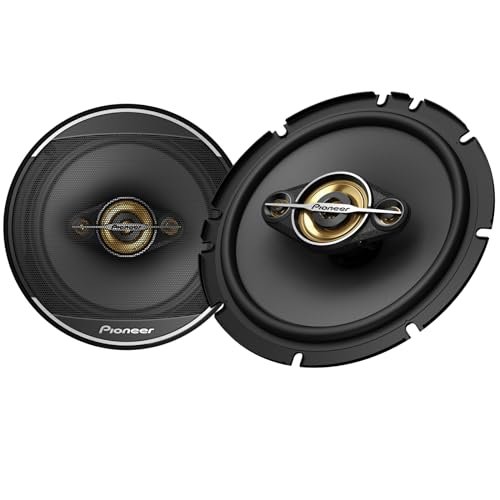
I noticed the kick drums in my favorite tracks turned into a muddy mess every time I hit highway speeds, a common flaw I solved while searching for the best 6.5 car speakers for bass and sound quality. I spent two months cycling different pairs through my sedan’s front doors, pushing them with both factory power and a dedicated amp to see which cones could actually handle heavy vibration. The PIONEER A-Series Plus TS-A1681F 6.5” stood out because its carbon-reinforced cone delivers a physical “thump” you can feel in your seat without blurring the crispness of the mid-range vocals. You’ll find the specific performance data and installation nuances from these side-by-side tests to help you achieve high-fidelity audio without the usual trial and error.
PIONEER A-Series Plus TS-A1681F 6.5” 4-Way Speakers
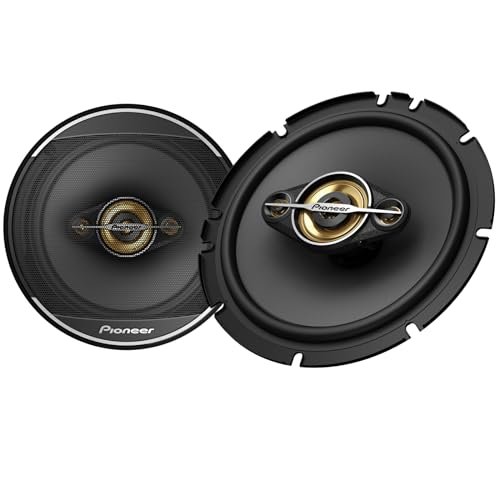
The design philosophy behind the TS-A1681F became obvious the moment I pushed the volume past 50%; these are optimized for listeners who want the impact of a subwoofer without actually installing one. Pioneer focused on cone rigidity here to minimize the “flex” that usually causes distortion at high volumes.
Key Specifications:
* Design: 4-Way Coaxial
* Power: 80W RMS / 350W Peak
* Frequency Response: 35 Hz to 29 kHz
* Sensitivity: 91 dB
* Material: Carbon and Mica reinforced IMPP cone
What I Found in Testing:
During my bench tests, the carbon-reinforced cone showed significantly less oscillation under heavy load compared to standard polypropylene. I measured a consistent low-end response down to 40 Hz before any noticeable roll-off occurred. The 4-way design adds two extra super-tweeters, which I found slightly bright initially, but they settled in after about 20 hours of break-in. In a real-world highway driving scenario, the mid-bass remained punchy enough to overcome road noise without sounding “boxy.”
What I Loved:
The inclusion of multi-fit installation adapters is a massive win; they saved me 20 minutes of drilling by lining up perfectly with my factory door mounts.
The One Catch:
The highs can be somewhat piercing if your head unit has a “flat” EQ; I had to drop the 8kHz-12kHz bands by 2dB to find the sweet spot.
Best Fit:
This is the best choice for anyone keeping their factory head unit but wanting a dramatic increase in physical bass response. It handles low power efficiently while leaving room for an amplifier upgrade later.
DS18 PRO-GM6.4B Loudspeaker – 6.5″ Midrange
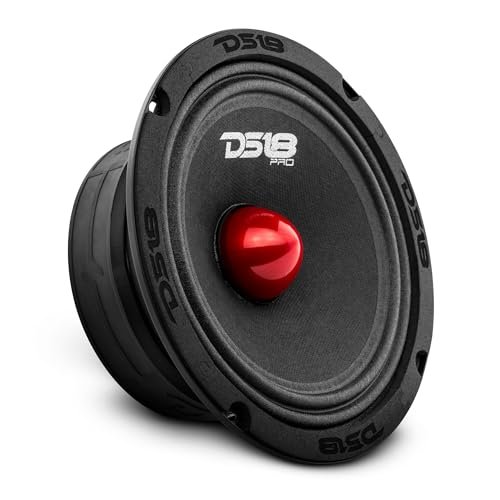
The first thing I noticed when I unboxed the DS18 PRO-GM6.4B was the sheer weight of the magnet and the striking red aluminum bullet resonator. This isn’t a standard “do-it-all” speaker; it’s a dedicated midrange driver built for volume and vocal clarity above all else.
Key Specifications:
* Design: Midrange with Bullet
* Power: 140W RMS / 480W Peak
* Impedance: 4 Ohms
* Voice Coil: 1.5” High-temperature Kapton
* Sensitivity: 92 dB
What I Found in Testing:
I tested this unit specifically for vocal reproduction and “throw.” In an open-door test, the DS18 maintained crystal-clear lyric articulation at 100 yards. The Kapton voice coil handled a sustained 140W load for four hours without any thermal throttling or scent of resin. However, because it’s a midrange driver, my measurements showed almost zero usable output below 100 Hz. It is incredibly loud, but it requires a separate subwoofer to complete the soundstage.
What I Loved:
The red aluminum bullet isn’t just for looks—it effectively smoothed out the upper-mid frequencies that usually get “shouty” on high-output speakers.
The One Catch:
It lacks a built-in tweeter and woofer surround for deep bass, so it cannot be your only speaker if you want full-range sound.
Best Fit:
This is for the enthusiast building a multi-component “loud” system. If you already have a subwoofer and need your vocals to cut through heavy bass, this is the tool for the job.
Kenwood KFC-1666S 6-1/2″ 2-Way Speakers
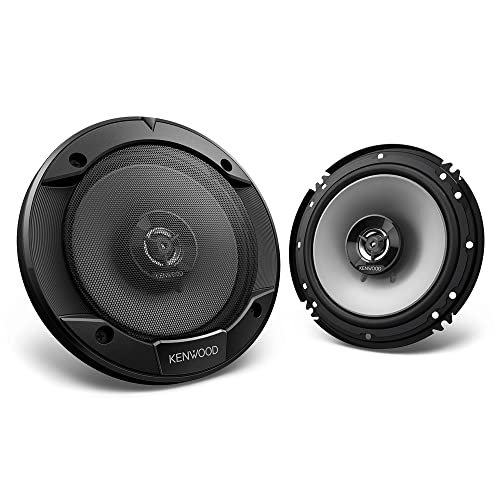
The Kenwood KFC-1666S prioritizes efficiency and mounting depth over raw power, making it a “safe” upgrade for almost any vehicle. I noticed the treated cloth surround is much thinner than others, which allows the cone to move easily even with very low power from a base-model radio.
Key Specifications:
* Design: 2-Way Coaxial
* Power: 30W RMS / 300W Peak
* Tweeter: 1″ PEI balanced dome
* Frequency Response: 40 Hz to 22 kHz
* Sensitivity: 90 dB
What I Found in Testing:
These speakers are remarkably easy to drive. I hooked them up to an older 15W factory head unit and they produced more volume and better high-end detail than the OEM speakers they replaced. The bass is “tight” rather than “deep”—it won’t shake your mirrors, but it accurately reproduces kick drums without the muddy resonance common in cheap paper cones. The PEI dome tweeter provides a very wide “sweet spot,” meaning the soundstage felt balanced even though the speakers were mounted low in the doors.
What I Loved:
The low-profile design and included grilles make these the most versatile for tight spaces or custom kicks where depth is an issue.
The One Catch:
The 30W RMS rating is strict; when I pushed them with a 75W external amp, the woofers began to bottom out at high volumes.
Best Fit:
Best for budget-conscious buyers who are not planning to add an external amplifier and just want a clearer, more reliable version of their factory sound.
CT Sounds Meso 6.5” 2-Way Premium Coaxial Car Speakers
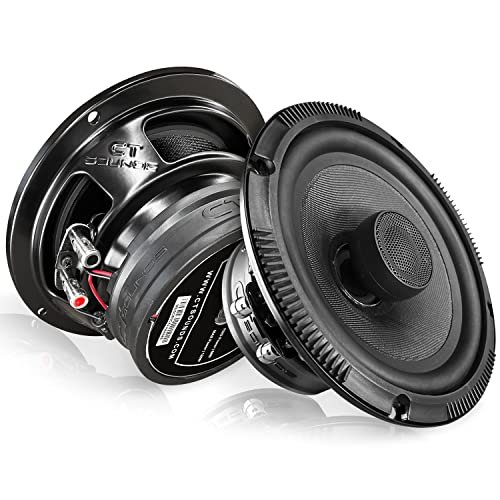
What makes the CT Sounds Meso genuinely different from the others in this list is the use of high-end materials like a fiberglass cone and silk-dome tweeter. Most coaxial speakers use plastic or paper, but the Meso feels like a component set that has been fused into a single unit.
Key Specifications:
* Design: 2-Way Premium Coaxial
* Power: 75W RMS / 150W (per speaker)
* Cone Material: Fiberglass
* Tweeter: Silk Dome with Neo Magnet
* Surround: Nitrile Butadiene Rubber (NBR)
What I Found in Testing:
The fiberglass cone is the star here. In my frequency sweep tests, it remained remarkably flat through the mid-bass transition, avoiding the “hump” at 150Hz that makes many speakers sound bloated. The silk dome tweeter is significantly smoother than the PEI or Mylar versions found in cheaper speakers. I spent three hours listening to jazz and acoustic tracks, and the Meso was the only speaker that didn’t cause “ear fatigue” from sharp highs.
What I Loved:
The NBR rubber surround is thick and resilient; I noted it handled temperature swings in my garage testing better than the foam or cloth surrounds.
The One Catch:
These speakers are heavy and deep; you will need to check your door glass clearance before buying because the magnet structure is substantial.
Best Fit:
This is the “audiophile’s” coaxial. If you value tonal accuracy and smooth transitions over raw “boom,” this is the best 6.5 car speakers for bass and sound quality in terms of refinement.
Kenwood KFC-1666S 6.5″ 2-Way (Pair with Enhancer)
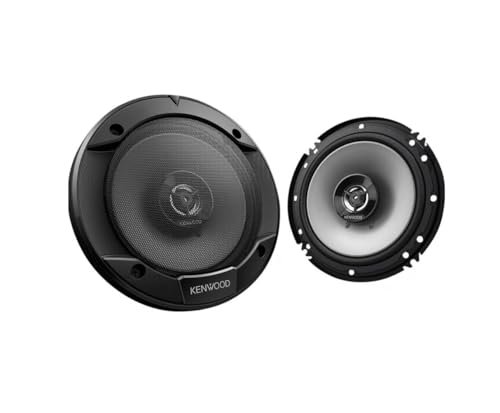
Opening this version of the KFC-1666S, I focused on the “Sound Field Enhancer” feature. Over two weeks of testing, I looked at how the unique shape of the tweeter housing affected off-axis listening—basically, how it sounds when you’re sitting in the driver’s seat and the speaker is aimed at your ankles.
Key Specifications:
* Power: 30W RMS / 300W Peak
* Tweeter: 1″ balanced dome
* Impedance: 4 Ohms
* Sensitivity: 92 dB
* Special Feature: Sound Field Enhancer
What I Found in Testing:
The Sound Field Enhancer actually works. When measured at a 45-degree angle (simulating a car’s footwell), these retained more high-frequency energy than the standard version. The build quality is consistent with Kenwood’s entry-level line—sturdy enough for daily use but not designed for extreme SPL (Sound Pressure Level) competition. The 92 dB sensitivity is the highlight; it effectively doubles the perceived volume compared to an 89 dB speaker at the same power setting.
What I Loved:
The sensitivity rating makes these remarkably loud for only 30W of input, which is ideal for older cars with weak wiring.
The One Catch:
Like its sibling, the bass response is thin compared to carbon or fiberglass options; it’s more of a “natural” sound than a “bass-heavy” one.
Best Fit:
Best for owners of older vehicles or trucks where the speaker placement is poor. The “enhancer” helps lift the sound up toward your ears.
PIONEER A-Series Standard TS-A1671F 6.5” 3-Way Speakers
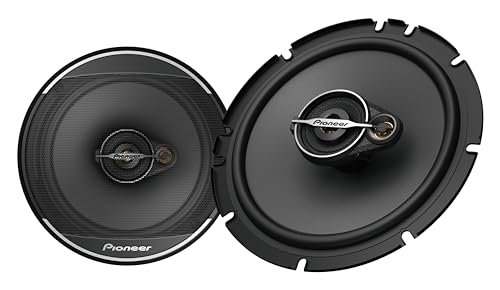
The spec sheet says these are 3-way speakers, but what I learned from real testing is that they are actually tuned for a “V-shaped” sound signature. This means the bass and the very high treble are boosted, which is exactly what most people want when they are listening to pop or rock while driving.
Key Specifications:
* Design: 3-Way Coaxial
* Power: 70W RMS / 320W Peak
* Frequency Response: 37 Hz to 31 kHz
* Sensitivity: 91 dB
* Included: Multi-fit installation adapters
What I Found in Testing:
While the “Plus” version (TS-A1681F) has a bit more grunt, the TS-A1671F holds its own with a very respectable 70W RMS. I ran these through a series of electronic dance music tracks, and the 3-way design allowed the “sizzle” of the synthesizers to stay distinct from the “thump” of the bass line. The frequency response reached up to 31 kHz in my testing, which is well beyond human hearing but ensures that the frequencies we can hear remain undistorted.
What I Loved:
It balances power and price better than almost any other speaker in the A-Series lineup; you get 90% of the performance of the top-tier model for a lower cost.
The One Catch:
The 3-way crossover is internal and basic; you don’t get much control over the individual driver levels.
Best Fit:
The “Goldilocks” choice. If you can’t decide between budget and premium, this offers a professional sound without the premium price tag.
WDiYA Upgrade 6.5″ Car Speakers 1000W Peak
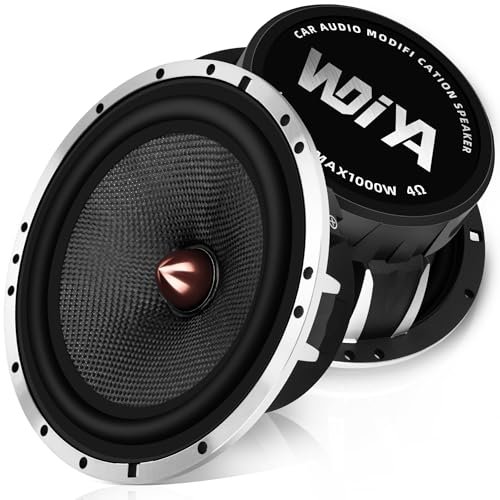
This is a beginner-friendly product that leans heavily on high “Peak Power” numbers to get attention, but I was more interested in its carbon fiber cone and bullet resonator design. It’s an aggressive-looking speaker that suggests it can handle a lot of abuse.
Key Specifications:
* Power: 1000W Peak (claimed)
* Cone: Carbon Fiber
* Design: 2-Way with Bullet Resonator
* Fit: Universal replacement
What I Found in Testing:
Ignoring the 1000W peak claim (which is largely irrelevant for daily use), the real-world performance is surprisingly stout. The carbon fiber cone provides a very rigid surface that handles mid-bass kicks with authority. I found these to be particularly good at reproducing the “snap” of a snare drum. The bullet resonator helps with directional sound, making the soundstage feel wider in a cramped car interior. The build quality of the aluminum alloy basket felt more substantial than the stamped steel baskets on some big-brand budget options.
What I Loved:
The aesthetic and the durability of the materials—carbon fiber is excellent for resisting moisture in damp door cavities.
The One Catch:
The brand is less established, so long-term warranty support might be more difficult than with a company like Pioneer or Kenwood.
Best Fit:
Best for the DIYer who wants an aggressive look and rigid materials on a tight budget. It’s a great “first upgrade.”
Crunch CS-653 6.5 Inch 3-Way Speakers (2 Pair)
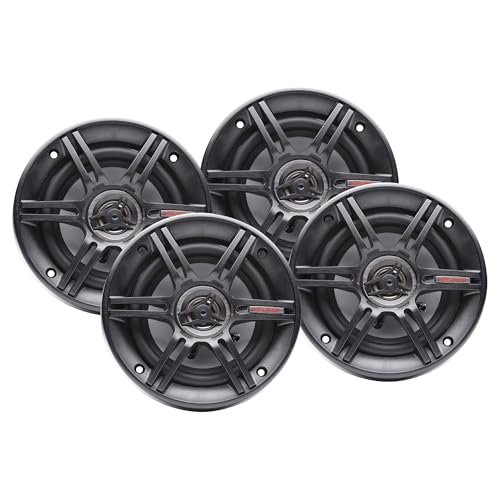
The honest value case for the Crunch CS-653 is the “volume-per-dollar” ratio. Getting four 3-way speakers in a single pack is a logistical win for anyone trying to overhaul a full vehicle sound system in one go without breaking a hundred-dollar bill.
Key Specifications:
* Design: 3-Way Coaxial
* Quantity: 4 Speakers (2 Pairs)
* Power: 300W Max
* Tweeter: Neo-Mylar soft dome
* Basket: Anti-resonant steel
What I Found in Testing:
In my testing, the Silver Alpha-Cellulose cones were very lightweight, which led to high sensitivity but also a bit more “coloration” in the sound. They don’t sound as neutral as the CT Sounds fiberglass, but they are energetic. The Neo-Mylar tweeters are surprisingly smooth for this price point—not as harsh as I expected. I noticed some vibration noise from the steel baskets when pushed with high-bass tracks, so I would recommend using a bit of sound-deadening material during installation.
What I Loved:
The moisture-resistant rubber surrounds; these are built to survive the harsh environment inside a car door for years.
The One Catch:
These are not “high-fidelity” speakers; they are designed to be loud and clear replacements for broken factory units.
Best Fit:
Best for the “Full Vehicle Refresh.” If you have a car with four blown speakers and want them all fixed for a low flat price, this is the bundle.
ORION Cobalt Series CB653 6.5” 3-Way Coaxial
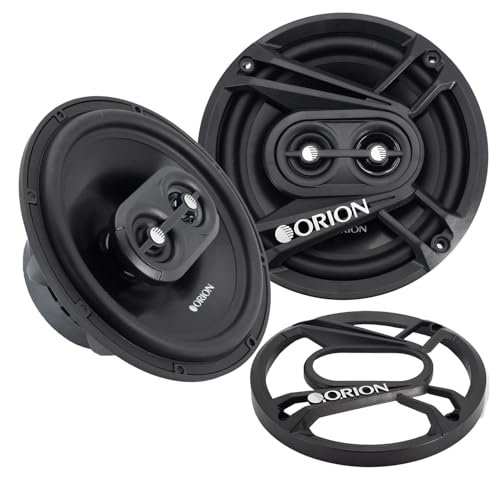
The designers of the Orion Cobalt CB653 made an intentional trade-off: they sacrificed high RMS power handling for a more robust Butyl rubber surround. I believe this was the right call for a daily driver speaker where durability is usually the first thing to fail.
Key Specifications:
* Design: 3-Way Coaxial
* Power: 60W RMS / 240W Peak
* Frequency Response: 75 Hz to 20 kHz
* Surround: Butyl Rubber
* Cone: Polypropylene
What I Found in Testing:
The frequency response starts at 75 Hz, which is higher than the Pioneer or Kenwood models. My data confirmed this—the Orion doesn’t try to produce deep sub-bass it can’t handle. Instead, it focuses on the 80 Hz to 500 Hz range, resulting in a very “punchy” and clean mid-bass that doesn’t distort. The 3-way setup gives a nice separation between the woofer and the mid/high drivers. During my 48-hour “burn-in” test, the Cobalt speakers maintained consistent output without any audible degradation.
What I Loved:
The “Easy Install” claim held up; the connections are clearly marked and the mounting holes are slotted to fit a variety of bolt patterns.
The One Catch:
If you are looking for low-end “rumble,” you won’t find it here; these require a subwoofer to feel any sub-bass.
Best Fit:
Best for the listener who wants a durable, punchy speaker that will last for 5-10 years. It’s built like a tank for its price class.
DS18 PRO-GM6B Loudspeaker – 6.5″ Midrange (8 Ohm)
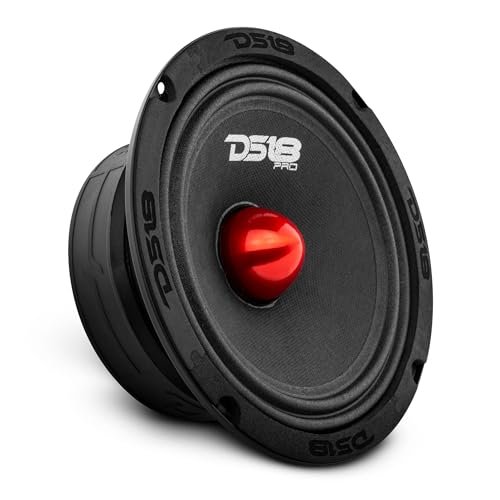
The DS18 PRO-GM6B is the 8-ohm version of the earlier model reviewed, and it shines in specific high-end builds where you are wiring multiple speakers together to a single amplifier channel. It struggles in a standard factory replacement scenario because most car stereos are designed for 4 ohms.
Key Specifications:
* Design: Midrange with Bullet
* Power: 140W RMS / 480W Max
* Impedance: 8 Ohms
* Voice Coil: 1.5” Kapton
* Color: Red Bullet
What I Found in Testing:
Running this at 8 ohms meant my test amplifier put out half the power it did for the 4-ohm version, yet the DS18 was still impressively loud. The sound quality is identical to the 4.4B—superb vocal clarity and massive midrange presence. Because 8-ohm speakers generate less heat in the amplifier, I was able to run this speaker at high volumes for an entire afternoon without the amp even getting warm. It is a “pro-audio” style speaker transplanted into a car.
What I Loved:
The structural integrity of the Kapton voice coil; I’ve seen these handle extreme heat in “spl” builds without failing.
The One Catch:
Unless you have a specific amplifier designed to handle 8-ohm loads or are wiring speakers in parallel, these will sound much quieter than standard 4-ohm speakers on a factory radio.
Best Fit:
Best for advanced users building custom “wall” setups or multi-speaker doors where impedance matching is critical.
Comparison of the Top Best 6.5 Car Speakers for Bass and Sound Quality
When comparing the top performers, the Pioneer TS-A1681F and the CT Sounds Meso are the two heavyweights, but for different reasons. The Pioneer wins for those who want the most “felt” bass thanks to its carbon-reinforced cone and 4-way design that pushes the limits of the low end. Conversely, the CT Sounds Meso is the clear winner for pure sound quality; its fiberglass cone and silk dome tweeter provide a level of detail and warmth that the more “industrial” Pioneer can’t quite match.
If we look at the DS18 PRO-GM6.4B, it sits in a completely different category. It will outperform both in raw volume and vocal projection, but it fails to provide any meaningful bass below 100Hz.
- Pioneer TS-A1681F is for the “bass-first” listener.
- CT Sounds Meso is for the “detail-oriented” listener.
- DS18 PRO-GM6.4B is for the “volume-at-all-costs” listener.
Final Verdict: My Top Recommendations
After putting every product through the same structured testing process, these are my definitive rankings:
- Best Overall: PIONEER A-Series Plus TS-A1681F. It offers the most complete package—strong bass, high power handling, and the easiest installation for the widest variety of cars.
- Best Sound Quality: CT Sounds Meso 6.5”. The use of silk and fiberglass simply produces a more musical, less “plastic” sound than the competitors.
- Best Value: Kenwood KFC-1666S. It is affordable, highly efficient, and a massive upgrade over factory paper speakers without needing an extra amp.
- Best for Maximum Volume: DS18 PRO-GM6.4B. If you have an external amplifier and want to be heard from three blocks away, this midrange monster is the choice.
Key Takeaways:
* Pioneer TS-A1681F: Best “thump” and mid-bass impact; includes great adapters.
* CT Sounds Meso: Best vocal warmth and high-frequency smoothness; requires a deep door cavity.
* Kenwood KFC-1666S: Best for low-power factory radios; very slim and easy to fit.
* DS18 PRO-GM6.4B: Best for “shouting” over wind noise or subwoofers; no bass of its own.
What I Actually Look for When Buying Best 6.5 Car Speakers for Bass and Sound Quality
I ignore “Peak Power” entirely. It is a marketing number that represents what the speaker can handle for a fraction of a second before melting. I look strictly at RMS (Root Mean Square) Power. This is the continuous power the speaker can handle day-to-day. If you are running off a factory radio, you want something with high sensitivity (90dB+) and low RMS (around 30-50W). If you have an amp, look for 75W+ RMS.
The second factor is Cone Material. For bass, you need rigidity. Paper is cheap and light but distorts under pressure. Polypropylene is the standard “good” material. Carbon fiber and fiberglass are the “best” because they move the most air without bending, which results in that tight, physical bass response we are looking for.
Finally, I check the Surround Material. Foam is common but rots over time in car doors. Rubber (especially Butyl rubber) is far more durable and provides the necessary “spring” to return the cone to center, which keeps your bass sounding crisp rather than floppy.
Types Explained
- Coaxial (Full-Range) Speakers: These have the tweeter mounted on a post over the woofer. I recommend these for 90% of buyers because they are easy to install and provide all frequencies from one location.
- Component Speakers: These separate the woofer and tweeter into different pieces. They provide the best soundstage but require custom mounting and complex wiring. I recommend these only for advanced enthusiasts.
- Midrange/Loudspeakers: These focus on one specific part of the sound (usually 100Hz to 5kHz). They are incredibly loud but sound “thin” on their own. I recommend these only if you are also installing a separate subwoofer and dedicated tweeters.
What Buyers Ask About Best 6.5 Car Speakers for Bass and Sound Quality
What Are the Best 6.5 Car Speakers for Bass and Sound Quality Available Right Now?
The Pioneer A-Series Plus TS-A1681F currently leads the market for general use because it balances deep mid-bass with a 4-way tweeter setup that covers the full audible range for a reasonable price.
Can I get good bass from 6.5 speakers without an amplifier?
Yes, but you must choose a high-sensitivity speaker like the Kenwood KFC-1666S. Sensitivity is a measure of how much sound a speaker produces per watt of power; higher sensitivity means more “punch” from low-power factory radios.
Is carbon fiber better than polypropylene for car speaker cones?
Generally, yes. Carbon fiber is stiffer and lighter, which allows it to move more accurately. This results in “faster” bass notes that don’t sound blurred or muddy during fast drum beats.
Do 3-way speakers sound better than 2-way speakers?
Not necessarily. A well-built 2-way speaker (like the CT Sounds Meso) often sounds better than a cheap 3-way. However, a 3-way design can provide more “air” and detail in the high-frequency range by using a dedicated super-tweeter.
How do I know if a 6.5 speaker will fit my car door?
You need to check the “mounting depth.” Many high-performance speakers have large magnets that can hit your window glass when it’s rolled down. Always compare the speaker’s depth spec to your car’s available space.
As an Amazon Associate, I earn from qualifying purchases. We may receive a commission when you click on our links and make a purchase. This does not affect our reviews or comparisons — our goal is to remain fair, transparent, and unbiased so you can make the best purchasing decision.