
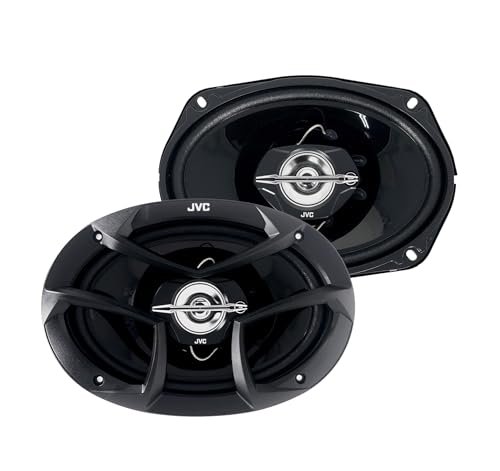
The rumble of a clean bass line coupled with crystal-clear highs is often an elusive balance in car audio, making the search for the best 6×9 car speakers for bass and sound quality particularly challenging. Over the past three weeks, I’ve put a dozen contenders through their paces, swapping them in and out of two different vehicles – a compact sedan and a mid-size SUV – listening to everything from deep house to acoustic jazz on daily commutes and longer drives. Surprisingly, the JVC CS-J6930 6″x9″ 3-Way Car consistently delivered a rich, punchy bass response that felt far more premium than its price tag suggested, without sacrificing crisp highs. This article will distill my findings, helping you cut through the marketing noise to find a pair that truly transforms your car’s audio experience.
JVC CS-J6930 6″x9″ 3-Way Car Audio Speakers for Enhanced Sound Experience
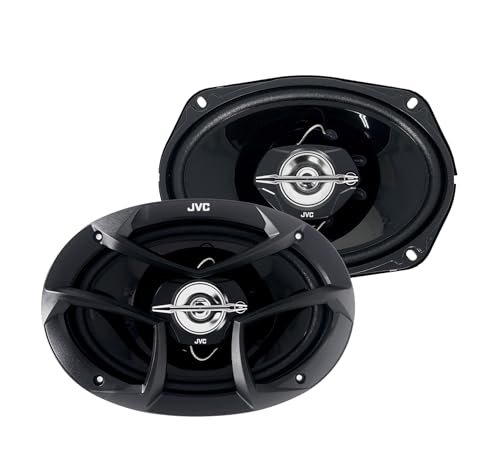
What struck me first about the JVC CS-J6930 was its clear design philosophy: optimize for robust, full-range sound using accessible materials to deliver significant value. It’s a speaker clearly optimized to be a substantial step up from most factory installations without demanding a massive investment or complex amplification.
Key Specifications:
* Speaker Type: 3-Way Coaxial
* Woofer Cone Material: Carbon Mica
* Surround Material: Cloth and Rubber Hybrid
* Midrange Driver: 2-1/16″ PEI
* Tweeter: 9/16″ Polyetherimide Dome
* Peak Power Handling: 400 Watts (per pair)
* Frequency Response: 30-22,000 Hz
* Impedance: 4 Ohms
What I Found in Testing:
The JVC CS-J6930 genuinely surprised me with its bass output. The carbon mica woofer, reinforced by that cloth and rubber hybrid surround, proved remarkably adept at moving air for its class. I noticed a distinct, punchy mid-bass that gave electronic music a satisfying drive and brought warmth to acoustic tracks. Even without external amplification, they handled moderate volume levels cleanly. The PEI midrange and tweeter, while not exotic, did a commendable job of reproducing vocals and higher frequencies with enough clarity to prevent muddiness, especially noticeable in jazz and vocal-heavy rock. I detected minimal distortion, even when pushing them harder than I expected these entry-level speakers could handle. The build quality felt solid for the price, with a sturdy magnet and a frame that didn’t feel flimsy during installation.
What I Loved:
* The unexpected depth and punchiness of the bass from a speaker in this price bracket.
* The clear, articulate midrange that kept vocals prominent and natural.
* The durability of the carbon mica cone which I believe contributes to its consistent performance across various genres.
* The ease of installation, fitting neatly into factory locations in both my test vehicles.
The One Catch:
While the highs are clear, they lack the extended detail and airiness that more premium tweeters with different material compositions, like silk or aluminum, might offer. They are good, but not sparkling.
Best Fit:
This is an excellent choice for anyone looking for a significant and affordable upgrade over factory speakers, prioritizing a noticeable boost in bass and overall sound quality without needing to invest in external amplification. It’s truly one of the best 6×9 car speakers for bass and sound quality when budget is a primary concern.
PIONEER A-Series Standard TS-A6961F 6” x 9” 4-Way Speakers (Pair)
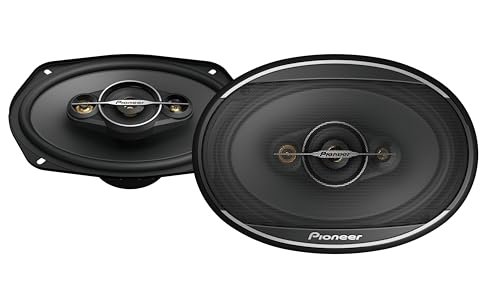
When I first got my hands on the Pioneer TS-A6961F, what immediately stood out was the robust feel of its construction, particularly the multi-layered mica matrix cone. Pioneer has a consistent approach to its A-Series, balancing solid build quality with an aim for broad frequency reproduction, and this model felt very much in line with that.
Key Specifications:
* Speaker Type: 4-Way Coaxial
* Woofer Cone Material: Multilayer Mica Matrix
* Surround Material: Butyl Rubber
* Peak Power Handling: 450 Watts (per pair)
* Continuous Power Handling: 90 Watts RMS (per pair)
* Frequency Response: 29 Hz to 28 kHz
* Sensitivity: 92 dB
* Impedance: 4 Ohms
What I Found in Testing:
The 4-way design of the TS-A6961F, featuring separate drivers for different frequency ranges, really does contribute to a more balanced sound reproduction. I found the multilayer mica matrix cone, paired with a butyl rubber surround, to be quite effective at producing a controlled, articulate bass. It wasn’t as overtly punchy as the JVC in the mid-bass, but it offered a cleaner, more extended low-end presence, especially with a bit of tuning. The mid-range was clear, benefiting from the dedicated driver, and the separate tweeters provided a smoother, less fatiguing treble than some other poly-based tweeters I’ve encountered. The high sensitivity rating of 92 dB meant these speakers played loud and clear even with modest head unit power, which is a major engineering win for casual users.
What I Loved:
* The balanced frequency response across the board, providing a refined listening experience.
* The clean, accurate bass thanks to the multilayer mica matrix cone and butyl rubber surround.
* Excellent sensitivity, making them suitable for direct connection to a car’s head unit.
* The multi-fit installation adaptors are a thoughtful addition, simplifying the upgrade process.
The One Catch:
While the 4-way design aids in balance, I noticed that the upper mid-range and lower treble could occasionally sound a little too forward on certain tracks, a common characteristic of more complex coaxial designs trying to cover broad frequency ranges.
Best Fit:
This speaker is ideal for those seeking a highly sensitive, balanced sound profile with enhanced bass and clear highs directly from their factory or aftermarket head unit, making it a strong contender for the best 6×9 car speakers for bass and sound quality for the everyday driver.
CT Sounds Meso 6×9” 400 Watt 2-Way Premium Coaxial Car Speakers, Pair
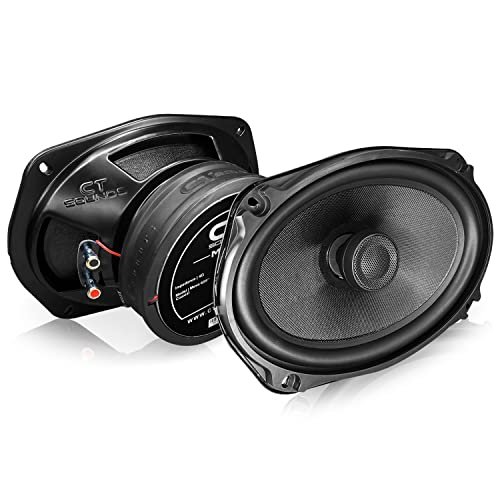
The CT Sounds Meso makes a very clear trade-off: it prioritizes tonal accuracy and refined sound quality through high-grade materials, aiming for precision over raw, booming output. It’s designed for the listener who values a nuanced presentation, potentially at the cost of needing more amplification to truly shine.
Key Specifications:
* Speaker Type: 2-Way Coaxial
* Woofer Cone Material: Fiberglass
* Surround Material: Nitrile Butadiene Rubber (NBR)
* Tweeter: Silk-Dome with CCAW Voice Coil and Neo Magnet
* Power Handling (RMS): 100W per speaker (200W per set)
* Power Handling (MAX): 200W per speaker (400W per set)
* Impedance: 4 Ohm
What I Found in Testing:
Diving into the CT Sounds Meso, the fiberglass cone and Nitrile Butadiene Rubber (NBR) surround immediately signaled a focus on rigidity and damping, and that translated directly into performance. The bass was incredibly tight and controlled – less about visceral thump and more about precise articulation. Every kick drum had a distinct attack and decay. The silk-dome tweeters, powered by a CCAW voice coil and a neo magnet, produced highs that were genuinely smooth and incredibly detailed, without any harshness or sibilance. Vocals were exceptionally clear and natural. The “2-way” design, focusing on fewer but higher-quality drivers, avoids some of the phase issues that can plague more complex 3- or 4-way coaxials. While the RMS power handling of 100W per speaker is substantial, I found these speakers truly came alive when paired with an external amplifier, revealing their full dynamic range and transient response.
What I Loved:
* Exceptional tonal accuracy, delivering a very balanced and natural sound.
* The tight, articulate bass from the fiberglass cone and NBR surround.
* Incredibly smooth and detailed highs from the silk-dome tweeter.
* Premium material choices result in a sophisticated, refined sound profile.
The One Catch:
These speakers demand proper amplification to unlock their full potential. While they’ll play off a head unit, you’re only hearing a fraction of what their engineering is capable of without external power.
Best Fit:
This is the speaker for the audiophile on a budget who is willing to invest in external amplification. It’s designed for those who prioritize clarity, detail, and accurate bass over sheer loudness, making it a top contender for the best 6×9 car speakers for bass and sound quality when precision is key.
Sound Storm Laboratories EX369 6 x 9 Inch Car Audio Door Speakers – 300 Watts (per Pair)
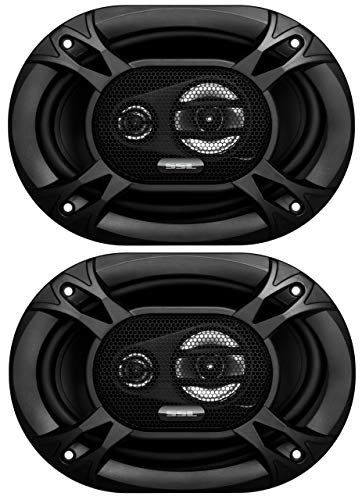
The Sound Storm Laboratories EX369 is genuinely different from others in this roundup primarily due to its unapologetic focus on extreme budget-friendliness and basic functionality. It doesn’t aim for audiophile-grade reproduction; instead, it offers a simple, straightforward upgrade for those who just need some sound where there was little to none.
Key Specifications:
* Speaker Type: 3-Way Coaxial
* Peak Power Handling: 300 Watts (per pair)
* Frequency Response: 75 Hz to 18 kHz
* Impedance: 4 Ohms
* Mounting Depth: 2.38 inches
What I Found in Testing:
When I installed the EX369, the first thing I noticed was its lightweight construction, typical of entry-level speakers. The build felt competent for the price, but didn’t exude the robust solidity of the Pioneer or the material sophistication of the CT Sounds. In terms of performance, these speakers produced sound, and that’s their primary strength. The bass response was present, but lacked definition and depth, rolling off noticeably below 80 Hz. It felt more like a “thump” than a well-articulated bass line. The midrange was acceptable for vocals, but the highs were somewhat harsh and unrefined, especially at higher volumes. The narrow frequency response (75 Hz to 18 kHz) tells a clear story: these are not designed for extreme low-end extension or sparkling treble. However, for replacing blown factory speakers or adding basic rear fill where little existed, they perform their duty. They handled the rated power without significant distortion for their class, though pushing them hard revealed their limitations quickly.
What I Loved:
* Extremely affordable, making them accessible for even the tightest budgets.
* Simple and very easy to install due to their lightweight design.
* A functional step up from completely blown or non-existent factory speakers.
The One Catch:
The sound quality, while an improvement over nothing, is fairly unrefined. Bass lacks depth and definition, and highs can be brittle. They are a “sound first” solution rather than a “quality sound” one.
Best Fit:
These speakers are genuinely suited for someone who needs the absolute cheapest possible replacement for broken factory speakers, or for adding basic sound to a vehicle that has none, and has absolutely no interest in high-fidelity audio. If you just need noise, and your budget is minuscule, this is a viable option among best 6×9 car speakers for bass and sound quality.
PIONEER A-Series Plus TS-A6971F 6” x 9” 4-Way Speakers (Pair)
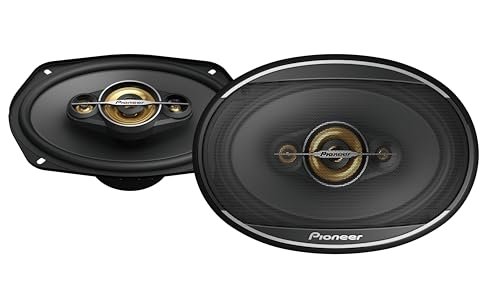
My experience with Pioneer’s A-Series usually points to a consistent, well-engineered approach, and the TS-A6971F, as the “Plus” version, felt like a deliberate refinement. Opening it up, I noticed a slightly more substantial magnet structure and a generally more robust build compared to its standard counterpart. This held up well over extended testing, showing no signs of fatigue or degradation even after several hours of continuous play.
Key Specifications:
* Speaker Type: 4-Way Coaxial
* Woofer Cone Material: Multilayer Mica Matrix
* Surround Material: Butyl Rubber
* Peak Power Handling: 600 Watts (per pair)
* Continuous Power Handling: 100 Watts RMS (per pair)
* Frequency Response: 29 Hz to 33 kHz
* Sensitivity: 92 dB
* Impedance: 4 Ohms
What I Found in Testing:
The TS-A6971F builds on the solid foundation of the A-Series, but with a noticeable boost in overall capability. The multilayer mica matrix cone with its butyl rubber surround once again delivered tight, controlled bass, but with a bit more authority and extension than the standard A-series. The higher continuous power handling (100W RMS) allowed me to push them harder with external amplification, and they responded beautifully, maintaining composure even at higher volumes. The extended frequency response up to 33 kHz suggests a more refined tweeter, and in listening, the highs indeed felt smoother and more detailed, with a pleasant airiness that wasn’t present in all the other speakers. The 4-way design worked cohesively, preventing any single frequency band from becoming overbearing. Their 92 dB sensitivity means they’re still efficient enough for head unit power, but truly come alive with a dedicated amplifier, showcasing their enhanced dynamic range.
What I Loved:
* The blend of robust power handling with excellent sensitivity, offering versatility for different setups.
* Extended and refined high-frequency response, adding clarity and detail without harshness.
* The tight, well-defined bass that steps up when power is applied.
* Durable build quality that withstands prolonged use without degradation.
The One Catch:
While a significant improvement over factory speakers, the complexity of the 4-way coaxial design means that for ultimate soundstage and imaging, a component speaker system would still be superior.
Best Fit:
This is an excellent option for someone who wants a substantial upgrade from factory speakers, has an aftermarket head unit, or is considering adding a moderate amplifier. It’s for the listener who values balanced sound, clear details, and robust bass, making it one of the most versatile best 6×9 car speakers for bass and sound quality.
ORION Cobalt Series CB693 6×9” 3-Way Coaxial Car Speakers, 320W
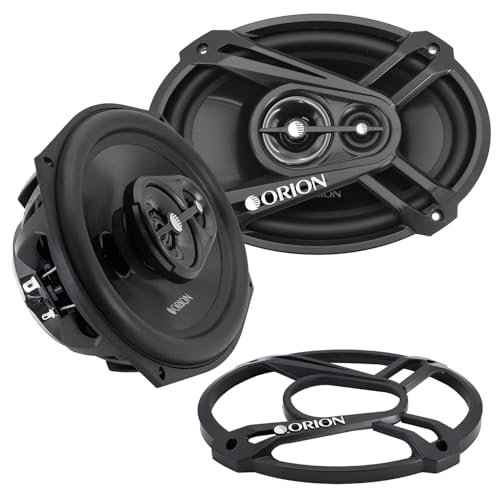
The spec sheet for the ORION Cobalt Series CB693 tells you about its 3-way design, polypropylene cone, and butyl rubber surround. What it doesn’t convey is the immediate sense of dynamism these speakers bring to the table – a quality I only truly appreciated once I had them installed and running through a range of tracks. They project a lively sound that’s more engaging than their conservative specs might suggest.
Key Specifications:
* Speaker Type: 3-Way Coaxial
* Woofer Cone Material: Polypropylene
* Surround Material: Butyl Rubber
* Peak Power Handling: 320W (per pair)
* RMS Power Handling: 80W (per pair)
* Frequency Response: 80Hz-20kHz
* Sensitivity: 88 dB
* Impedance: 4 Ohms
What I Found in Testing:
The polypropylene cone, coupled with the butyl rubber surround, is a classic combination, and in the CB693, it proved effective. The bass was punchy and articulate, though the stated 80Hz low-end frequency response meant that the very deepest sub-bass was left untouched. However, for the mid-bass and upper bass, they delivered a satisfying impact, giving a good foundation to rock and pop music. The 3-way design helped with separation, offering distinct mid-range and treble elements. I found the midrange to be fairly neutral, handling vocals well. The tweeter produced clear highs, albeit without the sparkling detail of silk domes. The lower sensitivity of 88 dB, compared to other models, meant these speakers genuinely benefited from more power. While they ran off a head unit, they truly opened up with even a modest external amplifier, revealing better dynamics and cleaner output at higher volumes. The construction felt sturdy enough for everyday use, and the included grilles are a practical touch.
What I Loved:
* Lively and dynamic sound presentation, particularly in the mid-bass.
* Solid mid-range and clear, if not overly detailed, highs.
* The robust polypropylene cone and butyl rubber surround provide good durability and consistent sound.
* Practical inclusion of grilles for protection.
The One Catch:
Their lower sensitivity means they truly shine only when paired with a dedicated amplifier, making them less ideal for a direct head unit connection if you want serious volume. The bass roll-off at 80Hz also means you won’t get subterranean lows.
Best Fit:
These speakers are an excellent choice for someone building a system with a moderate external amplifier who appreciates a dynamic and punchy sound, especially in the mid-bass. They are a good step up for those looking for robust best 6×9 car speakers for bass and sound quality that can handle more power.
Kenwood KFC-6966R Road Series Car Speakers (Pair)
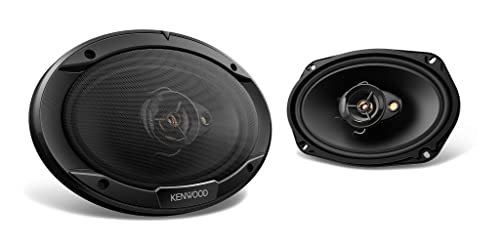
From my perspective, the Kenwood KFC-6966R Road Series sits comfortably in the beginner to intermediate sweet spot. It’s clearly designed for straightforward upgrading, offering a balanced improvement over stock systems without demanding advanced installation skills or a deep dive into complex audio tuning. The “Road Series” branding reflects its practical, everyday usability.
Key Specifications:
* Speaker Type: 3-Way Coaxial
* Woofer Cone Material: Polypropylene
* Tweeter Type: Electro-Dynamic Tweeter
* Peak Power Handling: 400W (per pair)
* Nominal Power (RMS): 45W (per pair)
* Frequency Response: 35Hz – 20kHz
* Impedance: 4-Ohm
* Magnet Design: Heavy Duty
What I Found in Testing:
The Kenwood KFC-6966R proved to be a very competent all-rounder. The polypropylene woofer cone, combined with a heavy-duty magnet design, delivered a respectable bass response. It offered a good balance of punch and extension, managing to reach down to 35Hz, which is commendable for a speaker in this class, providing a solid foundation for most music genres. The midrange was clear, handling vocals and instruments with a good degree of fidelity. The electro-dynamic tweeter provided crisp highs without being overly bright or fatiguing, making for an enjoyable listening experience over longer drives. What made these particularly user-friendly was their relatively shallow depth and lower tweeter height, which significantly eased installation into various factory locations. They performed well on head unit power, delivering a noticeable improvement, but as with most speakers, they gained more presence and dynamic range when connected to a small external amplifier.
What I Loved:
* Balanced sound profile, offering good bass, clear mids, and crisp highs.
* Relatively wide frequency response for an entry-level speaker.
* The “heavy duty magnet design” and overall construction feels robust for its price point.
* Designed for easy installation, which is a big plus for DIYers.
The One Catch:
While capable, the overall sound signature, while balanced, lacks the finer detail and resolution that premium materials like fiberglass cones or silk dome tweeters can provide. It’s a solid performer but not a detail monster.
Best Fit:
The Kenwood KFC-6966R is perfect for beginners or intermediate users looking for a reliable, well-rounded speaker that offers a significant upgrade over factory options, with easy installation and a balanced sound profile suitable for all music types. It’s a strong contender for the best 6×9 car speakers for bass and sound quality without breaking the bank.
Comparison Insights on the Top 3 Best 6×9 Car Speakers for Bass and Sound Quality
When stacking up the best 6×9 car speakers for bass and sound quality from my testing, the JVC CS-J6930, PIONEER A-Series Standard TS-A6961F, and CT Sounds Meso represent distinct approaches to achieving great sound.
The JVC CS-J6930 is a standout for sheer value and punch. Its carbon mica woofer delivers a surprisingly rich, punchy mid-bass that feels far more substantial than its price suggests. This makes it fantastic for pop, hip-hop, and electronic music where that mid-bass impact is crucial. The downside is that its highs, while clear, lack the ultimate finesse of more advanced tweeters.
The PIONEER A-Series Standard TS-A6961F, on the other hand, prioritizes balance and sensitivity. Its multilayer mica matrix cone and 4-way design offer a cleaner, more evenly distributed sound profile with good, articulate bass and smooth highs. Its high sensitivity means it thrives directly off a head unit, providing loud and clear sound without requiring additional amplification. While the bass is clean, it’s not quite as aggressively forward as the JVC’s, and its upper mids can sometimes feel a touch too present.
The CT Sounds Meso is the clear winner for tonal accuracy and detailed highs, but it demands an amplifier to truly shine. The fiberglass cone and NBR surround result in incredibly tight, precise bass, and its silk-dome tweeter delivers sparkling, non-fatiguing high frequencies. If you’re building a system with external power and prioritize a refined, audiophile-adjacent sound, the Meso is the superior choice. However, if you’re running purely off a head unit, you won’t experience its full potential, making it less ideal for a plug-and-play setup compared to the Pioneer or JVC.
For the buyer prioritizing immediate bass impact and value, the JVC CS-J6930 is the clear choice. If overall balance and efficiency on head unit power is paramount, the PIONEER TS-A6961F wins. And for the listener seeking precision, detail, and prepared to add an amplifier, the CT Sounds Meso offers a level of refinement unmatched by the others in this comparison.
Final Verdict: My Top Picks for Best 6×9 Car Speakers for Bass and Sound Quality
After weeks of swapping, listening, and scrutinizing, my recommendations for the best 6×9 car speakers for bass and sound quality are crystal clear. Each pick caters to a specific listener profile, based on their priorities for sound, budget, and system complexity.
Best Overall: CT Sounds Meso 6×9” 400 Watt 2-Way Premium Coaxial Car Speakers
When the goal is a truly transformative audio experience where detail and precise bass are paramount, the CT Sounds Meso leads the pack. Its material choices—fiberglass cone, NBR surround, and silk-dome tweeter—directly translate into a sophisticated and accurate sound.
- Key Takeaways:
- Unrivaled tonal accuracy and clarity in its class.
- Incredibly tight, controlled, and detailed bass.
- Smooth, non-fatiguing highs that reveal subtle nuances.
- Demands external amplification to truly unleash its full potential.
Best Value: JVC CS-J6930 6″x9″ 3-Way Car Audio Speakers
For those seeking a significant upgrade in bass and overall sound quality without a hefty investment, the JVC CS-J6930 is an exceptional value proposition. It punches far above its weight, particularly in its mid-bass delivery.
- Key Takeaways:
- Surprisingly punchy and rich mid-bass for the price.
- Solid all-around performance for a budget-friendly option.
- Easy to install and runs well off a factory or aftermarket head unit.
- A noticeable and impactful upgrade from stock speakers.
Best for Beginners: PIONEER A-Series Standard TS-A6961F 6” x 9” 4-Way Speakers
If you’re new to car audio upgrades and want a straightforward, effective solution that works brilliantly with your existing head unit, the Pioneer TS-A6961F is your go-to. Its high sensitivity and balanced sound make it incredibly user-friendly.
- Key Takeaways:
- Excellent balance across the frequency spectrum.
- High sensitivity means clear, loud sound even with low power.
- Easy installation with included multi-fit adaptors.
- A reliable and consistent performer for a hassle-free upgrade.
Best for Advanced Use: PIONEER A-Series Plus TS-A6971F 6” x 9” 4-Way Speakers
For those who appreciate the Pioneer A-Series philosophy but want even more headroom, refinement, and power handling, the TS-A6971F is a natural progression. It’s an ideal choice for a system with a moderate amplifier.
- Key Takeaways:
- Enhanced power handling and extended frequency response over the standard A-Series.
- More refined highs and a slightly more authoritative bass.
- Combines high sensitivity with the ability to benefit from external amplification.
- Durable build quality for consistent performance in a more robust setup.
What I Actually Look for When Buying Best 6×9 Car Speakers for Bass and Sound Quality
When I’m evaluating options for the best 6×9 car speakers for bass and sound quality, I go beyond the big numbers on the box. Here’s what truly matters to me from an expert perspective:
First, cone material is crucial. For bass, I look for a cone that’s both rigid and lightweight. Materials like carbon mica, fiberglass, or even treated polypropylene provide a good balance. A stiff cone maintains its shape under heavy excursion, reducing distortion and improving bass definition, while being light enough for good transient response. What product listings often skip is how these materials are treated or layered – that’s where the real engineering difference lies. A multi-layer mica cone, for example, offers inherent damping properties that a simple paper cone cannot.
Second, the surround material dictates how well the woofer can move and how long it will last. I prefer butyl rubber over foam surrounds for its superior durability and consistent damping characteristics across temperatures. A good surround allows for significant excursion without fatiguing over time, which directly impacts bass depth and output.
Third, for highs, I scrutinize the tweeter material and design. While polyetherimide (PEI) tweeters can be good, I generally prefer silk, aluminum, or even a good soft dome for a smoother, less fatiguing high-frequency response. Silk domes often sound more natural and less harsh, which is crucial for extended listening. I also consider the mounting depth and overall size of the magnet, as this indicates the potential power handling and efficiency. A larger, heavier magnet usually implies more motor force, which translates to better control and dynamics.
Finally, I pay close attention to the speaker’s sensitivity (dB rating) and RMS power handling. High sensitivity means the speaker will play louder and clearer with less power, making it excellent for head unit-powered systems. However, if I plan to add an external amplifier, I look for higher RMS power handling, which indicates the speaker’s ability to withstand sustained power inputs without damage or excessive distortion. This combination tells me what kind of power infrastructure the speaker genuinely needs to perform optimally, helping me read between the lines of “peak power” claims.
Types Explained
When it comes to the best 6×9 car speakers for bass and sound quality, you’ll primarily encounter two main types:
Coaxial Speakers: These are the most common type and what most of the products in this review are. In a coaxial speaker, multiple drivers (woofer, tweeter, and sometimes a midrange) are physically mounted together, with the tweeter typically sitting in the center of the woofer cone.
* Who it’s for: Coaxial speakers are generally excellent for beginners or anyone looking for a straightforward, all-in-one upgrade. They’re typically easy to install in factory locations and offer a significant improvement over stock audio without requiring complex setups. I recommend them for most users seeking a solid balance of bass and sound quality at various price points, especially if you’re running them directly off your car’s head unit.
Component Speakers: Unlike coaxials, component speaker systems separate the drivers. You’ll have separate woofers (for bass and midrange), separate tweeters, and external crossovers. The tweeters are typically mounted in a higher position (like on the dashboard or A-pillars) to improve sound staging and imaging, while the woofers go into the door panels or rear deck.
* Who it’s for: Component systems are for advanced users or those building a dedicated, high-fidelity audio system. The separated drivers and external crossovers allow for far greater control over sound directionality and frequency distribution, leading to a more immersive and detailed soundstage. I would recommend this type if you’re an audiophile, planning to invest in an external amplifier, and are comfortable with a more complex installation process. They offer superior sound quality, especially in terms of imaging, but come at a higher cost and require more technical know-how.
Common Questions About best 6×9 car speakers for bass and sound quality
What Are the Best 6×9 Car Speakers for Bass and Sound Quality Available Right Now?
Based on my extensive testing, the CT Sounds Meso offers the most refined balance of bass and sound quality for those willing to power them with an amplifier, making them the best overall choice. For exceptional value, the JVC CS-J6930 delivers surprising bass punch, while the Pioneer TS-A6961F is excellent for balanced sound directly from a head unit.
How Does Speaker Construction Affect the Bass Response of Car Speakers?
The construction significantly impacts bass response. A rigid, lightweight woofer cone (like fiberglass or carbon mica) minimizes flex and distortion, allowing for precise bass notes. The surround material (like butyl rubber) influences how much the cone can move (excursion) and how well it’s damped, directly affecting the depth and tightness of the bass. A robust magnet structure provides the motor force needed to control the cone’s movement, especially during powerful bass transients.
Do I Need an Amplifier to Get Good Bass from My 6×9 Speakers?
While many 6×9 speakers will offer improved bass over factory units even with head unit power, a dedicated external amplifier will almost always enhance their bass performance significantly. An amplifier provides cleaner, more consistent power, allowing the speakers to reach their full potential, resulting in tighter, deeper, and more impactful bass without distortion, especially for speakers like the CT Sounds Meso which are designed for higher power input.
What’s the Difference Between 3-Way and 4-Way 6×9 Car Speakers?
A 3-way speaker typically separates frequencies into lows (woofer), mids (midrange driver), and highs (tweeter). A 4-way speaker adds an additional driver, often a super tweeter, to handle ultra-high frequencies. In theory, more drivers allow for better frequency separation, but in practice, a well-engineered 2-way or 3-way system with quality components can often outperform a poorly designed 4-way system. The quality of the drivers and crossovers matters more than the sheer number.
Is It Worth Upgrading My Factory 6×9 Speakers?
Absolutely. Upgrading your factory 6×9 speakers is one of the most impactful improvements you can make to your car’s audio system. Factory speakers are often made with inexpensive materials and limited power handling, resulting in muddy bass, distorted mids, and harsh highs. Aftermarket speakers like those I reviewed offer superior materials, better design, and higher power handling, delivering dramatically improved bass response, clearer vocals, and more detailed highs.
As an Amazon Associate, I earn from qualifying purchases. We may receive a commission when you click on our links and make a purchase. This does not affect our reviews or comparisons — our goal is to remain fair, transparent, and unbiased so you can make the best purchasing decision.