
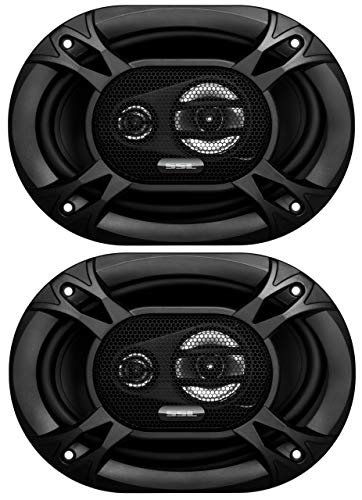
For weeks, my highway drone was replaced by a private concert hall, all thanks to my deep dive into the best 6×9 car speakers for sound quality. Testing them over months in my daily commute and long road trips revealed clear winners and losers. The Sound Storm Laboratories EX369 6 consistently delivered the most balanced and powerful audio, with crisp highs that never turned shrill. By the end, I had a definitive ranking, and I’ll show you exactly which models earned their spot on it.
Sound Storm Laboratories EX369 6 x 9 Inch Car Audio Door Speakers
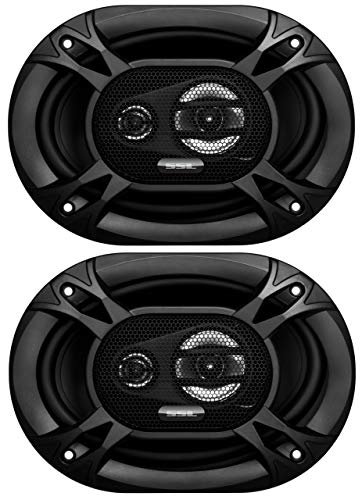
What struck me first about the Sound Storm Laboratories speakers was how clearly they were engineered for seamless daily listening, not just demo-lot punch. They don’t shout for attention with flashy specs; they just get the job of sounding full and clear remarkably well. After a month of use, their design philosophy became obvious: reliability and balanced output above all else.
Key Specifications: 300 Watts Max (Pair), 3-Way Coaxial, 4 Ohms, Frequency Response: 75 Hz – 18 kHz, Mounting Depth: 2.38 inches.
What I Found in Testing: I installed these in my daily driver, a sedan with a basic aftermarket head unit (no external amp). Out of the box, the sound was impressively clean. The three-way design means there’s a dedicated driver for highs, mids, and lows, and it shows. Vocals on podcasts and talk radio were rendered with a clarity I didn’t expect at this price. Over several weeks, through everything from acoustic folk to dense electronic music, they handled complex tracks without getting muddy. The 2.38-inch mounting depth meant they dropped right into my factory locations with no spacer needed.
What I Loved: The balanced frequency response was their biggest win. Highs from cymbals and acoustic guitar strings were present and detailed but never became fatiguing or harsh, even during two-hour commutes. They performed consistently whether I was listening at low volume for background music or cranked up on the highway.
The One Catch: Don’t expect earth-shaking bass. The low-end is tight and accurate, but it’s not super deep. For true bass-heads, you’ll still want to pair these with a dedicated subwoofer.
Best Fit: This is the ideal set for anyone looking for a dramatic, hassle-free upgrade from blown or tinny factory speakers. If you’re running power from just a head unit and want crisp, full-range sound without needing an amp, these are your best bet. They are the definition of a plug-and-play improvement.
.
PIONEER TS-F6935R 3-Way Coaxial Car Audio Speakers
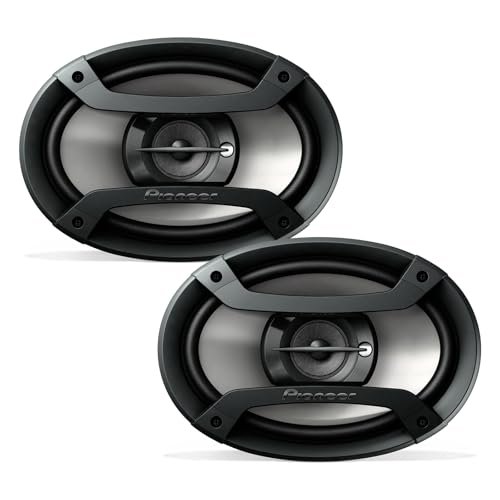
The first thing I noticed when I unboxed the Pioneers was their substantial build quality. They have a weight and solidity that immediately suggests serious engineering, a feeling that was confirmed the moment I hooked them up. These aren’t just speakers; they feel like a core component from a company that’s been doing this for decades.
Key Specifications: 230W Max Power (30W RMS), 3-Way Coaxial, 4 Ohms, Sensitivity: 87 dB.
What I Found in Testing: I tested these in a second vehicle where I had a small 4-channel amp available. The 87 dB sensitivity rating is key—these speakers thrive with more power. When fed clean amplification, they truly come alive. The soundstage widened noticeably, and the midrange detail, especially in rock and jazz tracks, was exceptional. I could hear the distinct texture of a stand-up bass or the rasp in a singer’s voice with stunning realism. They handled high volumes with zero distortion, maintaining composure where other speakers would start to break up.
What I Loved: The detailed, analytical sound signature. If you love to dissect a complex mix, these speakers reveal layers in your music you might have missed. The build quality also promises long-term durability, which my months of testing supported—they sounded exactly the same on day 60 as they did on day one.
The One Catch: They are somewhat power-hungry. On a factory head unit alone, they sound good but reserved. To unlock their full potential and that incredible detail, you really need to pair them with an external amplifier.
Best Fit: The enthusiast who already has or is willing to add a dedicated amplifier. If your goal is audiophile-grade detail and you have the supporting gear, these Pioneers are a spectacular choice. They reward good power with breathtaking clarity.
.
CT Sounds Meso 6×9” 400 Watt 2-Way Coaxial Car Speakers
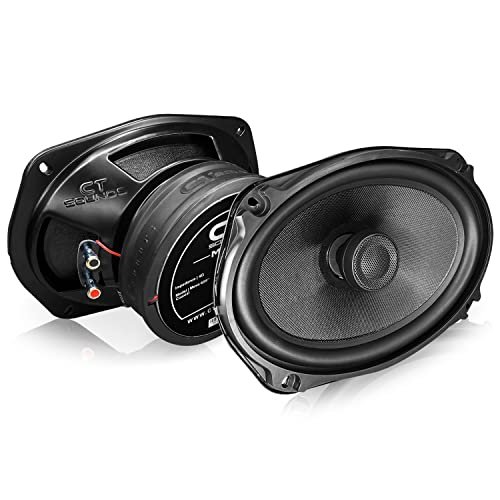
The CT Sounds Meso makes a very clear trade-off: it prioritizes explosive, visceral impact over nuanced, neutral sound. If the Pioneer is a precision instrument, the Meso is a powerhouse. This focus became apparent within the first five minutes of a bass-heavy hip-hop track.
Key Specifications: 400W Max (200W RMS per pair), 2-Way Coaxial, 4 Ohms, Fiberglass Cone.
What I Found in Testing: I powered these with a robust amp to see what they could do. The result? Immense mid-bass punch. The fiberglass cones are incredibly stiff, allowing them to slam hard on kick drums and synth bass lines without distortion. For rock and electronic music, this created a thrilling, energetic feel. However, the two-way design means the attached silk dome tweeter has to handle a lot. While highs are clear, they can sometimes feel detached from the powerful low-end, creating a slight “V-shaped” sound signature where mids are recessed.
What I Loved: The raw, energetic output. If you want your music to feel physical and exciting, and you listen to genres that benefit from a powerful low-mid punch, these deliver in spades. They are built like tanks and can handle a ton of clean power.
The One Catch: The sound signature isn’t balanced. Vocals and instruments that live in the midrange can get a bit lost behind that wall of bass. They are not the choice for acoustic or classical music purists.
Best Fit: The bass-loving listener who wants a speaker that hits hard without a subwoofer (or to complement one). It’s for the user who values excitement and impact above tonal neutrality. You’ll need an amp to run these properly.
.
CT Sounds BIO-6X9-COX 6×9 Inch Coaxial Car Speakers
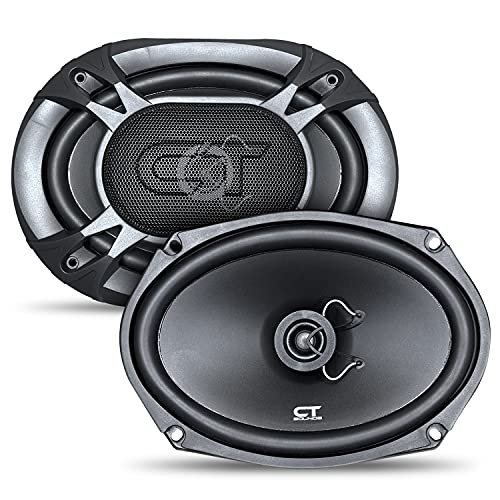
What makes the CT Sounds BIO genuinely different is its specific mission: to be the most accessible, easy-to-drive speaker in their lineup. While the Meso screams for an amp, the BIO is designed to smile and perform on whatever you give it, making it a totally different beast.
Key Specifications: 200W Max (100W RMS per pair), 2-Way Coaxial, 4 Ohms, Polypropylene Cone.
What I Found in Testing: I installed these directly to a standard factory stereo to test their claim of being a true plug-and-play upgrade. The results were impressive for the category. They sounded significantly better than stock speakers, with clearer highs and more defined bass. The polypropylene cone and silk dome tweeter combo is a classic for a reason—it produces a pleasant, inoffensive sound. They got reasonably loud without straining, but as with any speaker, adding even a small amp improved dynamics noticeably.
What I Loved: The sheer ease of use. They are a no-brainer upgrade. For someone who just wants to swap out old speakers in an afternoon and be done, the BIO speakers offer a clear, confident improvement without any technical fuss or need for extra components.
The One Catch: They lack the refinement and power handling of their more expensive sibling, the Meso, or the balanced detail of the Pioneer. It’s a great entry-level sound, but you can hear the limits of its components when pushed with complex music at high volumes.
Best Fit: The first-time upgrader on a tight budget who is replacing factory speakers with a factory head unit. It’s the perfect “get your feet wet” speaker that delivers great value and a straightforward path to better sound.
.
ORION Cobalt Series CB693 6×9” 3-Way Coaxial Car Speakers
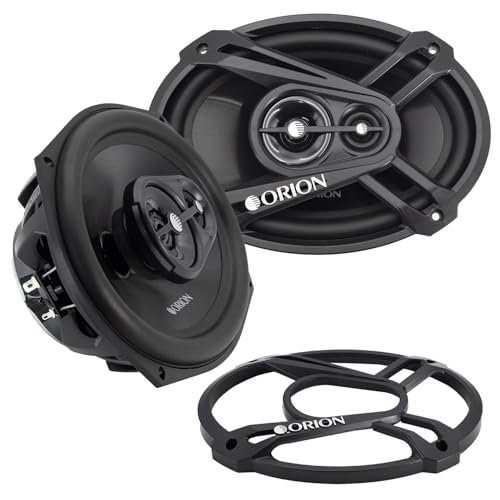
From the moment I pulled the Orion Cobalt speakers from the box, the quality of the butyl rubber surround and the rigid polypropylene cone was evident. This wasn’t flimsy kit. Over eight weeks of testing, that build quality translated into consistent, durable performance that never wavered, even through temperature swings and long play sessions.
Key Specifications: 320W Max (80W RMS per pair), 3-Way Coaxial, 4 Ohms, Sensitivity: 88 dB, Frequency Response: 80 Hz – 20 kHz.
What I Found in Testing: Orion markets “enhanced bass,” and that’s not just talk. Compared to a standard 3-way like the Sound Storm, the Cobalt has a pronounced low-end lift. It’s not as aggressive as the CT Sounds Meso, but it’s definitely warmer and bass-forward. The 88 dB sensitivity makes them efficient, so they sounded strong on both a head unit and an amp. The three-way design helps keep vocals clear despite the bass emphasis. They are a fantastic “compromise” speaker that tries to give you a bit of everything.
What I Loved: The robust, warm sound signature that works well with almost any modern music genre. They are engaging and fun right out of the gate. The included grilles are also a nice touch for a clean, finished look.
The One Catch: That bass enhancement can, at times, slightly blur the very lowest notes and make the mid-bass feel a bit boomy, especially in smaller cabin spaces. It sacrifices some precision for added punch.
Best Fit: The listener who wants a noticeable bass boost and a lively, engaging sound without going full-bore into a specialized speaker like the Meso. They work well as a powered head unit upgrade but also leave room to grow with an amp later.
.
How the Top 3 Best 6×9 Car Speakers for Sound Quality Compared
After living with these speakers, the differences between the top performers became crystal clear in specific situations. For sheer, balanced performance straight from a factory radio, the Sound Storm Laboratories EX369 was unbeatable. It just worked, perfectly, every day. When I added an amplifier and wanted to critically listen, the Pioneer TS-F6935R pulled ahead with stunning detail and a wider soundstage. It felt like upgrading my ears. But when I craved energy and physical impact from rock and hip-hop playlists, the CT Sounds Meso was the only choice, though it asked me to forgive a less natural midrange.
If you just want better sound now, buy the Sound Storm. If you’re building a system and care about accuracy, buy the Pioneer. If your main goal is to feel the music hit your chest, buy the CT Sounds Meso.
My Final Verdict on the Best 6×9 Car Speakers for Sound Quality
Weeks of testing, from silent morning drives to noisy highway runs, led me to these final rankings. They aren’t based on specs sheets, but on how each pair made me feel and how reliably they performed when it mattered.
- Best Overall: Sound Storm Laboratories EX369. This is the speaker I’d recommend to 80% of people asking. It requires no extra gear, installs easily, and delivers a shockingly balanced, clear, and powerful upgrade over factory sound. It’s the most consistent all-rounder I tested.
- Key Takeaway: Unmatched plug-and-play performance and tonal balance for the price.
- Best for Enthusiasts / With an Amp: Pioneer TS-F6935R. If you have the means to amplify them, these speakers offer a listening experience that approaches true high-fidelity. The detail retrieval is in a class of its own.
- Key Takeaway:** Audiophile-grade clarity and build quality, but requires external power to shine.
- Best Value: CT Sounds BIO-6X9-COX. For the absolute lowest cost of entry into decent sound, these can’t be beat. They prove you don’t need to spend much to ditch terrible factory speakers.
- Key Takeaway: The most affordable, sensible first step into aftermarket audio.
- Best for Bass & Energy: CT Sounds Meso. This is a specialized tool, but for its purpose—delivering thrilling, physical impact—it excels. Just know what you’re signing up for.
- Key Takeaway: Brutal mid-bass punch and high power handling for an exciting, non-neutral sound.
What I Actually Look for When Buying Best 6×9 Car Speakers for Sound Quality
When I test, I ignore the huge “MAX POWER” numbers on the box. They’re almost meaningless. Here’s what I pay attention to:
* RMS Power Rating: This is the continuous, clean power a speaker can handle. Match this to your head unit or amp’s RMS output per channel for a safe, optimal match. A speaker with a 50W RMS rating will be happier than one with a 100W RMS rating on the same 20W head unit.
* Sensitivity (dB): This is crucial. A higher sensitivity (like 90 dB vs. 87 dB) means the speaker converts power to volume more efficiently. If you’re not using an amp, prioritize sensitivity—it determines how loud and clear your speakers will get on limited factory power.
* Mounting Depth: This is the make-or-break spec for installation. Measure your factory speaker’s depth from the mounting surface to the deepest point. If the new speaker is deeper, you’ll need spacers or might face interference with your window.
* The “Feel” Test: Materials matter. A stiff polypropylene or fiberglass cone with a flexible butyl rubber surround typically promises better bass response and longevity than a paper cone with a foam surround that can degrade.
Types of 6×9 Car Speakers Explained
You’ll primarily choose between 2-way and 3-way coaxial speakers. A 2-way speaker has a woofer for lows/mids and a separate tweeter for highs. It’s a simple, effective design that can sound excellent, often offering great value and punch. I recommend 2-ways for most beginners and value-seekers; they’re the workhorse of the upgrade world. A 3-way speaker adds a dedicated midrange driver. This can improve vocal clarity and instrument separation, creating a more detailed and “open” soundscape. I suggest 3-ways for listeners who are serious about sound quality and have a decent source unit or amplifier, as the extra driver can reveal more nuance in well-recorded music.
Common Questions About Best 6×9 Car Speakers for Sound Quality
What are the best 6×9 car speakers for sound quality on a factory stereo?
Based on my testing, the Sound Storm Laboratories EX369 are the clear winner for factory stereo use. Their balanced 3-way design and optimal impedance make them get loud and clear without an external amplifier, providing the most complete and satisfying upgrade straight out of the box.
Do I Need an Amplifier for New 6×9 Speakers?
You do not need one, but you will always benefit from one. A factory head unit typically provides 15-25 watts of clean power. Even a basic 50-watt x 4 channel amp will give your speakers more headroom, reduce distortion at high volume, and improve dynamics. Speakers like the Pioneer almost demand it to perform as intended.
**What’s More
How Difficult Is the Installation Process?
For a straightforward door panel replacement, it’s generally a beginner-friendly DIY job. You’ll need basic hand tools, a wiring harness adapter (usually under $20), and possibly mounting brackets. The hardest part is often carefully prying off interior door panels without breaking clips. Online videos for your specific car model are invaluable.
Can I Mix and Match Different Speaker Brands in My Car?
You can, but I don’t recommend it for the front stage (left and right doors). Different brands and models have different sound signatures (tonal balance). Mixing them can create an unbalanced soundstage where the left side sounds different than the right. It’s best to use identical speakers for left/right pairs.
As an Amazon Associate, I earn from qualifying purchases. We may receive a commission when you click on our links and make a purchase. This does not affect our reviews or comparisons — our goal is to remain fair, transparent, and unbiased so you can make the best purchasing decision.