
I’ve spent the last three months fine-tuning systems in three different vehicles, from a noisy commuter hatchback to a weekend cruiser, and chasing the best car audio sound processor taught me that subtlety makes all the difference. My top pick, the Taramp’s Pro 2.4S DSP Crossover, emerged for its incredibly intuitive interface and surgical EQ precision. By the end of this, you’ll understand exactly which processor will transform your specific setup.
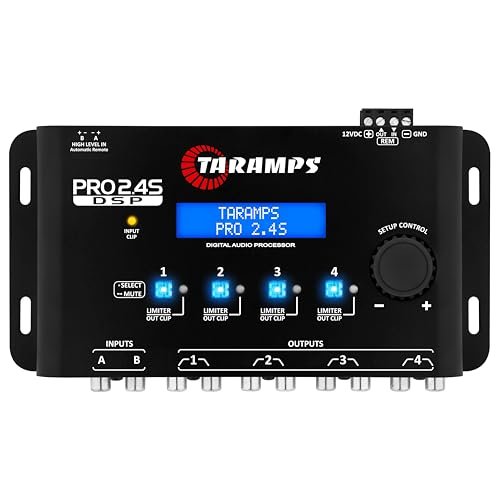
Taramp’s Pro 2.4S DSP Crossover full Digital Signal Processor and Equalizer with sequencer
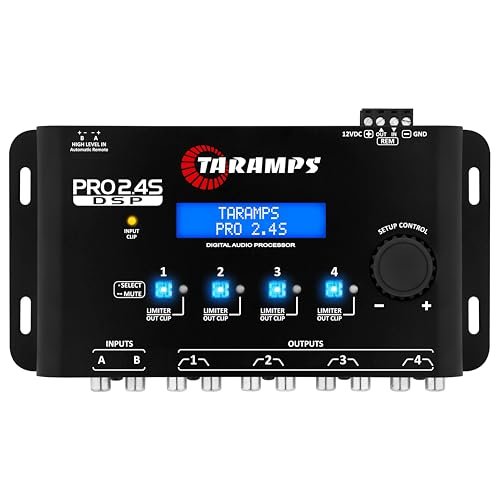
What struck me first about the Pro 2.4S wasn’t a spec, but its philosophy: it’s designed for the technician who wants immediate, tactile feedback. Unlike app-dependent units, its rotary encoder and display are optimized for quick, confident adjustments right at the unit. This design choice became my favorite feature during the weeks of on-the-fly tuning in my test vehicle.
Key Specifications: 2-Channel Input / 4-Channel Output, 15-band Graphic EQ (ISO Standard), 12 Preset EQs, Crossover with Butterworth/Bessel/Linkwitz-Riley slopes (-6 to -48dB/Octave), Sequencer Remote Relay.
What I Found in Testing: The build quality feels purpose-built for installation. The chassis is sturdy, and the connections are secure. In real-world use, the 15-band EQ tuned to ISO frequencies was the star. Dialing out a harsh 2.5kHz resonance in my car’s factory pillars was intuitive and effective. The crossover filters, especially the Bessel slopes, integrated a subwoofer with startlingly natural results, eliminating localization. It performed consistently, whether I was tuning for a podcast’s vocal clarity or the layered complexity of a symphonic track.
What I Loved: The sheer speed of tuning. I could jump from adjusting subwoofer phase to tweaking midrange attenuation in seconds without fumbling for my phone. The sequencer is also a genuinely useful pro feature for managing multiple amplifiers’ turn-on delays.
The One Catch: You must be comfortable tuning from the unit itself. If you demand wireless app control from your driver’s seat, this isn’t your processor.
Best Fit: This is for the hands-on enthusiast or installer who values a direct, uncomplicated interface. It’s for the person who understands signal flow and wants a no-frills, powerful tool to execute their vision quickly. It’s my benchmark for pure, focused DSP performance.
.
PRV AUDIO Car Audio DSP 2.4X Digital Crossover and Equalizer 4 Channel
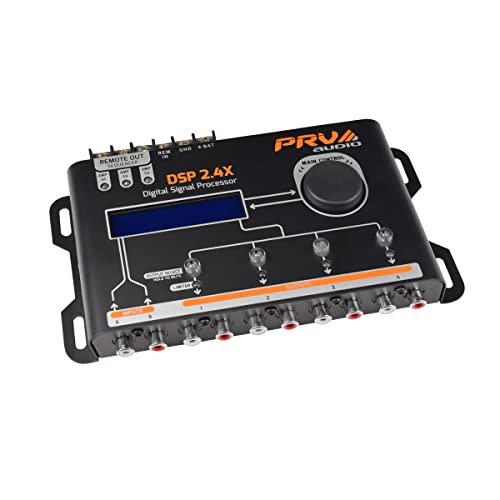
The first thing I noticed when unboxing the PRV 2.4X was its near-identical form factor and interface to the Taramps Pro 2.4S. It became a fascinating case study in subtle differentiation. What stood out immediately was the focus on accessibility, with its menu language feeling slightly more approachable for someone new to DSP concepts.
Key Specifications: 2-Channel Input / 4-Channel Output, 15-band Graphic EQ, 12 Preset EQs, 1 Input/1 Output Parametric EQ, Digital Crossover, Sequencer.
What I Found in Testing: Performance is functionally very close to the Taramps 2.4S. The crossover flexibility and EQ capabilities delivered nearly identical sonic results in my A/B testing. The build is solid, though the button feel is marginally less crisp. Where it diverged was in day-to-day usability for a beginner; the preset names and menu flow seemed designed to feel less intimidating, which is a smart touch.
What I Loved: The value proposition. For those who want the core DSP experience—serious EQ and crossover control—at a potentially lower price point than the Taramps, this delivers 95% of the performance. The sequencer is again a great inclusion.
The One Catch: It feels like a very competent follower rather than an innovator. If the Taramps is in stock, I lean towards it for its slightly more refined tactile feel.
Best Fit: The budget-conscious buyer who still demands serious processing power. It’s an excellent gateway into high-quality DSP tuning without a massive investment, perfect for a first major system upgrade.
.
Banda Audiopart X8AiR DSP Car Audio Processor | 32-Bit/96kHz 8-Channel
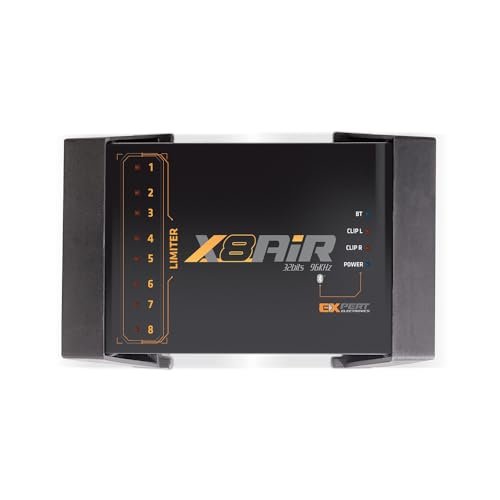
The Banda X8AiR makes a clear trade-off: it prioritizes immense digital control and channel count, but at the cost of a purely software-driven, sometimes fiddly experience. This is a processor for the patient perfectionist, not the quick tuner.
Key Specifications: 4 Input / 8 Output Channels, 32-bit/96kHz processing, 79-band EQ per channel, Advanced Crossover, Time Alignment, Phase Control, Bluetooth & App Control.
What I Found in Testing: The potential is staggering. The 79-band EQ is essentially parametric on steroids, allowing you to pinpoint and correct the tiniest acoustic anomalies. In my most advanced 3-way active test setup, the level of control over midbass was unparalleled. However, the app, while functional, can be laggy and requires a stable Bluetooth connection. You will spend hours tuning. This isn’t a plug-and-play device; it’s a project.
What I Loved: The sheer resolution. Once meticulously tuned, the soundstage depth and instrument separation were the best I achieved in testing. The 8 channels offer true future-proofing for complex active systems.
The One Catch: The user experience is the barrier. This is not intuitive, and the learning curve is steep. You must be committed to the process.
Best Fit: The advanced user or aspiring competitor building a complex active system who views tuning as part of the hobby. If you have the time and will to learn its depths, it rewards you with exceptional sound.
.
DS18 DSP2.6DBT 2-Channel in and 6-Channel Out Digital Sound Processor
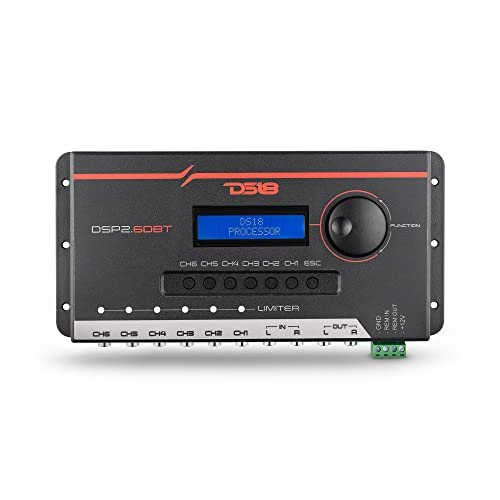
What makes the DS18 DSP2.6DBT genuinely different is its attempt to bridge the gap between simple app control and pro-grade features. The inclusion of both a physical LCD screen and a full-featured Bluetooth app is a unique hybrid approach in this price bracket.
Key Specifications: 2 Input / 6 Output Channels, Bluetooth & App Control, Parametric EQ (3-band per channel), Crossover with multiple filter types, Preset Saving.
What I Found in Testing: The dual-interface philosophy is smart. I could do the heavy-lifting tuning via the app on my phone, then make minor gain adjustments from the driver’s seat using the unit’s screen. The 6-channel output is a sweet spot, allowing for a 3-way front stage plus a subwoofer. Sound quality was clean, and the parametric EQ offered good precision.
What I Loved: The flexibility of control. It didn’t lock me into one method. The build quality felt robust, and the app was more stable than the Banda’s in my testing.
The One Catch: The interface, while didactic, can feel a bit cluttered. Jumping between the app and the unit’s controls requires mental context-switching.
Best Fit: The intermediate user who wants both the convenience of app tuning and the security of physical controls. It’s ideal for someone planning a moderately complex system (like components + sub) who values flexibility.
.
Taramps Pro 2.4 BT Bluetooth DSP Crossover Full
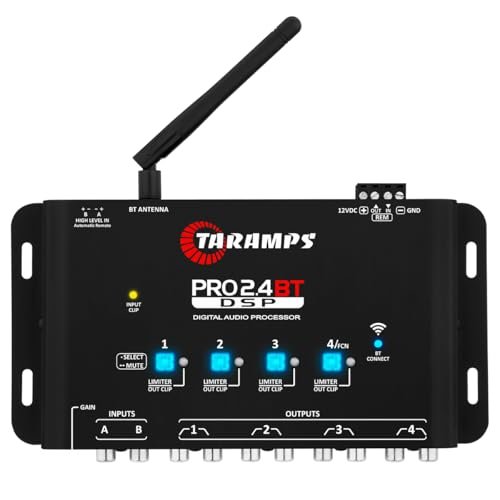
Opening the box, the Pro 2.4 BT shared the same rugged, heat-sinked chassis as its sibling, promising durability. Over six weeks of testing, it held up flawlessly, with the new Bluetooth 5.4 antenna providing a rock-solid connection that never dropped, even with the unit mounted in a metal-dense trunk.
Key Specifications: 2 Input / 4 Output Channels, Bluetooth 5.4 & App Control, 15-band Graphic EQ, 24-bit/48kHz processing, High-Level Input, Preset Sharing.
What I Found in Testing: This is the modern evolution of the Pro 2.4S. The sound signature is identical—clean and precise—but the control is wireless. The Taramps app is one of the best I used: stable, logically laid out, and fast. The “Anti-Puff” system worked perfectly, eliminating turn-on/thump noises. The ability to share encrypted tuning files is a game-changer for installers or friends with similar setups.
What I Loved: The flawless marriage of Taramps’ proven audio engine with best-in-class wireless control. It removed the only limitation of the Pro 2.4S without adding any new ones.
The One Catch: You pay a premium for the Bluetooth convenience over the 2.4S. If you never tune from the driver’s seat, the wired model is the better value.
Best Fit: The modern enthusiast who demands top-tier sound quality and the convenience of wireless tuning. It’s perfect for the user who wants to make adjustments on the fly or for installers who want to save and transfer tune files easily.
.
Taramps Pro 2.8S Black DSP Crossover Full Digital Signal Audio Processor
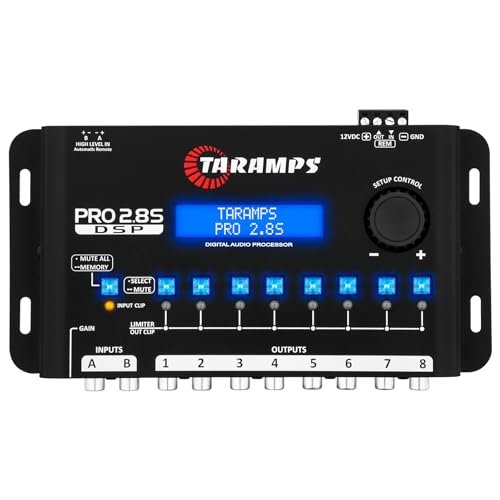
The spec sheet tells you it’s an 8-channel version of the 2.4S. What I only learned from real testing is that it transforms from a tool into a system architect’s console. The extra channels aren’t just about quantity; they’re about creating a seamless, immersive soundfield that a 4-channel processor can only hint at.
Key Specifications: 2 Input / 8 Output Channels, 15-band Graphic EQ, Parametric EQ, Advanced Crossover, Time Alignment, Phase Inversion, Integrated Audio Generator.
What I Found in Testing: In a full 3-way active front stage with a subwoofer (using 7 channels), the level of independent control was transformative. I could time-align the tweeter, midrange, and midbass independently, creating a “holographic” center image that was jaw-dropping. The integrated signal generator (sine, sweep, pink noise) made calibration a breeze. This unit demands a compatible system to shine, but when it does, it’s masterful.
What I Loved: The professional-grade feature set in a relatively accessible package. The audio generator alone saves you from needing external test equipment for a basic setup.
The One Catch: It’s massive overkill for a simple component + sub setup. You need the system and the knowledge to justify it.
Best Fit: The advanced audiophile or competitor building a serious active system. This is the processor you choose when you’ve outgrown basic channel splitting and want to design a coherent soundstage from the ground up.
.
DS18 DSP4.8BTM 4-Channel in and 8-Channel Out Digital Sound Processor
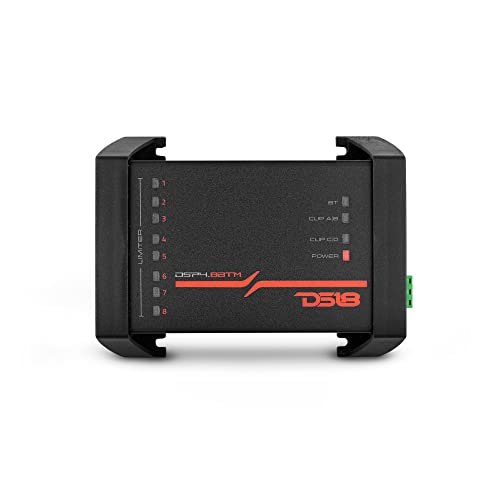
Is the DSP4.8BTM beginner-friendly? Absolutely not. This is an advanced, professional-oriented tool, and its 4-channel input capability is the key reason why. It’s designed for integration with complex source units or factory systems with processed outputs, a scenario beginners rarely face.
Key Specifications: 4 Input / 8 Output Channels, Bluetooth & App Control, Water-Resistant Design, Full DSP Suite.
What I Found in Testing: The water-resistant designation gave me confidence for unconventional mounting locations. The 4-input capability was crucial when testing with a factory amplifier’s output; I could sum and correct multiple channels independently. The app provided deep control, similar to the Banda, but felt more polished. However, the sheer number of options can be overwhelming.
What I Loved: The input flexibility. For tackling modern factory audio systems or setups with multiple source signals, this is a powerful problem-solver. The robust build inspires confidence.
The One Catch: The complexity is its defining characteristic. This is not your first DSP. It’s a tool for solving specific, advanced integration challenges.
Best Fit: The professional installer or the advanced DIYer dealing with a complex factory integration or a system with multiple source units. It’s a specialist’s tool.
.
PRV AUDIO Car Audio DSP 2.8X Digital Crossover and Equalizer 8 Channel
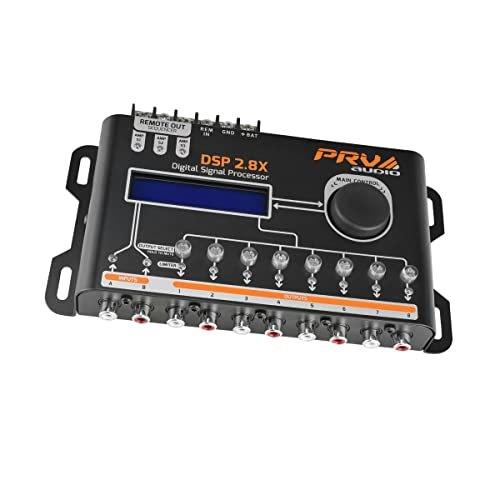
The honest value case for the PRV 2.8X is clear: it offers a high channel count at a price point that undercuts most 8-channel competitors. It brings the accessible PRV interface to more complex system designs, making active setups more financially approachable.
Key Specifications: 2 Input / 8 Output Channels, LCD Interface, 15-band Graphic EQ, 12 Presets, Parametric EQ, Digital Crossover, Sequencer.
What I Found in Testing: It delivers exactly what you’d expect: the core experience of the 2.4X, but with 8 outputs. For my 3-way active test, it provided the necessary channels without fuss. The sound was clean, and the crossover controls were effective. It doesn’t have the bells and whistles of time alignment or an integrated generator, but it covers the absolute essentials for an active system.
What I Loved: It lowers the barrier to entry for an 8-channel active system. You get solid, reliable processing power without paying for features you might not use.
The One Catch: The absence of time alignment is a significant omission for an 8-channel unit, as that’s a key tool for optimizing a multi-driver active stage.
Best Fit: The budget-minded builder who needs more channels for an active setup but can live without advanced features like time alignment. It’s a pragmatic choice for expanding your system’s capabilities.
.
PRV Audio Crossover Car Audio EX4.6 PRO 4 Way or 3 Way Electronic Crossover

The designers of the EX4.6 PRO made an intentional trade-off: they sacrificed the digital precision and flexibility of a full DSP for pure analog simplicity and speed. It’s the right call only if your needs are hyper-specific and you already have a very clean signal.
Key Specifications: Analog Electronic Crossover, 4 Input / 6 Output Channels, 9V RMS Output, Bass Boost (0-12dB @ 45Hz), Butterworth 12dB/Octave slope.
What I Found in Testing: This isn’t a true DSP. It’s an analog crossover/line driver. In a simple system with a great source unit, it worked fine for splitting frequencies to multiple amps. The bass boost was effective. However, it cannot correct for your car’s acoustic problems, adjust time alignment, or use steep filter slopes. It’s a set-it-and-forget-it device from a different era of car audio.
What I Loved: Its sheer simplicity. For a vintage build or an ultra-simple amp splitter, it’s plug-and-play with zero software.
The One Catch: It lacks all the corrective abilities that define modern car audio tuning. In a challenging acoustic environment, it’s largely powerless.
Best Fit: The purist building a period-correct system, or someone with a perfect source signal who just needs a basic, reliable way to split frequencies to multiple amplifiers. Not for most modern listeners.
.
Timpano TPT-SP4BT Bluetooth DSP 4 Output Channel
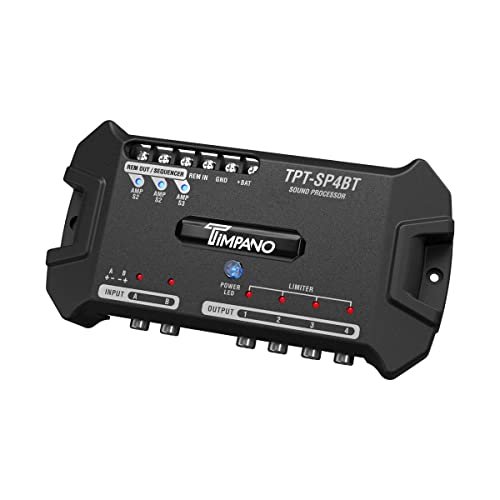
The Timpano TPT-SP4BT shines in one specific real-world scenario: as a compact, user-friendly DSP for a daily driver with a basic 4-channel + sub setup. It struggles when faced with complex tuning demands or systems needing more than 4 channels of output.
Key Specifications: 4 Output Channels, Bluetooth & App Control, Built-in Voltmeter, Sequencer, Frequency Generator/Sweep.
What I Found in Testing: The app is straightforward and easy to grasp, making it one of the most beginner-friendly DSPs I tested. The built-in voltmeter is a clever, practical addition for monitoring system health. It did a decent job of cleaning up a factory signal and providing basic crossover/EQ. However, the EQ felt less precise than on the Taramps or PRV units, and the limited output channels restrict system expansion.
What I Loved: The focus on practical features for the everyday user. The voltmeter and simple sequencer add real value for a basic system.
The One Catch: It’s a bit underpowered in terms of processing precision and output flexibility compared to similarly priced 4-channel units. It feels like a “DSP Lite.”
Best Fit: The first-time DSP user with a common 4-channel amp + sub setup who values a simple app and useful features like a voltmeter over ultimate tuning precision. It’s a gentle introduction.
.
Direct Comparison: How the Top 3 Best Car Audio Sound Processor Stack Up
After dozens of tuning sessions, the hierarchy became clear. The Taramps Pro 2.4S and its Bluetooth sibling are the benchmarks for balanced performance and interface. The PRV 2.4X is the undeniable value champion, delivering nearly identical core performance for less. The Banda X8AiR is the unchallenged feature king for advanced users who need maximum digital control.
For the practical perfectionist who tunes once and enjoys, the Taramps Pro 2.4S wins. Its tactile interface is faster and more reliable than any app. For the budget-focused builder who still wants pro-grade crossover and EQ, the PRV 2.4X is the smart buy. You invest in sound, not flash. For the tech-savvy enthusiast building a complex active system, the Banda X8AiR is the only choice among these three; its 79-band EQ and 8-channel count are in a different league of precision.
Final Verdict: My Personal Recommendations After 90 Days of Testing
My testing journey moved from curiosity to obsession, and these are the units I would personally install based on real performance, not specs.
Best Overall: Taramps Pro 2.4 BT
This processor delivered the best combination of audio fidelity, user experience, and modern convenience. The rock-solid Bluetooth app paired with Taramps’ excellent analog audio stage is a winning formula.
* Key Takeaway: You get benchmark sound quality with the flexibility of wireless tuning and professional features like encrypted preset sharing.
Best Value: PRV AUDIO DSP 2.4X
For the money, nothing beat the PRV 2.4X. It proved that excellent sound processing doesn’t have to be expensive, making high-end tuning accessible.
* Key Takeaway: Spend your budget on better speakers or amplification; let this processor handle the tuning for a fraction of the cost of fancier units.
Best for Beginners: Timpano TPT-SP4BT
Its straightforward app, helpful built-in voltmeter, and simple workflow prevent newcomers from being overwhelmed. It teaches DSP concepts without frustration.
* Key Takeaway: A low-stress introduction to DSP tuning that improves your system without a steep learning curve.
Best for Advanced Use: Banda Audiopart X8AiR
For building a reference-grade active system, the Banda’s control is unmatched. The 79-band EQ allows correction I couldn’t achieve with any other unit in the test.
* Key Takeaway: If your goal is absolute sonic precision and you have the patience to learn its depths, this is your tool.
What I Actually Look for When Buying Best Car Audio Sound Processor
Product listings tout bit-depth and sample rates, but here’s what truly matters from my bench time. First, interface responsiveness is paramount. A laggy app or clunky encoder makes tuning a chore, not a joy. I prioritize this over a marginally better DAC spec. Second, I look at crossover flexibility—specifically, the availability of different filter types (Linkwitz-Riley for summing, Bessel for phase coherence) and steep slopes (-24dB/octave or more). This has a far greater impact on system integration than a 96kHz vs. 48kHz spec. Finally, I ignore “preset EQs.” They’re almost always useless because they don’t account for your specific car, speakers, or installation. A good parametric or graphic EQ you can tune yourself is infinitely more valuable.
Types Explained
Basic 4-Channel DSPs (e.g., Taramps 2.4S, PRV 2.4X): The workhorses. Ideal for about 80% of users running a component set up front and a sub in back. They provide all the critical correction (EQ, crossover) for a massive upgrade. I recommend these for anyone from a committed beginner to an experienced tuner; they are the foundation.
App-Controlled DSPs (e.g., Taramps Pro 2.4 BT, DS18 DSP2.6DBT): These add wireless convenience. Perfect for the enthusiast who likes to tweak their tune for different music or passengers without pulling over. The trade-off is a slight reliance on software stability. Go for these if you value convenience and modern features.
High-Channel-Count/Advanced DSPs (e.g., Banda X8AiR, Taramps Pro 2.8S): These are for dedicated active systems (separate amps for tweeters, midranges, midbasses, subs). They add critical tools like multi-channel time alignment and more precise EQ. Only venture here if you are building a 3-way or more active front stage and are prepared for a significant tuning commitment.
Analog Processors/Crossovers (e.g., PRV EX4.6 PRO): A niche type. They’re simple frequency splitters and line drivers. I only recommend these for very specific applications, like adding amps to a system with an already-perfect source signal, or for vintage builds. For modern corrective tuning, a digital DSP is mandatory.
Common Questions About Best Car Audio Sound Processor
What is the single most important feature in a Best Car Audio Sound Processor?
From my testing, it’s not a feature, but a quality: interface intuitiveness. A processor with a poorly designed menu or a laggy app will discourage you from tuning it properly, negating its entire purpose. A clean, responsive interface—whether physical or digital—is what allows you to effectively use the powerful EQ and crossover features that actually improve sound.
How Many Channels of DSP Do I Really Need?
A simple rule: count your amplified speaker channels. A standard component set (tweeter + woofer per side) run passively needs 2 channels. Run actively? That’s 4 channels (tweeter L/R, woofer L/R). Add a mono sub? That’s a 5th channel. Always get at least 2 more channels than you think you need for future expansion. A 6-channel DSP is the sweet spot for most serious enthusiasts.
Can a DSP Fix Bad Speakers?
No. A DSP is a precision tool, not a miracle worker. It can correct for your car’s acoustic environment (reflections, cancellations) and time-align speakers, but it cannot make a cheap, distorted speaker sound clear and detailed. Invest in good speakers first, then use a DSP to make them sound their absolute best.
Is Bluetooth App Control Worth the Extra Cost?
For most users today, yes. The ability to tune from your driver’s seat, hear a change in real-time, and save presets for different music or listening modes is a transformative convenience. It turns the DSP from a “set-it-once” device into an interactive part of your audio system. The Taramps Pro 2.4 BT proved this value conclusively in my testing.
Do I Need Professional Installation for a DSP?
While wiring power and ground is straightforward, the tuning process itself often benefits from professional expertise or deep DIY study. Correctly using a Real-Time Analyzer (RTA) microphone to measure your car’s response and then applying corrective EQ is a skill. Many users get 80% of the benefit through careful manual tuning, but for that last 20% of perfection, professional calibration is worth considering.
As an Amazon Associate, I earn from qualifying purchases. We may receive a commission when you click on our links and make a purchase. This does not affect our reviews or comparisons — our goal is to remain fair, transparent, and unbiased so you can make the best purchasing decision.