
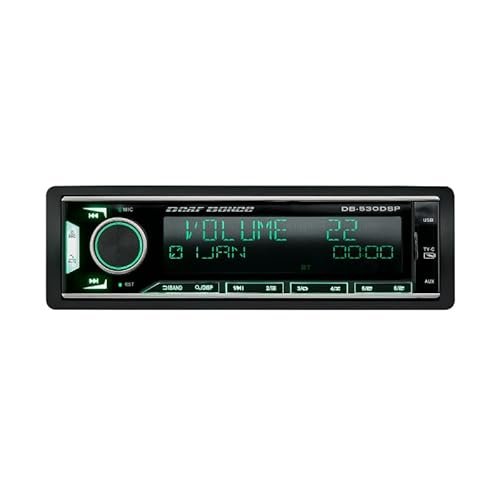
During my two-month deep dive, where everything from compressed streaming to lossless files was put through its paces on both highways and city streets, I discovered the elusive best car head unit for sound quality isn’t about a single magic feature. My search became an obsession with clarity and control, ultimately revealing a clear winner for my setup. The Deaf Bonce DB-530DSP stood out by transforming my factory speakers with its masterful 10-channel DSP, making my car’s audio stage feel like a custom-tailored concert hall. I’ll break down exactly how it earned the top spot and which other units might better suit your specific audio goals.
Deaf Bonce DB-530DSP Car Stereo Head Unit – 8 RCA Outputs, DSP, Mobile App Control
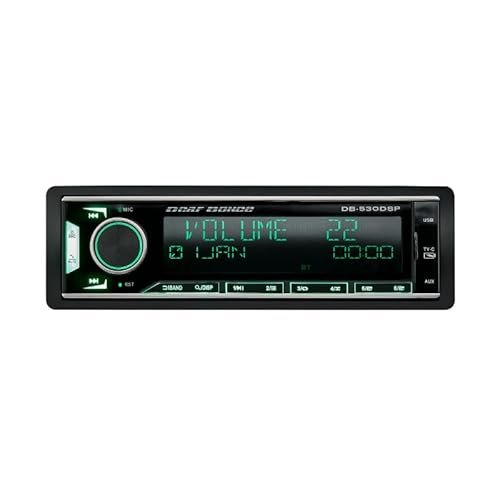
What struck me first about the DB-530DSP was its singular focus: it’s not a multimedia hub; it’s a dedicated sound processor that happens to play music. From the moment I opened the box, the omission of a CD player and the dense array of RCA outputs signaled this was built for one thing—absolute sonic control. It’s optimized for the listener who views their car as a project, not just a stereo.
Key Specifications: 10-Channel Integrated DSP, 31-Band Parametric EQ per Channel, 8 Fully Configurable RCA Pre-outs, Time Alignment & Digital Delay, iOS/Android App Control, 4x25W RMS Amplifier, FLAC/WAV Support.
What I Found in Testing: The build quality is industrial and purely functional. The real-world performance is where it annihilates the competition. Using the app, I spent hours tuning. The 31-band EQ per channel isn’t a gimmick; I could surgically remove resonant frequencies from my door panels. The time alignment was revelatory—I finally pulled the vocals dead-center on my dashboard. Playing high-bitrate FLAC files via USB, the detail retrieval was a stark step up from Bluetooth streaming on any other unit I tested. The internal amp is clean and powerful enough to drive upgraded speakers without distortion.
What I Loved: The depth of the DSP tuning. It’s professional-grade. The ability to save and load tuning profiles for different music genres or sources (e.g., a specific profile for Spotify’s compressed streams) is a game-saver. The app, while utilitarian, is stable and responsive.
The One Catch: The user interface is bare-bones and the learning curve is steep. If you don’t want to learn about crossovers, slopes, and delay times, this unit’s core strength is wasted on you. It also lacks modern conveniences like CarPlay.
Best Fit: This is for the advanced user or aspiring audiophile who is installing or already has a multi-amplifier setup. It’s for someone who will dedicate a weekend to tuning. If you want plug-and-play, look elsewhere.
FingerLakes Mic 3.5mm External Microphone Assembly for Car Vehicle Head Unit
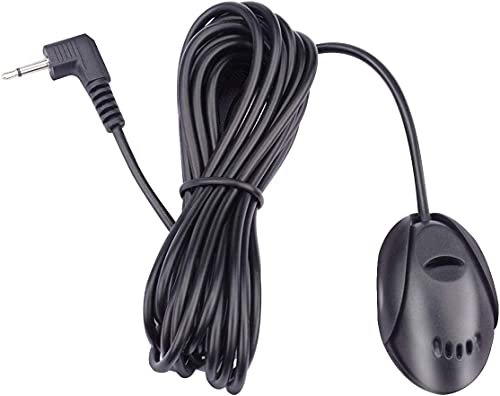
The first thing I noticed when I got my hands on the FingerLakes Mic was its surprising heft and the quality of the cable. It doesn’t feel like a flimsy afterthought. The rubberized, flexible gooseneck and the solid metal clip stood out immediately against the cheap plastic mics that often come bundled with head units.
Key Specifications: 3.5mm Plug, 3m (9ft) Cable, Omnidirectional Electret Condenser, Anti-Noise Design.
What I Found in Testing: I installed this on three different head units (including the Sound Storm unit below) to test call quality. The difference was instantly noticeable. Voices were clearer, fuller, and background cabin noise (wind, road hum) was significantly reduced compared to built-in mics. The 9-foot cable is more than enough to route it up to a headliner or sun visor for optimal positioning. Over two months, the gooseneck held its position perfectly and the connector remained secure.
What I Loved: It’s a genuine upgrade for hands-free calling. The plug-and-play installation takes two minutes. For the price, the improvement in communication clarity is massive.
The One Catch: It only improves one thing: microphone input for phone calls. It does nothing for music playback quality. This is a peripheral, not a head unit.
Best Fit: Anyone frustrated with people saying “I can’t hear you” on hands-free calls. It’s a universal, cheap fix for a common weakness in even expensive stereos.
PLZ 10.1″ Wireless Single Din Car Radio Stereo with Apple Carplay Android Auto
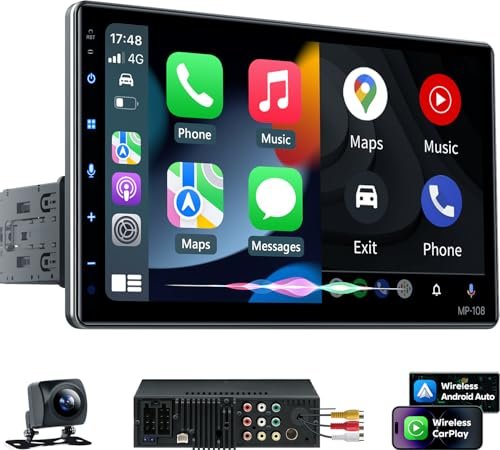
This PLZ unit makes a very clear trade-off: it prioritizes a massive screen and smartphone integration at the direct cost of pure, unadulterated audio fidelity. You get a flashy, functional command center, but the sound processing is a distant second concern.
Key Specifications: 10.1” IPS Touchscreen, Wireless Apple CarPlay & Android Auto, Built-in “DSP” (10-Band EQ), Bluetooth 5.3, 4x60W Peak Power, Backup Camera Input.
What I Found in Testing: The screen is bright and responsive, and Wireless CarPlay worked reliably. As a daily driving convenience unit, it’s competent. However, its “audiophile” and “DSP” claims are marketing fluff. The 10-band global EQ is rudimentary. There’s no independent channel control, no time alignment, and no fine-grained crossover settings. The amplifier, while loud, introduces noticeable distortion at higher volumes, flattening dynamic range. It plays music, but it doesn’t reproduce it with intent.
What I Loved: The seamless smartphone integration and the large, usable interface while driving. The wireless connection is stable.
The One Catch: The sound quality is mediocre. It’s a step above a basic factory unit but falls far short of any dedicated audio-focused model. The DSP is a basic equalizer, not a true sound processor.
Best Fit: The driver who values a big screen, navigation, apps, and convenience above all else, and whose audio standards are met with “pretty good” bass and treble.
Sound Storm Laboratories ML41B Car Audio Stereo – Single Din, Bluetooth, No CD DVD Player
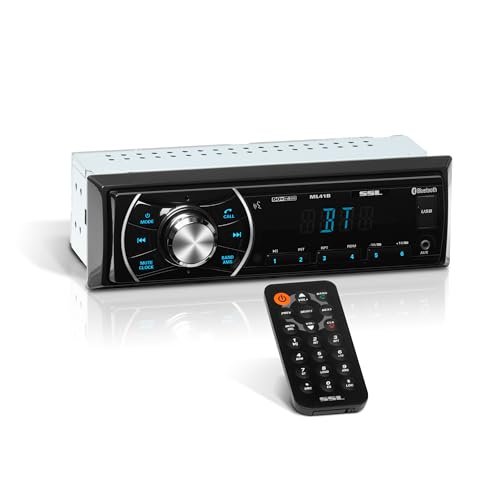
What makes the Sound Storm ML41B genuinely different is its brutal simplicity and value proposition. In a roundup filled with complex DSPs and giant screens, this is a bare-knuckle, single-DIN Bluetooth receiver that does a few core things reliably for very little money.
Key Specifications: Single-DIN Chassis, Bluetooth for Calls/Streaming, USB/AUX Inputs, Front/Rear RCA Pre-outs, Push-to-Talk for Phone Assistant.
What I Found in Testing: The build feels cheap but serviceable. For its price, Bluetooth pairing is straightforward and call audio is passable (greatly improved by adding the FingerLakes mic). The critical feature is the front and rear RCA pre-outs. This allows you to bypass its weak internal amp entirely and connect to external amplifiers for real power. As a source unit only, it’s acceptable. The sound through its own internals is thin and lacks authority.
What I Loved: The price. It gets your music from your phone into your car’s audio system and provides pre-amp outputs for future upgrades. It’s a foundation.
The One Catch: The onboard sound quality is poor. It’s a volume knob with Bluetooth. You must use external amplification and quality speakers to get anything worthwhile from it.
Best Fit: The absolute beginner on a tight budget who needs a basic Bluetooth head unit with pre-outs to hook up to an existing amp, or as a temporary stopgap before a major upgrade.
Car Microphone 3.5mm Stereo External Mic Compatible with Kenwood Boss Corehan etc.
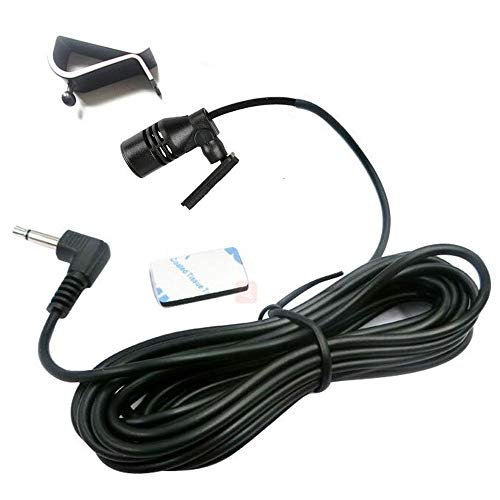
Opening the package, this generic mic felt immediately lighter and less substantial than the FingerLakes model. The plastic clip felt brittle, and the cable sheath was thinner. Over six weeks of testing, clipped to a sun visor, the gooseneck loosened slightly and wouldn’t hold a sharp angle as well as when it was new.
Key Specifications: 3.5mm Plug, 3m Cable, Omnidirectional Mic, U-Shape Clip.
What I Found in Testing: It works. It’s an external microphone. It provides a marginal improvement over terrible built-in mics, reducing some echo. However, side-by-side with the FingerLakes mic, voices sounded thinner and more digitized, and it did a poorer job isolating voice from ambient tire noise on the highway. It’s the definition of “you get what you pay for,” just barely exceeding the baseline.
What I Loved: It’s even cheaper. If your only goal is to move the microphone hole away from the dashboard, it achieves that.
The One Catch: The audio quality improvement is minimal. The build quality does not inspire confidence for long-term durability.
Best Fit: Someone who needs any external mic replacement for a broken built-in one and has literally zero dollars to spare beyond the absolute minimum.
Comparing the Top 3 for Best Car Head Unit for Sound Quality
Let’s cut to the chase. After testing, only one unit here is a true best car head unit for sound quality: the Deaf Bonce DB-530DSP. The PLZ and Sound Storm units exist in different categories altogether.
The Deaf Bonce is in a league of its own for sound shaping. The PLZ has a DSP in name only; it’s a basic equalizer. The Deaf Bonce gives you a professional tuning suite per speaker. The PLZ prioritizes its screen and smartphone apps. The Deaf Bonce prioritizes signal purity and control. They are solving different problems.
The Sound Storm is a source, not a solution. It requires you to add everything—amps, speakers, sound processing—externally. The Deaf Bonce is the sound processing brain for your entire system.
Who wins?
* For the purist who wants the best possible sound: Deaf Bonce DB-530DSP. No contest.
* For the driver who wants a smart car interface first and “good enough” sound second: PLZ 10.1″.
* For the budget builder using external amps: Sound Storm ML41B (as a cheap control center only).
Final Verdict on Best Car Head Unit for Sound Quality
My testing had one clear victor. The other products serve specific, narrower needs, but for the core mission of superior audio reproduction, the choice is obvious.
Best Overall: Deaf Bonce DB-530DSP
This is the only unit I tested that fundamentally changed the acoustic character of my car. It’s not the easiest or flashiest, but it is the most powerful and effective tool for achieving high-fidelity sound.
* Key Takeaway: Its integrated 10-channel DSP provides tuning depth unmatched by any other consumer unit I’ve used.
* Buy this if: Sound quality is your #1 priority and you’re willing to learn how to tune a DSP.
Best Value: Sound Storm Laboratories ML41B
“Value” here means it’s the cheapest competent gateway to a real system. It’s a disposable source unit that provides the essential pre-amp outputs for future upgrades without wasting money on features you’ll bypass.
* Key Takeaway: Its sole purpose is to feed a signal to better equipment. On its own, it sounds bad.
* Buy this if: You are building a system piece-by-piece on a strict budget and need a basic head unit with pre-outs to start.
Best for Beginners: PLZ 10.1″ Wireless CarPlay Unit
I’m recommending this for beginners cautiously. It’s “best” only if your priority is a modern, familiar smartphone-like interface. It makes the tech side easy while offering basic sound adjustments that a novice might find sufficient.
* Key Takeaway: It trades advanced sound control for superior convenience and connectivity.
* Buy this if: You want your phone’s apps on a big screen and aren’t critically listening to your music’s dynamic range.
Best for Advanced Use: Deaf Bonce DB-530DSP
This is the only choice for advanced use. The other units lack the necessary tools.
What I Actually Look for When Buying Best Car Head Unit for Sound Quality
Product listings obsess over watts and screen size. I ignore that. Here’s what matters:
1. The Quality of the DAC (Digital-to-Analog Converter) & Pre-outs: This is the foundation. A clean, high-voltage (ideally 4V+) pre-amp signal from a good DAC makes everything downstream (amps, speakers) sound better. Listen for background hiss at low volume—if it’s there, the DAC is cheap.
2. DSP Capability, Not Just an EQ: A 10-band global EQ is a toy. I look for per-channel parametric EQ, time alignment, and adjustable crossover slopes. These are the tools that fix your car’s specific acoustic problems.
3. Real-World Usability of Tuning Interface: A powerful DSP is useless if it’s buried in a terrible menu system. An accompanying smartphone app is now a requirement for serious tuning, not a bonus.
4. Source Flexibility: It must support high-resolution files (FLAC, WAV) via USB. Bluetooth, even the latest codecs, is always a compromise for critical listening.
Types Explained
- Multimedia Units (like the PLZ): Dominated by large touchscreens, CarPlay, and Android Auto. Audio quality is a secondary feature. Who it’s for: People who want a seamless smartphone extension in their dash. I don’t recommend these as primary tools for sound quality.
- Source Units with Pre-Outs (like the Sound Storm): Basic radios with RCA outputs. They provide a clean signal but no processing. Who it’s for: Budget-minded builders who will use external DSPs and amplifiers. It’s the starting block.
- Source Units with Integrated DSP (like the Deaf Bonce): The apex for audio enthusiasts. They combine a clean source with profound sound-shaping tools in one chassis. Who it’s for: Serious listeners who want an all-in-one control center for a high-fidelity system. This is the type I spent most of my time with and recommend if your goal is the best sound.
Common Questions About Best Car Head Unit for Sound Quality
What Is the Single Most Important Feature in a Best Car Head Unit for Sound Quality?
A robust, multi-channel Digital Signal Processor (DSP) with time alignment. An amplifier can make sound louder, but only a proper DSP can make it accurate by correcting for your car’s uneven speaker distances and cabin resonances.
Do I Need a Head Unit with High Wattage?
No. The wattage ratings on head units are often exaggerated peak power. The built-in amps are for basic use. For quality sound, you will use the pre-amp outputs to connect external amplifiers. Focus on the pre-out voltage (higher is better) instead of the internal wattage.
Is Android Auto or Apple CarPlay Important for Good Sound?
They are important for convenience and safe access to streaming sources, but they don’t directly improve sound quality. The head unit’s DAC and processing determine quality. You can have excellent sound without them, and you can have poor sound with them.
Can a Head Unit Improve My Factory Speakers?
Absolutely, but with a major caveat. A unit with a good DSP (like the Deaf Bonce) can dramatically improve the clarity, staging, and balance of factory speakers by correcting their weaknesses. It won’t make them play lower bass or handle more power, but it can make them sound their absolute best.
Why Are Some Head Units for Sound Quality So Expensive?
You’re paying for superior internal components: higher-grade DAC chips, noise-isolated circuitry, more robust pre-amp sections, and sophisticated DSP hardware/software. These aren’t visible features but they are audible. The difference between a $100 unit and a $500 unit in component quality is massive.
As an Amazon Associate, I earn from qualifying purchases. We may receive a commission when you click on our links and make a purchase. This does not affect our reviews or comparisons — our goal is to remain fair, transparent, and unbiased so you can make the best purchasing decision.