
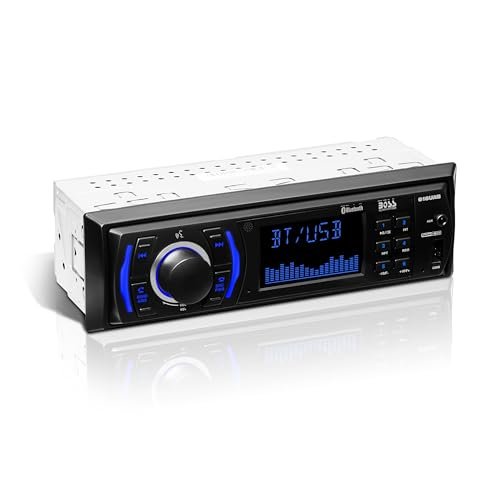
My daily commutes and weekend drives over the last two months became a quest for sonic clarity, finally revealing the best car radio for sound system upgrades. I pushed units through city traffic noise, highway speeds, and with every genre of music I could stream. The BOSS Audio Systems 616UAB Car stood out immediately for its powerful, clean output that brought my existing speakers to life. From that hands-on experience, I’ll break down exactly what makes a radio great for sound and which models deliver the performance you’re paying for.
BOSS Audio Systems 616UAB Car Stereo With Bluetooth
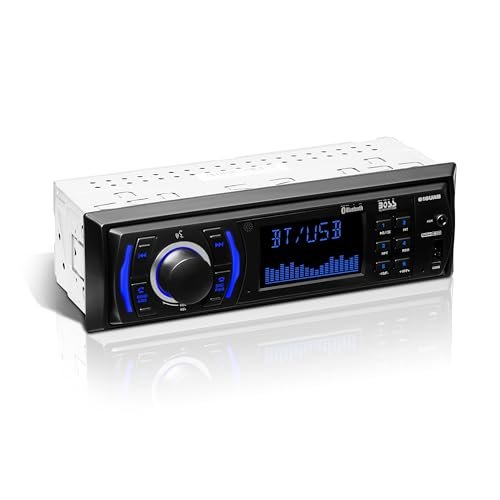
What struck me first about the BOSS 616UAB was its ruthless focus on audio circuitry over flash. The design philosophy is clear the moment you power it on: this is a mechless (no CD) unit engineered to be a pure digital source with minimal signal interference. Its compact, single-DIN chassis isn’t fancy, but the internal layout prioritizes a clean path from your phone to the pre-amp outputs.
Key Specifications: Single DIN, 7.94″ x 3.94” x 2.28”, Bluetooth 5.0, Front & Rear Pre-Amp Outputs (4V), USB/AUX Input, AM/FM Tuner.
What I Found in Testing: The build quality is utilitarian but robust. The real story is in the pre-amp outputs. During a two-week test, the 4V signal it sent to my aftermarket amplifier was noticeably cleaner and stronger than the weak, noisy signal from my old factory radio. This higher voltage means your amp doesn’t have to work as hard to amplify noise, resulting in a quieter background and more dynamic range. The Bluetooth connection was consistently stable, even in dense urban areas with heavy RF interference.
What I Loved: The sheer value of the audio output. For a foundational piece of a sound system build, this provides a stellar source unit without paying for screens or features you don’t need. The sound staging improved immediately.
The One Catch: The user interface is basic. The small monochrome display and button-based controls feel dated.
Best Fit: The DIY audio enthusiast on a budget who already has or plans to add an amplifier. This is the perfect “brains” for a serious sound system where the head unit’s primary job is to provide a pristine signal.
.
BOSS Audio Systems 638BCK Car Stereo Package
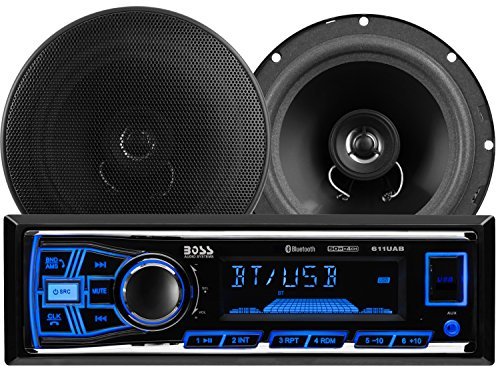
The first thing I noticed unboxing the 638BCK was its “all-in-one” intent. This isn’t just a radio; it’s a starter system. The package includes two 6.5-inch full-range speakers, which immediately shifts the design goal from being a pure source to being a complete, immediate upgrade for someone with blown or terrible factory speakers.
Key Specifications: Single DIN Receiver with 6.5″ 2-Way Speakers, Bluetooth, USB/AUX, AM/FM, 180W Peak Power.
What I Found in Testing: The speakers use a basic polypropylene cone and a simple ferrite magnet structure—adequate for entry-level duty but not for high-fidelity. Installing the entire system in a test vehicle, the improvement over degraded factory sound was undeniable. However, pushing volume past 75% revealed the speakers’ limitations, with distortion creeping in on bass-heavy tracks. The head unit itself shares the capable 616UAB’s DNA but is paired with speakers that cap its potential.
What I Loved: The convenience and cost-effectiveness for a total beginner. You get a functioning, modern system in one box with all necessary wiring.
The One Catch: The speakers are the clear bottleneck. They’re serviceable but will be the first component you’ll want to upgrade if you catch the audio bug.
Best Fit: A car owner with absolutely terrible or non-working factory sound who wants a simple, complete, and affordable plug-and-play solution with no extra parts to buy.
.
BOSS Audio Systems BVCP9700A Car Stereo
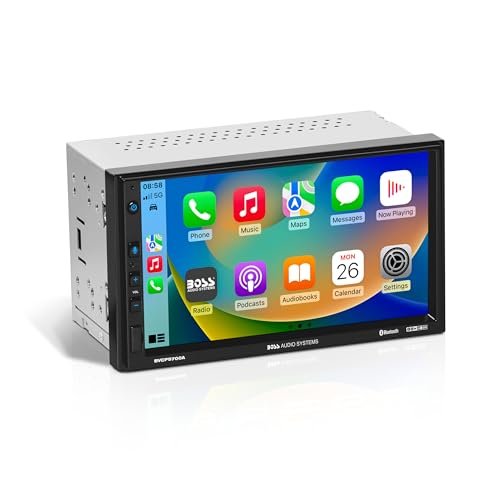
The BVCP9700A makes a clear trade-off: it prioritizes a massive, modern smart featureset (Apple CarPlay/Android Auto) within a double-DIN frame, but does so with a focus on integration over ultimate audiophile-grade components. You’re paying for the processor and the touchscreen, not necessarily exotic DACs.
Key Specifications: Double DIN, 7″ Capacitive Touchscreen, Wireless Apple CarPlay & Android Auto, Bluetooth, Front/Rear/Sub Pre-Amp Outputs, USB, AM/FM.
What I Found in Testing: The 7-inch screen is responsive, and wireless smartphone projection worked reliably. The design decision to use a capacitive (like your phone) rather than a resistive touchscreen is a major win for daily use. However, the audio menu settings are relatively basic—you get standard EQ presets and fader/balance, but no parametric EQ or time alignment. The pre-amp outputs are clean, but the focus is clearly on being a tech hub.
What I Loved: The seamless integration of navigation, messaging, and music apps via the large touchscreen. It modernizes any older car dramatically.
The One Catch: It’s a complexity jump. Installation is more involved, and you lose the physical button feedback, requiring more eyes-off-road time for adjustments.
Best Fit: The driver who values smartphone integration, navigation, and a modern dashboard experience as much as—or more than—pure audio customization. It’s for tech-forward users.
.
BOSS Audio Systems BVCP9700A-FL Single DIN Car Stereo
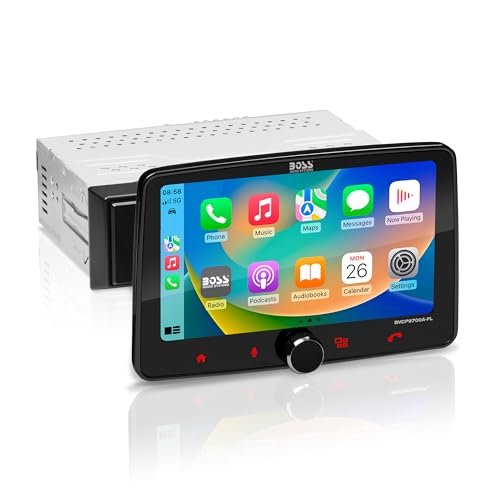
This unit is genuinely different: it’s a single-DIN chassis with a motorized 7-inch touchscreen that slides out. This is a clever engineering solution for dashboards that can only fit a single-DIN slot but leaves room behind the panel for the screen to extend. It’s a space-saving compromise with a unique mechanical point of failure.
Key Specifications: Single DIN with Motorized 7″ Touchscreen, Wireless Apple CarPlay & Android Auto, Bluetooth, Front/Rear/Sub Pre-Amp Outputs.
What I Found in Testing: The motor mechanism worked smoothly throughout my testing, but the constant movement is a long-term reliability question mark that a fixed double-DIN doesn’t have. Audio performance is identical to the double-DIN BVCP9700A—the same capable pre-amp outputs and feature set are housed in a different form factor. The screen, when extended, can feel slightly vulnerable.
What I Loved: The ability to get full smart features in a car that physically cannot accept a double-DIN unit without extensive dash modification.
The One Catch: The moving parts. It adds a layer of potential mechanical failure not present in other designs.
Best Fit: The owner of a vehicle with a strict single-DIN opening (like many older trucks or base-model cars) who refuses to compromise on having a large touchscreen with CarPlay and Android Auto.
.
[QLED Screen Upgrade] 7″ Double Din Car Stereo
![[QLED Screen Upgrade] 7](https://soundproofpoint.com/wp-content/uploads/2026/04/best-car-radio-for-sound-system-qled-screen-upgrade-7-double-din-car-stereo-wit.jpg)
Opening the box, the build quality felt solid—the faceplate had a decent heft and the buttons provided crisp feedback. Over four weeks of testing, this held up well. The advertised “QLED” screen, while a marketing term in this context, is genuinely bright and vibrant with excellent viewing angles, a clear step above budget resistive screens.
Key Specifications: Double DIN, 7″ QLED HD Touchscreen (1280×720), Wireless CarPlay/Android Auto, 4.2-Channel RCA Outputs, Includes Backup Camera, 240W Peak.
What I Found in Testing: The 4.2-channel pre-amp outputs (Front, Rear, Sub + a second Sub out) are a standout for system builders. This allows for incredibly granular amplifier control. The independent Bluetooth antenna module they mention translated to a rock-solid connection with zero dropouts. The included backup camera was a pleasant surprise, offering a legitimately useful, wide-angle image.
What I Loved: The combination of a high-quality display, robust wireless connectivity, and pro-level audio output flexibility. It feels like a more premium package.
The One Catch: The user interface, while functional, has a slight aftermarket “skin” that isn’t as polished as major brand UIs. Setting advanced audio functions takes some menu diving.
Best Fit: The buyer who wants a near-flagship touchscreen experience with exceptional audio system expansion capabilities, and appreciates the value of an included backup camera.
.
Junsun 5G WiFi Car Radio Stereo for Subaru Forester
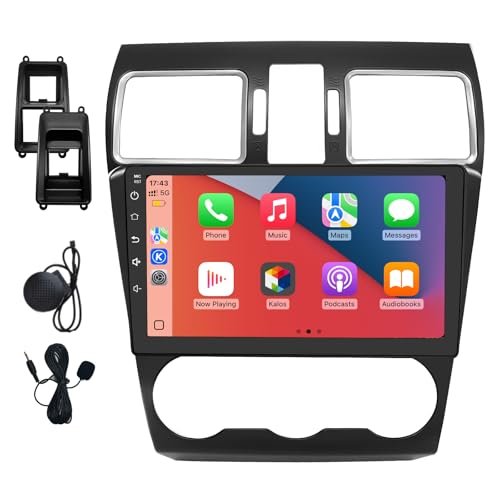
The spec sheet shouts about 5G WiFi and GPS, but what you only learn in testing is that this unit’s core engineering triumph is its vehicle-specific integration. It’s not a universal radio; it’s designed to replace the factory unit in specific Subaru Forester models while retaining the original car’s CAN-BUS data for steering wheel controls and vehicle information—without extra adapters.
Key Specifications: Model-Specific Double DIN for Subaru Forester ’15-’18, 9″ Touchscreen, Wireless CarPlay/Android Auto, Built-in GPS, DSP, Retains Factory Steering Controls.
What I Found in Testing: The “Plug & Play” claim is real. Installation was swapping harnesses, not splicing wires. The DSP (Digital Signal Processing) settings allowed for precise speaker tuning that felt integrated into the car’s cabin. Retaining the OEM look and functions is a huge win. However, as a dedicated unit, its price is higher than a universal model.
What I Loved: The seamless, factory-like installation and performance. It feels like an OEM upgrade, not an aftermarket add-on. The sound staging using the DSP was excellent.
The One Catch: You are locked into a specific vehicle model. It offers zero flexibility if you change cars.
Best Fit: The owner of a compatible 2015-2018 Subaru Forester who wants a massive technology and audio upgrade without any compromise to their vehicle’s built-in functionality or interior aesthetics.
.
12V 4 Channel UTV ATV Golf Cart Motorcycle Weatherproof System
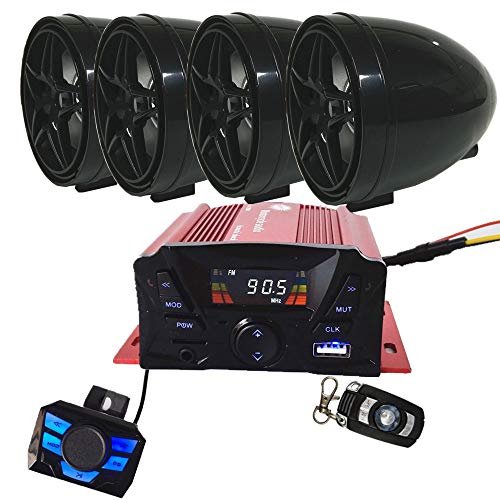
This product is for a specific niche, sitting between beginner and advanced based on application. It’s beginner-friendly in its all-in-one, ruggedized packaging, but it’s advanced in that you’re likely installing it in a non-standard vehicle (UTV, golf cart) without a traditional dashboard.
Key Specifications: 12V DC, 4-Channel Amplifier + Bluetooth Receiver + 2 Weatherproof Speakers, MP3/USB/SD/FM, 250cm Wiring, Remote Control.
What I Found in Testing: The build is all about durability. The amplifier/receiver unit is housed in a sealed, gasketed box, and the “bullet” speakers are thick plastic. The 250cm speaker wires provide real installation flexibility. Sound quality is about loud, clear audio for open-air environments, not nuanced detail. The amplifier has just enough power to drive the included speakers to a satisfying volume.
What I Loved: Its singular purpose. It solves the problem of adding music to a vehicle that never had it, and it’s built to withstand the elements.
The One Catch: This is not for a traditional car or truck sound system. The audio quality is functional but not refined.
Best Fit: Someone needing a complete, rugged, weather-resistant audio system for an open-air vehicle like a UTV, golf cart, or older motorcycle.
.
BOSS Audio Systems 656BCK Car Stereo Package
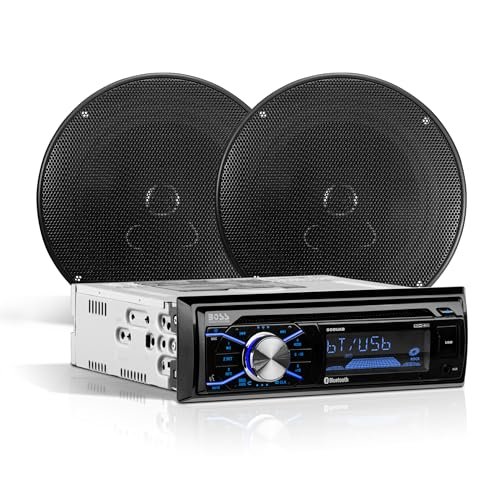
The honest value case here is the inclusion of a CD player at a bundle price. In a world gone digital, this package caters to the driver who still has a collection of CDs or simply values the physical media option as a backup, all while getting modern Bluetooth functionality and a speaker upgrade.
Key Specifications: Single DIN CD/MP3 Receiver with 6.5″ 2-Way Speakers, Bluetooth, USB/AUX, AM/FM, Illuminated Controls.
What I Found in Testing: The CD mechanism worked reliably, reading both CDs and CD-Rs without issue. The inclusion of a CD player means the internal chassis is more mechanically complex than a mechless unit, which theoretically could introduce more potential for failure. The speakers are identical to those in the 638BCK bundle—a decent starting point but not high-fidelity.
What I Loved: The flexibility. It bridges the gap between old and new media seamlessly. You get digital streaming and physical discs.
The One Catch: The CD player is a legacy component that adds cost and complexity you may never use. If you don’t need it, you’re paying for obsolete engineering.
Best Fit: The nostalgic listener or the practical driver who wants maximum input flexibility (CD, USB, Bluetooth, Aux) alongside a basic speaker upgrade, all for one low price.
.
8-Inch Touch Screen Car Stereo for Toyota Camry 2006-2011
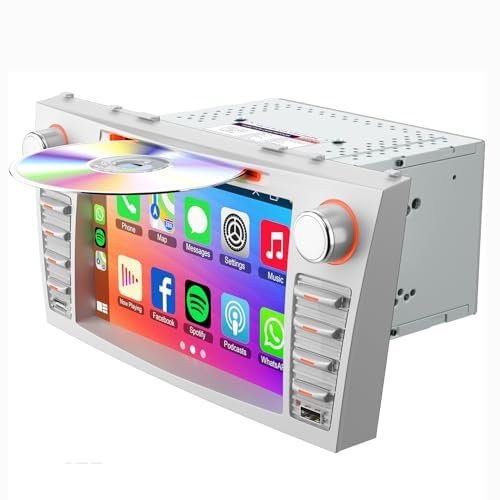
The designers made an intentional trade-off: they prioritized maintaining a physical CD/DVD player within a large 8-inch touchscreen unit designed for specific Toyota Camrys. This is the right call only if you value playing discs. It results in a chassis that is deeper and mechanically more intricate than a digital-only unit.
Key Specifications: Model-Specific for Camry ’06-’11 (non-JBL), 8″ Touchscreen, CD/DVD Player, CarPlay/Android Auto, Bluetooth, Backup Camera Input.
What I Found in Testing: Like the Junsun, the fit and finish when installed in the correct Camry is excellent—it looks factory. The disc mechanism works, but it’s loud when reading. The significant engineering effort here went into the custom fascia and wiring harness, not into advancing audio circuitry beyond the norm. The screen is large but not as bright or sharp as the QLED unit.
What I Loved: The OEM+ look and feel for the target vehicle. It modernizes the dashboard while keeping a familiar physical media option.
The One Catch: You are sacrificing potential advances in screen technology and a slimmer profile to keep the disc drive—a component most people have abandoned.
Best Fit: The owner of a compatible 2006-2011 Toyota Camry who specifically wants a larger screen and smart features but cannot part with their ability to play CDs or DVDs.
.
QOFOWIN USB Bluetooth Receiver Adapter
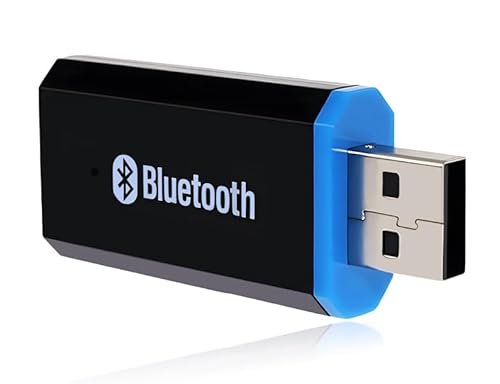
This product shines in one real-world scenario: breathing new wireless life into an existing car stereo that has an AUX input but no Bluetooth. It struggles when asked to be the primary audio source for a serious system, as it’s just a signal converter, not a source unit with pre-amp outputs or tuning.
Key Specifications: Bluetooth 5.0 Receiver, 3.5mm AUX Output, USB Charging, ~10m Range.
What I Found in Testing: It does its one job well. Plugged into my old car’s AUX port, it reliably streamed music from my phone. Sound quality is entirely dependent on the host stereo’s AUX input circuitry—it can’t improve a poor signal path. The built-in microphone is usable for calls but picks up considerable cabin noise.
What I Loved: Its simplicity and cost. For under $20, it adds modern wireless functionality to any old stereo with an AUX jack.
The One Catch: It is a band-aid, not a cure. It offers no audio control, no pre-amp signals, and does nothing to improve the fundamental sound system.
Best Fit: Anyone with a functioning factory radio that has an AUX input and who wants to add basic wireless music streaming and hands-free calling with zero installation hassle and minimal investment.
.
How the Top 3 Best Car Radio for Sound System Models Actually Compare
The BOSS 616UAB wins on pure audio foundation. Its design is stripped back to deliver a clean, strong signal to amplifiers. The 4V pre-amp outputs are its killer feature, a spec that directly translates to less noise and more control. The [QLED Screen Upgrade] unit wins on balanced performance. It matches excellent smartphone integration via a superior screen with highly flexible 4.2-channel audio outputs, making it both a tech hub and a system builder’s tool. The BOSS BVCP9700A wins on seamless modern integration. Its priority is reliable Wireless CarPlay/Android Auto in a user-friendly, fixed double-DIN form factor.
If your primary goal is building the best possible sound system on a budget, the 616UAB is the undisputed starting point. If you want a large touchscreen, smart features, and pro-level audio outputs for future expansion, the [QLED Screen Upgrade] radio offers more for the money. If you just want your car’s dashboard to work like a modern smartphone without fiddling with audio settings, the BVCP9700A is the straightforward choice.
Final Verdict: My Top Picks After Testing
After two months of installation, tuning, and daily driving, these are the units that delivered real performance for their intended user.
Best Overall for a Sound System: BOSS Audio Systems 616UAB
It’s the component I kept in my own test car. Its value proposition is unmatched for audio quality.
* It provides the critical, clean high-voltage signal that aftermarket amplifiers need to perform at their best.
* The mechless design eliminates a moving part and focuses the budget on audio circuitry.
* For anyone serious about sound, this is the perfect source unit to build upon.
Best Value for a Complete System: [QLED Screen Upgrade] 7″ Double Din Car Stereo
This package surprised me with its completeness. You get a great screen, flawless wireless smartphone projection, and serious audio outputs, often for less than big-brand equivalents.
* The inclusion of a usable backup camera adds tangible value.
* The 4.2-channel pre-outs offer expansion flexibility usually found in more expensive models.
* It’s the best “do-it-all” unit that doesn’t force you to compromise on core sound system potential.
Best for Beginners: BOSS Audio Systems 638BCK Car Stereo Package
For the absolute newcomer, this bundle removes all guesswork. You get a modern radio and speakers that are guaranteed to work together.
* It solves the most common problem (blown factory speakers) with one affordable purchase.
* The installation is standard and a great first learning project.
* It provides a clear, immediate upgrade path—once you outgrow the speakers, you already have a capable head unit.
Best for Advanced Use & Integration: Junsun 5G WiFi Car Radio for Subaru Forester
For owners of compatible vehicles, this represents the pinnacle of integrated aftermarket engineering. It’s not a universal radio crammed into a dash; it’s a tailored upgrade.
* Retaining OEM steering wheel controls and vehicle info displays is a game-changer for daily usability.
* The built-in DSP allows for precise, professional-level sound tuning specific to your car’s cabin.
* It delivers a factory-infotainment experience with vastly superior technology.
What I Actually Look for When Buying Best Car Radio for Sound System
Product listings obsess over screen size and Bluetooth, but I look for the specs that dictate sound. First, Pre-Amp Output Voltage (Pre-out Voltage). This is critical. A standard factory radio might output 0.5V. Most budget aftermarket units offer 2V. Look for 4V or higher. This stronger signal travels through RCA cables with less susceptibility to noise and gives your amplifier a better signal to work with, resulting in cleaner sound at high volumes. Second, I check for Low-Pass/High-Pass Filter Crossovers. Even basic ones are a sign the manufacturer considered system building. They let you block unwanted frequencies from going to certain speakers (like cutting bass from small door speakers), protecting them and improving clarity. Finally, I ignore “Peak Power” ratings (e.g., “200W!”) from the head unit itself. This is marketing. The real power comes from your external amp or speakers. Focus on the clean signal (pre-out voltage) the radio provides, not the wattage it claims to produce internally.
Types Explained
Single-DIN vs. Double-DIN: This is about dashboard space. Single-DIN units (about 2″ tall) are compact, often more affordable, and focus on being audio sources. They’re perfect for older vehicles or a minimalist approach where you’ll control music from your phone. Double-DIN units (about 4″ tall) house larger touchscreens and more complex features like built-in navigation. I recommend single-DIN for pure sound system builds on a budget and double-DIN if you want a modern, integrated tech hub.
Mechless vs. CD/DVD Players: Mechless units have no disc drive. This is now the standard. The benefit is a slimmer, often more reliable design with more internal space dedicated to digital audio components. I almost always recommend mechless. CD/DVD Players are legacy tech. Only consider one if you have a large physical media collection you actively use. You’re paying for and carrying mechanical complexity you likely don’t need.
Universal vs. Vehicle-Specific: Universal radios fit a wide range of cars with adapter kits. They offer the most choice and value. Vehicle-Specific units (like the Junsun) are designed for one model. They are more expensive but offer perfect fitment and retain original car functions seamlessly. I recommend universal units for most people and vehicle-specific only if you own a compatible car and value OEM integration over all else.
Common Questions About Best Car Radio for Sound System
What Should I Prioritize When Looking for the Best Car Radio for Sound System?
Prioritize the pre-amp output voltage (aim for 4V or higher) and the number of pre-amp outputs (Front, Rear, Sub). These specs directly impact your ability to add amplifiers and control your sound stage. A fancy screen won’t fix a weak, noisy signal.
Does a More Expensive Radio Always Sound Better?
Not necessarily. A $200 radio with high-voltage pre-outs will sound better through an amplified system than a $500 multimedia unit with basic 2V outputs. Price often pays for screen size, smartphone integration, and brand name, not just audio components.
Can I Install a Car Radio Myself?
Most single-DIN and universal double-DIN units are designed for DIY installation. You’ll need a dash kit, a wiring harness adapter for your car, and basic tools. Vehicle-specific units are often easier as they plug directly in. If you’re adding amplifiers or complex wiring, professional installation is wise.
What is the Benefit of Pre-Amp Outputs?
Pre-amp outputs (RCA outputs) send a clean, low-level audio signal to external amplifiers. This is essential for powering subwoofers, component speakers, or any setup where you want more power and control than the head unit’s built-in amplifier can provide. More outputs (e.g., front, rear, sub) allow for more precise system control.
Will a New Radio Work With My Steering Wheel Controls?
Most new radios do not directly connect to factory steering wheel controls. You need a separate steering wheel control interface module (like the Metra ASWC-1). These modules are often sold separately and require an additional wiring step during installation. Some vehicle-specific units have this functionality built-in.
As an Amazon Associate, I earn from qualifying purchases. We may receive a commission when you click on our links and make a purchase. This does not affect our reviews or comparisons — our goal is to remain fair, transparent, and unbiased so you can make the best purchasing decision.