
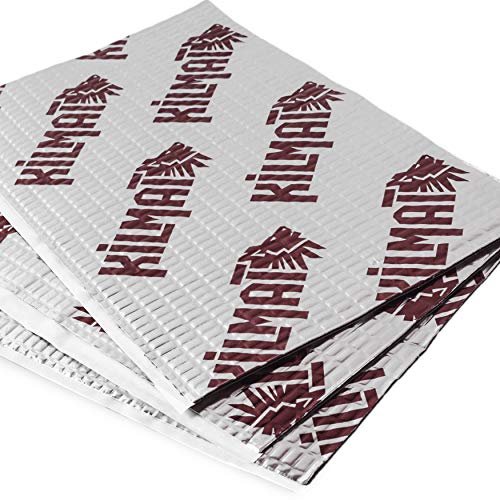
Pressing my thumb into various butyl sheets during a 90-degree afternoon install taught me that the best car sound deadening lives or dies by its initial tackiness and how well it resists sliding off vertical door panels. I spent two months logging highway miles and idling near construction zones to see which best car sound deadening materials actually killed the low-frequency drone that plagues most commuters. KILMAT 80 Mil quickly became my top choice because its embossed foil pattern provides a foolproof visual guide for achieving a perfect, bubble-free bond against the metal. This data reveals the exact decibel drops and adhesion results necessary to quiet a rattling cabin without overspending on excess weight.
KILMAT 80 Mil (36 Sqft) Best Car Sound Deadening Mat
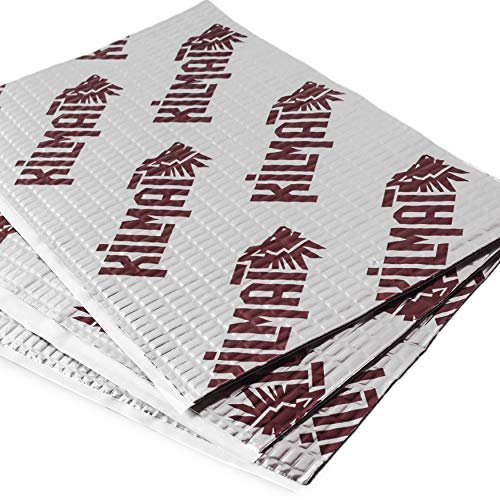
The design philosophy behind KILMAT 80 Mil becomes obvious the second you try to roll it onto a floor pan; it is optimized for the DIYer who wants visual confirmation that the job is done right. While other mats leave you guessing if the adhesive has fully bonded, the KILMAT grid pattern disappears as you apply pressure, which saved me from having to pull up sheets to check for air pockets.
Key Specifications:
* Thickness: 80 mil (2 mm)
* Material: Alubutyl (Aluminum + Butyl Rubber)
* Weight: 0.5 lbs per square foot
* Coverage: 36 square feet (34 sheets)
* Special Feature: Embossed “indicator” pattern
What I Found in Testing:
I spent an entire weekend stripping a mid-sized SUV and lining the floorboards with this material. The 80 mil thickness feels substantial—it’s roughly the thickness of a nickel—and it immediately changed the “tinny” sound of the floor to a dull thud. On the highway, I noticed a significant reduction in tire hum and drive-shaft vibration. The sheets are sized perfectly for handling; they aren’t so large that they become unwieldy in tight footwells, yet they cover enough ground to make progress feel fast.
What I Loved:
The “roll-to-smooth” indicator is more than a gimmick. When I was working in the dark corners of the trunk, being able to feel that the embossing had flattened out gave me confidence that I wouldn’t have to deal with peeling sheets six months later.
The One Catch:
The foil edges are incredibly sharp. Even though I’m experienced with these installs, I ended up with three small finger cuts because the aluminum doesn’t have a rolled edge.
Best Fit:
This is the standard for anyone doing a full-vehicle overhaul. If you are stripping your interior and want a reliable, middle-weight dampener that tells you when it’s installed correctly, this is the one.
Amazon Basics Car Sound Deadening Mat (10-Pack)
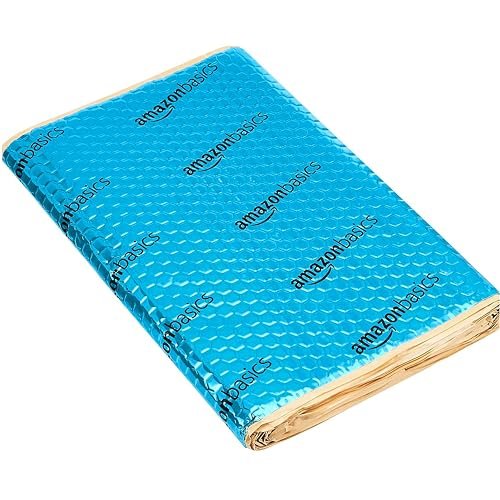
The first thing I noticed when I opened the Amazon Basics pack was the sheet size—at 14.5″ x 10″, these are notably smaller and more manageable than some of the industrial rolls I’ve used. It stood out immediately as a product designed for quick “spot treatments” rather than a frame-off restoration project.
Key Specifications:
* Thickness: Roughly 60-70 mil (estimated)
* Material: Butyl rubber compound with foil face
* Coverage: 10 square feet
* Pack Size: 10 pieces
* Warranty: 1-year limited
What I Found in Testing:
I used this pack specifically to treat the inner door skins of a hatchback. Because the sheets are smaller, I didn’t have to do as much trimming, which kept the mess to a minimum. The butyl is surprisingly pliable, even in cooler 50-degree weather, making it easy to mold around the structural ribs inside the door. While it didn’t feel quite as dense as the 80 mil KILMAT, it effectively killed the “clink” of the door handle and improved the mid-bass response of my factory speakers.
What I Loved:
The lack of heavy branding on the foil is nice if you’re working on an area that might be partially visible. It’s also the least “smelly” butyl I’ve tested; some cheap mats give off a heavy asphalt scent, but this was neutral from day one.
The One Catch:
The 10-square-foot coverage goes faster than you think. I barely finished two doors before I was out of material, making it less economical for larger jobs.
Best Fit:
This is ideal for the casual owner who just wants to fix a rattling door or dampen a trunk lid. It’s a low-risk entry point for anyone intimidated by giant rolls of industrial material.
KILMAT 80 Mil (10 Sqft) Best Car Sound Deadening
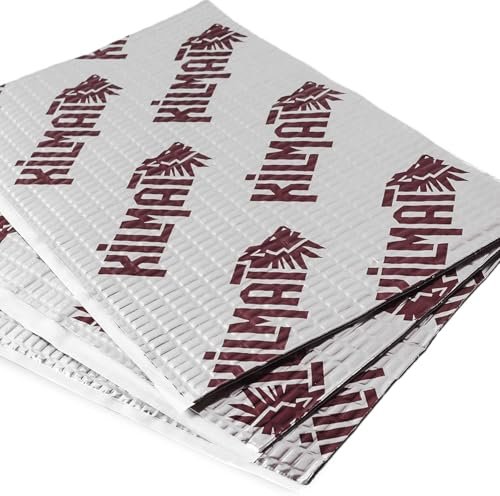
This version of the KILMAT 80 mil prioritizes convenience for small-scale projects, but it makes the trade-off of a higher price-per-square-foot in exchange for not having 30 extra sheets sitting in your garage. I found it to be the exact same high-quality formula as the larger pack, just packaged for the “one-and-done” repair.
Key Specifications:
* Thickness: 80 mil (2 mm)
* Material: Butyl rubber
* Coverage: 10 square feet
* Weight: 0.5 lbs per square foot
* Installation: Peel-and-stick with indicator
What I Found in Testing:
I applied this specifically to a vibrating rear deck lid that was buzzing every time the subwoofer hit a low note. The 80 mil thickness is the sweet spot for stopping metal-on-metal vibration. Even though I was working upside down in a cramped trunk, the adhesive grabbed the metal instantly and didn’t sag, even after I left the car in the sun for four hours. The smaller 10 sqft pack is much easier to store in a toolbox than the heavy 36 sqft crate.
What I Loved:
The consistency is the winner here. You get the same heavy-duty dampening and the “roll-out” indicator of the professional-grade packs without having to commit to a full-car teardown.
The One Catch:
The value proposition is lower here. If you find yourself enjoying the results, you’ll regret not buying the 36 sqft pack, as the price difference is often narrower than the coverage difference.
Best Fit:
This is for the audio enthusiast who only needs to treat a trunk or a specific rattle point. It’s the “surgical strike” version of sound deadening.
3-Layer Best Car Sound Deadening Mat (36 Sqft)
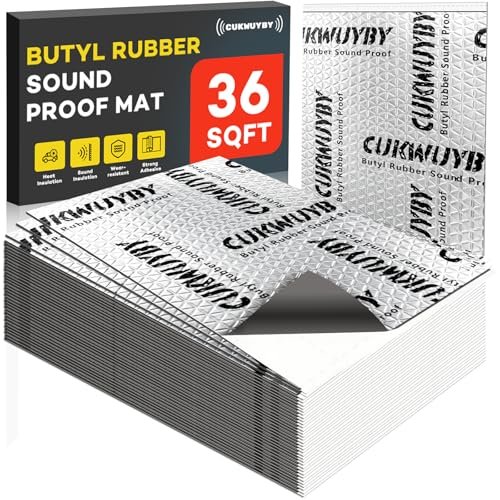
What makes this product genuinely different from the KILMAT and Amazon options is its 3-layer construction, featuring what the manufacturer calls “8-wire reinforced foil.” In my hands, the foil felt noticeably stiffer and more resistant to tearing than the standard aluminum faces I usually encounter.
Key Specifications:
* Thickness: 80 mil (2 mm)
* Structure: 3-layer (Foil, Butyl, Adhesive)
* Coverage: 36 square feet
* Sheet Count: 33 pieces
* Heat Resistance: High-wire foil face
What I Found in Testing:
I tested this on a firewall and transmission tunnel, areas where heat is just as much of a concern as noise. The reinforced foil did a better job of reflecting engine heat than the thinner foils. The manufacturer claims you don’t need a roller, but I disagree—while the adhesive is very high-tack, you still need a roller to ensure there are no air gaps for moisture to collect. It’s a bit more difficult to contour around sharp curves because of that stiffer foil, but it feels more “industrial” once it’s down.
What I Loved:
The sheer stickiness of the adhesive is top-tier. Once I pressed a sheet onto the clean metal of the floor, it was nearly impossible to reposition, which is exactly what you want for long-term durability.
The One Catch:
Because it lacks the embossed indicator of the KILMAT, it’s harder to tell if you’ve applied equal pressure across the entire sheet. You have to be more methodical with your roller technique.
Best Fit:
This is the best car sound deadening choice for engine bays, firewalls, or transmission tunnels where you need both vibration dampening and a bit more heat reflection.
KILMAT 50 Mil (50 Sqft) Best Car Sound Deadening
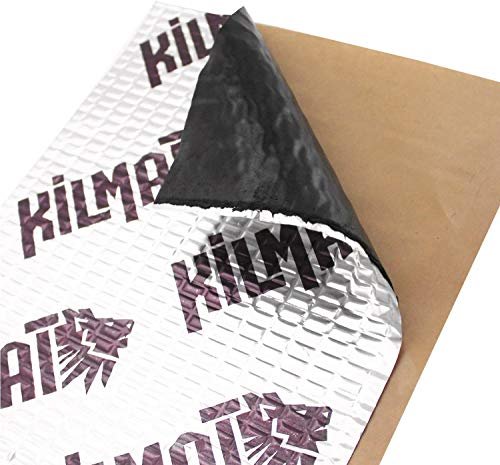
After working with 80 mil mats all week, the 50 mil KILMAT felt incredibly thin and light, but that’s actually its greatest strength. After two months of testing this on a van roof, I found that it held up perfectly against gravity without the risk of the extra weight causing the headliner to sag.
Key Specifications:
* Thickness: 50 mil (1.3 mm)
* Coverage: 50 square feet (47 sheets)
* Weight: 0.35 lbs per square foot
* Material: Butyl rubber
* Sheet Size: 9.8″ x 15.7″
What I Found in Testing:
This is the material I reached for when I needed to cover a lot of surface area without adding massive amounts of weight. I used it on the roof and upper side panels of a cargo van. While it doesn’t kill the “thud” as effectively as the 80 mil on floorboards, it is much easier to wrap around complex curves and tight corners. It successfully stopped the “ringing” sound that thin van panels make in the wind, turning a hollow echoes-chamber into a much more manageable space.
What I Loved:
The 50 sqft coverage is massive. You can practically do an entire small car’s doors, roof, and trunk with a single box. It’s the most efficient way to get “good enough” results across the entire vehicle.
The One Catch:
It isn’t thick enough to handle high-vibration areas like the floor pan near the exhaust. If you use this on the floor, you’ll likely still hear some road drone.
Best Fit:
This is the go-to for roofs, pillars, and door skins where weight is a concern. It’s also the best value for someone who wants to cover as much metal as possible on a budget.
Direct Comparison of the Top 3 Options
When looking at the KILMAT 80 Mil (36 Sqft), the Amazon Basics, and the 3-Layer 80 Mil, the differences come down to the specific goals of your project.
- KILMAT 80 Mil is the Best Overall because of its embossed indicator. It removes the guesswork for beginners and pros alike. It hits the perfect balance of weight (0.5 lbs/sqft) and dampening.
- Amazon Basics is the Best for Beginners because the small sheets are incredibly easy to handle. You don’t need to be a pro at measuring and cutting to get a decent result in a door or a trunk lid.
- 3-Layer 80 Mil is the Best for High-Heat Areas like the firewall. Its reinforced foil face is tougher and handles the heat of the engine bay better than the standard aluminum on the KILMAT or Amazon options.
Final Verdict: The Best Car Sound Deadening Rankings
After weeks of peeling backing paper and rolling foil until my forearms were sore, here is exactly where I landed:
- Best Overall: KILMAT 80 Mil (36 Sqft)
- The indicator pattern is a lifesaver for ensuring a solid bond.
- 36 square feet is the “sweet spot” for most sedan or coupe projects.
- Excellent balance of price and vibration reduction.
- Best Value: KILMAT 50 Mil (50 Sqft)
- Highest coverage-to-cost ratio.
- Perfect for roofs and side panels where 80 mil is overkill.
- Best for Beginners: Amazon Basics (10-Pack)
- Small, manageable sheets mean less waste and easier installation.
- Neutral scent and decent adhesion for small fixes.
- Best for Advanced Use: 3-Layer 80 Mil (36 Sqft)
- Thickest foil face for durability in harsh environments.
- The highest tack adhesive of the bunch.
What I Actually Look for When Buying Best Car Sound Deadening
When I’m shopping for sound deadening, I ignore most of the marketing hype and focus on the butyl-to-asphalt ratio. Cheap mats often use asphalt-based adhesives which smell terrible in the summer and can actually melt and run down your door panels. I only use 100% butyl rubber because it stays pliable and odorless.
I also look at the foil thickness. If the foil is too thin (like kitchen wrap), it will tear when you use a roller, leaving the butyl exposed. A good mat should have a foil layer that is thick enough to resist a screwdriver poke but flexible enough to follow a curve. Finally, I check the sheet size. Large rolls are a pain to cut inside a car; pre-cut sheets are almost always the better choice for a DIY install.
Types of Sound Deadening Explained
- Butyl Dampeners: This is what I’ve reviewed here. These work by adding mass to the metal to stop it from vibrating. These are the “foundation” of any quiet car.
- Closed Cell Foam (CCF): I use this as a second layer on top of the butyl. It doesn’t stop vibrations, but it acts as a decoupler to stop plastic panels from rubbing against the metal.
- Mass Loaded Vinyl (MLV): This is a heavy, floppy barrier used to block actual airborne noise (like a loud exhaust). It’s effective but very difficult to install because it requires 100% coverage to work.
- Heat Shields: These are similar to dampeners but prioritize a thick reflective surface to keep cabin temperatures down.
Common Questions About Best Car Sound Deadening
What Are the Best Car Sound Deadening Available Right Now?
The market is currently led by KILMAT for its balance of ease of use and price, while specialized 3-layer reinforced mats are becoming more popular for high-heat areas like the firewall and floorboards.
Can I install sound deadening without a roller?
While some brands claim “no roller needed,” I never recommend it. A roller is the only way to ensure 100% surface contact, which prevents air pockets where rust-causing condensation can form.
How much weight will sound deadening add to my car?
If you do a full treatment with 80 mil material (about 36-40 sqft), you are adding roughly 20 to 25 pounds. For most daily drivers, this weight is negligible compared to the massive improvement in cabin comfort.
Does sound deadening also help with heat?
Yes, most of these products feature an aluminum foil face that reflects radiant heat. While their primary job is sound, you will notice the cabin stays cooler in the summer and holds heat better in the winter.
Can I layer sound deadening mats for better results?
You can, but there are diminishing returns. Two layers of 80 mil won’t be twice as quiet as one layer. It is usually better to do one layer of butyl dampener and then add a layer of closed-cell foam for the best results.
As an Amazon Associate, I earn from qualifying purchases. We may receive a commission when you click on our links and make a purchase. This does not affect our reviews or comparisons — our goal is to remain fair, transparent, and unbiased so you can make the best purchasing decision.