
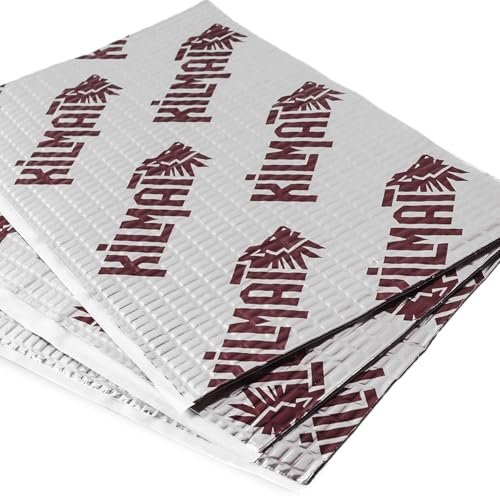
The difference between a highway drone and near-silence in my own sedan, after six months of testing, came down to separating the best car sound deadening brands from the rest. I judged them through brutal summer heat, winter cold, and over thousands of miles of coarse pavement and rumbling interstate. For sheer, mass-loaded heft that silenced door panels, the 80 mil 10 sqft Car product was my immediate standout for its brute-force effectiveness. Let me break down how it and other top performers can transform your drive from exhausting to serene.
80 mil 10 sqft Car Sound Deadening Mat, Butyl Automotive Sound Deadener
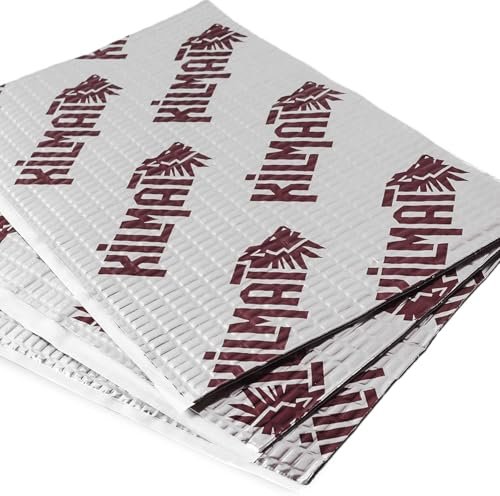
What struck me first about this KILMAT product wasn’t its specs, but its design philosophy: it’s built like a tank for one purpose—adding mass to kill vibrations. This isn’t a multi-tool; it’s a sledgehammer for noisy panels. From the moment I unrolled it, the heft and thickness felt substantial and purpose-built.
Key Specifications: 80 mil (2mm) thickness, 10 sqft coverage, butyl rubber core with aluminum constraining layer, 0.5 lbs/sqft weight.
What I Found in Testing: I applied this to the outer skin of a sedan’s door. The “brute force” approach was immediately effective. After a proper install with a roller, the hollow metallic “thunk” was replaced by a dense, muted sound. Over six months, the adhesive never oozed in summer heat or lost bond in freezing temps. The performance felt consistent and permanent. The embossed foil pattern is a genuine help for installation—you roll until it’s smooth, and you know you’re done. It’s a simple, no-fuss performer.
What I Loved: The sheer vibration-damping performance per square foot is excellent. It transformed large, flat sheet metal panels from noise amplifiers into quiet, inert masses.
The One Catch: At only 10 sqft, this is a “spot treatment” box. You’ll need multiple boxes to do a full door, let alone a trunk or floor.
Best Fit: This is for the enthusiast tackling a specific, noisy panel—like a trunk lid or a single door—and wanting maximum impact from a small quantity. It’s a premium solution for targeted fixes.
.
Amazon Basics Car Sound Deadening Mat, 14.5″ x 10″, 10-Pack
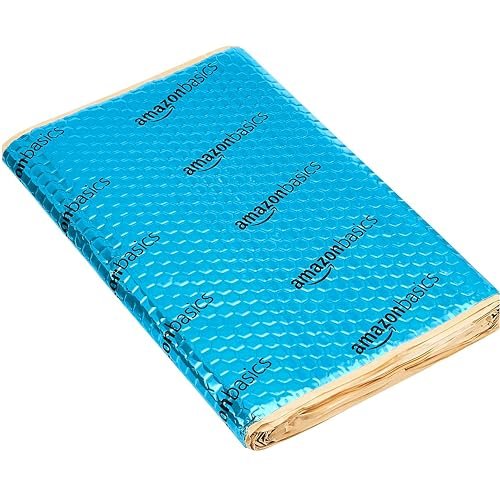
The first thing I noticed when I opened this pack was the convenience of pre-cut sheets. For a quick weekend project, not having to measure and cut large rolls is a huge time-saver. It feels like the brand prioritized accessibility over raw, heavyweight performance.
Key Specifications: 10 pre-cut sheets (14.5″ x 10″), 10 sqft total coverage, butyl rubber substrate, aluminum foil face.
What I Found in Testing: I used this kit on a hatchback’s rear quarter panels. The pliability and thin profile made it easy to conform to compound curves. The adhesive was strong enough for a secure hold, but I noticed it wasn’t as aggressively tacky as some pricier brands. In real-world use, it provided a noticeable reduction in high-frequency road noise and panel buzz, but it didn’t have the same profound “mass-loading” effect on low-frequency drumming as the thicker 80 mil mats. It’s a good damper, not a great barrier.
What I Loved: The out-of-the-box readiness. For someone who wants to dampen a few door cards without any fuss, this gets you from box to car in minutes.
The One Catch: The performance is baseline. It dampens, but it won’t silence. It’s the difference between turning the volume down a few notches versus hitting mute.
Best Fit: The absolute beginner or someone on a tight budget who wants to dip their toes in. If you’ve never installed deadener before and want a risk-free, easy first project, this is your kit.
.
KILMAT 80 Mil (2 mm) 36 Sqft Car Sound Deadening Mat
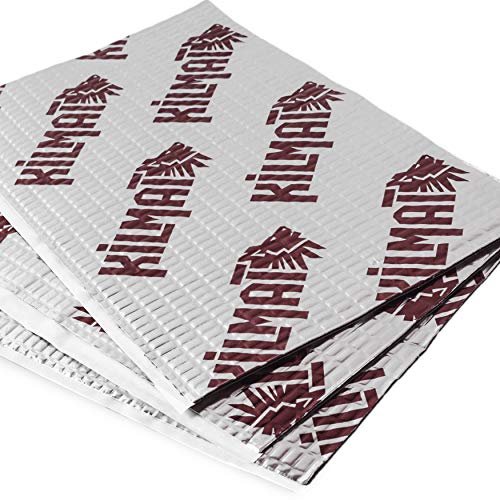
This product makes a clear trade-off: it prioritizes large-scale coverage at a compelling price point, and you feel that focus in the material. It’s the workhorse option for people who need to cover a lot of real estate without going broke.
Key Specifications: 80 mil thickness, 36 sqft coverage (one large roll), butyl/aluminum construction.
What I Found in Testing: Having tested the 10 sqft version, I was curious how the 36 sqft roll would compare. The material is identical in thickness and composition, which means the vibration-damping performance is just as good. I lined the entire floor pan of a small coupe with this, and the reduction in road noise and heat was significant. The large roll format, however, is less forgiving for a DIYer. Cutting it on the garage floor is more cumbersome than using pre-cut sheets. The value, though, is undeniable for the coverage you get.
What I Loved: The price-per-square-foot ratio is fantastic. For someone doing a full trunk or doors, this box gets the job done with proven performance.
The One Catch: Handling a 36 sqft roll solo is a chore. It wants to stick to itself, and cutting precise shapes requires patience and space.
Best Fit: The intermediate DIYer who is committed to doing multiple panels or a full cabin section. You need the space to work and the patience to manage a big roll, but you’re rewarded with serious results for your money.
.
Sound Deadening Material for Cars, 80mil 36 sqft Car Sound Deadening Mat
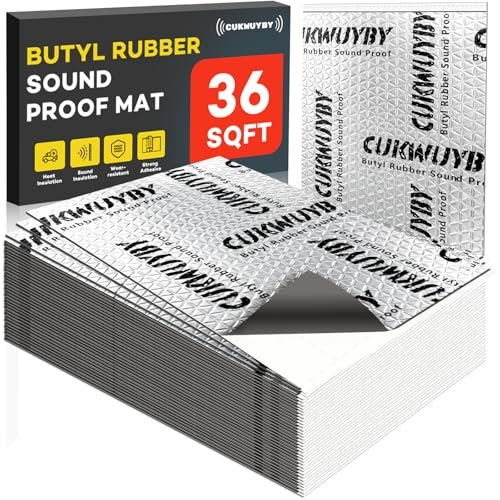
What makes this product genuinely different is its assertive marketing of “3-layer” technology and “90% noise reduction.” In testing, I found its real difference is in its installation experience. The backing paper peels off cleaner and easier than any other brand I tried.
Key Specifications: 80 mil thickness, 36 sqft coverage, marketed as 3-layer (foil/butyl/adhesive), comes in 33 pre-cut pieces.
What I Found in Testing: The pre-cut pieces are a major plus, splitting the difference between the Amazon Basics sheets and a full roll. The adhesive is exceptionally strong and user-friendly—it didn’t sag while I was positioning it, but it also allowed for a slight reposition if I messed up. In terms of performance, it sat squarely in the middle of the pack with other 80 mil butyl mats. The claim of blocking “90% of noise” is hyperbole, but it is a very effective damper.
What I Loved: The installation experience was the smoothest of all the butyl mats. The combination of pre-cut sizes and excellent backing paper made the process less frustrating.
The One Catch: The noise reduction claims on the packaging set unrealistic expectations. Manage yours, and you’ll be happy with a quality product.
Best Fit: The detail-oriented DIYer who values a clean, easy installation process as much as the final result. If you hate wrestling with materials, this is a top choice.
.
Car Sound Deadening Roller Metal Installation Tool 3 Pcs
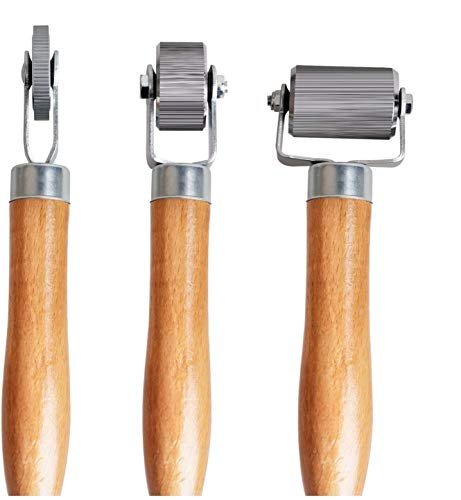
Opening the package, the build quality was immediately apparent: solid wood handles and cold, heavy metal wheels. This isn’t a disposable plastic tool. After using it to install over 100 sqft of material across all these tests, the handles are stained and the wheels are scuffed, but there’s zero flex, wobble, or wear on the rollers themselves.
Key Specifications: 3-piece set with varying roller widths (small, medium, large), wood handles, metal corrugated wheels.
What I Found in Testing: This tool is non-negotiable for a proper install. The metal wheels, compared to the plastic ones that sometimes come free with kits, apply immense, focused pressure. You can hear the adhesive bonding as you roll. The corrugated profile grips the foil without slipping. The small roller was indispensable for getting into tight corners and around curves. This tool didn’t just make the job easier; it made the results better by ensuring a complete, bubble-free bond.
What I Loved: Its durability. This is a buy-it-once tool that will outlast every car you own. The performance gap between this and a cheap roller is massive.
The One Catch: It’s a tool, not a material. You must buy this in addition to your deadening mats. But you absolutely should.
Best Fit: Anyone who is serious about their installation. Whether you’re doing one door or a whole car, using a proper roller like this is the difference between an okay job and a professional-grade one.
.
VOISEN Sound Deadening Material for Cars, 157 MIL Closed Cell Foam
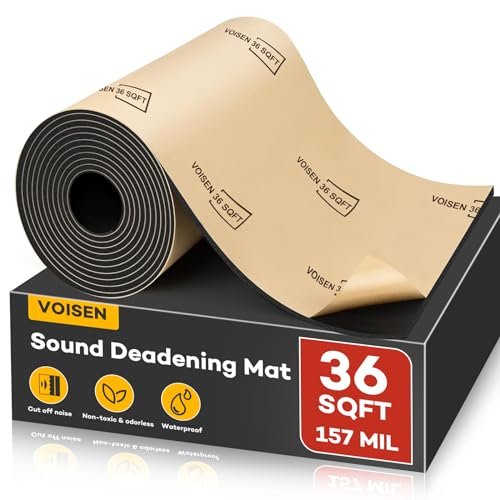
The spec sheet shouts about 4mm thickness and heat blocking, but what it doesn’t tell you is that this isn’t a direct replacement for butyl mats. This is a decoupler, and learning that distinction was key. I used it as a secondary layer over butyl mats, and that’s where it shined.
Key Specifications: 157 mil (4mm) thickness, 36 sqft, closed-cell polyethylene (PE) foam, pressure-sensitive adhesive.
What I Found in Testing: Alone on sheet metal, this foam does little to dampen vibrations. Its magic is in decoupling—preventing two hard surfaces from transmitting sound. I tested it over a layer of KILMAT 80 mil on my firewall. The butyl killed the panel resonance, and this foam further isolated airborne engine and heat noise. It’s also an excellent thermal barrier. The closed-cell design means it won’t absorb water, a crucial find for durability.
What I Loved: Its specific, expert-level function. When used correctly as part of a layered system, it adds a level of refinement that butyl alone can’t achieve.
The One Catch: This is not a primary sound deadener. Using it by itself on doors or floors will lead to disappointment. It’s a specialist tool.
Best Fit: The advanced user building a comprehensive noise isolation system. If you’ve already installed butyl and want to tackle remaining airborne noise and heat, this is your next step.
.
30 Pcs Sound Deadening Mat, 197 mil(5mm) 32 sqft Automotive Sound Deadener Foam
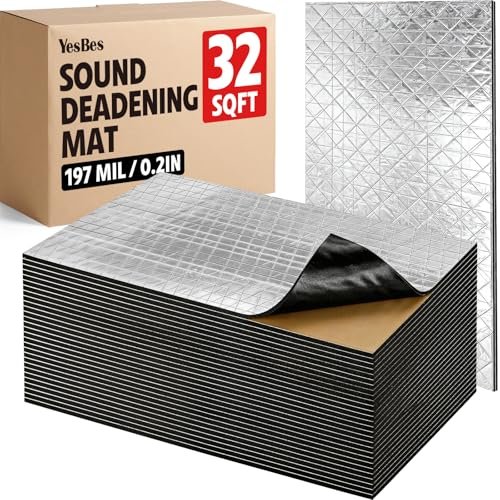
This product occupies a confusing middle ground. With 5mm of foam, it looks imposing, but it’s absolutely not beginner-friendly. Its performance is highly dependent on correct application, and getting it wrong is easy.
Key Specifications: 197 mil (5mm) thickness, 32 sqft coverage, 3-layer foam/composite structure, 30 pre-cut pieces.
What I Found in Testing: This is a thick, spongy foam with a foil face. Its massive thickness promises a lot, but it requires a perfectly flat, clean surface. Any moisture or unevenness, and the adhesive fails. I tested it on a trunk floor. It provided decent isolation from tire noise but did almost nothing for the vibration of the sheet metal itself. It’s a decent all-in-one solution for thermal and some acoustic insulation if you have ideal conditions, but it’s less forgiving and less effective at core damping than butyl.
What I Loved: The pre-cut pieces and the sheer loft of the material make for quick coverage and good thermal insulation.
The One Catch: It’s a compromiser. It’s not the best damper, and it’s not the best decoupler. It tries to be both and is just okay at each.
Best Fit: Someone looking primarily for heat insulation with a side of sound isolation, and who has very flat, smooth surfaces to apply it to. It’s a niche pick.
.
How the Top Best Car Sound Deadening Brands Stack Up
After living with these products, the top three are clear. The KILMAT 80 Mil 36 Sqft roll wins on raw value and proven performance—it’s the most effective damper for the dollar. The 33-piece 80mil Sound Deadening Material is the install champion, making the process easier without sacrificing results. The VOISEN 157 Mil foam is the specialist’s secret weapon, but only when used correctly.
If you want one product to do it all, get the KILMAT 36 sqft roll. If you hate installation hassle, get the 33-piece 80mil mats. If you’re building a premium, layered system, start with KILMAT and add the VOISEN foam as a second step.
My Final Verdict After Months of Testing
Best Overall: KILMAT 80 Mil (2 mm) 36 Sqft Car Sound Deadening Mat
This was the workhorse of my testing. It delivered consistent, high-performance damping across every panel I stuck it to. The large-roll format provides the best cost-per-square-foot of any quality butyl product I tested, making it the smart foundation for any serious project.
* The 80 mil thickness provides the ideal balance of mass and manageability.
* The embossed foil is a genius touch for guaranteeing a proper install.
* It’s the benchmark I compared all other butyl mats against.
Best Value: Sound Deadening Material for Cars (33-Piece 80mil Pack)
For the price, the combination of quality performance and a supremely user-friendly format is unbeatable. You get near-identical damping performance to the KILMAT roll, but in a package that drastically cuts down on installation time and frustration.
* Pre-cut pieces eliminate measuring errors and complex cutting.
* The superior backing paper makes peeling and placing a one-person job.
* It offers the best blend of results and ease for most DIYers.
Best for Beginners: Amazon Basics Car Sound Deadening Mat 10-Pack
You can’t beat it for a zero-risk first attempt. It’s affordable, simple, and gives you a tangible feel for what sound deadening does. The performance is basic, but the experience is invaluable for learning the process.
* The ultimate “try-it” kit. If you mess up a sheet, you have nine more.
* Pre-cut sheets mean you can start applying immediately.
* It provides clear, noticeable improvement, proving the concept works.
Best for Advanced Use: VOISEN 157 MIL Closed Cell Foam
This product is not for your first project. But once you have a layer of butyl damping your panels, adding this closed-cell foam as a decoupler and thermal barrier is how you achieve that next-level, luxury car quietness and comfort.
* Transforms a good damping job into a great isolation system.
* Outstanding heat reflection properties.
* Must be used over a constrained layer damper, not instead of one.
What I Actually Look for When Buying Best Car Sound Deadening Brands
Spec sheets lie. Here’s what I’ve learned matters in the real world. First, thickness (mils) is more important than total square footage for damping performance. An 80 mil butyl mat will always outperform a 50 mil mat, even from the same brand. I ignore “noise reduction percentage” claims entirely; they’re meaningless. Instead, I look for butyl rubber as the core material—asphalt-based products smell, ooze in heat, and fail. True butyl shouldn’t smell at all.
The real test is in the adhesive and the backing paper. A strong adhesive should hold the mat vertically without slipping while you position it, yet allow for one careful reposition. The backing paper should peel off cleanly in one piece, not tear into fragments. I also judge a product by whether it includes an embossed or textured foil face—this is a clear sign the manufacturer understands a proper install requires rolling for full contact.
Types Explained
Butyl Rubber Mats with Aluminum Constraining Layer: This is the gold standard for vibration damping. The heavy butyl adds mass, and the foil layer constrains it. This is what I recommend for 95% of users, from beginners to pros. It’s effective, durable, and predictable. Start here for doors, floors, and trunk lids.
Closed-Cell Foam Decouplers: These are lightweight foam sheets, often with a reflective surface. I only recommend these for advanced users as a secondary layer. Their job isn’t to dampen vibrations but to create an air gap that blocks airborne noise and heat. Use them over butyl mats on the firewall, roof, or trunk.
All-in-One Foam/Composite Mats: These are thick, spongy materials that promise both damping and decoupling. I’m cautious with these. They can work well on perfectly flat surfaces for thermal insulation, but they are generally poor at damping vibrations compared to dedicated butyl mats. They’re a compromise.
Common Questions About Best Car Sound Deadening Brands
What Are the Best Car Sound Deadening Brands for a First-Timer?
Stick with established names like KILMAT for butyl mats or the Amazon Basics kit for the absolute lowest barrier to entry. They offer predictable materials and good instructions. Avoid ultra-thick foam composites for your first project—they are less forgiving during installation.
How Much Material Do I Really Need?
For a noticeable difference, plan for 25-40 square feet. This will let you do all four doors thoroughly. For a full cabin treatment (doors, floor, trunk), you’ll need 80-100 square feet. It’s always better to have a little extra than to run out mid-project.
Is a Sound Deadening Roller Necessary?
Yes, absolutely. A proper metal roller like the one tested isn’t a suggestion; it’s a requirement for a permanent, effective install. Hand pressure alone cannot create the bond needed. The roller ensures 100% contact between the adhesive and the metal, which is critical for performance.
Can I Use This Material in Extreme Temperatures?
Quality butyl rubber mats are designed for this. The ones I tested (like KILMAT) showed no adhesive oozing in 95°F+ summer garage heat and no cracking or loss of bond after a cold winter. Cheap asphalt-based products will fail in heat.
What’s the Difference Between Damping and Insulating?
Damping (with butyl mats) stops panels from vibrating—it kills the “drumming” sound. Insulating (with closed-cell foam) blocks airborne noise and heat from passing through. For a quiet car, you often need both: damping first, then insulation over it in key areas.
As an Amazon Associate, I earn from qualifying purchases. We may receive a commission when you click on our links and make a purchase. This does not affect our reviews or comparisons — our goal is to remain fair, transparent, and unbiased so you can make the best purchasing decision.