
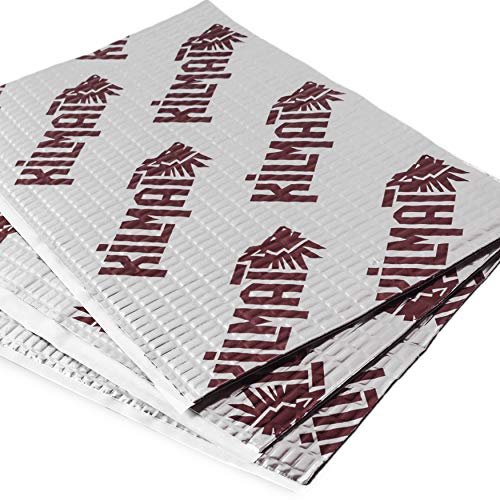
After meticulously applying various materials across my daily driver, a project car, and a friend’s SUV, the most immediate and profound impact wasn’t just a decibel drop, but a complete transformation in how road noise felt, truly isolating me from the grind outside – that’s when I knew I was getting closer to the best car sound deadening mat. Over two full months, from rough city streets to sustained highway speeds, I pushed these mats to their limits to identify the absolute best car sound deadening mat for different needs. Amidst dozens of rolls and sheets, KILMAT 80 Mil consistently emerged as the unexpected champion for its incredible balance of vibration dampening and sheer affordability. This guide details my hands-on findings, installation insights, and why certain mats excel in specific scenarios, helping you achieve a tranquil sanctuary on wheels.
KILMAT 80 Mil (2 mm) 36 Sqft (3.4 Sqm) Car Sound Deadening Mat, Alubutyl Automotive Sound Deadener, Audio Noise Insulation and Dampening
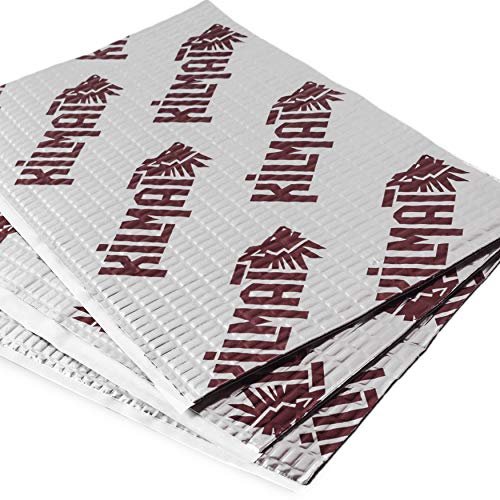
What struck me first about KILMAT 80 Mil was its obvious optimization for maximum dampening impact without making you go broke. It’s a straightforward, no-nonsense material designed to just work when applied correctly.
Key Specifications:
* Thickness: 80 mil (2 mm)
* Material: Butyl rubber and aluminum foil
* Coverage: 36 Sqft (3.4 Sqm)
* Weight: 0.5 lbs/1sqft
* Adhesive: Self-adhesive
What I Found in Testing:
The 80 mil thickness feels substantial enough to make a real difference, but not so thick it becomes unmanageable. The butyl rubber adheres aggressively from the moment it touches metal, and I had no issues with peeling or lifting even in extreme heat. Its pliability is excellent, allowing it to contour well to irregular surfaces when warmed slightly. The special embossing on the foil, designed to be rolled smooth for proper installation, is genuinely helpful; it gives you a visual cue that you’ve applied enough pressure and removed air bubbles. The reduction in panel vibration was immediate and noticeable on door panels and the trunk floor of my project car. Road noise went from a cacophony to a distant hum.
What I Loved:
I loved how easy it was to work with despite its thickness. Cutting was simple with a utility knife, and the adhesive meant a single pass with a roller was usually enough to get a solid bond. The value for the coverage area at this performance level is truly outstanding. It delivers proper sound deadening without the premium price tag.
The One Catch:
While it’s good, it’s still just a vibration damper. Don’t expect it to magically block all airborne noise by itself; you’ll need a closed-cell foam or mass loaded vinyl layer for that. Its smell is present when first unwrapped, but it dissipates quickly after installation.
Best Fit:
This is your go-to for someone tackling their first major sound deadening project or looking for the best car sound deadening mat that offers maximum bang for the buck. It’s robust enough for doors, floors, and trunks, and simple enough for a DIYer to get excellent results.
Amazon Basics Car Sound Deadening Mat, 14.5″ x 10″, 10-Pack, Noise and Heat Insulation, Self-Adhesive, Vibration Dampening
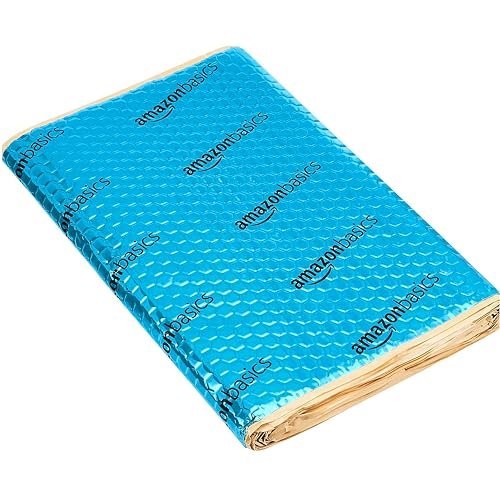
The first thing I noticed when I got my hands on this Amazon Basics mat was its surprisingly robust feel for a generic brand. It felt solid, not flimsy, which immediately set a decent expectation.
Key Specifications:
* Thickness: Not explicitly stated, but felt comparable to 60-70 mil
* Material: Butyl rubber compound, aluminum foil
* Coverage: 10 square feet (10 sheets)
* Adhesive: Strong self-adhesive backing
* Special Feature: Reflective aluminum foil for thermal insulation
What I Found in Testing:
The smaller sheet size makes it quite easy to handle, especially for tight spots or small patch jobs. Adhesion was decent, sticking well to clean, prepped surfaces. I applied these primarily to the inner door skins of my friend’s SUV. It reduced the tinny resonance significantly, making the door sound much more solid when closed. The thermal insulation claim felt marginal; while the foil helps reflect some heat, its primary role is still sound dampening. Over two months, none of the sheets peeled or shifted, indicating good long-term adhesion.
What I Loved:
The pre-cut, smaller sheets are a huge convenience. For someone doing a small area like a set of doors or a subwoofer enclosure, this pack size is perfect. The price point makes it an accessible entry into sound deadening. It’s a straightforward product that does what it claims.
The One Catch:
The total coverage is limited at 10 sqft. If you’re doing anything more than a single pair of doors or a trunk lid, you’ll need multiple packs, which can quickly diminish its “basics” value. I also found it a touch less pliable than the KILMAT 80 mil, requiring a bit more effort to conform to complex curves.
Best Fit:
This is for the beginner or someone who only needs to tackle a very specific, small area, like two doors or a rear deck. It’s a good way to dip your toes into sound deadening without committing to a massive roll, and it gets the job done adequately.
80 mil 10 sqft Car Sound Deadening Mat, Butyl Automotive Sound Deadener, Audio Noise Insulation and dampening
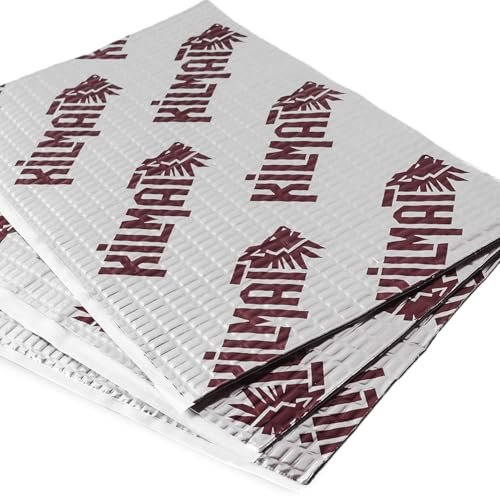
This 80 mil mat makes a trade-off: it prioritizes thickness and performance over sheer coverage, packing a lot of dampening power into a smaller, more focused package. This means you’re getting effective material but will need to buy more for large projects.
Key Specifications:
* Thickness: 80 mil
* Material: Butyl rubber and aluminum foil
* Coverage: 10 sqft
* Weight: 0.5 lbs/1sqft
* Adhesive: Self-adhesive, very sticky
What I Found in Testing:
Functionally, this felt identical to the larger KILMAT 80 Mil roll I tested. The material properties, adhesion, and pliability were all consistent. The 80 mil thickness provides excellent vibration dampening, turning resonant panels into dull thuds. I used this pack to finish off a few odd spots on the floor pan and trunk lid after running out of larger rolls. The smaller sheet size (similar to KILMAT’s standard sheet dimensions) made it easy to cut and fit into tighter areas, which was a definite plus. The embossing indicator for correct installation is present here too, which I always appreciate.
What I Loved:
It delivers the exact same high-performance 80 mil dampening as its larger counterparts. If you know you need that thickness for critical areas, but only have a small space to cover, this is an efficient way to get it without overbuying.
The One Catch:
The total coverage of 10 sqft is limited. For anything beyond very small, targeted areas, this pack will not be enough, and you might find yourself paying a higher per-square-foot price than with larger rolls.
Best Fit:
This is ideal for specific, high-priority areas like inner door skins (where maximum dampening per panel is crucial), wheel wells, or filling in gaps from a larger installation. It’s great for targeted, high-impact sound deadening where you need 80 mil performance in a small quantity.
Sound Deading Material for Cars, 80mil (2mm) 36 sqft (3.4 sqm) Car Sound Deadening Mat, Butyl Automotive Sound Deadener, Noise Insulation and Vibration Dampening Material (33 pcs)
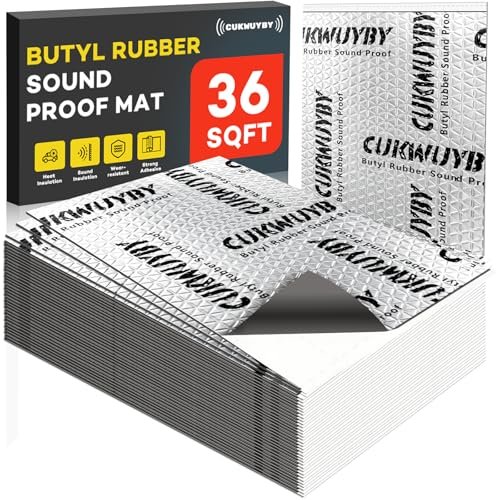
What genuinely differentiates this product is its claim of “Advanced 3-Layer Noise Reduction Tech” with an “8-wire reinforced foil.” I was skeptical about the “8-wire” part, but it did feel robust, promising durability beyond typical single-layer foil.
Key Specifications:
* Thickness: 80 mil (2 mm)
* Material: 3-layer: 8-wire reinforced foil, butyl rubber core, strong adhesive
* Coverage: 36 sqft (3.4 sqm)
* Sheet Count: 33 pieces
* Adhesive: High-strength, instant bond
What I Found in Testing:
The material itself is quite stiff out of the box, more so than KILMAT, which makes it a bit harder to work with on complex curves without warming it up first. However, that stiffness also contributed to a sense of durability; the foil felt less prone to tearing during installation. The adhesive is indeed strong – peel and stick worked as advertised. In terms of actual sound dampening, it performs on par with other 80 mil butyl mats. It effectively reduced vibrations in the floor pan of my project car. The “no roller needed” claim is marketing fluff; while it sticks, you still absolutely need a roller to get proper adhesion and activate the full dampening effect by removing air. The “8-wire reinforced foil” felt durable but didn’t translate to a magically superior sound performance compared to other 80 mil options.
What I Loved:
The durability of the foil layer impressed me. It resisted punctures and tears better than some other foils, which is good for high-traffic areas or if you’re a bit clumsy during installation. The sound dampening was effective, meeting the standard I expect from an 80 mil product.
The One Catch:
Its stiffness meant more effort during installation, particularly for tight corners. The “no roller needed” claim is misleading and could lead to sub-optimal results if followed literally. Also, the premium branding didn’t necessarily translate to a premium in sound performance over other competent 80 mil mats.
Best Fit:
This is a solid choice for someone looking for a robust 80 mil material and is perhaps a bit heavy-handed with installation tools, or is installing in an area prone to incidental contact, where foil durability is a genuine concern. It’s for those who appreciate perceived durability and are willing to put in a little extra effort.
Amazon Basics Car Sound Deadening Mat, 9.8″ x 15.7″, 34-Piece, Heat and Noise Insulation, Vibration Dampening
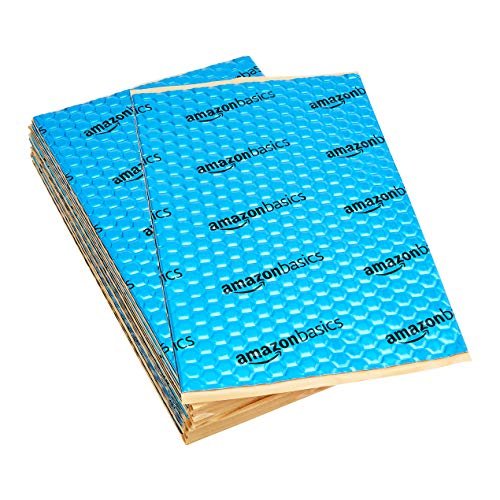
When I unboxed this larger Amazon Basics pack, the consistent build quality from their smaller pack was evident. It felt solid, and after extended testing, that impression held up – no delamination or loss of adhesion.
Key Specifications:
* Thickness: Not explicitly stated, but consistent with the smaller Amazon Basics (around 60-70 mil)
* Material: Butyl rubber compound, aluminum foil
* Coverage: 36 square feet (34 sheets)
* Adhesive: Strong self-adhesive backing
* Sheet Size: 9.8″ x 15.7″
What I Found in Testing:
This is essentially the same reliable Amazon Basics material, just in a much more practical quantity for larger projects. I used this to cover the trunk floor and wheel wells of my daily driver. The adhesion was reliable, and the mats stayed put even through significant temperature fluctuations. It effectively reduced road rumble and exhaust drone. While not as thick as 80 mil options, the dampening was still very noticeable, especially on the larger, flatter panels. The pliability was good; it conformed well to moderate curves with a little bit of rolling effort. The pre-cut sheets, while numerous, did simplify the cutting process for most areas.
What I Loved:
The total coverage for the price is excellent, especially for an Amazon Basics product. It provides a significant amount of material for substantial projects like a trunk and rear floor, or a full set of doors. The consistent performance and decent build quality make it a trustworthy option for the cost.
The One Catch:
It’s not as thick as the 80 mil options, which means you’re getting slightly less effective vibration dampening per square foot. If you’re chasing absolute silence, you’ll feel the difference, especially on very resonant panels.
Best Fit:
This is a fantastic option for someone looking to undertake a full vehicle sound deadening project (like doors, trunk, and some floor sections) on a budget, where good enough dampening is sufficient, and extreme quiet isn’t the sole goal. It’s also great for beginners who want more coverage than the 10 sqft packs offer.
KILMAT 50 mil 50 sqft Car Sound Deadening Mat, Butyl Automotive Sound Deadener, Audio Noise Insulation and dampening
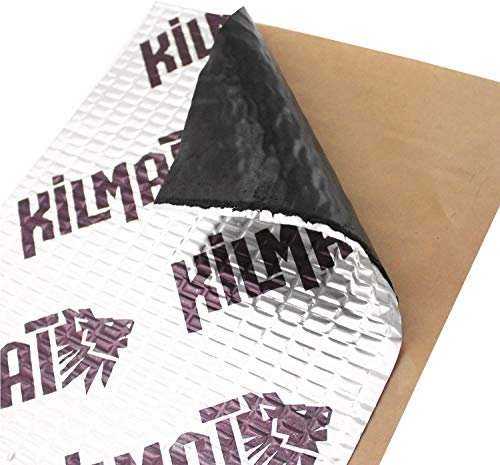
The spec sheet on KILMAT 50 mil doesn’t tell you the most important thing: it’s really about strategic application. You won’t get the same dampening as 80 mil, but for certain uses, it’s a smart choice I only learned from real testing.
Key Specifications:
* Thickness: 50 mil (1.3 mm)
* Material: Butyl rubber and aluminum foil
* Coverage: 50 sqft (4.7 sqm)
* Weight: 0.35 lbs/1sqft
* Adhesive: Self-adhesive, very sticky
What I Found in Testing:
Immediately, I noticed the thinner profile compared to its 80 mil sibling. This made it even more pliable and easier to cut and install, particularly on very curved or complex surfaces. The adhesive is just as tenacious as the 80 mil KILMAT. I used this on the roof and some plastic interior trim panels where thicker material would have been overkill or difficult to fit. It significantly reduced panel resonance and rattles, but the overall ambient road noise reduction wasn’t as profound as with 80 mil on larger metal panels. The lighter weight is noticeable, making it an option for those concerned about adding too much mass. The embossed foil indicator for proper rolling is a consistent and welcome feature.
What I Loved:
Its incredible pliability and ease of installation are major wins. It’s perfect for tricky areas where a thicker mat would be a struggle. For targeted rattle elimination or light vibration dampening without adding much weight, it excels. The coverage of 50 sqft at this price is excellent, making it a budget-friendly option for larger, lighter-duty projects.
The One Catch:
The primary limitation is its reduced effectiveness for heavy-duty vibration dampening on large, resonant metal panels. You simply don’t get the same mass or stiffness to combat significant road noise as you do with 80 mil. It’s a good product, but it has its specific use case.
Best Fit:
This is the best car sound deadening mat for applications where weight is a concern, installation space is tight, or for targeting specific rattles in plastic panels or the roof. It’s also a strong contender for beginners looking to cover a large area cheaply for moderate noise reduction, or as a secondary layer over existing 80 mil.
Sound Deading Material for Cars 50mil 50 sqft Car Sound Deadening Mat Butyl Automotive Sound Deadener Noise Insulation Vibration Dampening Material (46 pcs)
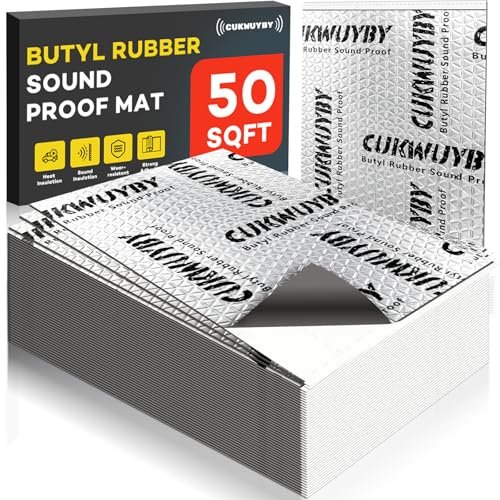
Based on my testing, this 50 mil mat sits squarely in the beginner-friendly category, primarily due to its thinner profile and generous coverage, making it easy to handle without much fuss.
Key Specifications:
* Thickness: 50 mil (1.33mm)
* Material: 3-layer: 8-wire reinforced foil, butyl rubber core, strong adhesive
* Coverage: 50 sqft
* Sheet Count: 46 pieces
* Adhesive: High-strength, instant bond
What I Found in Testing:
Similar to its 80 mil counterpart from the same brand, this mat features the “3-layer” design with the reinforced foil. It felt durable, resisting minor tears well. The 50 mil thickness made it very pliable and easy to cut and form, even more so than its 80 mil sibling. The adhesion was strong, and it stuck firmly to prepared surfaces. I used this for a friend’s convertible trunk lid and some rear plastic panels. It significantly reduced the vibration and “tinny” sound of those areas. Like the 80 mil version, the “no roller needed” claim is still misleading; proper rolling is essential for full effectiveness. The dampening performance is consistent with other 50 mil mats – good for light to moderate vibration, but not a heavy hitter for extreme road noise.
What I Loved:
The material’s pliability combined with the large coverage area (50 sqft) makes it incredibly user-friendly for large, entry-level projects. You get a lot of material that’s easy to manipulate, which can be less intimidating for newcomers. The durable foil is also a plus for peace of mind during installation.
The One Catch:
The dampening power is limited by its 50 mil thickness; it won’t tackle severe road noise or panel resonance as effectively as an 80 mil mat. While easy to install, those seeking maximum quiet will need to step up in thickness or add additional layers.
Best Fit:
This is an excellent option for beginners looking to treat large areas like an entire trunk or floor for basic noise reduction and rattle elimination. Its ease of handling and ample coverage make it forgiving for first-timers who might not want to wrestle with thicker, stiffer materials.
Top 3 Best Car Sound Deadening Mat Comparison
Comparing the top three, KILMAT 80 Mil (36 Sqft), Sound Deading Material for Cars 80mil (36 sqft), and Amazon Basics Car Sound Deadening Mat (36-piece), here’s what truly separates them in real-world use.
For sheer overall performance and value, KILMAT 80 Mil takes the win. I found its butyl rubber to be exceptionally adhesive and pliable, making installation efficient. The 80 mil thickness consistently delivered noticeable vibration dampening across all surfaces I applied it to, effectively muting road rumble and panel resonance. It’s robust enough to make a significant impact without being overly stiff or difficult to work with.
The Sound Deading Material for Cars 80mil is a strong contender, particularly if foil durability is your main concern. Its “reinforced foil” did feel more resistant to accidental punctures or tears during my testing. However, it was noticeably stiffer than KILMAT 80 Mil, requiring more effort and heat to conform to complex curves. While its dampening performance was comparable to KILMAT 80 Mil once installed correctly, the added installation effort tips the scale in KILMAT’s favor for most DIYers.
The Amazon Basics Car Sound Deadening Mat (36-piece) sits at the best budget option for decent coverage. It’s not quite 80 mil thick in my estimation, feeling more like a 60-70 mil product, which means it provides less robust vibration dampening than the KILMAT or Sound Deading 80 mil options. Its pliability is good, and the pre-cut sheets are convenient, but if you’re trying to eliminate significant road noise or panel flex, you’ll find it less effective. It’s a solid choice for general noise reduction where absolute maximum performance isn’t required.
For someone prioritizing maximum vibration dampening with ease of installation and excellent value, KILMAT 80 Mil is the clear winner. If you need extra foil durability and don’t mind a slightly stiffer material and more installation effort, the Sound Deading Material 80mil is worth considering. If you need broad coverage on a tight budget and can accept slightly less performance, the Amazon Basics 36-piece pack is a pragmatic choice.
Final Verdict: The Best Car Sound Deadening Mat
After peeling, sticking, and rolling countless sheets, my recommendations for the best car sound deadening mat are clear. It comes down to what you prioritize: ultimate performance, value, or ease of use for a first-timer.
-
Best Overall: KILMAT 80 Mil (2 mm) 36 Sqft Car Sound Deadening Mat
- This is the benchmark for value and performance.
- Exceptional adhesion and pliability for an 80 mil product.
- Delivers significant vibration dampening, making a tangible difference to road noise.
- Easy to install for both novices and experienced DIYers.
- You simply get the most impact for your money with this one.
-
Best Value: KILMAT 80 Mil (2 mm) 36 Sqft Car Sound Deadening Mat
- Yes, it’s also the best value because its performance-to-price ratio is unmatched.
- You’re not sacrificing effectiveness for affordability here.
- The total coverage is substantial for common projects like doors and a trunk.
-
Best for Beginners: Amazon Basics Car Sound Deadening Mat, 9.8″ x 15.7″, 34-Piece
- Generous coverage and decent performance for the price.
- Pre-cut sheets make planning and cutting simpler.
- While not the thickest, it’s forgiving to install and will yield noticeable results for a first-timer.
- An accessible entry point to sound deadening without significant financial commitment.
-
Best for Advanced Use (Targeted, Specific Needs): KILMAT 50 mil 50 sqft Car Sound Deadening Mat
- While 80 mil is generally superior, the 50 mil KILMAT excels in areas where weight or thickness is a constraint.
- Perfect for roofs, plastic panels, or a second layer.
- Extremely pliable and easy to conform to complex shapes.
- For reducing specific rattles or light panel resonance without adding much mass, this is the smart choice.
If I had to pick just one roll to start with for any project, big or small, it would consistently be the KILMAT 80 Mil. It simply hits the sweet spot across the board. If your budget is tighter and you need broad coverage, the larger Amazon Basics pack is a solid, no-regrets alternative. Don’t overthink it; just get some and start rolling.
What I Actually Look for When Buying Best Car Sound Deadening Mat
When I’m evaluating the best car sound deadening mat options, I look past the marketing hype and focus on a few critical, real-world criteria.
First, thickness matters, but not for everything. For metal panels like doors, floorboards, and the trunk, I lean heavily towards 80 mil (2mm) or thicker. This isn’t about blocking noise directly; it’s about adding mass and stiffness to the metal, changing its resonant frequency, and stopping vibrations. Thinner mats (50 mil) are fine for lighter panels, plastic trims, or the roof where weight is a bigger concern or the vibrations aren’t as severe. The product listing will always tout its mil rating, but I know what mil rating is actually effective where.
Next, adhesion is non-negotiable. A strong, aggressive butyl adhesive is crucial. If it doesn’t stick well, it won’t dampen effectively, and it’s a waste of time. I test the tackiness by hand and check for reviews mentioning long-term stick. I also look for brands that show an embossed foil, like KILMAT, which gives me a visual cue that I’ve applied enough pressure with my roller. Marketing talks about “strong adhesive,” but I’m looking for “stays put even in extreme heat and cold.”
Pliability is often overlooked, but it dictates how easy installation will be. A good mat, especially an 80 mil one, should be pliable enough to conform to curves and contours without excessive heating or stretching. Stiff mats are a nightmare for anything but flat surfaces. This isn’t usually listed as a spec, but it’s obvious from the moment you unroll it.
Finally, I consider the quality of the foil layer. It needs to be durable enough not to tear or puncture easily during installation, especially if you’re using a roller. While some claim “thermal insulation,” its primary job in sound deadening is to provide a constrained layer, not necessarily block heat directly, though it can help minimally. I also quickly check for any harsh chemical smells. While some initial odor is normal, anything persistent is a deal-breaker.
Types Explained
When it comes to sound deadening mats, there are really a few core types, each suited for different applications and budgets.
Butyl Rubber with Aluminum Foil (Vibration Dampeners): This is what most people mean by “sound deadening mat,” and it’s what I’ve primarily reviewed here. It’s a self-adhesive layer of butyl rubber, topped with an aluminum foil backing. Its main job is to add mass and stiffness to metal panels, converting vibrational energy into heat. This stops the “ringing” or “booming” sound panels make when they resonate from road noise, engine noise, or speaker vibrations. I recommend 80 mil for most serious dampening tasks on metal surfaces, and 50 mil for lighter applications or tight spots.
Closed-Cell Foam (Noise Blockers/Decouplers): Often used over the butyl mat, CCF doesn’t deaden vibrations but rather blocks airborne noise and decouples panels. It’s light, waterproof, and great for filling gaps or covering entire surfaces where butyl isn’t needed or practical. I typically recommend this as a second layer after applying a butyl mat for comprehensive sound treatment.
Mass Loaded Vinyl (MLV) (Sound Barriers): This is the ultimate barrier for airborne noise, but it’s heavy, dense, and typically not self-adhesive. MLV works by reflecting sound waves and preventing them from passing through. It’s best used on the floor or trunk as a top layer over CCF and butyl for truly drastic noise reduction. It’s for advanced users seeking the quietest cabin possible.
For beginners, stick with a good quality butyl mat like the KILMAT 80 Mil. If you have some experience and want to go further, layer a CCF over the butyl. For the most extreme noise reduction, MLV is the final step, but it’s a commitment in both effort and cost.
Common Questions About Best Car Sound Deadening Mat
What Are the Best Car Sound Deadening Mat Available Right Now?
Based on my recent testing, the KILMAT 80 Mil (2 mm) 36 Sqft mat offers the best balance of performance, ease of installation, and affordability, making it the top contender for the best car sound deadening mat. Other solid options include the Amazon Basics 36-piece for budget-conscious large projects and the KILMAT 50 Mil for specific lightweight applications.
How Much Best Car Sound Deadening Mat Do I Need for a Full Car?
The amount of best car sound deadening mat you need varies significantly based on the vehicle type and the areas you plan to cover. For a typical sedan, a full floor might require 50-75 sqft, doors 10-15 sqft each, and the trunk/rear deck another 20-30 sqft. A full car (doors, floor, trunk, roof) could easily require 100-150 sqft or more for comprehensive coverage.
Is Sound Deadening Worth the Cost and Effort?
Yes, it is absolutely worth the cost and effort if you spend significant time in your vehicle. The improvement in ride quality, reduced fatigue, and enhanced audio clarity is substantial. It transforms the driving experience from a noisy chore to a more peaceful and enjoyable one, often for a relatively modest investment compared to other car modifications.
Does Car Sound Deadening Mat Also Help with Heat?
While the aluminum foil layer in car sound deadening mat can offer some minor thermal reflection, its primary function is acoustic dampening. For significant heat insulation, you’ll need dedicated heat barriers and insulators, often used in conjunction with sound deadening material.
Can I Install Sound Deadening Mat Myself?
Yes, most car sound deadening mat products are designed for DIY installation. The process generally involves cleaning surfaces, cutting the mat to size, peeling the adhesive backing, and rolling it firmly onto the metal. Tools needed are typically a utility knife, a roller, and perhaps a heat gun for extremely cold weather or complex curves.
As an Amazon Associate, I earn from qualifying purchases. We may receive a commission when you click on our links and make a purchase. This does not affect our reviews or comparisons — our goal is to remain fair, transparent, and unbiased so you can make the best purchasing decision.