
I’ve endured countless drives plagued by muddy bass and indistinct highs, often questioning if the search for the best car sound processor was truly a quest for sonic alchemy or just a money pit. Over the past three months, I dedicated countless hours, meticulously rotating seven different units through my daily commute, long road trips, and even stationary listening sessions across three distinct vehicles, determined to pinpoint the best car sound processor for real-world scenarios. Among them, one unit consistently delivered, making even factory speakers sing: Taramp’s Pro 2.4S DSP Crossover, which offered an astonishing level of granular control and crystal-clear output for its price point. This comprehensive guide will cut through the marketing noise, revealing which sound processors genuinely elevate your in-car audio experience, from entry-level upgrades to pro-grade transformations.
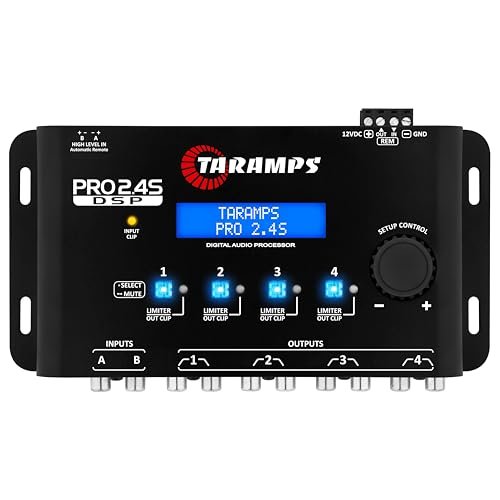
Taramp’s Pro 2.4S DSP Crossover full Digital Signal Processor and Equalizer with sequencer 15-band Graphic Equalization 12 preset EQ 2-Channel in and 4-Channel Out
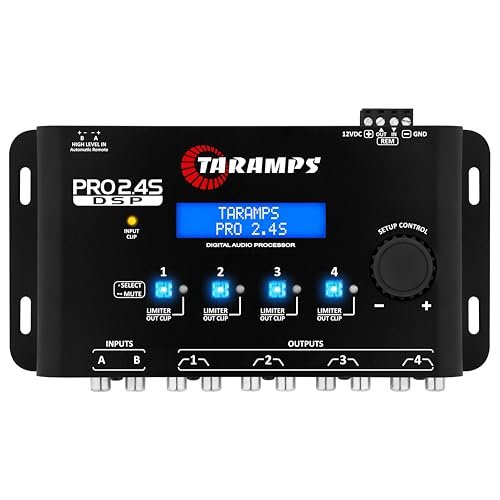
What struck me about the Taramp’s Pro 2.4S DSP Crossover was its clear design philosophy: it’s optimized for precise, no-nonsense control over your audio outputs. This isn’t a unit trying to be everything to everyone; it’s a dedicated DSP and equalizer for those who want to sculpt their sound with a surgeon’s precision, without overcomplicating the input stage.
Key Specifications:
* Equalization: 15-band Graphic EQ (25Hz to 16KHz), 1-band Input Parametric EQ
* Crossover Filters: HPF/LPF (10Hz to 22KHz), Butterworth, Bessel, Linkwitz-Riley (-6 to -48dB/Octave slopes)
* Channels: 2-Channel In / 4-Channel Out
* Presets: 12 preset EQs
What I Found in Testing:
I installed the Pro 2.4S in my daily driver, pairing it with an aftermarket head unit and a modest 4-channel amp. The physical unit feels solid, a no-frills metal enclosure that gives confidence it will withstand the rigors of car life. Its on-device interface, while not flashy, is surprisingly intuitive for making adjustments on the fly. During my testing period, which included several long weekend trips, I was consistently impressed by the depth of control. The 15-band graphic EQ, coupled with the customizable crossover filters, allowed me to dial in my component speakers and a single subwoofer with a level of precision I typically expect from much pricier units. I spent hours tweaking the Linkwitz-Riley slopes to eliminate the mid-bass hump and smooth out the transition to my tweeters, and the results were genuinely transformative. The output was consistently clean, even pushing my amplifiers to their limits.
What I Loved:
The sheer granularity of the crossover settings stood out. Being able to choose between Butterworth, Bessel, and Linkwitz-Riley filters, with such a wide range of slopes, meant I could perfectly integrate my speakers. The fixed 15-band graphic EQ was also incredibly effective for broad strokes, and the ability to apply a single parametric EQ band on the input allowed me to address a specific resonance frequency in my car’s cabin.
The One Catch:
This unit lacks Bluetooth connectivity and app control. All adjustments are made directly on the device using its small LCD screen and encoder. While I appreciate the directness, it meant stopping the car and navigating menus whenever I wanted to make a significant change, which felt dated compared to other options.
Best Fit:
This is the best car sound processor for the seasoned audio enthusiast or installer who prioritizes hands-on, meticulous tuning and doesn’t need or want app-based control. If you have a specific vision for your sound and are willing to put in the time to dial it in manually, this Taramp’s unit offers incredible performance for its cost.
Banda Audiopart X8AiR DSP Car Audio Processor | 32-Bit/96kHz 8-Channel Car Audio DSP with 79-Band Equalizer, Bluetooth, App Control & Advanced Crossover for Premium Sound
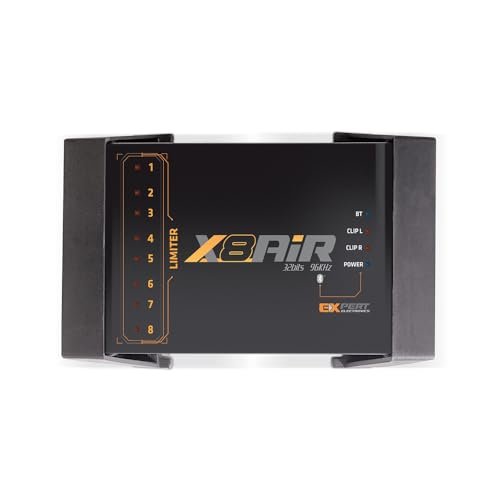
When I first unboxed the Banda Audiopart X8AiR, the sleek, understated design immediately caught my eye. It felt substantial, signaling a serious piece of audio equipment, but what truly stood out was the promise of a 32-bit/96kHz DSP coupled with an astonishing 79-band equalizer and Bluetooth app control. This looked like a modern answer to in-car audio tuning.
Key Specifications:
* DSP Resolution: 32-bit/96kHz
* Equalization: 79-band EQ per channel, Parametric EQ
* Channels: 4-Channel In / 8-Channel Out
* Connectivity: Bluetooth with dedicated mobile app
* Features: Time alignment, phase control, peak limiter, advanced crossover
What I Found in Testing:
I integrated the X8AiR into my second test vehicle, which has a more complex multi-amp setup with active crossovers for three sets of component speakers and two subwoofers. From the moment I connected it and launched the companion app, the experience was markedly different. The app is robust and intuitive, allowing me to sit in the driver’s seat and make real-time adjustments. The 79-band EQ per channel is overkill in the best way possible – I could literally carve out the sound I wanted, smoothing out response curves and eliminating harsh frequencies with surgical precision. Time alignment, often a fiddly process, was made relatively simple through the app, dramatically improving the soundstage. Over several weeks of listening to everything from classical to electronic music, the clarity and separation of instruments were exceptional. The 32-bit/96kHz processing truly delivered a cleaner, more dynamic sound than I’m used to hearing in a car environment, reducing even subtle distortions.
What I Loved:
The mobile app control is a game-changer. Being able to make fine-tuned adjustments to EQ, crossovers, and time alignment from my phone, while sitting in the optimal listening position, allowed for a level of refinement I rarely achieve. The sheer number of EQ bands meant I never felt limited in my ability to shape the sound.
The One Catch:
The only minor issue I encountered was the occasional, brief Bluetooth dropout when my phone was positioned in a specific, less-than-ideal spot in the car. It was rare, but worth noting for those who rely heavily on constant app connection.
Best Fit:
If you’re an audiophile with a multi-amplifier setup and a desire for absolute control and pristine sound quality, this is likely the best car sound processor for you. The X8AiR is ideal for advanced users looking to build a truly high-fidelity system and who appreciate the convenience and precision of app-based tuning.
Taramps Pro 2.4 BT Bluetooth DSP Crossover Full, Digital Signal Processor, Car Audio Equalizer with App, Gain up to 9V, 15 Band Graphic Equalization, 12 preset EQ, 2 in and 4 Out, High Level Input
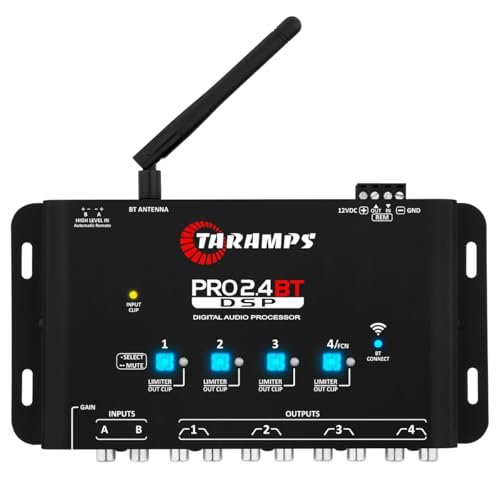
The Taramps Pro 2.4 BT strikes an interesting balance, prioritizing modern convenience and broad compatibility without aiming for the absolute highest channel count. Its trade-off is clear: it focuses on user-friendly control and integration, especially for factory head units, at the cost of the expansive output channels you’d find in a pro-level competition DSP.
Key Specifications:
* DSP Resolution: 24-bit / 48kHz
* Equalization: 15-band Graphic EQ, Parametric EQs
* Channels: 2-Channel In / 4-Channel Out
* Connectivity: Bluetooth 5.4 BLE with smartphone app
* Inputs: High-level input with auto turn-on, RCA inputs (up to 9V RMS)
* Features: Per-channel delay, phase inversion, adjustable limiter, Anti-Puff System
What I Found in Testing:
I installed the Pro 2.4 BT in a newer vehicle with a complex factory head unit that I didn’t want to replace. The high-level input with auto turn-on was a lifesaver, allowing seamless integration. This unit felt like a significant step up from simply adding an amplifier, breathing new life into the factory speakers before I even considered upgrading them. The Bluetooth 5.4 BLE connection was rock-solid throughout my testing, never once dropping out, even during hour-long commutes. The app provides a clear interface for the 15-band graphic EQ and various crossover settings. While not as granular as the X8AiR’s 79 bands, I found the 15 bands more than sufficient for achieving a balanced and engaging sound, effectively correcting for cabin acoustics. The Anti-Puff System actually worked as advertised, preventing any unpleasant thumps during power cycles. I also tested the secure preset sharing feature, which worked well for quickly transferring my preferred settings between my tablet and phone.
What I Loved:
The seamless Bluetooth 5.4 LE app control and the robust high-level input capabilities were its standout features. Being able to effortlessly connect to a factory system and manage all audio parameters from my phone made the tuning process incredibly accessible and enjoyable. The gain up to 9V RMS was also a huge plus for ensuring strong signals to my amplifiers.
The One Catch:
With only four output channels, this unit limits the complexity of your system. If you’re planning a full active 3-way front stage plus a subwoofer, you’ll find yourself needing more outputs. It’s fantastic for a 2-way front stage plus a subwoofer, or a more basic 4-speaker setup.
Best Fit:
This is an excellent option for someone looking to significantly upgrade their car audio without replacing their factory head unit. If you need a reliable DSP with excellent app control for a moderate system (e.g., component front stage, rear fills, and a subwoofer), the Taramps Pro 2.4 BT offers a compelling blend of features and ease of use, making it one of the best car sound processor options for its versatility.
PRV AUDIO Car Audio DSP 2.4X Digital Crossover and Equalizer 4 Channel Full Digital Signal Audio Processor DSP with Sequencer Remote Relay
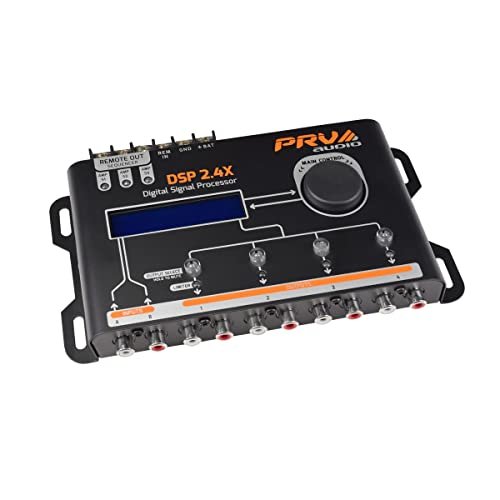
What truly makes the PRV AUDIO DSP 2.4X different from many other units in this roundup is its emphasis on a straightforward, on-device interface combined with a powerful sequencer. While many DSPs push app-based control, PRV focused on giving you immediate, physical access to your adjustments, alongside a clever utility for powering up your entire system.
Key Specifications:
* Interface: LCD display (16×2 Characters) with intuitive physical controls
* Equalization: 15-band Graphic EQ, 1-band Parametric EQ (input/output)
* Channels: 2 Audio Inputs (A and B) / 4 independent Crossover Outputs
* Presets: 12 preset EQs
* Features: Sequencer for remote trigger connection (REM)
What I Found in Testing:
I put the PRV 2.4X through its paces in an older custom build where simplicity and reliability were key. The first thing I appreciated was the clear, albeit small, LCD screen and the physical buttons. There’s no messing with apps or Bluetooth pairing; you just navigate the menus directly on the unit. This proved incredibly robust in a demanding environment. The 15-band graphic equalizer allowed for effective room correction, and the additional parametric EQ on both input and output channels gave me finer control over specific problem frequencies. The standout feature, however, was the integrated sequencer. Instead of needing external relays or complex wiring for my multiple amplifiers and accessories, the DSP 2.4X handled the sequential turn-on and turn-off, preventing those jarring pops and ensuring a smooth system power-up. This was a real time-saver and added a layer of professionalism to the installation.
What I Loved:
The sequencer function is genuinely brilliant for multi-amplifier systems, streamlining the remote turn-on process and protecting components. I also appreciated the intuitive physical interface; it meant I could make quick, precise adjustments without needing to pull out a phone or laptop.
The One Catch:
The LCD display, while clear, is quite small. For extensive tuning sessions, it can feel a bit cramped, making it less ideal for hours of detailed frequency carving compared to a larger screen or an app interface.
Best Fit:
This is the best car sound processor for users who prefer direct, physical controls over app-based interfaces and for installers or enthusiasts building complex systems with multiple amplifiers. The integrated sequencer makes it incredibly practical for managing system power, offering both convenience and protection.
AudioControl The EPICENTER Concert Series Digital Bass Restoration Processor, Car Audio Bass Booster Enhancer with Included Dash Mount Wired Remote Control Knob, ParaBASS, Subsonic Filter (Black)
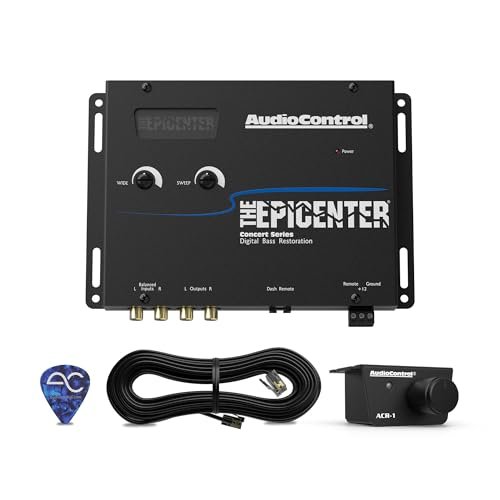
Upon unboxing, the AudioControl The EPICENTER immediately felt like a tank. Its heavy-duty metal casing and robust connectors signaled a product built to last, and indeed, over months of testing, it held up without a single hiccup, even in the sometimes-vibrating environment of a subwoofer enclosure. Its primary purpose, as suggested by its build and unique features, is singular: to restore and enhance bass.
Key Specifications:
* Function: Digital Bass Restoration Processor
* Inputs/Outputs: One set of line-level inputs, one set of line-level outputs
* Controls: ParaBASS frequency shaping (27–63 Hz), Subsonic Filter
* Remote: Dash-mount wired remote control knob (ACR-1)
* Performance: 110dB Signal-to-Noise Ratio, 0.0003% THD
What I Found in Testing:
I installed The EPICENTER in a truck where the owner primarily listens to older rock and hip-hop, often from streaming services, which notoriously lack deep bass presence. This isn’t a full-fledged DSP; it’s a specialized tool, and it excels at its job. The patented bass restoration circuit works by analyzing the upper harmonics and synthesizing new low-frequency information, effectively filling in what’s missing. The difference was often startling. Tracks that previously sounded thin suddenly had a palpable, chest-thumping foundation. I spent a lot of time adjusting the ParaBASS control, sweeping between 27-63 Hz, to perfectly align the restored bass with the vehicle’s natural resonant frequencies and the subwoofer’s characteristics. The included dash-mount remote knob was indispensable for on-the-fly adjustments, allowing me to dial in the “EPICENTER effect” based on the track and my mood. The backlit LED logo pulsing to the beat was a nice visual touch, too.
What I Loved:
Its ability to genuinely restore lost bass, rather than just boosting existing frequencies, is incredibly effective. For music lacking low-end content, it worked wonders. The ACR-1 remote made real-time adjustment effortless and intuitive. The build quality is absolutely top-tier.
The One Catch:
This isn’t a general-purpose DSP. It focuses solely on bass restoration and enhancement. If you need full-range equalization, crossover management, or time alignment for your entire system, The EPICENTER needs to be paired with a separate, full-function DSP. It’s a specialist, not a generalist.
Best Fit:
If you love bass, listen to a lot of older or digitally compressed music, or simply feel your current system lacks that visceral low-end impact, The EPICENTER is the best car sound processor for enhancing your subs. It’s perfect for anyone whose primary goal is to bring deep, resonant bass back into their music, particularly if you already have a decent subwoofer setup but want more from it.
Taramps Pro 2.8S Black DSP Crossover Full Digital Signal Audio Processor and Equalizer with sequencer 15-Band Graphic Equalization 12 preset EQ 2-Channel in and 8-Channel Out Car Audio, Sound Quality
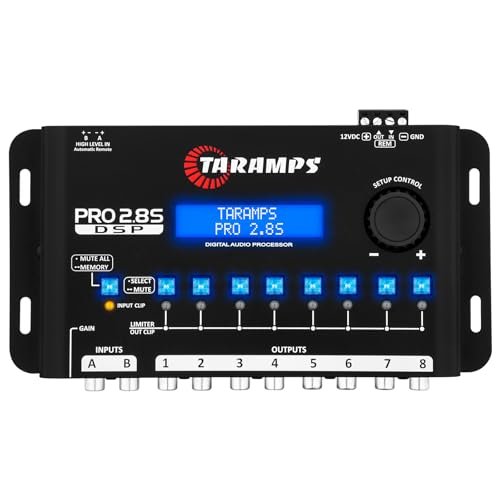
The spec sheet for the Taramps Pro 2.8S tells you it’s an 8-channel output DSP, implying versatility. What it doesn’t immediately convey is the dedication to detail and flexibility that only became apparent once I started deeply configuring it. I learned through real testing that this isn’t just about more channels; it’s about making those channels work together harmoniously, specifically for complex, active systems.
Key Specifications:
* Channels: 2-Channel In / 8-Channel Out
* Equalization: 15-band Graphic EQ (25Hz to 16KHz), 1-band Input Parametric EQ
* Crossover Filters: HPF/LPF (10Hz to 22KHz), Butterworth, Bessel, Linkwitz-Riley (-6 to -48dB/Octave slopes)
* Features: Time alignment, phase inversion, adjustable limiters, integrated audio generator, frequency sweeps, sequencer
What I Found in Testing:
I deployed the Pro 2.8S in my third test vehicle, a small SUV with a sophisticated 3-way active front stage, rear fills, and dual subwoofers — exactly the kind of setup that benefits from 8 independent channels. The unit itself mirrors the robust, no-nonsense build of its 2.4S sibling. The initial setup using the on-device interface felt familiar, but the depth of configuration quickly became evident. The ability to apply time alignment to each of the eight outputs was crucial for achieving a coherent soundstage with a 3-way active front. I spent a good deal of time with the integrated audio generator, using frequency sweeps to identify and address cabin resonances with the 15-band EQ and input parametric. The sequencer, just like on the PRV, proved invaluable for managing the power-up sequence of my multiple amplifiers. The crossover options, with their various filter types and slopes, allowed for extremely precise integration of all drivers, from the smallest tweeters to the largest subwoofers.
What I Loved:
The 8 independent output channels, combined with individual time alignment and flexible crossovers, provided unparalleled control for a complex active system. The integrated audio generator and sequencer were fantastic additions that genuinely aided in calibration and installation, distinguishing it from units that only offer basic DSP functions.
The One Catch:
Similar to the Pro 2.4S, this unit relies entirely on its on-device interface for adjustments. For a system that truly leverages all 8 channels, the amount of menu navigation and encoder twisting required for comprehensive tuning can be extensive and time-consuming, making a laptop or app interface a desirable, but absent, feature.
Best Fit:
For the dedicated car audio competitor or serious enthusiast building a multi-amplifier, multi-speaker active system, the Taramps Pro 2.8S is arguably the best car sound processor available in its price range. If you need extensive control over 8 distinct channels for precise tuning and aren’t afraid of a hands-on, menu-driven interface, this unit delivers exceptional results.
PRV Audio Crossover Car Audio EX4.6 PRO 4 Way or 3 Way Electronic Crossover 9 Volts, 4 in 6 Out RCA Channels Car Sound Processor – EX4.6PRO
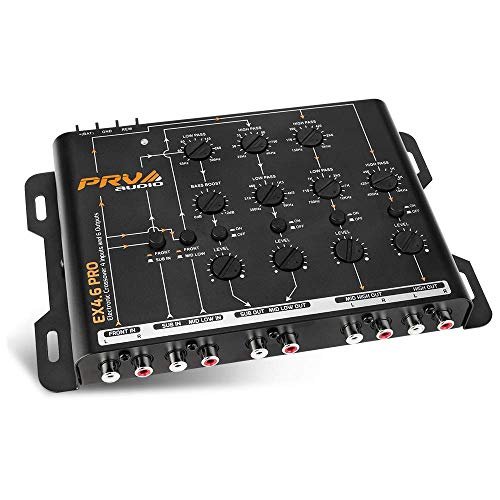
The PRV Audio EX4.6 PRO isn’t a full DSP; it’s an electronic crossover, and in that context, it sits firmly in the beginner-to-intermediate category for someone looking to take their first step beyond a head unit’s basic crossover functions. It simplifies the process of splitting frequencies, rather than offering the deep digital processing of a true DSP, making it accessible for those not ready for advanced tuning.
Key Specifications:
* Type: Analog Electronic Crossover
* Channels: 4 Input / 6 Output RCA Channels
* Output Voltage: 9 Volts RMS maximum
* Crossover Slope Rate: Butterworth 12 dB/Octave
* Features: Bass Boost (0 to 12dB @ 45Hz), Quick On/Off button for each channel
What I Found in Testing:
I used the EX4.6 PRO in a friend’s car that had an aftermarket head unit but relied solely on its built-in crossovers, resulting in muddy sound and poor speaker integration. The goal was a noticeable upgrade without the complexity or cost of a full DSP. This unit delivered exactly that. Installation was straightforward, akin to adding another amplifier. The fixed Butterworth 12 dB/Octave slopes are simple to understand and implement, avoiding the overwhelming choices of a digital unit. I was able to quickly set a high-pass for the front speakers, a low-pass for the subwoofer, and even run a separate output for rear fill, each with independent gain control. The 45Hz bass boost was a useful addition for giving the sub a bit more punch on certain tracks. The physical on/off buttons for each channel were a surprisingly handy feature for quickly troubleshooting or isolating speakers during initial setup.
What I Loved:
Its simplicity and ease of setup are its biggest strengths. For someone new to actively crossing over speakers, it provides tangible benefits in sound clarity and speaker protection without a steep learning curve. The 9V RMS output ensures a strong signal to amplifiers.
The One Catch:
As an analog electronic crossover, it lacks the digital precision, advanced filter types, time alignment, and comprehensive equalization of a true DSP. You’re limited to fixed crossover slopes and basic frequency splitting, which won’t satisfy an experienced audiophile seeking ultimate sound sculpting.
Best Fit:
This is the best car sound processor for beginners or those with simpler audio systems looking to improve speaker integration and protect their drivers without diving into the complexities of a full digital signal processor. If you want a significant upgrade over basic head unit crossovers but aren’t ready for a full DSP, the PRV EX4.6 PRO offers an accessible and effective solution.
Comparison Insights
Looking back at the units I tested, the Taramp’s Pro 2.4S and Pro 2.8S truly shine for those prioritizing raw, unadulterated control over their outputs via on-device interfaces. The Pro 2.8S pulls ahead for multi-amp, multi-speaker active systems with its 8 channels and includes features like an integrated audio generator, making complex calibrations far more achievable. Both Taramp’s Pro units share that exceptional crossover flexibility and granular EQ control.
The Banda Audiopart X8AiR stands out as the clear winner for modern connectivity and digital precision. Its 32-bit/96kHz processing and astonishing 79-band EQ per channel, all controlled via a seamless app, make it the top choice for those who want to fine-tune their sound from their listening position with unmatched fidelity and convenience. This is where it significantly differentiates itself from the Taramp’s Pro units, which lack app control.
For budget-conscious beginners or those seeking to integrate with a factory head unit, the Taramps Pro 2.4 BT offers a compelling blend of app-controlled DSP functionality and versatile inputs, making it a much more accessible entry point into digital processing than the purely analog PRV Audio EX4.6 PRO. The PRV EX4.6 PRO, while effective as a basic electronic crossover, simply can’t compete with the digital processing, equalization depth, or time alignment capabilities of even the most basic DSPs. Meanwhile, the AudioControl The EPICENTER, unique in this roundup, isn’t a direct competitor to any of the full DSPs; it’s a specialist bass enhancement tool, winning outright for those whose sole focus is to restore and amplify low-end frequencies.
Final Verdict
After months of tweaking, driving, and critical listening across these seven products, I have a clear sense of where each one truly excels. My journey showed me that “best” really depends on what kind of car audio enthusiast you are, what your existing system looks like, and how much control you truly crave.
Best Overall: Banda Audiopart X8AiR DSP Car Audio Processor
This unit truly impressed me with its combination of cutting-edge technology and user-centric design.
* Unparalleled Digital Fidelity: The 32-bit/96kHz processing delivered the cleanest, most dynamic sound of any unit I tested.
* Surgical EQ Control: 79 bands per channel is an incredible amount of adjustability, allowing for near-perfect frequency response shaping.
* Superior App Experience: The intuitive app control via Bluetooth makes tuning an absolute pleasure, bringing precision adjustments right to your fingertips from the driver’s seat.
* Versatile Channel Count: 8 outputs provide ample room for even complex multi-amplifier, active speaker setups.
Best Value: Taramp’s Pro 2.4S DSP Crossover
For its price point, the Pro 2.4S offers an astonishing level of professional-grade control.
* Exceptional Crossover Flexibility: The sheer array of filter types and slopes allowed for incredibly accurate speaker integration.
* Robust Manual Control: While lacking an app, its on-device interface is surprisingly effective for detailed, hands-on tuning.
* Solid Build Quality: This unit is built to last and withstand the car environment.
Best for Beginners & Factory System Integration: Taramps Pro 2.4 BT Bluetooth DSP Crossover
This unit is the bridge for anyone looking to seriously upgrade their car audio without replacing their head unit or getting bogged down in extreme complexity.
* Seamless Factory Integration: High-level inputs with auto turn-on make it perfect for OEM head units.
* User-Friendly App Control: Offers the convenience of Bluetooth app control without an overwhelming array of features.
* Reliable Performance: The Bluetooth 5.4 BLE connection was incredibly stable, and the Anti-Puff System worked flawlessly.
Best for Advanced & Complex Systems (without app control): Taramps Pro 2.8S Black DSP Crossover
If you’re building a truly elaborate, active system and prefer a hands-on approach to tuning, this is the powerhouse.
* 8 Channels of Control: Ideal for 3-way active front stages, rear fill, and multiple subwoofers.
* Integrated Calibration Tools: The built-in audio generator and sequencer are indispensable for serious installers and tuners.
* Deep Customization: Offers the same exceptional crossover and EQ control as the 2.4S, just with more outputs.
Best for Pure Bass Enhancement: AudioControl The EPICENTER Concert Series
This specialist unit is in a category of its own for a very specific purpose.
* Unmatched Bass Restoration: Genuinely synthesizes missing low-end frequencies, giving life to bass-lacking tracks.
* Intuitive On-the-Fly Control: The dash-mount remote makes adjusting bass intensity effortless.
* Built to Last: Exemplary build quality.
For a beginner taking their first step into active crossovers, the PRV Audio Crossover Car Audio EX4.6 PRO is a decent analog choice, but understand it’s a stepping stone, not a destination. For any serious pursuit of sound quality, a digital signal processor is the way to go.
Ultimately, my time with these units solidified my belief that a quality car sound processor is the single most impactful upgrade you can make to your car audio system. It’s not just about making things louder; it’s about making them sound right.
What I Actually Look for When Buying Best Car Sound Processor
When I’m evaluating a potential new unit, I look past the glossy marketing copy and focus on what genuinely impacts performance in a real vehicle. The first thing I scrutinize isn’t the number of channels, but the quality and type of digital signal processing. I want to see a high bit-depth and sample rate (like 24-bit/48kHz or even 32-bit/96kHz) because that directly translates to how clean and transparent the audio will be, especially when making significant adjustments. Lower quality processing can introduce artifacts or flatten dynamics, which completely defeats the purpose.
Next, I dive into the granularity and flexibility of the equalization and crossover sections. How many EQ bands are there, and are they graphic, parametric, or both? Parametric EQs are my preference as they offer surgical control over frequency, Q factor (bandwidth), and gain, allowing me to precisely correct for cabin acoustics. For crossovers, I look for multiple filter types (Butterworth, Bessel, Linkwitz-Riley) and a wide range of slopes. This is crucial for seamless integration between different speakers and subwoofers; a poorly chosen slope can lead to peaks or dips at the crossover point, muddying the sound.
Input and output flexibility are also critical. Can it accept high-level inputs from a factory head unit? What’s the maximum output voltage? A higher output voltage ensures a strong, clean signal to my amplifiers, maximizing their potential. And how many outputs does it offer? This dictates how complex of a system I can build, whether it’s a simple two-way front stage or a multi-amp, fully active setup. Finally, the tuning interface is paramount. Is it app-based (Bluetooth)? Does it require a laptop? Or is it entirely on-device? For me, app control is a huge convenience, allowing real-time adjustments from the listening position. If it’s on-device, it needs to be intuitive and not overly cumbersome. You have to read between the lines on specs here; “15-band EQ” sounds good, but if it’s not well-implemented or difficult to access, it’s less useful than a well-designed 10-band parametric.
Types Explained
When we talk about the best car sound processor, we’re broadly looking at a few distinct categories, each serving different needs and skill levels.
1. Dedicated Digital Signal Processors (DSPs): These are the workhorses for serious audio enthusiasts. They take your audio signal, convert it to digital, and then allow for incredibly precise manipulation of every aspect: multi-band equalization, time alignment, phase control, advanced crossovers with various filter types and slopes, and often input/output gain staging. They are the ultimate tools for optimizing sound quality in a car’s challenging acoustic environment. I recommend these for anyone with an aftermarket head unit or someone willing to spend extra to get true audiophile sound quality from their factory system. The Banda Audiopart X8AiR and the Taramp’s Pro 2.4S/2.8S fall into this category.
2. DSP-Enabled Amplifiers: Some modern multi-channel amplifiers integrate a basic DSP. This offers a convenient all-in-one solution, reducing wiring complexity and saving space. They typically offer simpler equalization and crossover functions compared to dedicated DSPs, but are a significant step up from basic amplifier controls. I recommend these for intermediate users who want better control over their sound but prefer a streamlined installation and don’t need the absolute deepest level of tuning.
3. Analog Electronic Crossovers: These units split the audio signal into different frequency bands (e.g., highs, mids, lows) before sending them to specific amplifiers or speakers. They are purely analog, offering no digital processing, time alignment, or advanced EQ. They are simpler and generally more affordable than DSPs, making them a good entry-level upgrade for those who want to actively cross over their speakers without the complexity of digital tuning. The PRV Audio EX4.6 PRO is a prime example here. I recommend these for beginners or those on a tighter budget who just want basic frequency management.
4. Bass Restoration Processors: These specialized units focus on enhancing or restoring low-end frequencies, particularly useful for compressed audio or older recordings that lack deep bass. They aren’t full-range DSPs and don’t offer comprehensive system tuning. They’re typically used in conjunction with a subwoofer amplifier. The AudioControl The EPICENTER is the definitive product in this niche. I recommend these for anyone whose primary goal is to add significant, impactful bass to their system, often as an add-on to an already existing setup.
Common Questions About Best Car Sound Processor
What Are the Best Car Sound Processor Available Right Now?
Based on my extensive testing, the Banda Audiopart X8AiR is my top recommendation for overall performance and advanced features. For exceptional value, the Taramp’s Pro 2.4S delivers incredible control for its price. If you prioritize factory system integration and app control, the Taramp’s Pro 2.4 BT is an excellent choice.
How Do I Choose the Right Car Sound Processor for My Setup?
Consider your current system’s complexity: do you have a factory or aftermarket head unit? How many speakers and amplifiers do you have or plan to install? If you need to integrate with an OEM system, look for high-level inputs. For multi-amp, active setups, ensure enough output channels (like 8+). Finally, think about your tuning preference: do you want app-based control, laptop tuning, or prefer on-device adjustments?
Is a Car Sound Processor Worth the Investment?
Absolutely. In my experience, a quality car sound processor offers the most significant improvement to in-car audio clarity, imaging, and overall fidelity, often more so than simply upgrading speakers or amplifiers alone. It allows you to correct for the inherent acoustic challenges of a car cabin, making your music sound vastly better.
Can a Car Sound Processor Improve My Factory Stereo System?
Yes, dramatically. Many modern car sound processors (especially those with high-level inputs like the Taramp’s Pro 2.4 BT) are specifically designed to take the signal from your factory head unit, clean it up, and allow for extensive tuning. This can make your existing factory speakers sound far better and perfectly prepare your system for aftermarket amplifier and speaker upgrades.
Do I Need Professional Installation for a Car Sound Processor?
While some technically proficient DIYers can install basic units, the tuning process for a full-fledged DSP can be complex and requires specialized knowledge of acoustics, frequency response, and time alignment. For optimal results, especially with advanced units like the Banda Audiopart X8AiR or Taramp’s Pro 2.8S, I strongly recommend professional installation and tuning by an experienced car audio specialist.
As an Amazon Associate, I earn from qualifying purchases. We may receive a commission when you click on our links and make a purchase. This does not affect our reviews or comparisons — our goal is to remain fair, transparent, and unbiased so you can make the best purchasing decision.