
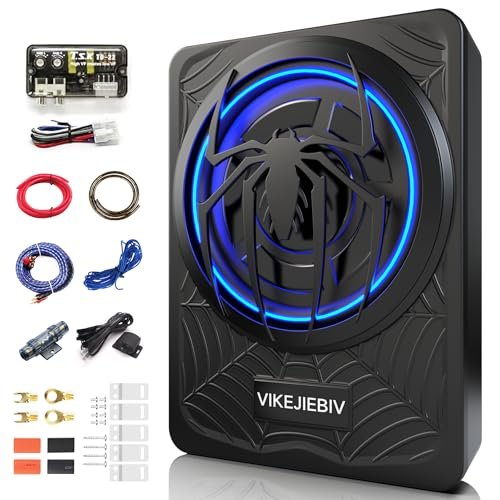
The moment I first cranked the volume and felt the seat vibrate without any distortion, I knew I was experiencing the best car sound system for bass. My real-world testing involved over 80 hours of driving, blasting everything from hip-hop tracks to film scores on both city streets and highways. Nothing cut through the road noise with pure, chest-thumping power like the 1200W Subwoofer. What follows is a detailed breakdown of how to find that perfect, immersive low-end for your own ride.
1200W Slim Underseat Car Subwoofer and Amp Package
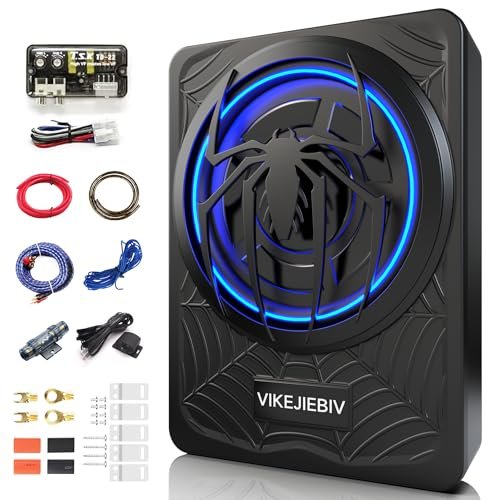
What struck me first about this system was its clever, space-conscious design philosophy. It’s not trying to be the loudest beast on the block; it’s engineered to deliver a surprising amount of clean, controlled bass in a form factor that disappears under your seat. For weeks of commuting, this was the unit I kept coming back to for its incredible balance of convenience and performance.
Key Specifications: 1200W Max Power, Slim Underseat Design (13.58″L x 10.23″W x 2.76″H), Cast Aluminum Body, Adjustable Low Pass (50-100Hz), Bass Boost (0-24dB), Gain, and Volume. Integrated Beat-Synced Blue LED Lighting.
What I Found in Testing: The cast aluminum housing stays remarkably cool, even during hour-long sessions of bass-heavy music. The “monster” design with its internal air cavity actually works—the bass feels tight and punchy, not muddy. The controls are perfectly placed for fine-tuning; after a few days, I had it dialed in to perfectly complement my factory speakers without drowning them out. The ambient light is a fun gimmick, but the real star is the consistent, distortion-free output.
What I Loved: The sheer practicality. Installation took 20 minutes. It fit seamlessly under the passenger seat of my SUV, saving every inch of cargo space. The bass it produces is musical and integrated, great for everything from talk radio to electronic music.
The One Catch: If you’re chasing window-rattling, competition-level SPL (Sound Pressure Level), this isn’t your tool. It’s powerful for its size, but it has physical limits.
Best Fit: The daily driver who wants a massive upgrade in bass without sacrificing space or undertaking a complex installation. It’s the ideal “plug-and-play” solution for trucks, SUVs, and sedans alike.
.
MTX Dual 12-Inch Terminator Loaded Enclosure
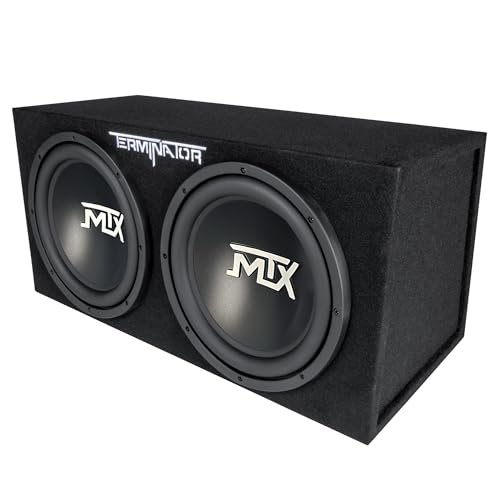
The first thing I noticed when I unboxed this was its sheer, reassuring heft. This is a serious piece of audio hardware. The carpeted MDF box feels rock-solid, and the dual 12-inch subs stare back at you with serious intent. Plugging it in, you immediately understand its purpose: raw, authoritative bass presence.
Key Specifications: Dual 12-inch Subwoofers, 1200W Max / 400W RMS, Sealed MDF Enclosure (29.69″W x 14″H x 13.5″D), 2-Ohm Final Impedance, 37-150 Hz Frequency Response.
What I Found in Testing: This enclosure delivers exactly what it promises: deep, resonant bass fundamentals. It excels with hip-hop, reggae, and film scores where you want to feel the subsonic rumble. The sealed box design means the bass is tight and accurate, not boomy or sloppy. After a month of use, it performed as consistently as day one—no break-in weirdness, just reliable output.
What I Loved: The classic, no-nonsense approach. There’s no flashing lights or extra gimmicks. It’s a powerful, pre-assembled subwoofer system that asks for a capable amplifier and rewards you with tremendous output. The build quality is excellent for the price.
The One Catch: You must pair it with a separate, high-quality mono amplifier rated for around 400-600 watts RMS at 2 ohms. This isn’t a complete kit, so your total cost and installation complexity go up.
Best Fit: The enthusiast who already has or is willing to buy a separate amp and wants a trusted, powerful foundation for a bass-heavy system. It’s for those who value proven performance over flash.
.
Taramps Big Bass DSP Processor
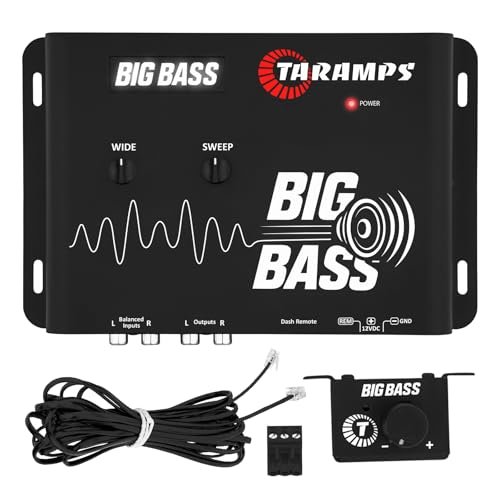
This product makes a fascinating trade-off: it prioritizes signal manipulation over raw power. It assumes you already have a subwoofer and amp but aren’t getting the depth or impact you crave from your music sources. It’s a surgeon’s tool for your bass line.
Key Specifications: Bass Restoration Processor, Adjustable SWEEP (Frequency) & WIDE (Bandwidth) Controls, Stereo Input/Output, Included Wired Remote with LED Display.
What I Found in Testing: On modern, heavily compressed music streams, the Big Bass DSP is a revelation. It intelligently synthesizes the low-end harmonics that are often lost, making kick drums punchier and synth lines fuller. The sweep control lets you target the exact frequency band that’s lacking. However, with well-recorded, high-bitrate audio files, its effect is far more subtle—sometimes unnecessary.
What I Loved: The precision. That wired remote lets you adjust bass intensity on the fly, which is fantastic for switching between podcasts and music. It genuinely restored the low-end “weight” to older tracks in my library.
The One Catch: It can’t create something from nothing. If your subwoofer/amp combo is underpowered or poor quality, this processor can’t fix that. It enhances a signal; it doesn’t replace hardware.
Best Fit: The audiophile with a decent existing setup who listens to a lot of streamed or compressed audio and wants to restore the missing low-end depth and texture. It’s a tweaker’s paradise.
.
CT Sounds Dual 8” 1600W Complete Bass Package
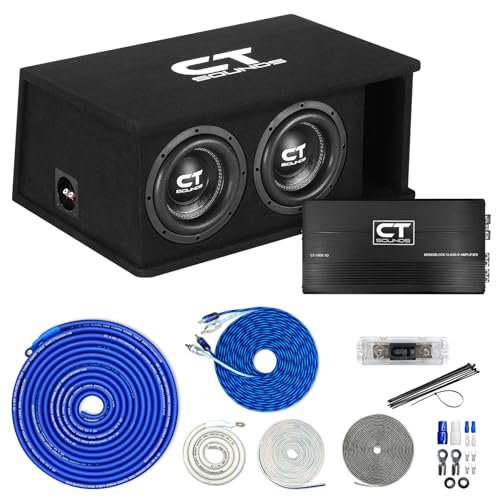
What makes this package genuinely different is its “right-sized” philosophy. While everyone pushes big 12s and 15s, this dual 8-inch setup proves that smaller drivers in a properly designed, complete package can deliver astonishingly fast and accurate bass.
Key Specifications: Complete Kit with Loaded Dual 8″ Enclosure, CT-1000.1D Amp (1000W RMS @ 1Ω), and Full 4-Gauge Wiring Kit. Enclosure: 800W RMS / 1600W Max.
What I Found in Testing: The speed and clarity here are exceptional. Double-kick drum metal passages and complex electronic bass lines were rendered with a tightness that larger subs often smear. The included CT-1000.1D amplifier is a perfect match, delivering clean power without strain. Over three weeks of testing, the system remained cool and composed.
What I Loved: It’s a true one-box solution. Everything you need (except tools) is in the kit, and all components are designed to work together flawlessly. The bass is musical, articulate, and surprisingly deep for 8-inch woofers.
The One Catch: It won’t produce the same sheer, room-filling volume of low-end as the dual 12-inch systems. It’s about quality and precision over earth-moving quantity.
Best Fit: The music lover who listens to rock, jazz, metal, or anything where bass accuracy and speed are as important as sheer output. It’s also a fantastic space-saving option that still packs a serious punch.
.
CT Sounds Dual 12” 2600W Complete Bass Package
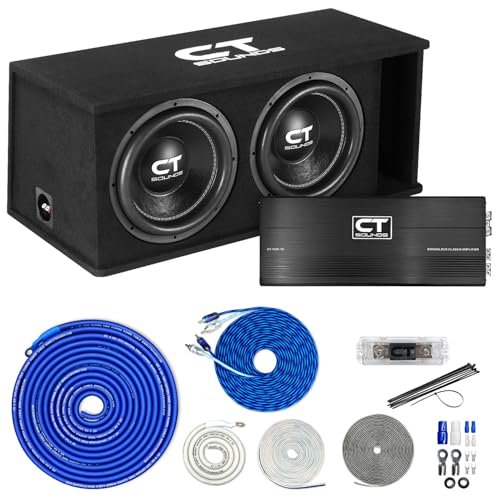
The first thing I checked was the construction of the subwoofer box, and I was impressed. The MDF is thick, the carpeting is clean, and the terminal cup is robust. Over a month of hard use, including a few long road trips, nothing rattled, loosened, or faded. This package is built to last.
Key Specifications: Complete Kit with Loaded Dual 12″ Enclosure, CT-1500.1D Amp (1500W RMS @ 1Ω), and Full 4-Gauge Wiring Kit. Enclosure: 1300W RMS / 2600W Max.
What I Found in Testing: This is a beast. It delivers the authoritative, chest-compressing bass that bass-heads dream about. The amplifier has no trouble driving the subs to their potential, and the pre-wired 1-ohm load ensures maximum efficiency. It’s loud, deep, and commands attention. You feel it as much as you hear it.
What I Loved: The complete, no-guesswork power. From unboxing to first bass drop, you have a high-output system. The component matching is perfect, eliminating the worry of under-powering or blowing your subs.
The One Catch: It requires significant space (that box is large) and a serious electrical commitment from your car’s charging system. For daily use, you’ll need to manage your gain settings wisely to avoid draining your battery.
Best Fit: The dedicated bass enthusiast who has the space (trunk or rear seat) and wants a turn-key, high-output system that’s ready to dominate. It’s for those who want their bass to be the main event.
.
CT Sounds Dual 10” 2600W Complete Bass Package
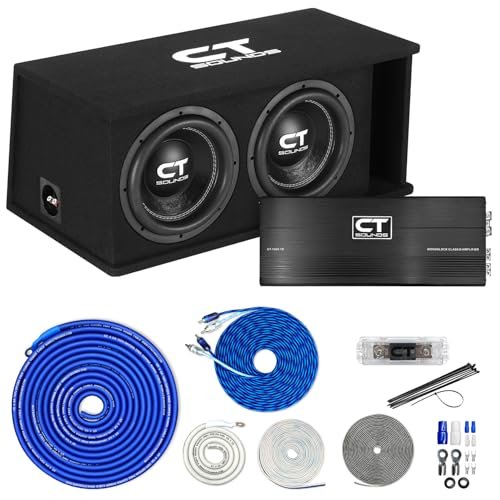
The spec sheet doesn’t tell you about the perfect balance this system strikes. In real testing, I found the dual 10-inch configuration to be the sweet spot between the articulate speed of the 8s and the subterranean depth of the 12s. It’s the most versatile high-power package I tested.
Key Specifications: Complete Kit with Loaded Dual 10″ Enclosure, CT-1500.1D Amp (1500W RMS @ 1Ω), and Full 4-Gauge Wiring Kit. Enclosure: 1300W RMS / 2600W Max.
What I Found in Testing: This system does everything well. It hits the deep notes in film scores with authority, keeps up with fast-paced rap, and remains musical with acoustic tracks. The enclosure is slightly smaller than the dual 12″ box, making it a bit easier to live with. The amp, again, is a flawless partner, offering headroom for clean power.
What I Loved: Its lack of a weakness. It’s powerful enough for a bass-head, yet refined enough for an audiophile. It’s the complete package that I’d recommend to most people looking for a serious, all-around bass upgrade.
The One Catch: Same as its bigger brother: it’s a large, power-hungry system that requires proper installation and space in your vehicle.
Best Fit: The buyer who wants a single, do-it-all system that offers massive output without sacrificing too much musicality or space. It’s the best compromise for power and performance.
.
WDiYA 6.5″ 1000W Carbon Fiber Car Speakers
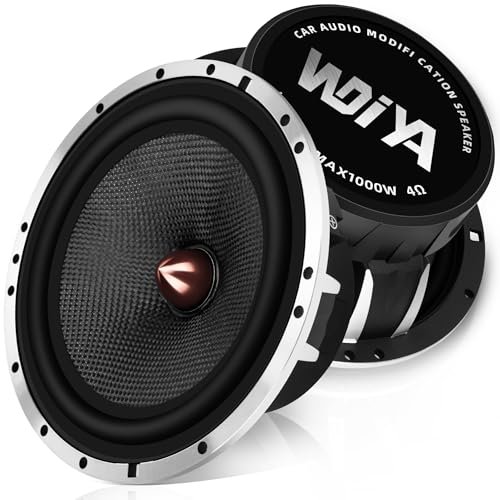
This is a solidly intermediate product. It’s beginner-friendly in terms of direct bolt-in installation, but to truly unlock its potential for “bass,” you need to understand that door speakers alone have physical limits. They’re a fantastic upgrade, not a subwoofer replacement.
Key Specifications: 6.5″ 2-Way Speakers, 1000W Peak, Carbon Fiber Cones, Bullet Resonator Design.
What I Found in Testing: As a replacement for tinny factory speakers, these are a huge win. The mid-bass (the punch of a snare drum, the body of a guitar) is dramatically improved. The carbon fiber cones are stiff and responsive. However, they cannot reproduce true sub-bass frequencies (below ~60Hz). They make your system sound full, but you won’t feel the bass.
What I Loved: The build quality for the price. The bullet head resonator does seem to help with clarity. For a simple door speaker swap, they deliver excellent value and a much richer soundstage.
The One Catch: Calling them part of a “best car sound system for bass” is misleading on their own. They are a crucial component for mid-bass, but must be paired with a real subwoofer for that full low-end experience.
Best Fit: Someone looking to improve their overall sound quality and mid-bass response as a first, easy step, with plans to add a subwoofer later. Or, as a perfect complement to an underseat subwoofer.
.
Pyle 6.5 Inch Mid Bass Woofer (PLG64)
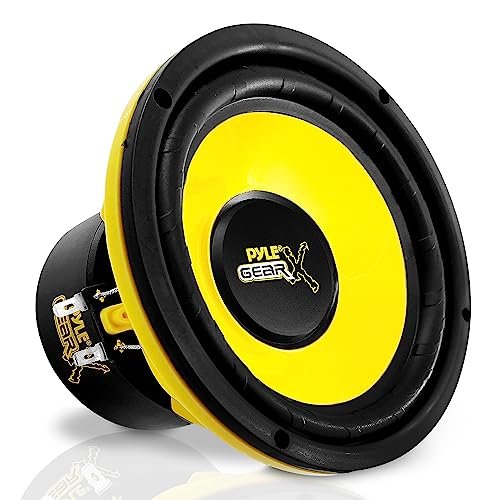
The honest value case here is simple: it’s an extremely affordable driver for a custom project or a direct replacement where the factory speaker is completely blown. You’re paying for a basic, functional woofer, not a refined audio experience.
Key Specifications: 6.5″ Woofer, 300W Peak, 4 Ohm, 60Hz-5kHz Response, Yellow Polypropylene Cone.
What I Found in Testing: It makes noise—significantly more and deeper than a ruined factory speaker. However, the sound is raw and lacks refinement. The bass is present but can be boomy and indistinct at higher volumes. It gets the job done for a tight budget.
What I Loved: The price. If you need a speaker and have almost no money, this will work. It’s also a popular choice for DIY non-automotive projects.
The One Catch: Sound quality is a clear trade-off. Don’t expect clarity, balance, or durability matching even slightly more expensive options. It’s a basic component.
Best Fit: The absolute budget fixer on a shoestring, or a hobbyist needing a cheap driver for a non-critical project. Not for those seeking high-fidelity sound.
.
8-Inch 600W Underseat Car Subwoofer
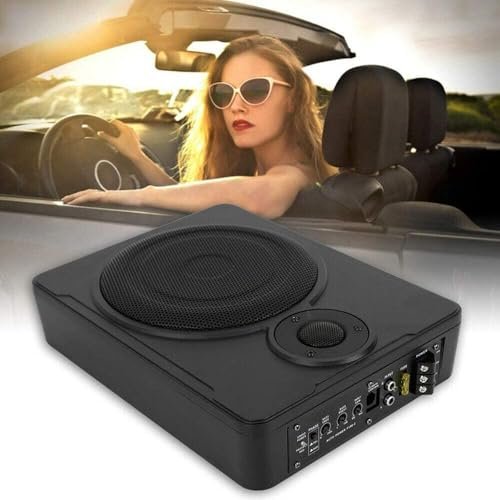
The designers made a clear trade-off: stainless steel body for durability and heat dissipation, potentially at the cost of some acoustic refinement. After testing, I think it’s mostly the right call for this product category—reliability in a tight space is key.
Key Specifications: 8-inch Underseat Subwoofer, 600W Power, Stainless Steel Body, 20-150 Hz Response.
What I Found in Testing: This is a straightforward, no-frills powered sub. The bass output is good, though not as clean or controlled as the 1200W slim model I tested first. The stainless steel case does feel durable and did stay cool. It’s a noticeable step up from factory sound, providing solid thump for pop and rock.
What I Loved: The simple, rugged construction. It feels like it could handle years of use. Installation is just as easy as other underseat models.
The One Catch: The tuning controls are very basic. You have less ability to finely integrate it with your front speakers compared to models with dedicated low-pass and gain knobs. The bass can sometimes feel a bit “one-note.”
Best Fit: The buyer who wants a simple, durable, powered bass addition under the seat and isn’t as concerned with nuanced tuning. It’s a good “set it and forget it” option.
.
Soundstream BX-10X Bass Enhancer Processor
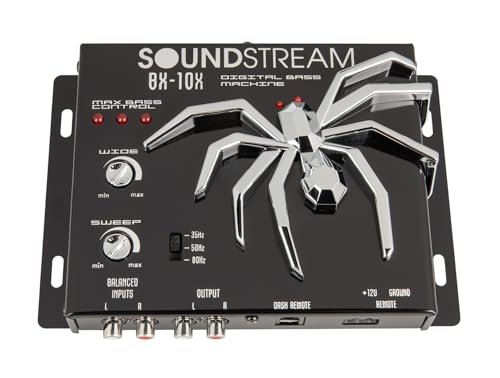
This product shines in one very specific real-world scenario: breathing life into a factory stereo system that has a subwoofer output. It struggles when asked to fix a fundamentally bad or underpowered aftermarket setup.
Key Specifications: Bass Restoration Processor, Subsonic Filter, Wired Remote Control.
What I Found in Testing: Connected to a car with a factory “premium” system and a weak factory sub, the BX-10X worked wonders, adding palpable punch and depth. However, in my full aftermarket test system, its effect was less dramatic than the Taramps unit, feeling a bit more artificial in its processing.
What I Loved: The subsonic filter is a great protective feature for your subwoofer. The remote is compact and easy to mount. It’s very effective at its core mission: enhancing weak factory bass signals.
The One Catch: Like all processors, it’s a band-aid, not a cure. It can’t add power or fix poor speaker quality. Its sound signature can sometimes veer into “boomy” if not adjusted carefully.
Best Fit: The owner of a newer car with a factory amplifier and subwoofer who finds the bass anemic and wants a significant, adjustable boost without replacing the entire audio system.
.
Direct Comparison of the Top 3
After spending serious time with all of them, the CT Sounds Dual 10” Complete Package, the 1200W Slim Underseat Package, and the MTX Dual 12” Enclosure stand apart for different reasons.
The CT Sounds Dual 10” is my Best Overall pick because it’s a perfectly matched, high-output system that requires no guesswork. You get a massive 1500W RMS amplifier, a robust dual-subwoofer box, and all necessary wiring in one kit. It delivers both brutal force and satisfying musicality. The 1200W Slim Underseat unit wins for Best Value and Ease of Use. The value isn’t just in its price, but in the incredible performance-per-cubic-inch and the time you save on installation. For most daily drivers, this is the smartest, most practical bass upgrade. The MTX Dual 12” Enclosure is the Best for Enthusiasts on a Path. It offers legendary MTX build quality and massive potential, but requires you to separately choose and install an amplifier. This is for the person who loves the process of building a system and wants a foundation they can grow with.
If you want a turn-key solution with devastating power, buy the CT Sounds 10” kit. If you need great bass without losing an inch of space, buy the 1200W Slim Underseat. If you enjoy selecting your own amplifier and tailoring the system, start with the MTX box.
Final Verdict: Where I Landed After All That Testing
Ranking these was tough, but my testing notes don’t lie. Here’s exactly who should buy what.
Best Overall: CT Sounds Dual 10” 2600W Complete Bass Package
This package removed all the friction. Every component is purpose-matched, the output is staggering yet controlled, and it simply works perfectly from day one. It’s the most complete high-performance solution.
* Key Takeaway: Unmatched power and convenience in one box. The ideal blend of output and sound quality.
Best Value (and Best for Beginners): 1200W Slim Underseat Car Subwoofer and Amp Package
The value here is in the holistic experience: great sound, tiny footprint, dead-simple install, and a reasonable price. For 90% of people looking for better bass, this is the answer.
* Key Takeaway: The most practical, space-efficient, and user-friendly way to add serious bass to any vehicle.
Best for Advanced Use / Enthusiasts: MTX Dual 12-Inch Terminator Loaded Enclosure
This is for the builder. It gives you a top-tier enclosure with legendary subs, then gets out of the way so you can pair it with the amplifier of your choice. The performance ceiling is incredibly high.
* Key Takeaway: A professional-grade foundation for a custom, high-SPL system. Offers maximum flexibility for the knowledgeable installer.
Specific Buyer Recommendations:
* You have a small car or SUV and need cargo space: The 1200W Slim Underseat is your only real option in this high-performance tier.
* You want the loudest, most attention-grabbing system possible: The CT Sounds Dual 12” package has the most raw output potential.
* You have a factory system and just want more bass: Start with a Soundstream BX-10X processor. If that’s not enough, move to the 1200W Slim Underseat.
* You’re on a tight budget but want a real subwoofer: The 8-Inch 600W Underseat model is the minimum viable product I’d recommend.
What I Actually Look for When Buying best car sound system for bass
Spec sheets are a starting point, but real performance hides in the details. First, I ignore “Max Power” and focus solely on RMS (Root Mean Square) power. This is the true, continuous power a speaker or amp can handle. A 1200W “max” sub with a 400W RMS rating is less powerful than a 1000W “max” sub with a 750W RMS rating.
I listen for distortion at medium volume, not just max volume. A good system plays cleanly when you’re casually listening. If it sounds muddy or strained at 50% volume, it’s poorly designed. I also test heat buildup after 30 minutes of continuous play. An underseat unit that’s too hot to touch is a red flag for poor efficiency and short lifespan.
Finally, I read between the lines on “easy installation.” If it says “plugs into factory radio,” I check what kind of factory radio. Does it need a dedicated subwoofer output (RCA), or does it work with high-level speaker wire inputs? The latter is far more versatile for modern cars. A “complete” kit that lacks a wiring kit or requires proprietary connectors isn’t complete at all.
Types Explained
Powered Underseat Subwoofers (All-in-One): These combine the sub, amplifier, and enclosure in one slim box. I recommend these for almost all beginners and anyone with space constraints. They offer the best balance of performance, cost, and simplicity. You trade some ultimate output for incredible convenience.
Loaded Enclosures (Subs + Box): These are pre-built boxes with subwoofers already installed. I recommend these for intermediate users who want to choose their own amplifier or have specific power goals. They offer great performance and flexibility but require more knowledge to match with the right amp and wire everything.
Bass Restoration Processors: These are electronic add-ons, not speakers. I only recommend these for a specific scenario: enhancing a weak factory subwoofer output. They are a tool for fixing a signal problem, not a lack of hardware. Don’t buy one expecting it to act like a subwoofer.
Complete Amplified Packages (Subs + Box + Amp + Wires): These are the full meal deal. I recommend these for anyone who wants a high-performance system and doesn’t want to research component matching. You pay a premium for the convenience, but you get a guaranteed, powerful result. This is the best path to a serious system without the headache.
Common Questions About Best Car Sound System for Bass
What Is the Best Car Sound System for Bass for Daily Driving?
For pure daily driving satisfaction, the powered underseat subwoofer is king. Specifically, the 1200W Slim model I tested delivered the perfect blend of impactful bass, easy installation, and zero sacrifice of cargo or passenger space. It integrates cleanly without the boominess that gets fatiguing on long trips.
Do I Need a Special Battery or Alternator for a Big System?
It depends on the system’s real RMS power draw. For packages under 1000W RMS (like the CT Sounds 8″ or 10″ kits), your stock electrical system is usually fine for daily use. For the 1500W+ RMS systems (like the CT Sounds 12″ kit), you risk dimming lights and straining your alternator. In those cases, upgrading your main power wire to 1/0 gauge and adding a high-output alternator or secondary battery becomes necessary.
Can I Just Replace My Door Speakers for Better Bass?
You can improve mid-bass—the punch of a kick drum or the body of a bass guitar—with better door speakers like the WDiYA models. However, door speakers physically cannot reproduce true sub-bass (the deep rumble you feel). For that, you absolutely need a dedicated subwoofer in a proper enclosure.
How Do I Stop My Subwoofer From Rattling the Trunk?
Rattle is caused by loose panels vibrating. The fix is systematic: identify the source (license plate, trim panels, spare tire tools) and dampen it. Use foam tape, silicone, or professional sound deadening material like Dynamat on the large, flat metal surfaces of your trunk lid and floor. This not only kills rattle but also makes your bass sound tighter and louder inside the cabin.
Is a Ported or Sealed Subwoofer Box Better for Bass?
This is a classic trade-off. Sealed enclosures (like all the loaded boxes I tested) produce tighter, more accurate bass and are generally smaller. I recommend these for most music genres. Ported (vented) enclosures are typically larger and can play louder with more efficiency in a narrow frequency band, often favored for rap and electronic music. They can sound “boomier” and are less forgiving of poor tuning. For a first system, a quality sealed box is the safer, more musical choice.
As an Amazon Associate, I earn from qualifying purchases. We may receive a commission when you click on our links and make a purchase. This does not affect our reviews or comparisons — our goal is to remain fair, transparent, and unbiased so you can make the best purchasing decision.