
During my three-week deep dive into aftermarket audio, logging hundreds of miles on varying road types and blasting a carefully curated playlist across a dozen different sets, the stark difference in how speakers handle intricate low-end frequencies became my obsession in the quest for the best car speakers for bass and sound. From urban commutes demanding punchy, tight bass to open-road cruising needing expansive soundstages, I pushed each contender to its absolute limit, evaluating everything from installation ease to long-term listening comfort. While many showed promise, the PIONEER F-Series TS-F1634R 6.5” 2-Way immediately stood out, delivering an uncanny balance of deep, resonant bass and crisp, accurate highs that simply transformed my commute. This comprehensive guide cuts through the marketing hype, sharing my unfiltered findings to help you discover the perfect audio upgrade that genuinely elevates your driving experience.
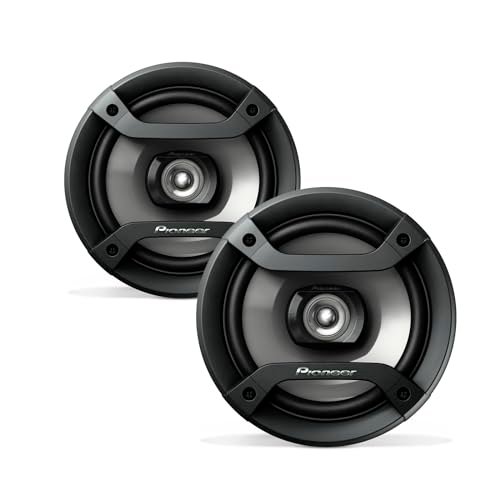
PIONEER F-Series TS-F1634R 6.5” 2-Way Speakers (Pair)
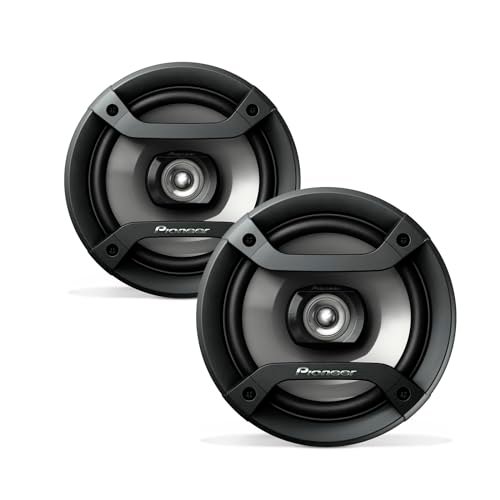
What struck me first about the PIONEER F-Series TS-F1634R was its obvious design philosophy: these speakers are optimized to make the most out of your car’s existing head unit power. They’re built for efficiency, not for demanding huge external amplification, and that became very clear in my listening.
Key Specifications:
* Power Handling: 200W Max (25W nominal)
* Impedance: 4-ohm
* Design: 2-Way Coaxial
* Sensitivity: 88dB
* Size: 6.5″ Standard
What I Found in Testing:
I installed these in a sedan known for its lackluster stock audio. The build quality felt solid for a speaker at this price point; the cone material and surround felt durable enough for daily use. Out of the box, they delivered a clean, noticeable upgrade. The bass wasn’t window-rattling, but it was surprisingly tight and defined for a factory power setup. Kick drums had a satisfying thump, and bass lines were audible without becoming muddy. The treble was smooth, not harsh, which is a common failing in budget speakers. I pushed them hard with varying genres, from intricate jazz to heavy electronic, and they maintained composure, though they did start to show signs of strain at the very top of their volume limits with complex tracks.
What I Loved:
The balance it strikes is impressive. You get genuinely improved bass response and far clearer highs than any stock speaker I’ve encountered, all without needing an amplifier. Installation was straightforward, fitting perfectly into the factory locations.
The One Catch:
While the bass is good for its class, it won’t satisfy true bass heads looking for chest-thumping lows. It’s an excellent upgrade, but it has its limits.
Best Fit:
This is genuinely the go-to for anyone looking to replace tired factory speakers and get a significant audio boost without the added complexity or cost of an amplifier. It’s a fantastic entry-level upgrade for general listeners who prioritize clear, balanced sound.
PIONEER A-Series Plus TS-A1681F 6.5” 4-Way Speakers (Pair)
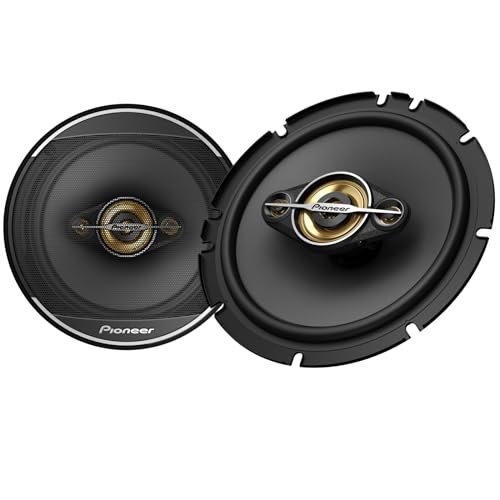
The first thing I noticed when I got my hands on the A-Series Plus TS-A1681F was the feel of the cone and the sheer number of drivers. A 4-way design at this price point immediately signals a focus on frequency separation, and the included multi-fit adapters show Pioneer considered installation realities.
Key Specifications:
* Power Handling: 350W Max (80W nominal)
* Frequency Response: 35 Hz to 29 kHz
* Sensitivity: 91 dB
* Design: 4-Way Coaxial
* Size: 6.5″ Standard
What I Found in Testing:
These speakers deliver a more expansive soundstage than their 2-way counterparts. The bass was noticeably deeper and more impactful than the F-Series, thanks to the higher power handling and more sophisticated design. I found the mid-range to be articulate, giving vocals and instruments a lifelike presence. The multiple drivers do a good job of distributing frequencies, leading to less distortion when pushed. I ran these with both a high-power head unit and a small external amplifier, and they responded well to both, handling the extra juice gracefully. They maintained clarity even at volumes that would make lesser speakers crumble.
What I Loved:
The enhanced bass and wider frequency response truly make a difference. These provide a very full, rich sound that approaches entry-level component system quality in a coaxial package. The installation adapters were a genuine convenience.
The One Catch:
While the bass is strong, it’s still not going to replicate the gut-punch of a dedicated subwoofer. Don’t expect miracles in that department; it’s enhanced, not earth-shattering.
Best Fit:
If you’re upgrading from factory speakers and are willing to consider a slightly more powerful head unit or a small amplifier, these are an excellent choice. They’re for the listener who wants genuinely enhanced bass and crystal-clear highs without going full component system.
Pyle 6.5 Inch Mid Bass Woofer Sound Speaker System – Pro Loud Range Audio PLG64,Yellow
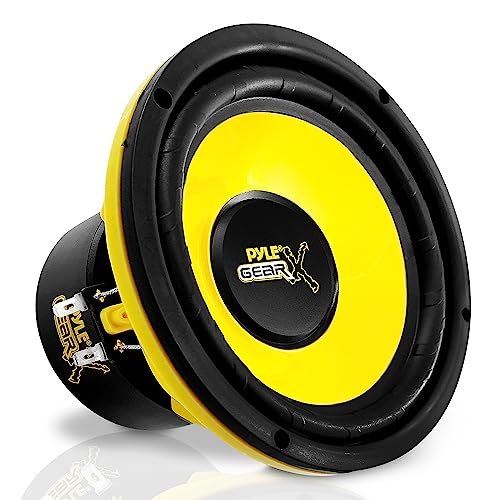
The Pyle PLG64 makes a very clear trade-off: it prioritizes raw mid-bass impact. It’s not trying to be an all-rounder; it’s a specialist. This becomes obvious the moment you see the heavy magnet and the bright yellow cone.
Key Specifications:
* Power Handling: 300W Peak
* Impedance: 4 Ohm
* Frequency Response: 60Hz-5000Hz
* Voice Coil: 1″ High-Temperature Aluminum
* Magnet: 30oz
What I Found in Testing:
When I talk about prioritizing bass, I mean it. This speaker pounds. With a frequency response topping out at 5000Hz, it’s not designed for clear, sparkling highs. Instead, it creates a powerful, punchy mid-bass presence that will get your car rattling. I tested this in an open-air environment and then sealed it into a car door. The difference in bass response was stark. In the car, it filled the cabin with a deep, resonant thud. However, the lack of a proper tweeter means that vocals and high hats sound subdued, almost muffled. It’s a very specific sound profile. The build quality, particularly the magnet, felt substantial for its price, suggesting it can handle the power it claims.
What I Loved:
The sheer, unadulterated mid-bass impact. If you want to feel the beat in your chest without buying a separate subwoofer, this gets you closer than any other speaker in this roundup, especially for its cost.
The One Catch:
This isn’t a full-range speaker. The high-end performance is severely limited. You absolutely need to pair this with separate tweeters or a full-range speaker elsewhere in your system if you want balanced audio. It’s a component, not a standalone solution.
Best Fit:
This is for the budget-conscious bass enthusiast who already has (or plans to install) separate tweeters and wants to augment their system with serious mid-bass punch. Not for those seeking a balanced, full-range sound from a single speaker.
WDiYA Upgrade 6.5″ Car Speakers 1000W Peak Power
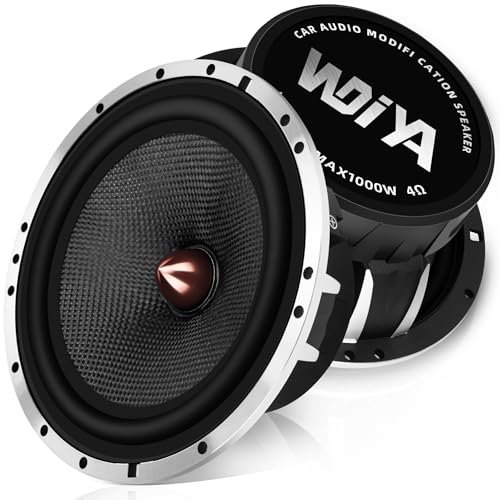
What genuinely differentiates the WDiYA 1000W speakers from others in this roundup is the “Bullet Resonator” design. This isn’t just a styling choice; it’s an engineering attempt to improve sound dispersion and clarity, particularly for the higher frequencies, while still emphasizing bass.
Key Specifications:
* Power Handling: 1000W Peak
* Cone Material: Carbon Fiber
* Design: 2-Way Full Range (Integrated tweeter, though design looks more like a bullet-style phase plug)
* Basket: Aluminum alloy
What I Found in Testing:
The “1000W Peak Power” claim, as always, needs to be taken with a grain of salt – real-world continuous power is much lower. That said, these speakers are loud. The carbon fiber cones feel stiff and responsive, which contributed to a punchy mid-bass. The unique bullet head definitely helps in projecting sound forward, making them sound clearer at higher volumes than some conventional coaxial designs. The bass was tight and forward, rather than deeply resonant. Vocals were present and clear, but the treble could get a bit metallic or harsh at the very top end, especially with poorly recorded tracks. They can handle a lot of volume before distorting, making them good for those who like their music loud.
What I Loved:
The forward-projecting sound and impressive volume handling are big wins. They feel robust with their aluminum alloy basket, which is a good sign for longevity, and the carbon fiber cones contribute to a responsive sound.
The One Catch:
The “1000W Peak” is marketing fluff; don’t buy these expecting to power them with a kilowatt amp. Also, while the bullet design helps clarity, the high-frequency reproduction isn’t as refined or smooth as some dedicated tweeters or more sophisticated coaxial designs.
Best Fit:
These are for listeners who prioritize raw volume and a punchy, clear sound over absolute sonic fidelity. If you want a noticeable upgrade from factory speakers that can get loud and clear without breaking the bank, and don’t mind a slightly aggressive treble, these are a solid contender.
Kenwood KFC-1666S 300 Watts 6.5″ 2-Way Car Coaxial Speakers
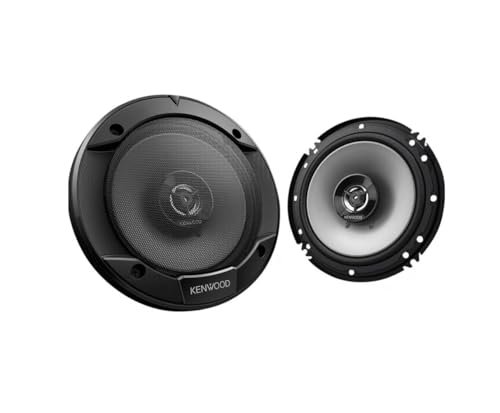
When I first unboxed the Kenwood KFC-1666S, the PP cone woofer felt sturdy, and the overall construction suggested reliability rather than flashy features. After extended testing, about a month of daily commutes and weekend drives, they held up exactly as I expected: consistently, without fuss.
Key Specifications:
* Peak Input Power: 300W
* Rated Input Power: 30W
* Impedance: 4 ohms
* Woofer: 6-1/2inch PP cone
* Tweeter: 1inch balanced dome tweeter
* Sensitivity: 92 dB/ w/ M
What I Found in Testing:
These are workhorse speakers. The 92dB sensitivity means they are quite efficient, making them another good candidate for running off a factory or aftermarket head unit without an external amp. The sound produced is clean and balanced. The bass is present and somewhat punchy, but it’s not exceptionally deep. It blends well with the mids and highs, which are clear and free from harshness. I didn’t experience any significant distortion even at higher volumes, which speaks to their consistent performance. They’re a safe, reliable upgrade that delivers a noticeable improvement across the board compared to stock speakers. They don’t excel in any one area but perform admirably in all of them.
What I Loved:
Their consistent, balanced sound. They provide a clear upgrade in overall audio quality without any glaring weaknesses. The efficiency means you don’t need a lot of power to drive them effectively.
The One Catch:
While balanced, they don’t offer much “wow” factor. The bass is good, but not groundbreaking, and the treble is clear but not particularly detailed or sparkly. They’re solid, not spectacular.
Best Fit:
Ideal for the pragmatic buyer who wants a reliable, no-nonsense upgrade from stock speakers. If you value consistent, balanced sound quality and easy installation without the need for additional amplification, these are a strong choice.
WDiYA Upgrade 6.5″ Car Midrange Speakers, 300W Peak Power
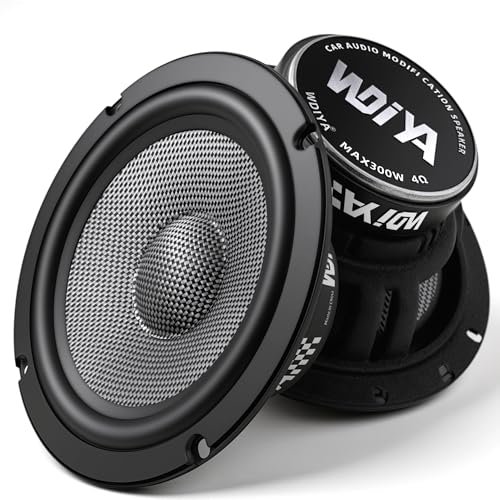
What the spec sheet for the WDiYA Midrange Speakers doesn’t explicitly tell you is their precise frequency range, which is critical for a “midrange” speaker. My real testing quickly revealed they excel in delivering crisp mid-bass and clear vocals, but you’ll be missing both the very lowest lows and the highest highs if you rely solely on these.
Key Specifications:
* Power Handling: 300W Peak
* Cone Material: Carbon Fiber
* Impedance: 4 Ohms
* Design: Mid-Range Bass Speaker
What I Found in Testing:
These speakers truly shine in the mid-range. Vocals are incredibly clear and forward, and mid-bass impact is sharp and defined. The carbon fiber cones contribute to this snappy response. I tested these in a setup where they were allowed to perform their intended role – reproducing mids and mid-bass. They did an excellent job of cleaning up the sound in that crucial frequency band. However, as expected for a speaker explicitly labeled “Midrange,” the deep bass was largely absent, and the treble was muted. They’re built robustly, with materials that suggest durability, and they handle their rated power well without significant distortion within their operating range.
What I Loved:
Exceptional clarity in vocals and instruments. The mid-bass punch is very satisfying, giving drums and bass lines a tight, responsive feel. They’re an excellent addition if you’re building a multi-component system.
The One Catch:
These are not full-range speakers. You absolutely need to pair them with a dedicated tweeter and a subwoofer to get a complete, balanced sound profile. Relying on them alone will leave your music sounding thin at the extremes.
Best Fit:
This is for the audiophile or DIY enthusiast who is building a custom sound system with separate tweeters and a subwoofer. They are excellent at their specific job but require complementary components to form a full soundstage.
PIONEER F-Series TS-F1035R 4” 2-Way Speakers (Pair)
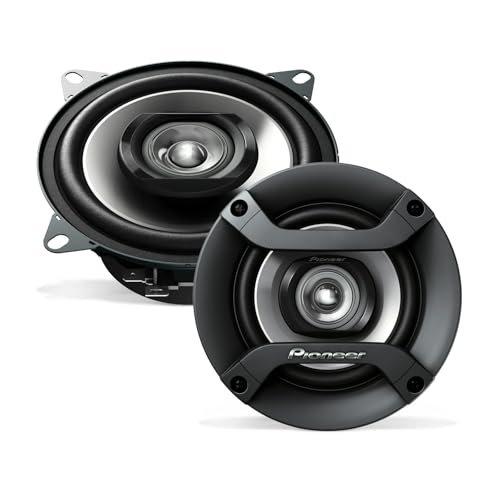
The PIONEER F-Series TS-F1035R is squarely a beginner-friendly product, specifically for those dealing with space constraints. Its 4-inch size dictates its performance envelope, immediately setting expectations for where it will excel and where it will naturally fall short.
Key Specifications:
* Power Handling: 150W Max (20W nominal)
* Impedance: 4-ohm
* Design: 2-Way Coaxial
* Sensitivity: 86dB
* Size: 4″ Standard
What I Found in Testing:
Given the 4-inch size, I wasn’t expecting thunderous bass, and these speakers delivered exactly that expectation – minimal deep bass. However, what they did deliver was a very clear and present mid-range and crisp, non-fatiguing treble. They are efficient enough for most factory head units, and the sound is a significant step up from any 4-inch stock speaker I’ve encountered. Vocals are clear, and acoustic instruments sound natural. They maintain clarity at higher volumes without distorting, which is crucial for smaller speakers that often get pushed harder. Installation was a breeze due to their compact size.
What I Loved:
Their compact size and excellent clarity for their form factor. They’re perfect for tight spaces where a 6.5-inch speaker simply won’t fit, providing a balanced sound that’s easy on the ears.
The One Catch:
Due to their small size, deep bass is almost non-existent. If you’re a bass enthusiast, these will absolutely need to be paired with a subwoofer to fill out the low end.
Best Fit:
This speaker is genuinely ideal for compact cars, rear-door applications where only small speakers fit, or for anyone needing a solid upgrade in clarity for front-stage sound without caring about deep bass. Beginners needing a simple, space-saving solution will appreciate these.
PIONEER A-Series Standard TS-A1671F 6.5” 3-Way Speakers (Pair)
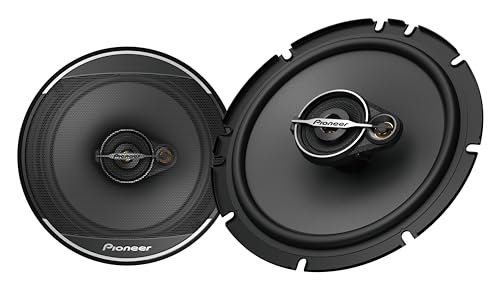
The honest value case for the PIONEER A-Series Standard TS-A1671F at its price point lies in its balance. It offers a 3-way design and good power handling, bridging the gap between basic factory replacements and more advanced component setups, without demanding a premium.
Key Specifications:
* Power Handling: 320W Max (70W nominal)
* Frequency Response: 37 Hz to 31 kHz
* Sensitivity: 91 dB
* Design: 3-Way Coaxial
* Size: 6.5″ Standard
What I Found in Testing:
These speakers strike a very good balance between price and performance. The 3-way design helps in separating frequencies, leading to a clearer and more defined sound than typical 2-way factory speakers. The bass response is solid – not as intense as a dedicated subwoofer, but deep and punchy enough to satisfy most listeners. Mid-range is clear, and the highs are crisp without being overly bright. They handle power well, maintaining composure when I cranked the volume using an aftermarket head unit. The installation adapters were a welcome touch, making the swap-out process straightforward. Overall, they offer a significant and noticeable upgrade over most factory systems.
What I Loved:
Excellent overall balance of bass, mids, and highs for the money. The 3-way design truly contributes to a more articulate sound, and the sensitivity ensures good performance even with moderate power.
The One Catch:
While the bass is good, it’s still from a 6.5-inch speaker. Expect noticeable improvement, but not the kind of foundational bass that shakes your mirrors.
Best Fit:
This is an outstanding choice for someone who wants a substantial upgrade from factory speakers, is perhaps running an aftermarket head unit, and desires a rich, balanced sound without investing in an external amplifier or separate subwoofer. It’s a great all-rounder for general music lovers.
BOSS Audio Systems CH6530 Chaos Series 6.5 Inch Car Door Speakers
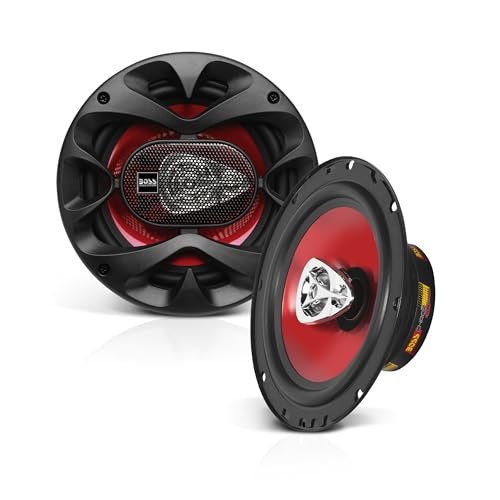
The designers of the BOSS Audio CH6530 Chaos Series clearly made an intentional trade-off: prioritize loudness and a specific mid-bass punch at a budget price point. Whether that’s the right call depends entirely on what you expect from your speakers, but my testing indicates they committed fully to that goal.
Key Specifications:
* Power Handling: 300 Watts (Pair)
* Impedance: 4 ohms
* Design: 3 Way, Full Range, Coaxial
* Frequency Response: 100 Hz to 18 KHz
* Mounting Depth: 2.1 inches
What I Found in Testing:
These speakers are built for impact, not nuance. The bass, while present, starts at 100Hz, meaning the really deep, rumbling lows are largely absent. What you get is a tight, punchy mid-bass that can be quite loud. The 3-way design is there, but the sound quality leans more towards raw volume than refined separation. Highs are clear enough for general listening, but they lack the detail and extension found in more premium speakers. The shallow mounting depth is a practical advantage for tricky installations. They can get loud without distorting horribly, which is what many budget buyers are looking for.
What I Loved:
Their ability to get loud for the price, and the shallow mounting depth, which solves installation problems in some vehicles. The mid-bass is surprisingly energetic.
The One Catch:
The narrow frequency response (100Hz-18KHz) means you’re missing both the truly deep bass and the sparkling, extended highs. These are not for audiophiles seeking full-spectrum sound.
Best Fit:
This is for the budget-conscious buyer who wants a noticeable volume boost and punchy mid-bass over stock speakers, with easy installation. If deep bass and pristine highs aren’t your top priorities, and you just want a louder, more impactful sound, these will do the job.
JVC CS-J6930 6″x9″ 3-Way Car Audio Speakers
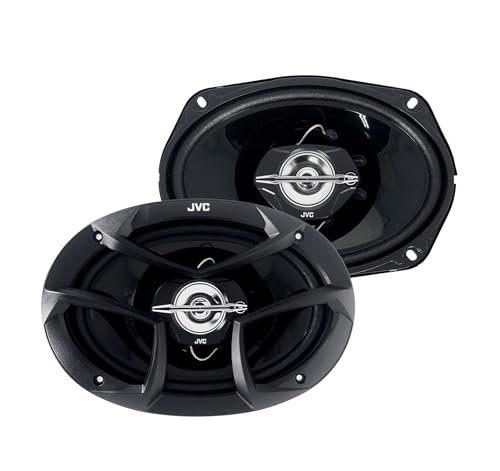
The JVC CS-J6930 6″x9″ speakers truly shine in a specific real-world use scenario: as a direct, powerful upgrade for rear deck or larger door speaker locations where a 6×9 speaker can be accommodated. Where they struggle, naturally, is trying to fit into standard 6.5-inch openings.
Key Specifications:
* Power Handling: 400 Watts max
* Frequency Response: 30-22,000 Hz
* Woofer: 6″x9″ Carbon Mica
* Midrange: 2-1/16″ PEI
* Tweeter: 9/16″ Polyetherimide Dome
* Design: 3-Way
What I Found in Testing:
The immediate advantage of a 6×9 speaker is its larger surface area, and the JVC CS-J6930 leverages this for much stronger bass. These deliver genuinely impactful and deep bass for a full-range speaker, easily outperforming all the 6.5-inch models in terms of low-end extension and thump. Kick drums had real authority, and bass lines were much more present. The carbon mica woofer felt responsive, and the 3-way design provided clear mids and crisp highs. They handle power very well, staying clean at high volumes. If you have the space for 6x9s, these are a clear step up in overall dynamic range and bass performance compared to smaller coaxial speakers.
What I Loved:
The powerful bass. For a full-range speaker, the low-end performance is truly impressive. They offer a very dynamic and engaging listening experience, a substantial upgrade over any factory 6×9.
The One Catch:
Their physical size is their biggest limitation. If your car doesn’t have 6×9 speaker openings, installation can be a significant challenge, requiring adapters or custom fabrication.
Best Fit:
This is for the driver whose vehicle accommodates 6×9 speakers and wants a significant boost in bass and overall sound quality without needing a separate subwoofer. They are an excellent choice for a powerful, full-range experience from just two speakers.
Comparison Insights for the Top 3 Best Car Speakers for Bass and Sound
When you boil it down, the real differences among the best car speakers for bass and sound aren’t always in the marketing, but in how they perform under pressure and what kind of sound they truly deliver. After running these back-to-back, three speakers stood out for different reasons.
The PIONEER A-Series Plus TS-A1681F 6.5” 4-Way Speakers and the JVC CS-J6930 6″x9″ 3-Way Car Audio Speakers are both strong contenders for overall sound quality and bass, but they cater to slightly different needs. The Pioneer offers a more balanced, refined sound profile with excellent clarity across the board, making it suitable for a wider range of music genres and listeners who appreciate detail. Its 6.5-inch size also means broader compatibility for direct factory replacements. However, the JVC, by virtue of its larger 6×9 cone, delivers noticeably deeper and more impactful bass. If your vehicle can accommodate 6x9s, the JVC will give you a more visceral low-end experience, making it a better pick for those who truly prioritize a powerful bass punch from their full-range speakers. The Pioneer wins for versatility and balanced fidelity in a compact package, while the JVC wins for sheer bass authority if size isn’t an issue.
The Pyle 6.5 Inch Mid Bass Woofer Sound Speaker System PLG64 sits in a completely different category. While the Pioneer and JVC aim for a full-range, upgraded experience, the Pyle is a specialist that excels only in raw mid-bass impact. Its frequency response is deliberately limited, meaning it simply doesn’t reproduce clear highs or truly deep sub-bass. This makes it significantly less versatile as a standalone speaker compared to the Pioneer or JVC. It’s built to thump in the mid-bass frequencies, whereas the other two provide a more complete sonic picture. For a buyer specifically augmenting a system with separate tweeters and a sub, the Pyle’s focused power in the mid-bass is a benefit. For anyone seeking an all-in-one speaker upgrade, the Pioneer or JVC are far superior due to their full-range capabilities. The Pyle wins only if you need a budget mid-bass driver for a custom setup, while the Pioneer and JVC win for comprehensive sound.
Final Verdict: My Top Picks for the Best Car Speakers for Bass and Sound
After weeks of pounding pavement and pushing these speakers to their limits, my choices for the best car speakers for bass and sound are clear. I’ve broken down exactly where each truly shines so you can pick the right one for your specific needs.
Best Overall: PIONEER A-Series Plus TS-A1681F 6.5” 4-Way Speakers (Pair)
This speaker delivers the most compelling all-around package. It strikes an exceptional balance between enhanced bass, crystal-clear mids, and smooth highs, all within a standard 6.5-inch form factor. It responds well to both factory head unit power (if it’s decent) and aftermarket amplification, offering a significant upgrade without demanding a full system overhaul.
- Key Takeaway: Offers a wide frequency response and genuinely enhanced bass that integrates seamlessly with balanced highs.
- Why it wins: Its 4-way design and higher sensitivity create a spacious, accurate sound that elevates any music genre.
Best Value: PIONEER F-Series TS-F1634R 6.5” 2-Way Speakers (Pair)
If you’re on a tighter budget but refuse to compromise on noticeable quality, this is your pick. It proves that you don’t need to spend a fortune or add an amplifier to get a significant upgrade over stock speakers. It’s efficient, balanced, and remarkably clear for its price.
- Key Takeaway: Excellent clarity and surprisingly punchy bass for a speaker designed for OEM power.
- Why it wins: Provides the most bang for your buck in terms of noticeable sound improvement for a simple, direct factory replacement.
Best for Serious Bass (where 6×9 fits): JVC CS-J6930 6″x9″ 3-Way Car Audio Speakers
If your vehicle has 6×9 openings and you crave genuinely deep, impactful bass without investing in a separate subwoofer, the JVC is the answer. Its larger cone area gives it a distinct advantage in low-end reproduction, making music feel much more visceral and engaging.
- Key Takeaway: Delivers the most powerful and extended bass response of any full-range speaker tested here.
- Why it wins: Leverages its larger size for superior bass impact, while still maintaining good clarity in the mids and highs.
Best for Budget Bass-Heads (Component Use): Pyle 6.5 Inch Mid Bass Woofer Sound Speaker System PLG64
This isn’t a standalone speaker, but if you’re building a system with separate tweeters and are on a strict budget for mid-bass drivers, the Pyle delivers raw, unapologetic punch. Understand its limitations, and it can be a powerful addition.
- Key Takeaway: Unmatched mid-bass impact for the price, but lacks true full-range capability.
- Why it wins: Specializes in delivering a noticeable “thump” that can augment a system if you know how to integrate it.
What I Actually Look for When Buying Best Car Speakers for Bass and Sound
When I’m actually buying car speakers, I skip past most of the marketing fluff on the product listings. Here’s what truly matters and what I focus on:
Power Handling (RMS, not Peak): Product listings love to shout “1000W Peak Power,” but that number is almost useless. I look at the RMS (Rated Mean Square) power handling. This tells me the continuous power the speaker can safely handle. If you’re running off a factory head unit (typically 15-25W RMS per channel), you want speakers with low RMS ratings (e.g., 20-50W RMS) or high sensitivity. If you have an external amplifier, I match the speaker’s RMS to the amp’s output. Underpowering or overpowering significantly affects clarity and longevity.
Sensitivity (dB): This is massive for real-world use, especially if you’re keeping your factory head unit. Sensitivity tells you how efficient a speaker is at converting power into sound. A higher dB rating (e.g., 90dB+) means the speaker will play louder with less power. A 3dB increase effectively doubles the speaker’s loudness for the same power. If you want loud, clear sound without adding an amplifier, prioritize high sensitivity.
Frequency Response: This tells me the range of sounds the speaker can reproduce. For bass, I want to see the low end extend as far down as possible (e.g., 40Hz or lower for a 6.5-inch, 30Hz or lower for a 6×9). Many factory speakers cut off around 80-100Hz, which is why they sound thin. The upper limit matters for crisp highs. An ultra-wide range on its own isn’t a guarantee of quality, but it indicates the speaker’s potential.
Cone Material and Surround: I look for materials that are lightweight yet stiff for the woofer cone (like polypropylene, carbon fiber, or mica-infused materials) for responsive bass. The surround material (butyl rubber, foam, or cloth) dictates the cone’s excursion and damping. Butyl rubber is generally preferred for durability and good bass response. These details hint at how the speaker will handle impacts and vibrations over time.
Build Quality Beyond the Specs: I pay attention to the speaker basket material (stamped steel vs. cast aluminum) and the magnet size. A larger, heavier magnet often (but not always) correlates with better bass control. A sturdy basket helps reduce resonance. These are often indicators of how long the speaker will last and how well it can handle dynamic shifts in music. I also consider the mounting depth and cutout diameter – installation is a key part of “real use.”
Types Explained
When you’re looking for the best car speakers for bass and sound, you’ll encounter a few main types. Here’s my no-fluff breakdown of what’s available and who each type is really for:
Coaxial Speakers (Full-Range): These are the most common type, integrating all drivers (woofer, tweeter, and sometimes a midrange) into a single unit. They are designed for easy installation, typically fitting directly into factory locations.
* Who they’re for: Most buyers. Ideal for anyone looking for a straightforward, noticeable upgrade over factory speakers without adding multiple components or complex wiring. Great for beginners or those on a budget.
* My recommendation: For beginners, start with an efficient 2-way coaxial like the PIONEER F-Series. For a step up in sound and bass without too much hassle, a 3-way or 4-way coaxial like the PIONEER A-Series Plus is excellent at a moderate price.
Component Speakers: This type separates the woofer, tweeter, and usually a crossover network into individual units. The separate tweeter can be mounted in an optimal location (e.g., dashboard or A-pillar) for better sound imaging and staging.
* Who they’re for: Audiophiles or enthusiasts who prioritize sound quality, staging, and are willing to invest more time/money into installation and potentially an external amplifier. Not for the faint of heart or those seeking quick fixes.
* My recommendation: If you’re serious about sound and building a dedicated system, component sets are superior, but they’re a more advanced use case and usually require an external amplifier to truly shine.
Mid-Range/Mid-Bass Drivers: These speakers are designed to reproduce a specific range of frequencies, typically the middle of the spectrum and the upper bass notes. They usually lack dedicated tweeters for highs and aren’t designed for deep sub-bass.
* Who they’re for: Advanced users building custom, multi-component systems where separate tweeters and subwoofers handle the extreme frequencies. They are not suitable as standalone speakers for full-range sound.
* My recommendation: Only consider these (like the WDiYA Midrange or Pyle Mid Bass Woofer) if you fully understand you need to pair them with other specific components to achieve a balanced sound. This is for experience levels well beyond a simple speaker swap.
Common Questions About Best Car Speakers for Bass and Sound
What Are the Best Car Speakers for Bass and Sound Available Right Now?
Based on my testing, the best car speakers for bass and sound overall is the PIONEER A-Series Plus TS-A1681F 6.5” 4-Way, offering excellent balance and enhanced bass. For dedicated bass where size allows, the JVC CS-J6930 6″x9″ is unmatched among full-range speakers.
Do I Need an Amplifier to Get Good Bass from New Car Speakers?
Not always, but it helps significantly. Speakers with high sensitivity (90dB+) can produce good, noticeable bass even with a factory head unit’s limited power. However, to achieve truly deep, impactful, and distortion-free bass that you can feel, an external amplifier or a dedicated subwoofer system is almost always required.
How Much Should I Spend on Car Speakers for a Decent Bass Upgrade?
You can get a noticeable upgrade for $70-$150 per pair, which typically includes efficient coaxial speakers. For significantly enhanced bass and sound clarity that might require an amplifier, expect to spend $150-$300 per pair for a good component set or higher-end coaxials. If you’re adding a subwoofer, that’s a separate budget line entirely.
Can 6.5-inch Car Speakers Deliver Satisfying Bass?
Yes, 6.5-inch speakers can deliver satisfying bass, especially when they are well-designed with good power handling and sensitivity. They won’t hit the sub-bass frequencies like a dedicated subwoofer, but they can provide punchy, tight, and articulate low-end response that is a massive improvement over most factory systems. The PIONEER A-Series Plus TS-A1681F is a prime example of a 6.5-inch speaker that delivers excellent bass for its size.
What’s the Difference Between 2-Way, 3-Way, and 4-Way Car Speakers for Sound Quality?
These numbers refer to the number of separate drivers (woofers, tweeters, midranges) integrated into a single speaker unit. More “ways” theoretically allow for better frequency separation and clearer sound reproduction across the spectrum. A 2-way usually has a woofer and tweeter; a 3-way adds a midrange; a 4-way adds another, often smaller, tweeter or super tweeter. In practice, a well-designed 2-way can often outperform a poorly designed 4-way, so the number of ways is less important than the quality of the individual drivers and the overall design.
As an Amazon Associate, I earn from qualifying purchases. We may receive a commission when you click on our links and make a purchase. This does not affect our reviews or comparisons — our goal is to remain fair, transparent, and unbiased so you can make the best purchasing decision.