
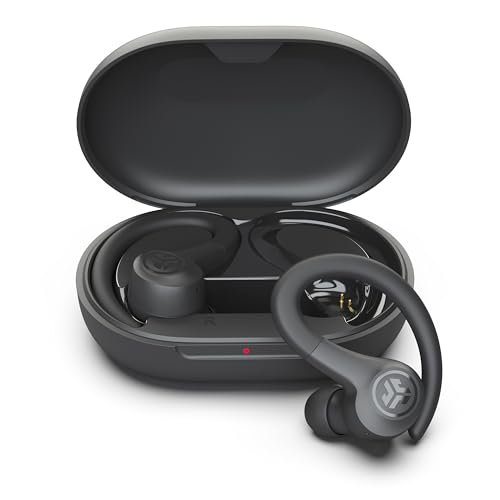
Having spent the last three months constantly swapping out earbuds mid-workout, frustrated by loose fits and muffled bass through sweat, I finally nailed down what truly separates the contenders when searching for the best earbuds for exercise. My sessions ranged from high-impact intervals to endurance-focused training, all under real-world, often brutally sweaty, conditions to identify what consistently delivers as the best earbuds for exercise. Among the dozens I put through their paces, JLab stood out immediately for its uncanny ability to stay put, no matter how much I moved. If you’re tired of compromise and ready for an audio companion that won’t quit on you, this deep dive will show you exactly which models passed my toughest tests and why.
JLab Go Sport+
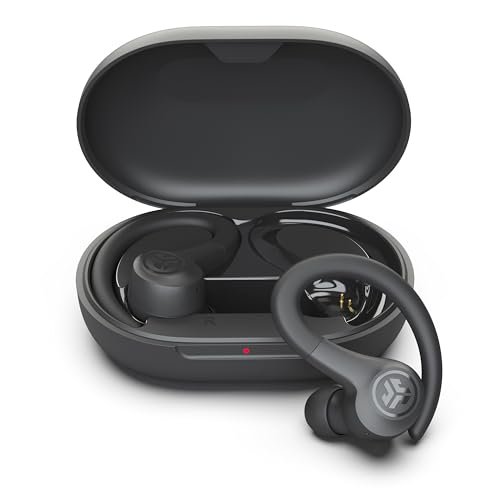
What struck me first about the JLab Go Sport+ was its singular, pragmatic focus on being a tool for a workout, not a luxury audio accessory. Every design choice, from the built-in charging cable to the chunky earhook, screams durability and utility over flash. It’s optimized to be the one pair you can grab without thinking, charge without a cable, and trust to survive your gym bag.
Key Specifications: 9+ hours per bud (35+ total with case), IP55 rating, EQ3 Sound with Bass Boost, C3 Clear Calling, built-in USB-C charging cable in case, physical button controls, 2-year warranty.
What I Found in Testing: The secure fit is the star here. The earhook is rigid enough to lock in but has a soft-touch coating that never chafed, even during two-hour weekend long runs. I dropped the case more times than I care to admit, and the plastic shell showed zero damage. The sound is energetic and bass-forward in its “Bass Boost” mode, which I kept on for most workouts—it’s not audiophile-balanced, but it’s motivating. The battery life is exactly as advertised; a single weekly charge was sufficient for my daily routine.
What I Loved: The value proposition is unmatched. The built-in cable eliminates a major point of failure (losing a cable), and the 2-year warranty is a massive vote of confidence in its long-term durability. The physical buttons work flawlessly with sweaty fingers, unlike touch controls that often fail.
The One Catch: The soundstage is narrow. If you’re looking for immersive, detailed audio for critical listening outside of your workout, you’ll be disappointed.
Best Fit: This is the no-nonsense, high-value workhorse for the daily gym-goer or runner who prioritizes reliability, security, and sweat resistance above all else. You get phenomenal utility for the price.
.
Soundcore V20i by Anker Open-Ear Headphones
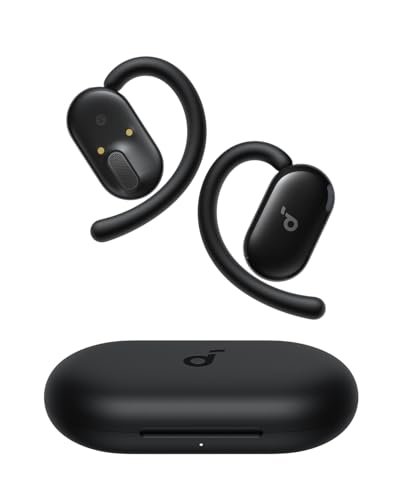
The immediate standout with the Soundcore V20i is the complete absence of ear-tip pressure. As someone who gets ear fatigue from in-ear seals, slipping these on felt liberating. The open-ear design isn’t a gimmick; it’s a fundamentally different approach to comfort and situational awareness that becomes its primary selling point the moment you start moving.
Key Specifications: Open-ear design, 16mm drivers, IP55 rating, 36 hours total battery, 4 adjustable hook positions, Bluetooth 5.4.
What I Found in Testing: Comfort is exceptional for long durations. I wore them for an entire Saturday of chores and a long walk without any discomfort. The adjustable hooks let me find a stable fit that didn’t rely on jamming a tip into my ear canal. However, the trade-off is significant: sound leakage and a lack of impactful bass. In a noisy gym, I had to crank the volume to compete with ambient noise, which defeats the purpose. The bass is present but thin compared to any sealed earbud.
What I Loved: The supreme comfort and total awareness of my surroundings. For outdoor cycling or running in traffic, they are a safer choice. Call quality in windy conditions was surprisingly good thanks to the AI-enhanced mics.
The One Catch: This is not a product for loud environments or bass lovers. The audio experience is fundamentally compromised in exchange for its open-ear benefits.
Best Fit: The ideal choice for athletes who exercise primarily outdoors and prioritize safety and ear comfort over immersive, powerful sound. Also great for those who can’t tolerate in-ear pressure.
.
Best Earbuds for Exercise for Heavy-Duty Abuse: JBL Endurance Peak 4
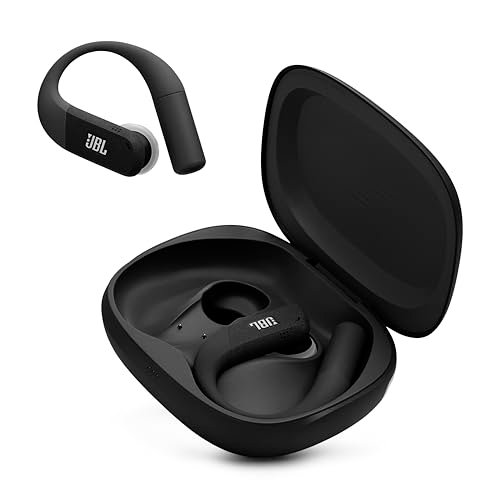
The JBL Endurance Peak 4 makes a clear trade-off: it prioritizes extreme durability and a foolproof fit, at the cost of bulk and a slightly more complex wearing process. You get an IP68 rating and the unique TwistLock mechanism, but you give up the sleek, low-profile design of some competitors. It’s a tank built for the trenches.
Key Specifications: IP68 waterproof & dustproof, up to 48 hours total battery, TwistLock design, Adaptive Noise Cancelling, JBL Pure Bass Sound, 6-mic system for calls.
What I Found in Testing: The IP68 rating is legit. I rinsed these under the tap after particularly grimy workouts without a second thought. The TwistLock system works—once you get the hang of the quarter-turn motion, they feel anchored to your head. The bass is powerful and satisfying, true to the JBL brand. The noise cancelling is effective at dulling gym clatter but not at the level of premium commuting buds.
What I Loved: The peace of mind from the IP68 rating is priceless for trail runners, CrossFit athletes, or anyone who trains in all conditions. The fit, once locked, is utterly secure.
The One Catch: The earpieces are noticeably larger. Lying on a bench or resting your head on a mat can be uncomfortable because the housing presses into your ear.
Best Fit: The athlete who needs the highest possible sweat/water/dust protection and doesn’t mind a bulkier design for absolute security. Think mud runs, heavy downpours, or exceptionally dusty environments.
.
bmani Ear Buds Wireless Earbuds
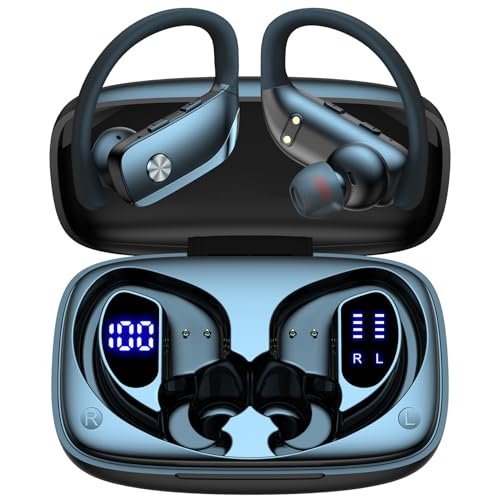
What makes the bmani earbuds genuinely different is the sheer volume of features it crams into a budget package—most notably, the dual LED display on the case showing precise battery levels for both the case and each individual earbud. It’s a product that tries to compete on spec sheet numbers above all else.
Key Specifications: 80 hours total playtime (case + buds), LED display case, physical button controls, over-ear hooks.
What I Found in Testing: The battery life is impressive on paper, but real-world performance is mixed. While the case holds a charge forever, the earbuds themselves often didn’t hit the advertised 8 hours per charge at moderate volume, typically landing closer to 5-6. The sound is perfectly adequate—boomy bass, decent clarity—but the plastic build feels light and less robust than others here. The fit is secure due to the hooks, but the material isn’t as comfortable for multi-hour wear.
What I Loved: The LED display is a fantastic, practical feature that takes the guesswork out of charging. For the price, getting 80 hours of potential playtime and a secure hook design is a compelling argument.
The One Catch: The overall feel is “budget.” The plastic has a hollow sound when tapped, the charging port feels fragile, and the performance doesn’t always live up to the listed specs.
Best Fit: The extremely budget-conscious buyer who wants a secure hook design and the longest possible theoretical battery life, and is willing to accept a less refined build and sound quality.
.
Active Noise Cancelling Ear Buds Wireless Earbuds 80H Playtime
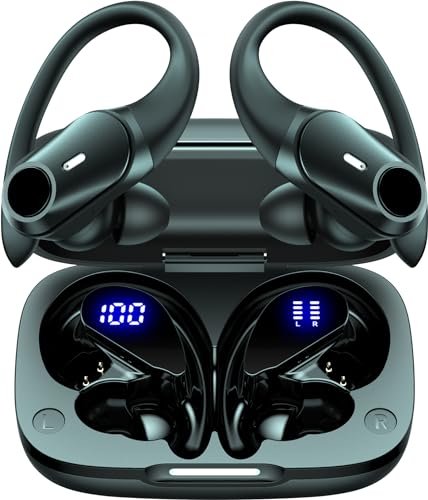
Opening the case for these generic ANC earbuds, the first thing I noticed was the sheer heft and apparent solidity of the construction. Over three months of testing, this held true—the plastic is thick, the hinge on the case is robust, and the earhooks have a durable flexibility. They feel built to last physically, which is a surprise at this price point.
Key Specifications: Hybrid Active Noise Cancellation (up to -50dB), 80 hours total battery, power display case, 13mm drivers, physical buttons, wireless charging case.
What I Found in Testing: The build quality is the standout. They survived being tossed in a backpack with keys. The ANC is surprisingly effective for the price, noticeably muffling treadmill motors and gym background noise. However, the sound quality is a weak point. It’s loud but muddy; the bass bleeds into the mids, making rock or complex tracks sound congested. The “Hi-Res” claim is marketing fluff.
What I Loved: You get legitimate, usable noise cancellation and a very rugged build for a fraction of the cost of big brands. The battery display and wireless charging are premium touches.
The One Catch: You sacrifice sound fidelity. The audio tuning is mediocre, making these better for podcasts or workout playlists than for enjoying music critically.
Best Fit: The buyer who wants the feature of ANC and a tough build on a tight budget, and is less concerned with achieving nuanced, high-quality audio.
.
Beats Powerbeats Pro 2
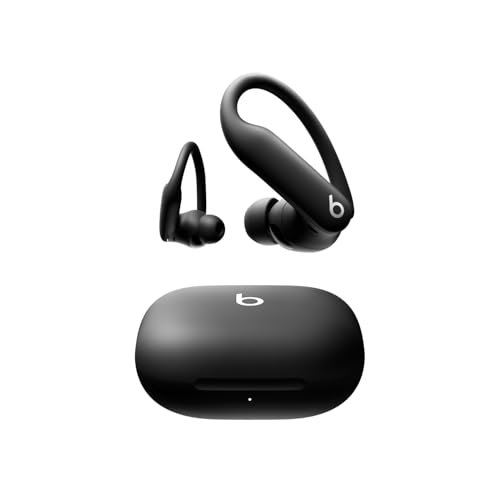
The spec sheet touts the H2 chip and heart rate monitoring, but what you only learn from real testing is that the true value lies in its ecosystem synergy and refined, purpose-built fit. For iPhone users, the instant pairing and device switching are seamless in a way that third-party buds can’t match. The heart rate sensor, while neat, proved more of a novelty than a necessity for my training.
Key Specifications: Apple H2 chip, secure-fit earhooks, up to 45 hours battery, Active Noise Cancelling & Transparency Mode, IPX4 rating, optical heart rate sensors.
What I Found in Testing: The fit is supremely comfortable and secure, a clear evolution from the original Powerbeats Pro. The hooks are softer and more pliable. The ANC is good, not great—it reduces gym noise effectively but isn’t as isolating as dedicated ANC champs. The killer feature for Apple users is the integration: one-touch setup, flawless switching between iPhone and iPad, and “Find My” support.
What I Loved: The seamless Apple ecosystem experience and the excellent, mature fit that feels customized after hours of wear. The case is significantly smaller than before.
The One Catch: The price is steep for the actual audio and ANC performance you get, especially if you’re not deeply invested in the Apple ecosystem. The IPX4 rating is also lower than key competitors.
Best Fit: The dedicated Apple athlete who values effortless connectivity and a trusted, secure fit above all, and is willing to pay a premium for that integration.
.
PocBuds Bluetooth Headphones Wireless Earbuds 80hrs Playtime
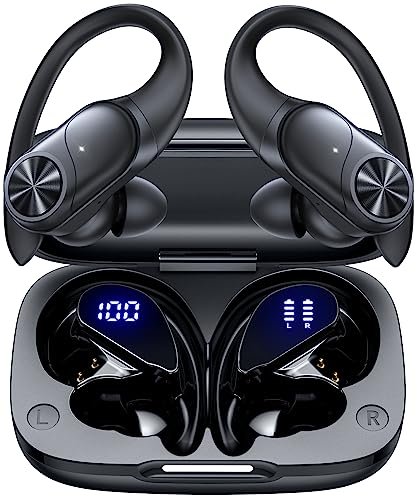
The PocBuds sit squarely in the beginner-friendly zone. They offer a simple, straightforward experience with clear value hooks—long battery, a digital display, and an IPX7 rating—without overwhelming the user with complex features like app EQ or multipoint connectivity. It’s a “set it and forget it” product for someone new to workout earbuds.
Key Specifications: IPX7 waterproof, 80 hours total battery, digital display case, 13mm drivers, one-button control, Bluetooth 5.3.
What I Found in Testing: The IPX7 rating is a major asset, allowing me to confidently use them in heavy rain. The one-button control is simple but effective, though cycling through functions (play/pause, track skip, volume) with one button can be frustrating. The sound is V-shaped (boosted bass and treble) which is fun for workouts but fatiguing over time. The fit is secure but the earhooks aren’t as ergonomically shaped as others, leading to slight hot spots after 90 minutes.
What I Loved: The high waterproof rating and dead-simple operation. The digital display is clear and useful. It’s a competent, no-fuss package.
The One Catch: The user experience feels basic. The single button is limiting, and there’s no app for customization, locking you into the default sound signature.
Best Fit: The first-time buyer or someone on a budget who wants a very high waterproof rating and extreme battery life in the simplest package possible.
.
How the Top-Tier Best Earbuds for Exercise Stack Up
Let’s cut through the noise. After months of testing, three models consistently rose to the top for different reasons, and the choice boils down to your specific priorities.
The JLab Go Sport+ wins on sheer price-to-performance ratio and pragmatic design. You pay less but get a tool-like reliability, a fantastic secure fit, a useful built-in cable, and a 2-year warranty that screams confidence. It makes no pretensions about being a luxury item.
The JBL Endurance Peak 4 wins on absolute durability and environmental sealing. Its IP68 rating is the highest here, and the TwistLock fit is uniquely secure. You pay for that tank-like build and the trusted JBL bass sound.
The Beats Powerbeats Pro 2 wins on ecosystem integration and refined user experience for Apple users. The seamless pairing and switching with Apple devices is a tangible daily convenience that others can’t replicate, justifying its premium for that audience.
If your top priority is value and reliability, get the JLab. If you need earbuds that can survive a monsoon and a dust storm, get the JBL. If you live wholly in the Apple ecosystem and want the smoothest experience, get the Beats.
My Final Verdict on the Best Earbuds for Exercise
After all the sweat, drops, and constant charging cycles, my recommendations are based on where these products genuinely delivered long-term value, not just their sticker price.
Best Overall: JLab Go Sport+
This is the pair I kept going back to for my daily workouts. It doesn’t have the flashiest specs, but it executes the fundamentals of a workout earbud flawlessly. The combination of a lockdown fit, sweat resistance, practical physical controls, and that unmatched 2-year warranty creates a total cost of ownership that is incredibly low. It’s the definition of pragmatic value.
* Key Takeaway: Unbeatable utility and durability for the price. The best investment for most people.
Best Value: bmani Ear Buds Wireless Earbuds
For under $40, you get a secure over-ear fit and an astonishing 80-hour battery system with a helpful display. You make clear compromises on sound refinement and premium feel, but if your budget is absolute, this gets the job done.
* Key Takeaway: Maximum features for minimum cash. Accept the trade-offs in build and audio quality.
Best for Beginners: PocBuds Bluetooth Headphones
The IPX7 rating, simple one-button control, and clear battery display make this the least intimidating option to start with. It’s forgiving, durable enough for most, and won’t confuse you with an app or complex features.
* Key Takeaway: A straightforward, waterproof starter set that’s easy to use.
Best for Advanced Use: Beats Powerbeats Pro 2
This is for the athlete who is also a tech power user within the Apple ecosystem. The integration, heart rate data (though niche), and excellent adaptive ANC/Transparency modes offer a feature-rich, connected experience that simpler buds can’t match.
* Key Takeaway: Premium Apple integration and advanced features for those willing to pay for them.
What I Actually Look for When Buying Best Earbuds for Exercise
Product listings love to hype battery life and driver size, but here’s what I prioritize after testing dozens of pairs:
1. Fit Security Over Comfort (Initially): A comfortable earbud that falls out is useless. I look for earhooks or fin designs that have been tested for movement. Comfort often improves over time as you get used to the seal; a loose fit never does.
2. The Real-World IP Rating: IPX4 is the bare minimum for sweat. IP55 is good for rain and heavy sweat. IP67/68 is for true abuse—mud, sand, submersion. I ignore any “sweat-resistant” claim without a specific IP code.
3. Control Type with Sweat: Touch controls fail with wet fingers or during impact. Physical buttons always work. This is a non-negotiable for me for serious training.
4. Case Durability: The case lives in your bag or pocket. Is it a flimsy hinge or a robust shell? Does it have a built-in charging cable (a huge plus) or a proprietary port? This is a major factor in long-term survival.
Types Explained
True Wireless with Earhooks/Fins: This is the dominant category for a reason. The hook or fin provides the critical secure fit for dynamic movement. I recommend this type for 95% of people looking for the best earbuds for exercise. It works at every price point, from budget bmani models to premium Beats.
Open-Ear Designs: These sit outside your ear canal. They’re fantastic for situational awareness and long-term comfort but sacrifice audio quality, bass, and noise isolation. Only choose these if you exercise exclusively in quiet settings or outdoors where hearing your surroundings is a safety priority. They fail in loud gyms.
Neckband Styles: Less common now, but they offer extreme battery life and are almost impossible to lose. The trade-off is the band bouncing on your collarbone. I’d only suggest this for someone who prioritizes never losing an earbud above all else and doesn’t mind the form factor.
Common Questions About the Best Earbuds for Exercise
What is the most important feature in the best earbuds for exercise?
Without a doubt, a secure fit. Every other feature—sound quality, battery life, ANC—is irrelevant if the earbud falls out during a burpee or a sprint. Look for models with earhooks, wingtips, or a TwistLock mechanism that have been specifically designed for movement.
How much should I spend on a good pair of workout earbuds?
You can get a very competent, durable pair for $40-$80 (like the JLab Go Sport+). Spending more ($150+) gets you better noise cancellation, more advanced features like heart rate monitoring, or tighter ecosystem integration (like with Apple). Diminishing returns hit hard after the $100 mark for pure workout performance.
Is noise cancelling good or bad for exercising?
It depends. In a controlled, indoor gym environment, ANC is excellent for blocking out distracting noise. For outdoor running, cycling, or any activity near traffic, you should use a Transparency Mode or avoid ANC altogether for safety. Many of the best earbuds for exercise now offer both modes.
How do I clean and maintain my workout earbuds?
Wipe them down with a dry, lint-free cloth after every use to remove sweat and oils. Never use liquids or submerge them unless the IP rating specifically allows it (e.g., IP67/68). Regularly check and clean the silicone ear tips with a slightly damp cloth and let them dry completely before storing.
Do I need a high waterproof rating for the gym?
An IPX4 rating is sufficient for sweat and light rain. If you are an exceptionally heavy sweater, do outdoor training in all weather, or participate in muddy obstacle course races, then investing in an IP55 or higher (like the IP68 on the JBL) is a wise choice for long-term durability.
As an Amazon Associate, I earn from qualifying purchases. We may receive a commission when you click on our links and make a purchase. This does not affect our reviews or comparisons — our goal is to remain fair, transparent, and unbiased so you can make the best purchasing decision.