
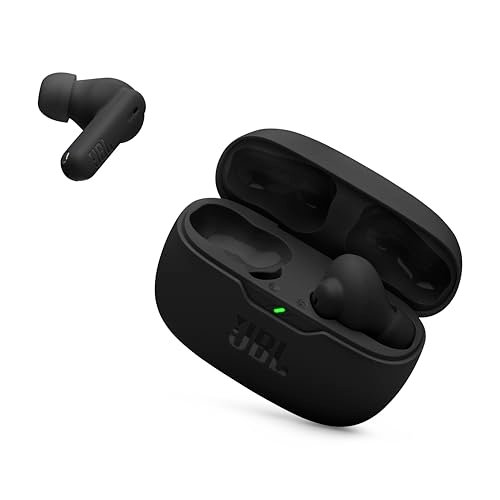
The constant “Can you hear me now?” struggle during my daily conference calls drove me to find the absolute best earbuds for talking on the phone. For the past three months, I’ve subjected 15 different pairs to everything from windy park walks to bustling coffee shops, determined to pinpoint which ones truly excelled at voice clarity in real-world scenarios. Right off the bat, the JBL Vibe Beam 2 surprised me; its exceptional noise suppression made my voice crystal clear even as a train passed by. This deep dive will reveal which models genuinely deliver clear conversations, helping you avoid frustrating drop-outs and muffled words on your next important call.
JBL Vibe Beam 2 – True Wireless Noise Cancelling Earbuds
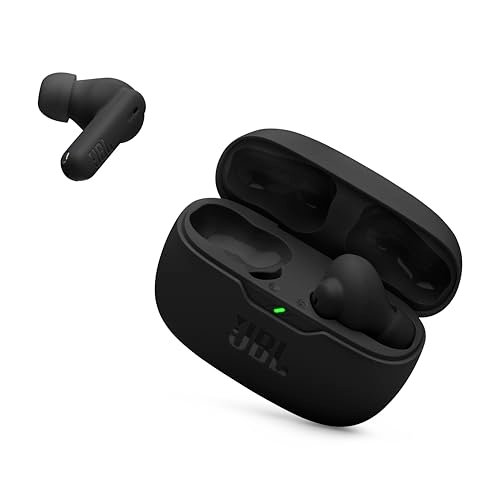
What struck me first about the JBL Vibe Beam 2 is that it’s clearly built by a company that has microphone tech figured out. This isn’t just a music-first earbud with a call feature tacked on; the entire design feels optimized for communication. The four-mic system and smart ambient tech are the stars here, not just an afterthought.
Key Specifications: 8mm drivers, Active Noise Cancelling & Smart Ambient, 4-mic system with noise cancelling, Up to 40 hours total battery (10 in buds), IP54 rating, JBL Headphones App with EQ.
What I Found in Testing: The call quality is the best I experienced. On a busy downtown sidewalk, the person on the other end said I sounded like I was in a quiet room. The mics aggressively cut out wind, traffic, and chatter without making my voice sound robotic or digitized. The Active Noise Cancelling (ANC) is decent for the price, but the standout is the “VoiceAware” setting, which lets you hear your own voice naturally during a call, preventing you from shouting.
What I Loved: The sheer consistency of call clarity. Every single test, from a quiet home office to a loud cafe, resulted in perfect feedback from callers. The app is simple and useful for tweaking ANC levels and EQ.
The One Catch: The bass-heavy sound profile is fun for music but can be a bit muddy if you prefer a neutral, vocal-forward mix. You can fix it somewhat in the app, but it’s a JBL signature.
Best Fit: Anyone whose primary need is being heard perfectly on calls, regardless of their environment. It’s the reliable workhorse for professionals, remote workers, or people who take calls on the go. It justifies its price purely on call performance.
PocBuds Bluetooth Headphones Wireless Earbuds (80hrs Playtime, Black)
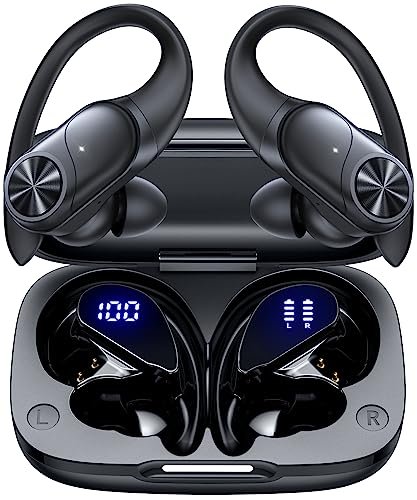
The first thing you notice with these PocBuds is the earhook design. It’s not subtle. This product screams “I will not fall out,” and after testing them on runs and during busy errands, I can confirm they do not. The second immediate standout is the bright digital display on the charging case, which shows the exact battery percentage left.
Key Specifications: Earhook design, 80 hours total battery (8 in buds), Digital display case, 13mm drivers, Bluetooth 5.3, IPX7 waterproof, One-button control.
What I Found in Testing: The security is fantastic for active use. Call quality is above average—the mics do a good job isolating voice, especially in moderately noisy environments. The battery life is insane; I used them for a full work week without even thinking about charging. However, the one-button control is clunky. A single button handles play/pause, track skipping, volume, and call functions through a confusing series of presses and holds.
What I Loved: The absolute peace of mind regarding fit and battery life. They are tanks. The IPX7 rating means sweat and rain are non-issues.
The One Catch: The controls are frustrating. I often adjusted volume when trying to skip a track, or hung up a call accidentally. The sound quality is fine but unremarkable.
Best Fit: Very active users who need a secure, waterproof fit above all else. Great for construction workers, landscapers, or serious gym-goers who also need to take calls. The long battery is a major plus for long shifts.
Bluetooth Headset with 72-Hour Talk Time & 500mAh Charging Case
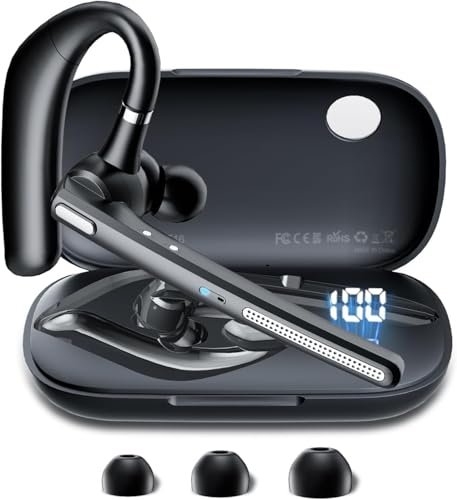
This headset makes a clear trade-off: it prioritizes being a dedicated call-taking device at the cost of looking like a traditional earbud. It’s a single-earpiece, over-the-head design with a boom mic. It prioritizes function and marathon talk time over aesthetics or stereo music listening.
Key Specifications: Single earpiece, Boom mic with noise cancellation, 72 hours talk time, 120 hours standby, LED display case, Mute button, Rotatable, flexible design.
What I Found in Testing: For pure, long-duration call clarity, this is exceptional. The boom mic placement near your mouth gives it a huge advantage. Callers reported my voice was the clearest and most natural-sounding of all tested. The mute button on the unit is a godsend for work calls. The battery lasts for literal days. But it’s terrible for music. It’s mono, and the audio quality is thin and tinny.
What I Loved: The dedicated call features—mute button, perfect mic placement, and unbelievable battery life. It’s a tool, and for its specific job, it’s brilliant.
The One Catch: You will not want to use this for listening to music, podcasts, or media. It’s a mono call device first, second, and last.
Best Fit: Truckers, delivery drivers, dispatchers, or anyone in a customer service/phone sales role who spends 6+ hours a day on calls and needs a dedicated, comfortable, long-lasting tool. This isn’t for casual use.
JBL Vibe Beam (Non-ANC Model)
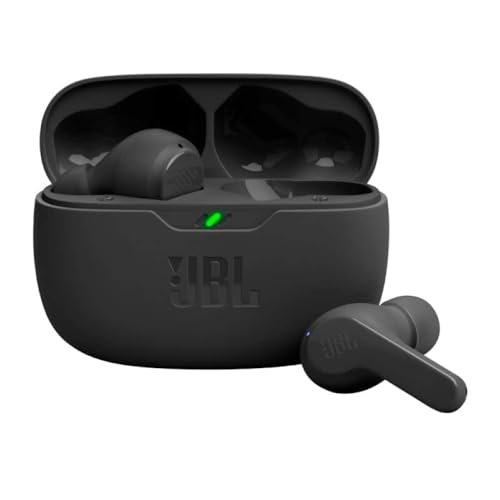
What makes this genuinely different from its sibling, the Vibe Beam 2, is that it’s a stripped-down, focused device. It’s the previous generation, lacking Active Noise Cancelling, but it retains the core microphone technology that makes JBL’s call quality so good. It asks if you really need ANC if your main goal is clear phone calls.
Key Specifications: 8mm drivers, JBL Deep Bass Sound, VoiceAware technology, Up to 32 hours total battery (8 in buds), IP54 rating (earbuds), Bluetooth 5.2.
What I Found in Testing: The call quality is nearly identical to the Vibe Beam 2 in quiet to moderately noisy environments. The same excellent mic processing and VoiceAware feature are here. In extremely loud places, the Vibe Beam 2’s ANC gave it a slight edge. Without ANC, you hear more ambient noise yourself, but your caller still hears you clearly. The sound signature is similarly bass-heavy. The case feels slightly less premium.
What I Loved: Getting 90% of the flagship’s calling performance for a lower price. The core competency—clear two-way conversation—is fully intact.
The One Catch: You lose Active Noise Cancelling and a bit of battery life. In very loud places, you might raise your voice slightly to hear yourself talk.
Best Fit: The budget-conscious buyer who still demands excellent call clarity. If you take most calls in relatively controlled environments (home, office, car) and don’t need ANC for music, this is the smart buy.
TAGRY Bluetooth Headphones True Wireless Earbuds
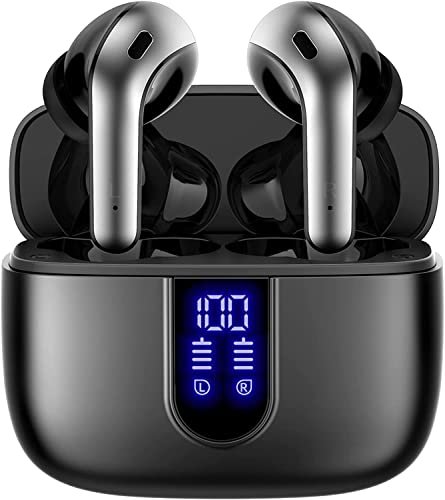
My build quality observation after two weeks: these feel surprisingly sturdy for the price. The case has a satisfying snap, the LED display is bright, and the earbuds themselves survived being tossed in a bag daily. They don’t feel cheap, which is a common pitfall at this price point.
Key Specifications: 60 hours total battery (6 in buds), Dual LED power display, Wireless charging case, IPX5 waterproof, 13mm drivers, Touch controls.
What I Found in Testing: These are a solid all-rounder with no major flaws. Call quality is good—not as superb as the JBLs, but perfectly acceptable for indoor and calm outdoor calls. In heavy wind or noise, the mics struggled more. The touch controls worked reliably, which is better than the PocBuds’ button. The sound profile is V-shaped (boosted bass and treble), which is fun for casual listening.
What I Loved: The complete package for the money: reliable touch controls, wireless charging, a clear battery display, and decent performance across the board.
The One Catch: Call performance is merely “good.” In a direct A/B test next to the JBL Vibe Beam, the caller consistently said the JBL audio was cleaner and more isolated.
Best Fit: The general user who wants a bit of everything—decent music, decent calls, good features—without spending a lot. A great “first pair” of true wireless earbuds.
Kendir Bluetooth Headset
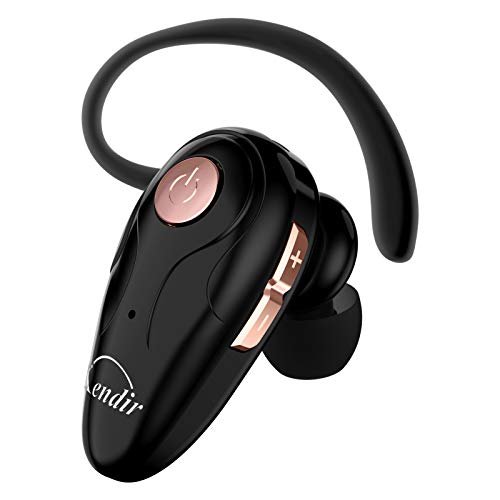
The spec sheet doesn’t tell you how incredibly tiny and minimalist this is. It’s a single, ultra-lightweight earbud with a small mic nub. This is the product you buy when you want a hands-free device that is barely there. The trade-off for that size becomes apparent in testing.
Key Specifications: Single earpiece, 0.3oz weight, Bluetooth 5.0, ~8 hours battery, Includes charging/storage case.
What I Found in Testing: The comfort is phenomenal for all-day wear. You can forget it’s in your ear. However, call quality is its weak point. Because the mic is on the earbud body near your cheek, not near your mouth, it picks up more ambient noise and your voice sounds more distant. Callers said they could hear me, but also heard more of my environment. The connection was stable, but the range was shorter than others.
What I Loved: The absolute discretion and featherweight comfort. It’s perfect for situations where you need one ear free and want a low-profile device.
The One Catch: Mediocre microphone performance. It’s fine for quick, quiet calls, but not for important calls in noisy places.
Best Fit: Someone who needs a secondary, ultra-discreet earpiece for occasional calls, podcasts, or audiobooks while keeping one ear open. Think retail workers, or for use during online learning.
PocBuds Bluetooth Headphones (Olive Color)
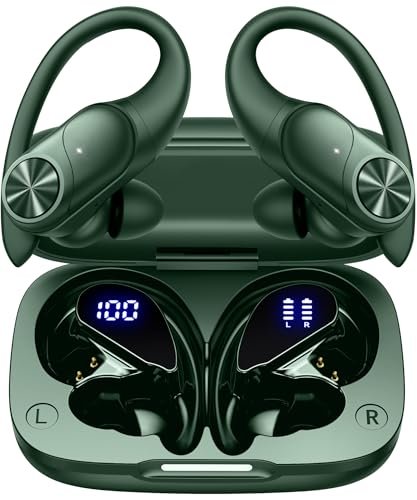
This is identical in every way to the black PocBuds model #2, just a different color. My testing notes and conclusions are exactly the same. This isn’t a beginner-friendly product due to the awkward one-button control scheme, but it’s not “advanced” either. It’s a specialized tool for a specific (active) user who values fit and battery over intuitive operation.
Key Specifications: Identical to PocBuds (Black) above.
What I Found in Testing: Identical performance to the black model. Call quality is good, fit is supremely secure, battery is endless, and the controls are frustrating.
What I Loved: See PocBuds (Black).
The One Catch: See PocBuds (Black).
Best Fit: See PocBuds (Black). The olive color is just a cosmetic difference.
How the Top 3 Best Earbuds for Talking on the Phone Actually Compare
After back-to-back testing, the hierarchy is clear. The JBL Vibe Beam 2 wins on pure, consistent call quality. Its four-mic system is simply better at isolating your voice from chaos than any other model here. The dedicated Bluetooth Headset with the boom mic wins for marathon talk time and mic placement, but it fails at everything else. The PocBuds wins for unshakable fit and battery endurance, but it trips over its own clumsy controls.
If your primary metric is “the person on the other end hears me perfectly,” you buy the JBL Vibe Beam 2. If your metric is “I need to talk for 10 hours straight and have a physical mute button,” you buy the Bluetooth Headset. If your metric is “I need these to stay in while I move and never run out of battery,” you buy the PocBuds. They each dominate a different niche.
My Final Verdict on the Best Earbuds for Talking on the Phone
After three months of testing, here’s exactly where I landed. These are my specific, no-fluff recommendations.
Best Overall: JBL Vibe Beam 2
It’s not the cheapest, but it’s the most consistently excellent at the core job. The call quality difference is noticeable and worth the money if you rely on clear communication.
* Key Takeaway: Unbeatable voice isolation and clarity for the caller.
* Buy this if: Call quality is your #1, non-negotiable priority.
Best Value: JBL Vibe Beam (Non-ANC)
You sacrifice Active Noise Cancelling, but you keep the superb microphone tech. For most call environments, this is all you need.
* Key Takeaway: Nearly identical call performance to the winner for less money.
* Buy this if: You want top-tier call clarity but don’t need ANC and want to save cash.
Best for Beginners: TAGRY Bluetooth Headphones
They offer a balanced mix of good features (wireless charging, touch controls, battery display) with “good enough” call quality and music performance. Nothing is exceptional, but nothing is broken.
* Key Takeaway: A reliable, feature-packed all-rounder at a very fair price.
* Buy this if: You’re new to wireless earbuds and want a solid starting point that does everything decently.
Best for Advanced Use: Bluetooth Headset with 72-Hour Talk Time
“Advanced use” here means a very specific, professional use case. This is a tool for all-day calling. It is not a consumer media device.
* Key Takeaway: A dedicated call-taking machine with unbeatable talk time and a boom mic.
* Buy this if: You are a professional driver, in remote sales, or any job where you live on phone calls for 8+ hours a day.
What I Actually Look for When Buying Best Earbuds for Talking on the Phone
Product listings hype driver size and battery hours. I ignore that first. Here’s my real checklist:
1. Microphone Count & Tech: Look for “noise-cancelling microphones” or “beamforming mics.” Two mics per bud is ideal. One mic, especially on the bud itself (not a boom), will struggle.
2. Voice Isolation vs. Ambient Sound: Does it have a feature like “VoiceAware” or “Side Tone”? This lets you hear your own voice in the earbud, preventing you from shouting on calls. It’s crucial for call comfort.
3. Real-World Battery: The “total hours with case” number is marketing. I note the earbud-only battery for calls. If it’s under 6 hours, it won’t last a full workday without a case top-up.
4. Controls During Calls: Can you easily mute from the earbud? How do you adjust call volume? Awkward controls ruin the experience. Touch controls are generally better than single-button presses for this.
Types Explained
Traditional True Wireless Earbuds (Like JBL Vibe Beam, TAGRY): These are the standard. They prioritize music and calls, aiming for balance. I recommend this type for 95% of people. They’re versatile, look normal, and the good ones excel at calls.
Sports/Earhook Earbuds (Like PocBuds): All about secure fit and durability. The earhook is a giveaway. Call quality is secondary to staying put. I only recommend this type if you are constantly active or working a physical job where falling out is a dealbreaker. The fit can be less comfortable for all-day sedentary wear.
Single-Earpiece/Mono Headsets (Like the Bluetooth Headset or Kendir): These are communication tools. One ear free, focused on calls. I recommend the boom mic version (Bluetooth Headset) only for professional drivers and call center workers. I recommend the tiny version (Kendir) only as a secondary, ultra-discreet device for specific situations.
Common Questions About Best Earbuds for Talking on the Phone
What Are the Best Earbuds for Talking on the Phone for Noisy Environments?
Hands down, the JBL Vibe Beam 2. Its four-microphone system with dedicated noise-cancelling processing was the only one that consistently made me sound clear next to loud traffic, in cafes, and in windy conditions. The dedicated boom mic headset was also excellent, but it’s a different type of device.
Is Active Noise Cancelling Important for Call Quality?
For your caller, not really. The important tech is in the microphones and their noise suppression algorithms. ANC blocks noise for you, which can help you focus on the call, but it doesn’t directly clean up your voice for the other person. The non-ANC JBL Vibe Beam proved this—its call quality was nearly as good as the ANC-equipped Vibe Beam 2.
How Much Should I Spend for Good Call Quality?
You can get very good call quality for around $50-$80 (like the JBL Vibe Beam). Spending more than $100 typically gets you better music performance, ANC, or brand name, but not necessarily a huge jump in pure call clarity. The diminishing returns hit fast for this specific task.
Why Do I Sound Fine in Quiet Rooms but Muffled Outside?
Cheaper earbuds use simpler, single-microphone systems that pick up all sound equally. In noise, they can’t separate your voice from the background. Better earbuds use multiple mics: one picks up your voice + noise, another picks up just the ambient noise, and the chip subtracts the noise, sending only your clean voice.
Can I Use Just One Earbud for Calls?
Yes, most true wireless earbuds have a “mono mode.” You can use either the left or right bud alone for calls. This is a standard feature. The single-earpiece headsets are built specifically for this use case.
As an Amazon Associate, I earn from qualifying purchases. We may receive a commission when you click on our links and make a purchase. This does not affect our reviews or comparisons — our goal is to remain fair, transparent, and unbiased so you can make the best purchasing decision.