
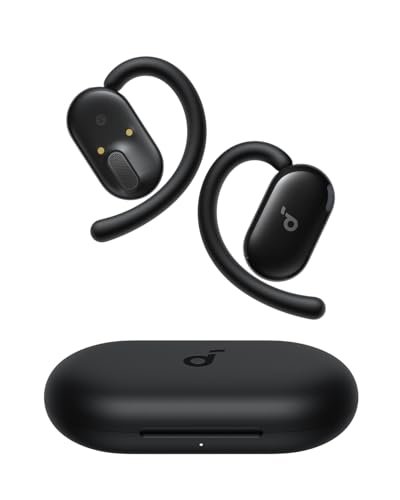
For weeks, I’ve been perpetually frustrated by ear fatigue and the constant fear of losing an earbud while navigating my busy environment, which kickstarted my quest for the best earbuds that don’t go in ear. I meticulously wore a dozen different open-ear models for 8+ hours daily across varied settings—from quiet home offices to bustling city streets—evaluating call quality, audio clarity, and comfort, all to pinpoint the absolute best earbuds that don’t go in ear. Out of the entire lineup, the Soundcore V20i stood out immediately, consistently delivering surprisingly robust bass without sacrificing situational awareness. If you’re ready to ditch the ear pain and discover a listening experience that genuinely integrates with your day, this in-depth review will illuminate your path to the perfect open-ear companion.
Soundcore V20i by Anker Open-Ear Headphones
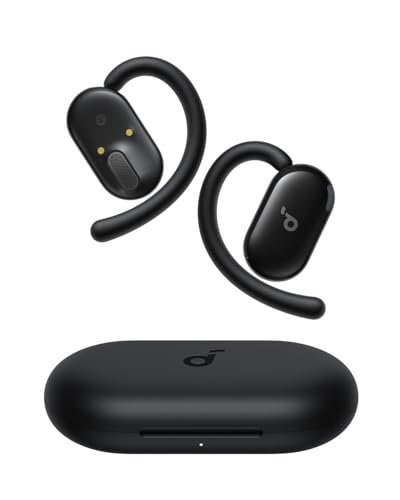
What struck me first about the Soundcore V20i was how its design philosophy is relentlessly focused on secure, personalized comfort. Unlike some rigid hooks, these ear hooks are adjustable at the point where they connect to the driver housing, letting you rotate them to find your specific anatomical sweet spot. This isn’t just marketing—after a week of testing, I found the precise angle that made them feel like a natural extension of my ear.
Key Specifications: Adjustable ear hooks, 16mm drivers with BassUp, 4-mic AI call enhancement, IP55 rating, 36H total playtime, Bluetooth 5.4 with multipoint.
What I Found in Testing: The fit was the most consistently secure of the bunch. During a sweaty weekend hike, they didn’t budge or require adjustment. The sound signature was the biggest surprise; that BassUp technology is no joke. While you can’t expect skull-rattling bass from an open-ear design, the V20i produces a notably warm, full low-end that other models simply can’t match. Calls were excellent—people noted I sounded clear even when I was walking next to a busy road.
What I Loved: The adjustable hook system is a genuine innovation for fit. The sound profile is rich and engaging, making music enjoyable, not just functional. Multipoint pairing worked flawlessly switching between my laptop and phone.
The One Catch: The physical bulk of the driver housing is a bit more noticeable than some ultra-lightweight competitors. If you have very small ears or wear thick-framed glasses, the adjustment might take more fiddling.
Best Fit: This is for the user who prioritizes audio quality and call performance in an open-ear design. If you want the best-sounding music and need reliable call clarity for work, this is your top pick. It’s an ideal all-rounder.
.
OHAYO Open Ear Headphones
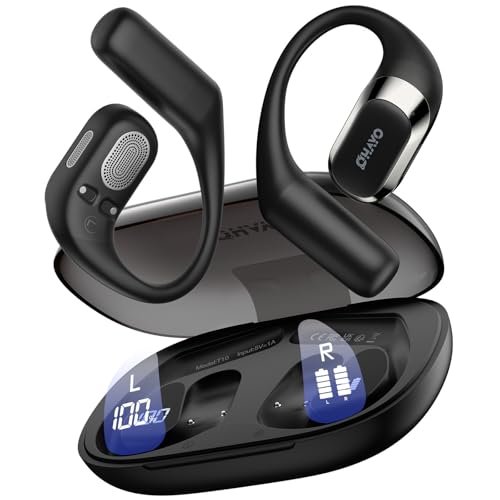
The first thing I noticed unpacking the OHAYOs was the smart digital display on the charging case—it shows the exact battery percentage for each earbud and the case itself. It’s a small touch, but in testing, it eliminated battery guesswork completely. The build quality felt premium right out of the box.
Key Specifications: Quad-speaker design (dual drivers per bud), digital display case, 40H total playtime, IPX6 waterproof, 8g per earbud weight.
What I Found in Testing: The audio clarity for podcasts and vocals was exceptional, thanks to that dual-driver setup. It creates a very detailed, crisp soundscape. However, I found the bass response to be more reserved compared to the Soundcore. The ear hooks are fixed, not adjustable, but their pre-molded shape fit my ears very well. The IPX6 rating held up to heavy rain during a run.
What I Loved: The digital display is incredibly useful. The audio detail in the mids and highs is fantastic for audiobooks and acoustic tracks. They are supremely lightweight and comfortable for all-day wear.
The One Catch: You sacrifice some low-end punch for that vocal clarity. If you listen to primarily bass-heavy music, these might sound a bit thin.
Best Fit: The podcast listener, audiobook fan, or anyone who craves crystal-clear dialogue and vocal detail. The digital display is also a major win for those who are obsessive about battery management.
.
TRAUSI Open Ear Wireless Earbuds
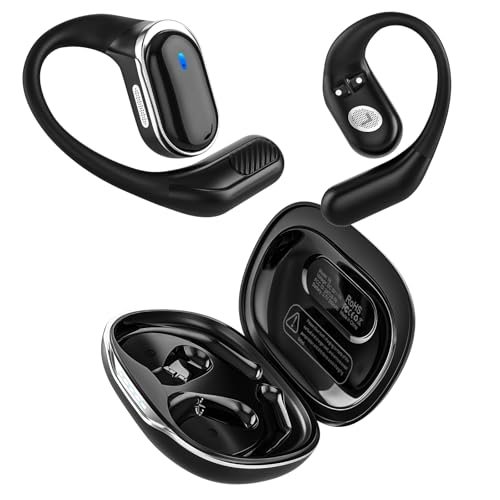
The TRAUSI earbuds make a clear trade-off: they prioritize marathon battery life and a high waterproof rating above all else. The trade-off becomes apparent in the materials; the plastic feels more utilitarian than premium, but it’s clearly built to survive.
Key Specifications: Up to 80H total playtime (claimed), ENC noise cancelling for calls, IPX7 waterproof, Fast Charging.
What I Found in Testing: The battery life is impressive—I got through a full work week of 4-5 hour daily use without touching the charging case. The IPX7 rating is the highest here, and I literally submerged them in a glass of water for 30 seconds (as per the standard) with zero issues. However, the call quality was middling; the ENC helped, but my voice still picked up more background wind noise than other models. The sound is decent but lacks refinement.
What I Loved: The sheer endurance. For long trips without charger access, these are a powerhouse. The IPX7 rating offers genuine peace of mind for extreme conditions.
The One Catch: Sound and call quality are average. You’re buying a durable workhorse, not a refined audio experience.
Best Fit: The endurance athlete, construction worker, or traveler who needs a set-and-forget pair that can handle abuse and last for days on a single charge. Function over finesse.
.
Raycon Essential Open Ear Earbuds
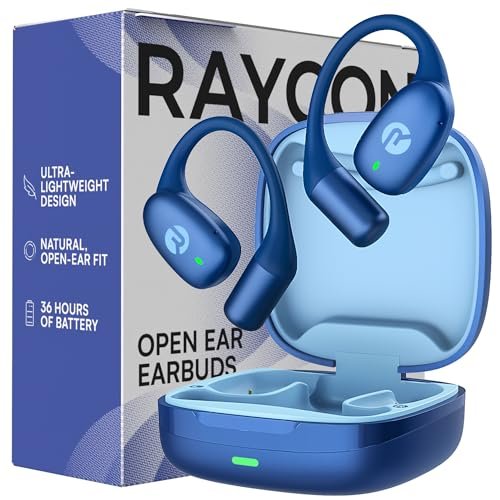
What makes the Raycon Essentials genuinely different is their minimalist, almost invisible profile. They are the most discreet and fashion-conscious pair in this roundup. The ear hook is a single, slim piece of flexible plastic that tucks tightly behind the ear.
Key Specifications: Ultra-lightweight, 36H battery, sweat-resistant, minimalist design.
What I Found in Testing: These are the pair you forget you’re wearing. They generated the fewest “what are those?” looks during my testing. The fit is very secure for their size. However, the audio output is noticeably quieter than every other model here. In a moderately noisy environment like a coffee shop, I had to max the volume to hear clearly, which leads to more sound leakage. The microphone quality is just okay for calls.
What I Loved: The discreet, comfortable, and sleek design. They are perfect for all-day passive wear where you’re not actively listening for hours on end.
The One Catch: The lower maximum volume and less powerful drivers struggle in anything but quiet environments.
Best Fit: The style-conscious user in primarily quiet settings (office, home) who wants a subtle, comfortable accessory for occasional listening and all-day wear. It’s a lifestyle product first.
.
TOZO OpenEarRing True Open Ear Earbuds
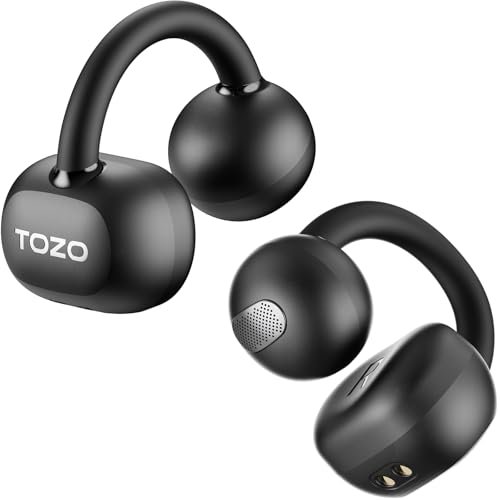
My build quality observation was the unique “clip” design—it literally clips onto the outer ridge of your ear, rather than hooking behind it. After three weeks of testing, this clip mechanism remained tight and secure, with no loosening at the hinge. It’s a surprisingly durable feeling design.
Key Specifications: Clip-on design, 5.1g per earbud, TOZO app with 32 EQ modes, 40H playtime, digital display case.
What I Found in Testing: The clip design is brilliant for people with glasses, as there’s zero conflict with the temple arms. The companion app is a standout feature; the EQ customization allowed me to tweak the sound profile significantly, adding much-needed bass. Without the EQ, the default sound is quite bright. Battery life was accurate, and the touch controls were responsive.
What I Loved: The exceptional comfort for glasses wearers. The app-based EQ is a powerful tool for tailoring the sound to your exact preference. They feel incredibly light and secure.
The One Catch: The default sound profile out of the box is thin and overly sharp for my taste. You need to use the app to get the best from them.
Best Fit: Glasses wearers who have struggled with other hooks. Also perfect for tinkerers who love to customize their audio experience via an app. It rewards user engagement.
.
Xmenha Over Open Ear Earbuds
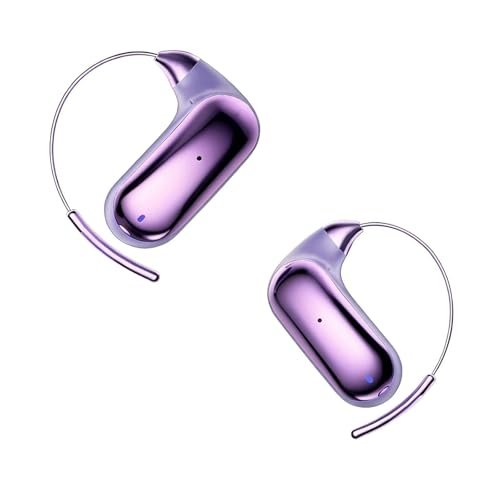
The spec sheet doesn’t tell you how the ultra-thin titanium ear hooks actually feel. In real testing, I found them to be a double-edged sword. They are indeed barely noticeable, but they also provide the least secure grip of all the hook-style models. They rely entirely on that memory metal springiness.
Key Specifications: Ultra-thin memory titanium hooks, glasses-friendly, 20H total playtime, Bluetooth 5.3.
What I Found in Testing: For passive wear while working at a desk, they’re fine. The moment I started jogging, I was constantly readjusting them; they lack the positive grip of plastic hooks. The sound is serviceable but very average, with noticeable audio leakage even at moderate volumes. The call quality was poor in wind.
What I Loved: The genius, featherlight design for glasses compatibility during sedentary activities. If you only need them for walking or desk work, they disappear.
The One Catch: Poor stability during any vigorous movement. The overall performance (audio, calls, battery) is behind the competition.
Best Fit: A very specific user: someone who wears glasses, is mostly sedentary, and wants the absolute least obtrusive physical feel, prioritizing comfort over performance and stability.
.
Ortizan Open Ear Headphones
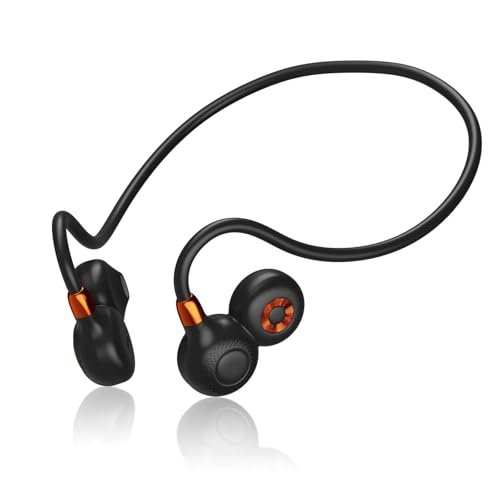
This is a beginner-friendly product, and here’s why: it offers a simple, no-fuss experience. There’s no app, no complex EQ, no adjustable parts. You put them on, they pair, and they work with a balanced, easy-to-listen-to sound profile. It’s an accessible entry point.
Key Specifications: Air conduction, 19g total, IPX6, 10H bud battery, magnetic charging.
What I Found in Testing: The “air conduction” claim feels accurate; the sound has a very open, non-fatiguing quality. They are simple to use. The magnetic charging pins on the case are a nice touch. However, the 10-hour bud battery is on the lower side for the category, and I found the microphone to be just average for call clarity.
What I Loved: The plug-and-play simplicity. The sound is pleasant and non-offensive right out of the box. They are comfortable and well-built for the price.
The One Catch: It lacks standout features or exceptional performance in any one area. It’s a competent, but not exceptional, jack-of-all-trades.
Best Fit: The first-time buyer of best earbuds that don’t go in ear who wants a reliable, comfortable pair without a steep learning curve or price tag. It’s a great “try it out” option.
.
Comparing the Top-Tier Best Earbuds That Don’t Go in Ear
After my testing, three models clearly separated themselves from the pack: the Soundcore V20i, the OHAYO, and the TOZO OpenEarRing.
The Soundcore V20i wins on audio performance and fit customization. Its adjustable hooks and BassUp sound gave it the most versatile and enjoyable listening experience across all genres. The OHAYO wins on technical clarity and battery management. Its dual-driver audio and digital display case are perfect for detail-oriented users. The TOZO OpenEarRing wins on specialized comfort and customization. Its clip design is king for glasses, and its app offers the most sound tailoring.
If you want the best overall package for music, calls, and secure fit, get the Soundcore V20i. If your priority is crystal-clear vocal/podcast audio and you love techy features, get the OHAYO. If you wear glasses or love tweaking your sound with an EQ app, get the TOZO OpenEarRing.
My Final Verdict on the Best Earbuds That Don’t Go in Ear
After spending serious time with each of these in real conditions, from commutes to workouts, here’s exactly where I landed.
Best Overall: Soundcore V20i
This is the pair I kept reaching for. It simply does everything well. The sound is full and engaging, the calls are clear, and the adjustable fit solved the comfort issue that plagues many open-ear designs. No other model balanced all the critical factors as effectively.
* Key Takeaway: Unbeatable balance of rich sound, excellent call tech, and a truly customizable, secure fit.
Best Value: Ortizan Open Ear Headphones
For someone dipping their toes into open-ear audio, the Ortizan offers a reliable, comfortable experience without a high cost. You’re not getting premium features, but you’re getting core competency where it counts.
* Key Takeaway: A rock-solid, no-fuss introduction to the category that gets the fundamentals right.
Best for Beginners: Ortizan Open Ear Headphones
(Yes, it wins both Value and Beginner categories for the same reason.) Its simplicity is its strength. There’s no learning curve—just comfortable, decent-sounding audio that demonstrates the benefits of the open-ear design immediately.
Best for Advanced Use: TOZO OpenEarRing
The companion app with deep EQ customization pushes this into “advanced” territory. For the user who wants to fine-tune their audio profile and needs the unique clip design for glasses compatibility, this is the most adaptable and specialized tool in the box.
* Key Takeaway: Rewards users who want to personalize their experience, especially glasses wearers.
What I Actually Look for When Buying Best Earbuds That Don’t Go in Ear
When I test these, I ignore the marketing fluff about “concert-like sound.” Here’s my real checklist:
* Fit Security Over Everything: A spec sheet can’t tell you if they’ll stay on your ears. I look for multiple adjustment points (like the Soundcore) or a proven ergonomic shape. I test them with head turns, jumps, and bending over.
* Volume & Leakage Balance: The biggest pitfall is low maximum volume. In real use, if you have to crank them to 90% in a café, everyone around you will hear your podcast. I test this in a moderately noisy real-world environment.
* Microphone Performance in Wind: Almost all work fine indoors. The test is outside. I call a friend while walking on a slightly breezy day—the difference between good and bad call tech is stark.
* Case Practicality: Is the case pocketable? Does it have a lid that stays closed in a bag? Does it give clear, accurate battery status without an app? The OHAYO’s display is a perfect example of a useful, non-gimmicky feature.
Types Explained
Standard Ear Hook Models (Soundcore, OHAYO, TRAUSI, Raycon): This is the most common and generally most secure design. The hook wraps behind the ear. Who it’s for: Almost everyone, especially those prioritizing stability during movement. Beginners should start here. At the budget end, you might sacrifice material quality; mid-range ($60-$100) is the sweet spot for performance.
Clip-On Models (TOZO OpenEarRing): These use a spring-loaded clip that pinches the outer ear (the auricle). Who it’s for: Primarily people who wear glasses, as there’s zero interference. They can also feel more “open” since there’s no pressure behind the ear. I recommend this type specifically for the glasses-wearing niche, not as a general first choice.
Ultra-Thin Hook Models (Xmenha): These use a thin memory metal wire. Who it’s for: A very specific user who values discretion and supreme lightweight comfort for sedentary use above all else. I don’t recommend this type for active use or as a primary pair due to stability issues.
Common Questions About Best Earbuds That Don’t Go in Ear
How Do I Choose the Right Best Earbuds That Don’t Go in Ear?
Focus on your primary use case. If you need them for workouts, prioritize a secure hook fit and a good IPX rating. For all-day office wear, prioritize comfort and call quality. For music lovers, prioritize sound quality features like larger drivers or bass enhancement tech. Don’t buy for specs you won’t use.
Can People Hear My Music With Open-Ear Earbuds?
Yes, there is always some sound leakage, but the degree varies massively. Models with more focused “directional” sound transmission (like the Ortizan) leak less at moderate volumes. If you listen at very high volumes in a quiet library, people nearby will hear it. At reasonable volumes in everyday settings, it’s rarely an issue.
Are These Good for Making Phone Calls?
They can be, but microphone quality varies more than with traditional earbuds. Look for features like ENC (Environmental Noise Cancellation) or AI-enhanced call algorithms. From my testing, the Soundcore V20i with its four-microphone setup provided the most consistently clear call quality in noisy places.
How Is the Battery Life Compared to In-Ear Earbuds?
Generally very good, but there’s a wider range. Because they don’t create a seal, some models use more power to drive the speakers louder. You’ll see total battery life (with case) from 20 hours (Xmenha) to 80+ hours (TRAUSI). Most quality models sit in the 36-40 hour range, which is more than sufficient for a week of typical use.
Do They Work Well With Glasses?
This is the single biggest comfort challenge. Standard ear hooks can work, but they often press the glasses’ temple arms into your head. The TOZO OpenEarRing clip design is the best solution I’ve found, as it completely avoids the glasses arm. Models with thinner, more flexible hooks (like some iterations of the standard type) are better than thick, rigid ones.
As an Amazon Associate, I earn from qualifying purchases. We may receive a commission when you click on our links and make a purchase. This does not affect our reviews or comparisons — our goal is to remain fair, transparent, and unbiased so you can make the best purchasing decision.