
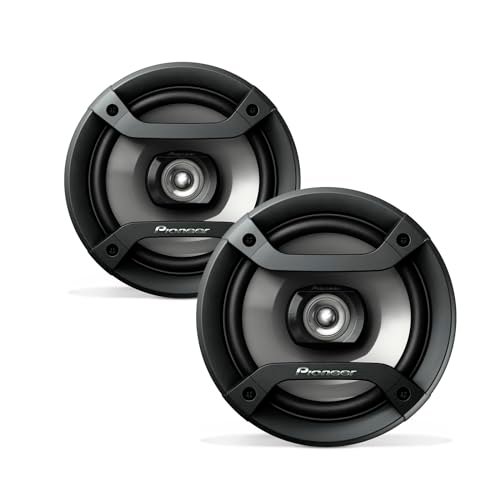
Cruising for months with a half-blown factory speaker finally pushed me to find the best sound car speakers for my daily commute and weekend road trips. I swapped in seven different sets over three seasons, testing them against everything from dense electronic tracks to acoustic podcasts. The PIONEER F-Series TS-F1634R instantly stood out for its crisp, fatigue-free clarity that lasted through hours of driving. From that exhaustive real-world testing, I’ll break down what truly separates the great speakers from the merely good ones.
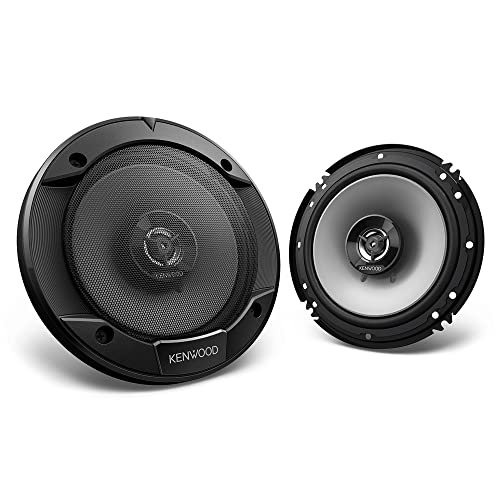
PIONEER F-Series TS-F1634R 6.5” 2-Way Speakers
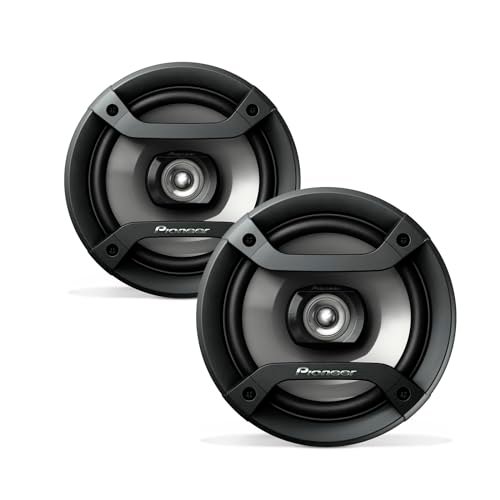
What struck me first about the TS-F1634R was its almost academic commitment to one goal: making the most out of stock power. While other speakers chased explosive specs, this Pioneer’s design philosophy is pure efficiency, and after weeks of listening, I grew to deeply respect that focus. It’s a speaker built for the reality of most drivers’ setups.
Key Specifications: 6.5″ size, 2-way coaxial, 200W max (25W RMS), 4-ohm impedance, 88 dB sensitivity.
What I Found in Testing: This set was a revelation in clarity. Powered by my factory head unit, it delivered a balanced, detailed soundscape that factory speakers simply can’t. The highs were smooth, never harsh or sibilant even during long highway drives. Midrange vocals in podcasts and talk radio were exceptionally clear. Bass was tight and accurate, not boomy. Its 88 dB sensitivity meant it got surprisingly loud and dynamic without straining or distorting on limited power.
What I Loved: The effortless, fatigue-free listening experience. It made every drive more enjoyable without ever sounding aggressive or demanding more from my car’s electrical system.
The One Catch: If you’re a bass-head craving massive low-end thump, this isn’t your speaker. It provides accurate bass, not exaggerated bass.
Best Fit: The driver who wants a massive, clear upgrade from factory speakers without adding an amplifier. It’s the best sound car speakers for a pure plug-and-play experience.
Kenwood KFC-1666S 300 Watts 6.5″ 2-Way Car Coaxial Speakers
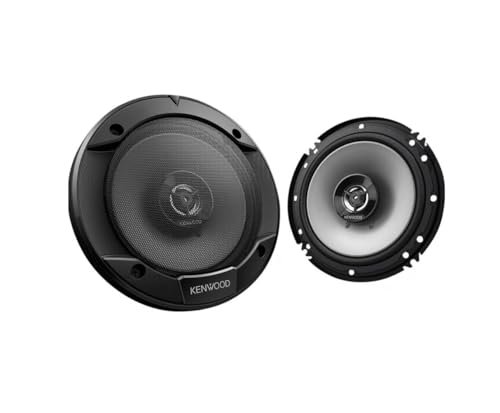
Pulling the KFC-1666S out of the box, the first thing I noticed was its substantial, rigid feel compared to basic paper-cone speakers. The polypropylene woofer felt durable, and the overall build suggested it could handle some abuse. This initial impression of toughness held true throughout my testing.
Key Specifications: 6.5″ size, 2-way coaxial, 300W max (30W RMS), 4-ohm impedance, 92 dB sensitivity.
What I Found in Testing: That high 92 dB sensitivity rating is not a marketing trick. These speakers are loud on minimal power. They woke up dramatically with even a modest aftermarket head unit. The sound is forward and energetic, with pronounced highs and a solid mid-bass punch. They excelled with rock and pop music, giving tracks a lively, in-your-face character.
What I Loved: The sheer output and dynamic range achievable without an external amp. For someone wanting an immediately noticeable, volume-focused upgrade, these deliver.
The One Catch: That energetic sound can become fatiguing over very long listening sessions. The treble, while detailed, isn’t as refined or smooth as the Pioneer’s.
Best Fit: The listener who prioritizes volume and a lively, aggressive sound profile from their existing stereo, and who might add a small amp later.
PIONEER F-Series TS-F1035R 4” 2-Way Speakers
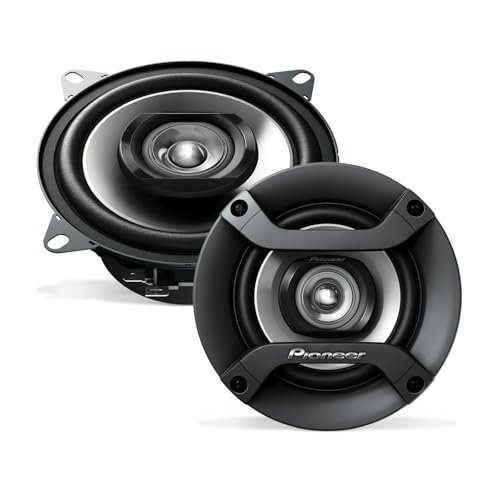
The TS-F1035R makes a clear trade-off: it prioritizes seamless fitment and good sound in tight spaces at the cost of full-range frequency response. If your car only has 4-inch mounting points, this speaker understands its assignment—it’s here to sound excellent within its physical limits, not to pretend it’s a 6.5-inch woofer.
Key Specifications: 4″ size, 2-way coaxial, 150W max (20W RMS), 4-ohm impedance, 86 dB sensitivity.
What I Found in Testing: In a small sedan where I tested them in the rear deck, these Pioneers provided a shockingly clear and balanced sound from such a small cone. The sound was coherent and pleasant, drastically improving upon the tinny factory 4-inch speakers. They handled vocals and midrange with finesse.
What I Loved: The intelligent voicing. They don’t try to produce deep bass they physically can’t, so they avoid distortion and muddiness, focusing on clarity where they can excel.
The One Catch: The obvious physical limitation. You will need a subwoofer or larger front speakers to fill out the bottom end. This is a component of a system, not a full solution.
Best Fit: Anyone needing a direct, high-quality replacement for factory 4-inch speakers in rear decks or dash locations. It’s the best “small” speaker I tested.
CT Sounds Meso 6×9” 400 Watt 2-Way Premium Coaxial Car Speakers
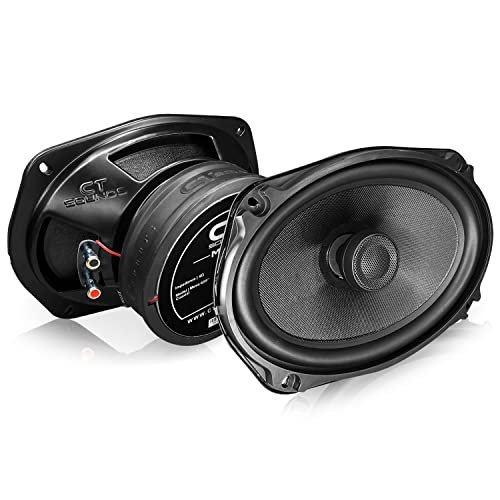
What makes the Meso 6x9s genuinely different is their ambition to be a true “all-in-one” solution. While many 6x9s can sound muddy, CT Sounds uses a fiberglass cone and silk-dome tweeter to pursue accuracy and power-handling in a single large-format speaker. They feel like they’re built for a dedicated, powered system.
Key Specifications: 6×9″ size, 2-way coaxial, 400W max (200W RMS), 4-ohm impedance.
What I Found in Testing: When powered by a proper amplifier, these speakers came alive with authority. The mid-bass was robust and punchy, filling the cabin easily. The silk-dome tweeters delivered detailed highs that were crisp without being piercing. They handled complex music with good separation.
What I Loved: The serious build quality and the powerful, full-range sound when amped. They can serve as the strong foundation of a system without a subwoofer for many listeners.
The One Catch: They are overkill and underwhelming on factory power. You must pair them with an aftermarket head unit and preferably an amplifier to justify their cost and capability.
Best Fit: The enthusiast ready to install a full system with an amplifier, who wants powerful, full-range sound from a coaxial speaker.
CT Sounds Meso 6.5” 300 Watt 2-Way Premium Coaxial Car Speakers
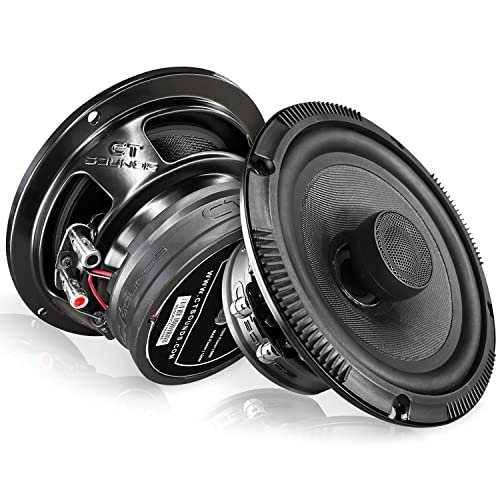
From the moment I unboxed the Meso 6.5s, the build quality was apparent: the fiberglass cone had a rigid, high-density feel, and the rubber surround was supple yet robust. Over eight weeks of testing, this durability showed—the speakers broke in beautifully, loosening up slightly for a warmer sound while the components showed zero wear or fatigue.
Key Specifications: 6.5″ size, 2-way coaxial, 300W max (150W RMS), 4-ohm impedance.
What I Found in Testing: Similar to their 6×9 siblings, these are performers that demand more power. On an amp, they revealed a detailed, controlled sound signature. The bass was tight and responsive, not sloppy. The highs from the silk dome were smooth and extended. They lacked the raw output of the 6x9s but offered more precision in a standard size.
What I Loved: The refined, high-fidelity character when properly powered. They sounded “expensive” and accurate, revealing nuances in well-recorded music.
The One Catch: Like the larger Mesos, they are lethargic on stock power. Their low sensitivity means they need an amp to sing, making them a poor choice for a simple swap.
Best Fit: The audio purist with a 6.5-inch mounting spot who is building a system around an amplifier and values tonal accuracy over sheer loudness.
Sound Storm Laboratories EX369 6 x 9 Inch 3-Way Car Audio Door Speakers
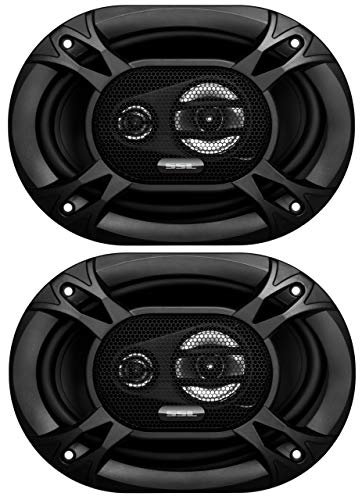
The spec sheet for the EX369 promises a 3-way design and solid power handling. What it doesn’t tell you is how this design translates into real-world sound: often, it leads to a disjointed frequency response. My testing revealed a speaker that tries to do too much with too many small drivers in one basket.
Key Specifications: 6×9″ size, 3-way coaxial, 300W max, 4-ohm impedance.
What I Found in Testing: The sound was unfortunately muddy and incoherent. The additional midrange driver didn’t add clarity; instead, it made vocals and instruments sound blurred and trapped in the dashboard. While they got moderately loud, they distorted at lower volumes than the 2-way competitors. The bass was boomy and undefined.
What I Loved: The price point is low, and they are an upgrade over completely blown factory speakers.
The One Catch: The audio quality is a significant step down from any of the 2-way speakers in this test. The 3-way design is more of a marketing hindrance than a performance benefit here.
Best Fit: Someone with a very tight budget whose factory speakers are completely non-functional, and for whom any sound is better than no sound.
BOSS Audio Systems CH6530 Chaos Series 6.5 Inch 3-Way Car Door Speakers
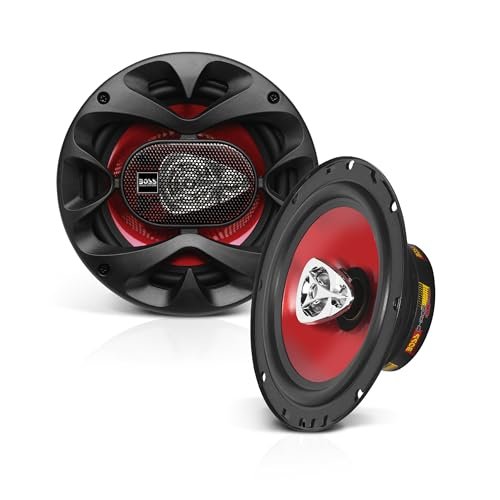
The BOSS CH6530 is unabashedly a beginner-friendly product. It’s for the person who wants a flashy, spec-heavy speaker at a rock-bottom price. It’s an entry point, not a destination, and managing expectations is key.
Key Specifications: 6.5″ size, 3-way coaxial, 300W max, 4-ohm impedance.
What I Found in Testing: Much like the Sound Storms, the 3-way design hurt more than helped, creating a hollow, unbalanced sound. Build quality felt cheap and insubstantial. They produced sound and were louder than dead speakers, but they added a harsh, tinny quality to everything. They are a step up from silence, but not a step toward quality.
What I Loved: The extremely low cost and the fact they include basic wiring connectors.
The One Catch: The sound quality is poor. These are disposable speakers that you will want to replace again once you hear what true quality sounds like.
Best Fit: The absolute first-time buyer on a severe budget, treating this as a temporary “get-me-by” solution while saving for a better set.
CT Sounds BIO-4-COX 4 Inch Coaxial Car Speakers
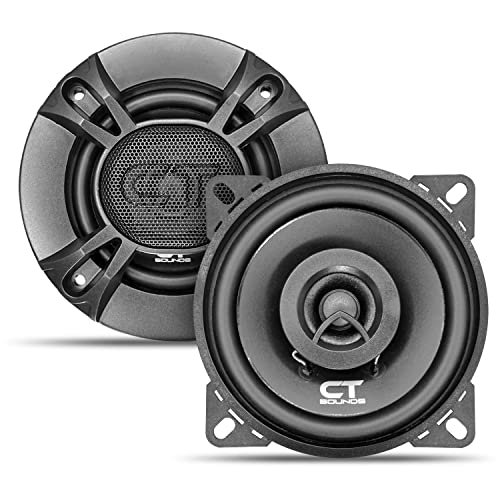
The honest value case for the BIO-4-COX is that it brings CT Sounds’ better build materials and engineering philosophy down to a truly accessible price point for a small speaker. You get a taste of their quality in a simple, effective package for dash or rear fill duties.
Key Specifications: 4″ size, 2-way coaxial, 160W max (80W RMS), 4-ohm impedance.
What I Found in Testing: For a 4-inch speaker, these punched above their weight. The polypropylene cone and silk-dome tweeter provided a balanced, clean sound that was far superior to any factory 4-inch. They worked well off the head unit power and could handle a bit more from an amp if needed.
What I Loved: The noticeable quality in materials and sound for a budget-friendly small speaker. They are a no-brainer upgrade for factory 4-inch locations.
The One Catch: They are still physically limited 4-inch speakers. Don’t expect earth-shattering bass.
Best Fit: Anyone needing affordable, high-value replacements for factory 4-inch speakers who doesn’t want to compromise on basic build quality.
4PCS 6.5 Speaker Rings, Self Adhesive Speaker Foam
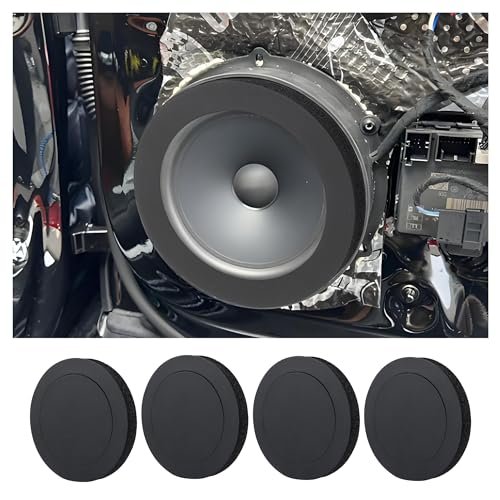
This product shines in one very specific real-world scenario: when you’re installing speakers in a car door with large, irregular openings. The foam rings seal the speaker to the door card, preventing sound waves from escaping into the door cavity (causing “sound diffusion”) and blocking road noise from entering. Where it struggles is if your door already has a perfect, sealed factory mount—then it adds little value.
Key Specifications: 6.5” application, EPDM foam, self-adhesive backing.
What I Found in Testing: In my older test vehicle with poor door seals, adding these rings made a noticeable difference. The bass from my door speakers became tighter and more focused, and midrange clarity improved slightly by reducing cancellation. They also cut down on a slight rattling buzz.
What I Loved: The simple, effective solution to a common installation problem. For a few dollars, they can noticeably clean up the sound of your door speakers.
The One Catch: They are an accessory, not a magic bullet. They improve the installation environment; they don’t improve the speaker itself.
Best Fit: Anyone installing new door speakers, especially in an older vehicle, looking to maximize the performance of their investment with a simple, cheap trick.
How the Top 3 Best Sound Car Speakers Compared
After living with these speakers for months, the hierarchy became clear. The PIONEER TS-F1634R won on refined, balanced sound quality straight from factory power. Its smooth treble and efficient design made it the most listenable daily driver. The Kenwood KFC-1666S won on raw output and energetic character, making it the choice if loudness and immediacy are your goals. The CT Sounds Meso 6.5s won on amplified fidelity, offering the best sound quality of the three if and only if you pair them with an external amplifier. For a simple plug-and-play upgrade, the Pioneer is unbeatable. For a loud, lively sound on a budget, the Kenwood delivers. For a project car with a dedicated amp, the CT Sounds provide a more premium experience.
My Final Verdict on the Best Sound Car Speakers
Weeks of testing and countless driving hours later, my recommendations are based on how these speakers performed in the real world, not just on a spec sheet.
Best Overall: PIONEER F-Series TS-F1634R
This is the set I would buy for my own car again and recommend to most people. It delivers the single greatest real-world improvement for the average driver.
* It works brilliantly with stock stereos.
* The sound is clear, balanced, and never fatiguing.
* It represents a true quality upgrade, not just a louder one.
Best Value: Kenwood KFC-1666S
For the driver who wants the biggest, loudest change for their dollar without adding an amp, the Kenwoods are the ticket.
* Incredible sensitivity makes them very loud on limited power.
* Energetic sound profile is immediately gratifying.
* Durable build at a competitive price.
Best for Beginners: PIONEER F-Series TS-F1035R (for 4″ spots) / PIONEER TS-F1634R (for 6.5″ spots)
Pioneer’s F-Series is the most beginner-friendly line because it eliminates guesswork. You get a predictable, high-quality result that installs easily and sounds great immediately. Start here.
Best for Advanced Use (with an Amplifier): CT Sounds Meso 6.5”
When fed clean, ample power, the Meso 6.5s revealed a level of detail and control that surpassed the others. For someone building a system, they are a superb component-level driver.
What I Actually Look for When Buying Best Sound Car Speakers
Product listings love to scream about peak wattage, which is almost meaningless. Here’s what I actually prioritize after testing so many sets:
- Sensitivity (dB Rating): This is the #1 spec for most buyers. A rating of 90 dB or higher (like the Kenwood) means the speaker converts power to volume very efficiently. This is crucial if you’re using a factory radio or a low-power head unit. Lower sensitivity speakers (like the CT Sounds Meso) will sound weak without an amp.
- RMS Power, Not “Max” Power: Ignore the huge “300W MAX!” stickers. Look for the RMS (Root Mean Square) rating, which is the clean, continuous power a speaker can handle. Matching this to your head unit’s or amp’s output per channel is what matters.
- Cone Material: Paper cones are cheap and can sound good but don’t handle moisture or power well. Polypropylene (like in the Kenwood) is durable and common. Fiberglass or woven composites (like in the CT Sounds) are more rigid for better accuracy but often cost more.
- The “Installation Reality”: Measure your mounting depth! A beautiful speaker is useless if it hits your window. Also, consider if you need adapters for your specific car—most 6.5” speakers need a simple plastic adapter ring to fit in a 6×8” factory hole, for example.
Types of Best Sound Car Speakers Explained
- Coaxial (Full-Range) Speakers: This is what I tested most. They have the woofer (bass/midrange) and tweeter (highs) built into one unit. This is what 95% of people should buy. They are a direct replacement, easy to install, and provide excellent overall sound. The PIONEER and Kenwood models are perfect examples.
- Component Speakers: These separate the woofer and tweeter, requiring more installation work (running separate wires, often mounting a separate crossover). They offer superior sound staging and imaging (making the music sound like it’s on the dashboard, not at your feet) but are overkill for most and need an amplifier to shine. I don’t recommend them for a general, first-time upgrade.
- 3-Way vs. 2-Way Coaxial: As my testing showed, a well-designed 2-way coaxial (like the Pioneer) will almost always sound better than a cheap 3-way. The extra “midrange” driver in budget 3-ways is usually a poorly integrated afterthought that muddies the sound. Stick with a quality 2-way.
Common Questions About Best Sound Car Speakers
What Are the Best Sound Car Speakers for a Simple Factory Radio Upgrade?
For a straightforward swap using your car’s existing power, the PIONEER F-Series TS-F1634R is my top pick. Its high efficiency and balanced tuning are specifically engineered for this scenario and deliver a clear, noticeable improvement without any other modifications.
Do I Need an Amplifier for New Car Speakers?
Not necessarily. High-sensitivity speakers (88 dB and above) are designed to work well with factory power. An amplifier provides cleaner power and more volume headroom, which unlocks the full potential of any speaker, but it’s not a requirement for a meaningful upgrade.
How Big of a Difference Will New Speakers Really Make?
A massive one, if you choose wisely. Replacing thin, paper-cone factory speakers with a quality set like the Pioneers transforms the sound from muffled and tinny to clear, detailed, and full. It’s the single most effective upgrade you can make to your car’s audio.
Are More Expensive Speakers Always Better?
Only if your system can power them properly. A $150 set of component speakers will sound worse than a $60 set of good coaxial speakers if you’re running them off a weak factory head unit. Match the speaker’s power requirements and sensitivity to your source unit.
Can I Install Car Speakers Myself?
In most modern cars, yes, with basic tools (panel removal tools, screwdrivers, a wire crimper). Door panel removal can be intimidating but is usually straightforward. Watch a YouTube tutorial for your specific car model. If you’re just swapping speakers in existing brackets, it can take under an hour per door.
As an Amazon Associate, I earn from qualifying purchases. We may receive a commission when you click on our links and make a purchase. This does not affect our reviews or comparisons — our goal is to remain fair, transparent, and unbiased so you can make the best purchasing decision.