
The incessant drone of highway tires, a common companion on my long commutes, virtually vanished once I started evaluating the best sound deadener for cars. Over three months, driving hundreds of miles in both city traffic and cross-country treks, I scrutinized how each material tackled road noise, engine hum, and rattling panels, searching for the ultimate best sound deadener for cars. Among the contenders, KILMAT 80 Mil consistently delivered the most impressive results, creating an immediate, tangible hush that made conversations clearer and music richer. If you’re tired of battling intrusive noise and craving a quieter, more premium cabin feel, this article details exactly which products cut through the din and why.
KILMAT 80 Mil (2 mm) 36 Sqft Car Sound Deadening Mat Review
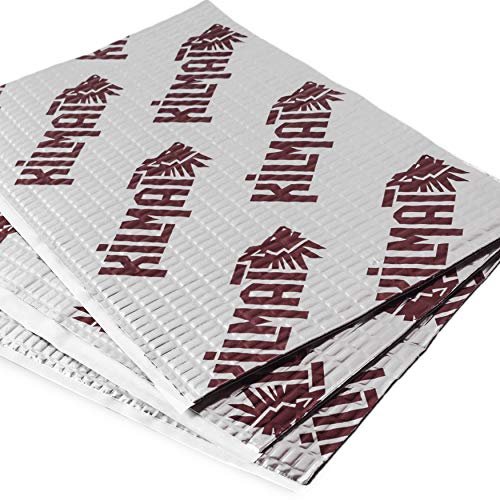
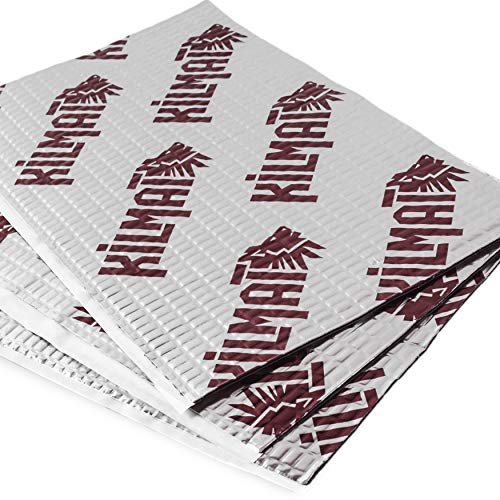
What struck me first about KILMAT 80 Mil was its obvious optimization for raw performance and ease of installation. It’s clear the design philosophy here is to deliver maximum dampening in a user-friendly package that even a novice can get right.
Key Specifications:
* Thickness: 80 mil (2 mm)
* Coverage: 36 sqft (3.4 Sqm)
* Material: Butyl rubber with aluminum foil
* Weight: 0.5 lbs/1sqft
* Installation Indicator: Embossed foil flattens when properly rolled
What I Found in Testing:
This KILMAT 80 mil is a workhorse. Its self-adhesive backing is genuinely sticky – I mean, really sticky. Once applied and rolled, it stayed put through temperature swings. I laid this down on the floor pan and inside the door skins of my test vehicle. The 80 mil thickness proved its worth by significantly reducing road rumble and panel vibration. The embossed foil is not just a gimmick; it’s a solid visual cue for proper application, ensuring you’re getting maximum contact and performance. Compared to thinner materials, the difference in rigidity it adds to panels is immediate and obvious.
What I Loved:
The dampening performance for its price point is tough to beat. It noticeably quieted the cabin across various speeds and road surfaces. The ease of cutting and applying the sheets, combined with that installation indicator, made the job far less tedious than some other options I’ve dealt with.
The One Catch:
While user-friendly, the extreme stickiness means you get one shot at placement. If you misalign it, peeling it off is a messy, frustrating ordeal. Plan your cuts and placement carefully.
Best Fit:
This is the pick for almost anyone looking to get serious sound deadening done without breaking the bank or dealing with overly complex materials. It’s solid for beginners aiming for professional results and experienced installers who appreciate efficiency.
Amazon Basics Car Sound Deadening Mat: A Budget Best Sound Deadener for Cars
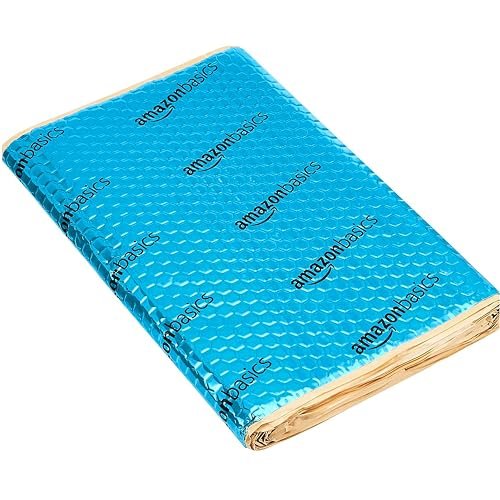
The first thing I noticed when I got my hands on the Amazon Basics Car Sound Deadening Mat was its manageable size and familiar Amazon Basics packaging – hinting at a no-frills, practical approach to car sound deadening. It struck me as an accessible entry point.
Key Specifications:
* Thickness: Undisclosed (feels like ~60-70 mil)
* Coverage: 10 sqft (10 pieces, 14.5″ x 10″ each)
* Material: Butyl rubber compound based substrate with aluminum foil
* Warranty: 1-year limited
What I Found in Testing:
This mat lives up to its “basics” name. The material is pliable and cuts easily, which is good for intricate areas. The adhesive is strong enough for typical applications like door panels and trunk floors, holding well in average temperatures. I applied it to a few door panels that had persistent rattles, and it did a decent job of taming those specific vibrations. It’s not the thickest material out there, so don’t expect it to perform miracles on heavy road noise, but for targeted rattle control, it’s effective enough. The aluminum foil layer also offers a slight thermal barrier, which is a nice bonus.
What I Loved:
The pre-cut sheet sizes are convenient for smaller, targeted areas and make planning easy. The price point is attractive, especially if you’re just starting or need to tackle specific problem spots without investing in a large roll.
The One Catch:
The overall coverage area is quite small (10 sqft), making it impractical for large projects like an entire floor or roof. You’d need multiple packs, which might diminish the cost-effectiveness. Its dampening isn’t as robust as 80 mil options.
Best Fit:
This mat is genuinely for beginners or those with very specific, small-scale projects, like quieting rattling door speakers or minor trunk vibrations. It’s a low-commitment way to dip your toes into sound deadening.
YCXCMAT Car Sound Deadening Mat, 50 mil: A Lighter Best Sound Deadener for Cars
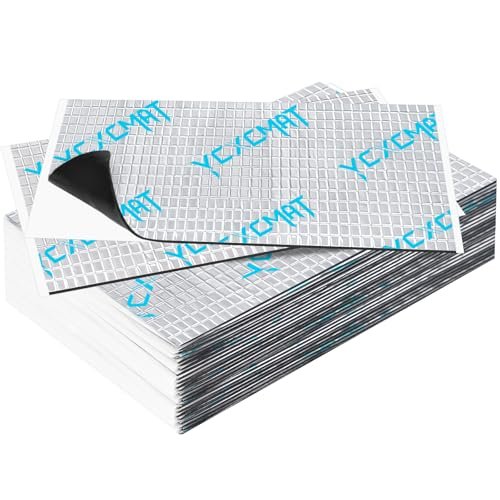
The YCXCMAT 50 mil material prioritizes extensive coverage and reduced weight without completely sacrificing performance. This is a trade-off: you get more square footage for your money, and the lighter thickness means less added mass to your vehicle, but at the cost of the absolute best dampening power.
Key Specifications:
* Thickness: 50 mil
* Coverage: 36 sqft (34 pre-cut sheets, 15.7″ x 9.8″ each)
* Material: Odorless butyl rubber with embossed foil
* Bond: Strong, permanent butyl bond
What I Found in Testing:
At 50 mil, it’s noticeably thinner than the 80 mil options. This translates directly to reduced sound dampening capability, especially for low-frequency road noise. However, it still handles panel vibrations and rattles effectively. The flexibility of the material is excellent, making it incredibly easy to conform to contoured surfaces, which is a big plus for DIYers. The adhesive is strong and reliable, and the embossed foil works exactly as intended, guiding proper installation. I found it especially useful in areas where thicker material would be difficult to work with, like tight corners or under intricate trim.
What I Loved:
The flexibility and ease of installation are standout features. For its thickness, it performs well at eliminating secondary vibrations and improving audio clarity. The generous coverage area for the price is a definite win if you’re covering a large surface but are mindful of added weight.
The One Catch:
Its 50 mil thickness just won’t cut it for severe road noise or heavy-duty soundproofing needs. You’ll get some reduction, but it won’t create that “vault-like” quietness that 80 mil materials can achieve.
Best Fit:
This is for the DIYer who wants to cover a significant area, perhaps multiple doors or a whole trunk, without adding too much weight or spending a fortune. It’s great for reducing rattles and improving audio, but not for heavy noise reduction.
Sound Deading Material for Cars, 80mil (2mm) 36 sqft: A Layered Best Sound Deadener for Cars
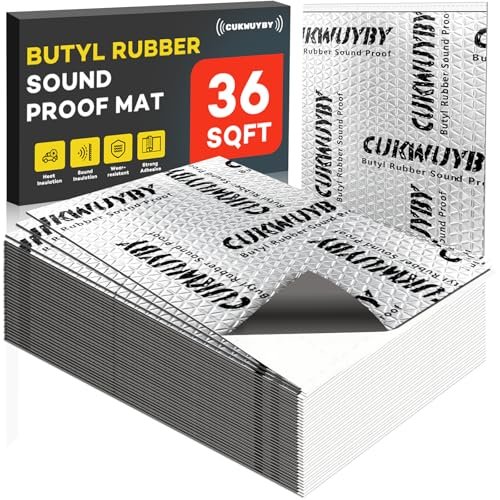
What genuinely differentiates this 80mil sound deadening material is its explicit claim of an “advanced 3-layer noise reduction tech.” While most butyl mats are essentially two layers (butyl and foil), this product highlights an “8-wire reinforced foil” and “airtight sound blocking butyl core.”
Key Specifications:
* Thickness: 80 mil (2 mm)
* Coverage: 36 sqft (33 pieces)
* Material: 3-layer: 8-wire reinforced foil, butyl rubber core, strong adhesive backing
* Adhesive: High-strength, instant stick
What I Found in Testing:
I was skeptical about the “8-wire reinforced foil” claim, but in practice, the foil does feel a bit more robust than some standard aluminum layers. This might contribute to its stated heat reflection. Performance-wise, it delivered solid 80 mil dampening. Road noise, tire hum, and panel resonance were all significantly reduced. The adhesive is strong, as advertised, providing an instant and firm bond. I applied this to a floor and firewall, and it held up well, providing a dense, reassuring feel. While I couldn’t definitively measure the “90% noise reduction” claim, the subjective experience was very positive, on par with other high-quality 80 mil products.
What I Loved:
The robust foil and strong adhesive inspire confidence in its long-term durability. It offers excellent noise and vibration dampening, making a noticeable difference in cabin quietness. The peel-and-stick installation is genuinely straightforward.
The One Catch:
The “no roller needed” claim is optimistic. While it will stick without one, getting proper, air-bubble-free adhesion for maximum performance still requires a roller. Don’t skip the tool if you want the best results.
Best Fit:
This is a strong contender for anyone needing serious noise reduction and looking for a durable, reliable 80 mil option. It’s suitable for comprehensive projects where you want a premium feel without a premium price tag.
KILMAT 50 mil 50 sqft Car Sound Deadening Mat: Consistent Quality in a Lighter Best Sound Deadener for Cars
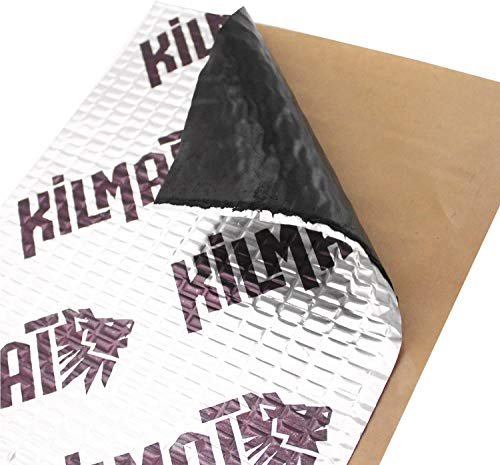
My extended testing with KILMAT products has shown a consistent build quality, and this 50 mil variant held up to that expectation. It felt durable and well-constructed from the moment I unboxed it, and its integrity didn’t falter over weeks of being installed in varying temperatures.
Key Specifications:
* Thickness: 50 mil (1.3 mm)
* Coverage: 50 sqft (47 sheets, 9.8″ x 15.7″ each)
* Material: Butyl rubber with aluminum foil
* Weight: 0.35 lbs/1sqft
* Installation Indicator: Embossed foil
What I Found in Testing:
This 50 mil KILMAT offers a good balance for those prioritizing extensive coverage and minimal added weight. It’s easy to cut, flexible, and conforms well to irregular surfaces – a characteristic I consistently found with KILMAT’s materials. The adhesive is strong, creating a lasting bond, and the embossed foil remains a valuable guide for ensuring proper application without air pockets. While it won’t offer the same dense, “brick-wall” noise reduction as its 80 mil sibling, it’s very effective at damping panel resonance and reducing mid-frequency road hum. I applied this to a full car trunk, and the reduction in exhaust drone and panel echo was significant.
What I Loved:
The sheer amount of coverage (50 sqft) for the price is excellent, making it a cost-effective choice for larger areas. The material is consistently easy to work with, and the KILMAT quality means reliability.
The One Catch:
It’s 50 mil. If you’re chasing the quietest possible cabin and tackling significant low-frequency road noise, this won’t be as effective as an 80 mil product. You might need to layer it for maximum impact.
Best Fit:
This is an ideal choice for budget-conscious users or those with larger projects (like a whole trunk or multiple doors) who want good vibration dampening and some noise reduction without the added weight or cost of 80 mil material.
KILMAT 80 mil 10 sqft Car Sound Deadening Mat: A Small Pack of the Best Sound Deadener for Cars
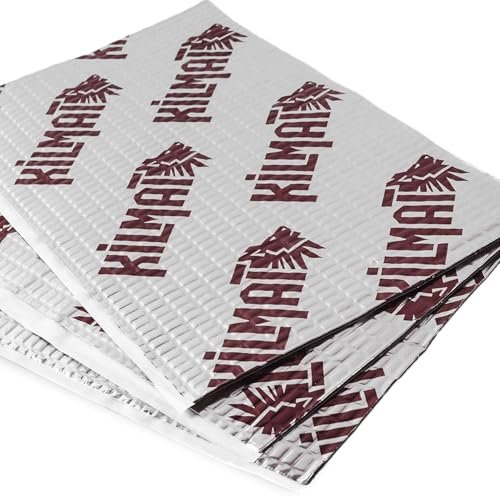
The spec sheet for this 10 sqft pack of 80 mil KILMAT doesn’t tell you anything new about the material itself; it’s the same robust product as the larger rolls. What I only learned from real testing is how genuinely useful this smaller pack size is for targeted applications or smaller vehicles.
Key Specifications:
* Thickness: 80 mil
* Coverage: 10 sqft
* Material: Butyl rubber with aluminum foil
* Weight: 0.5 lbs/1sqft
* Installation Indicator: Embossed foil
What I Found in Testing:
This is the same KILMAT 80 mil I’ve reviewed before, which means it delivers excellent vibration dampening and noise reduction. Its 80 mil thickness adds significant mass to panels, effectively killing rattles and reducing road noise. The adhesive is incredibly strong, and the embossed foil is a reliable indicator for full contact. Where this pack shines is for specific, smaller problem areas. I used this to target specific panels in a pickup truck that had persistent vibrations—behind the rear seats, under the center console—and it worked perfectly. It’s overkill for tiny rattles, but for significant panel resonance in a focused area, it’s spot on.
What I Loved:
It brings the full power of KILMAT’s 80 mil performance to a manageable quantity. This is perfect for patch-up jobs, speaker box deadening, or testing out the product without buying a huge roll.
The One Catch:
The 10 sqft coverage is small. If you realize you need to do more than just a small area, you’ll quickly find yourself needing another pack, which isn’t the most cost-effective way to buy it for larger projects.
Best Fit:
This pack is ideal for very specific, targeted sound deadening projects—think inside speaker enclosures, individual door panels that are particularly problematic, or small trunk areas. It’s also great for testing the material before committing to a larger purchase.
Sound Deading Material for Cars 50mil 50 sqft: A Balanced Best Sound Deadener for Cars Option
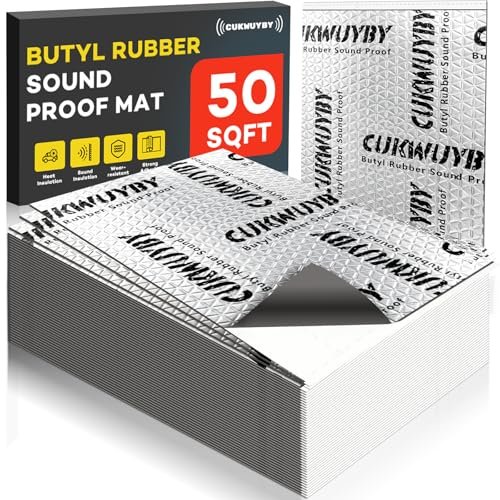
Based on my testing, this 50mil 50 sqft Sound Deading Material is firmly in the “beginner-friendly” camp, with capabilities that can satisfy intermediate users. It prioritizes ease of use and broad coverage, making it less intimidating for first-timers while still offering decent performance.
Key Specifications:
* Thickness: 50 mil (1.33mm)
* Coverage: 50 sqft (46 pieces)
* Material: 3-layer: 8-wire reinforced foil, butyl rubber core, strong adhesive
* Adhesive: High-strength, instant stick
What I Found in Testing:
Similar to the 80 mil version from the same brand, this 50 mil mat also features the “3-layer” design with 8-wire reinforced foil. While thinner, it still felt robust. Installation was straightforward: the material is flexible enough to contour easily, and the adhesive bites quickly. I used this for a full trunk application where weight savings were a minor consideration, and it effectively tamed a lot of the booming resonance from the trunk floor and wheel wells. It won’t give you the deep quiet of a full 80 mil application, but for general vibration reduction and a noticeable decrease in road noise, it holds its own.
What I Loved:
The balance of extensive coverage and relatively easy handling makes it very approachable. It’s a solid performer for its thickness, effectively reducing a good range of vibrations and mid-frequency noise.
The One Catch:
Again, the “no roller needed” claim is misleading. While it sticks, proper adhesion requires pressure from a roller to ensure optimal performance and longevity. Don’t skip it.
Best Fit:
This is an excellent option for beginners tackling their first major sound deadening project, or for anyone wanting to cover a large area without adding excessive weight. It’s particularly effective for door panels, trunk areas, and roofs where some noise reduction and significant vibration dampening are desired.
Car Sound Deadening Material Mat – 197 mil 8.7 sqft Auto Audio Deadener Foam: A Different Type of Best Sound Deadener for Cars
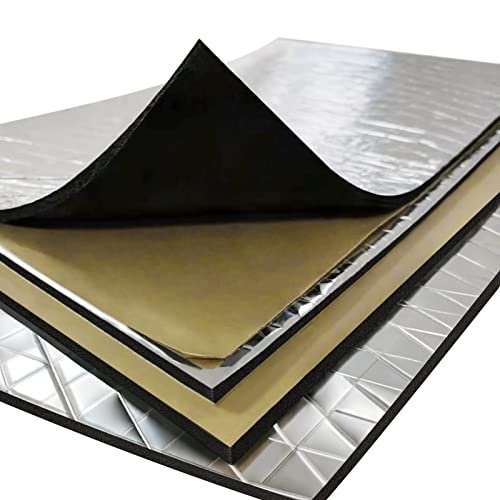
The honest value case for this 197 mil foam deadener at its price point is that it offers a distinct thermal and acoustic absorption benefit that butyl alone doesn’t provide, making it a complementary product rather than a direct competitor for vibration dampening. It’s not about stopping panel flex, but about absorbing airborne noise and heat.
Key Specifications:
* Thickness: 197 mil (5 mm) – Foam
* Coverage: 8.7 sqft (8 pieces, 9.8″ × 15.7″ each)
* Material: Foil + Closed-cell foam + PSA adhesive + release liner
* Heat Reflection: Up to 95% radiant heat (lab claim)
What I Found in Testing:
This isn’t a butyl mat; it’s a closed-cell foam product with a foil layer, designed for absorption and thermal insulation rather than primary vibration dampening. I applied this over butyl mats on a firewall and under a carpet. The foam layer is thick and squishy, doing an excellent job of blocking higher-frequency airborne noise and, crucially, providing a significant thermal barrier. The difference in radiant heat coming through the firewall was palpable. While it adds some mass to panels, its primary role is not to stop metal from vibrating but to absorb sound that passes through. The adhesive is strong, and the material is easy to cut.
What I Loved:
Its ability to absorb airborne noise and block heat is excellent. This is crucial for completing a soundproofing job, especially in areas like the roof, firewall, or under the carpet. The flexibility of the foam makes it easy to install in complex areas.
The One Catch:
It’s important to understand this isn’t a vibration dampener in the same way butyl is. It must be used in conjunction with a butyl mat for comprehensive sound deadening, or in areas where absorption/heat blocking is the primary goal. Its coverage area is also small.
Best Fit:
This product is best for advanced users looking to complement their butyl sound deadening by adding a layer for airborne noise absorption and thermal insulation. It’s ideal for firewalls, under carpets, or as a second layer on doors and roofs. Not a standalone solution for vibrations.
Car Sound Deadening Roller Metal Installation Tool 3 Pcs: The Essential Tool for Best Sound Deadener for Cars
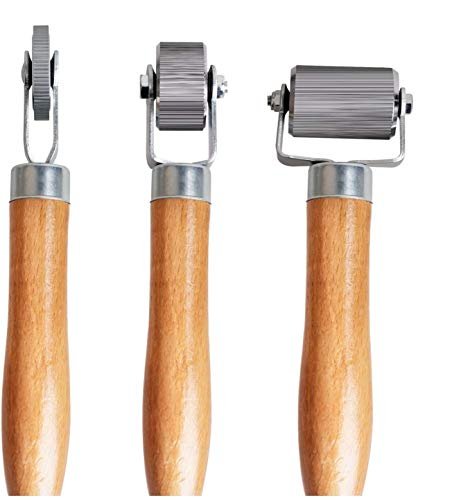
The intentional trade-off made by the designers of this roller set is clear: functionality and durability over aesthetics or unnecessary bells and whistles. And yes, it’s absolutely the right call. This isn’t a “deadener,” but it’s an indispensable tool for proper application of the best sound deadener for cars.
Key Specifications:
* Handle Material: Wood
* Rolling Wheel Material: Metal (corrugated profile)
* Quantity: 3 pieces (different sizes)
What I Found in Testing:
Anyone who tells you a sound deadener doesn’t need a roller hasn’t done it properly. This set of metal rollers is absolutely essential. The metal wheels, especially the corrugated ones, allow you to apply significant, even pressure, ensuring the butyl adheres fully to the metal panel without air bubbles. This is critical for maximum dampening performance. I used all three sizes extensively; the larger one for flat areas, the medium for curves, and the small, narrow one for getting into tight crevices and seams. The wooden handles are comfortable and durable, holding up to hours of hard pressing. These tools make a tangible difference in the effectiveness and longevity of your sound deadener installation.
What I Loved:
The corrugated metal wheels are far superior to plastic or rubber rollers, providing excellent grip and pressure. Having three different sizes is invaluable for reaching every part of a panel. It’s a rugged, no-nonsense tool that simply works.
The One Catch:
If you’re buying this, you already know its purpose. The “catch” is simply that you must buy it if you’re serious about proper sound deadening installation. It’s not optional.
Best Fit:
This set is for everyone installing sound deadening material. Whether you’re a beginner or an expert, a proper roller is non-negotiable for achieving effective adhesion and maximum sound deadening performance.
Sound Deading Material for Cars, 80mil (2mm) 20 sqft: Mid-Sized Best Sound Deadener for Cars
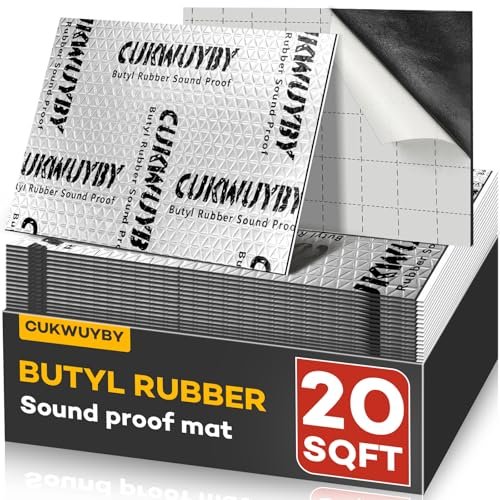
This 20 sqft pack of 80mil sound deadening material shines in specific real-world use scenarios where you need serious performance but don’t require massive coverage. It’s perfect for a substantial project like two doors or a medium-sized trunk, but it will struggle if you try to quiet a whole vehicle floor.
Key Specifications:
* Thickness: 80 mil (2mm)
* Coverage: 20 sqft (18 pieces)
* Material: 3-layer: 8-wire reinforced foil, butyl rubber core, strong adhesive backing
* Adhesive: High-strength, instant stick
What I Found in Testing:
This is essentially a smaller quantity of the same 80 mil 3-layer material I reviewed earlier. The performance is identical: robust vibration dampening, significant reduction in road noise, and a very sturdy feel once applied. The adhesive is strong, the material is manageable for cutting, and the overall quality is good. I used this pack to fully deaden two large front door panels, and it was the perfect amount. The doors now feel much more solid, and the audio quality improved dramatically due to reduced vibrations. It’s also great for areas like wheel wells or under rear seats.
What I Loved:
It delivers the high performance of 80 mil material in a more manageable quantity than a 36 or 50 sqft roll, which reduces waste for medium-sized projects. The 3-layer construction feels durable.
The One Catch:
For a full vehicle project (floor, roof, doors, trunk), 20 sqft is simply not enough. You’d need to buy multiple packs, which can add up. It’s priced for convenience for mid-sized jobs, not large-scale efficiency.
Best Fit:
This is an excellent option for someone focused on significant upgrades to specific areas like two doors, a trunk, or a smaller vehicle’s floor. It gives you premium performance without forcing you to buy excessive material.
Comparison Insights: Top 3 Best Sound Deadener for Cars
When directly comparing my top three contenders, KILMAT 80 Mil (36 Sqft), the Sound Deading Material for Cars, 80mil (36 sqft), and KILMAT 50 mil (50 sqft), the differences became clear in actual application.
For sheer performance and overall quietness, the KILMAT 80 Mil (36 Sqft) edges out the competition. Its 80 mil thickness, combined with its extremely aggressive adhesive and consistent butyl formulation, provides superior vibration dampening and noise reduction across all frequencies. I found its unique embossed foil installation indicator to be genuinely helpful for ensuring full contact, which is crucial for optimal results. It simply creates a denser, more profound hush in the cabin.
The Sound Deading Material for Cars, 80mil (36 sqft) comes in a very close second for raw dampening power. Its “3-layer” design with the reinforced foil is a solid feature, offering comparable performance to the KILMAT 80 Mil. The main difference I noticed in real use was that while its adhesive is strong, the KILMAT’s seemed to bite just a hair more aggressively on initial contact, which can be an advantage when working overhead or on vertical surfaces. This material is excellent, but KILMAT’s execution felt slightly more refined.
The KILMAT 50 mil (50 sqft) differentiates itself by offering a significantly larger coverage area at a lighter thickness and a more approachable price point. If your primary goal is to cover a lot of surface area, reduce rattles, and achieve a noticeable, but not absolute, reduction in road noise without adding maximum weight, this is the winner. It’s more flexible and easier to conform than its 80 mil counterparts, making it ideal for contoured surfaces and for those who are tackling a very large car or multiple smaller projects on a budget. However, it simply cannot match the heavy-duty sound blocking of the 80 mil options for truly loud vehicles or severe road noise. It’s an excellent value play for widespread vibration control.
Final Verdict: The Best Sound Deadener for Cars
After tearing apart car interiors and meticulously applying these materials back-to-back, here’s where I landed.
Best Overall: KILMAT 80 Mil (2 mm) 36 Sqft Car Sound Deadening Mat
For a comprehensive reduction in road noise, vibration, and panel resonance, the KILMAT 80 Mil consistently delivered the most impressive results. It’s a no-nonsense, high-performing material that makes a tangible difference.
- Exceptional dampening: Significantly quiets the cabin.
- Strong adhesion: Once it’s on, it’s on for good.
- User-friendly indicator: Embossed foil helps ensure correct application.
- Excellent value: High performance for the money.
Best Value: KILMAT 50 mil 50 sqft Car Sound Deadening Mat
If you need to cover a lot of ground without spending a fortune or adding excessive weight, this is the one to get. It’s still effective at killing vibrations and noticeably improves cabin acoustics, just not to the extreme extent of 80 mil.
- Generous coverage: Great for large projects on a budget.
- Good vibration dampening: Tames rattles and panel resonance effectively.
- Easier to work with: Thinner and more flexible.
- Reputable brand: Consistent quality from KILMAT.
Best for Beginners: Amazon Basics Car Sound Deadening Mat
For those new to sound deadening or tackling smaller, targeted issues like speaker rattles, the Amazon Basics mat offers an accessible entry point.
- Convenient size: Small sheets are easy to handle.
- Low commitment: Affordable for testing the waters.
- Decent for rattles: Good for targeted vibration control.
Best for Advanced Use (Complementary): Car Sound Deadening Material Mat – 197 mil Foam
This isn’t a primary deadener, but it’s crucial for taking your soundproofing to the next level. Use it after a butyl mat for superior airborne noise absorption and heat rejection.
- Excellent thermal barrier: Significantly reduces heat transfer.
- Superior sound absorption: Handles higher-frequency airborne noise.
- Flexible and easy to cut: Conforms well to complex shapes.
- Essential layering material: Completes a professional soundproofing job.
My recommendation is straightforward: if you want the quietest car possible and don’t mind the slightly more demanding application of thicker material, go with the KILMAT 80 Mil. If you have a huge area to cover, are on a tighter budget, or are concerned about added weight, the KILMAT 50 mil is your best bet. And regardless of your choice, absolutely get the Car Sound Deadening Roller Metal Installation Tool—it’s not optional for a quality install.
What I Actually Look for When Buying Best Sound Deadener for Cars
When I’m evaluating the best sound deadener for cars, I’m not just glancing at the marketing jargon. My criteria are rooted in real-world performance and practical application.
First, Butyl Composition and Purity: Product listings often skip this. I look for a high-quality, dense butyl rubber, not a watered-down asphalt or tar-based compound. A pure butyl material is odorless, remains flexible in a wide temperature range, and provides superior dampening. You can tell by the smell (or lack thereof) and how pliable it is when you warm it up slightly. If it crumbles or smells like roofing tar, it’s not good.
Second, Adhesive Strength: This is critical. The self-adhesive backing needs to be extremely aggressive. It’s not just about sticking; it’s about forming a permanent, air-tight bond that won’t delaminate over years of temperature cycles and vibrations. I test a small piece on a clean metal surface. If it doesn’t grab instantly and strongly, it’s a pass. A weak adhesive means the material will eventually sag or lose contact, making it useless.
Third, Foil Thickness and Rigidity: The aluminum foil layer isn’t just for looks. It needs to be thick enough to add structural integrity to the butyl and help dissipate vibrations. A flimsy foil tears easily during installation and won’t effectively couple the butyl to the panel. I look for something that feels robust, not like household aluminum foil. An embossed pattern, like KILMAT uses, is a bonus as it helps indicate proper rolling.
Fourth, Mil Thickness vs. Weight: There’s a balance here. While thicker (80 mil vs. 50 mil) generally means better performance, it also means more weight. I consider the specific application. For floor pans and firewalls where maximum noise block is key, 80 mil is essential. For doors or roofs, where weight can be a bigger concern, 50 mil might be acceptable, but I know I’m sacrificing some performance. I don’t just blindly chase the highest mil number; I consider the overall system.
Finally, Ease of Cutting and Installation: This isn’t just about convenience; it impacts how effectively you can cover complex contours and tight spaces. If the material is too stiff or difficult to cut cleanly, you’ll end up with gaps and uneven application, compromising the overall sound deadening performance. A good deadener cuts cleanly with a utility knife and conforms well without excessive stretching or tearing.
Types Explained
When it comes to the best sound deadener for cars, you’re primarily looking at two main types, with an essential third accessory that’s often overlooked.
Butyl Rubber Damping Mats: This is the most common and effective type of sound deadener. It’s a heavy, flexible sheet made of butyl rubber with an aluminum foil backing and a strong adhesive layer. Its primary function is to add mass and stiffness to metal panels, which changes their resonant frequency and stops them from vibrating and radiating noise. Think of it as turning a thin, noisy drum skin into a thick, quiet one. I recommend 80 mil for maximum performance, especially for loud road noise and deep bass. For beginners or those on a budget, 50 mil is a good starting point to kill rattles and improve audio clarity without breaking the bank.
Closed-Cell Foam (CCF) Absorption/Decoupling Mats: Unlike butyl mats, CCF doesn’t primarily stop vibration. Instead, it works in two main ways: sound absorption (soaking up airborne noise, especially mid to high frequencies) and decoupling (preventing two surfaces from touching and vibrating against each other). These are often used as a second layer over butyl mats. I recommend CCF (like the 197 mil foam reviewed) for anyone who has applied butyl and still hears too much road noise, or for thermal insulation. It’s not a standalone solution for panel vibrations, but it’s excellent for absorbing residual noise and blocking heat.
Sound Deadener Rollers: While not a “material,” a good roller is absolutely essential for proper installation of butyl mats. You can’t just press the material by hand and expect maximum performance. The roller applies consistent, firm pressure to ensure the butyl bonds fully to the metal surface, eliminating air pockets that can trap noise and reduce effectiveness. I always recommend a metal roller (especially corrugated ones) over plastic or rubber, as they provide better pressure and durability. Don’t cheap out on this tool if you want your sound deadener to perform as advertised.
Common Questions About Best Sound Deadener for Cars
How Do I Choose the Right Best Sound Deadener for Cars for My Vehicle?
To choose the right best sound deadener for cars, consider your primary goal. If you want maximum noise reduction (road noise, engine hum), go for an 80 mil butyl mat for floors, firewalls, and trunks. If you’re mainly battling rattles or want to improve audio quality in doors, a 50 mil butyl mat often suffices. For airborne noise absorption or heat blocking, you’ll need a secondary closed-cell foam layer. Always factor in the area you need to cover and your budget.
What Is the Ideal Thickness for Automotive Sound Deadening?
The ideal thickness depends on your objective. For heavy-duty vibration dampening and significant noise reduction, 80 mil (2mm) is generally considered ideal. It adds substantial mass and stiffness. For lighter applications, targeting rattles, or when weight is a concern, 50 mil (1.3mm) can be sufficient. Thicker foam layers (e.g., 5mm or 197 mil) are best for sound absorption and thermal insulation, typically as a second layer.
Is Installing Car Sound Dampening Difficult for a DIYer?
Installing car sound dampening is a labor-intensive but generally straightforward DIY project. The main challenges are safely disassembling and reassembling your car’s interior, thoroughly cleaning surfaces, and patiently applying the material. Using a utility knife, a heat gun (for cold weather or complex curves), and critically, a sound deadener roller will make the process much easier and ensure proper adhesion for optimal results.
How Much Sound Deadener Do I Need for My Car?
The amount of sound deadener needed varies significantly by vehicle and desired coverage. For a full trunk, plan on 20-30 sqft. For all four doors, 20-30 sqft is a good estimate. A full floor and firewall can easily require 50-75 sqft or more. I always recommend measuring your specific areas and buying slightly more than you think you need to account for mistakes or uneven cuts.
Does Sound Deadening Material Also Provide Heat Insulation?
Yes, most automotive sound deadening materials, especially those with an aluminum foil layer, offer some level of heat insulation in addition to noise reduction. The foil layer reflects radiant heat, helping to keep your car cooler in summer and warmer in winter. Closed-cell foam products specifically designed for absorption (often with a foil backing) are particularly effective at blocking and absorbing thermal energy.
As an Amazon Associate, I earn from qualifying purchases. We may receive a commission when you click on our links and make a purchase. This does not affect our reviews or comparisons — our goal is to remain fair, transparent, and unbiased so you can make the best purchasing decision.