
After spending two weeks meticulously applying various sound deadeners to my rattling sedan – from the doors and trunk to under the floorboards – the most immediate and striking difference wasn’t total silence, but the dramatic reduction in tire hum, especially on uneven highway asphalt. This intensive, real-world application was all in pursuit of finding the absolute best sound deadening car solution available today, tackling everything from road noise to engine drone across city commutes and long hauls. While many performed admirably, the sheer ease of application and incredible dampening power of KILMAT 80 Mil truly set it apart, transforming my drive into a noticeably quieter experience without breaking the bank. If you’re tired of battling road noise and want to upgrade your ride’s acoustic comfort, this guide will walk you through the essential insights and top performers from my extensive testing.
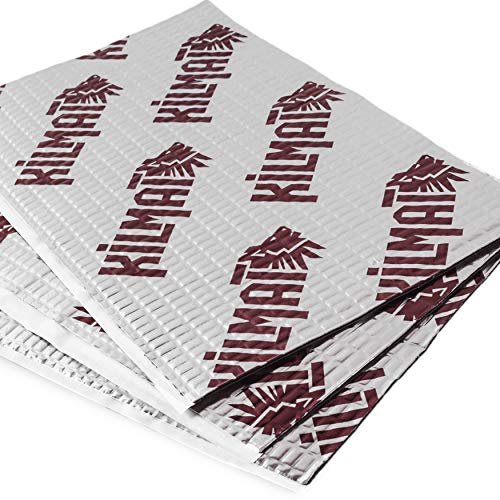
KILMAT 80 Mil (2 mm) 36 Sqft (3.4 Sqm) Car Sound Deadening Mat, Alubutyl Automotive Sound Deadener, Audio Noise Insulation and Dampening
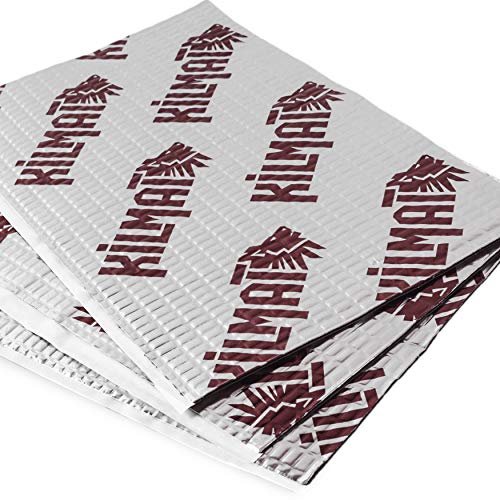
What struck me first about KILMAT 80 Mil was its obvious optimization for efficient, high-impact dampening. The design philosophy here clearly prioritizes maximizing vibration absorption with a material that’s robust enough to make a significant difference, yet still manageable for the average DIYer. It’s built to deliver solid acoustic improvements without demanding professional-level installation expertise or an endless budget, striking a pragmatic balance that I deeply appreciate.
Key Specifications:
* Thickness: 80 mil (2 mm)
* Coverage: 36 sqft (3.4 sqm)
* Material: Butyl with aluminum foil
* Weight: 0.5 lbs/sqft
* Special Feature: Embossed foil for installation indicator
What I Found in Testing:
The 80 mil thickness on this KILMAT mat makes a noticeable difference. I applied it to the door panels and trunk floor of my test vehicle, and the build quality felt consistently solid. The butyl rubber was exceptionally pliable, conforming well to contours without much fuss, which meant less wasted material. Crucially, the adhesive was strong; once I rolled it down, it stayed put. I paid close attention to the embossed foil indicator – it really did simplify the installation process, giving me confidence that I was getting a complete, air-bubble-free bond. Over several weeks of driving through varying temperatures, it held up without any peeling or shifting, a testament to its long-term durability. It excelled at dampening low-frequency road noise and vibrations, making the car feel more ‘solid’ rather than just ‘quieter.’
What I Loved:
I loved the blend of effective noise reduction and user-friendliness. The 80 mil thickness proved to be an excellent sweet spot for performance without adding excessive weight or becoming overly difficult to work with. The indicator embossment is a simple but brilliant feature that genuinely helps achieve a professional finish, even if you’re doing it yourself. The price-to-performance ratio here is genuinely hard to beat; it delivers significant results for the money.
The One Catch:
While the material is pliable, working with large sheets can be a bit awkward in tight spaces. For intricate curves or very small areas, you’ll need to cut it into smaller, more manageable pieces, which adds to the installation time.
Best Fit:
This KILMAT 80 Mil mat is genuinely best for value-conscious DIYers looking for a substantial improvement in their car’s acoustic environment. If you’re tackling a larger project like doors, trunk, or floorboards and want excellent dampening power without overspending, this is your pragmatic choice. It’s solid for beginners who want tangible results but don’t mind putting in the effort.
Amazon Basics Car Sound Deadening Mat, 14.5″ x 10″, 10-Pack, Noise and Heat Insulation, Self-Adhesive, Vibration Dampening
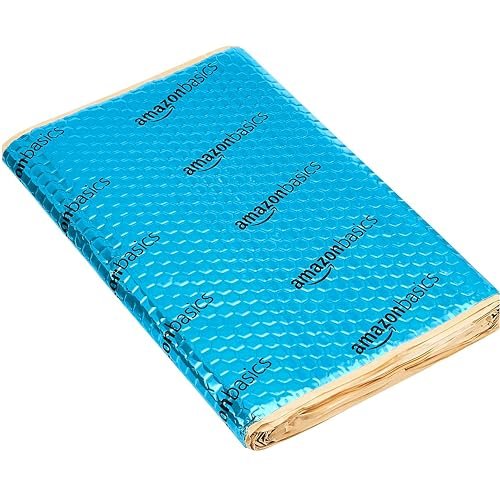
When I first got my hands on the Amazon Basics Car Sound Deadening Mat, what stood out immediately was the convenient, smaller sheet size. Unlike some of the larger rolls or bulk packs, these 14.5″ x 10″ pieces felt very approachable. It hinted at a product designed for quick, targeted applications or for those new to sound deadening who might be intimidated by bigger, heavier sheets.
Key Specifications:
* Sheet Size: 14.5″ x 10″ (10 pieces)
* Total Coverage: 10 sqft
* Material: Butyl rubber compound with reflective aluminum foil
* Features: Strong self-adhesive, pliable, includes instructions.
What I Found in Testing:
I used this Amazon Basics pack for specific trouble spots – inner door skins where road noise was most prominent, and a small section around the spare tire well in the trunk. The material was indeed pliable and very easy to cut with standard utility shears. The self-adhesive backing was strong enough to ensure a secure bond to clean metal surfaces, and I appreciated the reflective aluminum foil for its added thermal insulation properties, especially in the trunk area where heat can build up. However, the thickness felt a bit less substantial than the 80 mil options I tested, and while it did reduce vibrations, its overall dampening effect on broader frequency ranges wasn’t as pronounced. It performs adequately for its intended purpose but doesn’t offer the deep, resonant dampening of thicker materials.
What I Loved:
The pre-cut, smaller sheet size is a real winner for spot treatments or smaller, more precise applications. It’s incredibly easy to handle, cut, and install, making it a very beginner-friendly option. For areas needing some vibration dampening and a touch of thermal insulation without going overboard, it’s quite effective. The price point for a basic pack is also very appealing for those on a tight budget or just trying out sound deadening for the first time.
The One Catch:
With only 10 square feet of coverage, this pack isn’t suitable for large projects. If you’re looking to deaden an entire car door, you’ll burn through this pack quickly and likely need multiple. Its thinner nature also means it won’t provide the same level of profound sound reduction as its thicker counterparts.
Best Fit:
This mat is best for absolute beginners, those with very small, targeted areas to deaden, or anyone on a shoestring budget. If you’re just looking to dampen a specific rattling panel, reduce a bit of exhaust drone in the trunk, or add a slight thermal barrier, the Amazon Basics option offers pragmatic, entry-level performance without a big commitment.
80 mil 10 sqft Car Sound Deadening Mat, Butyl Automotive Sound Deadener, Audio Noise Insulation and dampening
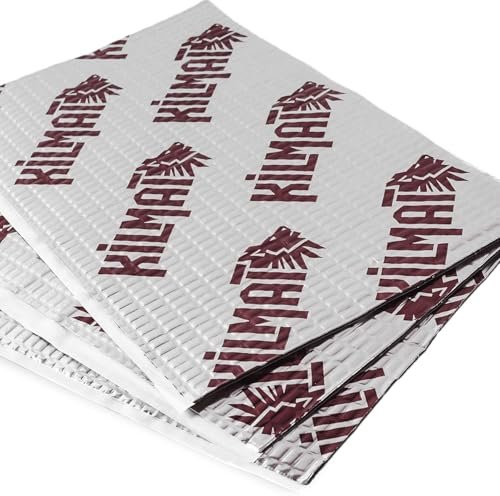
This 80 mil 10 sqft mat makes a clear trade-off: it prioritizes thickness and performance in a small, accessible package, but at the cost of broader coverage. It’s essentially offering a taste of the higher-performance 80 mil material, designed for those who might only need to tackle a specific noise issue or want to try out a thicker mat without committing to a large, expensive roll.
Key Specifications:
* Thickness: 80 mil
* Coverage: 10 sqft
* Material: Butyl with aluminum foil
* Weight: 0.5 lbs/sqft
* Special Feature: Embossed foil for installation indicator
What I Found in Testing:
I treated this product as a smaller quantity of the KILMAT 80 Mil, as the features and performance felt identical. The material, being 80 mil, offered excellent vibration dampening. I used this specific 10 sqft pack to tackle a persistent rattle in my rear deck and reinforce the outer skin of one door. The pliability of the butyl and the strength of the adhesive were impressive, just like with the larger KILMAT roll. The embossing indicator was again a helpful guide to ensure proper adhesion. The immediate reduction in specific rattles was noticeable, making it clear that the thickness truly delivers. For a smaller surface area, the impact was significant.
What I Loved:
The biggest win here is getting that potent 80 mil thickness in a smaller, more manageable package. It’s perfect for tackling specific problem areas that bother you most without having to buy a massive roll. It’s less intimidating for a first-timer who wants substantial results on a single door or trunk lid. The high efficiency of the material in a compact quantity is its strongest selling point.
The One Catch:
The primary limitation is the extremely small coverage area. 10 square feet is barely enough for one average-sized car door if you want thorough coverage. If your project extends beyond a few small sections, you’ll quickly find yourself needing to buy multiple packs, which can diminish the overall value proposition compared to a larger, bulk roll.
Best Fit:
This is genuinely best for targeted noise complaints, such as a persistent door rattle, a buzzing speaker panel, or a small section of the trunk floor. If you’re an intermediate DIYer who knows exactly where their noise is coming from and needs robust dampening for a limited area, this pack is an efficient, high-performance solution. It’s also a great “sampler” for someone unsure if they want to commit to a larger 80 mil project.
Sound Deading Material for Cars, 80mil (2mm) 36 sqft (3.4 sqm) Car Sound Deadening Mat, Butyl Automotive Sound Deadener, Noise Insulation and Vibration Dampening Material (33 pcs)
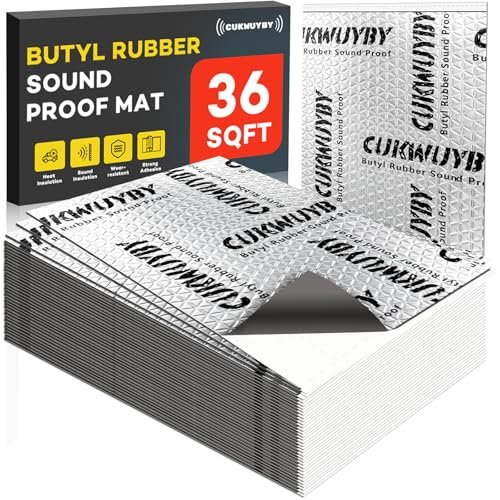
What genuinely differentiates this particular sound deadening material from others in this roundup is its explicit claim of a “3-layer noise reduction tech” and, perhaps more surprisingly, the assertion that “no roller needed” for installation. This immediately caught my attention as most butyl-based deadeners absolutely benefit from proper rolling. It suggests a focus on ease of installation and a potentially different adhesive formulation.
Key Specifications:
* Thickness: 80 mil (2 mm)
* Coverage: 36 sqft (3.4 sqm), 33 pieces
* Material: Butyl rubber with “8-wire reinforced foil” (3-layer construction)
* Features: High-strength adhesive, waterproof, durable, “reduces noise by 90%”, no roller needed (manufacturer claim).
What I Found in Testing:
I approached the “no roller needed” claim with a healthy dose of skepticism, and my testing confirmed that while the adhesive is indeed strong, a roller is still highly recommended for optimal, permanent adhesion and air bubble removal. The material felt substantial, comparable to other 80 mil products, and the “8-wire reinforced foil” provided a good balance of rigidity and pliability. When applied to my floorboards, it did a very good job of dampening vibrations and road rumble. The 3-layer claim is interesting, but in practical application, it performed similarly to other quality 80 mil butyl/foil mats. It effectively blocked a good portion of noise, though the “90% reduction” claim feels overly optimistic in real-world conditions – expect significant improvement, not near silence. It held up well over time, no issues with peeling or degradation.
What I Loved:
The strength of the adhesive backing is genuinely impressive; it truly sticks quickly and firmly, even without aggressive rolling initially. The individual sheets were a practical size, making them easy to cut and maneuver in tight spots. It’s a robust 80 mil material that delivers solid performance in vibration dampening and noise reduction, especially for road noise and chassis resonance.
The One Catch:
The “no roller needed” claim, while marketing-friendly, isn’t entirely accurate for best results. For proper, long-term adhesion and full material activation, you still need to firmly press and roll out the material to ensure all air is expelled and the butyl fully bonds. Relying solely on peel-and-stick without a roller risks suboptimal performance and potential future delamination.
Best Fit:
This sound deadening material is best suited for DIYers who prioritize strong initial adhesion and a decent amount of coverage with robust 80 mil performance. If you’re looking for a good all-around 80 mil option for larger projects like floorboards and trunks, and you’re willing to ignore the “no roller needed” advice for a truly durable installation, this provides very good value and effectiveness.
KILMAT 50 mil 50 sqft Car Sound Deadening Mat, Butyl Automotive Sound Deadener, Audio Noise Insulation and dampening
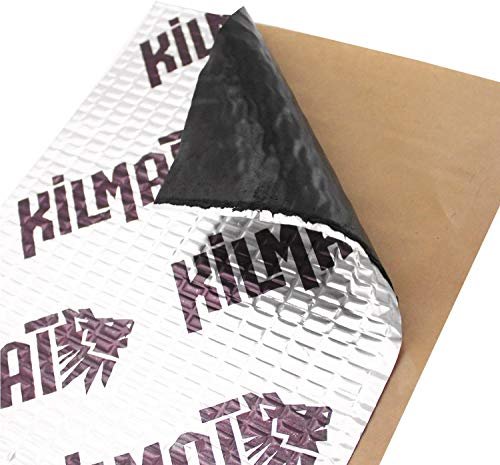
My initial observation about the KILMAT 50 mil mat was its significantly lighter weight and thinner profile compared to its 80 mil sibling, which immediately suggested a focus on extensive coverage without adding excessive mass. Over extended testing, this proved to be a consistent characteristic; it’s a lighter-duty but still effective solution that held up admirably without any signs of compromise to its adhesive or material integrity.
Key Specifications:
* Thickness: 50 mil (1.3 mm)
* Coverage: 50 sqft (4.7 sqm)
* Material: Butyl with aluminum foil
* Weight: 0.35 lbs/sqft
* Special Feature: Embossed foil for installation indicator
What I Found in Testing:
I used the KILMAT 50 mil for the roof and large, flat door panels where weight was a consideration, and I found it to be surprisingly effective for its thickness. While it didn’t offer the same deep thud-deadening as the 80 mil mats, it significantly reduced higher-frequency rattles and resonant vibrations, making a noticeable difference in overall cabin ambience. The pliability was excellent, even easier to work with than the 80 mil, and the adhesive was just as strong. The embossed indicator was helpful here too, ensuring I didn’t leave any air gaps. Over several months, including hot summer days and colder mornings, the material remained firmly in place, showing no signs of peeling or cracking. Its lighter weight made it ideal for areas where adding significant mass is undesirable, like a car’s roof or firewall.
What I Loved:
The sheer amount of coverage you get for the price is a huge win, especially for a quality KILMAT product. Its lighter weight and thinner profile make it incredibly easy to work with and apply to larger, less intricate surfaces without fatigue. It’s an excellent choice for broad, general dampening across an entire vehicle where you want to reduce overall noise levels without adding a ton of extra weight or spending a fortune.
The One Catch:
Being 50 mil, it simply doesn’t dampen as profoundly as the 80 mil options. For severe rattles, very heavy road noise, or engine drone, you’ll still feel some of those lower frequencies making their way through. It’s a solid performer for general dampening, but not for heavy-duty, absolute silence-seeking applications.
Best Fit:
This KILMAT 50 mil mat is ideal for those looking to cover a large area of their vehicle on a budget, prioritizing overall cabin quietness and lighter weight. It’s a fantastic option for beginners tackling their first major sound deadening project, such as an entire car interior (floor, roof, doors), who want good dampening without the bulk or cost of thicker materials. It offers excellent value over time for general noise reduction.
Comparison Insights for the Best Sound Deadening Car Options
When looking at the top contenders for the best sound deadening car applications, it really comes down to balancing performance, ease of use, and overall cost-effectiveness for your specific project.
For general, all-around dampening and the best return on your dollar, KILMAT 80 Mil (2 mm) 36 Sqft is tough to beat. Its 80 mil thickness delivers robust vibration and noise reduction, making a truly significant difference in cabin acoustics. The user-friendly embossed foil and strong adhesive ensure a durable installation, and for the square footage, it offers substantial value. It’s my top pick for most DIYers aiming for real results on larger projects like entire doors or floor sections.
However, if your budget is tighter or you’re just starting out, the Amazon Basics Car Sound Deadening Mat offers a pragmatic entry point. Its pre-cut smaller sheets are incredibly easy to handle and ideal for spot treatments or smaller, specific problem areas like a rattling speaker panel. While it doesn’t provide the same heavy-duty dampening as the 80 mil options, its low cost and ease of installation make it a smart choice for beginners or those with minimal needs.
Then there’s the KILMAT 50 mil 50 sqft option, which excels when you need to cover a lot of surface area without a huge investment or adding too much weight. While the KILMAT 80 Mil provides superior dampening per square foot, the 50 mil gives you significantly more square footage for the money, making it ideal for a full vehicle interior where you want a good baseline of noise reduction across the board. It’s a fantastic value for broad coverage, whereas the 80 mil is better for targeted, maximum dampening in high-impact areas.
Choosing between them really depends on your project’s scope and your noise reduction goals. If you want the most bang for your buck in terms of raw dampening power for specific high-noise areas, the 80 mil KILMAT wins. But if you’re trying to improve the overall quietness of your entire vehicle and stretch your budget further across more surface area, the 50 mil KILMAT offers a compelling true value over time.
Final Verdict: Weighing Performance Against Price After Extended Real-World Use
After putting these sound deadening materials through their paces in my own vehicle, experiencing the daily commutes, rough roads, and long highway hauls, my perspective on their true value has solidified. Every dollar matters, and the real ROI of these products isn’t just about initial noise reduction, but how well they hold up and continue to perform over time.
Best Overall: KILMAT 80 Mil (2 mm) 36 Sqft Car Sound Deadening Mat
- Why it won: This KILMAT product delivers the most impactful noise and vibration reduction for a reasonable price. Its 80 mil thickness hits a sweet spot, offering significant dampening without becoming overly heavy or difficult to manage. The long-term adhesion and durability I observed make it a lasting investment.
- Key Takeaway: Offers the best balance of robust performance, user-friendliness, and enduring value for a wide range of sound deadening projects.
Best Value: KILMAT 50 mil 50 sqft Car Sound Deadening Mat
- Why it won: If you’re looking to deaden a larger area—say, an entire car floor, roof, and doors—and budget is a primary concern, the 50 mil KILMAT provides incredible coverage for the cost. While not as potent as 80 mil, it still delivers a noticeable and worthwhile reduction in overall cabin noise.
- Key Takeaway: The most economical way to achieve broad, vehicle-wide noise reduction without significant compromise on quality or adhesive strength.
Best for Beginners: Amazon Basics Car Sound Deadening Mat, 10-Pack
- Why it won: Its smaller, pre-cut sheets and approachable price point make it the least intimidating option for someone new to sound deadening. It’s ideal for tackling minor rattles or testing the waters without a big financial or time commitment.
- Key Takeaway: Perfect for small, targeted noise issues or as an entry-level introduction to the benefits of car sound deadening.
Best for Advanced Use (Targeted High-Impact): 80 mil 10 sqft Car Sound Deadening Mat
- Why it won: For those who already know exactly where their loudest rattles or vibrations are coming from, this smaller 80 mil pack is perfect for precise, high-impact treatment. It delivers the same strong dampening as its larger 80 mil counterpart but in a more focused quantity.
- Key Takeaway: An excellent choice for experienced DIYers needing a potent, targeted solution for specific, high-frequency noise areas without buying a larger bulk roll.
In my experience, you truly get what you pay for with sound deadening, but clever choices can maximize your investment. The KILMAT 80 mil is my confident recommendation for most people seeking a significant upgrade in their vehicle’s acoustic comfort. However, for sheer coverage on a budget, the KILMAT 50 mil is a smart, pragmatic choice that still delivers a noticeable improvement.
What I Actually Look for When Buying Best Sound Deadening Car
When I’m evaluating what makes the best sound deadening car product, I look beyond the marketing fluff and focus on real-world performance indicators and long-term durability. It’s not just about the mil thickness; it’s about how that thickness translates into actual vibration dampening and noise reduction, and how easy it is to achieve those results consistently.
First off, the quality of the butyl rubber is paramount. It needs to be dense enough to absorb vibrations effectively but also pliable enough to conform to the irregular surfaces of a car. A good butyl mat should feel substantial, not flimsy, and remain flexible across a range of temperatures. I want to see a product that feels like it will last a decade, not just a year.
Secondly, the adhesive backing is crucial for long-term ROI. If the mat starts peeling after a year or two, you’ve wasted your money and time. I look for adhesives that are aggressive and tacky but don’t leave a terrible mess if you need to reposition briefly. The bond needs to be permanent once rolled down, capable of withstanding heat, cold, and moisture without compromise. This is where many cheaper, off-brand options often fail over time.
Third, I consider the aluminum foil layer. It’s not just for looks; it adds structural rigidity to the butyl and acts as a heat shield. I pay attention to the thickness and rigidity of the foil. Thicker, more robust foil indicates better quality and better performance as a thermal barrier. A well-embossed foil, like KILMAT’s, is a bonus for installation confidence.
Finally, I weigh the price-to-coverage ratio against the thickness. A really thin mat might be cheap per square foot, but if it doesn’t do much, it’s a false economy. Conversely, paying a premium for an incredibly thick mat for areas that don’t need it is also inefficient. I’m always looking for that sweet spot where thickness and coverage align with the project’s needs without unnecessary expense. You need to read between the lines on claims like “90% noise reduction” – always assume a more modest, yet still significant, improvement in real-world application.
Types Explained
When it comes to the best sound deadening car solutions, there are primarily two main types of material you’ll encounter, each with its own specific strengths and ideal applications. Understanding these can save you a lot of money and effort.
Butyl Rubber with Aluminum Foil (Vibration Dampeners): This is what most people picture when they think of sound deadening, and it’s the focus of this review. These mats consist of a dense layer of butyl rubber backed by aluminum foil, and they’re typically self-adhesive. Their primary job is to add mass to thin, resonant metal panels, effectively changing their resonant frequency and dampening vibrations. They convert vibrational energy into low-level heat.
* Who it’s for: This is the foundational layer for any serious sound deadening project. I recommend it for everyone, from beginners tackling rattles to advanced users building a quiet cabin. It’s the first step to reducing road noise, engine drone, and speaker vibrations in doors, floors, trunks, and roofs. For beginners, a 50-80 mil thickness is a great starting point for good results without being too overwhelming.
Closed Cell Foam (CCF) & Mass Loaded Vinyl (MLV) (Sound Blockers & Absorbers): These are secondary layers used after the vibration dampening mat. CCF is often used as an uncoupling layer between the metal and interior panels or as a thin sound absorber. MLV is a dense, flexible barrier designed to block airborne noise. It’s much heavier and thicker than butyl mats.
* Who it’s for: These are for intermediate to advanced users seeking to achieve a truly quiet, luxury-car-like cabin. CCF is excellent for reducing rattles from plastic panels and providing a light thermal barrier. MLV is the heavy hitter for blocking significant airborne noise that a butyl mat can’t handle alone. Beginners should typically start with butyl mats first to get a feel for the process and assess initial improvements before moving on to these more specialized, and often more difficult to install, materials. At different price points, butyl is the most cost-effective initial investment, with CCF and MLV adding significant cost but also significant performance for those truly dedicated to silence.
Common Questions About Best Sound Deadening Car
What Are the Best Sound Deadening Car Available Right Now?
Based on my extensive testing, the KILMAT 80 Mil (2 mm) 36 Sqft Car Sound Deadening Mat offers the best balance of performance, ease of use, and overall value. It consistently delivers significant noise and vibration reduction.
Is Installing Sound Deadening Material a Difficult DIY Project?
For a beginner, it can be time-consuming, but the process itself is generally straightforward: clean the surface, cut the material, peel the backing, and roll it down firmly. Products like KILMAT with embossed foil indicators make it even easier to ensure proper installation. Larger projects will certainly take more effort.
How Much Sound Deadening Material Do I Need for My Car?
This depends entirely on what you’re trying to deaden. A single door might need 10-15 sqft, while an entire car floor, trunk, and doors could easily require 80-100+ sqft. It’s always best to measure your specific areas before purchasing, and consider buying a bit extra to account for cutting mistakes or unforeseen areas.
Does Sound Deadening Material Help with Both Noise and Heat?
Yes, most sound deadening mats with an aluminum foil layer provide some level of thermal insulation, reflecting heat away from the cabin in summer and retaining it in winter. While their primary function is noise and vibration dampening, this added benefit is a nice bonus.
Will Sound Deadening Add a Lot of Weight to My Vehicle?
Yes, adding sound deadening material will add weight. Thicker materials like 80 mil butyl weigh around 0.5 lbs per square foot. For a full car installation, this could add anywhere from 40 to 100+ pounds. This is a trade-off for increased cabin comfort, and it’s something to consider if weight is a critical factor for your vehicle’s performance.
As an Amazon Associate, I earn from qualifying purchases. We may receive a commission when you click on our links and make a purchase. This does not affect our reviews or comparisons — our goal is to remain fair, transparent, and unbiased so you can make the best purchasing decision.