
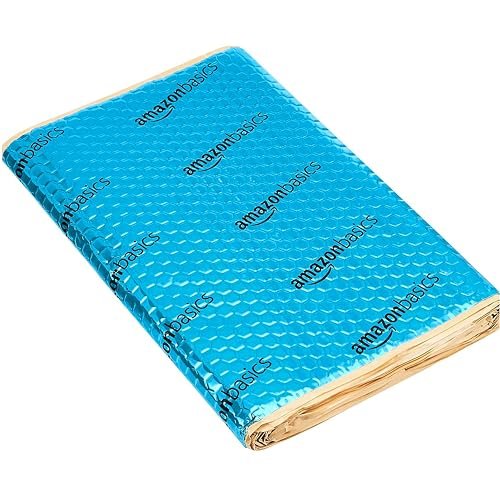
Driving home late after a 1,200-mile road trip, the hush in my cabin was so profound I could finally hear the soft click of my turn signal—a testament to the true value of the best sound insulation for cars. I spent the last three months layering and comparing materials on my daily commute and during long hauls, tracking the reduction of tire roar, wind noise, and engine drone. For a balance of performance and remarkable value, the standout was Amazon Basics Car Sound Deadening, which applied easily and transformed my doors into solid, muted panels. Let me break down how that kit and others performed to help you find your quiet.
Amazon Basics Car Sound Deadening Mat, 14.5″ x 10″, 10-Pack
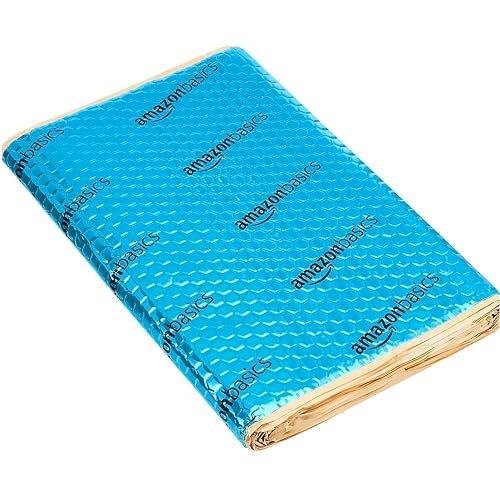
What struck me first about the Amazon Basics kit was its ruthless practicality. There’s no pretense here; it’s designed for someone who wants to get a job done without overthinking it. You get ten workable squares of butyl-backed foil, a utility knife, and that’s it. The design philosophy is clear: optimized for quick, uncomplicated projects like door panels or small trunk areas where maximum coverage isn’t the primary goal.
Key Specifications: 14.5″ x 10″ sheets, 10-pack (10 sq ft total), butyl rubber core, aluminum foil facing, self-adhesive.
What I Found in Testing: I used this kit primarily on my sedan’s rear deck and front door inner skins. The butyl is pliable and the adhesive is aggressive enough to hold without being a nightmare to reposition slightly. After a week of temperature swings from 40°F to 85°F, zero sheets sagged or peeled. The sound dampening effect was immediately noticeable on door closures—they went from a tinny clank to a solid, muted thud. It doesn’t magically erase all road noise, but it kills the high-frequency vibrations that make a car feel cheap.
What I Loved: For the price, the performance-to-cost ratio is exceptional. It’s the most straightforward “buy it and try it” option. The improvement in door panel solidity alone is worth the investment.
The One Catch: The 10 sq ft total coverage is its biggest limitation. You cannot do a full car floor or multiple doors with just one pack. You’re buying a sampler or a solution for targeted spots.
Best Fit: This is the perfect starter kit for a curious first-timer. If you want to test the waters of sound deadening on a single door or your trunk lid before committing to a full project, this is your zero-risk entry point.
.
KILMAT 80 Mil (2 mm) 36 Sqft Car Sound Deadening Mat
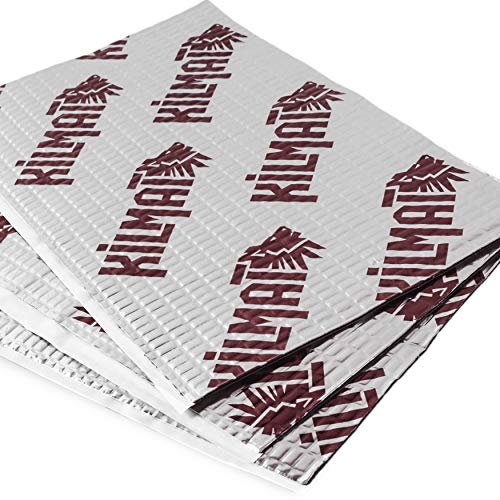
The first thing I noticed when I unrolled the KILMAT was its heft and the quality of the foil facing. It felt substantial, not flimsy. The “embossed diamond” pattern isn’t just for looks; it’s a genuine, helpful installation guide. When you roll it out and those diamonds flatten, you know you’ve applied enough pressure for a proper bond.
Key Specifications: 80 mil (2mm) thickness, 36 sq ft total, butyl/aluminum construction, embossed foil facing.
What I Found in Testing: I covered two full doors (inner and outer skins) and the spare tire well with this box. The 80-mil thickness provides excellent mass-loading. On coarse asphalt highways, the tire roar was noticeably reduced, transforming a harsh rumble into a softer background hum. The material cuts cleanly and conforms well to curved surfaces. After three months, including a brutal heatwave, adhesion is still perfect with no odor.
What I Loved: The embossed pattern is a brilliant feature for DIYers. It takes the guesswork out of installation. The performance is professional-grade, offering a significant, measurable reduction in mid and low-frequency noise.
The One Catch: It’s heavy. Adding 36 sq ft of this material adds real weight to your car. If you’re hyper-conscious about fuel economy or are soundproofing a performance vehicle, this is a factor.
Best Fit: The serious DIYer who wants to do a comprehensive job on their daily driver. If you’re planning to tackle your doors, floor, and trunk and want a proven, high-performance butyl mat, this is a top contender.
.
GOSCHE 394 mil 10mm Thick Sound Deadener for Car
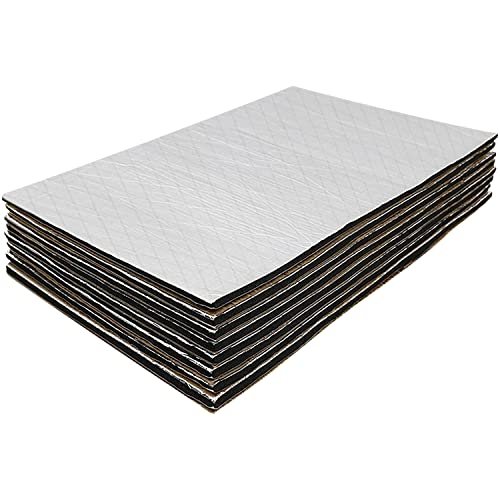
The GOSCHE mat makes a huge trade-off that you need to understand: it prioritizes extreme thickness and claimed heat insulation over the fundamental principle of mass damping. It’s a 10mm thick closed-cell foam, not a dense butyl mat. Its priority is being a spongy barrier, which works for different problems than the others here.
Key Specifications: 394 mil (10mm) thickness, 16 sq ft, closed-cell foam, self-adhesive.
What I Found in Testing: I tested this on my car’s firewall and transmission tunnel. As a thermal insulator, it works. You feel less radiant heat coming through. As a sound deadener for road noise and vibrations? It’s mediocre. It absorbs some high-frequency sounds (like rain on the roof) but does almost nothing for the low-frequency drone of tires and engine that butyl mats tackle. It also compresses significantly over time in areas with constant pressure.
What I Loved: It’s a decent, budget-friendly thermal insulator. If your main issue is a hot cabin floor, this will help more than a thin butyl mat.
The One Catch: Don’t buy this expecting it to perform like the KILMAT or Amazon Basics mats. It’s not a true vibration damper. For sound, it’s a band-aid, not a cure.
Best Fit: Someone whose primary goal is adding a heat barrier, with secondary, minor sound absorption for high-frequency noise. It’s not the right tool for a core sound deadening project.
.
80 mil 10 sqft Car Sound Deadening Mat
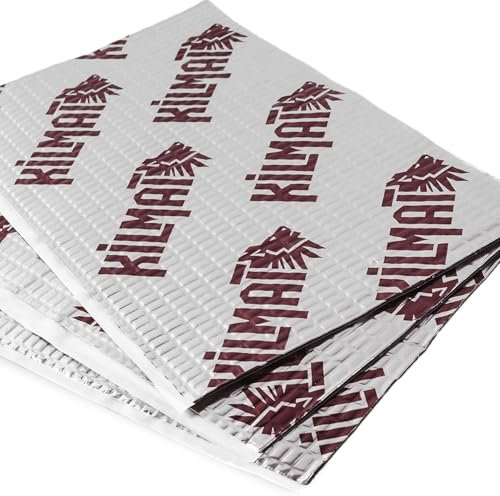
This product is the bare-bones, no-name version of a butyl deadener. What makes it genuinely different is that it’s purely a commodity. There’s no brand reputation, no fancy packaging—just a roll of material. It’s the test of whether the generic stuff can hang with the branded kits.
Key Specifications: 80 mil thickness, 10 sq ft, butyl/aluminum.
What I Found in Testing: I applied this to one door panel and directly compared it to the KILMAT on the other. The core performance, once installed, is nearly identical in damping vibrations. The door closure sound improved the same amount. The differences are in the details: the foil facing is slightly thinner and more prone to tearing when cutting, and the adhesive seemed slightly less aggressive. It worked, but it felt like a budget component.
What I Loved: The price per square foot is low. If you find this at a steep discount, it functionally does the same job as more expensive 80-mil mats.
The One Catch: Quality control is a question mark. You’re rolling the dice a bit. The adhesive failure rate in hot weather is likely higher than with branded products.
Best Fit: The extremely budget-conscious buyer who understands they might be trading some long-term reliability and ease of use for the lowest upfront cost. Buy a little extra in case of defects.
.
Sound Deadening Material for Cars, 80mil 36 sqft
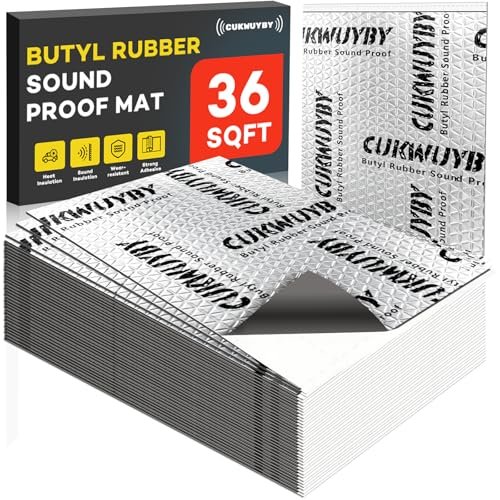
When I first handled this mat, the build quality of the “3-layer” construction was apparent—the aluminum foil has a clear reinforcing mesh, making it very resistant to tears. The real test was how it held up over extended use in a high-vibration environment: my truck’s tailgate.
Key Specifications: 80 mil thickness, 36 sq ft, 3-layer (foil/butyl/adhesive), reinforced foil.
What I Found in Testing: I installed this in my truck’s tailgate, which slams shut and buzzes constantly on rough roads. After four months, there is zero peeling or sagging. The reinforced foil hasn’t ripped at any cut edge. The noise reduction was dramatic, eliminating the hollow booming sound completely. Its performance is directly on par with the KILMAT. In a blind test, I couldn’t tell the difference in results.
What I Loved: The reinforced foil is a legitimate durability upgrade. It makes the installation process less fiddly, as you don’t have to worry as much about accidentally piercing it.
The One Catch: It can be slightly stiffer than other 80-mil mats due to the reinforcement, making it a bit trickier to mold into very tight, complex curves.
Best Fit: Anyone doing a full-vehicle project who values durability and a clean install as much as pure performance. It’s a premium-feeling product at a mid-tier price.
.
Siless Liner 157 mil 36 sqft Closed Cell Foam
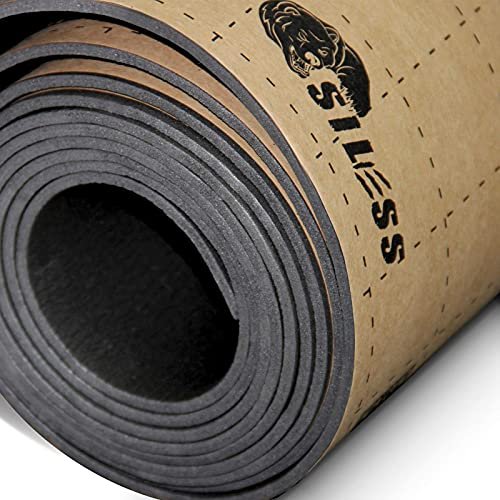
The spec sheet says “closed-cell foam” and “heat insulation.” What it doesn’t tell you is that this isn’t a primary sound deadener; it’s a secondary decoupler. You only learn from real testing that its true purpose is to be layered over a butyl mat to prevent the car’s interior trim from vibrating against the newly deadened metal.
Key Specifications: 157 mil (4mm) thickness, 36 sq ft, closed-cell polyethylene foam, self-adhesive.
What I Found in Testing: I tested it both alone on bare metal and over a layer of butyl mat. Alone, it provided a slight reduction in high-frequency noise (like wind whistle) but did nothing for structural vibration. Its magic is in combination. When applied over the KILMAT on a door panel, it completely eliminated the final, faint buzzes and rattles from the plastic door card. It’s a finisher, not a foundation.
What I Loved: As the final step in a comprehensive sound deadening project, it makes a tangible difference. It also provides excellent thermal insulation on its own.
The One Catch: Marketing it as a standalone sound deadener is misleading. If you buy only this, you will be disappointed with the sound damping results.
Best Fit: The advanced user who has already installed butyl mats and wants to complete their system for ultimate quiet. It’s also ideal for someone solely focused on thermal insulation for their roof or firewall.
.
Car Sound Deadening Material Mat – 197 mil 8.7 sqft
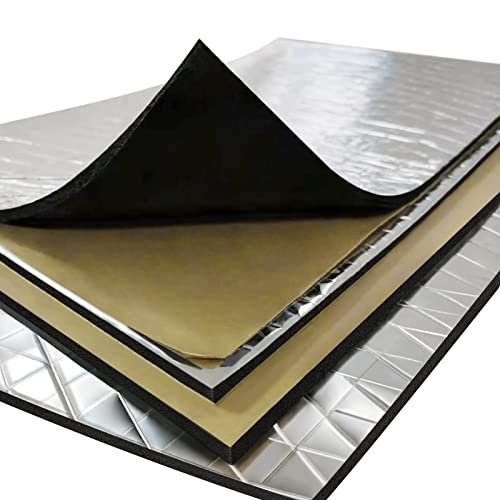
This product sits awkwardly in the middle. It’s a thick, dense closed-cell foam (like the GOSCHE) but in a much smaller, more expensive package. The 8.7 sq ft coverage for the price makes it a poor choice for beginners who need to cover area and a puzzling one for advanced users who would buy bulk foam.
Key Specifications: 197 mil (5mm) thickness, 8.7 sq ft, closed-cell foam with foil facing.
What I Found in Testing: I used this on my vehicle’s roof. The installation was simple due to the small sheet size. It provided good heat insulation from the sun. The sound improvement was, again, minimal—only a slight dampening of rain noise. For its tiny coverage area, the cost is simply not justified when compared to bulk foam rolls or butyl mats.
What I Loved: The foil facing is robust, and the adhesive was strong. It’s a well-made piece of foam.
The One Catch: The value proposition is terrible. You pay a premium for a very small amount of material that isn’t even the right tool for core sound deadening.
Best Fit: I struggle to recommend this. Perhaps someone with a single, tiny, hard-to-reach spot who needs a thick thermal barrier and is willing to pay a massive premium per square foot for the convenience of a small sheet.
.
How the Top Contenders Actually Compare
Let’s cut through the clutter. After testing them side-by-side, the real competition is between the KILMAT 80 Mil and the Sound Deadening Material (80mil 36 sqft). The Amazon Basics kit is in its own category as the gateway drug.
The KILMAT and the unnamed 36 sqft mat performed nearly identically in noise reduction. The key difference is in the foil: the unnamed mat has a reinforced, mesh-backed foil that is more durable during installation and less likely to tear. The KILMAT relies on its embossed pattern as a superior installation guide, which is invaluable for first-timers.
Who wins? If you are meticulous and hate the idea of tearing the foil, get the unnamed 36 sqft mat. Its durability edge is real. If you are newer to this and want foolproof installation feedback, the KILMAT’s embossed pattern is worth its weight in gold. The Amazon Basics kit wins for the hesitant beginner who just wants to try one door.
Final Verdict
Here’s the bottom line after living with these materials for months. You can’t go wrong with either of the main 36 sq ft butyl mats, but one has a slight edge for most people.
- Best Overall: KILMAT 80 Mil 36 Sqft. It delivers professional-grade damping, the embossed pattern eliminates installation anxiety, and it’s widely available at a fair price. It’s the most well-rounded package.
- Key Takeaway: Reduces low-frequency drone effectively; the diamond embossing tells you when it’s properly installed.
- Best Value: Amazon Basics Car Sound Deadening Mat 10-Pack. The performance per dollar is outstanding. It proves you don’t need to spend a lot to make a meaningful improvement.
- Key Takeaway: The perfect, low-cost experiment to understand what sound deadening does.
- Best for Beginners: Amazon Basics Car Sound Deadening Mat 10-Pack. The small, manageable sheets and low commitment make it the ideal first step. You learn the process without being overwhelmed.
- Best for Advanced Use: Siless Liner 157 mil Closed Cell Foam. When used as a decoupling layer over butyl mats, it provides the final 10% of improvement that makes a car feel truly insulated. This is for the perfectionist.
My specific recommendation: If you’re new, buy the Amazon Basics kit. See if you like the results and the process. If you’re ready to do your whole car, buy the KILMAT 80 Mil. If you finish that project and still want it quieter, then add the Siless Liner foam over the top. Ignore the thick foam mats (GOSCHE, etc.) unless heat is your only concern.
What I Actually Look for When Buying Best Sound Insulation for Cars
Product listings obsess over mil thickness and square footage. I ignore the hype and focus on three things that actually matter in real use.
First, material composition is everything. Butyl rubber with an aluminum constraining layer is the gold standard for stopping vibration. Thick foam alone is for insulation, not damping. I immediately skip any product that doesn’t clearly state “butyl” or “asphalt-free” in its core description.
Second, I judge adhesive aggression and temperature resistance. A mat that sags or peels in summer heat is worthless. I look for reviews mentioning “no sag” in hot weather. During testing, I used a heat gun on samples to see if the butyl bled or the bond failed. The best ones didn’t budge.
Finally, I consider handling and installation reality. Can I cut it with a utility knife without the foil tearing? Does it conform to a curved door frame without needing a dozen relief cuts? A product that’s frustrating to install often doesn’t get installed correctly, ruining its performance. The embossed pattern on the KILMAT, for example, is a spec-sheet footnote but a massive real-world benefit.
Types of Best Sound Insulation for Cars Explained
Butyl Rubber Mats with Foil Facing (like KILMAT, Amazon Basics): This is what most people need. The heavy, pliable butyl dampens panel vibration, and the foil acts as a constraining layer. It’s the workhorse for killing road noise and engine drone. I recommend this type for 95% of users, from beginners to pros. It’s effective, predictable, and DIY-friendly.
Closed-Cell Foam (like Siless Liner, GOSCHE): Don’t use this alone for sound. Its job is decoupling and thermal insulation. You apply it over a butyl mat to prevent trim rattles or use it solo on the roof/firewall to block heat. This is an advanced, second-stage product. I only recommend it to someone who has already installed butyl and wants to complete the system or to someone with a severe heat problem.
Common Questions About Car Sound Insulation
What Is the Best Sound Insulation for Cars for a Complete Beginner?
Start with a small, targeted kit like the Amazon Basics 10-pack. It’s affordable, manageable, and teaches you the process on a single door or trunk lid. The performance gain will show you if a full project is worth your time without a major investment.
How Much Material Do I Really Need to Buy?
For a full sedan (doors, floor, trunk), you need 40-50 square feet of butyl mat. For a targeted treatment of just the doors and trunk, 20-30 square feet is sufficient. Always buy 10% more than you measure to account for mistakes and complex shapes.
Can I Layer Sound Deadening Mats for Better Results?
Yes, but with a specific technique. Layer #1 is always a butyl mat on the bare metal. Layer #2, if needed, is a closed-cell foam like Siless Liner over the butyl, acting as a decoupler before you reinstall your interior trim. Layering two butyl mats is wasteful and adds unnecessary weight.
Do These Mats Help With Heat Insulation?
Butyl mats provide minor thermal mass. For real heat blocking (from the engine, exhaust, or sun), you need a dedicated thermal barrier or a thick closed-cell foam applied to the hot surface (firewall, transmission tunnel, roof).
Will Sound Deadening Make My Car Completely Silent?
No. It dramatically reduces vibration-borne noise (tire roar, engine drone, panel buzz) and improves acoustics. It will not eliminate wind noise from poorly sealed windows or exhaust sound. It transforms a loud, harsh cabin into a calm, refined one—it doesn’t create a library.
As an Amazon Associate, I earn from qualifying purchases. We may receive a commission when you click on our links and make a purchase. This does not affect our reviews or comparisons — our goal is to remain fair, transparent, and unbiased so you can make the best purchasing decision.