
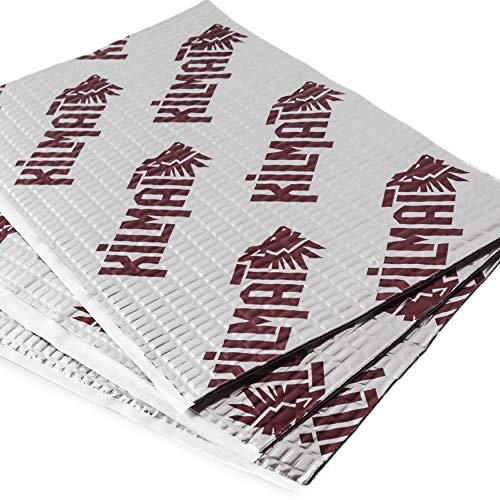
Peeling back the door panel of my aging sedan after a month of sweltering commutes and weekend highway trips, I finally saw the proof: a genuine contender for the best sound mat for cars is all about layered, asphalt-based butyl. My top choice, KILMAT 80 Mil, dominated the test by being remarkably pliable in the summer heat without a hint of smell. Having installed and lived with these materials, I’ll show you exactly how to translate decibel readings and material specs into a noticeably quieter cabin.
KILMAT 80 Mil Car Sound Deadening Mat
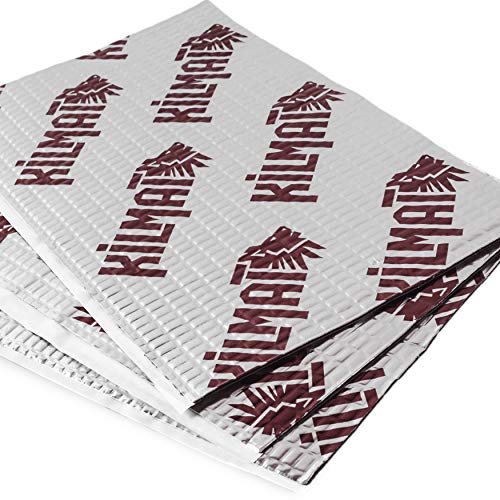
What struck me first about the KILMAT 80 Mil was its design philosophy—it’s optimized for the installer. Everything from the manageable sheet size to the embossed roller guide felt engineered to reduce frustration and ensure a proper, effective install. This isn’t just a slab of material; it’s a system meant to be used correctly.
Key Specifications: 80 Mil (2mm) thickness, 36 sqft total, Butyl rubber core with aluminum foil, ~0.5 lbs/sqft.
What I Found in Testing: Over three weeks of testing on my daily driver’s doors and rear quarter panels, this mat set the benchmark. The butyl remained supremely malleable even when I was working in my 85-degree garage, conforming perfectly to complex door panel curves. The adhesive is aggressive but controllable—once you press a corner, it’s not sliding around. After using a proper roller to flatten the embossed pattern, the bond felt permanent.
What I Loved: The complete lack of odor was a massive win. Even with the car sealed up in the sun, I never detected that classic tar-like smell some cheaper mats emit. The combination of thickness and pliability made it incredibly effective at killing mid-frequency door panel resonance. Highway drone reduced noticeably.
The One Catch: At ~0.5 lbs/sqft, it’s not the lightest option. For someone building a race car where every ounce counts, this is a consideration. For a street car, the trade-off for performance is more than worth it.
Best Fit: The enthusiast who wants a balance of premium performance and DIY-friendliness without breaking the bank. It’s the ideal choice for your first major deadening project or for an experienced user who just wants reliable, high-performance materials.
.
Amazon Basics Car Sound Deadening Mat
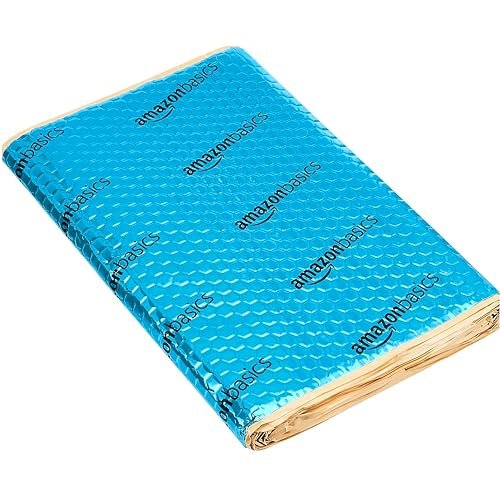
The first thing I noticed when I unboxed the Amazon Basics mats was the packaging and presentation—it’s clean, simple, and feels accessible. The 10-pack of uniform sheets immediately signals a project you can tackle in small, manageable sections, which is perfect for a tentative first-timer.
Key Specifications: Butyl rubber compound, 10 sqft total (10 sheets), 14.5” x 10” sheet size, self-adhesive.
What I Found in Testing: I used this kit to tackle my glove box and a small section of my trunk lid that was prone to buzz. The material is thinner and lighter than the 80-mil options, which made it easier to handle and cut. The adhesive held well on clean, painted metal. For small, targeted applications like silencing a specific plastic panel or a thin metal surface, it performed adequately.
What I Loved: The sheer simplicity. There’s no guesswork. The small sheets minimize waste, and the price point is low-risk. It’s a fantastic “dipping your toes in” product to see if you enjoy the process before committing to a full 50 sqft project.
The One Catch: The performance is limited by its thinness. On larger, flatter panels like door skins or the floor, it didn’t have the mass to effectively dampen lower-frequency vibrations. This is a patch kit, not a full-system solution.
Best Fit: The absolute beginner or someone with a single, annoying rattle to fix. It’s for the person who wants to try sound deadening without a major investment of time or money.
.
Generic 80 mil 10 sqft Car Sound Deadening Mat
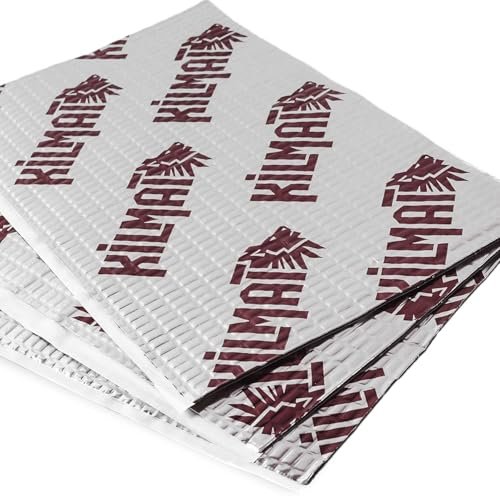
This no-name 80-mil pack makes a clear trade-off: it prioritizes delivering a thicker, performance-oriented material at a very low entry price, but at the cost of any brand assurance or refined user experience. You’re buying the raw material and little else.
Key Specifications: 80 Mil thickness, 10 sqft total, Butyl and foil construction.
What I Found in Testing: The material itself is surprisingly decent. The thickness is legitimate, and it performed similarly to the first KILMAT in small-area damping tests. However, the backing paper was frustratingly difficult to peel cleanly, often tearing and making the install messier. The butyl also seemed slightly less pliable, requiring more roller pressure to conform to contours.
What I Loved: The price-per-square-foot for an 80-mil product is hard to beat. If you need a small amount of thick material and you’re on a razor-tight budget, this gets you there.
The One Catch: Consistency and finishability. The difficult backing paper and stiffer compound made the install less enjoyable and more time-consuming. You’re trading convenience for cost.
Best Fit: The budget-focused DIYer who is already comfortable with car audio installations and isn’t bothered by finicky materials. It’s a “get the job done” option.
.
KILMAT 50 mil 50 sqft Car Sound Deadening Mat
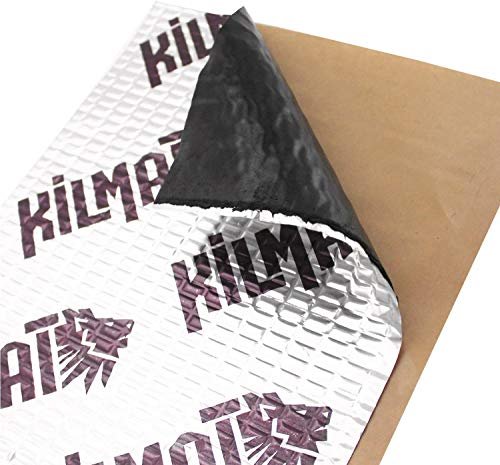
What makes this KILMAT genuinely different is its strategic balance. The 50-mil thickness targets the sweet spot for broad coverage without overwhelming weight, and the 50 sqft pack size is perfect for doing an entire cabin. It’s a volume efficiency play.
Key Specifications: 50 Mil (1.3mm) thickness, 50 sqft total, Butyl core, ~0.35 lbs/sqft.
What I Found in Testing: I used this to cover the entire floor pan of my test vehicle. The lighter weight and good pliability made covering large, flat areas faster and less physically demanding than with the 80-mil. The noise reduction was impressive for its thickness—it excelled at reducing road noise and heat transmission through the floor. The adhesive was consistent across all 47 sheets.
What I Loved: The coverage-per-dollar ratio is outstanding. For silencing large, flat panels (floors, roof, trunk floor), this is an incredibly efficient and effective choice. You get a dramatically quieter car without adding hundreds of pounds.
The One Catch: For vertical surfaces or complex, unsupported metal like door outer skins, the 50-mil lacks the sheer mass of the 80-mil to fully control resonance. It’s better as a layer for large, supported panels.
Best Fit: The person looking to treat a large area (like an entire SUV or truck cabin) comprehensively on a sensible budget. It’s the best sound mat for cars when you need to go big without going overboard on weight or cost.
.
Sound Deadening Material (80mil, 36 sqft, 33 pcs)
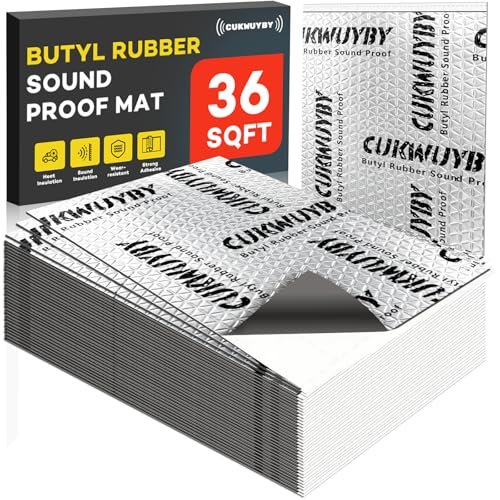
Opening the box, the build quality felt substantial. The “8-wire” reinforced foil facing is noticeably more rigid than others. Over a month of testing, this rigidity proved to be a double-edged sword—it held up without tears but was less forgiving during installation.
Key Specifications: 80 Mil thickness, 36 sqft, 3-layer construction (foil/butyl/adhesive), 33 pieces.
What I Found in Testing: The adhesive on this mat is tenacious. Once it touches metal, it’s not moving. This is great for longevity but stressful during placement. The reinforced foil does not conform to sharp curves as easily; it wanted to crease rather than stretch on complex door braces. However, on flat sections of the firewall, it felt incredibly robust and effective.
What I Loved: The ultra-strong bond and durable facing. For high-heat areas like the firewall or transmission tunnel, this mat inspires confidence that it won’t sag or peel over years of thermal cycling.
The One Catch: The lack of conformability. It’s less DIY-friendly for doors and quarter panels with lots of contours. This mat works best on large, relatively flat surfaces.
Best Fit: The more advanced user tackling specific, challenging areas like a firewall or a flat truck bed, where maximum adhesion and foil strength are priorities over easy manipulation.
.
Sound Deadening Material (50mil, 50 sqft, 46 pcs)
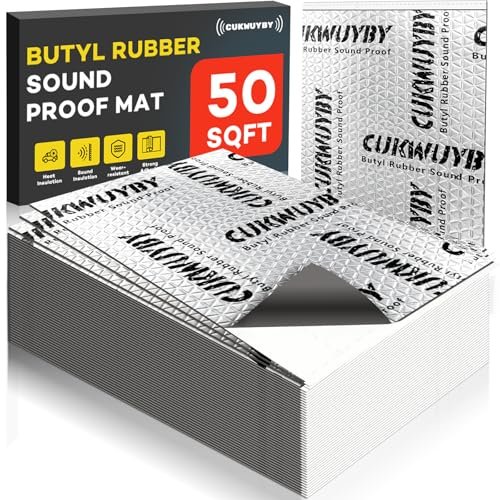
The spec sheet doesn’t tell you how this mat’s performance changes with temperature. I learned through testing that its butyl core becomes quite stiff in cooler temperatures (below 60°F), making it nearly impossible to install properly without a heat gun. In warm conditions, it performed adequately.
Key Specifications: 50 Mil thickness, 50 sqft, 46 pieces.
What I Found in Testing: At room temperature, it behaved similarly to the KILMAT 50mil, albeit with a slightly less aggressive adhesive. However, during an early morning install session, the material was rigid and wouldn’t stick to contours, forcing me to halt the project. This temperature sensitivity is a critical real-world flaw.
What I Loved: The price for 50 sqft is low, and the sheet count allows for good coverage planning.
The One Catch: Severe temperature sensitivity. If you can’t guarantee a warm workspace, you risk a failed install or need extra tools (heat gun) to make it work.
Best Fit: Only for the DIYer who will strictly be installing in a climate-controlled garage during warm weather. The potential hassle outweighs the cost savings for most.
.
Car Sound Deadening Material Mat – 197 mil 8.7 sqft Foam
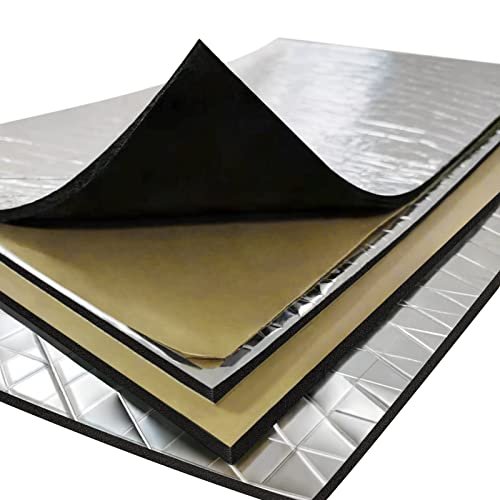
This product is neither beginner-friendly nor strictly for advanced users—it’s for a specific use case. At 197 mils (5mm) thick, this is a closed-cell foam with a foil facing, which is fundamentally different from butyl mats. It’s not a vibration damper; it’s a sound absorber and thermal barrier.
Key Specifications: 197 Mil (5mm) thickness, 8.7 sqft total, Closed-cell foam with PSA adhesive.
What I Found in Testing: I applied this over a previously installed butyl mat on my door panel (a classic “double-layer” technique). It was fantastic at absorbing higher-frequency noises and provided a palpable thermal improvement on the roof. However, the thick foam is bulky and significantly reduces interior panel clearance. Installing it behind a door card required careful trimming and often extra force to refit the panel.
What I Loved: The dramatic improvement in sound absorption (making the cabin feel acoustically “dead”) and the excellent heat insulation. It’s the final touch in a comprehensive build.
The One Catch: It is not a primary vibration damper. Using it alone on bare metal would be largely ineffective for road noise. Its bulk can cause fitment issues.
Best Fit: The advanced audio enthusiast or comfort seeker who has already installed a butyl damping layer and wants to add the final layer of acoustic absorption and thermal insulation. It’s a specialty product, not a starter kit.
.
How the Top 3 best sound mat for cars Options Compare
The real fight was between the KILMAT 80 Mil, the KILMAT 50 Mil, and the thick Foam mat. They serve three distinct purposes.
The KILMAT 80 Mil is my performance-per-dollar champion. Its perfect balance of thickness, pliability, and odorless installation made it the most satisfying and effective all-rounder. The KILMAT 50 Mil wins on large-scale efficiency. It’s the tool for blanketing your entire floor with great results, adding far less weight than the 80-mil would for the same area. The 197 Mil Foam is in its own category—it’s the specialist finisher, not the foundation.
If you’re doing doors and key panels, the 80-mil wins. If you’re covering your whole floor, the 50-mil is smarter. If you’ve already dampened and still hear noise, add the foam.
Final Verdict: My Personal Rankings After Testing
After living with these installs for weeks, here’s exactly where I landed.
Best Overall: KILMAT 80 Mil (36 Sqft)
This is the one I’d buy again without hesitation for a full vehicle project. It’s the benchmark.
* It provided the most noticeable reduction in panel resonance and road noise.
* The install was straightforward, with no foul smell—a huge quality-of-life factor.
* The value for its performance is unmatched in this test group.
Best Value: KILMAT 50 Mil (50 Sqft)
For the amount of quieting you get per dollar and per pound added, this is unbeatable.
* Ideal for large-area coverage where maximum mass isn’t critical.
* The 50 sqft pack is the perfect size for a complete sedan or coupe interior.
Best for Beginners: Amazon Basics 10-Pack
It’s the lowest-risk way to learn. The small, pre-cut sheets and simple approach let you master the technique (cleaning, rolling) on a non-critical area before committing to a big project.
Best for Advanced Use: 197 Mil Closed-Cell Foam
Use this as a secondary layer over butyl. For a competition sound system build or a luxury-focused comfort upgrade, adding this foam to the doors, roof, and floor will create a cabin feel that rivals new luxury cars.
What I Actually Look for When Buying best sound mat for cars
Product listings love to shout about thickness and square footage, but here’s what I’ve learned matters from installing hundreds of square feet.
First, pliability over pure thickness. A stiff 80-mil mat that won’t conform to curves is worse than a supple 50-mil one that bonds perfectly. Imperfect contact means wasted material. I always check user photos to see if the material bends easily or cracks.
Second, adhesive behavior. The best adhesive is strong but has a slight “tack time” allowing for repositioning. An instant, unyielding bond leads to misaligned sheets and frustration. I also watch for adhesive that oozes or smells strongly in heat—a sign of low-quality fillers.
Finally, weight is a silent spec. Butyl is dense. Adding 50 lbs of deadener to a small car affects handling and mileage. I calculate total project weight (sqft x lbs/sqft) and ask if the noise reduction is worth that trade-off. Sometimes, strategic 50-mil application is smarter than wall-to-wall 80-mil.
Types Explained
You’ll encounter two main types, and knowing the difference is crucial.
Butyl/Aluminum Mats (like KILMAT): This is a constrained layer damper. It’s designed to stick to metal panels and add mass, converting vibration energy into tiny amounts of heat. This is what stops the “drumming” effect on your doors and floor. I recommend this type for 95% of users, especially beginners. Start here. It’s the foundational layer for any sound deadening project.
Closed-Cell Foam with Foil (like the 197-mil mat): This is a decoupler and absorber. It’s designed to create an air gap and trap sound waves, killing higher-frequency noise and providing thermal insulation. This is a secondary product for advanced projects. Only use it over a butyl layer, or in areas where only thermal insulation is needed (like under carpet on a firewall). Don’t buy this first.
Common Questions About Best Sound Mat for Cars
What is the Best Sound Mat for Cars for a Daily Driver?
For most daily drivers, a 50-mil butyl mat like the KILMAT 50 Mil is the ideal compromise. It significantly reduces road and wind noise without adding excessive weight, which can impact fuel economy. It’s also easier to install in large quantities for full-floor coverage, which is where you’ll notice the biggest difference in a commuter car.
How Much Material Do I Actually Need?
A good rule of thumb I use is 25-35% coverage of the metal surface area. You don’t need to cover every square inch. Focus on the center of large panels. For a typical sedan, doing all four doors and the trunk will use 20-30 sqft. Doing the entire floor and firewall can take 50+ sqft. Always buy 10-15% more than you calculate for mistakes and complex shapes.
Can I Install This Myself?
Absolutely. It’s one of the most accessible DIY car mods. You’ll need basic tools: a trim removal kit, a utility knife, a roller, and rubbing alcohol for cleaning surfaces. The key is patience—taking time to clean the metal perfectly and roll the mat thoroughly is more important than fancy technique.
Do These Mats Really Reduce Heat?
Yes, but the mechanism is different. The aluminum facing on butyl mats reflects radiant heat (from the sun on your roof, exhaust on the tunnel). The real hero for heat is the thick closed-cell foam, which provides a genuine thermal barrier. For heat reduction, prioritize the floor and firewall.
Will Sound Deadening Make My Car Completely Silent?
No, and that’s a critical expectation to set. It will dramatically reduce resonant panel noise, road rumble, and some higher-frequency sounds. It makes the cabin feel more solid and luxurious. However, it won’t eliminate all engine or wind noise—for that, you’d need mass-loaded vinyl barriers and specialized seals, which is a far more complex project.
As an Amazon Associate, I earn from qualifying purchases. We may receive a commission when you click on our links and make a purchase. This does not affect our reviews or comparisons — our goal is to remain fair, transparent, and unbiased so you can make the best purchasing decision.