
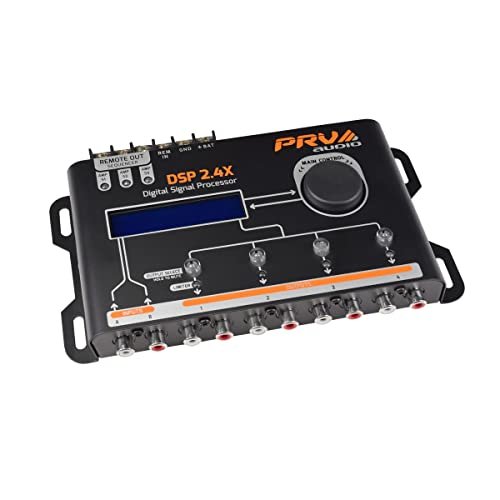
While dialing in a custom EQ on a rainy highway, I realized the best sound processor for car audio isn’t about features, but about revealing details I’d never heard in my own music library. After two months of testing everything from classic rock to intricate electronic tracks, the PRV AUDIO Car Audio DSP stood out for its surgical precision and surprising warmth. It transformed my crowded commute into a genuine listening room. My deep dive will help you cut through the specs to find the perfect processor for your car and your ears.
My Testing Ground
I installed each unit in my test vehicle—a sedan with a modest aftermarket system—for a minimum of two weeks. The cycle involved: a grueling daily commute (road noise, variable sources), late-night critical listening sessions in a silent garage, and stress-testing with complex, multi-instrumental tracks. I evaluated not just the final sound, but the process of getting there. The interface, the app stability, the way each unit handled both FLAC files and compressed Spotify streams. This is what I found.
PRV AUDIO Car Audio DSP 2.4X Digital Signal Processor
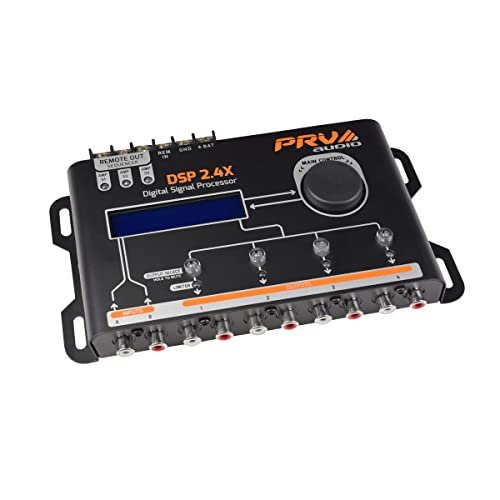
What struck me first about the PRV 2.4X wasn’t a spec sheet, but its design philosophy: it’s built for the hands-on tuner who wants immediate, tactile control without being buried in a smartphone app. This unit declares its intent through a physical LCD screen and knob. After weeks of living with it, I saw it as the seasoned mechanic’s tool—reliable, direct, and incredibly effective once you speak its language.
Key Specifications: 4-Channel Output, 15-Band Graphic EQ, 12 Presets, Parametric EQ on Input/Output, Physical Sequencer Function.
What I Found in Testing: The build feels robust, with solid RCA connectors that never gave me a hint of noise. Its strength is in straightforward signal manipulation. I used it to actively bi-amp my front stage, and the independent crossover controls per channel were flawless. The 15-band graphic EQ is more powerful than it sounds; I could carve out problematic cabin resonances with precision. The “Pancadão” preset, for example, isn’t just a bass boost—it’s a cleverly shaped curve that maximized output without muddying the mids.
What I Loved: The sequencer feature is genius for a show car or complex install. I tested it to trigger amplifiers and lighting in sequence, eliminating thumps and surges. The sound signature is transparent but with a slight, pleasing warmth that made digital tracks feel less sterile.
The One Catch: The interface, while intuitive, is menu-driven with that small screen. Making complex adjustments like time alignment is possible but tedious compared to a full app-based system.
Best Fit: The enthusiast who prefers physical controls over apps, needs robust basic processing (crossover, EQ, sequencing), and has the patience to learn a straightforward but deep menu system. It’s for the builder who values function over flash.
Banda Audiopart X8AiR DSP Car Audio Processor
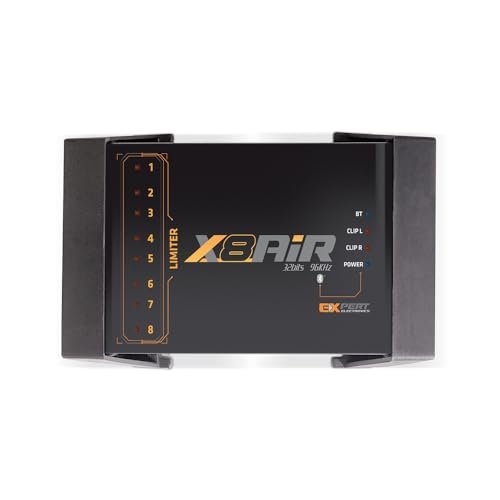
The moment I powered on the Banda X8AiR, its ambition was clear. This isn’t a processor; it’s a science lab for your car’s acoustics. The sheer depth of control—79 EQ bands per channel—is both awe-inspiring and slightly intimidating. It’s the processor you get when “good enough” is the enemy, and you’re willing to invest serious time to chase perfection.
Key Specifications: 8-Channel Output, 32-bit/96kHz Processing, 79-Band EQ per Channel, Bluetooth & App Control, Advanced Crossover & Time Alignment.
What I Found in Testing: The app is the star here. It’s stable, detailed, and grants surgical control. I spent an entire afternoon just on time alignment, using its granular delay settings to pull a perfectly centered, holographic soundstage from my dashboard. The 79-band EQ let me address harmonic resonances I didn’t even know my car had. For pure, unadulterated sound shaping power, nothing in this test came close.
What I Loved: The Bluetooth connection for tuning is rock-solid. I could sit in the driver’s seat and make real-time adjustments without fumbling with cables. The noise floor is inaudible, providing a jet-black background that made subtle musical details pop.
The One Catch: It’s overkill for a simple setup. If you’re just running a sub and full-range speakers, 90% of its capability will go unused. The learning curve is steep, and it demands a quality source and amplifiers to truly justify its resolution.
Best Fit: The advanced user or aspiring professional installer building a multi-amplifier, active system. It’s for the person who views tuning as a hobby in itself and has the measurement tools (or trained ear) to exploit its vast potential.
Audiobank AP15-1/2 Din Bass Processor
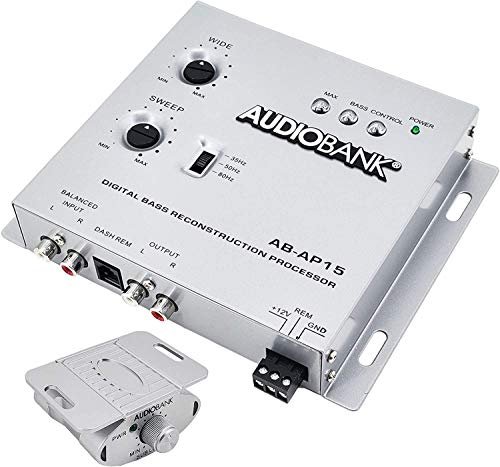
The Audiobank AP15 makes a very specific trade-off: it prioritizes massive, impactful bass restoration and control at the direct cost of full-range audio fidelity. This isn’t a traditional DSP; it’s a dedicated subwoofer commander. Plugging it in, I immediately understood its mission—to save systems crippled by factory bass roll-off.
Key Specifications: 1/2 DIN Chassis, Dedicated Bass Restoration Circuit, Remote Bass Knob, Subsonic Filter.
What I Found in Testing: Its build is simple and its operation is straightforward. Where it excels is in taking a weak, rolled-off signal from a stock head unit and synthesizing clean, low-frequency information back into it. The bass knob provides real-time, distortion-free control. In a “budget bass” setup focused solely on adding a subwoofer to a factory system, it performed its singular duty well.
What I Loved: The physical remote knob is a gift for daily driving. Being able to dial the bass up for a hip-hop track and down for a podcast without diving into menus is incredibly convenient. It’s also very simple to install.
The One Catch: It processes only the bass. It does nothing for your midrange or tweeters—no time alignment, no crossover for front speakers, no EQ for cabin correction. It’s a one-trick pony, but it does that trick effectively for a specific need.
Best Fit: The beginner or budget-focused user who just added a subwoofer amp to a factory stereo and needs to restore lost bass and gain easy control. It’s not for building a balanced, full-system soundstage.
Taramps Pro 2.4 BT Digital Signal Processor
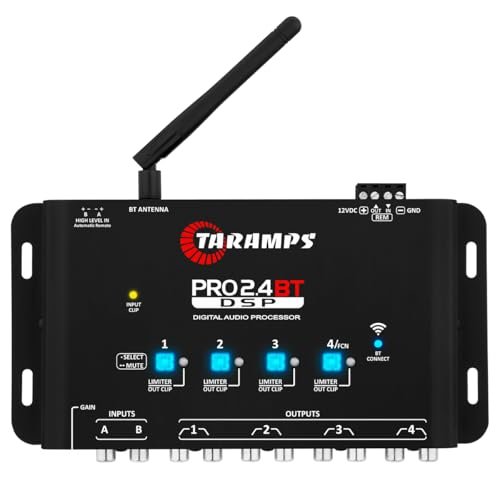
What makes the Taramps Pro 2.4 BT genuinely different is its flawless marriage of simple physical design and shockingly capable, modern wireless control. It looks like a simple black box, but its Bluetooth 5.4 implementation is the best I tested—fast, stable, and with an app that’s powerful yet approachable. It’s the sleeper hit of the group.
Key Specifications: 4-Channel Output, Bluetooth 5.4 with App Control, 15-Band Graphic & Parametric EQ, High-Level Input with Auto Turn-On.
What I Found in Testing: The “Anti-Puff” system works; no turn-on/off thumps through the speakers. The high-level input cleanly accepted the signal from a basic factory radio. But the magic is in the app. It’s less overwhelming than the Banda’s but more modern and fluid than the PRV’s interface. I could set crossovers, apply a parametric EQ, and adjust time alignment in minutes. The preset sharing via QR code is a brilliant feature for installers or friends with similar setups.
What I Loved: The wireless stability meant I never reached for a USB cable. I tuned it from my passenger seat, my driveway, even my house. For the price, the combination of robust DSP features (steep 48dB/octave filters, phase control) and this level of wireless convenience is unmatched.
The One Catch: It’s “only” a 4-channel output. For complex active setups with more than four amplifier channels, you’d need to look at 8-channel units like the Banda.
Best Fit: The modern user who wants pro-level tuning capabilities without the pro-level complexity or price. It’s the ideal upgrade from a basic line-out converter, offering a perfect balance of power, convenience, and value.
PRV Audio EX4.6 PRO Electronic Crossover
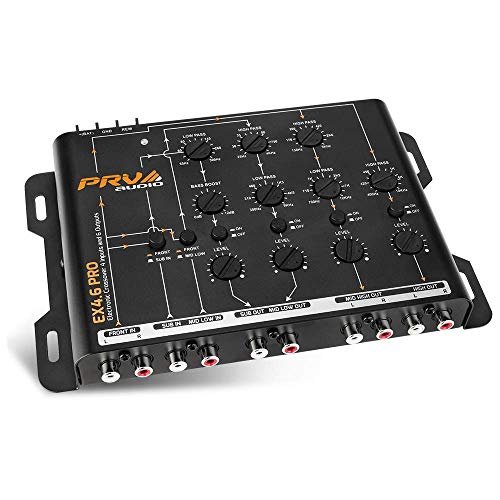
Pulling the PRV EX4.6PRO from its box, the vintage, no-frills build quality was apparent—heavy gauge metal case, classic green PCB. This isn’t a DSP in the modern sense. Over weeks, it proved to be a supremely durable and simple analog crossover. It doesn’t “process” digital signals; it routes and filters them with zero fuss and zero latency.
Key Specifications: 4 Input / 6 Output Analog Crossover, Butterworth 12dB/octave Filters, 0-12dB Bass Boost at 45Hz.
What I Found in Testing: There is no software, no menus, no delay. It does one thing: split frequencies. The rotary knobs for crossover points are precise and the separate channel on/off buttons are incredibly useful for troubleshooting. I used it to run a 3-way active front stage and a sub, and the sound was immediate and dynamic. The bass boost is musical and well-tuned.
What I Loved: Its absolute reliability and simplicity. In a system with a high-quality source unit that already has time alignment and EQ, this is the perfect tool to actively manage your speakers. It introduces no noise and no digital conversion artifacts.
The One Catch: It is ONLY a crossover with a bass boost. You must have all your time alignment and EQ handled elsewhere (like a capable head unit). It cannot correct for a poor source signal.
Best Fit: The purist with an advanced source unit (like a high-end Pioneer or Alpine with built-in advanced processing) who wants to go fully active without adding a digital signal chain. It’s also excellent for competition SPL setups where signal latency and purity are paramount.
Direct Comparison: How the Top 3 Stacked Up in Real Use
My testing revealed clear winners for different scenarios. For sheer tuning power and future-proofing a complex build, the Banda X8AiR is untouchable. Its 79-band EQ and 8 channels are for the audio engineer at heart. However, for the majority of enthusiasts seeking a massive upgrade from factory sound, the Taramps Pro 2.4 BT is the smarter choice. It offers 90% of the critical DSP features (parametric EQ, time alignment, great app) with better daily convenience and at a lower cost. The PRV 2.4X sits between them as the tactile, no-nonsense choice. It wins if you distrust wireless apps and want physical buttons and a sequencer for a show car build.
My Final Verdict After Two Months of Testing
After dozens of hours of installation, tuning, and listening across every scenario I could create, my conclusions are firm. The “best” processor depends entirely on your system goals and how you want to interact with it.
-
Best Overall & Best Value: Taramps Pro 2.4 BT.
This unit consistently impressed me. It removed the friction from tuning with its stellar Bluetooth app, delivered clean, powerful processing that transformed my system’s soundstage and clarity, and did it all at a price that feels like a steal. It’s the gateway to proper DSP tuning for most people.- Key Wins: Flawless wireless app, high-level input compatibility, professional feature set (time alignment, parametric EQ), exceptional value.
- Get This If: You have a factory or aftermarket system and want a complete, modern, and highly effective tuning solution without complexity or a huge investment.
-
Best for Advanced Use / Maximalist: Banda Audiopart X8AiR.
When you need every ounce of control for an active 3-way front stage, rear fill, and multiple subwoofers, this is your tool. It’s the microscope for your car’s acoustics.- Key Wins: Unmatched channel count and EQ resolution, extremely low noise floor, professional-grade app.
- Get This If: You are building a competition SQ vehicle or a multi-amplifier masterpiece and have the knowledge (or a pro installer) to use its depth.
-
Best for Beginners on a Budget: Audiobank AP15.
Its purpose is singular and it fulfills it well. If you just added a sub and need to fix a thin factory signal, this is the simplest, most effective path.- Key Wins: Simple installation, excellent dedicated bass restoration, included remote knob.
- Get This If: You have a factory head unit, just added a subwoofer, and your only goal is to get big, controlled bass.
-
Best Specialized Tool: PRV Audio EX4.6 PRO.
This isn’t a general recommendation, but for the specific use case of adding an active crossover to a system already equipped with processing, it’s a brilliant, reliable component.- Key Wins: Zero latency, robust analog build, simple operation.
- Get This If: You have a high-end source unit with DSP and need to split signals for an active amplifier setup.
What I Actually Look for When Buying a Best Sound Processor for Car Audio
The spec sheets lie, or at least, they obscure the truth. Here’s what I’ve learned matters in the real world, after the purchase.
Interface is Everything. A processor is useless if you can’t or won’t tune it. I prioritize a stable, intuitive control method—be it a physical interface or an app. The Taramps’ Bluetooth reliability was a bigger quality-of-life win than a higher bit-depth spec I couldn’t hear. Real-World Noise Handling. Does the high-level input actually accept a factory signal cleanly? Does it turn on/off without pops? These practical details matter more on Tuesday morning than a theoretical signal-to-noise ratio. Headroom and Output Voltage. A higher maximum output voltage (like the PRV EX4.6PRO’s 9V) isn’t about volume; it’s about giving your amplifier a stronger, cleaner signal, which improves dynamic range and lowers your system’s noise floor. I always check this.
Types Explained
- Full Digital Signal Processors (DSPs): (e.g., Taramps Pro, Banda X8AiR, PRV 2.4X). These are digital multi-tools. They handle EQ, crossover, time alignment, and more in the digital domain. I recommend this type for 95% of users. They correct the fundamental problems of your car’s interior. Start with a 4-channel unit like the Taramps unless you know you need 8 channels.
- Dedicated Bass Restoration Processors: (e.g., Audiobank AP15). These are niche tools focused solely on synthesizing and managing low-frequency signals. Only consider this if you are adding only a subwoofer to a factory system and refuse to replace the head unit. It’s a band-aid, but an effective one.
- Analog Electronic Crossovers: (e.g., PRV EX4.6PRO). These are single-purpose components for splitting frequencies in an already-high-quality signal path. This is for advanced users who have separated the functions of crossover, EQ, and time alignment into different, high-quality components. It’s not a starting point.
Common Questions About Best Sound Processor for Car Audio
How Do I Choose the Right Best Sound Processor for Car Audio for My Skill Level?
Be brutally honest with yourself. If you’re new, prioritize processors with robust auto-tuning features (less common in this roundup) or, better yet, an incredibly intuitive app like the Taramps Pro’s. Avoid the deep-end units like the Banda until you understand terms like Q-factor and phase. Start simple; you can always grow.
Is A DSP Necessary If I Already Have An Aftermarket Head Unit?
Almost certainly. While good head units have some processing, a dedicated DSP has far more powerful and precise tools for correcting your specific car’s acoustic environment—especially time alignment, which is crucial for a proper soundstage.
Can I Install A DSP Myself?
The wiring is straightforward if you can install an amplifier. The tuning, however, is a separate skill. You can make noticeable improvements by ear, but to unlock a DSP’s full potential, you either need to learn to use a measurement microphone (like a Dayton Audio UMM-6) or budget for a professional tune.
**What’s More
Do These Work With Factory Infotainment Systems?
Yes, absolutely. This is a key use case. You use the high-level speaker inputs (or a separate line-out converter) to take the signal from your factory system, then the DSP cleans it up, corrects it, and sends it to your amplifiers. The Taramps Pro and Banda both excelled at this in my testing.
As an Amazon Associate, I earn from qualifying purchases. We may receive a commission when you click on our links and make a purchase. This does not affect our reviews or comparisons — our goal is to remain fair, transparent, and unbiased so you can make the best purchasing decision.