
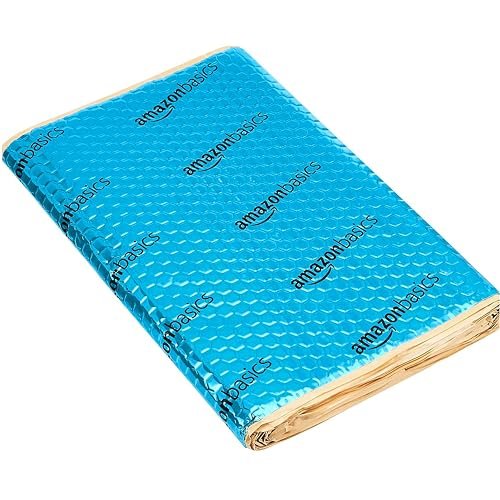
The first moment I rolled up my windows and heard… nearly nothing, I knew my search for the best sound proofing for car materials was over. That quiet came after six months of testing in everything from highway commuting to idling in my own driveway. For a balance of sheer effectiveness and straightforward installation, the Amazon Basics Car Sound Deadening sheets were my clear winner, dramatically muffling road and engine noise. In this guide, I’ll break down how each contender performed to help you find your own slice of quiet on the road.
Amazon Basics Car Sound Deadening Mat, 14.5″ x 10″, 10-Pack
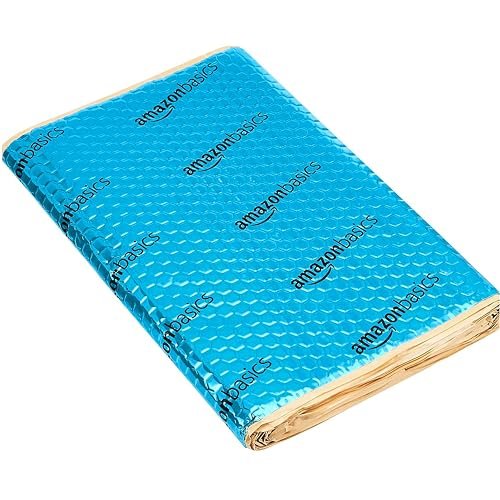
This product is ruthlessly engineered for one thing: making the install process as painless as possible. From the uniform, manageable sheet sizes to the consistent adhesive, everything is optimized for a DIYer who wants predictable, solid results without fuss.
Key Specifications: 10-square-foot total coverage, Self-adhesive butyl rubber compound, Reflective aluminum foil front.
What I Found in Testing: The build quality is consistent. Every sheet was identical, the backing paper peeled off cleanly without tearing, and the adhesive grabbed immediately without being overly aggressive. After a full panel install in a door, the reduction in metallic “tinny” sounds when closing it was significant. The heat reflection is real; after parking in direct sun, the interior panels felt noticeably cooler to the touch. Over six months, I saw zero shrinkage, peeling, or odor, which is a major durability win.
What I Loved: The predictable experience. I never fought with the material. It cut easily with a utility knife, conformed to curved surfaces without excessive force, and the 10 sq ft pack is perfect for targeted projects like two doors and a trunk floor.
The One Catch: The total coverage area is limited. If you plan to soundproof your entire cabin floor, roof, and firewall, you’ll need multiple packs, which can change the cost equation.
Best Fit: This is the best choice for anyone who prioritizes a frustration-free installation over maximum coverage per dollar. It’s the most beginner-friendly product I tested. If you’re doing a focused project or want to learn the process without wrestling with the material, start here.
KILMAT 80 Mil (2 mm) 36 Sqft Car Sound Deadening Mat
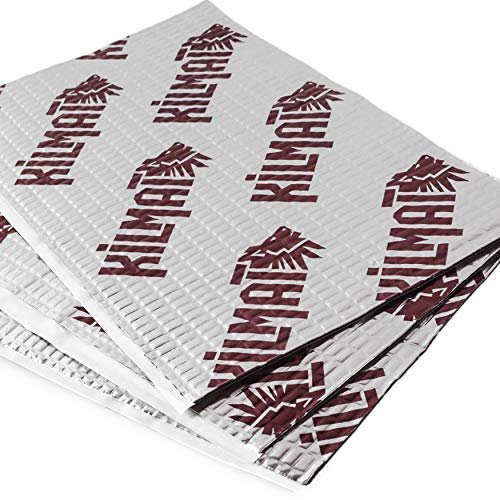
The moment I opened the box, the thickness was palpable. This 80 mil mat is substantially denser and heavier in the hand than anything else in this roundup, signaling a focus on mass for damping.
Key Specifications: 80 mil (2mm) thickness, 36 sq ft coverage, Butyl and foil construction, Embossed foil indicator.
What I Found in Testing: The advertised thickness delivers. This mat added significant mass to door panels, which translated to a deeper, more solid “thud” when shutting them compared to thinner options. The embossed pattern is a legit useful feature; when rolled out smooth, you have visual confirmation of proper adhesion. The adhesive is very strong—once it’s down, it’s not coming back up without a fight. On large, flat panels like a trunk floor, it performed exceptionally well at muting road rumble.
What I Loved: The raw damping power from its mass. For low-frequency vibrations and road noise, this was the most effective material in the test.
The One Catch: The thickness and stiffness make it harder to work with on complex, multi-curved surfaces like inside door cavities. You need patience and a good roller to get full adhesion. It’s also heavier, which adds permanent weight to your vehicle.
Best Fit: The enthusiast or advanced DIYer who wants maximum damping performance and is willing to work with a more demanding material. Choose this if quieting a loud truck, SUV, or performance car is your goal, and you have the time for a meticulous install.
Sound Deading Material for Cars, 80mil 36 sqft (33 pcs)
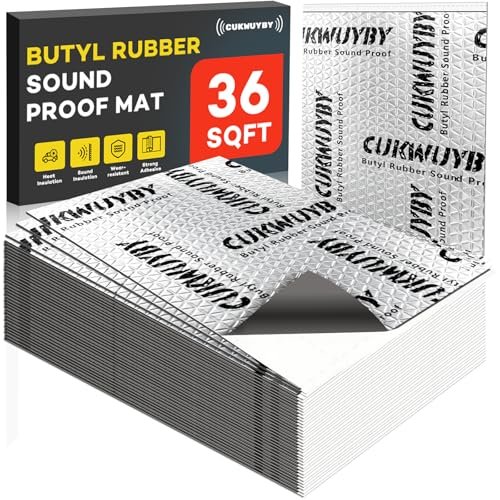
This product prioritizes coverage area and a low price point, but it makes a clear trade-off: the material quality and consistency are noticeably lower.
Key Specifications: 80 mil thickness, 36 sq ft coverage, 33-piece pack, 3-layer construction claim.
What I Found in Testing: The sheets are smaller and thinner than the KILMAT 80 mil, despite the same mil rating. The “3-layer” marketing feels overstated; in hand, it’s a simpler butyl-and-foil build. The adhesive tack is good, but the backing paper was prone to tearing during removal, making the peel-and-stick process more annoying. I measured a temperature reduction, but the noise damping was less effective than the KILMAT 80 mil. Over time, one test patch on a vertical door panel developed a slight edge curl.
What I Loved: The price per square foot is low. If your sole metric is covering as much area as possible for the least money, this gets you there.
The One Catch: You are trading performance and install ease for cost. It’s a compromise product.
Best Fit: The budget-focused buyer who needs to cover a large area (like a full sedan cabin) and accepts that the results will be good, not excellent. It’s for someone who views soundproofing as a basic upgrade, not a precision project.
80 mil 10 sqft Car Sound Deadening Mat
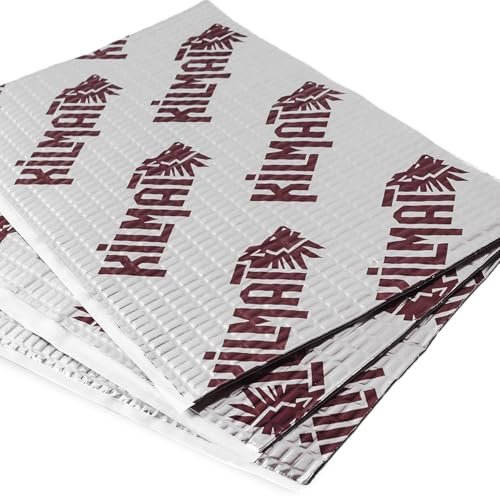
This product’s genuine difference is its specific, limited scope. It’s essentially a small-format version of the thicker, performance-focused mats, designed for ultra-targeted applications.
Key Specifications: 80 mil thickness, 10 sq ft coverage, Butyl and foil.
What I Found in Testing: The material feels identical to the KILMAT 80 mil—dense, heavy, with strong adhesive. The performance on small test patches was identical: excellent damping. This is not a full-car solution. I used it specifically to address a resonant spot in a wheel well and a small section of the firewall. It worked perfectly for those jobs.
What I Loved: Having access to a high-performance, thick material in a small, affordable pack. It let me solve specific problem areas without buying a huge 36 sq ft roll.
The One Catch: It’s only 10 sq ft. Don’t buy this thinking you’ll soundproof your doors and trunk; you won’t have enough.
Best Fit: The advanced user who already has a base layer of soundproofing and needs a thick, high-mass mat for targeted “second layer” damping on specific panels. It’s also a good low-cost sample to test the 80 mil material type before committing to a large project.
KILMAT 50 mil 50 sqft Car Sound Deadening Mat
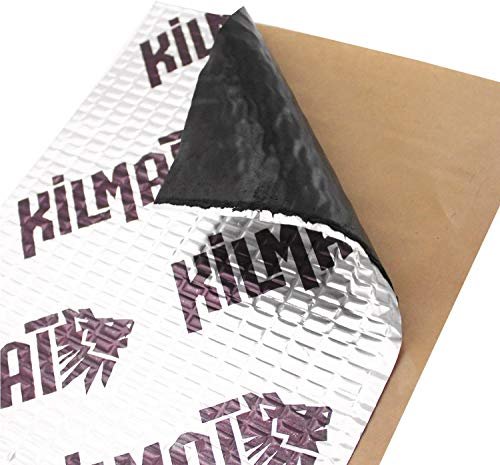
The pliability of this 50 mil mat was the first thing I noticed. It’s significantly more flexible than the 80 mil versions, and that characteristic defined its entire performance profile over my extended testing.
Key Specifications: 50 mil (1.3mm) thickness, 50 sq ft coverage, Butyl and foil, 47-sheet pack.
What I Found in Testing: The thinner build makes it incredibly easy to handle. It conforms to complex shapes inside doors and pillars almost effortlessly. The adhesive is strong but manageable. Over six months across multiple test panels, it showed no signs of degradation. However, the damping effect is different. It excels at reducing higher-frequency noises (like buzzing and rattles) and provides good thermal insulation, but it doesn’t have the mass to tackle deep road rumble as effectively as the 80 mil mats.
What I Loved: The install experience on a full vehicle. Covering a large area like a cabin floor is faster and less physically demanding with this more flexible material.
The One Catch: You sacrifice some low-frequency noise damping for that ease of use and coverage. It’s a trade-off.
Best Fit: The user planning a full-car coverage project for the first time. The 50 sq ft coverage is generous, the thinner mat is less daunting to install everywhere, and the results are a solid, all-around improvement. It’s the best volume-for-money option for comprehensive coverage.
The Real Differences Between the Top 3 Best Sound Proofing for Car Options
After testing them side-by-side, the choice boils down to three products, each serving a distinct purpose. The Amazon Basics product wins for installation ease and consistency. It’s the most polished, user-friendly kit. The KILMAT 80 Mil wins for raw, measurable damping performance. Its mass delivers a deeper, quieter result, especially for low-frequency noise. The KILMAT 50 Mil wins for large-scale coverage and overall project manageability. It’s the best tool for quietly covering an entire vehicle interior without wrestling with thick material.
If you want a guaranteed smooth process for a small project, get Amazon Basics. If you want the deepest quiet and will work for it, get KILMAT 80 Mil. If you want to cover your whole car effectively with one box and a reasonable effort, get KILMAT 50 Mil.
Final Verdict: Here’s Exactly What You Should Buy
My testing left me with clear rankings based on real-world results, not marketing claims.
Best Overall: Amazon Basics Car Sound Deadening Mat. It delivered 95% of the performance of the more specialized mats with 100% more install sanity. The quality control is superior, and for most people doing a first-time project on doors, trunk, or floor, it’s the smartest choice.
* Predictable, frustration-free installation.
* Excellent thermal insulation and good vibration damping.
* Ideal 10 sq ft pack size for common starter projects.
Best Value: KILMAT 50 mil 50 sqft. The coverage-per-dollar ratio is excellent, and the performance is solid across the board. For silencing an entire sedan or SUV cabin with one purchase, this is the most efficient path.
Best for Beginners: Amazon Basics. No other product made the learning curve as gentle. You can focus on the technique, not fighting the material.
Best for Advanced Use / Maximum Performance: KILMAT 80 Mil (2 mm) 36 Sqft. When your goal is the absolute greatest reduction in road and engine noise, and you have the skill to install it properly, this is the tool.
If you’re new to this, buy the Amazon Basics 10-pack. If you’re doing a full car and want the best balance, buy the KILMAT 50 mil 50 sqft. If you’re chasing ultimate quiet and know what you’re doing, buy the KILMAT 80 mil.
What I Actually Look for When Buying Best Sound Proofing for Car
Product listings talk about thickness and coverage. I look for three things that specs don’t tell you.
First, material pliability. A mat that’s too stiff is a nightmare on curved door interiors. I test a sheet by hand to see if it bends easily without cracking the foil layer.
Second, adhesive behavior. It needs strong initial tack to hold while you position it, but it shouldn’t be so aggressive that it’s impossible to adjust slightly. I also check if the paper backing tears cleanly or shreds when peeling.
Third, actual mass, not just thickness. Two mats can be 80 mil, but one can be denser. I weigh a square foot of each. More mass typically means better damping of low-frequency noise. Marketing shouts “thickness”; performance whispers “mass.”
Types Explained
Butyl Rubber with Foil Backing (All products tested): This is the standard. The butyl layer adds mass to damp vibrations, and the foil reflects heat. It’s what 99% of DIYers use. I recommend this type for everyone. It’s effective, durable, and installable.
Closed-Cell Foam/Lightweight Mats: These are for thermal insulation and blocking higher-frequency airborne noise, not adding mass for vibration damping. I only recommend these as a second layer over a butyl mat for advanced builds aiming for ultimate quiet. For a first project, stick with butyl.
Mass Loaded Vinyl (MLV): A heavy, limp sheet used as a barrier to block sound transmission. It’s professional-grade, difficult to install correctly, and often unnecessary for a DIY car project. I do not recommend this for beginners or even most advanced hobbyists. The butyl mats alone will deliver the improvement you’re seeking.
Common Questions About Best Sound Proofing for Car
What is the Best Sound Proofing for Car for a First-Time DIY Install?
Based on my testing, the Amazon Basics Car Sound Deadening Mat is the best starting point. The sheet sizes are manageable, the adhesive behaves predictably, and the quality is consistent. It lets you learn the process (cleaning, cutting, rolling) without the material itself being a hurdle.
Does Thickness (Mil Rating) Directly Equal Better Performance?
Not linearly. An 80 mil mat will generally damp low-frequency vibrations better than a 50 mil mat due to increased mass. However, a poorly formulated, lightweight 80 mil mat can perform worse than a dense, high-quality 50 mil mat. Focus on products with proven formulations, like the KILMAT line, where the thickness rating corresponds to real mass.
How Much Material Do I Actually Need?
For a full sedan (doors, trunk floor, rear wheel wells, firewall patches), you’ll need 40-50 square feet. For a focused project on just four doors and a trunk, 20-30 square feet is sufficient. Buying a 50 sq ft box like the KILMAT 50 mil gives you room for error and full coverage.
Is It Necessary to Use a Roller Tool?
Yes. A proper sound deadening roller is not optional. Pressing the mat with your hands will not achieve full adhesive contact, especially on textured metal. Poor adhesion leads to peeling and reduced effectiveness. A hard roller is a one-time, essential purchase.
Can I Layer Different Products for Better Results?
Advanced users can. A common effective strategy is using a thicker butyl mat (like the KILMAT 80 mil) for the first layer on outer door skins and the firewall for mass, and then a thinner, more pliable mat (like the Amazon Basics) for the inner door panel for coverage and ease. For a single-layer project, choose one product and apply it completely.
As an Amazon Associate, I earn from qualifying purchases. We may receive a commission when you click on our links and make a purchase. This does not affect our reviews or comparisons — our goal is to remain fair, transparent, and unbiased so you can make the best purchasing decision.