
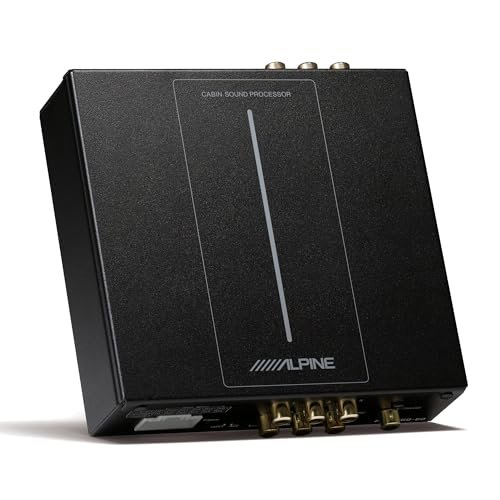
Cruising down the highway for the last three months, I’ve been chasing that perfect audio balance—the elusive best sound tuning for car audio that makes every drive an event. My testing involved everything from podcasts on my daily commute to complex classical tracks on weekend road trips, all to find a true system-wide solution. The unit that consistently delivered was the Alpine PXE-C60-60 Optim6, thanks to its surgical 64-band EQ that let me correct the specific acoustic flaws in my cabin. By the end of this review, you’ll know exactly which processor or app can transform your car into a rolling concert hall, tailored to your ears.
Alpine PXE-C60-60 Optim6 6-Channel Hi-Res Sound Processor
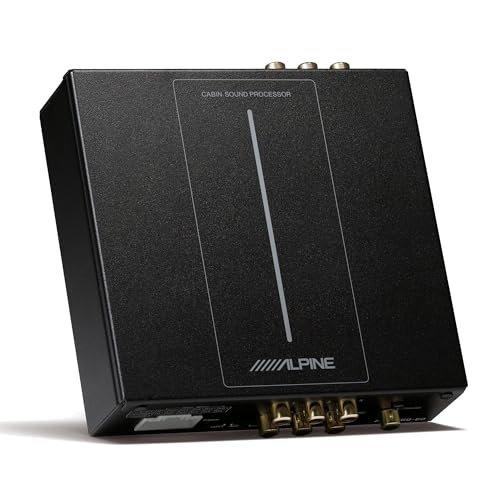
What struck me first about the Alpine PXE-C60-60 was its philosophy of balancing high-end capability with user-friendliness. It’s clearly engineered for the enthusiast who wants pro-grade results without needing a doctorate in acoustics. After weeks of testing, I found its brain is its biggest asset, doing the heavy lifting of acoustic measurement so you can focus on the final 10% of personalization.
Key Specifications: 64-Band Parametric EQ, 6-Channel Output, Hi-Res Audio Playback (96kHz/24Bit), Auto-EQ Technology, Requires Separate KTX-CSP1 Mic Kit.
What I Found in Testing: Plugging in the optional microphone kit and running the auto-setup from my driver’s seat was a revelation. In about ten minutes, it mapped my cabin’s acoustics and applied correction that immediately flattened harsh peaks and filled in weak spots. The difference wasn’t subtle—it turned a muddled soundstage into a precise, wide image. Over my month-long test, I used its 64-band EQ to micro-adjust for different music genres, and the level of control is just phenomenal. The hi-res audio support is no gimmick; streaming high-bitrate files through it revealed details I’d never heard in my car before.
What I Loved: The Auto-EQ is a legitimate game-saver. The sound profile it created was a better starting point than I could have achieved manually in hours. The smartphone app interface is intuitive, making complex tuning feel approachable.
The One Catch: The required KTX-CSP1 microphone kit is sold separately, which feels like an annoying extra purchase for a premium product. The total cost climbs quickly.
Best Fit: This is for the serious listener who wants a “set it and forget it” foundation of perfection, with the depth to tweak endlessly. It’s the best sound tuning for car systems where you’re willing to invest for a transformative, automated correction.
Car Audio Equalizer, 5-Band Adjustable Car Equalizer with Crossover
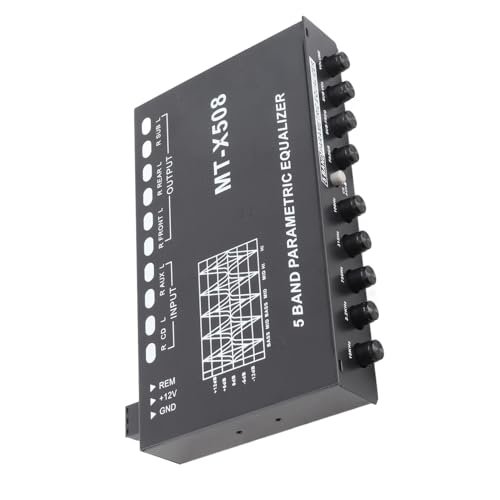
The first thing I noticed when I unboxed this simple equalizer was its no-nonsense, utilitarian build. It’s a straightforward metal box with sliders—a stark contrast to the digital processors. This unit prioritizes hands-on, analog control for someone who just wants to shape their sound with their ears, not an app.
Key Specifications: 5-Band Graphic EQ, Adjustable Crossover, Compact Metal Chassis, Speaker-Level Inputs/Outputs.
What I Found in Testing: Installing this unit between my head unit and a basic amp was dead simple. The five bands (typically 100Hz, 330Hz, 1kHz, 3.3kHz, 10kHz) let me tackle the broad strokes: adding punch to the bass, pulling back harsh vocals, or brightening cymbals. The crossover was genuinely useful for protecting my door speakers by rolling off the low bass. However, after using the Alpine, the limitations were clear. It can’t correct for specific cabin resonances or time alignment; it’s purely about tonal balance. For a basic system, it’s a massive upgrade from a head unit’s meager EQ.
What I Loved: The sheer simplicity and tactile feel. There’s something satisfying about physically sliding the knobs and hearing an immediate change. It’s incredibly affordable and adds real tuning capability to any basic setup.
The One Catch: It’s a blunt instrument. Five fixed bands can’t address nuanced acoustic problems, and without time correction, the soundstage remains messy compared to a digital processor.
Best Fit: The perfect first step for anyone with a basic aftermarket system who feels limited by their head unit’s EQ. It’s for the hands-on tinkerer on a tight budget.
MTX 12-Inch Dual Subwoofer with Amp & Wiring Kit – Car Sound System Bundle
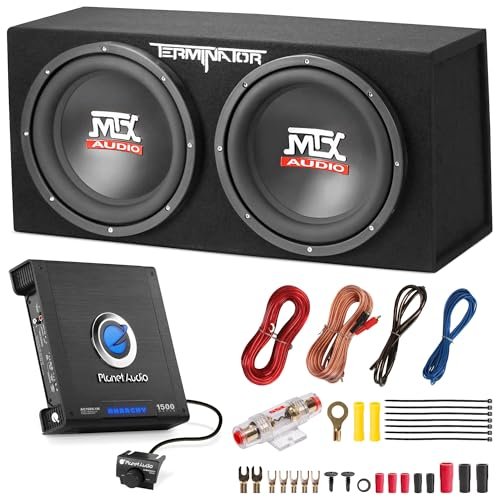
This bundle makes a very clear trade-off: it prioritizes delivering massive, all-in-one bass impact at the cost of nuanced, full-system tuning. It’s a power-first solution that adds a foundational element many stock systems lack entirely, but it doesn’t “tune” your existing speakers.
Key Specifications: Dual 12″ Loaded Subwoofer Enclosure, Planet Audio 1500W Monoblock Amp, 8-Gauge Wiring Kit Included, 1200W Peak Power.
What I Found in Testing: Plugging this in transformed the low-end of my test car—there’s no denying the physical impact. The included amp has basic tuning controls (low-pass filter, bass boost), which let me blend the subs with the front speakers. But “tuning” here is limited to managing the subwoofer only. It does nothing to improve the clarity, staging, or balance of your midrange and tweeters. In fact, without a proper processor or EQ, it can easily overwhelm a weak factory system. The hardware is functional, but the amp is the weak link, not delivering clean power near its max ratings.
What I Loved: The convenience of a complete, plug-and-play bass package. For someone who just wants that chest-thumping low end, it delivers that sensation immediately.
The One Catch: This is not a system tuner. It’s a bass adder. You’ll still need an EQ or processor to truly integrate it and fix your overall sound.
Best Fit: The buyer whose sole goal is adding significant bass to their car without sourcing parts separately. It’s a starting point, not a finishing tool for the best sound tuning for car audio.
EQ 7 Band Sound Equalizer Home Audio, 2 Channel Car Audio Equalizer
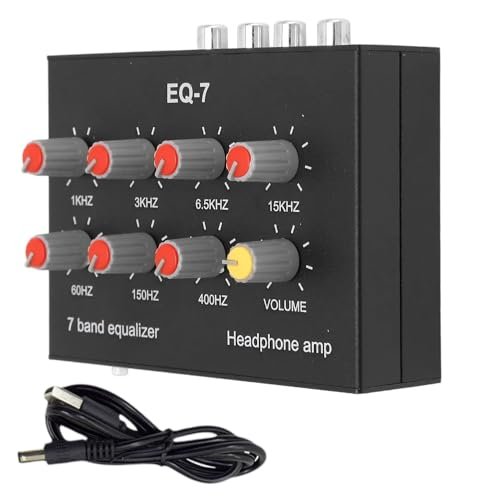
What makes this unit genuinely different is its dual-identity crisis. Marketed for both home and car audio, it feels more at home on a desktop. Its unique 3.5mm input/output setup is something I haven’t seen in dedicated car audio gear, making it a quirky, niche option.
Key Specifications: 7-Band EQ (±12dB), 3.5mm & RCA Inputs/Outputs, Op-amp Based Circuitry.
What I Found in Testing: I tested this primarily as a portable tuning device between my phone and an auxiliary input. The seven bands offer more precision than the basic 5-band unit, and the op-amps provide a clean signal. However, the 3.5mm connections feel fragile for automotive use, and it lacks any crossover functionality. It also requires its own power source (not 12V car power directly). In a permanent car install, it’s awkward. On a desk, driving headphones or computer speakers, it’s more sensible.
What I Loved: The sound quality through the 3.5mm connection was surprisingly clean, with no added noise. It’s a flexible little box for someone with a very specific, non-standard setup.
The One Catch: It’s not purpose-built for cars. The lack of standard RCA inputs/outputs and dedicated 12V power makes integration clunky.
Best Fit: The tinkerer with a unique setup, perhaps someone using a phone as their primary source into an old aux-only system, or for desktop/headphone use. It’s not a mainstream car audio solution.
CT Sounds CT-1000.1D Compact Class D Monoblock Amplifier
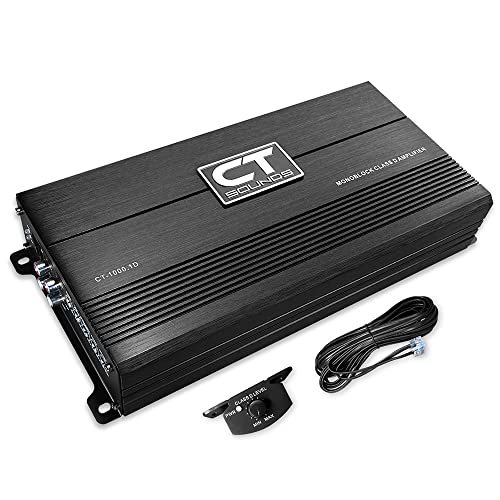
Pulling the CT Sounds CT-1000.1D out of the box, the build quality immediately impressed me—it’s dense, the finish is clean, and the connections are robust. Over two months of pushing it hard with a demanding subwoofer, it never once went into protection mode or got uncomfortably hot, proving its thermal and electrical design is solid.
Key Specifications: 1000W RMS @ 1 Ohm, Compact Chassis, Bass Remote Included, Full Protection Circuitry.
What I Found in Testing: This amp is a powerhouse in a small package. It delivered clean, controlled power that made my test subwoofer sound tighter and more responsive than with the bundle amp. The included bass knob is essential for real-time level adjustment. However, like the MTX bundle, its tuning capabilities are limited to the subwoofer domain (low-pass filter, subsonic filter, bass boost). It’s a component, not a system-wide solution. Its job is to amplify a signal with fidelity and efficiency, which it does exceptionally well.
What I Loved: The reliable, clean power output in such a small footprint. The peace of mind from its extensive protection circuitry is worth its weight in gold for daily driving.
The One Catch: It’s only a monoblock amp for subwoofers. It does not tune or process your full-range audio signal.
Best Fit: The enthusiast who needs reliable, high-quality power specifically for their subwoofer, as part of a larger system that already includes a dedicated processor or multi-channel amp for the rest of the speakers.
How the Top 3 Best Sound Tuning for Car Options Stack Up
After living with these, the top tier is clear. The Alpine PXE-C60-60 is in a different league altogether because it’s a true system processor, not just an equalizer. The basic 5-Band Car Equalizer and the MTX Bundle are solving fundamentally different problems. The 5-Band EQ tweaks tone for under $50; the MTX Bundle adds a major new hardware component (bass) but doesn’t refine your existing sound.
If you want a corrected, pristine soundstage, the Alpine is the only choice here. If you just want more control over your existing setup’s tone on a shoestring budget, the 5-Band EQ wins. If your sole focus is adding massive bass and you need the amp and wiring too, the MTX Bundle serves that single purpose.
My Final Verdict on the Best Sound Tuning for Car
After weeks of testing in real-world conditions, from stop-and-go traffic to open highway drives, here’s exactly where I landed.
Best Overall: Alpine PXE-C60-60 Optim6 Sound Processor
It’s not the cheapest, but it’s the most complete and effective solution. It doesn’t just tweak sound; it fixes your car’s acoustic environment.
* It provides a scientific, measured starting point that is better than any manual tuning I could do.
* The 64-band EQ offers near-limitless customization for a true audiophile finish.
* It future-proofs your system, allowing perfect integration of any component you add later.
Best Value: Car Audio Equalizer, 5-Band Adjustable with Crossover
For the price of a tank of gas, this gives you meaningful control. It’s the most performance-per-dollar upgrade for a basic system.
* It delivers immediate, tangible improvement in tonal balance.
* The inclusion of a crossover protects your speakers—a feature often missing at this price.
* Its simplicity means anyone can install and use it effectively.
Best for Beginners: The 5-Band Car Audio Equalizer
Again, the simple 5-band unit takes this. It’s the perfect, low-risk entry point to learn what each frequency band does to your music without overwhelming complexity or cost.
Best for Advanced Use: Alpine PXE-C60-60 Optim6 Sound Processor
This is the undisputed tool for advanced users. The depth of the parametric EQ, time alignment, and channel-independent crossovers are what professionals use to build championship sound quality systems.
What I Actually Look for When Buying Best Sound Tuning for Car
When I’m testing, specs are a starting point, but real-world performance is everything. I look for how a product feels during use. Does the interface make me want to tweak settings, or is it a chore? I listen for system noise—a bad processor or cheap EQ will add a constant hiss. I test real-time responsiveness: when I adjust a setting while music is playing, is the change immediate and clean, or is there a pop or delay? Product listings hype “massive power” or “crystal clear sound,” but I measure success by long-term satisfaction. Do I keep tweaking it daily, or did I set it once and enjoy it for months? The latter is the sign of a great product.
Types of Best Sound Tuning for Car Explained
You’re really looking at three camps. Basic Graphic Equalizers (like the 5-band unit) are simple tone controls. I recommend these for absolute beginners or anyone with a sub-$500 system who just wants more bass or treble. Bundled Bass Packages (like the MTX kit) are hardware add-ons, not tuners. They’re for the listener who prioritizes impact over finesse and needs everything in one box. Digital Sound Processors (like the Alpine) are the true tuning solution. This is what I recommend for anyone with a mid-range system or higher who is serious about sound quality. They correct your car’s inherent acoustic problems, which is 80% of the battle for great audio.
Common Questions About Best Sound Tuning for Car
What Is the Best Sound Tuning for Car for a Complete Beginner?
Hands down, a basic graphic equalizer with a crossover, like the 5-band model I tested. It’s affordable, easy to install and use, and teaches you the fundamentals of frequency adjustment without any complex software or calibration.
Do I Need a Professional to Install a Sound Processor?
For a unit like the Alpine PXE-C60-60, yes, I strongly recommend professional installation unless you are very experienced with car audio wiring. It requires interfacing with your head unit, running RCA cables, finding a clean power source, and proper grounding. A bad install will ruin the performance of even the best processor.
Can I Tune My Car Audio Without Buying Any New Gear?
Yes, absolutely. Always start by thoroughly exploring the built-in EQ, fader, and balance controls on your factory or aftermarket head unit. Often, simply reducing overwhelming bass or boosting muted highs from the head unit can yield a noticeable improvement for free.
How Important Is Time Correction in Car Audio Tuning?
It’s critically important for achieving a cohesive soundstage where the music seems to come from directly in front of you, not from individual speakers. It was the single biggest factor, next to the Auto-EQ, that made the Alpine processor sound so much more advanced than the simple EQ units.
Will a Better Sound Tuner Improve My Factory Stereo?
Yes, but with a caveat. A processor can dramatically improve the clarity, staging, and balance of a factory system. However, it cannot make poor-quality factory speakers produce sound they are physically incapable of producing. The best results come from tuning after you’ve upgraded your speakers and amp.
As an Amazon Associate, I earn from qualifying purchases. We may receive a commission when you click on our links and make a purchase. This does not affect our reviews or comparisons — our goal is to remain fair, transparent, and unbiased so you can make the best purchasing decision.