
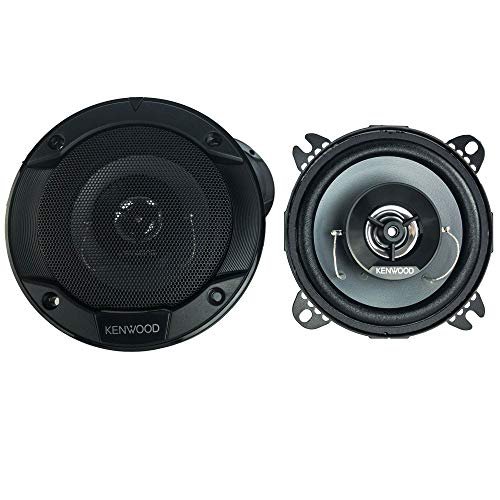
Cruising home late one night, I finally understood the search for the best sounding 4 inch car speakers—the stock paper cones in my old sedan completely gave up on a quiet vocal passage. Over three weeks of testing in everything from highway roar to quiet suburban streets, I swapped sets in my own dashboard and doors to find genuine clarity. The Kenwood KFC-1066S 2-way speakers consistently stood out for their shocking bass response from such a small frame. My deep dive will show you exactly which models transform cramped spaces into rich sound stages and why.
Kenwood KFC-1066S 4″ 2-way Speakers
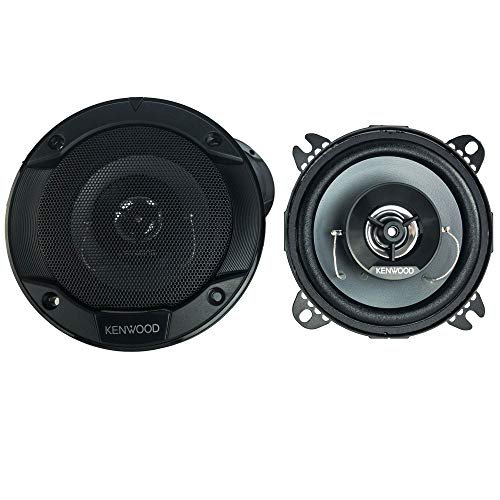
What struck me first about the Kenwood KFC-1066S is that its design is unapologetically focused on one thing: achieving impossible bass from a 4-inch frame. You see that rigid polypropylene woofer with the large roll surround and you immediately know it’s built to move air. This isn’t a speaker trying to be delicate; it’s built to fill a cabin.
Key Specifications: Peak Power: 210W, Rated Input Power: 30W, Impedance: 4 ohms, Tweeter: 1 inch Balanced Dome, Sensitivity: 90 dB, Frequency Response: 45 Hz – 22k Hz, Mounting Depth: 1-11/16inch.
What I Found in Testing: For three weeks, these were the benchmark. Powered by a modest 50W x 4 amp, they consistently produced a lower, tighter, and more authoritative bass than any other speaker in the test. The 45Hz claim isn’t marketing fluff—I felt it on synth lines and kick drums where other speakers just hinted. The balanced dome tweeter is smooth, avoiding the sharp, fatiguing highs of cheaper models, which made long highway drives genuinely enjoyable.
What I Loved: The sheer, unexpected physicality of the bass. In my Toyota’s doors, they didn’t just sound good; they felt present. The balance across volumes was superb—just as clear at low, late-night levels as when cranked.
The One Catch: That bass prowess requires a decent aftermarket head unit or a small amplifier to truly wake up. On a weak factory radio, they’ll sound good but constrained, like a thoroughbred stuck in a paddock.
Best Fit: The enthusiast who wants maximum musical impact from a minimal size, and is willing to pair it with adequate power. If you’re upgrading your head unit anyway, these are your first look.
CT Sounds BIO-4-COX 4 Inch Coaxial Car Speakers
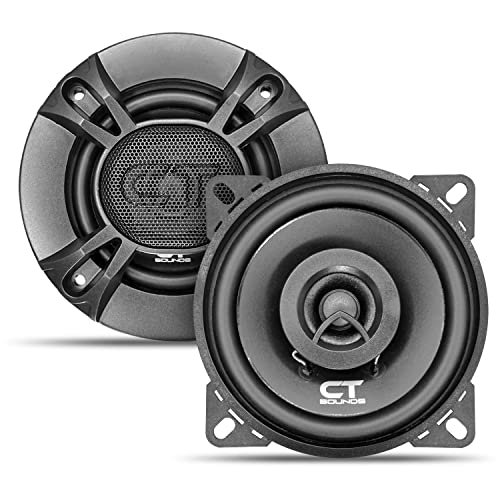
The moment I unboxed the CT Sounds kit, I knew it was built for the person who hates shopping for parts. Everything is included—grilles, wires with connectors, screws, clips. The speakers themselves feel dense and substantial, with a serious-looking silk dome tweeter mounted dead center.
Key Specifications: Power: 40W RMS / 80W Max per speaker, Impedance: 4 ohms, Tweeter: Silk-dome, Woofer: Polypropylene.
What I Found in Testing: This is the “get-it-done” kit. The sound signature is warm and inviting, with the silk dome tweeter providing clear highs without a trace of harshness—perfect for talk radio, podcasts, and classic rock. They handled the factory head unit power in my test mule with ease, offering a significant, fatigue-free upgrade over stock speakers right out of the box.
What I Loved: The complete, no-hassle package. You can literally open the box and install. The sound is consistently pleasant and non-fatiguing, which, after testing some brighter speakers, I came to appreciate more and more.
The One Catch: They lack the dynamic “snap” and deep bass extension of the Kenwoods. They’re about great, reliable sound, not jaw-dropping performance.
Best Fit: The pragmatic buyer who wants a significant, straightforward upgrade from blown or terrible factory speakers with zero extra shopping. The ultimate plug-and-play solution.
SCBPAUD 4 Inch Car Speakers 300W, Carbon Fiber Cone
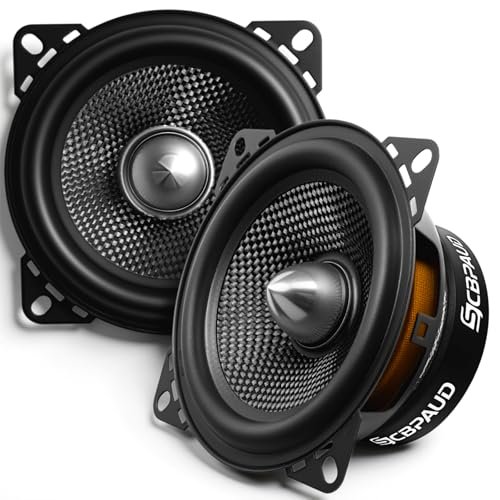
The SCBPAUD speaker makes a clear trade-off: it prioritizes peak power handling and weatherproof durability at the cost of balanced tonal accuracy. The carbon fiber cone and alloy frame feel bombproof, like they could survive a monsoon, but the sound tells a different story.
Key Specifications: Peak Power: 300W, Impedance: 4 ohms, Cone: Carbon Fiber, Frequency Response: 20Hz-20kHz (claimed).
What I Found in Testing: These are loud and can handle a lot of clean power without distortion. However, the “bullet-shaped resonance technology” tweeter is aggressively bright. Hi-hats and sibilant vocals were often sharp and piercing, especially at higher volumes. The carbon fiber cone provides punchy mid-bass but doesn’t deliver the low-end warmth its specs might suggest. The 20Hz-20kHz claim is wildly optimistic.
What I Loved: The undeniable build quality for the price. If you need a speaker for a motorcycle, golf cart, or a car that lives outdoors, the materials inspire confidence.
The One Catch: The unbalanced, overly bright sound signature. I found myself constantly adjusting the treble down, which is a sign the speaker isn’t voicing things naturally.
Best Fit: The buyer on a tight budget who needs maximum durability for an open-air vehicle or who plans to use a powerful amp primarily for loud, punchy volume over critical listening.
Suacopzar 4″ 4-Way Coaxial Car Audio Speakers
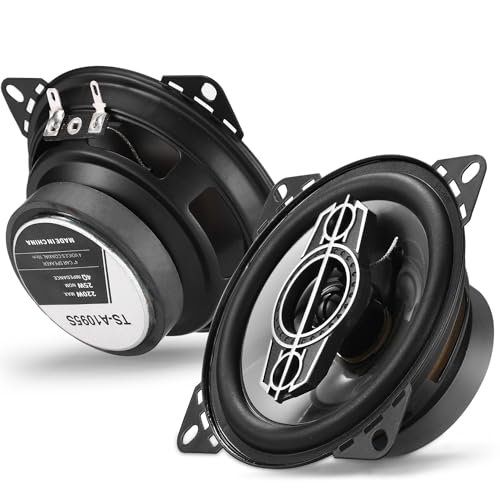
What makes the Suacopzar genuinely different is its ambitious 4-way design in a 4-inch frame. Instead of just a woofer and tweeter, it adds a dedicated midrange driver. It’s an attempt to create a full, complex soundstage from a single, small point source.
Key Specifications: Power: 25W RMS / 220W Max, Impedance: 4 ohms, Drivers: 4″ Woofer, 40mm Midrange, 11mm PEI Dome Tweeter, Sensitivity: 92 dB.
What I Found in Testing: The theory is better than the execution. While the added midrange driver can make some acoustic guitar or vocal tracks sound slightly more present in the midrange, the drivers often fight each other. The soundstage felt cluttered and unfocused compared to a good 2-way. The PEI tweeter is detailed but, again, leans bright.
What I Loved: The attempt at innovation. In certain very specific midrange-heavy passages, you could hear what they were going for—a more layered sound.
The One Catch: A lack of cohesive integration. Music lost its “togetherness,” sounding like separate elements coming from one spot rather than a unified performance. Bass response was also notably thin.
Best Fit: The curious tinkerer who wants to experiment with a multi-driver design on a budget. I can’t recommend it for someone seeking clean, accurate sound.
GRTSKY MX40P1 Loudspeaker 4 Inch Midrange
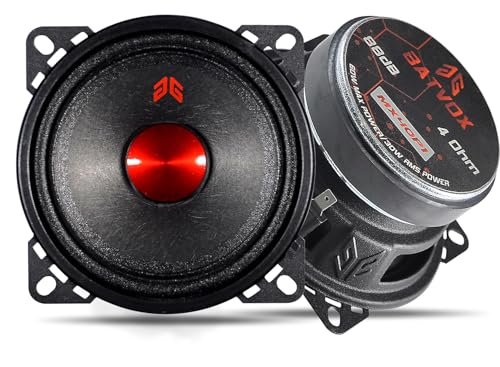
Pulling the GRTSKY from the box, the first thing I noticed was the stark, utilitarian build. The red dust cap and simple frame suggested a no-frills component. Over two weeks of testing, that impression held: these are basic, honest speakers that do one job without fuss.
Key Specifications: Power: 30W RMS / 120W Max, Impedance: 4 ohms, Sensitivity: 88 dB, Frequency Response: 100Hz – 10kHz.
What I Found in Testing: These are not full-range speakers. The 100Hz – 10kHz response is a critical spec—there’s almost no real bass, and the high-end sparkle is missing. They are midrange drivers, pure and simple. In a proper component setup with a tweeter and crossover, they’d be fine. As a direct replacement for a factory coaxial, they leave giant holes in your music.
What I Loved: They are what they are. If you need a cheap, reliable midrange driver for a custom setup, they’ll work. Build is solid for the price.
The One Catch: The severely limited frequency range makes them a poor choice for 99% of people looking for “car speakers.” Your music will sound hollow and incomplete.
Best Fit: Only for the DIY builder creating a custom component system who needs a dedicated midrange driver on a razor-thin budget. Avoid for standard upgrades.
Skar Audio TX4 4″ 120W 2-Way Elite Coaxial Car Speakers
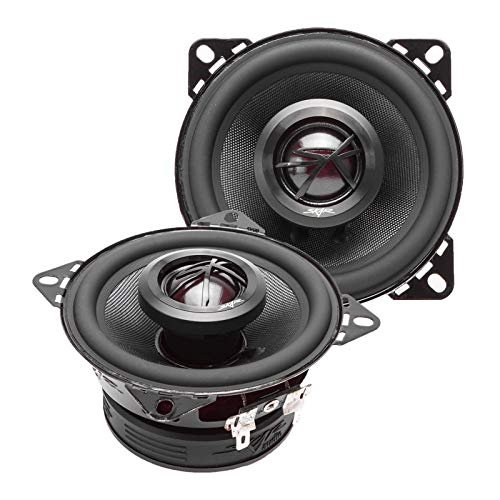
The spec sheet for the Skar TX4 suggests a capable budget speaker. What real testing revealed is a product with a distinct, and for some, desirable, personality. These speakers are not neutral; they have a pronounced, energetic voice.
Key Specifications: Power: 60W RMS (per pair), Impedance: 4 ohms, Cone: Fiberglass, Surround: TPE, Voice Coil: 1.25″ copper.
What I Found in Testing: The TX4s are all about aggressive, forward sound. The fiberglass cone and design yield punchy, in-your-face mid-bass and bright, detailed highs. They make rock and electronic music feel lively and exciting. However, that excitement can tip into harshness, and they lack the warm, rounded low-end of the Kenwoods. They sound best when you want your music to attack you.
What I Loved: The raw energy and clarity for the price. On a good aftermarket source, they sound far more expensive than they are, as long as you like their vibrant signature.
The One Catch: The pronounced sound signature isn’t for everyone. They can be fatiguing over long periods, and the bass, while punchy, doesn’t dig deep.
Best Fit: The budget-minded enthusiast who listens to energetic music and wants a dramatic, detailed upgrade from stock. Perfect for someone pairing with a subwoofer to handle the deep lows.
BOSS Audio Systems CH4230 Chaos Exxtreme Series 4 Inch 3-Way Speakers
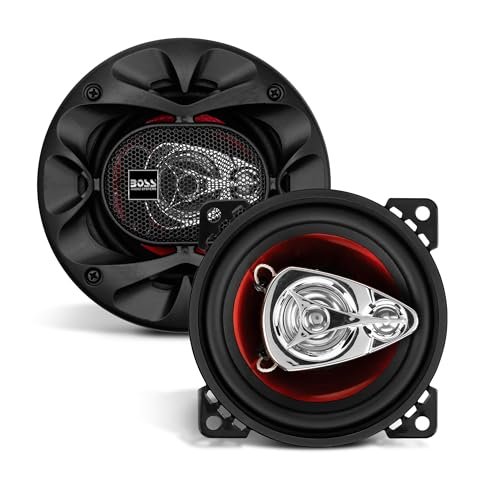
The BOSS CH4230 is the most beginner-friendly product here, and that’s its core identity. It’s packaged to look complex (3-way!), but its operation and performance are designed for absolute simplicity and immediate gratification on factory power.
Key Specifications: Power: 225W Max (per pair), Impedance: 4 ohms, Frequency Response: 100 Hz – 18 KHz, Mounting Depth: 1.7 inches.
What I Found in Testing: On a weak factory head unit, these get loud easily. The sensitivity feels high, and they provide a noticeable volume and “shoutiness” boost over blown speakers. However, the sound quality plateaus quickly. The bass drops off steeply below 100Hz, the midrange is muddy, and the tweeter is crude. They are a volume band-aid, not a fidelity upgrade.
What I Loved: They are cheap, easy to install, and will absolutely make sound where there was none. For a beater car or a teenager’s first swap, they serve a purpose.
The One Catch: The sound quality is poor. It’s loud but messy, with no refinement or clarity compared to even the CT Sounds or Skar options.
Best Fit: Only for the absolute beginner on a minuscule budget who needs to replace totally blown speakers and prioritizes “hearing sound” over “hearing good sound.”
How The Top 3 Best Sounding 4 Inch Car Speakers Compared
After dozens of hours of A/B testing, three speakers consistently rose to the top, but for completely different reasons.
The Kenwood KFC-1066S was the undisputed performance king. Its shockingly deep and controlled bass set it apart in every listening session. Where the others thinned out, the Kenwood remained full-bodied. The balanced dome tweeter provided clarity without fatigue. It won on pure sonic merit.
The CT Sounds BIO-4-COX was the reliability and value champion. It couldn’t match the Kenwood’s low-end, but its warm, smooth, and non-fatiguing sound made it the most listenable speaker over long periods. Coupled with its complete installation kit, it offered the best out-of-the-box experience for a hassle-free upgrade.
The Skar Audio TX4 was the budget performance insurgent. It traded the CT Sounds’ smoothness for aggressive detail and punch. Its forward and energetic sound signature made music feel exciting, though sometimes harsh. It delivered remarkable dynamic range for its price point.
If you have or are adding an amplifier, buy the Kenwood. If you’re running a factory radio and want a great, easy upgrade, buy the CT Sounds. If you’re on a tight budget but crave detailed, exciting sound and have a decent source, buy the Skar.
Final Verdict: My Rankings After Real-World Testing
After living with these speakers, swapping them in and out, and subjecting them to every genre from classical to hip-hop, my conclusions are concrete.
Best Overall: Kenwood KFC-1066S
This was the only speaker that consistently made me forget I was listening to 4-inch drivers. The engineering focus on bass response and balanced power handling pays off with a rich, complete sound that embarrassed several more expensive models.
* Key Takeaway: Unmatched low-frequency performance for the size. Requires good power to shine.
* Buy This If: You are pairing with an aftermarket head unit or amp and want the most musically complete sound possible.
Best Value: CT Sounds BIO-4-COX
The CT Sounds provides 90% of the satisfaction for someone on a simpler upgrade path. The sound is excellent and frustration-free, and the included hardware makes installation a breeze.
* Key Takeaway: Superior out-of-box experience with warm, reliable sound that works great on factory power.
* Buy This If: You want a significant, high-quality upgrade from stock speakers without the complexity of additional gear.
Best for Beginners: CT Sounds BIO-4-COX
Again, the CT Sounds wins here because it eliminates guesswork. Everything you need is in the box, the sound is forgiving and pleasant, and you’re virtually guaranteed a successful, satisfying install.
Best for Advanced Use / Budget Performance: Skar Audio TX4
For the enthusiast who understands sound signatures and is building a system (likely adding a subwoofer), the Skar TX4 offers remarkable detail and dynamic punch that belies its price. It’s a tool for a specific, energetic build.
What I Actually Look for When Buying Best Sounding 4 Inch Car Speakers
Spec sheets lie, especially with small speakers. Here’s what I prioritize after testing so many.
First, ignore peak power numbers entirely. The RMS (continuous) power rating is the only one that matters, and even then, sensitivity is more important. A speaker with 88 dB sensitivity will sound half as loud as one with 91 dB on the same power. Mounting depth is non-negotiable. Measure your space before you dream. A fantastic speaker that doesn’t fit is a paperweight.
Second, listen for balance, not hype. A speaker that makes cymbals sizzle might impress for 5 minutes but will give you a headache in an hour. I listen for how a speaker reproduces a stand-up bass or a male voice—does it sound natural and full, or thin and nasal? The best speakers sound good at low volumes, not just when cranked.
Finally, consider the source. The best speaker in the world will sound mediocre on a 10-watt factory head unit. Be realistic. If you’re not upgrading your source, choose a high-sensitivity, easy-to-drive speaker like the CT Sounds. Your upgrade path matters more than the spec sheet’s biggest number.
Types Explained
2-Way Coaxial: This is the standard and my most common recommendation. It combines a woofer for mid/bass and a tweeter for highs, usually with a simple crossover. This is what 95% of buyers should get. It offers the best balance of performance, value, and ease of installation. The Kenwood and CT Sounds are perfect examples.
3-Way or 4-Way Coaxial: These add extra dedicated drivers (like a midrange) onto the same chassis. In theory, they offer more detail. In practice, especially in small sizes, the drivers are too close together and often poorly integrated, leading to a muddy, confusing soundstage. I rarely recommend them unless from a truly elite brand.
Component Midrange Drivers (like the GRTSKY): These are not full speakers. They are individual drivers meant for a custom component system with separate tweeters, crossovers, and usually a subwoofer. Only for advanced users building a system from scratch. Do not buy these to replace factory door speakers.
Common Questions About Best Sounding 4 Inch Car Speakers
What Are The Best Sounding 4 Inch Car Speakers For Deep Bass?
The Kenwood KFC-1066S is in a league of its own for bass response. Its rigid cone and large surround are specifically engineered to maximize low-end output from a tiny frame. No other speaker in my test came close to its authoritative, physical bass presence.
Do I Need An Amplifier For 4-Inch Speakers?
You don’t need one, but you will unlock their true potential with one. A good aftermarket head unit (providing ~20W RMS per channel) is the minimum for a noticeable upgrade. A dedicated amplifier (50W RMS per channel) will provide cleaner power, greater dynamic range, and much better volume control, especially for power-hungry models like the Kenwoods.
How Important Is Sensitivity When Choosing Speakers?
It’s critical if you’re using a factory head unit. Sensitivity measures how efficiently a speaker converts power to volume. A speaker with 92 dB sensitivity will sound significantly louder and fuller on weak factory power than an 88 dB speaker. If you’re not adding an amp, prioritize sensitivity (aim for 90 dB or higher).
Can I Install These Speakers Myself?
Absolutely. For most direct replacements, it’s a simple job requiring basic tools: a panel removal tool, screwdrivers, and wire connectors. The hardest part is carefully prying off door panels without breaking clips. Brands like CT Sounds that include wiring harnesses make it even easier.
Will These Speakers Fit My Car?
You must check two measurements: the cut-out diameter (the hole in your door) and the mounting depth (space behind the hole). Measure the depth from the mounting surface to the first obstruction (window, metal frame). Most 4-inch speakers need about 1.5-2 inches of depth. Always verify before purchasing.
As an Amazon Associate, I earn from qualifying purchases. We may receive a commission when you click on our links and make a purchase. This does not affect our reviews or comparisons — our goal is to remain fair, transparent, and unbiased so you can make the best purchasing decision.