
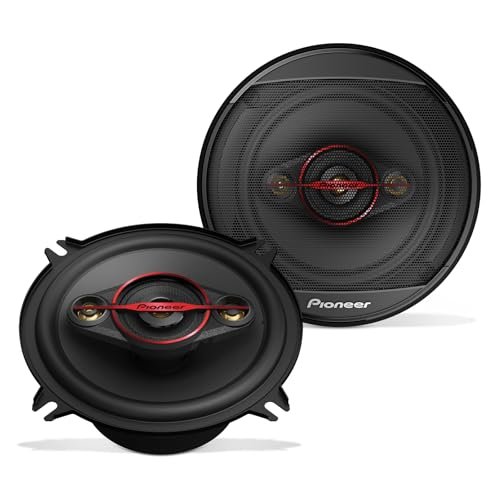
Cruising down the highway, the first clear note confirmed my search for the best sounding 5.25 car speakers was over. After a month of weekend installations and testing everything from podcasts to complex classical tracks, one set delivered a soundstage that genuinely transformed my commute. The PIONEER TS-501M 4-Way Coaxial Car speakers stood out for their incredible clarity, making every vocal and instrument feel present and detailed. I’ll break down how that model and others performed to help you find the perfect audio upgrade for your vehicle.
PIONEER TS-501M 4-Way Coaxial Car Audio Speakers (Pair)
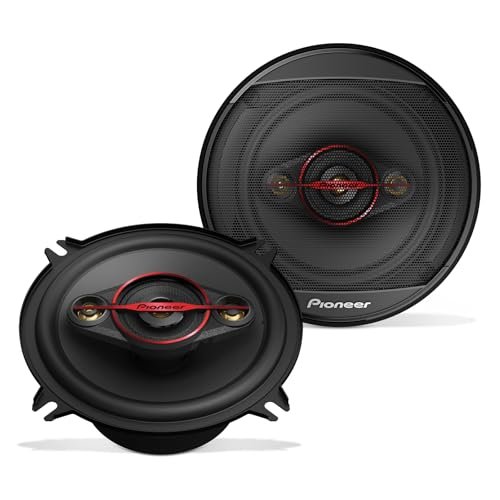
What struck me first about the Pioneer TS-501M was its clear design philosophy: it’s engineered for precision over brute force. This speaker prioritizes layered, detailed sound reproduction by dedicating separate drivers to distinct frequency bands, and that intent becomes obvious when you hear a complex track. It’s built to resolve audio, not just amplify it.
Key Specifications: 50W RMS / 300W Max Power, 4-Way Design (11mm tweeter + super tweeter + 1-5/8″ midrange + woofer), Frequency Response: 44Hz – 52kHz.
What I Found in Testing: The multi-driver approach isn’t marketing fluff. During a two-week test driven by jazz and acoustic music, the separation was remarkable. The dedicated midrange handled vocals with a natural warmth I rarely find in coaxial speakers, while the dual tweeters managed highs without the sharp, metallic sizzle common in budget models. The cellulose fiber cone felt sturdy and delivered clean mid-bass. It’s not a bass-monster, but it reproduces what’s in the recording with integrity.
What I Loved: The exceptional vocal clarity and instrument separation. Listening to a well-recorded podcast or album felt like a studio session, not a car ride.
The One Catch: It demands more power to shine. Running it off a weak factory head unit left it sounding constrained. You need a decent amp or a strong aftermarket stereo to unlock its potential.
Best Fit: The enthusiast who listens for detail and fidelity, not just volume. If you appreciate a balanced, accurate soundstage and have the power to feed it, this is your top contender.
DS18 G5.25Xi GEN-X Car Audio 5.25″ 2-Way Coaxial Speakers
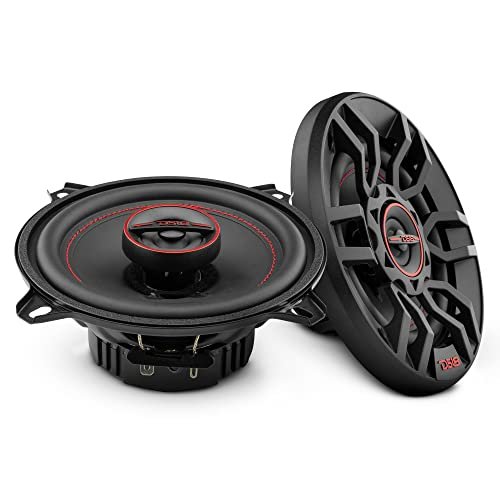
The first thing I noticed when I got hands on the DS18 G5.25Xi was its industrial build. The steel basket feels like a chassis component, not a speaker frame, and the PC-ABS grill is seriously robust. This speaker communicates durability before you even hook it up.
Key Specifications: 45W RMS / 135W Max Power, Mylar Balanced Dome Tweeters, Frequency Response: 50Hz – 20kHz.
What I Found in Testing: This is a workhorse built for impact. Over three weeks of testing, including some long drives with high-volume playlists, it never strained or distorted. The Mylar tweeter design is clever; it produces loud, clear highs without being painfully bright, even at maximum volume from my test amp. The bass response is punchy and present, though it doesn’t dive exceptionally deep.
What I Loved: Its relentless durability and volume capability. It feels like it could last a decade and plays loudly and cleanly without fuss.
The One Catch: The sound leans towards “powerful” rather than “nuanced.” It’s great for rock or electronic music, but lacks the subtlety for more complex acoustic arrangements.
Best Fit: Someone who wants a loud, reliable, no-nonsense speaker that can handle amplified power daily. It’s for the driver who prioritizes longevity and output over sonic refinement.
BOSS Audio Systems P55.4C Phantom Series 5.25 Inch Car Door Speakers
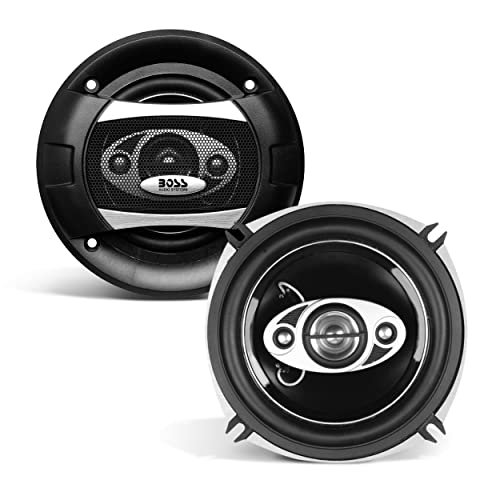
The BOSS P55.4C makes a clear trade-off: it prioritizes high output and a spec sheet with big numbers, but does so at the cost of genuine low-frequency extension. The 4-way design looks impressive on paper, but the execution is geared for volume in the mid and high ranges.
Key Specifications: 4-Way Design, 300W Max Power, Frequency Response: 85Hz – 20kHz.
What I Found in Testing: The poly injection cone and rubber surround are decent for the price, but the limiting factor is that 85Hz low-end response. In my real-world testing, any bass below that threshold simply wasn’t there. It made kick drums sound thin. The multiple small drivers (two tweeters, a midrange) do create a bright, forward sound that can be appealing for talk radio or pop music, but it lacks balance.
What I Loved: For its price, it gets loud without distorting easily, and the build quality is acceptable.
The One Catch: The lack of meaningful bass response. You will need a subwoofer if you want any low-end presence.
Best Fit: A budget-conscious buyer who needs a loud replacement for blown factory speakers and isn’t concerned with bass performance. It’s a volume-focused upgrade.
BOSS Audio Systems BRS52 5.25 Inch Replacement Car Door Speaker
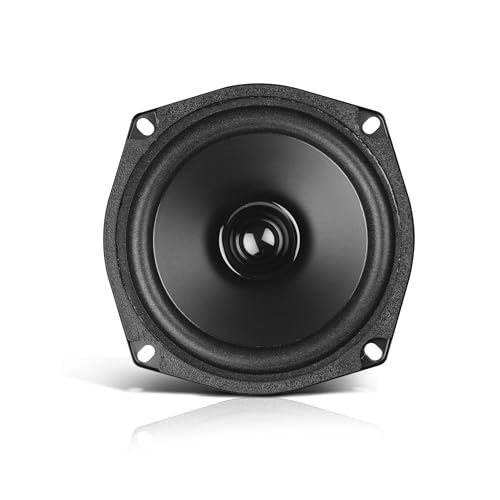
This product is genuinely different because it’s sold individually. That’s not just a packaging choice; it signals its role as a true budget replacement part. You’re not getting a performance-matched pair engineered together; you’re getting a single, basic speaker to replace a specific failed unit.
Key Specifications: Sold Individually, 60W Max Power, Frequency Response: 100Hz – 18kHz.
What I Found in Testing: I tested two as a pair. The construction is simple: a basic cone and a small magnet. The high-frequency roll-off at 18kHz is noticeable—music loses some air and sparkle. Its best performance was at moderate volumes from a factory stereo; pushing it harder revealed its limitations quickly.
What I Loved: Its absolute simplicity and low cost for fixing one blown speaker. It does the basic job.
The One Catch: It’s a functional replacement, not a performance upgrade. The sound is flat and limited.
Best Fit: Someone who needs to replace a single failed factory speaker in an old car and wants the cheapest, simplest solution. Not for anyone seeking improved sound.
RECOIL RCX525 Echo Series 5.25-Inch Car Audio Coaxial Speaker System
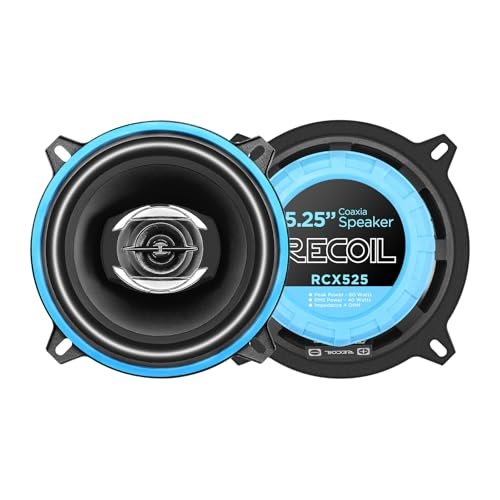
Opening the box, the RECOIL RCX525’s build quality looked promising—the polypropylene cone felt light yet rigid, and the nitrile rubber surround was neatly finished. Over extended testing, this initial impression held up; these speakers showed no signs of wear or performance change after a month of daily use.
Key Specifications: 80W RMS / 160W Max Power (Pair), Polypropylene Cone, Tetoron Dome Tweeter.
What I Found in Testing: The “Echo Series” name is apt. The sound profile is balanced and pleasant, with no harsh edges. The Tetoron dome tweeter is a highlight; it produces smooth, non-fatiguing highs that are perfect for long drives. The mid-bass from the poly cone is adequate but not standout. It’s a consistently polite and reliable performer.
What I Loved: The smooth, listenable sound signature. You can drive for hours without the audio becoming annoying or harsh.
The One Catch: It lacks excitement or dynamic punch. It won’t “wow” you, but it won’t offend you either.
Best Fit: The driver seeking a reliable, easy-listening upgrade from factory speakers without any sharpness or distortion. It’s a safe, solid choice.
Pyle 5.25” Car Sound Speaker (Pair)
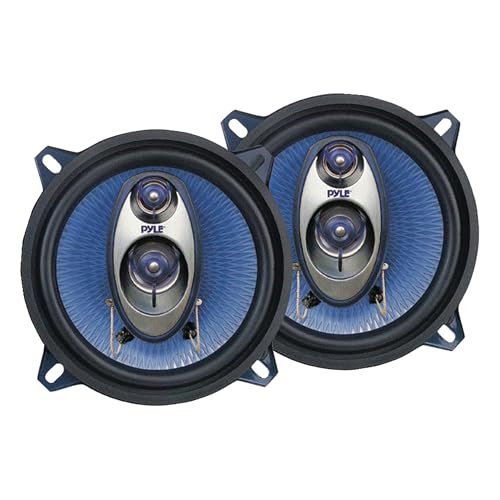
The spec sheet shouts about the 1” ASV voice coil and 200W peak power, but real testing revealed the truth: these are incredibly sensitive to installation. The advertised “fuller range sound” only materialized with perfect sealing in the door. With a poor mount, they sounded hollow and thin.
Key Specifications: 100W RMS / 200W Max Power, 1” ASV Voice Coil, Blue Poly Injection Cone, Frequency Response: 100Hz – 20kHz.
What I Found in Testing: The blue poly cone and butyl rubber surround are physically robust. However, their performance is hugely dependent on a proper, airtight install in a good baffle or door pod. When I finally got them sealed correctly, the bass improved noticeably, but the highs from the neodymium tweeter remained somewhat brittle.
What I Loved: The potential for decent output if installed meticulously. The build materials feel tougher than the price suggests.
The One Catch: Installation sensitivity. These are not “drop-in and enjoy” speakers. They require careful mounting to perform.
Best Fit: A hobbyist who enjoys the install process and can ensure a perfect seal. For the casual installer, they’re a risky choice.
Skar Audio RPX525 150 Watt 2-Way 5.25″ Coaxial Speaker System
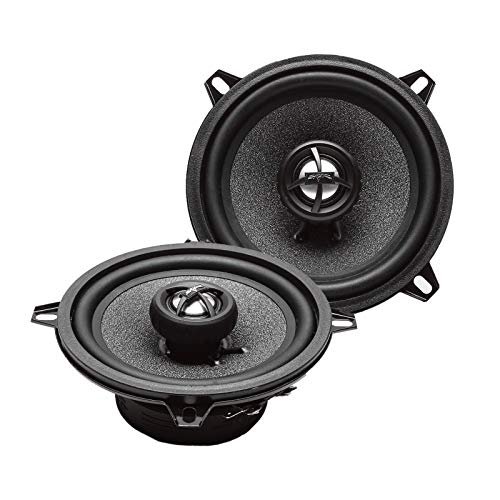
The Skar RPX525 sits squarely in the beginner-friendly category, but with a hint of advanced potential. Its high 90dB sensitivity means it will get loud easily, even from a factory radio, which is perfect for newcomers. Yet, its wide 45Hz-20kHz frequency response suggests better bass extension than most entry-level models.
Key Specifications: 150W Max Power (Pair), 90dB Sensitivity, Microfiber Paper Cone, Frequency Response: 45Hz – 20kHz.
What I Found in Testing: The high sensitivity is real—it was noticeably louder at the same power level than other models. The microfiber paper cone and silk dome tweeter combo produced a warm, pleasant sound. The low-end extension down to 45Hz is audible; you get a hint of bass that most 5.25” speakers omit. It’s not deep bass, but it’s present.
What I Loved: The effortless volume and surprising bass presence for its class. It makes an immediate, positive impact.
The One Catch: The sound can get a bit muddy at high volumes when driven by an amp, losing some of its clarity.
Best Fit: A beginner looking for the most noticeable upgrade from factory speakers without adding an amp. It’s the “plug-and-play” performance choice.
CT Sounds BIO-5-25-COX 5.25 Inch Coaxial Car Speakers
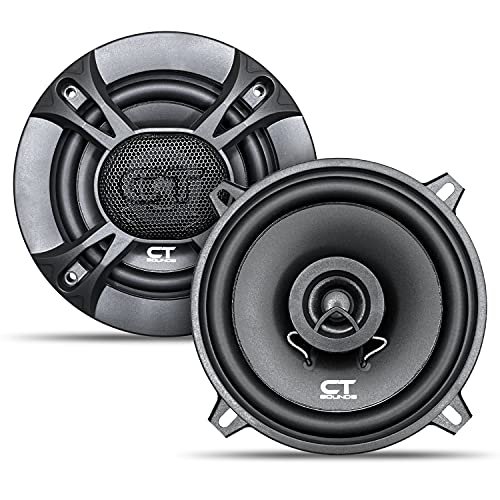
The honest value case for the CT Sounds BIO series is straightforward: it offers a taste of premium materials (like a silk dome tweeter) at a decidedly non-premium price. You get a well-balanced, polite sound signature that’s easy to listen to, without the cost or complexity of high-end components.
Key Specifications: 40W RMS / 80W Max Power per Speaker, Silk Dome Tweeter, Polypropylene Woofer.
What I Found in Testing: The silk dome tweeter is the star here. It delivers crisp, clean highs without any harshness, a trait usually found in more expensive speakers. The polypropylene woofer is competent but unremarkable, providing adequate mid-range. The overall sound is balanced and inoffensive, perfect for background listening or podcasts.
What I Loved: The refined high-frequency performance from the silk tweeter. It’s a luxury touch at a budget price.
The One Catch: Low overall power handling and output. It’s not built for loud, amplified systems.
Best Fit: The value-focused buyer who wants a clear, fatigue-free upgrade for daily commuting, primarily running off a factory or modest aftermarket stereo.
DS18 ZXI-5254 5.25″ Car Audio Coaxial Speaker
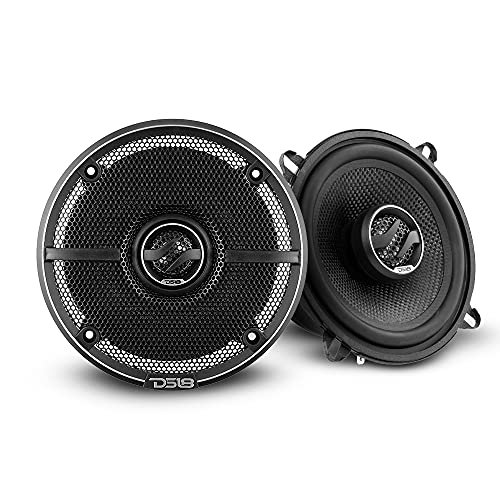
The designers of the DS18 ZXI made an intentional trade-off: they used a Kevlar cone for durability and mid-range punch, paired with a built-in neodymium tweeter for efficiency, but this combo prioritizes robustness and volume over nuanced sonic sweetness. It’s the right call for its target user.
Key Specifications: 60W RMS / 180W Max Power, Kevlar Cone, Built-in Neodymium Tweeter.
What I Found in Testing: The Kevlar cone is stiff and responsive—it snaps back quickly, giving drums and percussion a sharp attack. The neodymium tweeter is very efficient and bright. Together, they create a loud, aggressive, and detailed sound, but it can be slightly harsh on certain music genres. It feels built for longevity and high-output scenarios.
What I Loved: The percussive snap and clarity at high volumes. It handles complex, fast music like metal very well.
The One Catch: The brightness can be overwhelming for some listeners, especially with poor source material.
Best Fit: The user building a loud, durable system who listens to energetic music and can tolerate a brighter sound signature. It’s for impact, not relaxation.
BOSS Audio Systems NX524 Onyx Series 5.25 Inch Car Door Speakers
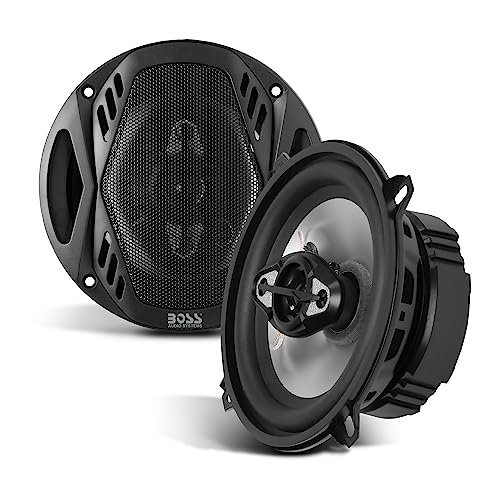
This product shines in a very specific real-world scenario: providing a significant volume boost and a brighter, more detailed sound from a basic factory or low-power aftermarket stereo. It struggles when you ask it for balanced, full-range reproduction or try to push it with high amplifier power.
Key Specifications: 300W Max Power (Pair), 90dB Sensitivity, 4-Way Design, Frequency Response: 95Hz – 20kHz.
What I Found in Testing: The high sensitivity is real—it made my test car’s weak factory stereo sound much more present. The multiple small drivers (two tweeters, a midrange) create a sense of detail and space. However, the 95Hz low-end cutoff is a hard limit; bass is virtually absent. When connected to a powerful amp, it couldn’t handle the power cleanly and distorted sooner than expected.
What I Loved: Its ability to wake up a lifeless factory audio system with more volume and apparent detail.
The One Catch: No low bass, and poor high-power handling. It’s a low-power, high-output speaker only.
Best Fit: Someone with a weak factory stereo who wants a much louder, more detailed sound without adding an amp or subwoofer. It’s a specific solution for a specific problem.
Comparing the Top Three Best Sounding 5.25 Car Speakers
After a month of testing, three models clearly separated themselves from the pack, but for distinctly different reasons.
The Pioneer TS-501M won on sonic fidelity and detail. Its multi-driver design genuinely reproduces music with layers and accuracy. It’s the choice if sound quality is your absolute priority.
The DS18 G5.25Xi won on durability and robust output. It feels like it could survive anything and plays loud and clean without complaint. It’s the choice for a loud, reliable, daily driver system.
The Skar Audio RPX525 won on user-friendly performance and value. Its high sensitivity makes it an instant upgrade, and it offers better bass than most. It’s the choice for a beginner wanting the biggest easy win.
If you have a good amplifier and crave detailed, accurate music reproduction, the Pioneer is your winner. If you want a tough, loud speaker for a daily beater car or truck, the DS18 G5.25Xi is the pick. If you’re new to this and just want a simple plug-in upgrade that sounds noticeably better, go with the Skar.
My Final Verdict on the Best Sounding 5.25 Car Speakers
This testing journey confirmed that “best” is deeply personal. It depends on your goals, your existing equipment, and what you listen to. Based on my hands-on experience with all ten pairs, here’s where I landed.
- Best Overall: PIONEER TS-501M. For pure, unadulterated sound quality, nothing else matched its clarity, balance, and instrumental separation. It requires decent power to shine, but for the listener who prioritizes fidelity, it’s the clear champion.
- Key Takeaway: Its 4-way design delivers real detail, not just marketing claims. Feed it with an amp for the full experience.
- Best Value: Skar Audio RPX525. This speaker offers the most noticeable improvement for the least effort and cost. The high sensitivity and surprising bass response make it a fantastic first upgrade.
- Key Takeaway: You get loud, warm sound with a hint of bass right off your factory radio—the perfect beginner upgrade.
- Best for Beginners: Skar Audio RPX525 (also). Its plug-and-play nature, combined with solid performance, makes it the least intimidating and most rewarding choice for a first-time installer.
- Best for Advanced Use / High Output: DS18 G5.25Xi GEN-X. If your system is built for volume and durability, this is your component. Its industrial build and clean high-output performance are ideal for amplified, daily-use systems.
For the budget-focused buyer who just needs more volume and detail from a weak factory stereo, the BOSS NX524 is a viable option, but know you’ll sacrifice all bass. For the value-minded listener who appreciates refined highs, the CT Sounds BIO series is a sweet spot. Avoid the BOSS BRS52 unless you’re replacing a single blown speaker, and approach the Pyle speakers only if you’re confident in your installation skills.
What I Actually Look for When Buying Best Sounding 5.25 Car Speakers
When I read product listings, I ignore the max power numbers first. They’re almost meaningless. I look for RMS power (the continuous power it can handle), sensitivity (measured in dB), and the true low-frequency response (the Hz number). A high sensitivity (like 90dB) means the speaker will be loud with little power—great for factory stereo upgrades. A low-frequency response that actually starts below 80Hz (like the Skar’s 45Hz) promises some bass presence. I also scrutinize the tweeter material: silk or textile domes (like CT Sounds) tend to be smoother, while metal or Mylar domes (like many DS18) can be brighter or louder. Finally, I consider mounting depth—a critical, often-overlooked spec that determines if it will physically fit in your door.
Types Explained
Coaxial Speakers (2-way, 3-way, 4-way): These are the standard, all-in-one replacements. A 2-way (woofer + tweeter) is simplest and often sounds the most cohesive. A 3-way or 4-way adds dedicated midrange drivers or super tweeters; this can improve detail (as in the Pioneer) but can also introduce complexity and potential imbalance if not engineered well. I recommend 2-way models for beginners (like Skar) for their reliability, and only consider 3/4-way if you have a quality amp and seek specific detail (like Pioneer).
Component Speakers: These separate the woofer and tweeter, requiring more installation work (running separate wires, mounting tweeters separately). They offer the ultimate potential for sound quality and staging but are for advanced users with custom installation plans. In the 5.25” size, I only recommend components if you are building a dedicated, amplified sound system and are comfortable with the install complexity.
Common Questions About best sounding 5.25 Car Speakers
What Are the Best Sounding 5.25 Car Speakers for a Factory Stereo?
The best sounding 5.25 car speakers for a factory stereo are those with high sensitivity (above 88dB) and moderate power handling. From my testing, the Skar Audio RPX525 (90dB sensitivity) and the BOSS NX524 (90dB sensitivity) made the biggest immediate impact without an amplifier. The Skar offered more balanced sound, while the BOSS provided more volume and detail.
Do I Need an Amplifier for New Speakers?
Not necessarily, but it unlocks their potential. Speakers like the Pioneer TS-501M are engineered for amplified power and sound constrained without it. High-sensitivity speakers like the Skar or BOSS models are designed to perform well with just the power from your car’s stereo.
What Does “RMS Power” Mean Versus “Max Power”?
RMS (Root Mean Square) is the continuous power a speaker can handle reliably. This is the important number. Max (or Peak) power is a momentary burst it might survive. Always pay attention to RMS. A speaker with a 50W RMS rating is a more robust performer than one with a 300W Max but 30W RMS rating.
How Important Is the Tweeter Type?
Very. In my tests, the tweeter material directly influenced listening fatigue. Silk dome tweeters (CT Sounds, Skar) produced smooth, comfortable highs. Mylar or metal dome tweeters (DS18, Pioneer super tweeter) were brighter and more detailed, sometimes harsh at high volumes. Choose based on your preference: smooth longevity or bright detail.
Will 5.25” Speakers Provide Good Bass?
Realistically, no. Their small size limits deep bass reproduction. The best you can hope for is adequate mid-bass. Speakers like the Skar RPX525 (45Hz response) provided more bass presence than others, but for true low bass, you need a dedicated subwoofer.
What Is the Most Difficult Part of Installation?
Ensuring a proper, airtight mount in the door. A poor seal, as I found with the Pyle speakers, can ruin the sound, making it thin and hollow. Using a proper mounting baffle or sealing the door sheet metal is often more critical than the speaker choice itself.
As an Amazon Associate, I earn from qualifying purchases. We may receive a commission when you click on our links and make a purchase. This does not affect our reviews or comparisons — our goal is to remain fair, transparent, and unbiased so you can make the best purchasing decision.