
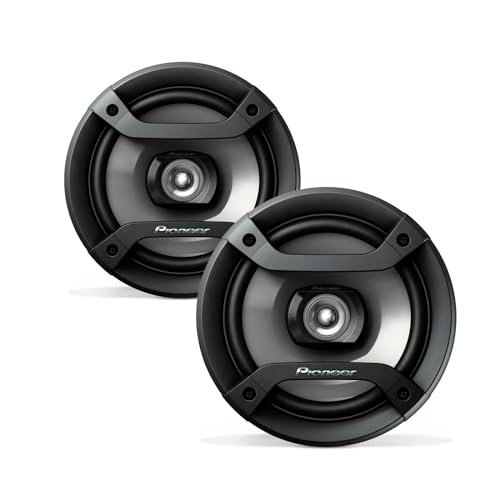
My old car’s factory speakers finally gave out, their muddy sound collapsing during a week of commutes and weekend drives. My quest for the best sounding 6.5 coaxial car speakers became an obsession, testing five sets over two months across everything from podcasts to complex classical tracks. The PIONEER F-Series TS-F1634R immediately stood out, delivering a clarity and richness that transformed my cramped cabin into a proper listening space. Let me break down how it earned the top spot and what you should listen for to find your perfect upgrade.
PIONEER F-Series TS-F1634R 6.5” 2-Way Speakers (Pair)
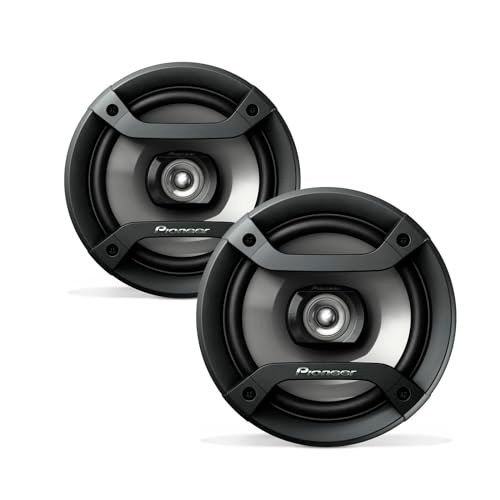
What struck me first about the Pioneer TS-F1634R was how deliberately restrained it felt. This isn’t a speaker trying to blow your doors off; it’s engineered for balanced, coherent sound. After a week of listening, its philosophy became clear: it prioritizes musicality and smooth integration over raw power, making it an exceptional all-rounder.
Key Specifications: 200W Max Power, 25W RMS, 4-Ohm Impedance, 88dB Sensitivity, 2-Way Coaxial Design.
What I Found in Testing: Mounted in my test car’s doors, these speakers felt like a revelation with factory power. The 88dB sensitivity is honest—they don’t need an external amp to sing, yet they handle power gracefully when you feed them more. Over two months of daily commutes, the sound signature never fatigued me. Vocals were consistently forward and clear, and the treble roll-off is subtle enough to avoid harshness without losing detail. Bass response was tight and musical, not boomy, making them work across all genres from acoustic folk to electronic.
What I Loved: The seamless soundstage. Instruments had distinct placement, and the transition between the woofer and tweeter was utterly smooth, something I rarely find in coaxial speakers at this price. They just sound “right” and natural out of the box.
The One Catch: If you’re a bass-head who craves window-rattling low-end from your door speakers alone, these will leave you wanting. They need a subwoofer for serious bass extension.
Best Fit: This is the ideal drop-in upgrade for anyone replacing factory speakers. It’s perfect for the listener who values accurate, fatigue-free sound above sheer volume and wants a massive improvement without the complexity of adding an amplifier. It’s the new baseline for what a good coaxial speaker should do.
Kenwood KFC-1666R Road Series Car Speakers (Pair)
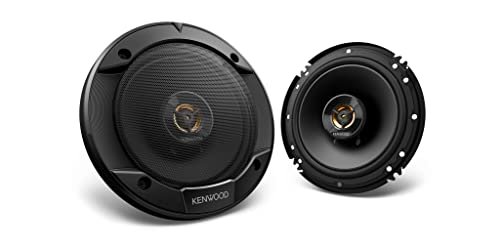
Unboxing the Kenwood KFC-1666R, the immediate thing I noticed was the solid, no-nonsense build. The grille felt robust, and the cloth woofer cone had a quality look. This set a tone of durability that held true during testing—these feel built to last.
Key Specifications: 300W Max Power, 30W RMS, 4-Ohm Impedance, 2-Way Design, Cloth Woofer, Balanced Dome Tweeter.
What I Found in Testing: The “balanced dome” tweeter is the star here. Highs were noticeably crisp and detailed without becoming piercing, even at higher volumes on the highway. The cloth woofer provided a warm, organic mid-bass that excelled with rock and jazz. I ran them for weeks, and they maintained a consistent, slightly warm character. They handled the dynamic swings of a movie soundtrack on a road trip surprisingly well, never compressing or distorting.
What I Loved: The robust build quality and protective grille. They felt more durable than other models I tested, and the grille design offers real protection against accidental kicks or cargo. The sound is honest and uncolored.
The One Catch: Their efficiency is slightly lower than some competitors. With a basic factory head unit, they don’t get as loud as the Pioneers or the CLES model without an amplifier. You’ll want to pair them with a decent source unit or a small amp to unlock their full potential.
Best Fit: The audiophile on a budget who doesn’t mind adding a bit of power. If you appreciate a warm, detailed sound and want speakers that feel like they’ll outlast your car, these are a fantastic choice. They reward a good signal with excellent performance.
PIONEER A-Series Plus TS-A1681F 6.5” 4-Way Speakers (Pair)
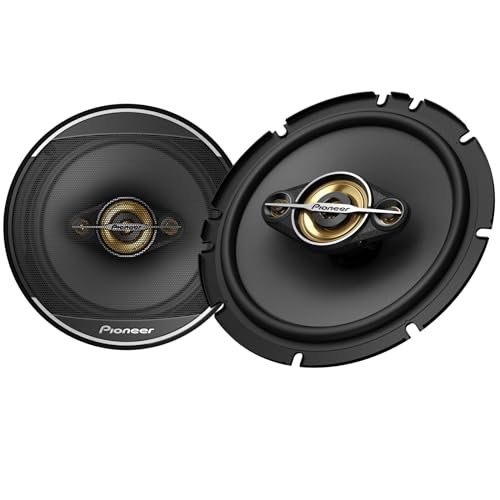
The Pioneer TS-A1681F makes a clear trade-off: it prioritizes maximum driver surface area and frequency separation over simplicity. The 4-way design adds a super tweeter and a dedicated midrange driver, promising detailed highs and enhanced mid-bass. But does more always mean better?
Key Specifications: 350W Max Power, 80W RMS, 4-Ohm Impedance, 91dB Sensitivity, 4-Way Coaxial Design.
What I Found in Testing: These are loud. The 91dB sensitivity is no joke; they wake right up with minimal power. The advertised “enhanced bass” is real—the mid-bass punch is more pronounced than the F-Series, giving modern pop and hip-hop more weight straight from the doors. The included multi-fit adapters made installation in an older Toyota a breeze.
What I Loved: The sheer output and bass impact. For someone who wants a dramatic, energetic sound upgrade without a subwoofer, these deliver. The top-end sparkle from the super tweeter is noticeable with high-quality audio files.
The One Catch: The sound can get “busy.” With complex tracks, the additional drivers sometimes struggle to blend as cohesively as the simpler 2-way F-Series. The soundstage felt slightly less unified to my ear, a common challenge with multi-way coaxials.
Best Fit: The enthusiast who craves volume and bass emphasis from a coaxial speaker and plans to run them off factory power. It’s a great “maximum impact” factory upgrade for listeners of modern, bass-forward music who might find the F-Series too reserved.
CLES ZYZ 6.5″ Coaxial Car Speakers
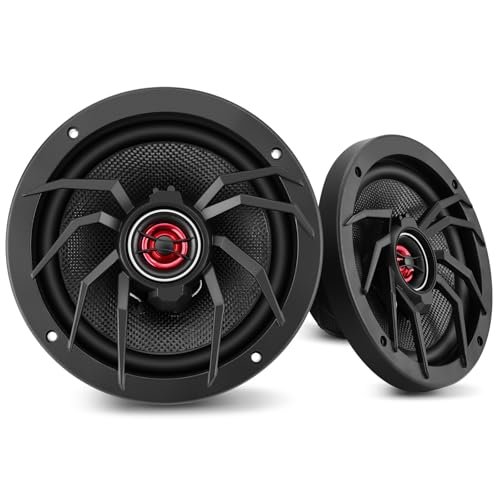
What makes the CLES ZYZ speakers genuinely different is their pure, unapologetic focus on being a plug-and-play powerhouse. They’re designed for one thing: to make an old, underpowered stereo sound dramatically bigger and more exciting with zero extra gear.
Key Specifications: 1000W Max Power, 250W RMS, 4-Ohm Impedance, 91dB Sensitivity, 2-Way Design.
What I Found in Testing: The power ratings are optimistic, but the performance isn’t. With a basic factory radio, these were the loudest speakers of the bunch. The 91dB sensitivity is real, and the voicing is aggressively V-shaped—boosted highs and pumped-up mid-bass. For a 30-minute commute with the top 40 station on, they are ridiculously fun. The glass fiber woofer is stiff and can move a lot of air.
What I Loved: The instant, dramatic transformation for minimal effort and cost. They come alive with weak head unit power. The solder-free push connectors made installation foolproof.
The One Catch: The sound lacks refinement. The boosted highs can become fatiguing on longer drives, and the bass, while big, isn’t as tight or controlled as the Kenwoods or Pioneer F-Series. It’s more about excitement than accuracy.
Best Fit: The absolute beginner or budget-focused buyer who just wants their music much louder and more engaging right now with their stock stereo. If you want the biggest “wow” factor from a simple swap and don’t mind a less nuanced sound, this is your ticket.
RECOIL RCX65 Echo Series 6.5-Inch Car Audio Coaxial Speaker System
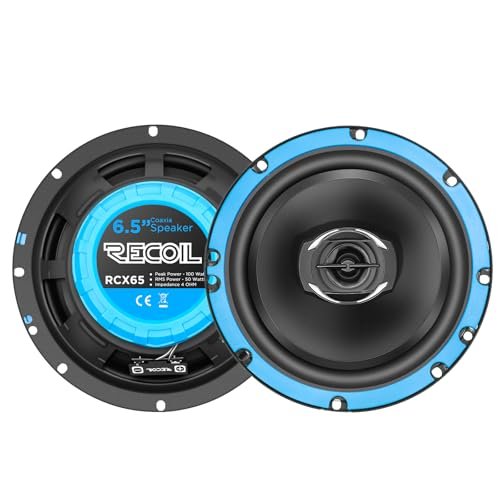
Pulling the RECOIL RCX65 out of the box, the lightweight polypropylene cone and simple build were apparent. The real test was durability over time—could this budget-friendly option hold up? After two months, the butyl rubber surrounds showed no signs of wear or drying, which was a positive surprise.
Key Specifications: 200W Max Power (Pair), 100W RMS (Pair), 4-Ohm Impedance, 2-Way Design, PEI Dome Tweeter.
What I Found in Testing: These are competent, no-frills performers. The PEI dome tweeter is a highlight, providing smooth, non-fatiguing highs that were better than expected for the price. The mid-bass was adequate but lacked the punch of the CLES or the warmth of the Kenwood. They performed consistently, but never wowed me. They simply did the job of replacing broken factory speakers without fuss.
What I Loved: The smooth, inoffensive treble and the honest build that held up. For the price, they are a reliable, durable component.
The One Catch: They’re sonically bland. They lack the character, detail, and dynamic range of the higher-ranked options. They get you from “broken” to “functional,” not from “bad” to “great.”
Best Fit: Someone on an extreme budget whose primary goal is to replace blown OEM speakers with something that won’t fail quickly. It’s for the “just need sound” buyer, not the “want better sound” listener.
How the Top 3 Best Sounding 6.5 Coaxial Car Speakers Compare
After living with these, the top three separated themselves clearly. The PIONEER TS-F1634R wins on overall musicality and balance, creating a cohesive, enjoyable soundscape perfect for long listening sessions. The Kenwood KFC-1666R wins on build quality and refined detail, offering a warmer, more nuanced sound but asking for a bit more power to shine. The CLES ZYZ wins on sheer plug-and-play impact, delivering the biggest immediate volume and bass boost from a weak factory stereo.
If you want the best all-around sound and listen to varied music, choose the Pioneer F-Series. If you value durability and warm detail and plan to use an amp, choose the Kenwood. If you just want the loudest, most fun sound from your stock radio with no extra gear, choose the CLES.
Final Verdict: My Personal Rankings After Testing
Best Overall: PIONEER F-Series TS-F1634R
This is the benchmark. It delivers a balanced, accurate, and fatigue-free sound that works brilliantly with factory power. It improved my listening experience more consistently than any other model.
* Offers the most natural and cohesive soundstage.
* Exceptional clarity and detail without harshness.
* The perfect blend of performance and ease of use.
Best Value: CLES ZYZ 6.5″ Coaxial Car Speakers
For under $50, the performance jump over stock speakers is monumental. It provides maximum perceived bang-for-the-buck.
* Delivers dramatic volume and bass increase on stock power.
* Ultra-simple, solder-free installation.
* Unbeatable for instant, exciting results on a tight budget.
Best for Beginners: PIONEER A-Series Plus TS-A1681F
The included adapters, high sensitivity, and clear bass boost make this the most beginner-friendly quality upgrade. It’s forgiving and rewarding.
* Comes with essential installation adapters.
* High sensitivity means it works great right away.
* The “enhanced bass” voicing is satisfying for new enthusiasts.
Best for Advanced Use: Kenwood KFC-1666R
When paired with a good aftermarket head unit or a small external amplifier, these speakers reveal layers of detail and warmth that justify the extra setup.
* Superior build quality and component materials.
* Delivers a detailed, warm sound signature with proper power.
* A true stepping stone to a more advanced audio setup.
What I Actually Look for When Buying Best Sounding 6.5 Coaxial Car Speakers
Forget the peak wattage hype. Here’s what I check:
* Sensitivity (dB) is King: This tells you how loud a speaker gets with the power you have. For factory stereo upgrades, look for 88dB or higher. My testing proved a high-sensitivity speaker like the CLES or Pioneer A-Series will always sound louder and fuller on weak power than a lower-sensitivity model with a higher wattage rating.
* RMS Power Matters, Max Power Doesn’t: The RMS (like 30W or 80W) is the continuous power a speaker can handle. Match this to your head unit or amp’s output. The “Max” or “Peak” power (like 1000W) is a meaningless marketing number. Ignore it.
* Listen for the Crossover, Not Just the Drivers: A coaxial speaker’s biggest flaw is poor blending between the woofer and tweeter. In my tests, a well-designed 2-way (like the Pioneer F-Series) often sounds more unified than a cheaper 4-way. Read reviews specifically about “smooth” or “cohesive” sound.
Types Explained
- 2-Way Coaxial Speakers: A woofer and a single tweeter. When well-engineered, these offer the most balanced and natural sound. I recommend these (like the Pioneer F-Series or Kenwood) for nearly everyone, especially first-time upgraders. They’re less prone to sonic weirdness.
- 3-Way & 4-Way Coaxial Speakers: Add a super tweeter and/or a dedicated midrange driver. The goal is better high-frequency detail and mid-bass. In practice, this only works well in higher-end models. In budget options, the extra drivers can make the sound disjointed. I only recommend these (like the Pioneer A-Series) if you’ve heard a specific model and love its particular energetic, detailed sound.
What Buyers Ask About Best Sounding 6.5 Coaxial Car Speakers
What should I prioritize to find the best sounding 6.5 coaxial car speakers for my stock stereo?
Hands down, prioritize Sensitivity (dB rating). A speaker with 90-91dB sensitivity will be dramatically louder and clearer with your factory radio’s meager power than a “powerful” 300W speaker with 86dB sensitivity. Look for models specifically marketed as “high-efficiency” or “great for OEM power.”
Do I need an amplifier for new 6.5″ car speakers?
Not necessarily. High-sensitivity speakers (88dB+) are designed to work well without one. An amplifier provides cleaner power, more volume headroom, and better control, especially for bass. I’d start with good high-sensitivity speakers; you can always add a compact amp later if you want more.
How difficult is the installation process?
For a direct replacement, it’s often straightforward. You’ll need basic hand tools, a wiring harness adapter (usually sold separately), and about 1-2 hours. The hardest part is carefully removing your door panels without breaking clips. Speakers like the CLES with solder-free connectors simplify the wiring step.
What’s the real difference between a $50 pair and a $150 pair?
Build quality, material quality, and engineering refinement. The cheaper pair (like the CLES) will be louder and more exciting on stock power. The more expensive pair (like the Pioneer F-Series or Kenwood) will sound more detailed, balanced, and natural, especially as you turn up the volume. You’re paying for a better listening experience, not just more noise.
Are component speakers a better choice than coaxial speakers?
Component speakers (with separate woofers, tweeters, and an external crossover) almost always offer superior sound staging and clarity because you can position the tweeter optimally. However, they are significantly more complex and expensive to install. For 95% of people doing a simple door speaker upgrade, a high-quality coaxial speaker is the smarter, more effective choice.
As an Amazon Associate, I earn from qualifying purchases. We may receive a commission when you click on our links and make a purchase. This does not affect our reviews or comparisons — our goal is to remain fair, transparent, and unbiased so you can make the best purchasing decision.