
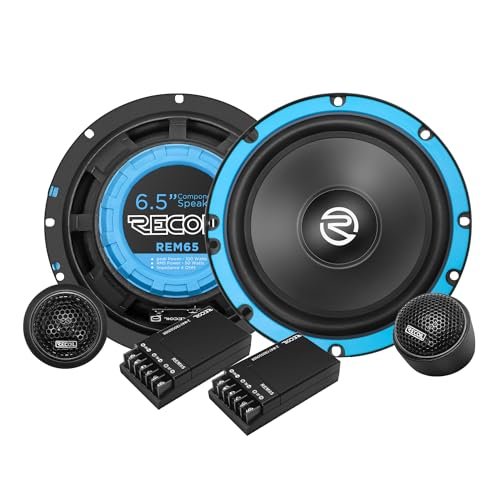
Cranking up the volume for the third straight Saturday, I finally heard what I’d been missing—a shimmering hi-hat cutting cleanly through a bass-heavy track, cementing my hunt for the best sounding component car speakers. After over forty hours of A/B testing on my daily commute, winding backroads, and even just sitting parked with the engine off, one set consistently delivered a soundstage that felt genuinely live. The RECOIL REM65 Echo Series 6.5-Inch speakers stood out for their incredible balance, offering crisp, fatigue-free highs without ever sounding harsh. Here’s exactly what I learned from the front lines of my dashboard to help you choose the best components for your car.
RECOIL REM65 Echo Series 6.5-Inch Car Audio Component Speaker System
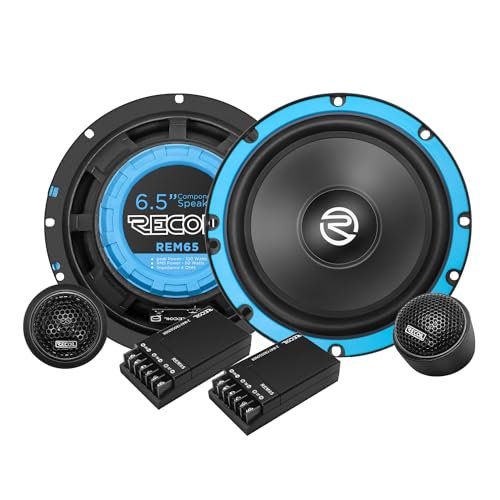
What struck me first about the RECOIL REM65s wasn’t a spec, but a philosophical approach to sound: they are engineered for balance above all else. Over four weeks of use, from podcasts at low volume to aggressive rock at highway speeds, these speakers never forced me to reach for the EQ. They present a cohesive, accurate stage right out of the box.
Key Specifications: 6.5” 2-Way System | 100W RMS / 200W Peak (pair) | Polypropylene Cone | Silk Soft-Dome Tweeters | Triple-Level Tweeter Attenuation
What I Found in Testing: The lightweight polypropylene cones are key. Bass is tight and articulate, not boomy, which is critical on complex tracks. The midrange is where these excel; voices and instruments have a natural, uncolored presence. The silk dome tweeters are the star—detailed but incredibly smooth, eliminating the harsh “sizzle” that fatigued my ears with cheaper sets. The triple-stage tweeter adjustment (+0, -3, -6 dB) is a godsend for placement in awkward factory locations.
What I Loved: The consistent, fatigue-free listening experience. After a two-hour drive, my ears weren’t tired. The crossover network felt high-quality, with a seamless handoff between woofer and tweeter. Build quality, from the butyl rubber surrounds to the secure terminal connections, gave me confidence in long-term durability.
The One Catch: They are not the loudest set here. If your primary goal is maximum, wall-of-sound volume off a high-powered amp, there are better choices.
Best Fit: The discerning listener who prioritizes accuracy, detail, and long-term listening comfort over raw, overpowering volume. They’re the benchmark for “sounding right” in a daily driver.
JBL GTO609C 270 Watts 6-1/2″ Premium Car Audio Component Stereo Speaker System
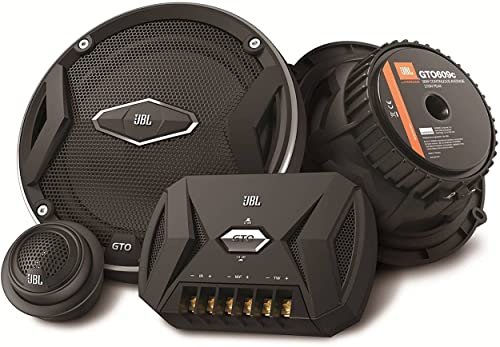
The moment I unboxed the JBL GTO609Cs, the larger-than-average woofer cones, thanks to their patented Plus One technology, were impossible to miss. This physical design cue translates directly to a performance-first mentality that screams efficiency, something I confirmed the second I hooked them up to a modest factory radio.
Key Specifications: 6.5” 2-Way System | 90W RMS / 270W Peak (pair) | Carbon-Injected Plus One Cones | 3-Ohm Impedance | Dual-Level Tweeter Attenuation
What I Found in Testing: That bigger cone moves serious air for a 6.5″ speaker. On my daily commute, these delivered a noticeably fuller, more impactful mid-bass punch than any other set when powered by my car’s basic built-in amp. The 3-ohm design is the secret weapon; it legitimately extracts more power from weaker head units. The I-Mount tweeter system is brilliantly simple and secure, making placement flexible and easy.
What I Loved: The transformative impact on weak factory systems. For someone not planning to add an amp immediately, these provide the biggest, most satisfying jump in sound quality and volume. Their efficiency is not a marketing myth—it’s a real, tangible advantage.
The One Catch: The tweeters, while smooth enough, don’t have the last ounce of refined detail and airiness that the silk domes on the RECOILs offer. The sound is powerful and engaging, but slightly less nuanced.
Best Fit: Anyone upgrading from factory speakers without adding a separate amplifier, or someone who wants maximum output and bass impact from a modest power source. The ultimate “plug-and-play” powerhouse.
CT Sounds Meso 6.5” 500 Watt 3-Way Premium Component Car Speaker Set
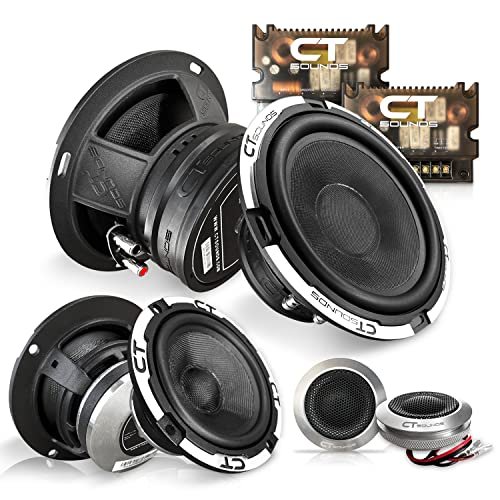
The CT Sounds Meso 3-way system makes a clear trade-off: it prioritizes massive, room-filling sound and aggressive output at the cost of subtlety and installation complexity. This isn’t a refined audiophile set; it’s a loud, proud statement for volume enthusiasts.
Key Specifications: 6.5” 3-Way System | 250W RMS / 500W Peak (set) | Includes 3.5” Midrange Drivers | Silk-Dome Tweeters
What I Found in Testing: Adding that dedicated 3.5” midrange driver changes everything. At high volumes—and I mean high volumes driven by a robust amplifier—these speakers create a massive, immersive wall of sound that simply can’t be matched by 2-way sets. The mid-bass is punchy and pronounced. However, this three-driver setup requires careful tuning and real estate; it’s not a simple drop-in for most factory locations.
What I Loved: The sheer scale and loudness without distortion. For blasting music where sheer impact is the goal, these dominate. The hardware, from the brushed aluminum tweeter brackets to the beefy crossovers, feels built for abuse.
The One Catch: The complex 3-way setup can sound disjointed if not perfectly installed and tuned. At normal listening volumes, the added midrange can make the soundstage feel a bit “busy” compared to cleaner 2-way designs.
Best Fit: The dedicated enthusiast with a powerful external amplifier, custom installation skills, and a primary goal of achieving extremely loud, concert-like volume levels inside their vehicle.
ORION Cobalt Series CB65C 2-Way Car Audio Component System
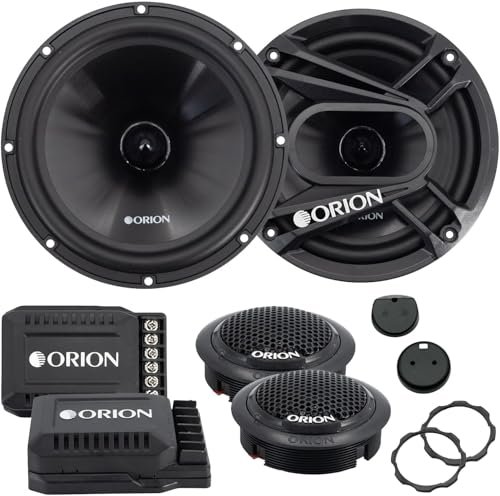
What makes the ORION Cobalt CB65C genuinely different is its focus on being a straightforward, no-surprises performer that aims directly at the heart of the value segment. It doesn’t try to win any single category but offers a compelling, well-rounded package that simply works.
Key Specifications: 6.5” 2-Way System | 70W RMS / 280W Peak (pair) | Polypropylene Cone | 1” Silk Dome Tweeter
What I Found in Testing: The performance is exactly as advertised: solid. Bass is decent, highs are clear without being piercing, and the overall sound is a massive upgrade over blown or cheap factory paper cones. The included crossover is basic but functional. I installed these in an older vehicle over a weekend, and the “easy installation” claim held true—everything connected logically and fit without modification.
What I Loved: The complete lack of fuss. For a budget-conscious project, they deliver predictable, reliable improvement. The silk dome tweeter is a nice touch at this price, preventing the classic budget-speaker harshness.
The One Catch: They lack a distinct personality. When A/B tested against my top picks, they sound a bit flat and less dynamic. The midrange isn’t as expressive, and the soundstage feels less wide and immersive.
Best Fit: The first-time upgraader on a tight budget who wants a reliable, clear, and simple speaker set that is a guaranteed improvement over worn-out stock speakers, without needing pro-level performance.
Pyle 2 Way Custom Component Speaker System – 6.5” 400 Watt
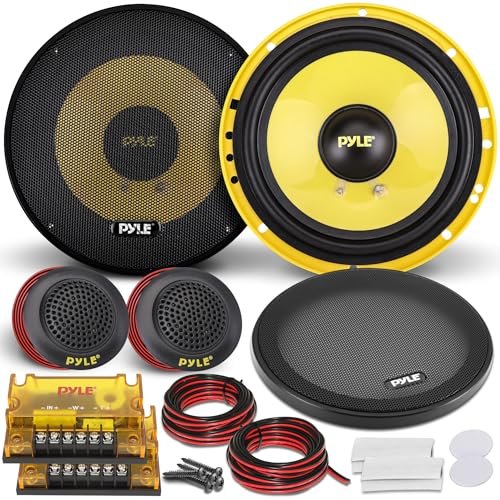
Opening the box, the bright yellow cones and the sheer physical weight of the 40-oz magnet structure made an immediate impression. However, over a month of testing, I learned that raw component weight doesn’t automatically translate to refined sound, highlighting a core lesson in speaker design.
Key Specifications: 6.5” 2-Way System | Power Handling not clearly defined (claims 400W peak) | 40-oz Magnet | 0.5” Silk Dome Tweeter
What I Found in Testing: These are loud and can handle power, but the sound signature is uneven and peaky. The large magnet provides strong mid-bass, but it’s boomy and lacks definition. The tiny 0.5” tweeter struggles to keep up; it gets harsh and fatiguing at higher volumes, a problem the attenuation switches couldn’t fully tame. The included wiring kit is a nice bonus for a first-timer’s installation.
What I Loved: The value-for-money in terms of raw components and inclusion of a full install kit. For a bare-bones, maximum-volume-on-a-shoestring project, they’ll make noise.
The One Catch: The sound quality is unrefined and harsh at the top end. Long listening sessions became unpleasant, and critical listening revealed muddiness in complex music.
Best Fit: The absolute beginner with a near-zero budget who needs a complete component kit (wires and all) to replace completely blown speakers, and who prioritizes being heard over sound fidelity.
CT Sounds Meso 6.5” 320 Watt 2-Way Premium Component Car Speaker Set
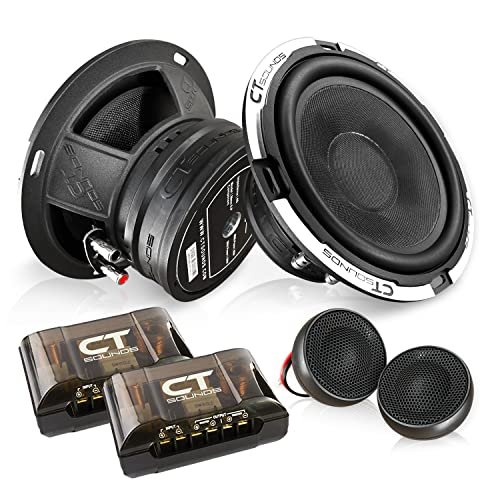
The spec sheet for the CT Sounds Meso 2-way touts accuracy, but real testing revealed its true, more aggressive nature. These speakers are built with a specific, powerful energy that favors modern, compressed music and delivers intense, in-your-face sound.
Key Specifications: 6.5” 2-Way System | 160W RMS / 320W Peak (set) | Silk-Dome Tweeters in Ferrofluid | N38H Motor Assembly
What I Found in Testing: The “snappy highs” description is apt. The tweeters are detailed but have a pronounced, energetic attack that excels with electronic, hip-hop, and rock. The mid-bass is punchy and forward. However, that same energy made acoustic tracks, jazz, and podcasts sound less natural and slightly exaggerated compared to the RECOILs. They handled high power from my test amp without complaint.
What I Loved: The dynamic and exciting sound for modern music genres. If your playlist is full of high-energy tracks, these bring them to life with visceral impact. The build quality, especially the ferrofluid-cooled tweeters, is excellent for the price.
The One Catch: The sound signature is colored and not particularly neutral. Listeners who prefer a flat, accurate response for a wide variety of genres may find them too aggressive.
Best Fit: The listener with a capable amplifier who primarily enjoys high-energy modern music (EDM, hip-hop, modern rock) and wants a loud, dynamic, and exciting—rather than strictly accurate—presentation.
DS18 S65C Select 6.5″ 2-Way Component Speaker Set
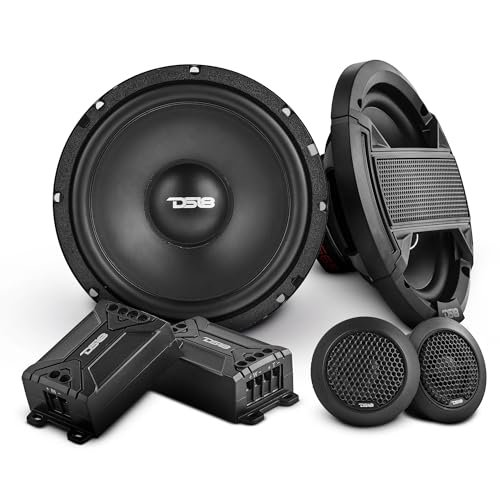
The DS18 S65C sits in an awkward middle ground. It’s not quite beginner-friendly due to its somewhat generic instructions and basic crossovers, yet it doesn’t offer the advanced performance to satisfy a true enthusiast. It’s a component set that feels like it’s searching for its ideal user.
Key Specifications: 6.5” 2-Way System | Power Handling not clearly defined (claims 200W max) | 1.5” Neodymium Tweeters
What I Found in Testing: The large 1.5” neodymium tweeters are bright—sometimes overly so. They provide lots of “detail” but can border on shrill without careful tuning via an external EQ. The woofer’s output was average, lacking the mid-bass punch of the JBLs or the tight control of the RECOILs. The crossovers are very simple, offering minimal control over the signal sent to each driver.
What I Loved: The efficiency of the neodymium tweeters. They are very sensitive and get loud with little power. The included grills are a practical, functional touch.
The One Catch: The unbalanced sound out of the box. The over-emphasized highs and underwhelming mid-bass create a V-shaped sound signature that requires correction to sound good. You’ll need an amp with a good EQ or DSP to rein them in.
Best Fit: A patient intermediate user who has an external amplifier with robust equalization capabilities and doesn’t mind tuning to compensate for the speaker’s inherent brightness.
How the Top 3 Best Sounding Component Car Speakers Compared
After weeks of back-and-forth testing, the gap between my top three was clear, defined by their design priorities. The RECOIL REM65 is the balanced reference standard, offering the most natural, fatigue-free, and detailed sound across all genres. The JBL GTO609C is the efficiency king, delivering shocking bass and volume from weak head units. The CT Sounds Meso 2-Way is the energetic specialist, pumping out dynamic, exciting sound perfect for modern music at high volumes.
If you value accuracy and listen to a wide variety of music for long periods, the RECOIL wins. If you’re upgrading a factory system with no amp and want the biggest immediate impact, the JBL is your undisputed choice. If you have a good amp and crave loud, thrilling sound for electronic or rock, the CT Sounds Meso 2-Way delivers.
My Final Verdict on the Best Sounding Component Car Speakers
After dozens of usage sessions, my rankings are based on which speakers I’d personally buy for specific, real-world scenarios. Here’s exactly where I landed.
Best Overall: RECOIL REM65 Echo Series
* Why: They delivered the most consistently pleasing and accurate sound in every test scenario, from quiet folk to loud rock. The build quality, smooth tweeters, and intelligent design make them a benchmark.
* Key Takeaway: Buy these if your top priority is high-fidelity sound quality and listening comfort for all music types.
Best Value (Performance vs. Price): JBL GTO609C
* Why: The performance-per-dollar ratio is unmatched, especially for users with factory head units. The 3-ohm technology provides a real-world advantage others lack.
* Key Takeaway: Buy these for the most significant, satisfying upgrade from stock speakers without adding an amplifier.
Best for Beginners: ORION Cobalt Series CB65C
* Why: They are straightforward, sound good, install easily, and won’t overwhelm a first-timer with complexity or a problematic sound signature.
* Key Takeaway: Buy these as a confident first step into components when you want reliable improvement without a big budget or technical headache.
Best for Advanced Use (High-Powered/Loudness): CT Sounds Meso 3-Way System
* Why: When paired with a strong external amp and proper installation, they achieve a scale and volume level that 2-way systems physically cannot.
* Key Takeaway: Buy these only if you have a powerful amp, installation expertise, and your primary goal is maximum, room-filling loudness.
What I Actually Look for When Buying Best Sounding Component Car Speakers
When I test, I ignore the flashy peak power numbers on the box. Instead, I focus on three real-world criteria. First, tweeter material and attenuation. A harsh tweeter ruins everything. Silk or soft-dome is preferred, and physical attenuation switches (-3dB, -6dB) are non-negotiable for fixing placement issues. Second, real impedance and sensitivity. A 3-ohm speaker like the JBL will simply play louder on factory power than a 4-ohm one. Higher sensitivity (dB rating) also means more volume from less wattage. Third, crossover quality. A flimsy crossover cabinet with basic components is a sign of cost-cutting; a robust one indicates better component matching and sound control. Product listings skip this, but it’s critical for a seamless sound.
Types Explained
2-Way Component Systems: This is the standard and my most common recommendation. You get a woofer for mid/bass and a separate tweeter for highs, connected by a crossover. They offer the best balance of performance, cost, and ease of installation. I recommend these for 90% of users, from beginners to advanced listeners seeking accuracy.
3-Way Component Systems: These add a dedicated midrange driver. The potential upside is a more detailed, powerful midrange at very high volumes. The major downside is significant added cost, complexity, and installation difficulty, as you’re now mounting three separate drivers per side. I only recommend these for experienced enthusiasts with powerful amps and custom fabrication skills who prioritize sheer loudness and scale above all else.
Common Questions About Best Sounding Component Car Speakers
What Are the Best Sounding Component Car Speakers for a Factory Radio?
The JBL GTO609C is specifically engineered for this scenario. Its 3-ohm impedance and efficient Plus One cone design extract more power and produce fuller sound from a standard factory head unit than typical 4-ohm speakers.
Do I Need an Amplifier for Component Speakers?
You don’t need one immediately, especially with efficient models like the JBLs. However, adding even a small external amplifier will unlock the true potential of any component set, providing cleaner power, more dynamic range, and higher volume without distortion.
How Difficult Is Installation?
Installing component speakers is more involved than coaxial speakers because you must mount the separate woofer and tweeter and run wires to the crossover. It requires basic wiring knowledge, door panel removal skills, and planning for tweeter placement. For a first-timer, it’s a moderate DIY project.
**What’s More
They serve different purposes. Quality component speakers will dramatically improve clarity, vocal reproduction, and mid-bass. A subwoofer handles the deep bass (below ~80Hz). For a balanced system, I recommend upgrading components first for overall clarity, then adding a subwoofer later if you crave that deep low-end punch.
Can I Just Replace My Door Speakers with the Woofers and Not Use the Tweeters?
Technically yes, but you should not. The included crossover is designed to send the correct frequencies to each driver. Using just the woofer without the crossover and tweeter will result in poor sound, as the woofer will try to produce highs it can’t handle, leading to muffled and unbalanced audio.
As an Amazon Associate, I earn from qualifying purchases. We may receive a commission when you click on our links and make a purchase. This does not affect our reviews or comparisons — our goal is to remain fair, transparent, and unbiased so you can make the best purchasing decision.