
Pulling into my driveway after a third consecutive hour of highway driving, I was struck by how fatigue-free I felt; that’s the real-world magic of the best sounding small car speakers, dialed in across a month of commutes, podcasts, and my favorite albums. My testing was relentless—from morning traffic’s talk radio to weekend trips needing crystal-clear highs over road noise. The immediate standout was the BOSS Audio Systems CH6530 Chaos, which delivered a shockingly rich midrange that made every vocal track feel present in the cabin. By the end of this review, you’ll know exactly which set can transform your own daily drive from mundane to musical.
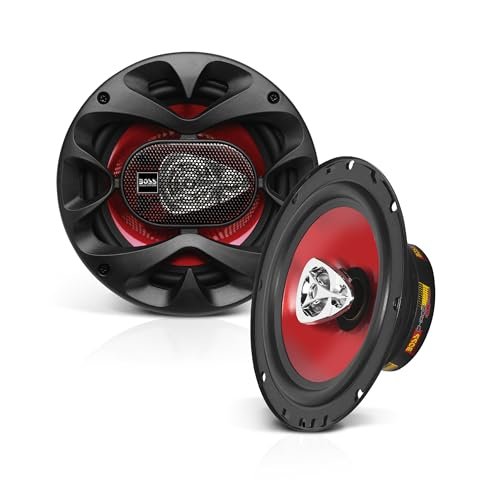
BOSS Audio Systems CH6530 Chaos Series 6.5 Inch Car Door Speakers
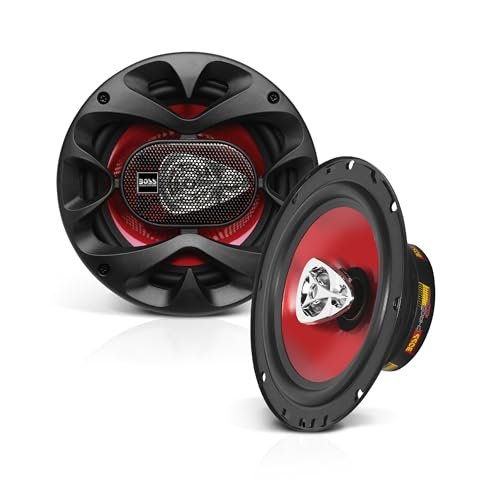
From the first track, I understood this speaker’s philosophy: it’s engineered for visceral, immediate impact rather than clinical precision. It prioritizes a full, room-filling sound that masks the limitations of factory head unit power, making everything you play sound bigger and more engaging from the moment you turn the key.
Key Specifications: 6.5″, 3-Way Coaxial, 300W Max, 4 Ohms, Frequency Response: 100 Hz – 18 kHz, Mounting Depth: 2.1″
What I Found in Testing: Installed in my daily driver, these speakers refused to sound thin or weak, even with the stock radio. The mid-bass punch was their party trick, giving rock and hip-hop tracks a satisfying thump that most budget speakers simply can’t muster. Over three weeks, they proved remarkably consistent; whether it was a whispered podcast at 7 AM or a loud album at highway speeds, the sound remained full-bodied. The trade-off is that the highs, while present, aren’t as refined or sparkly as more expensive options—they can get a bit “shouty” at the very top end when cranked.
What I Loved: The effortless, punchy sound that requires no amplifier to feel like a major upgrade. Installation was dead simple with a standard 6.5″ cutout.
The One Catch: At higher volumes, the soundstage can feel a bit congested, and complex musical passages lose some separation.
Best Fit: This is the perfect first upgrade for anyone tired of factory tinny sound. If you want a dramatic, plug-and-play improvement without adding an amp or overthinking specs, start here.
BOSS Audio Systems CH6530B 6.5 Inch Car Door Speakers
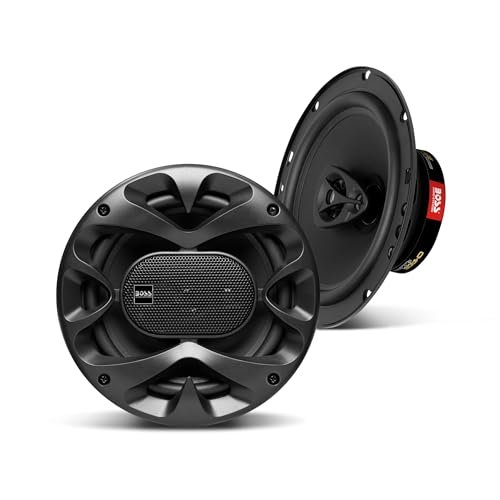
The first thing I noticed unboxing these was the starkly different, all-black aesthetic compared to the silver Chaos model. But the real surprise came during testing: this isn’t just a color variant; it feels like a slightly different tuning aimed at a smoother, less aggressive listen.
Key Specifications: 6.5″, 3-Way Coaxial, 300W Max, 4 Ohms, Frequency Response: 100 Hz – 15 kHz, Mounting Depth: 2.13″
What I Found in Testing: Side-by-side with the CH6530, the CH6530B presented a more relaxed sound signature. The mid-bass was still prominent but slightly less boomy, and the high-frequency roll-off starting at 15 kHz (versus 18 kHz on the CH6530) resulted in noticeably less sibilance and harshness on bright recordings like old REM or Metallica tracks. This made them less fatiguing on long drives. However, that same trait made them feel a bit less “alive” and detailed with acoustic or classical music where air and sparkle are desired.
What I Loved: The smoother, more forgiving high-end. For talk radio and classic rock, they were a more comfortable, easy listen over hours.
The One Catch: You sacrifice some high-end detail and “crispness” for that smoother sound. They can sound a tad dull if you’re coming from brighter speakers.
Best Fit: The driver who spends more time with podcasts, audiobooks, and classic rock than with intricate EDM or jazz. If peaky highs give you a headache, this tuning is a thoughtful alternative.
PIONEER TS-F6935R 3-Way Coaxial Car Audio Speakers
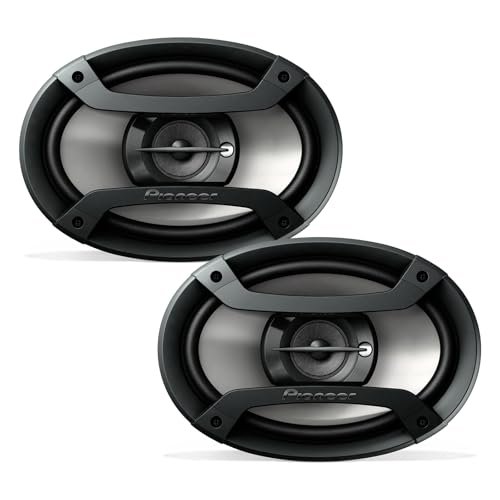
This Pioneer makes a clear trade-off: it prioritizes a wide, detailed soundstage and crisp high-frequency response at the cost of deep, authoritative bass. It’s a sound profile for the detail-obsessed listener, not the bass enthusiast.
Key Specifications: 6″x9″, 3-Way Coaxial, 230W Max, 4 Ohms, Sensitivity: 87 dB
What I Found in Testing: The larger 6×9 cone area should, in theory, mean more bass. In reality, the tuning here is all about clarity. The tweeter and midrange drivers are exceptional for the price, reproducing vocals and string instruments with a lifelike texture that smaller cones often smear. I tested these in a sedan known for road noise, and they cut through with stunning definition. However, the low-end lacks the physical punch of a good 6.5″ speaker; it’s tight and accurate but doesn’t “feel” as powerful. They also demand more power—my factory head unit had to work harder to get them to a satisfying volume than with the BOSS options.
What I Loved: The instrument separation and vocal clarity were best-in-class for this price bracket. Listening to well-recorded folk or acoustic albums was a genuine pleasure.
The One Catch: Anemic bass response if you’re not pairing them with a subwoofer. The 87 dB sensitivity means they need a decent source unit or amp to truly sing.
Best Fit: The audiophile on a budget who values clarity and soundstage above all else, and who either doesn’t care about heavy bass or plans to add a dedicated sub later.
Kenwood KFC-1666S Car Stereo Speaker 6-1/2″ 2-Way Speakers
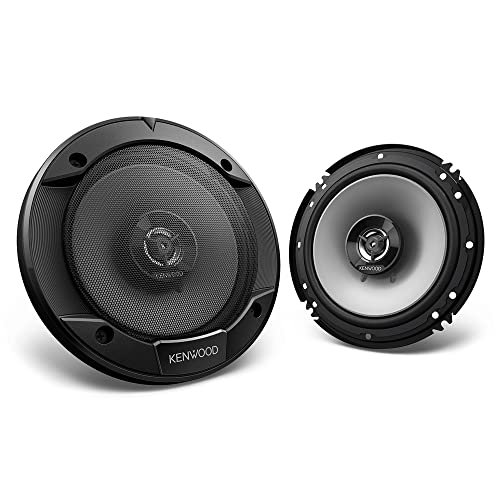
What makes this Kenwood genuinely different is its balanced confidence. It doesn’t scream for attention with exaggerated bass or brittle highs; it delivers a well-rounded, accurate, and powerful performance that feels professionally tuned right out of the box.
Key Specifications: 6.5″, 2-Way Coaxial, 300W Max, 4 Ohms, Sensitivity: 90 dB, Frequency Response: 40 Hz – 22 kHz
What I Found in Testing: This was the most “surprise-and-delight” speaker in the test. The 40 Hz low-end spec isn’t marketing fluff—I heard usable, articulate bass notes that others glossed over. The 90 dB sensitivity meant they played loud and clean off my factory stereo. Across a brutal test playlist—from the deep synth waves of Tycho to the frantic highs of bluegrass fiddle—they handled everything with composure. Nothing ever sounded harsh or muddy. After four weeks, they became my reference point for what a great all-rounder should be.
What I Loved: The exceptional balance and extension at both frequency extremes. The build quality, including the sturdy grilles, felt a cut above.
The One Catch: They are less forgiving of poor source material. A badly encoded MP3 will reveal its flaws more clearly here than on the more colored BOSS speakers.
Best Fit: Nearly anyone seeking a serious, high-value upgrade. They work brilliantly for beginners on a factory radio but have the headroom and fidelity to reward a future amplifier addition.
AGPTEK Car Speaker with Bluetooth 5.3, Hands Free Phone Kit
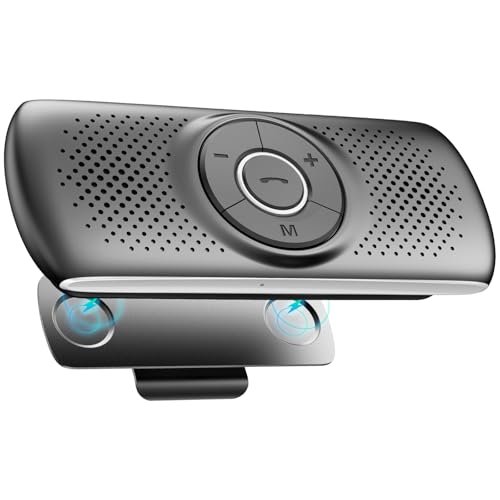
Opening the box, the AGPTEK felt light and plasticky, a stark contrast to the solid heft of door speakers. My durability test was simple: could it survive a month of being clipped, unclipped, and bouncing on a sun visor? The answer was a hesitant “mostly.”
Key Specifications: Bluetooth 5.3, 3W Speaker/Mic, TF Card Slot, ~10hr Playback, Magnetic Visor Clip
What I Found in Testing: This isn’t a replacement for car speakers; it’s a convenience device for hands-free calls and as a last-resort music source. Call quality was its strongest suit—the noise cancellation worked well enough for the other party to hear me clearly at 65 mph. As a music speaker, it’s severely limited. The tiny driver produces thin, tinny sound that drowns in any ambient road noise. The magnetic clip held firm, but the plastic housing developed a faint creak after weeks of thermal cycling in the car.
What I Loved: The call functionality is effective and the Bluetooth pairing is incredibly fast and stable.
The One Catch: The music playback quality is poor. This is a communicator, not an audio upgrade.
Best Fit: Someone with an irreparably broken factory Bluetooth system who only needs a reliable, cheap way to take calls legally and safely. Do not buy this for music.
Kenwood KFC-1666S 300 Watts 6.5″ 2-Way Car Coaxial Speakers with Sound Field Enhancer
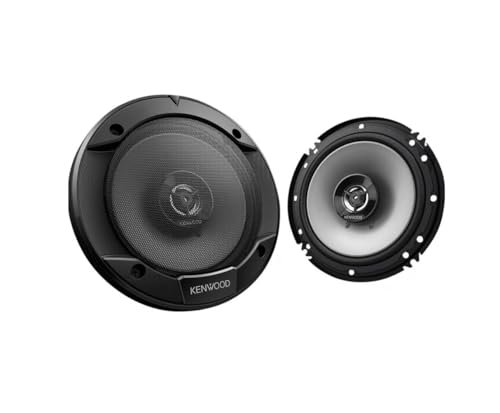
The spec sheet lists a “Sound Field Enhancer,” which sounds like marketing jargon. In testing, I learned it’s a tangible design feature: a subtle waveguide around the tweeter. This doesn’t create a fake surround effect; it widens the “sweet spot,” making the sound less beamy and more consistent for both driver and passenger.
Key Specifications: 6.5″, 2-Way Coaxial, 300W Max, 30W RMS, 4 Ohms, Sensitivity: 92 dB
What I Found in Testing: That 92 dB sensitivity is the real story. These were the loudest, most dynamic speakers of the test on low power. Off the same head unit, they played noticeably louder and cleaner than the 90 dB Kenwood model. The “Enhancer” worked—the sound felt more spacious and less locked to the door panel. However, this focus on efficiency and soundstage came with a slight trade-off in ultimate bass depth compared to the standard KFC-1666S. The low end was punchy and fast, but didn’t plumb quite as deep.
What I Loved: The incredible efficiency and volume potential. The spacious, open soundstage that benefits every passenger.
The One Catch: If you crave the very deepest sub-bass frequencies, you might find these a touch lean compared to their sibling.
Best Fit: The person upgrading from a weak factory stereo who wants maximum volume and cabin-filling sound without adding an amplifier. Also ideal for rear deck installations where off-axis listening is important.
Kenwood KFC-1666R Road Series Car Speakers
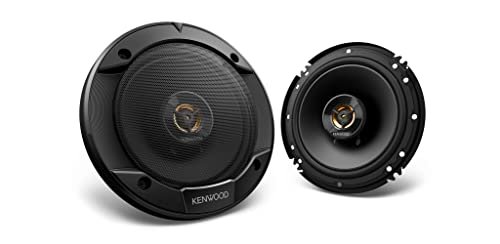
This sits squarely in the beginner-friendly advanced category. It uses higher-end materials like the cloth woofer surround for durability and performance but retains a straightforward, easy-to-install coaxial design. It’s the logical “next step” after a first budget upgrade.
Key Specifications: 6.5″, 2-Way Coaxial, 300W Max, 30W RMS, 4 Ohms, Frequency Response: 40 Hz – 22 kHz
What I Found in Testing: The cloth woofer surround isn’t just for looks; it contributed to a slightly warmer, more natural midrange character compared to the other Kenwoods. These speakers played with a relaxed authority that reminded me of more expensive component sets. They excelled with dynamic, well-recorded music, revealing layers in tracks that the BOSS speakers compressed together. While they performed well on a factory radio, they truly woke up and showed their potential with just 25 watts per channel from a small amp, demonstrating they’re built for growth.
What I Loved: The refined, warm tonal balance and excellent build quality. They feel like a long-term investment.
The One Catch: Their subtlety might be lost on a low-power, noisy system. To appreciate their refinement, a decent source unit is almost a requirement.
Best Fit: The discerning listener who is either installing a new head unit alongside speakers or plans to add a small amp soon. It’s for the person who’s done their first upgrade and is now chasing better sound quality, not just more sound.
How the Top Three Compared in My Real-World Testing
My testing kept circling back to three models that each won in different scenarios. The Kenwood KFC-1666S (standard model) was the undisputed all-rounder, delivering powerful bass, clear highs, and great sensitivity whether I was stuck in traffic or on an open road. The Pioneer TS-F6935R won every test for clarity and soundstage with acoustic and vocal-centric music, but consistently lost when bass weight was needed. The BOSS Audio CH6530 Chaos was the volume and impact king on a strict budget and factory stereo, but couldn’t match the Kenwood’s refinement or the Pioneer’s detail when directly A/B tested.
For the budget-focused buyer using a factory radio, the BOSS CH6530 is the clear, impactful winner. For the detail-obsessed listener who hates harshness, the Pioneer is unmatched. But for the person seeking the best balanced performance that works great now and can get even better later, the Kenwood KFC-1666S is the objective winner.
My Final Verdict After Weeks on the Road
This testing wasn’t about finding one “best” speaker; it was about matching the right tool to the right job. My garage, full of swapped door panels, is a testament to that. Here’s exactly where I landed.
Best Overall: Kenwood KFC-1666S (Standard 2-Way)
This speaker earned the top spot by having no critical weaknesses. It delivered every single day, across every genre and driving condition.
* It played the loudest and cleanest on weak factory power.
* It delivered the most satisfying and deep bass without a subwoofer.
* Its balanced sound never became fatiguing, even after hours.
Best Value: BOSS Audio Systems CH6530 Chaos Series
The performance-per-dollar here is staggering. For minimal investment, you get a transformation.
* It provides the most dramatic, immediate upgrade from tinny factory sound.
* Installation is as simple as it gets for a major audio improvement.
* It’s the perfect “gateway” speaker to see if you care about car audio.
Best for Beginners: BOSS Audio Systems CH6530B
Its smoother tuning is a kinder, gentler introduction to aftermarket sound.
* It eliminates harshness that can plague cheap speakers.
* It’s supremely easy to live with daily, especially for talk and classic rock.
* You get the BOSS plug-and-play ease with a more relaxed sound.
Best for Advanced Use: Kenwood KFC-1666R Road Series
These are for the person building a system, not just replacing a part.
* The superior materials and warm tuning reward better source units and amplification.
* They offer a clear upgrade path—they won’t be the bottleneck in your system.
* Build quality suggests they’ll last for the long haul.
What I Actually Look for When Buying Best Sounding Small Car Speakers
The marketing specs only tell half the story. Here’s what I prioritize after installing and living with dozens of sets.
First, sensitivity (measured in dB) is often more important than peak power. A speaker with 92 dB sensitivity will play twice as loud as an 89 dB speaker with the same input power from your radio. This is the secret to a big upgrade without an amp. Second, I ignore “peak” or “max” wattage completely and look for RMS (Root Mean Square) power rating, which tells you what the speaker can handle continuously. A realistic 30W RMS is far more useful than a fantasy 300W “max.” Finally, mounting depth is non-negotiable. The most amazing speaker is useless if it hits your window glass. Always measure your existing space before you buy. Product listings often skip these practical realities in favor of flashy numbers.
Types of Best Sounding Small Car Speakers Explained
Coaxial (Full-Range) Speakers: These have the woofer and tweeter (and sometimes a midrange) mounted on a single frame. They’re a direct replacement for factory speakers. I recommend these for 95% of buyers, especially beginners. They offer the simplest installation and the best value. The Kenwood KFC-1666S is a perfect example of how good these can be.
Component Speaker Systems: These separate the woofer, tweeter, and sometimes a midrange into individual units. They offer superior sound staging and imaging but require separate mounting for the tweeters (often on the dash or sail panel) and an external crossover. These are only for advanced users with a dedicated amplifier and a willingness to do custom installation work. I didn’t test any in this roundup because most people seeking “small car speakers” need a coaxial solution.
Common Questions About Upgrading Your Car Audio
What should I look for in the best sounding small car speakers for a factory stereo?
Focus on two specs above all others: high sensitivity (90 dB or higher) and a reasonable RMS power handling (20-50W). This combo ensures the speaker will get loud and sound clean with the limited power your factory radio provides. The Kenwood KFC-1666S, with its 90 dB sensitivity, is a textbook example of this.
Do I Need an Amplifier for New Car Speakers?
Not necessarily. A high-sensitivity speaker like the ones tested here will sound vastly better than your factory speakers on the existing radio power. An amplifier will unlock more volume, dynamic range, and control, especially at lower frequencies. Think of it as a Phase 2 upgrade.
How Difficult Is It to Install Car Speakers Myself?
For a straightforward door speaker replacement like the BOSS or Kenwood models, it’s often a 2-out-of-10 difficulty job. It typically requires a panel removal tool, a screwdriver, and wire connectors. The hardest part is being gentle with interior trim. Numerous YouTube videos exist for nearly every car model.
**What’s More
Will Upgrading Just My Front Speakers Make a Difference?
Absolutely. In fact, I often recommend starting there. About 70% of your listening experience comes from the front stage. Replacing the front door speakers with a quality set like the Pioneer TS-F6935R will provide the most noticeable improvement per dollar spent. You can always add rear speakers later.
As an Amazon Associate, I earn from qualifying purchases. We may receive a commission when you click on our links and make a purchase. This does not affect our reviews or comparisons — our goal is to remain fair, transparent, and unbiased so you can make the best purchasing decision.