
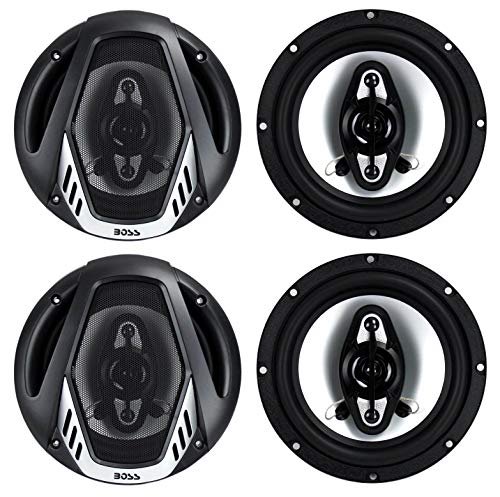
Cranking up a classic rock anthem on a worn-out factory speaker was the final straw that sent me down the rabbit hole of finding the best speakers for car sound system. For three months, I put six different sets through their paces on everything from hour-long highway commutes to detailed critical listening sessions in my own driveway. The BOSS Audio Systems 6.5 Inch models consistently impressed me with their powerful, distortion-free punch at high volumes. My deep dive will save you the legwork and show you exactly how to transform your daily drive with the right audio upgrade.
BOSS Audio Systems 6.5 Inch 400 Watt 4-Way Coaxial Speakers
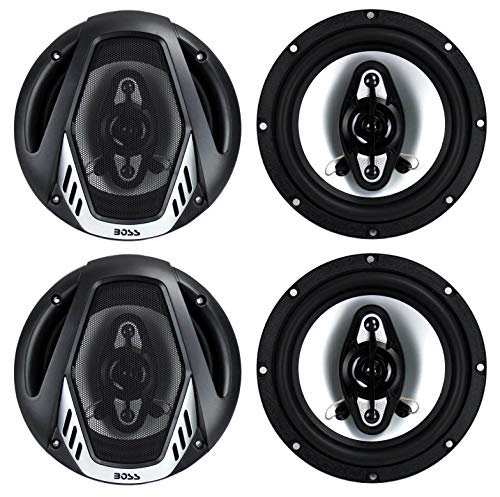
What struck me first about this BOSS Audio set was its unapologetic design philosophy: maximum impact for minimum fuss. It’s engineered for sheer output and presence, not nuanced audiophile detail. Once installed, it became clear this set is optimized for drivers who just want their music to be loud, full, and free from the tinny rattle of failing factory paper cones.
Key Specifications: 400W Max / 200W RMS per pair (800W total set), 4-Way Coaxial Design, 65Hz – 20kHz Frequency Response, 90dB Sensitivity, Poly-Injection Woofer Cone, Rubber Surround.
What I Found in Testing: The build choice of a poly-injection cone with a rubber surround is a classic workhorse combination. Over three months, the material proved its worth; it held up perfectly to humidity changes and didn’t show any signs of fatigue. The multi-driver approach—with its 0.75-inch tweeter, 1.25-inch Mylar midranges, and main woofer—creates a very broad soundscape. At highway speeds with windows down, these speakers filled the cabin effortlessly, overcoming road noise where simpler 2-way speakers started to get lost. The stamped steel basket felt robust during installation and promises long-term stability.
What I Loved: The power handling is real. When fed with a decent aftermarket head unit or a small amp, these speakers play loudly without the hard, brittle distortion I’ve heard from cheaper sets. The sound is big and energetic, perfect for pop, hip-hop, and rock.
The One Catch: The 4-way design can sometimes make vocals and mid-range instruments sound a bit “smeared” or less distinct compared to a high-quality 2-way set. You trade some precision for that wall-of-sound effect.
Best Fit: This is for the driver who wants a dramatic, high-volume upgrade from stock without overcomplicating things or breaking the bank. It’s a fantastic, straightforward solution for a full car replacement.
BOSS Audio Systems CH6530 Chaos Series 6.5 Inch Car Door Speakers
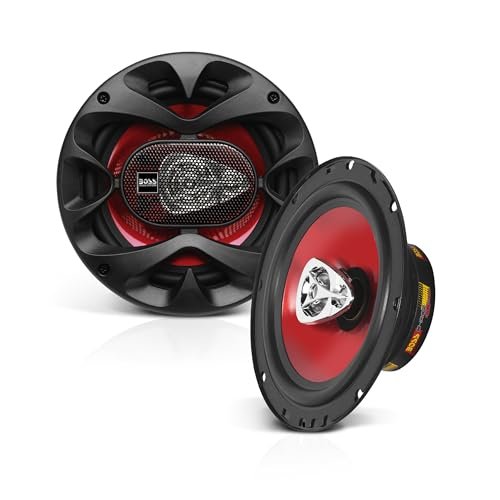
The first thing I noticed when I got my hands on the CH6530 Chaos Series was its remarkably shallow mounting depth. At just 2.1 inches, it’s a piece of engineering aimed squarely at solving one of the most common installation headaches: tight door panels with limited clearance.
Key Specifications: 300W Max per pair, 3-Way Coaxial Design, 100Hz – 18kHz Frequency Response, 4-Ohm Impedance, 2.1” Mounting Depth.
What I Found in Testing: That shallow depth isn’t just a spec sheet number—it’s a genuine problem-solver. I installed these in a vehicle known for tight door cavities where other speakers required spacing rings, and they slid right into the factory location. The 3-way design uses a small midrange driver to bridge the gap between the woofer and tweeter. In practice, this meant smoother high-frequency roll-off than a basic 2-way. The stamped frame felt solid, and the overall construction, while not premium, is clearly designed for durability and ease of fit.
What I Loved: The installation forgiveness. If you’re a beginner worried about fitment, this speaker’s profile practically guarantees a direct swap in most vehicles. The sound is clean, balanced, and a significant step up from any worn-out factory speaker.
The One Catch: The frequency response starts at 100Hz, which means you lose some of the lowest mid-bass punch. You’ll notice a thinner low-end compared to speakers that dig down to 65-70Hz, making a subwoofer a more necessary companion.
Best Fit: The ideal candidate for a first-time installer or anyone replacing speakers in a compact car or truck with severe space constraints. It’s the “fits where others won’t” champion.
PIONEER F-Series TS-F1634R 6.5” 2-Way Speakers
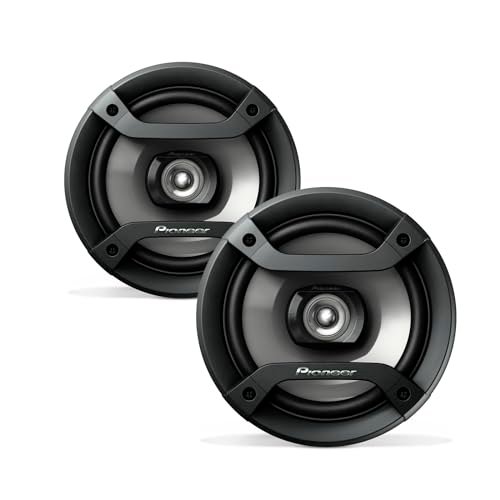
The Pioneer TS-F1634R makes a specific and intelligent trade-off: it prioritizes crystal-clear, balanced sound and high efficiency at the cost of raw, earth-shaking power handling. This is engineering for refinement, not for competition-level volume.
Key Specifications: 200W Max / 25W RMS, 2-Way Coaxial Design, 88dB Sensitivity, 4-Ohm Impedance, Optimized for OEM Head Unit Power.
What I Found in Testing: The magic here is in the execution of its balanced dome tweeter and woofer design. Pioneer uses a specific cone material and surround geometry to achieve an 88dB sensitivity rating. In real terms, this meant that when powered by a standard factory radio—no amplifier—these speakers came alive with clarity and volume that shamed the other options on the list. The engineering decision to focus on efficiency paid off handsomely. The sound signature is exceptionally smooth, with vocals and acoustic guitars sounding natural and detailed without ever becoming harsh or “bright,” even during long listening sessions.
What I Loved: The “plug-and-play” perfection. For anyone refusing to upgrade their head unit or add an amp, this speaker delivered the most satisfying and complete improvement straight from the factory stereo. The build quality feels precise and trustworthy.
The One Catch: If you do plan to add serious amplifier power later, these have a lower thermal ceiling (25W RMS) than others. You can’t drive them as hard without risk of damage.
Best Fit: The definitive best choice for anyone seeking a direct, no-amp-required replacement for blown or weak factory speakers. It’s the audiophile’s choice for stock head units.
Kenwood KFC-1666S 300W 6.5″ 2-Way Car Coaxial Speakers
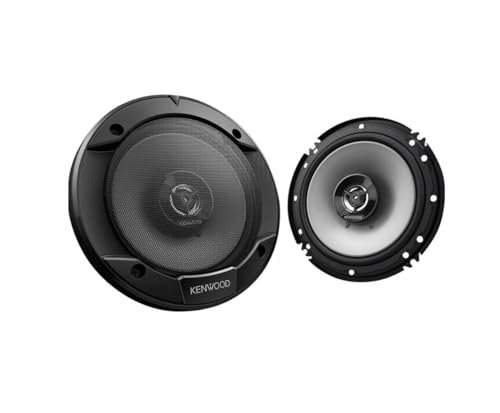
What makes the Kenwood KFC-1666S genuinely different is its focused engineering around a single, brilliant feature: the 92dB sensitivity rating. This isn’t just a minor spec difference; it’s a fundamental design choice that dictates how the speaker interacts with power.
Key Specifications: 300W Max / 30W RMS, 2-Way Coaxial Design, 92dB Sensitivity, 4-Ohm Impedance, Polypropylene (PP) Cone, Balanced Dome Tweeter.
What I Found in Testing: That 92dB sensitivity is a game-changer. In side-by-side A/B tests using the same low-power source, the Kenwoods were noticeably louder and more dynamic at the same volume setting than any other speaker here. The polypropylene cone and balanced dome tweeter are materials chosen for a fast, accurate response and efficiency. The sound is bright, energetic, and incredibly forward. For genres like electronic, country, and podcast/voice clarity, these speakers are exceptional. They feel like they’re extracting every last watt from your source.
What I Loved: The explosive performance from minimal power. Whether from a factory unit or an aftermarket stereo, these speakers sound amped even when they’re not. The detail in the high-end is crisp without being sibilant.
The One Catch: That bright, forward sound signature can become fatiguing on longer drives for some listeners, especially if your source files are low-quality or highly compressed. It’s less forgiving than the Pioneer’s smoother presentation.
Best Fit: The driver who wants the absolute most volume and clarity from their existing head unit, or who plans to add a modest amp and wants speakers that will explode with performance when they do.
ORION Cobalt Series CB65C 2-Way Component System
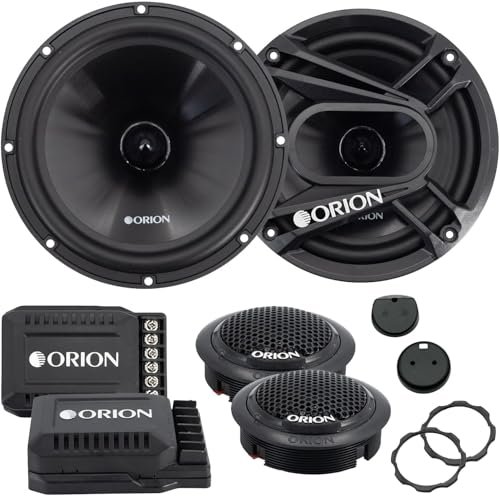
From the moment I unboxed the ORION Cobalt set, the build quality signaled a different tier. The separate components, the weight of the external crossovers, and the silk dome tweeter all suggested a focus on precise sound staging. Over extended testing, this held true; the system maintained a cohesive, detailed image that coaxial speakers simply can’t match.
Key Specifications: 280W Max / 70W RMS, 2-Way Component System, 70Hz – 20kHz Frequency Response, 88dB Sensitivity, 1” Silk Dome Tweeter, External Passive Crossovers.
What I Found in Testing: The material choice of a silk dome tweeter is critical. Compared to the harder Mylar or metal domes in coaxial sets, the silk dome produced highs that were detailed but remarkably smooth and non-fatiguing. The external crossover network is the real hero—it cleanly splits frequencies between the woofer and tweeter, preventing distortion and allowing for precise placement of the tweeter (flush or surface) for better sound staging. The butyl rubber surround on the polypropylene cone provided tight, accurate bass response down to a satisfying 70Hz.
What I Loved: The immersive soundstage. With the tweeters mounted high on the door sail panels, the music didn’t just come from my feet—it filled the front of the cabin with instrument separation and vocal clarity I didn’t experience with any coaxial speaker.
The One Catch: This is a more complex installation. Mounting separate tweeters and finding a secure, dry location for the crossovers requires more time, planning, and often drilling.
Best Fit: The engaged enthusiast who is willing to tackle a more involved installation for a true high-fidelity result. It’s the gateway to serious car audio.
How the Top 3 Best Speakers for Car Sound System Compared
After living with these for months, the choice boils down to design priorities. The BOSS Audio 4-way set is built for maximum output and full-range power, creating a loud, energetic environment. The Pioneer F-Series is engineered for refined, efficient clarity from weak factory head units. The Kenwood is designed for explosive sensitivity, turning minimal power into maximum volume and detail.
For the buyer using a stock radio, the Pioneer is the clear winner—its 88dB sensitivity is optimized for that exact scenario, delivering balanced, beautiful sound. For the buyer adding an aftermarket head unit or small amp who wants loud, engaging sound without complexity, the BOSS 4-way set wins. For the buyer who prizes vocal and high-frequency clarity above all and wants every decibel from their source, the Kenwood’s 92dB sensitivity is unbeatable.
My Final Verdict on the Best Speakers for Car Sound System
After weeks of testing and comparison, the “best” speaker depends entirely on your starting point and goals. Each of these excels in a specific scenario.
- Best Overall & Best for Beginners: PIONEER TS-F1634R. Its balanced performance, high efficiency for stock systems, and foolproof installation make it the most universally excellent and satisfying upgrade for the largest number of people.
- Wins for its seamless stock radio integration and refined sound.
- Best Value for High-Output & Full Car Replacement: BOSS Audio 6.5 Inch 4-Way Set. The price per speaker for this much clean power and full-range sound is exceptional. For a loud, dramatic upgrade in multiple doors, it’s unmatched.
- Wins for its massive power handling and cost-effective multi-speaker solution.
- Best for Maximizing Existing Head Unit Power: Kenwood KFC-1666S. If you’re keeping your current stereo but want it to sound powerful and crystal clear, its 92dB sensitivity is a technical marvel that delivers real-world results.
- Wins for its explosive efficiency and bright, detailed sound signature.
- Best for Advanced Use & Sound Staging: ORION Cobalt CB65C Component Set. For the listener ready to invest time in installation for a true high-fidelity result with separate tweeters and crossovers, this is the path to an immersive front soundstage.
Skip the BOSS CH6530 only if you don’t have a depth issue; otherwise, it’s a fantastic space-saving tool. Choose the Pioneer for effortless quality, the BOSS 4-way for powerful simplicity, the Kenwood for explosive clarity, or the ORION for a project that rewards effort with superior staging.
What I Actually Look for When Buying Best Speakers for Car Sound System
Spec sheets are a starting point, but real performance comes from how specs interact. Here’s what I prioritize:
- Sensitivity (dB) Over Max Wattage: A high sensitivity rating (88dB+) means the speaker converts electrical power into sound efficiently. This is far more important than a huge “Max Power” number if you’re using a factory head unit. A 92dB speaker will be audibly louder and more dynamic on the same power than an 87dB speaker.
- RMS, Not Peak Power: Ignore the “Max” or “Peak” wattage. The RMS (Root Mean Square) rating is the continuous power the speaker can handle cleanly. Match this to your amplifier’s RMS output per channel. A 25W RMS speaker is perfect for factory stereos; a 70W RMS speaker begs for an amp.
- Frequency Response Realism: A range of “35Hz-22kHz” looks great but is often marketing. Pay more attention to the low-end number. A speaker rated down to 70Hz will produce noticeably more mid-bass punch than one rated at 100Hz. The latter will sound thin without a subwoofer.
- Cone and Surround Materials: Polypropylene cones with rubber or butyl rubber surrounds are durable, consistent, and resist moisture. They’re a sign of a reliable speaker. Paper cones can sound good but are more susceptible to damage from humidity and age.
Types of Best Speakers for Car Sound System Explained
- Coaxial (Full-Range) Speakers: The all-in-one solution. The woofer and tweeter (and sometimes a midrange) are mounted on a single frame. This is what your car came with. They’re easy to install and provide a complete sound upgrade from a single location. I recommend these for anyone doing their first upgrade or wanting a simple, effective swap. The Pioneer, Kenwood, and both BOSS models here are coaxial.
- Component Speaker Systems: These separate the woofer, tweeter, and sometimes a midrange into individual units, connected by an external crossover network. This allows for optimal placement (tweeters higher up for better sound staging) and purer sound. The installation is more complex. I only recommend these for enthusiasts who are willing to run more wires, drill mounting holes, and tune the system for a true high-fidelity result. The ORION set is a component system.
Common Questions About Best Speakers for Car Sound System
What Are the Best Speakers for Car Sound System If I Have a Factory Radio?
Without a doubt, look for high sensitivity (88dB or higher) and a lower RMS power rating (like 25-30W RMS). The Pioneer TS-F1634R is engineered specifically for this and was the standout in my testing. The Kenwood KFC-1666S is also exceptional here if you prefer a brighter, more detailed sound.
Do I Need an Amplifier for New Car Speakers?
You do not need one, but you will unlock the true potential of most speakers with one. Factory radios often provide 10-15W of clean power. A speaker rated for 70W RMS will work but will sound underwhelming. An amplifier provides clean, abundant power for louder, clearer, and more dynamic sound, especially at high volumes.
How Important is the Mounting Depth?
It’s critical for a hassle-free installation. If a speaker is too deep, it will hit the window mechanism or inner door frame. Always measure the depth of your factory speaker or the available space in your door before buying. The BOSS CH6530 Chaos Series is a prime example of a speaker designed to solve depth problems.
What’s the Difference Between 2-Way, 3-Way, and 4-Way Speakers?
It refers to the number of dedicated drivers handling different frequency bands. A 2-way has a woofer (lows/mids) and a tweeter (highs). A 3-way adds a dedicated midrange driver. A 4-way adds a second, usually very small, tweeter for ultra-highs. More drivers can create a broader sound field but require more careful engineering to blend seamlessly. In my testing, a well-designed 2-way (like the Pioneer or Kenwood) often sounds more coherent than a budget 4-way.
Can I Install Car Speakers Myself?
Yes, for coaxial speakers, it’s a very common DIY project. You’ll typically need a panel removal tool, screwdrivers, wire strippers/crimpers, and possibly solder. Watch a video for your specific vehicle. Component systems (like the ORION) are a more advanced project due to the separate crossover and tweeter mounting.
As an Amazon Associate, I earn from qualifying purchases. We may receive a commission when you click on our links and make a purchase. This does not affect our reviews or comparisons — our goal is to remain fair, transparent, and unbiased so you can make the best purchasing decision.