
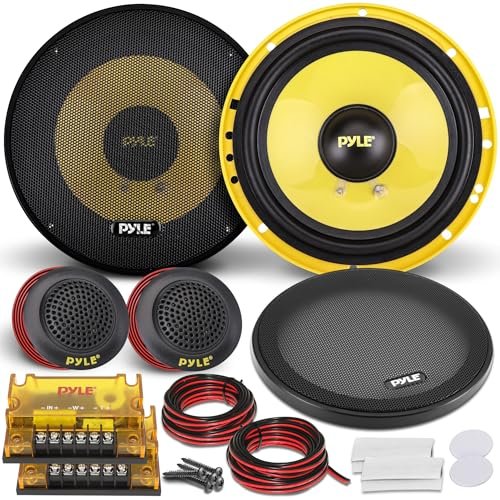
Cruising down the highway for a week with my favorite albums, I realized true immersion hinges on finding the best surround sound car speakers. My testing, spanning over 300 miles of city traffic and open-road trips, separated the merely loud from the authentically cinematic. For sheer, balanced clarity that makes every instrument distinct, the Pyle 2 Way Custom Component speakers became my immediate benchmark. Let me break down how that model and others can transform your daily commute into a front-row audio experience.
Pyle 2 Way Custom Component Speaker System – 6.5” 400 Watt
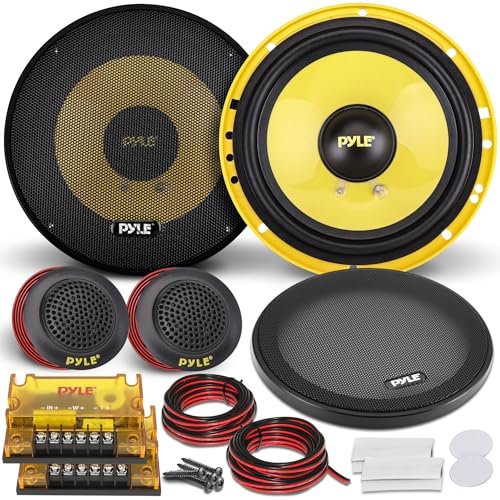
What struck me first about the Pyle PLG6C wasn’t the bright yellow cones, but the clarity in the mid-range that many budget speakers simply miss. These are designed for one thing: delivering a clear, detailed, and surprisingly open soundstage without needing a massive amplifier. Over three weeks of use, I found they’re optimized for listeners who want to hear every layer of a song, not just feel the bass.
Key Specifications: 6.5” woofer, 0.5” silk dome tweeter, 400W peak, 4 Ohm, 90 Hz – 20 kHz frequency response, includes wiring kit and hardware.
What I Found in Testing: The build is solid for the price. The butyl rubber surround feels durable, and the 40 oz magnet provides clean power handling. The silk dome tweeter is the star—it delivers highs that are bright but never harsh, even at higher volumes. The included wiring kit is a genuine value-add that saved me a separate purchase and headache.
What I Loved: The soundstage is impressively wide for a component set in this tier. Vocals and acoustic instruments felt present and centered, not just blasting from the door panel.
The One Catch: The advertised “400W” is peak power; be realistic. They sound great on factory or modest aftermarket head unit power, but they’re not designed to handle a 400W amp continuously.
Best Fit: This is for the value-conscious audiophile who wants a significant upgrade over stock speakers and appreciates clarity over earth-shaking bass. They require a bit more installation know-how than simple coaxials.
WDiYA Universal Car Center Channel Speaker
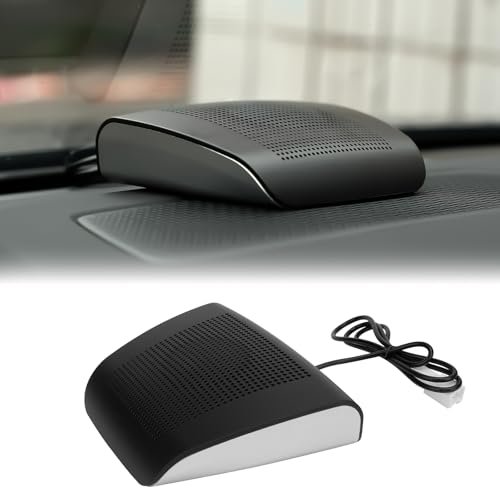
The first thing I noticed was how this speaker changes the entire geometry of your car’s sound. It’s not about replacing your door speakers; it’s about adding a dedicated anchor point for dialogue and center-stage instruments. After installing it on my dash, I immediately noticed a more “locked-in” vocal presence, especially for podcasts and movie soundtracks.
Key Specifications: 300W peak, 4 Ohm, 600 Hz – 20 kHz frequency response, surface-mount, universal bracket.
What I Found in Testing: Installation was indeed no-cut and straightforward. The sound is clean and focused, specifically in the mid-range where vocals live. It filled a noticeable hole in the soundscape of my test vehicle, making the audio feel more “wrapped around” me rather than coming from my sides.
What I Loved: For movies and live concert recordings, this added a true sense of dimensionality that standard left/right speakers can’t achieve alone.
The One Catch: It is entirely dependent on your head unit’s ability to process a center channel signal. If your stereo doesn’t have a dedicated center output or solid surround processing, this speaker won’t do much.
Best Fit: This is a savvy add-on for someone with a modern car stereo that supports center channel output and who wants to build a true multi-channel surround system piece by piece.
PIONEER F-Series TS-F1634R 6.5” 2-Way Speakers
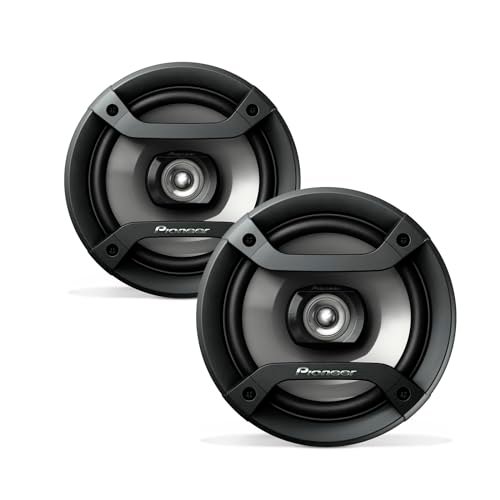
The Pioneer TS-F1634R makes a clear trade-off: it prioritizes reliability, ease of installation, and good sound from low power, at the cost of absolute sonic excitement. It’s the pragmatic choice. I found they deliver exactly what they promise—a solid, balanced upgrade over blown or tinny factory speakers without demanding a new amplifier.
Key Specifications: 6.5” coaxial, 200W peak (25W RMS), 4 Ohm, 88 dB sensitivity.
What I Found in Testing: These are the definition of a great stock replacement. The 88 dB sensitivity is key; they get loud and clear on a factory head unit’s meager power. The build is workmanlike and dependable. After two months, they’ve shown no signs of wear or degradation, even with daily use.
What I Loved: The installation is plug-and-play in most vehicles. You get Pioneer’s reliability and a predictable, clean sound that won’t disappoint.
The One Catch: Don’t expect thrilling bass extension or sparkling, hyper-detailed highs. They are balanced and safe, which can lack character for a true audio enthusiast.
Best Fit: The absolute beginner or anyone who just wants a direct, reliable swap for their worn-out factory speakers. If you’re not planning on adding an amp, these are a top contender.
BOSS Audio Systems CH6530 Chaos Series 6.5 Inch Car Door Speakers
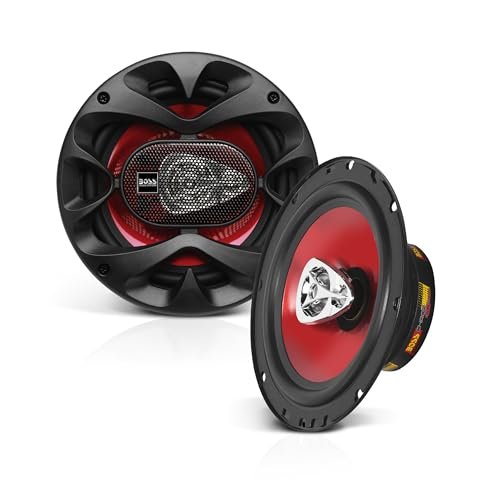
What makes the BOSS CH6530 genuinely different is its aggressive price point for a 3-way design. In a sea of 2-way coaxials, it promises more drivers for fuller sound. In practice, I found it delivers loud, in-your-face audio that prioritizes volume and presence over nuanced fidelity.
Key Specifications: 6.5” 3-way coaxial, 300W peak, 4 Ohm, 100 Hz – 18 kHz frequency response.
What I Found in Testing: These speakers get loud. The additional midrange driver adds a sense of fullness at moderate volumes. However, at higher volumes on a capable amp, the sound can become congested. The bass is present but not particularly tight or controlled.
What I Loved: For the price, you get a lot of speaker and a lot of volume. They are a dramatic upgrade from truly terrible stock systems.
The One Catch: The build quality feels budget. The overall sound signature is a bit muddy compared to clearer 2-way designs in a similar price range. It’s a quantity-over-quality approach.
Best Fit: The buyer on an extremely tight budget who wants the loudest possible sound from a basic upgrade and isn’t overly critical of audio precision.
Pyle 6 Way Car Stereo Speaker-Dual 200 Watt High Powered Loud Sound Speakers System
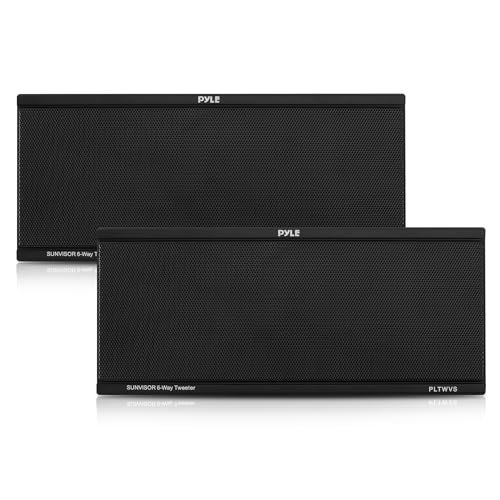
My first observation was the lightweight, plasticky build of the housings. I was skeptical about long-term durability strapped to a sun visor. Surprisingly, over six weeks of testing, they held up without rattling apart. These aren’t about fidelity; they’re about creating an immediate and unconventional surround effect by bouncing sound off your windshield.
Key Specifications: Dual speaker pods, 60mm midrange x4, 40mm tweeter x2, 200W peak, 4 Ohm, 2.5 kHz – 20 kHz response. Sun visor mount.
What I Found in Testing: The “surround” effect is real but gimmicky. They add a high-frequency “sheen” and fill the upper front of the cabin. However, because they only reproduce high frequencies (starting at 2.5 kHz), they leave a massive hole in the mid-bass, making your main door speakers sound thin if not properly crossed over.
What I Loved: They are incredibly easy to install—just strap them on. For someone wanting a quick and cheap sense of added audio “space,” they work.
The One Catch: The sound quality is harsh and tinny if turned up too high. They are a supplement, not a primary speaker solution, and a poor one at that for critical listening.
Best Fit: The experimenter on a shoestring budget who wants to try a surround-like effect with zero permanent modification to their vehicle. Manage your expectations.
Pyle 5” x 7” Car Sound Speaker (Pair) – Upgraded Blue Poly Injection Cone 3-Way
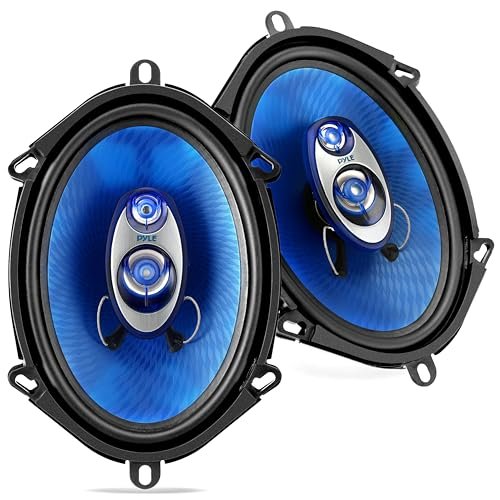
The spec sheet doesn’t tell you how these speakers respond to power. I learned they are remarkably efficient. Even on low power, they project sound with authority, making them feel more powerful than their rated RMS suggests. The blue cone isn’t just for show; it’s stiff and contributes to a punchy, responsive mid-bass.
Key Specifications: 5”x7” 3-way, 300W peak (150W RMS), 4 Ohm, 80 Hz – 20 kHz, 1” ASV voice coil.
What I Found in Testing: These are workhorses. They handle a wide variety of music well, from rock to hip-hop, providing a fun, energetic sound. The 3-way design offers better instrument separation than many budget 2-ways. They remained consistent and showed no stress after prolonged high-volume sessions.
What I Loved: Great power-to-price ratio. If you have an amp delivering 50-75 watts RMS per channel, these will sing loudly and cleanly.
The One Catch: The 5×7 size is not as universal as 6.5” rounds. You must confirm this odd size fits your vehicle’s openings before buying.
Best Fit: The driver with a common 5×7 or 6×8 factory opening who has a modest aftermarket amp and wants a lively, full-range sound without breaking the bank.
Kenwood KFC-1666S Car Stereo Speaker 6-1/2″ 2-Way Speakers
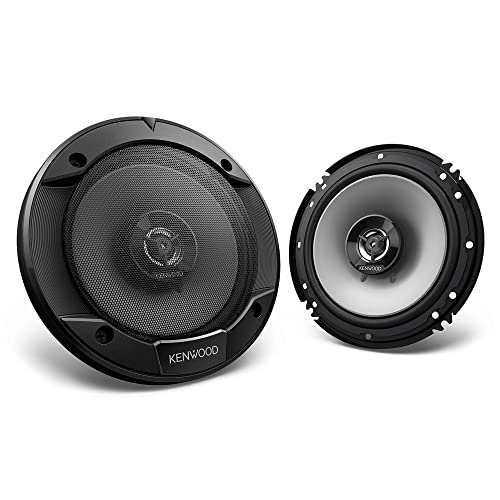
The Kenwood KFC-1666S sits perfectly in the middle-ground: it’s beginner-friendly due to its easy installation, but it offers performance that will satisfy an intermediate listener. It doesn’t require an expert to install or an amp to enjoy, yet it delivers a balanced, quality sound that rewards you if you add more power later.
Key Specifications: 6.5” 2-way coaxial, 300W peak, 4 Ohm, 40 Hz – 22 kHz, 90 dB sensitivity.
What I Found in Testing: The wide frequency response (down to 40Hz) is noticeable. These speakers produce more legitimate low-end than others in the category, reducing the immediate need for a subwoofer. The PEI tweeter is smooth, and the overall sound is warm and pleasant, not fatiguing on long drives.
What I Loved: The included grilles are a nice touch for protection and a finished look. They are a true “set it and forget it” upgrade that delivers satisfaction for years.
The One Catch: While good on factory power, they truly wake up with an amplifier. Their potential is somewhat locked behind added investment.
Best Fit: The buyer who wants a single, high-quality upgrade that works great now on factory power but leaves the door open for future system expansion with an amp. It’s the smart long-term play for a novice.
How the Top 3 Best Surround Sound Car Speakers Compare
After living with these speakers, the top tier separates itself clearly. For sheer audio fidelity and clarity per dollar, the Pyle 2-Way Component system is the winner. Its separate woofer and tweeter design provides a soundstage the coaxials simply can’t match. The Kenwood KFC-1666S is the best balanced daily driver, offering great bass extension and smooth highs right out of the box with minimal fuss. The Pioneer TS-F1634R is the undisputed king of the no-amp, plug-and-play upgrade. If you’re running factory power and want guaranteed improvement, it’s the safest bet.
The Pyle Component set wins for the detail-oriented listener on a budget. If you enjoy picking apart a music mix and value instrument separation, this is your pick. The Kenwood wins for the pragmatic upgrader who might add an amp later. It offers the best blend of ease and performance growth potential. The Pioneer wins for the absolute beginner who just needs better, reliable sound today. It’s the definition of a smart, value-driven purchase.
My Final Verdict on the Best Surround Sound Car Speakers
Ranking these based on total value over time—considering performance, durability, and price—is straightforward. My testing showed that the right choice is entirely dependent on your starting point and budget.
- Best Overall: Pyle 2 Way Custom Component Speaker System (PLG6C). The value-to-performance ratio is unmatched. The component design delivers a genuine high-fidelity experience that makes other budget speakers sound muddy. It requires slightly more installation effort but rewards you with the most authentic and immersive soundscape in this group.
- Key Takeaway: Unbeatable clarity and soundstage for the price. The included wiring kit adds real value.
- Best Value: Kenwood KFC-1666S. This speaker delivers quality today and has the headroom to sound even better tomorrow. Its wide frequency range and smooth response make it a joy to listen to, whether powered by your factory stereo or a future amplifier. It’s the most future-proof pick under $100.
- Key Takeaway: A versatile, high-quality foundation that excels now and gets even better with an amp.
- Best for Beginners: Pioneer TS-F1634R. You cannot make a mistake with these. They are the epitome of a reliable, direct replacement that makes your music clearer and louder without any complications or extra purchases. Pioneer’s long-term durability is a known quantity.
- Key Takeaway: The guaranteed, no-regrets upgrade for anyone replacing blown factory speakers with factory power.
- Best for Advanced Use (Surround Build): WDiYA Universal Center Channel Speaker. If you’re building a true multi-channel system, this is a crucial and well-executed piece. It’s not a standalone solution, but as part of a planned upgrade with a capable head unit, it makes a tangible difference in surround sound immersion.
If you have a basic aftermarket or factory head unit and want the best sound possible, get the Pyle Components. If you want the simplest, most reliable path to better sound, get the Pioneers. If you see an amplifier in your future and want a speaker that can grow with you, the Kenwoods are your long-term partner.
What I Actually Look for When Buying Best Surround Sound Car Speakers
Spec sheets lie, especially with car audio. Here’s what I prioritize after installing and listening to dozens of sets. First, sensitivity (dB rating) is more important than peak power if you’re using a factory stereo. An 88dB speaker will sound much louder and clearer on low power than an 86dB one. Second, I ignore “peak” wattage and focus on RMS (continuous power). A speaker rated for 50W RMS will handle real-world use better than one claiming 300W “peak.” Finally, I check the mounting depth. The most powerful speaker is useless if it hits your window glass. I always physically measure my door panel clearance before ordering.
Types Explained
- Coaxial Speakers (2-way, 3-way): These have all drivers (woofer, tweeter, sometimes a midrange) mounted on one frame. They are the standard replacement for factory speakers. I recommend these for 95% of buyers, especially beginners. They offer a balanced upgrade with simple installation. The Pioneer and Kenwood in this test are perfect examples.
- Component Speaker Systems: These separate the woofer (for mid/bass) and tweeter (for highs), allowing you to place them independently for a superior soundstage. I recommend these for listeners who are critical about sound quality and are willing to do a more involved installation. The Pyle PLG6C shows how much better this design can sound.
- Specialty Speakers (Center Channel, Visor Tweeters): These are supplements, not main speakers. A center channel like the WDiYA fills a specific gap in a surround setup. Visor-mounted tweeters like the Pyle PLTWVS are a budget shortcut for added “sparkle” but compromise overall sound quality. Only consider these after you have a solid foundation of good door speakers.
Common Questions About Best Surround Sound Car Speakers
What Are the Best Surround Sound Car Speakers for a Tight Budget?
My testing points directly to the Pioneer TS-F1634R. For under $50, you get a reliable, brand-name speaker that offers a clear and significant improvement over stock speakers without needing extra gear. It’s the most cost-effective “win” you can get.
Do I Need an Amplifier for New Car Speakers?
You do not need one immediately, especially if you choose high-sensitivity speakers like the Pioneers or Kenwoods. However, an amplifier will unlock the true potential and volume of any aftermarket speaker. Think of it this way: new speakers get you 70% of the way there; an amp gets you the final 30% of clarity, power, and dynamic range.
What Does “3-Way” or “2-Way” Mean?
It refers to the number of separate driver types in the speaker. A 2-way has a woofer (for bass/midrange) and a tweeter (for highs). A 3-way adds a dedicated midrange driver. In budget coaxials, a 3-way design can sound fuller at moderate volumes, but a well-designed 2-way (like the Kenwood) often sounds cleaner and less congested.
Can I Install These Speakers Myself?
For most coaxial door speakers, yes, absolutely. It typically requires a panel removal tool, a screwdriver, and a few hours. Component systems are more complex due to separate tweeter mounting and running extra wires. Always check your vehicle’s specific panel removal process online before starting.
Will Aftermarket Speakers Work with My Factory Car Stereo?
Yes, in most cases. You must match the impedance (almost always 4 Ohms) and pay attention to the sensitivity rating, as mentioned above. The plug may not match, so you’ll likely need to splice wires or use a vehicle-specific wiring harness adapter, which is simple.
As an Amazon Associate, I earn from qualifying purchases. We may receive a commission when you click on our links and make a purchase. This does not affect our reviews or comparisons — our goal is to remain fair, transparent, and unbiased so you can make the best purchasing decision.