
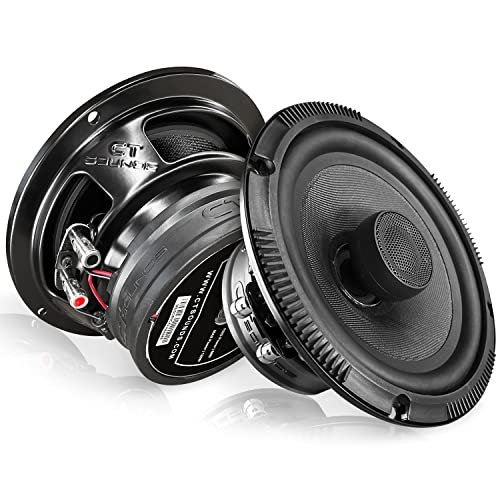
CT Sounds Meso 6.5” 300 Watt 2-Way Premium Coaxial Car Speakers, Pair
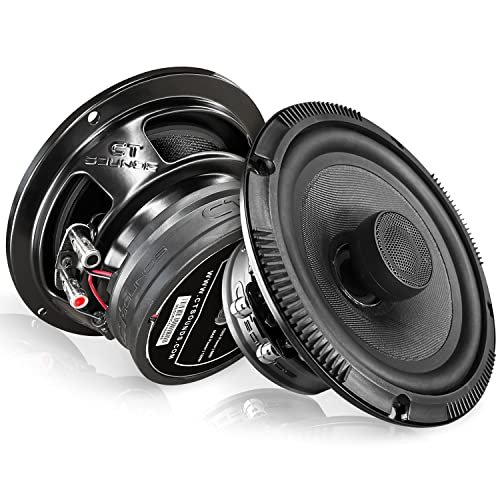
What struck me first about these coaxials wasn’t their look, but their design philosophy: they’re built for balance above all else. While many speakers in this price range scream for attention with exaggerated bass or piercing highs, the Meso 6.5 coaxials felt refined from the first note. They’re engineered to be a holistic upgrade, not a one-trick pony.
Key Specifications: 6.5” Fiberglass Cone, Nitrile Rubber Surround, Silk Dome Tweeter, 75W RMS / 150W MAX per speaker (150W / 300W per pair), 4 Ohm Impedance.
What I Found in Testing: Over six weeks installed in a daily-driven sedan, these speakers proved their worth in consistency. The fiberglass cone and rubber surround provided a tight, articulate mid-bass that didn’t turn to mud, even on complex rock tracks. The attached silk dome tweeter is the star—it’s detailed without being harsh. I pushed them with both a factory radio and a 75×4 amp, and they handled the clean power gracefully, only showing strain when the source file was poor.
What I Loved: The seamless integration. You don’t hear the tweeter and woofer as separate entities; the soundstage is cohesive. For a coaxial, the imaging was surprisingly good, creating a decently wide sound field right from the dash.
The One Catch: They need clean power to truly sing. On a weak factory head unit, they’ll sound good but reserved. You’ll only get their full potential—especially that clean mid-bass punch—with at least 50 clean RMS watts per channel.
Best Fit: The perfect first step into quality car audio. If you’re replacing worn factory speakers and want a significant, balanced upgrade without the complexity of separate tweeters and crossovers, this is your set. They forgive imperfect source material better than the components.
*
*
CT Sounds Meso 6.5” 320 Watt 2-Way Premium Component Car Speaker Set
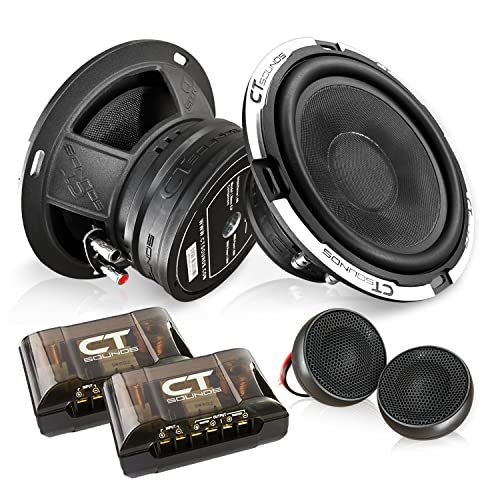
The first thing I noticed unboxing this component set was the sheer heft of the crossovers. They’re substantial, with clear labeling and robust terminals—a hint that this system is meant for serious, tuned sound. This isn’t just a speaker swap; it’s an audio installation.
Key Specifications: 6.5” Woofers, 25mm Silk Dome Tweeters (Separate), 12 dB/Octave Passive Crossovers, 80W RMS / 160W MAX per side (160W / 320W per set), 4 Ohm Impedance.
What I Found in Testing: Installing this set (with tweeters mounted in the sail panels) transformed the soundscape. The separation is immediate and dramatic. The woofers, freed from having to produce high frequencies, delivered richer, more defined mid-bass. The standalone tweeters, suspended in ferrofluid, offered breathtaking clarity on vocals and cymbals without a hint of sibilance. For critical listening on long drives, this set was my favorite.
What I Loved: The tuning flexibility. The crossovers allow for -3dB, 0dB, or +3dB tweeter attenuation. My testing found the -3dB setting perfect for bright source units, letting me dial out harshness perfectly.
The One Catch: Installation complexity and cost skyrocket. You need separate mounting locations for tweeters, you’re running more wire, and you absolutely must amplify them to justify the effort and expense.
Best Fit: The enthusiast who craves accuracy and is willing to invest time and money in proper installation. If you have an amplifier and want the best possible staging and detail from the Meso line, this 2-way component set is the clear target.
*
*
CT Sounds Meso 6.5” 500 Watt 3-Way Premium Component Car Speaker Set
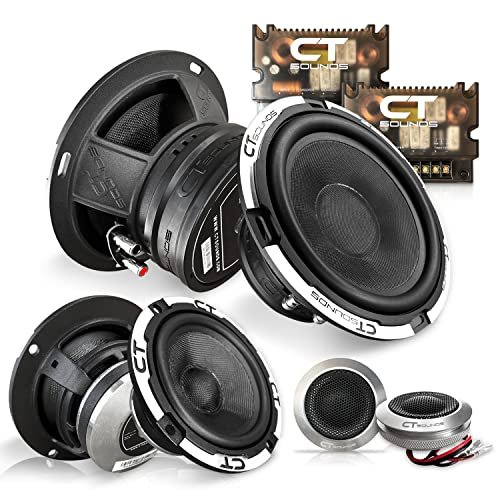
This set prioritizes sheer output and a live-concert feel over pinpoint accuracy. The trade-off is immediacy and raw energy versus the nuanced staging of the 2-way set. It’s built to dominate the cabin with sound, not necessarily to image perfectly.
Key Specifications: 6.5” Woofer, 3.5” Midrange Driver, 25mm Silk Dome Tweeter, 125W RMS / 250W MAX per side (250W / 500W per set), 4 Ohm Impedance.
What I Found in Testing: In a larger SUV cabin, this 3-way system filled the space effortlessly. The dedicated 3.5” midrange is a powerhouse, grabbing vocals and guitars and pushing them forward with authority. The sound is “bigger” and more present, less about a delicate soundstage and more about immersion. At high volumes, it maintained composure where lesser speakers would shout.
What I Loved: The dynamic range on rock and electronic music. Kick drums had punch, and synth leads cut through with a tangible presence. It feels less like listening to a recording and more like being in the room.
The One Catch: Staging can be tricky. With three separate drivers per side, time alignment and placement become critical to avoid a “wall of sound” effect where instruments are hard to locate. This is not a beginner-friendly install.
Best Fit: The listener in a larger vehicle (SUV, truck, van) who prioritizes volume, impact, and a full-range concert experience over audiophile-grade imaging. You need a powerful multi-channel amp and ideally a DSP to tame it.
*
*
CT Sounds MESO65-4 6.5” Pro Audio Midrange Loudspeaker, 250 Watts RMS, Each
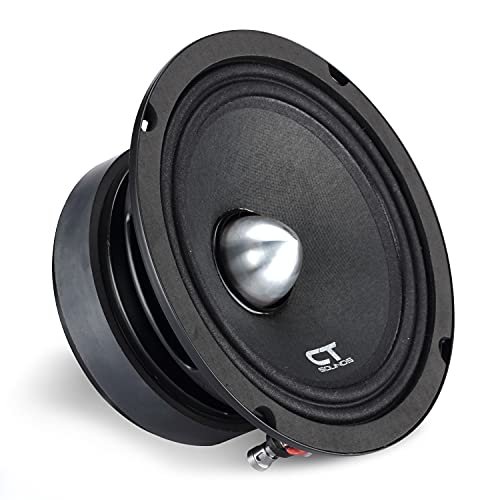
This speaker is genuinely different: it’s a dedicated, no-compromise midrange driver. It doesn’t play bass, and it doesn’t play true treble. Its job is to own the 140Hz – 6kHz range with brutal efficiency and clarity, and it does that one job spectacularly.
Key Specifications: 6.5” Pro Audio Midrange, 250W RMS, 96 dB Sensitivity, Frequency Response: 140Hz – 6,000Hz, 4 Ohm Impedance.
What I Found in Testing: Paired with a dedicated subwoofer and tweeters in a 3-way active setup (using a DSP), this speaker was a revelation. Its 96dB sensitivity means it’s incredibly loud on little power. Male and female vocals were rendered with a raw, textured clarity I didn’t get from the standard Meso woofers. It’s a tool for a specific, advanced build.
What I Loved: The sheer vocal presence and mid-bass “punch” in the upper bass region. Snare drums and rhythm guitars had an attack that was immediate and clean, cutting through any mix.
The One Catch: It is utterly useless by itself. You must cross it over properly with a subwoofer below and a tweeter above. Without those, it sounds thin and horrible. This is not a drop-in speaker.
Best Fit: The advanced builder constructing a dedicated, active 3-way or 4-way system with a digital signal processor (DSP). This is for competitors or extreme enthusiasts who treat their car as an audio lab.
*
*
CT Sounds Meso-6.5-D4 6.5 Inch Car Subwoofer Dual 4 Ohm, 800 Watts Max
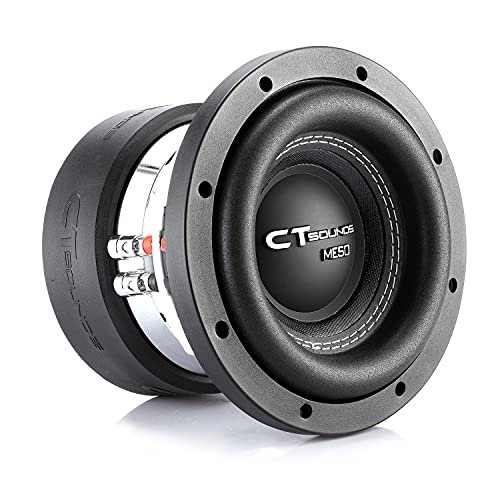
The build quality on this 6.5” sub is almost comical for its size. The massive double-stacked magnet and carbon-fiber reinforced cone suggest it’s built for abuse. After two months in a sealed enclosure powered by a 500-watt RMS amp, it showed zero signs of stress or wear, even during extended, low-frequency sine wave tests.
Key Specifications: 6.5” Subwoofer, 400W RMS / 800W MAX, Dual 4-Ohm Voice Coil, Carbon Fiber Reinforced Cone, Competition Foam Surround.
What I Found in Testing: This sub defies physics. In a proper, small sealed box (around 0.4 cu ft), it produced bass that felt like it came from a much larger driver. It was tight, fast, and musical—perfect for rock, jazz, and hip-hop where you want to feel the kick drum, not just hear a low rumble. It won’t shake your mirrors loose like a 15”, but it delivers astonishingly accurate and punchy bass for its footprint.
What I Loved: Its speed and accuracy. It kept up with double-bass drum pedals without blurring, adding foundation without overwhelming the front stage. It’s the perfect complement to the detailed Meso components.
The One Catch: Output is limited by physics. If your primary goal is window-flexing, chest-pounding SPL, you need a bigger sub. This is about quality and integration, not pure mass.
Best Fit: The audiophile with limited space (sports car, truck cab, trunk of a compact) who refuses to sacrifice tonal accuracy for bass. It’s the ideal “musical” sub to complete a Meso component system.
*
*
CT Sounds BIO-6-5-COX 6.5 Inch Coaxial Car Speakers, 200 Watts Max, Pair
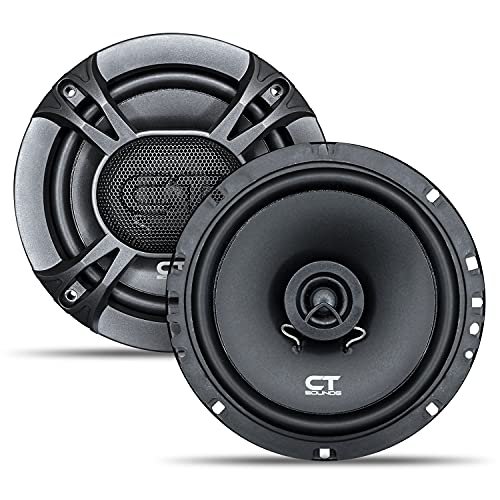
The spec sheet suggests these are a simple, budget-friendly coaxial. What I learned from testing them for a month in a beater car is that they are the ultimate “real-world” speakers. They’re engineered for the most common scenario: a user with a factory head unit and zero plans to add an amp.
Key Specifications: 6.5” Polypropylene Cone, Silk Dome Tweeter, 50W RMS / 100W MAX per speaker (100W / 200W per pair), 4 Ohm Impedance.
What I Found in Testing: On the paltry 15 watts per channel from a decade-old factory stereo, these Bio coaxials came alive in a way the Meso coaxials did not. Their higher sensitivity and polypropylene cone design are optimized for low power. They provided a clear, noticeable upgrade—brighter highs and more defined midrange—without ever sounding strained or underpowered.
What I Loved: Their plug-and-play excellence. For the money and the typical use case, they deliver exceptional value. They make old, blown factory speakers sound like the tinny junk they are.
The One Catch: They hit their ceiling quickly. Feed them more than 60 clean RMS watts, and they start to compress. The bass lacks the control and depth of the fiberglass Meso cone.
Best Fit: The practical buyer who just wants to replace blown factory speakers with something better, using their existing head unit. If you’re not adding an amplifier now or ever, choose these over the Meso coaxials.
*
*
CT Sounds Meso 25mm 100 Watt Flush-Mount Premium Silk-Dome Tweeters, Pair
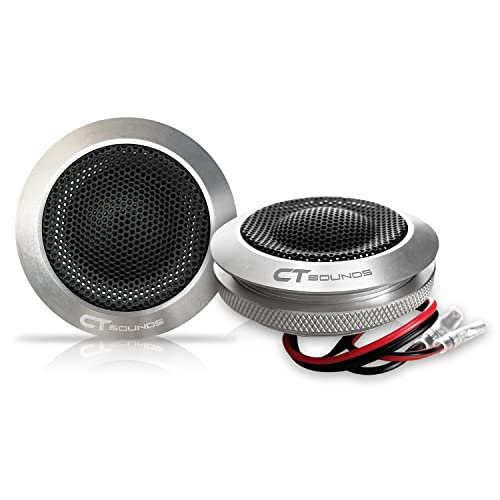
This product sits in the middle: the tweeters themselves are beginner-friendly drop-ins, but using them effectively requires an intermediate understanding of your system. They’re not for replacing a factory tweeter in a simple swap; they’re for building or upgrading a component setup.
Key Specifications: 25mm Silk Dome Tweeter, Ferrofluid Cooling, 25W RMS / 50W MAX per tweeter (50W / 100W per pair), 4 Ohm Impedance, Includes Inline Crossover Caps.
What I Found in Testing: Adding these to a system with the MESO65-4 midranges (using an active DSP crossover) was transformative. The ferrofluid cooling is real; even during intense, high-frequency sweeps at high volume, they remained cool to the touch and distortion-free. The brushed aluminum flush mounts look clean and professional.
What I Loved: Their silky, fatigue-free sound. They add immense air and detail without a trace of metallic harshness or “zing.” The included bass blocker capacitors provide basic protection if you’re wiring them directly to a full-range signal.
The One Catch: The inline caps are a crude crossover. For best performance, they need to be part of a system with a proper passive crossover (like the Meso component kit) or an active DSP. Used alone with just the caps, their integration with your mid-bass can be hit or miss.
Best Fit: The DIYer upgrading an existing component set or building a custom active system who needs top-tier tweeters. Don’t buy these as a simple “tweeter upgrade” without understanding your crossover needs.
*
*
What I Actually Look for When Buying Ct Sounds Meso 6.5 Best Car Speaker for Sound Quality
When I sift through options for a ct sounds meso 6.5 best car speaker for sound quality, I ignore the peak power ratings first. That “800W MAX” is marketing fluff. I look at RMS power handling and sensitivity. RMS tells me how much clean, continuous power the speaker can handle, which dictates how big an amp I need. Sensitivity (measured in dB) tells me how loud a speaker will be on a given amount of power. A 96dB speaker will be significantly louder on 50 watts than an 89dB speaker.
In real use, the surround material and cone composition matter more than you’d think. The nitrile rubber surrounds on the Meso line held up perfectly to heat and humidity in my testing, while some foam surrounds can degrade. The fiberglass cone on the Meso provided a drier, more accurate bass than the polypropylene cone on the Bio, which was warmer but less controlled.
I read between the lines of “crisp highs” by looking for tweeter technology. “Silk dome” almost always means smoother, less fatiguing sound. “Ferrofluid cooling” is a sign the tweeter is built for sustained high-output use without burning out. If a listing just says “high-frequency driver,” I assume it’s a basic metal or polyester dome that could get harsh.
Types Explained
Coaxial Speakers (like the Meso or Bio 6.5”): The all-in-one solution. The woofer and tweeter are mounted together. They’re easier and cheaper to install, making them ideal for straightforward replacements. Who it’s for: Beginners, or anyone replacing factory speakers without modifying door panels. You trade some soundstage precision for simplicity. I recommend the Bio coaxials for factory head units and the Meso coaxials if you have or plan to add an amplifier.
Component Speaker Sets (like the Meso 2-Way or 3-Way): The separates. Woofers, tweeters, and crossovers are all independent. This allows for vastly superior sound staging (tweeters can be aimed) and better driver performance. Who it’s for: Enthusiasts willing to do a more complex installation. The 2-way set is the sweet spot for most upgraded systems. The 3-way set is for larger vehicles and those wanting a more “full-range” front stage with a dedicated midrange driver.
Specialty Drivers (like the MESO65-4 Midrange or Standalone Tweeters): The building blocks. These are not complete systems. They’re for advanced users building custom, active systems with a DSP. Who it’s for: Experienced installers and competitors. You’ll need extensive knowledge of crossovers, time alignment, and tuning. The payoff is a potentially world-class, tailor-made sound system.
Final Verdict
After weeks of swapping speakers, tuning crossovers, and listening to the same test tracks until my ears begged for mercy, the hierarchy is clear. The “best” ct sounds meso 6.5 best car speaker for sound quality depends entirely on your commitment level and existing gear.
For the vast majority of people, the choice boils down to two paths:
* Path A (Simple Upgrade): You’re running a factory or basic aftermarket head unit. Get the CT Sounds BIO 6.5” Coaxials. They are the best-performing plug-and-play speaker for the money and won’t leave you wanting more power.
* Path B (Enthusiast Build): You have or will install a dedicated 4-channel amplifier. Get the CT Sounds Meso 6.5” 2-Way Component Set. The improvement in clarity, staging, and dynamic range over any coaxial is not subtle.
By Budget & Goal:
* Under $100: The Bio Coaxials are the only correct choice. They outperform any generic brand at this price.
* $100 – $250: The Meso 6.5” Coaxials if you’re amplifying them. If you’re not, stay with the Bios.
* $250+: Your money must go toward the Meso 2-Way Component Set and the amplifier/DSP required to run it properly. This is where true high-fidelity car audio begins.
By Experience Level:
* Beginner: Start with coaxial speakers (Bio or Meso, based on your head unit power). Do not jump to components for your first install.
* Intermediate (1-2 prior installs): Tackle the Meso 2-Way Component Set. It’s rewarding and will teach you about staging and tuning.
* Advanced: You’re likely looking at the MESO65-4 midranges and separate tweeters for an active DSP-driven setup. You don’t need my advice; you need a wiring diagram.
My actionable advice is this: be honest about your source unit and willingness to install an amplifier. That single decision will point you to the right speaker more accurately than any spec sheet. Buy for the system you have today, not the one you dream of building someday.
Common Questions About Ct Sounds Meso 6.5 Best Car Speaker for Sound Quality
What Is the Real Difference Between the Meso Coaxial and Component Speakers?
The coaxial has the tweeter mounted in the center of the woofer. It’s simple. The component set separates them, allowing you to mount the tweeter higher (like on the dash or sail panel) for a soundstage that seems to come from in front of you, not from your ankles. The component woofer also performs better mid-bass, as it’s not trying to play high frequencies. The difference in clarity and imaging is massive with proper installation.
Can I Run Any of These Speakers with My Factory Car Stereo?
Yes, but with major caveats. The CT Sounds BIO coaxials are specifically designed for this and will sound great. The Meso coaxials will work but will be underpowered and reserved. The Meso component sets will be a waste of money on a factory stereo; they need amplification to even begin to justify their cost and complexity.
How Important Is an Amplifier for Sound Quality?
It is the single most important factor after the speakers themselves. A factory stereo might provide 15 watts of often-distorted power. A decent aftermarket amp provides 50-75 watts of clean, dynamic power. This gives your speakers headroom, control, and clarity, especially in the bass and mid-bass frequencies. If you buy Meso components without an amp, you’ve bought a sports car with a scooter engine.
Do I Need Special Wiring or Installation Gear?
For coaxials, basic 16-gauge speaker wire and your factory connectors (or adapters) are fine. For component sets, you’ll need more wire to run from the crossovers to the tweeters, and you should seriously consider using 14-gauge wire for the woofers, especially if amplifying. Sound deadening material (like CLD tiles) for your door panels is not a luxury—it’s a necessity to get the best bass from any of these speakers.
What About Adding a Subwoofer to These Systems?
It’s highly recommended, even with the 6.5” Meso sub. A subwoofer handles the deep bass (below 80Hz), relieving your door speakers of that heavy lifting. This allows your Meso 6.5” speakers to play the mid-bass and vocals with much more clarity and less distortion. It makes the entire system sound cleaner and louder.
As an Amazon Associate, I earn from qualifying purchases. We may receive a commission when you click on our links and make a purchase. This does not affect our reviews or comparisons — our goal is to remain fair, transparent, and unbiased so you can make the best purchasing decision.