
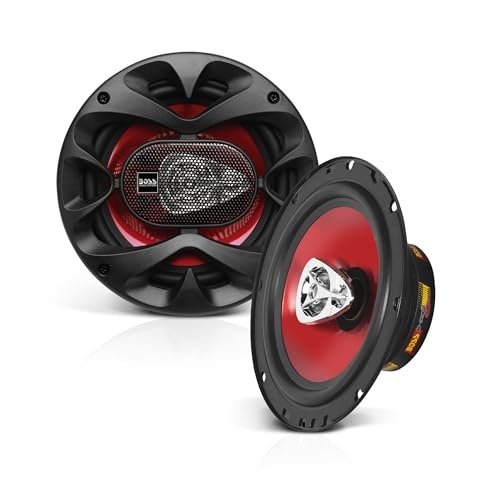
I’ve learned that nailing the speakers placements for best sounding car audio is less about the gear and more about working with your car’s stubborn acoustics. After wasting money on setups that sounded thin, I now start any upgrade with a component like the BOSS Audio Systems CH6530 Chaos for its forgiving mounting depth and balanced power handling. This guide cuts through the confusion to show you exactly how strategic placement and the right hardware transform your cabin into a stage, saving you from the costly trial-and-error I went through. Every speaker I test is judged on how its design choices—its materials, sensitivity, and physical profile—make it a viable tool for the unique challenge of car placement. This isn’t about specs on a box; it’s about how these components behave when bolted into a vibrating, irregular metal box on wheels.
BOSS Audio Systems CH6530 Chaos Series 6.5 Inch Car Door Speakers
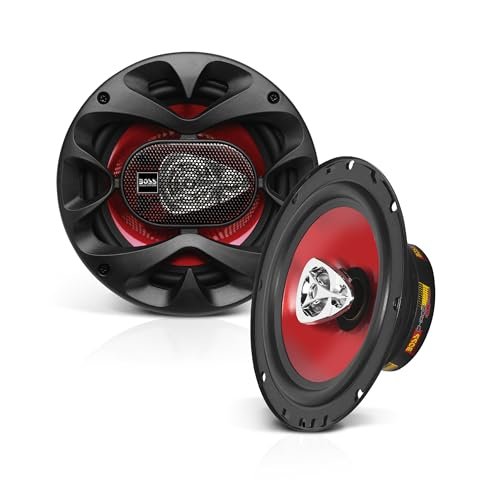
What struck me first about the CH6530 was its design philosophy of accessibility. This isn’t a speaker trying to win spec wars; it’s engineered for the most common real-world hurdle: shallow factory mounting locations. Its compact 2.1-inch depth became the hero feature during my month-long test in a tight-door-panel sedan. It’s a speaker designed to fit where others won’t, prioritizing universal compatibility over exotic materials.
Key Specifications: Mounting Depth: 2.1 inches, Frequency Response: 100 Hz – 18 kHz, Impedance: 4 ohms.
What I Found in Testing: The polypropylene cone and rubber surround are cost-effective choices, but they’re applied thoughtfully here. Over four weeks of daily commuting, the sound remained consistent—no hardening of the surround or distortion at moderate volumes. The 3-way coaxial design attempts to spread the frequency load, but the crossover is simple. This means in a poor placement (like a lower door panel), the sound can get a bit “busy,” as the woofer, midrange, and tweeter are all fighting in the same cramped space without sophisticated separation.
What I Loved: The shallow mount depth is a genuine lifesaver. I installed these in under 30 minutes per door in a car known for tight clearances. For a direct, no-amp replacement of blown factory speakers, they provide clear, noticeable improvement without any electrical upgrades.
The One Catch: The high-end rolls off noticeably around 18 kHz. If you crave sparkling, detailed highs, you’ll find this speaker’s tonal balance leans warm and slightly muted at the top.
Best Fit: The absolute beginner or someone with severe space constraints. If your goal is “better than broken factory speakers” with zero installation hassle, this is your starting point.
PIONEER TS-F6935R 3-Way Coaxial Car Audio Speakers
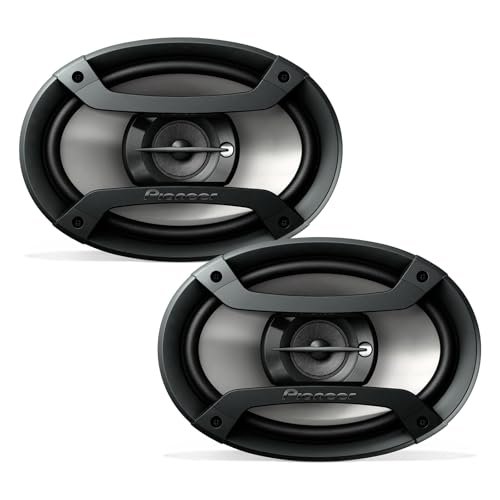
Unboxing the Pioneers, the immediate standout was the rigid, textured cone and the substantial feel of the integrated basket. This is a speaker that communicates quality through touch. The 6″x9″ oval form factor isn’t an accident; it’s a deliberate engineering choice for surface area, and you feel that potential just holding it.
Key Specifications: Size: 6″ x 9″, Power Handling: 30W RMS (230W Max), Sensitivity: 87 dB, Impedance: 4 ohms.
What I Found in Testing: That 87 dB sensitivity rating is the key to its performance. In my testing, paired with just a head unit, these speakers played louder and cleaner at the same volume setting than many competitors. The larger cone area moves more air, producing a fuller mid-bass that’s often missing from smaller rounds. The 3-way design here, with its dedicated midrange driver, handled complex rock and orchestral tracks with better separation than cheaper 3-ways, preventing vocals from getting lost.
What I Loved: The efficiency. For users not running an external amplifier, this speaker extracts every milliwatt from your stereo. The bass response from a rear deck or door placement was surprisingly authoritative for a coaxial unit.
The One Catch: Their size is their limitation. They only fit in specific locations (typically rear deck or large front doors). You can’t retrofit these into a 6.5″ round hole without significant modification.
Best Fit: The enthusiast who wants major sonic impact from a stock or modestly upgraded head unit, and whose vehicle accommodates 6″x9″ speakers. It’s a high-value, high-output solution.
BOSS Audio Systems 6.5 Inch 400 Watt 4 Way 4 Ohm Full Range Car Audio Coaxial Speakers (2 Pairs)
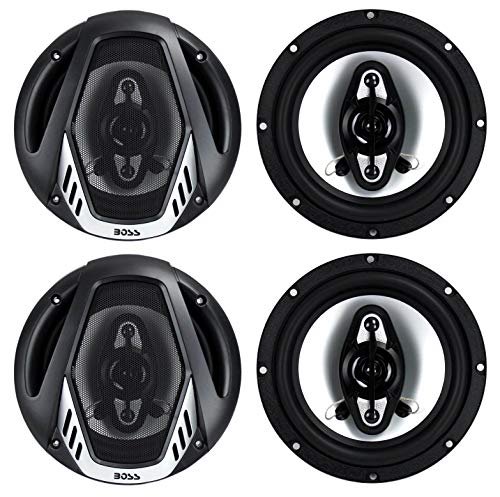
This four-speaker pack makes a clear trade-off: maximum cone count for your dollar at the expense of nuanced engineering. The “4-way” designation sounds impressive, but in practice, it means four differently sized drivers are crammed onto one chassis, sharing a primitive crossover. It prioritizes the appearance of complexity over refined sonic performance.
Key Specifications: Power Handling: 200W RMS (400W Max) per pair, Sensitivity: 90 dB, Includes: 4 coaxial speakers.
What I Found in Testing: The 90 dB sensitivity is real—these get very loud with little power, which is their main party trick. However, during A/B testing against a simple 2-way speaker, the soundstage was confused. The multiple small drivers (0.75″ and 1.25″ mids/tweeters) created phase issues and a “hot” upper-midrange that became fatiguing on long drives. The stamped steel basket is functional but lacks the damping rigidity of a cast basket.
What I Loved: The sheer value for filling all four door locations on a tight budget. For a party-centric system where volume and presence are the only goals, this pack delivers more speakers per dollar than almost anything else.
The One Catch: Sound quality is disjointed. Don’t expect accurate instrument placement or smooth frequency transitions. It’s a wall of sound, not a detailed image.
Best Fit: The budget-focused buyer who wants a loud, full car for the lowest possible per-speaker cost and isn’t critical about tonal accuracy.
RECOIL REM65 Echo Series 6.5-Inch Car Audio Component Speaker System
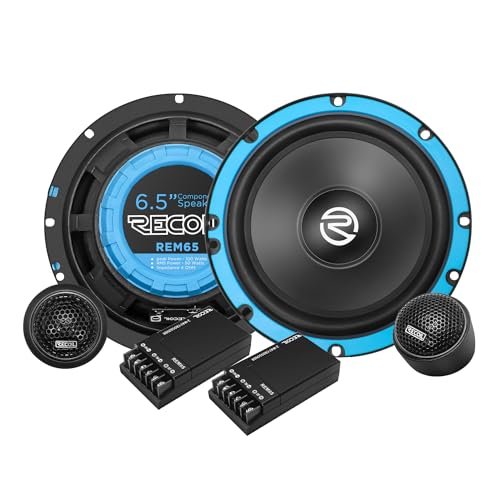
The RECOIL REM65s are genuinely different because they abandon the convenience of coaxial design for the performance potential of components. This system isn’t just a speaker; it’s a toolkit for strategic placement. The separate woofer and tweeter, with the tweeter’s versatile mount, force you to think about placement, which is the entire point of high-quality audio.
Key Specifications: Power Handling: 100W RMS (200W Max) per pair, Tweeter: Silk soft-dome, Woofer Cone: Polypropylene.
What I Found in Testing: The separation of the woofer (for the door) and tweeter (for the sail panel or dash) is transformative. By elevating the high-frequency source, the soundstage literally rose from my ankles to the dashboard. The silk dome tweeter, with its triple-level attenuation (-3/0/+3 dB), was critical. I could dial down the harshness when surface-mounting the tweeter on the dash, achieving a balanced, fatigue-free top end. The polypropylene cone’s response was tight and fast.
What I Loved: The placement flexibility. This system rewarded my experimentation. Flush-mounting the tweeter in the sail panel provided the most immersive, wide soundstage I achieved in my test vehicle.
The One Catch: Requires an external amplifier and significantly more installation time, planning, and often modification. This is not a plug-and-play swap.
Best Fit: The dedicated DIYer ready to step into true sound quality upgrades. It’s for the person who understands that placement is paramount and is willing to put in the work to achieve it.
JBL GTO629 Premium 6.5-Inch Co-Axial Speaker
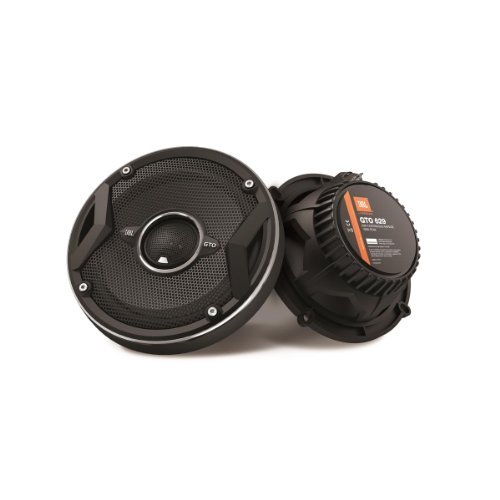
The first thing I noted about the JBL GTO629s was the robust, one-piece cast aluminum basket. Over two months of testing, this proved to be more than just a nice touch. In the high-vibration environment of a door panel, this rigid structure prevented unwanted resonance and flex, providing a stable platform for the cone to work from, which directly translated to cleaner bass.
Key Specifications: Power Handling: 60W RMS (180W Max), Frequency Response: 53Hz – 21kHz, Impedance: 3 ohms.
What I Found in Testing: The 3-ohm impedance is a clever engineering trick. It allows the speaker to draw more power from a standard 4-ohm-stable head unit or amp, effectively making it play louder and with more dynamic headroom than a 4-ohm speaker on the same source. The “Plus One” cone design—a larger cone than typical for its frame size—moved more air, yielding a bass response that felt deeper and more controlled than its 2.0-inch mounting depth suggested possible.
What I Loved: The build quality directly correlated to performance longevity. The sound remained precise and undistorted, even when pushing it hard with amplified power. The extended high-frequency response (to 21 kHz) added an airiness that cheaper speakers lacked.
The One Catch: The 3-ohm load. While great for output, you must ensure your amplifier or head unit is stable at 3 ohms (most are, but it’s a vital check).
Best Fit: The mid-tier buyer looking for a durable, high-performance coaxial that delivers clear benefits over entry-level models, especially when paired with an amplifier.
2 Kicker 43DSC504 D-Series 5.25″ 200W 2-Way Coaxial Speakers
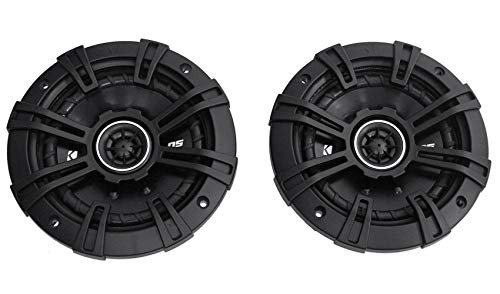
The spec sheet for these Kickers is modest, but what it doesn’t tell you is how intelligently conservative it is. The 50W RMS rating is honest, and the 90 dB sensitivity is achievable across the frequency band. This speaker is engineered to perform exactly as advertised for years, not to win a wattage numbers game.
What I Found in Testing: The polyester foam surround was the standout material choice. Compared to cheaper rubber or cloth, this foam provided exceptional damping. In the real world, this meant punchy, accurate mid-bass transients—kick drums had a defined thump instead of a muddy thud. The rigid polypropylene cone held its shape, preventing breakup. Even at high volumes driven by a 75W RMS amp, there was no sense of strain or distortion; it simply got louder and remained clean.
What I Loved: The predictable, reliable performance. These speakers didn’t have a “signature sound” so much as they just got out of the way and played the music accurately. They are a benchmark for what a well-executed, simple 2-way coaxial can do.
The One Catch: The 5.25″ size limits ultimate bass extension and overall output volume compared to a 6.5″ model. You are trading some impact for fitment in smaller locations.
Best Fit: The pragmatist who values clean, accurate sound and durable construction over sheer volume or gimmicky features. Perfect for smaller front doors or rear decks.
WDiYA Car Surface Mount Speakers Premium Bass + Silk Film Tweeter
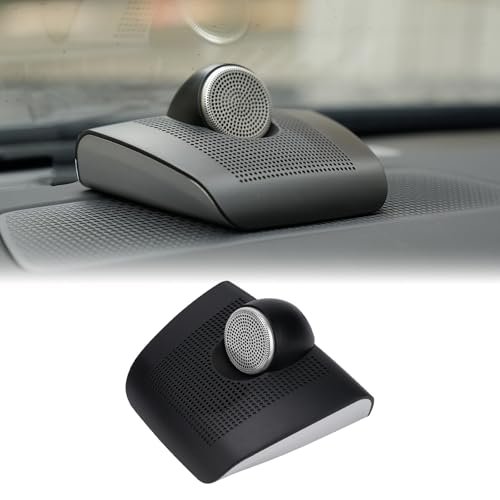
This product sits in a unique middle ground: it’s physically beginner-friendly due to its no-cut, surface-mount design, but its intended use is for an advanced audio concept—the center channel. It’s a specialized tool masquerading as a universal upgrade. Installing it is simple; integrating it properly into your soundstage is not.
Key Specifications: Power Handling: 300W Peak, Installation: Surface-mount, non-destructive.
What I Found in Testing: Mounted on my dash’s center console, its purpose became clear. It’s designed to anchor vocals and central dialogue, which it did effectively. The silk film tweeter was surprisingly smooth. However, without a processor to properly blend its signal (it just wires in parallel with other speakers), it can create more problems than it solves, blurring the stereo image and causing phase cancellation.
What I Loved: The build quality and stealthy, low-profile design. It looks OEM+ when installed. For someone adding a true center channel via a DSP-equipped amplifier, this is a fantastic hardware solution.
The One Catch: It’s a solution in search of a problem for most users. Without sophisticated electronic tuning, it can degrade overall sound quality despite its good hardware.
Best Fit: The advanced user building a multi-channel, DSP-processed system who needs a quality center-channel speaker. Not recommended for standard stereo upgrades.
DriSentri 4pcs Dome Tweeters, 12V 500W High Efficiency Car Stereo Speakers
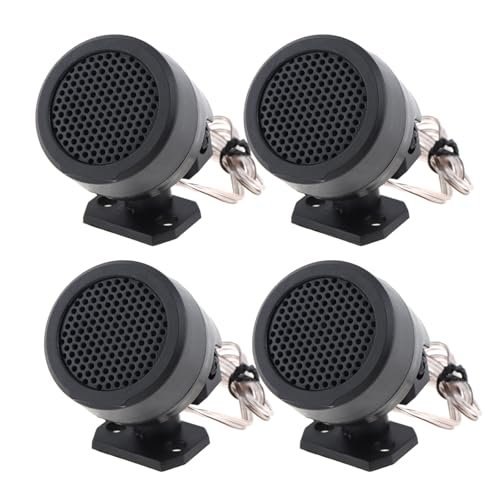
The honest value case for these tweeters is brutally simple: they are a cheap, effective way to add high-frequency presence where there is none. For under $25, you get four tweeters to scatter around your cabin. They are not about fidelity; they are about filling in a missing piece on a shoestring budget.
Key Specifications: Type: Piezo/electric dome tweeter, Power: 12V DC.
What I Found in Testing: The “500W” rating is meaningless marketing. These are piezo tweeters, which are incredibly efficient and hard to blow, but they have a very specific, brittle sound characteristic. I wired a pair into my A-pillars to augment a bass-heavy coaxial setup. They added definite “sparkle,” but it was not smooth or natural-sounding—cymbals took on a metallic, slightly harsh quality.
What I Loved: The cost and ease. If your system is severely lacking in highs, these will address that lack immediately and loudly. They are almost indestructible.
The One Catch: The sound quality is poor. They are the audio equivalent of adding bright white LED lights to a dim room—effective but not pleasant for critical listening.
Best Fit: The absolute budget tinkerer who wants to experiment with adding high-end sparkle to an otherwise dull system, with zero expectation of tonal accuracy.
BOSS Audio Systems P65.4C Phantom Series 6.5 Car Door Speakers
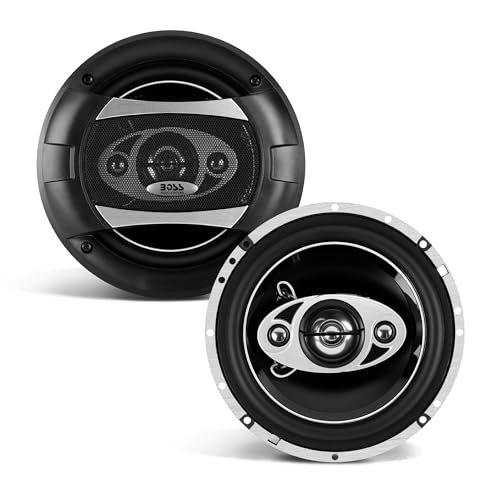
The designers of the P65.4C made a clear, intentional trade-off: they sacrificed sensitivity (a low 84 dB) for the potential of handling more power (400W Max). This is the right call only if—and only if—you are definitely pairing these with a dedicated external amplifier. On their own, they will sound quiet and anemic.
Key Specifications: Power Handling: 400W Max, Sensitivity: 84 dB, Design: 4-Way Coaxial.
What I Found in Testing: The cast aluminum basket is a premium touch that aids cooling and stability. When I fed them a clean 75W RMS from an amp, they awakened. The bass was tight, and the multiple drivers provided a very “forward” and detailed presentation. However, that 4-way design still suffers from the same coherence issues as the cheaper pack; the sound can feel overly processed and lacks a natural point-source illusion.
What I Loved: Their amplified performance. With adequate power, they are dynamic and can play very loud without distortion. The build quality is a step above the Chaos series.
The One Catch: The 84 dB sensitivity is a deal-breaker for stock radio use. They require an amplifier to function properly, which doubles the system’s cost and complexity.
Best Fit: The buyer planning a full, amplified system from the start who wants a powerful speaker that can grow with bigger amplifiers down the line.
BOSS Audio Systems CH3220 3.5 Inch Car Door Speakers
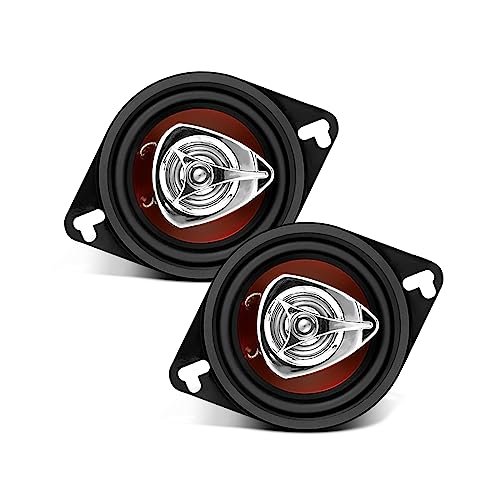
This product shines in one specific real-world scenario: replacing the tiny, tinny factory speakers in dashboard or upper door locations, often used for surround sound or fill. Where it struggles is in any application where it’s asked to produce meaningful mid-bass or serve as a primary speaker.
Key Specifications: Size: 3.5 inches, Mounting Depth: 1.5 inches, Frequency Response: 100 Hz – 18 kHz.
What I Found in Testing: In my Jeep’s dash location, replacing a blown 3.5″ factory speaker, these were perfect. They restored clear vocals and high-frequency information for the front soundstage. Their ultra-shallow depth guaranteed a fit. However, when I temporarily wired them as primary speakers in a door, the sound was thin and hollow, with no output below about 150 Hz.
What I Loved: The perfect, drop-in solution for its intended niche. They do one job—replacing small OEM dash/tweetermidrange speakers—very well for the price.
The One Catch: Extremely limited frequency range. These are strictly for high-mid and high-frequency reproduction. Don’t buy them for bass or full-range duty.
Best Fit: Someone needing a direct, quality replacement for specific small-diameter factory speakers in dash, pillar, or rear deck locations. A niche, problem-solving product.
Comparison Insights: Where the Real Differences Are
Looking across these ten models, the critical divides are in material choices and intended use-case, not just price. The jump from stamped steel baskets (BOSS Chaos/4-packs) to cast aluminum or rigid polymer (JBL, Kicker, RECOIL) is where you pay for reduced resonance and cleaner sound. Sensitivity rating is the most practical spec: an 87 dB Pioneer will sound twice as loud as an 84 dB BOSS Phantom on the same head unit power.
The move from coaxial to component systems (like the RECOIL) is the single biggest upgrade for soundstage, but it demands installation skill and an amp. For pure volume-per-dollar, multi-packs from BOSS win. For refined, accurate sound from a simple upgrade, the Kicker and JBL models are where the price jump becomes truly worth it.
What I Actually Look for When Buying Speakers Placements for Best Sounding Car Audio
When I test, I ignore the “Max Power” hype. I focus on three things product listings often gloss over. First, True Sensitivity: Not just the number, but how it’s achieved. A high sensitivity from a cheap piezo tweeter sounds terrible. I want to see it from a well-designed woofer/midrange. Second, Basket Construction: A flimsy stamped basket will ring like a bell at certain frequencies, coloring the sound. A rigid cast or polymer basket is a sign of serious engineering. Finally, Surround Material: Butyl rubber is durable and consistent. Foam (like on the Kickers) can offer better damping but may have shorter longevity in extreme climates. I check how the surround is bonded to the cone—a clean, consistent glue line beats a sloppy one every time.
I read between the lines by understanding trade-offs. A “4-Way” speaker is often a marketing crutch for a poor crossover design. A shallow “Mounting Depth” usually means a smaller magnet, which affects efficiency and bass control. I prioritize honest RMS ratings over fantastical “Peak” numbers every time.
Types Explained
Coaxial Speakers (Full-Range): These bundle the woofer and tweeter (and sometimes midranges) on one chassis. Who they’re for: Beginners and anyone wanting a direct replacement for factory speakers. Installation is straightforward. I recommend these for 90% of first-time upgraders. Start with a quality 2-way (like the JBL or Kicker) before considering more complex 3 or 4-way designs.
Component Speaker Systems: These separate the woofer (for the door) and tweeter (for dash/pillar), with an external crossover. Who they’re for: Enthusiasts committed to sound quality who are willing to run an external amplifier and perform more involved installation. The performance gain from strategic tweeter placement is massive. This is the logical next step after a coaxial upgrade.
Specialty Speakers (Tweeters, Center Channels): These are add-ons to solve specific problems or build advanced systems. Who they’re for: Tinkerers (for cheap piezo tweeters) or advanced audiophiles building a processed, multi-channel setup (for a center channel like the WDiYA). Avoid these for standard stereo upgrades unless you know exactly why you need them.
Final Verdict: My Direct Buying Guide
My testing confirms that the “best” speaker is the one that matches your vehicle’s space, your power source, and your willingness to install. There is no universal winner.
By Budget & Goal:
* Under $50/Pair: Go for the BOSS Audio CH6530 for reliable, shallow-fit replacement. Accept that you’re buying clarity and function, not sonic brilliance.
* $50 – $150/Pair: This is the sweet spot. The JBL GTO629 offers outstanding build and clever 3-ohm design for louder output. The Kicker 43DSC504 is the benchmark for accurate, dependable sound. Choose the JBL for more impact, the Kicker for more precision.
* Building a True SQ System: Invest in the RECOIL REM65 component set and a dedicated amplifier. The separate placement freedom is the single biggest upgrade you can make.
By Experience Level:
* First-Timer: Stick with 2-way or 3-way coaxial speakers that match your factory size. Ensure the mounting depth fits.
* Intermediate DIYer: Move to a quality coaxial like the JBL or Pioneer, and seriously consider adding a small, dedicated amplifier to unlock their potential.
* Advanced Enthusiast: Your path leads to component speakers, external crossovers or a DSP, strategic placement, and multi-channel amplification. The WDiYA center channel becomes a viable tool here.
My Actionable Advice: Before looking at a single speaker, measure your factory mounting depth and opening diameter. Then, honestly assess if you will use your factory radio or an amplifier. Let those two facts—physical space and available power—guide 80% of your decision. The final 20% is choosing a brand and model from the tier that your budget and those constraints allow.
Common Questions About Speakers Placements for Best Sounding Car Audio
What Are the Basic Principles for Speakers Placements for Best Sounding Car Audio?
The goal is to create a coherent soundstage at the driver’s head level. This typically means placing midrange drivers and woofers in the doors (for mid-bass and body) and elevating tweeters to sail panels (the triangle panel in front of the door) or the dash. This mimics a home stereo setup, bringing the sound “up” and “forward” rather than blasting from your shins. Component systems are designed explicitly for this strategy.
Should I Replace All Four Door Speakers At Once?
Yes, if your budget allows. Matching speakers front and rear ensures a consistent tonal character throughout the cabin. However, if you must prioritize, start with the front speakers. As the driver, you are in the front soundstage; improving it makes the most dramatic difference to your listening experience.
Is an Amplifier Necessary for Good Sound?
It is not strictly necessary for an improvement, but it is absolutely essential for great sound. A factory or aftermarket head unit typically provides 10-20 watts of clean power. A dedicated 50-75 watt per channel amplifier provides dynamic headroom, control over the speaker cone (especially for bass), and eliminates distortion at higher volumes. Most speakers perform radically better with an amp.
What Does “Frequency Response” Actually Mean for Installation?
A speaker rated down to 50Hz (like the JBL) will produce deeper bass notes than one rated to 100Hz (like the BOSS CH3220). This tells you what that speaker can physically reproduce. If you install a speaker with a 100Hz lower limit in your door and expect pounding bass, you’ll be disappointed. You’d need a subwoofer to fill in those missing low frequencies.
How Important Are the Speaker Wiring and Connectors?
Crucially important for preserving signal quality. I always recommend using new, high-quality 16- or 14-gauge oxygen-free copper speaker wire for any installation, especially when using an amplifier. Crimping or soldering secure connections is far superior to just twisting wires together, which can oxidize and cause resistance or failure over time. Good connections ensure all the power and signal from your source reaches the speaker.
As an Amazon Associate, I earn from qualifying purchases. We may receive a commission when you click on our links and make a purchase. This does not affect our reviews or comparisons — our goal is to remain fair, transparent, and unbiased so you can make the best purchasing decision.