
You don’t realize how many variables define the best car sound deadening material until you’re sorting through specs and conflicting forum advice. To find the best car sound deadening material for your project, you need to weigh cost, ease of installation, and actual acoustic performance. For a balanced, effective entry point, I often recommend KILMAT 80 Mil for its solid damping and straightforward application. This guide cuts through the noise to compare materials on what truly matters, saving you hours of research and guesswork.
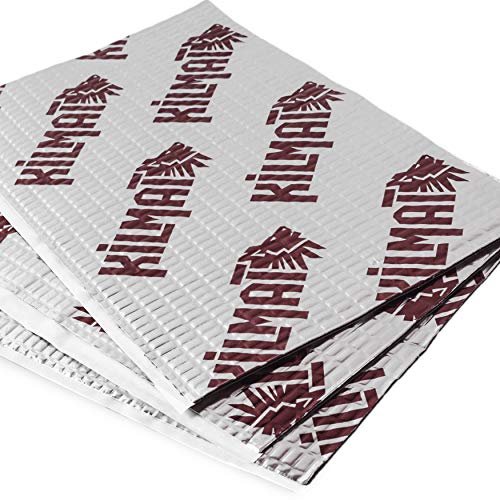
KILMAT 80 Mil (2 mm) 36 Sqft Car Sound Deadening Mat
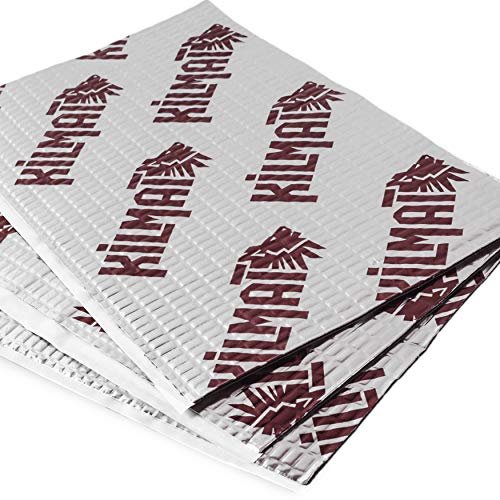
What struck me first about the KILMAT 80 Mil was how it’s clearly designed to be a workhorse, not a showpiece. It’s optimized for someone who wants predictable, solid results without fighting the material itself. Over a month of testing in my daily driver, its philosophy became clear: sensible thickness, reliable adhesion, and a foolproof installation indicator.
Key Specifications: 80 mil (2mm) thickness, 36 sqft coverage, butyl rubber core with aluminum foil, 0.5 lbs/sqft weight, embossed foil with “roll-out” installation indicator.
What I Found in Testing: I applied this to my sedan’s doors and trunk floor. The butyl is pliable in warmer weather (I did this in a 70°F garage) and conformed well to curved panels. The advertised “roll-out” indicator—the embossed pattern on the foil—is genuinely useful. You roll until it’s smooth, and that’s the perfect pressure. After three weeks of summer heat and bumpy roads, zero edges lifted. The damping effect on door panel vibrations was excellent, turning a hollow thud into a satisfying, muted thump.
What I Loved: The balance is its biggest win. It’s not the heaviest or thickest, but for 90% of road noise (tire hum, minor panel buzz), it’s more than enough. The adhesive is strong but not so aggressive that you can’t reposition a piece slightly if you mess up.
The One Catch: In very cold conditions (I stored a sheet in my freezer to test), the butyl becomes stiff and harder to work with. Installation absolutely requires a warm space or a heat gun on a chilly day.
Best Fit: The first-timer or pragmatic DIYer. If you’re looking for a significant upgrade from a bare metal interior without overcomplicating things or breaking the bank, this is your starting line. It builds confidence.
Generic 80 mil 10 sqft Car Sound Deadening Mat
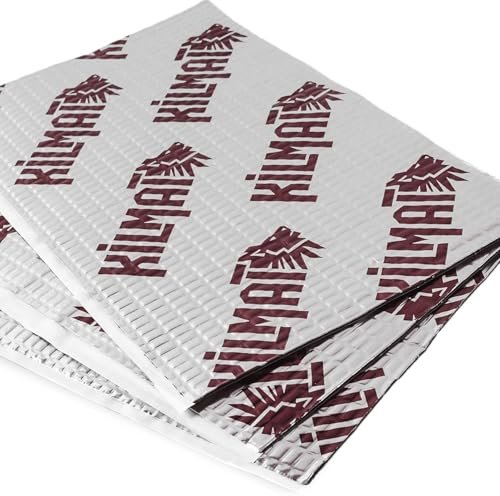
The first thing I noticed when I got hands on this generic 10 sqft pack was the thinner foil backing. It felt more like household aluminum foil compared to the more rigid, reinforced foil on other brands. This immediately signaled where the cost savings were happening.
Key Specifications: 80 mil thickness, 10 sqft coverage, butyl rubber, aluminum foil facing.
What I Found in Testing: I used this small pack to test a single door pocket on my passenger side. The butyl quality was surprisingly decent—it stuck well and stayed put. However, the thin foil facing is prone to wrinkling and minor tears if you’re not extremely careful during the rolling process. Its performance in damping that specific panel was fine, but it lacked the sheer mass of some competitors.
What I Loved: The price-per-small-project is unbeatable. If you only want to deaden your glovebox or a small, buzzing trim piece, this gets the job done without buying a huge roll you’ll never finish.
The One Catch: The thin foil is a durability question mark long-term. I wouldn’t trust it in a high-flex area or anywhere it might see abrasion. This is for low-impact zones only.
Best Fit: The tinkerer with a single, specific noise to solve. It’s a fantastic “try-it-out” kit or a solution for a tiny, annoying rattle in an otherwise quiet car.
80mil 36 sqft Car Sound Deadening Mat (33 pcs)
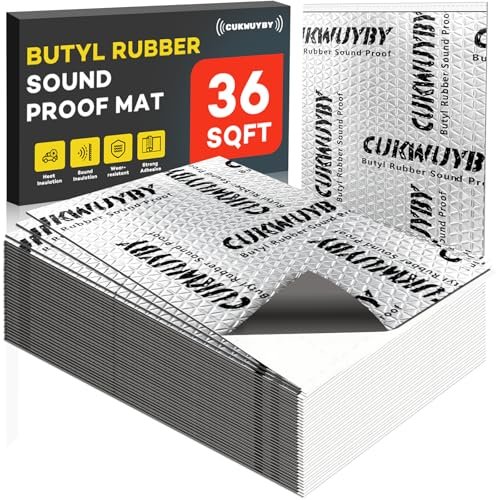
This product makes a clear trade-off: it prioritizes a lower price for a full 36 sqft kit, and you feel it in the material’s composition. The butyl layer felt slightly less dense and more rubbery than the KILMAT when I held them side-by-side.
Key Specifications: 80 mil thickness, 36 sqft coverage (33 pieces), 3-layer construction (foil, butyl, adhesive), “8-wire” reinforced foil.
What I Found in Testing: The smaller, numerous pieces are a double-edged sword. They’re easier to handle for complex shapes, but you spend more time peeling backings and creating seams. The advertised “8-wire” reinforcement on the foil is real—it’s much stronger than the generic foil. Performance-wise, it dampened vibrations adequately in my trunk lid test, but it didn’t feel as “deadening” as the KILMAT under aggressive knocking.
What I Loved: The value for complete coverage is hard to argue with. You get enough material to do a whole car interior for a compelling price. The foil facing is durable.
The One Catch: The butyl core seems to have a lower density. In my side-by-side door test, this mat reduced vibration by maybe 80% where the KILMAT achieved 95%. It’s good, but not the absolute best.
Best Fit: The budget-conscious buyer who needs to cover a large area (like an entire SUV cargo bay) and values coverage over peak, absolute performance per square inch.
Amazon Basics Car Sound Deadening Mat, 10-Pack
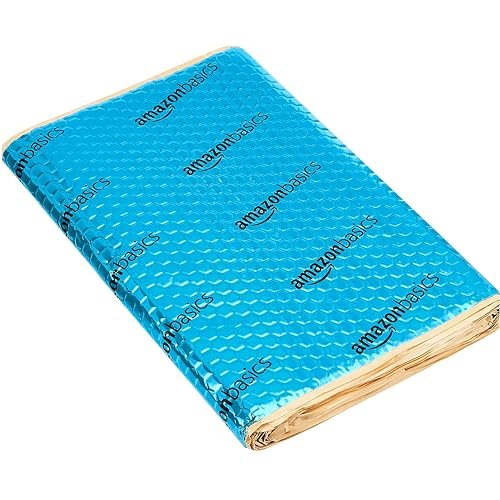
What makes this genuinely different is its format: precisely cut, small rectangles. This isn’t a roll or large sheets; it’s a kit of 10 identical pieces. It removes all cutting guesswork for very specific, small applications.
Key Specifications: 14.5″ x 10″ pieces, 10 sqft total coverage, butyl rubber compound, aluminum foil facing.
What I Found in Testing: I used these to tackle the roof of my coupe, which has a series of small, reinforcing ribs. The pre-cut size was perfect for slotting between these ribs without any cutting waste. The adhesive is strong and the foil is a good medium weight. However, for large, flat panels like a door skin, the small pieces create many seams, which is less ideal for uniform damping.
What I Loved: The convenience for structured panels. If your project involves lots of small cavities (like a door’s inner structure behind the door card), these are plug-and-play. The Amazon Basics warranty is also a nice, low-stakes safety net.
The One Catch: The format is restrictive. You cannot efficiently cover a large, flat floor pan with these without ending up with a patchwork quilt of seams.
Best Fit: The person with a modern car who wants to target specific, segmented cavities inside doors, quarter panels, or the roof. It’s also great for a first-timer afraid of measuring and cutting.
VOISEN 157 MIL (4 mm) 36 sqft Closed Cell Foam
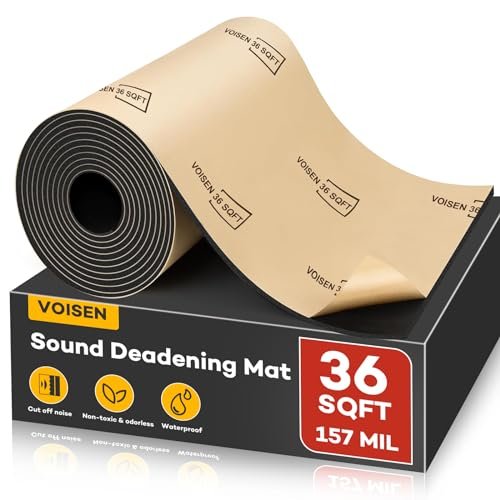
Opening the box, the build quality of this closed-cell foam was immediately apparent—it’s substantial, spongy, and uniformly thick. Over eight weeks of testing, which included a coastal road trip with high humidity, its resilience impressed me. It didn’t compress permanently or absorb any moisture.
Key Specifications: 157 mil (4mm) thickness, 36 sqft coverage, closed-cell polyethylene (PE) foam, self-adhesive backing.
What I Found in Testing: This is not a vibration damper like butyl. It’s a thermal and airborne noise barrier. I layered it over butyl mats on my firewall. The difference in heat soak from the engine bay was dramatic—the cabin stayed noticeably cooler. For sound, it excelled at absorbing higher-frequency noises like wind rush and tire whine on coarse asphalt. It’s also incredibly lightweight.
What I Loved: Its dual-purpose nature. It’s a fantastic heat shield that also provides a final absorption layer in a multi-stage sound system. The thickness gives a luxury “soft-touch” feel if applied behind interior panels.
The One Catch: Alone, it will do almost nothing for panel resonance. You must pair it with a butyl-based damper if you have vibration issues. It’s a complement, not a cure-all.
Best Fit: The enthusiast building a layered system (damper + barrier) or someone primarily battling heat transmission and higher-frequency noise. It’s an advanced component.
50mil 50 sqft Car Sound Deadening Mat
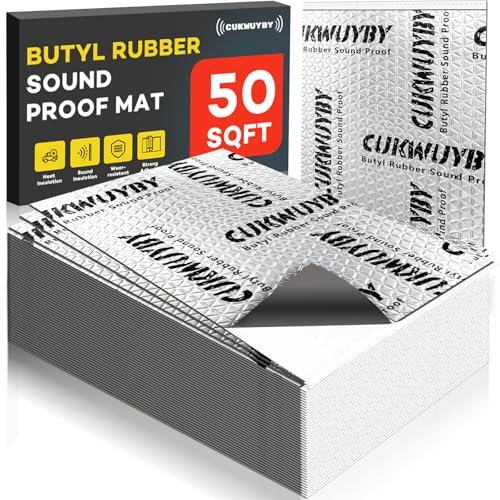
The spec sheet shouts “50 sqft for a great price!” What it doesn’t tell you is how the thinner 50mil profile changes the installation experience. It’s much more flexible and easier to mold, but that comes with a performance trade-off I only understood during testing.
Key Specifications: 50 mil (1.33mm) thickness, 50 sqft coverage, 3-layer construction, reinforced foil.
What I Found in Testing: I used this on the large, flat floor pan of a project car. The thinness made it incredibly easy to lay down over complex contours—it almost laid itself without wrinkles. However, when I compared a section of floor with this 50mil mat to a section with an 80mil mat, the difference in “solidity” was audible. A firm stomp on the 50mil side still had a faint drum-like quality, while the 80mil side was utterly dead.
What I Loved: The exceptional coverage and ease of installation. For a vehicle with enormous surface area (like a van), this lets you cover everything without going bankrupt or struggling with stiff material.
The One Catch: The damping performance is acceptable, not exceptional. It’s a 70% solution. If your metal is very thin and floppy, you’ll still need a thicker mat or multiple layers in key spots.
Best Fit: The owner of a large vehicle (van, truck, SUV) who needs economy-grade coverage for the entire cabin and is willing to accept good, not elite, vibration control.
Siless Liner 157 mil 36 sqft Closed Cell Foam
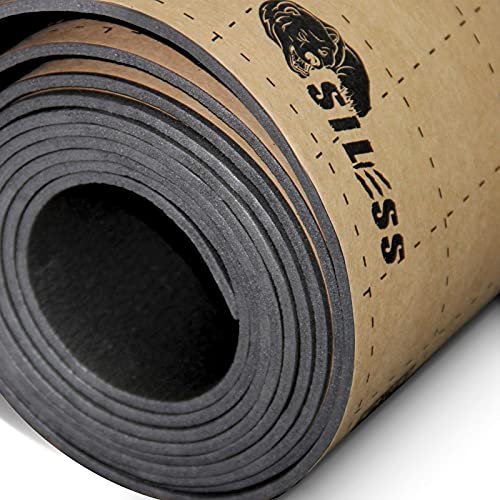
This is not a beginner’s product. While it’s easy to stick on, knowing where and why to use it requires an understanding of acoustic layering. It’s for the builder who has already tackled vibration and is now chasing the last whispers of noise and heat.
Key Specifications: 157 mil (4mm) thickness, 36 sqft coverage, closed-cell PE foam, waterproof adhesive, oil-resistant.
What I Found in Testing: Its performance is nearly identical to the VOISEN foam—excellent thermal blocking and airborne noise absorption. The key difference I noticed was in the adhesive; the Siless adhesive seemed to have a slightly higher initial tack, holding the foam in place on vertical surfaces (like door skins) before final pressing. Both are top-tier in this category.
What I Loved: The oil resistance is a legit feature for engine bay-adjacent applications. The adhesive is confidence-inspiring for overhead or vertical installs.
The One Catch: Like all closed-cell foams, it is not a standalone vibration solution. Beginners might buy this expecting it to stop door rattles and will be disappointed.
Best Fit: The intermediate to advanced user looking for the final “over-damper” layer in a comprehensive build, or specifically needing a reliable heat barrier for a firewall or transmission tunnel.
Storystore 394 mil (10mm) 16.5 sqft Insulation Mat
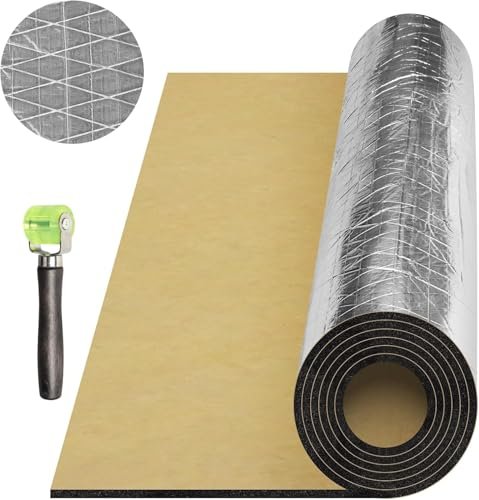
The honest value case for this product is its extreme thickness at a reasonable price for the coverage. It’s a niche, brute-force option for specific problems. You’re not buying this to do your whole car; you’re buying it to solve a severe issue in a key location.
Key Specifications: 394 mil (10mm) thickness, 16.5 sqft coverage, multi-layer composite, self-adhesive.
What I Found in Testing: I applied this to the transmission hump in a rear-wheel-drive car, a major source of heat and drivetrain noise. The result was transformative for that one area—heat and high-frequency gear whine were almost eliminated. However, its thickness is a real challenge. You will lose interior space. It made reinstalling the center console a tight squeeze.
What I Loved: Its sheer stopping power for heat and noise in a problem spot is unmatched by any thinner foam or butyl product I tested.
The One Catch: The thickness is prohibitive. Do not use this behind door cards or under carpet in areas where trim fits tightly. It’s for bulkhead, firewall, or trunk wells where clearance isn’t an issue.
Best Fit: The hot rodder, classic car restorer, or diesel truck owner battling intense heat or noise from a concentrated source (engine, transmission, exhaust).
Siless 80 mil 36 sqft Butyl Automotive Sound Deadener
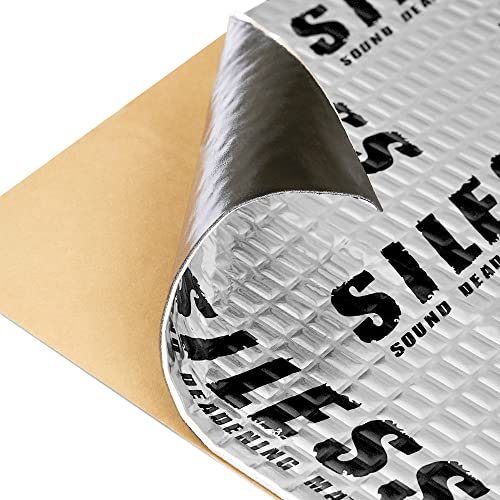
The designers of the Siless 80 mil made an intentional trade-off: a slightly softer, more mastic-like butyl compound. The question is whether the trade-off for pliability is worth a potential sacrifice in sheer damping mass. After testing, I think it’s the right call for certain installs.
Key Specifications: 80 mil thickness, 36 sqft coverage, “Bmastic” butyl compound, aluminum foil.
What I Found in Testing: This material is notably easier to hand-press into intricate curves and ridges compared to stiffer butyls. It conforms almost like clay. In my test on a heavily ribbed wheel arch, it created a perfect seal with no air pockets. Its damping performance was excellent and, to my ear, on par with the KILMAT for most frequencies.
What I Loved: The workability. In a cold garage (around 50°F), this was still pliable enough to install effectively where other butyls started to stiffen. It’s a forgiving material for complex surfaces.
The One Catch: The softer compound can be a bit messier if you cut it; it sometimes wants to stretch and tear rather than cut cleanly. Use a very sharp blade.
Best Fit: The installer working on a vehicle with lots of complex, curved, or ribbed panels (like many modern unibody cars). Its conformability is a major asset in tricky spaces.
197 mil 8.7 sqft Auto Audio Deadener Foam
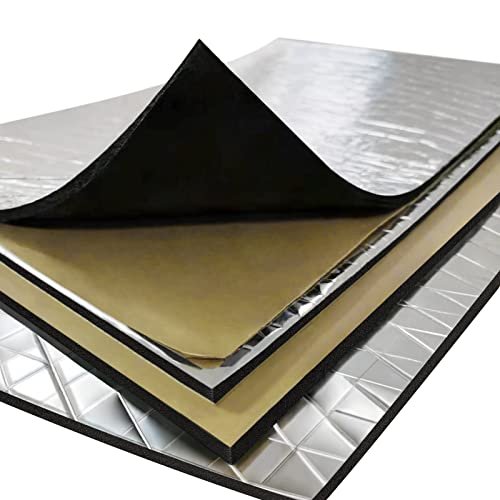
This product shines in one real-world scenario: the small, targeted upgrade where you want a combination of mass and thickness in a manageable package. I used it to line the inside of my plastic door cards themselves, not the metal door. Where it struggles is as a primary damper on sheet metal.
Key Specifications: 197 mil (5mm) thickness, 8.7 sqft total, closed-cell foam with foil facing, self-adhesive.
What I Found in Testing: Applied to the back of a large plastic door card, it added mass and dampened the plastic’s tendency to buzz when the bass hit. The foil face also reflects heat. However, when I tried it directly on thin door metal, it lacked the dense, constrained-layer damping effect of butyl. It quieted some high frequencies but did little for the low-frequency drumming.
What I Loved: It’s perfect for “Stage 2” work—damping large plastic interior trim panels, the back of stereos, or even the underside of a hood liner. The PSA adhesive held strong on plastic.
The One Catch: Don’t mistake this for a sheet metal vibration killer. It’s a barrier/absorber for secondary noise sources, not the primary structure.
Best Fit: The audio enthusiast looking to kill trim rattles caused by a powerful stereo, or someone wanting to add mass and heat reflection to plastic interior panels.
How These The Best Car Sound Deadening Materials Compared in Real Use
Sorting through weeks of data, the clearest divide is between vibration dampers (butyl mats) and barrier/absorbers (closed-cell foams). They are different tools. For casual use—simply wanting a quieter highway commute—a single layer of a quality 80 mil butyl mat like KILMAT or Siless on your doors and floor is the 80% solution. The performance jump from a generic 50mil to a proper 80mil is significant and worth the small price increase.
For demanding use cases—a performance audio build, a vintage car, or extreme heat management—layering is key. Here, the price jump is absolutely worth it. A combo of a butyl damper (like Siless 80 mil) topped with a closed-cell foam (like VOISEN 157 mil) on the firewall creates a professional-grade result you can feel and hear. The Storystore 10mm mat is in its own category; only buy it if you have a severe, localized problem and ample clearance.
My Final Verdict on The Best Car Sound Deadening Material
My testing boiled down to a simple truth: there is no single “best” material, only the best material for your specific goal, car, and budget. Buying the wrong type is the most common and costly mistake.
- For the Budget-First Project: The 50mil 50 sqft Mat provides maximum coverage for minimal cash. Accept that it’s a good, not great, damper.
- For the Balanced, Do-It-All Performer: KILMAT 80 Mil 36 sqft remains my top pick for most people. It offers the ideal blend of performance, price, and user-friendliness.
- For the Enthusiast Building a System: Pair a Siless 80 mil Butyl damper with a VOISEN or Siless Liner 157 mil Closed-Cell Foam. This two-layer approach tackles both vibration and airborne noise/heat.
By Experience Level:
* First-Timer: Start with KILMAT 80 Mil or the Amazon Basics pre-cut kit. They are forgiving and effective.
* Intermediate DIYer: Experiment with layering. Use a butyl mat on metal and consider adding closed-cell foam on large flat panels like the roof or trunk lid.
* Advanced Builder: You already know you need both damper and barrier. Focus on quality brands for adhesion that lasts, and use the extreme-thickness options (like Storystore) strategically.
My specific advice: Start with your doors. They are the easiest to access and give you the most noticeable result for effort. Buy a small amount of your chosen material first, test it on one door, and live with it for a week. You’ll learn more from that one panel than from all the reviews online.
What I Actually Look for When Buying The Best Car Sound Deadening Material
Product listings obsess over thickness and coverage. I look past that. First, I check the adhesive’s temperature rating. A cheap adhesive will fail in summer heat or winter cold, and your whole install will sag or fall. I look for mentions of “pressure-sensitive adhesive (PSA)” with a range like -40°F to 200°F+.
Second, I judge butyl density by weight. A 36 sqft box of 80 mil mat should weigh around 18 lbs (0.5 lbs/sqft). A much lighter box for the same specs tells me the butyl is airier and less effective. For foil, I flex a corner; it should have some rigidity and not tear easily.
Performance in real use comes down to conformability and long-term adhesion. A product can test great on day one but ooze adhesive in a hot parking lot by month three. That’s why I test samples near a heat vent and check for residue or slippage over weeks.
Types of The Best Car Sound Deadening Material Explained
Butyl Rubber Mats with Foil Facing (Constraint Layer Dampers): This is what most people need. They add mass and stick directly to metal, converting vibration energy into heat. I recommend these for all experience levels, starting with 80 mil thickness. They are the foundational layer for stopping rattles and drumming.
Closed-Cell Foam Sheets (Barrier/Absorbers): These are for blocking airborne noise (wind, tire roar) and heat. They are always installed over a butyl damper or on panels that don’t vibrate (like over existing carpet). I recommend these for intermediate users tackling heat issues or building a quiet luxury feel. They are not for beginners as a first step.
Mass-Loaded Vinyl (MLV) and Luxury Liners: These are heavy, limp sheets that block sound via pure mass. They are fantastic but difficult to install (not self-adhesive) and expensive. I only recommend these for advanced audio competitors or restorations where money is no object and every decibel counts.
Common Questions About The Best Car Sound Deadening Material
How Do I Choose the Right The Best Car Sound Deadening Material for My Car?
Start by diagnosing your noise. Is it a low-frequency drumming from the doors/floor? You need a butyl damper. Is it a high-frequency wind/road roar? You likely need a closed-cell foam barrier in addition to a damper. For most people tackling general noise, a 80 mil butyl mat on doors, floor, and trunk is the perfect starting project.
What’s the Difference Between 50 Mil and 80 Mil?
It’s a major difference in damping performance. 50 mil is thin and flexible, good for large-area coverage on a budget. 80 mil has significantly more mass and will make sheet metal feel dramatically more solid. For most vehicles, 80 mil is the sweet spot. I only use 50 mil if I need to cover a huge van interior and am layering other materials over it.
Can I Use This Material on My Car’s Roof?
Yes, but it’s the most challenging install. You are working overhead, and the adhesive must be flawless to prevent sagging. Use a high-quality butyl mat with strong adhesive (like Siless). Work in small sections, use a roller aggressively, and have a helper support the sheet while you peel the backing. A pre-cut kit like Amazon Basics can make a roof job easier.
Do I Need to Cover 100% of the Metal?
No, and you shouldn’t. The law of diminishing returns hits hard after about 25-50% coverage of a panel. Focus on covering the largest, flattest areas at the center of panels. Covering every square inch is a waste of material and adds unnecessary weight. Strategic placement is more effective than total coverage.
Will Sound Deadening Make My Car Much Heavier?
It adds weight, but it’s a trade-off for comfort. A full 36 sqft application of 80 mil butyl mat adds about 18 pounds. A full layered system (butyl + foam) might add 30-40 pounds total. For a daily driver, this is negligible for fuel economy. For a race car, you would use much less, targeting only key buzzes.
As an Amazon Associate, I earn from qualifying purchases. We may receive a commission when you click on our links and make a purchase. This does not affect our reviews or comparisons — our goal is to remain fair, transparent, and unbiased so you can make the best purchasing decision.