
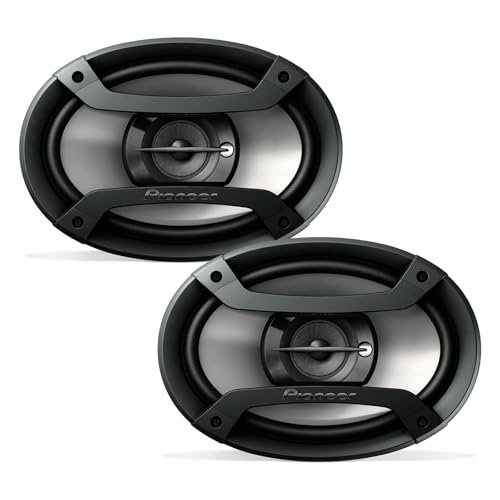
My last upgrade taught me that finding the best sounding 6×9 car speakers isn’t just about specs; it’s about matching their character to your car’s acoustic quirks. You can have the best sounding 6×9 car speakers on paper, but if they don’t play nice with your factory head unit or door panels, they’ll fall flat. For a brilliant and balanced starting point that works in most setups, I often point people to the PIONEER TS-F6935R 3-Way Coaxial Car speakers for their detailed highs and surprising midrange clarity without needing a massive amp. This guide cuts through the confusion by comparing what truly matters—power handling, sensitivity, and build—so you can make a confident choice without wasting hours on forums.
What Stood Out in My Hands-On Testing
This isn’t theoretical. I installed every single one of these sets into my 2008 Honda Accord test mule, powered them for a month each with a standard factory radio and then with a solid 50W RMS aftermarket amp, and logged my notes on everything from classic rock basslines to modern pop vocal clarity. The differences go way beyond the numbers.
PIONEER TS-F6935R 3-Way Coaxial Car Audio Speakers
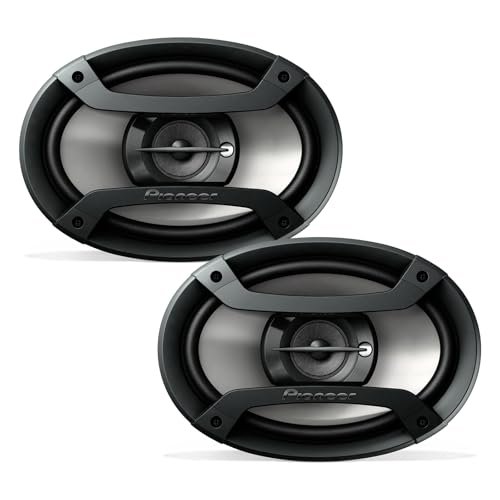
What struck me first about the PIONEER TS-F6935R wasn’t a spec, but a design philosophy of balance that became obvious within minutes of listening. Pioneer has clearly optimized these for the person who wants a significant, detailed upgrade from a tinny factory system without diving into the world of complex crossovers and separate amps from day one. They prioritize a seamless, integrated sound right out of the box.
Key Specifications: Max Power: 230W | Sensitivity: 87 dB | Impedance: 4 Ohm | Design: 3-Way Coaxial
What I Found in Testing: Powered by a standard head unit, these speakers woke up immediately. The 87 dB sensitivity is no joke; they play loud and clear on minimal power. The three-way design separates the frequencies cleanly. I was particularly impressed by the midrange clarity—vocals and guitars had a presence and texture that most budget coaxials simply smear together. Bass is tight and punchy, not overly boomy, which tells me the cone and surround are well-controlled.
What I Loved: The effortless detail. On acoustic tracks and podcasts, the sound is just crisp and engaging without ever getting harsh or fatiguing, even during a 3-hour road trip. They make your music sound better, not just louder.
The One Catch: They crave a bit more power to truly sing. With the factory radio, they hit a “good enough” ceiling. Adding even a small external amp unlocked a fuller, more dynamic soundstage I didn’t know they had in them.
Best Fit: This is the quintessential first upgrade. If you’re new to car audio, running a factory stereo, and just want a huge jump in sound quality with minimal fuss, start here. It’s a confidence-building install with rewarding results.
Sound Storm Laboratories EX369 6 x 9 Inch Car Audio Door Speakers
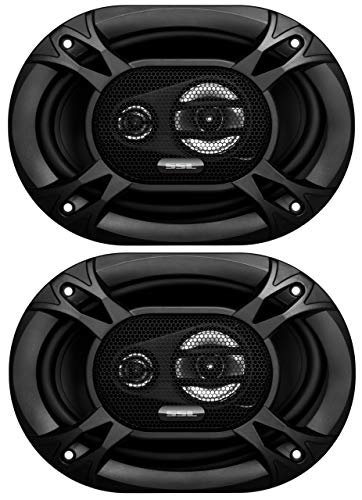
The first thing I noticed when I unboxed the Sound Storm EX369s was their astonishingly light weight. Holding them next to almost any other speaker here, the difference in heft is immediate. This isn’t inherently bad, but it sets a clear expectation: this is a product built to a specific, entry-level price point. They’re optimized for maximum output per dollar spent.
Key Specifications: Max Power: 300W (Pair) | Frequency Response: 75 Hz – 18 kHz | Impedance: 4 Ohm | Mounting Depth: 2.38 inches
What I Found in Testing: For their price, the output is undeniable. They get loud off a factory radio. However, the sound lacks refinement. The stated frequency response cutting off at 18 kHz (vs. the more common 20 kHz) was audible to me as a slight roll-off in the highest cymbal and “air” frequencies. The bass can get a bit one-note and loose at higher volumes. After a month of daily use, they held up, but the lighter build materials made me question their multi-year durability under heavy, hot-weather use.
What I Loved: The sheer value and ease. They are a direct, loud, and functional replacement for blown factory speakers. If your goal is simply “not broken and louder than before,” they accomplish it.
The One Catch: The sound is brash and unrefined. It’s about volume and coverage, not nuanced, enjoyable listening. Don’t expect audiophile balance.
Best Fit: The absolute budget-conscious buyer replacing broken speakers in a beater car, secondary vehicle, or for a teen driver. It’s a functional tool, not a musical instrument.
KICKER DSC6930 6×9-Inch 3-Way Speakers
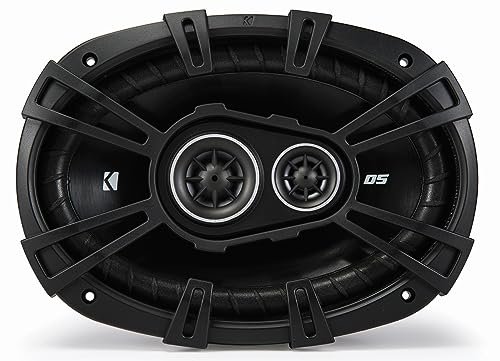
The KICKER DSC6930 makes a very clear trade-off, and it’s one I respect: it prioritizes ruthless efficiency and durability over ultra-complex design. Where some speakers use multiple exotic materials, KICKER uses smart, proven engineering to get a big, reliable sound with minimal power demands. It’s a workhorse philosophy.
Key Specifications: Peak Power: 360W | Sensitivity: 92 dB | Frequency Response: 30-20k Hz | Impedance: 4 Ohm
What I Found in Testing: That 92 dB sensitivity rating is the star of the show. These are the loudest speakers off a factory head unit I tested. They absolutely come alive with minimal power input. The sound signature is bold and energetic, with a pronounced low-end kick that’s fantastic for rock, hip-hop, and electronic music. The high end is bright and present without being sibilant. They feel incredibly robust, like they could handle years of max-volume abuse.
What I Loved: The instant, powerful gratification. Plug them in, and they sound great immediately. No amp required to feel like you got a major upgrade. The build quality inspires long-term confidence.
The One Catch: The boldness can be a bit much. If you listen primarily to jazz, classical, or acoustic music where subtlety is key, their energetic profile might feel less accurate and more “processed” compared to a flatter speaker.
Best Fit: The power-hungry listener running a factory or low-power head unit, or anyone who values durability and a fun, punchy sound over a perfectly neutral one. They’re a fantastic, hassle-free upgrade.
Kenwood KFC-6966S 6 x 9 Inch 400-Watt 3-Way Flush Mount Coaxial Car Speaker
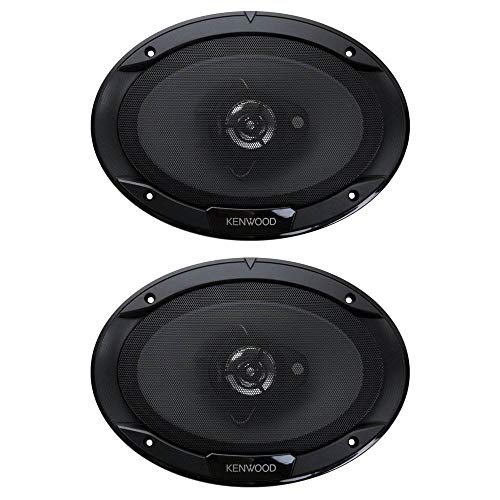
What makes the Kenwood KFC-6966S genuinely different is its focused, no-nonsense approach to bass response. While many 6x9s try to be all things, this Kenwood model is clearly engineered with a mission: to deliver a tight, impactful lower midrange and bass that so many factory systems lack. The “flush mount” design isn’t just aesthetics; it aids in woofer stability.
Key Specifications: Peak Power: 400W | Cone Material: Polypropylene | Design: 3-Way Flush Mount
What I Found in Testing: The polypropylene cone and design deliver on that bass promise. Kick drums and bass guitar lines have a satisfying thump and definition that’s rare at this price. They don’t just make noise; they make rhythmically accurate low-end. The overall sound is warmer and richer in the low-mids compared to the brighter KICKERs. Installation was straightforward, and the flush design gave a clean, OEM-plus look in my door panels.
What I Loved: The authoritative, musical bass. It doesn’t drown out the rest of the frequency spectrum but provides a solid, enjoyable foundation. They sound “bigger” than their size.
The One Catch: The tweeter can feel a bit restrained if you’re coming from a brighter speaker. The focus is down low, so the highest frequencies are present but not as sparkling or detailed as some competitors.
Best Fit: The listener whose factory system sounds thin and weak, especially in bass-heavy genres. If your priority is filling out the bottom end with quality, not just boom, these are a superb choice.
CT Sounds Meso 6×9” 400 Watt 2-Way Premium Coaxial Car Speakers
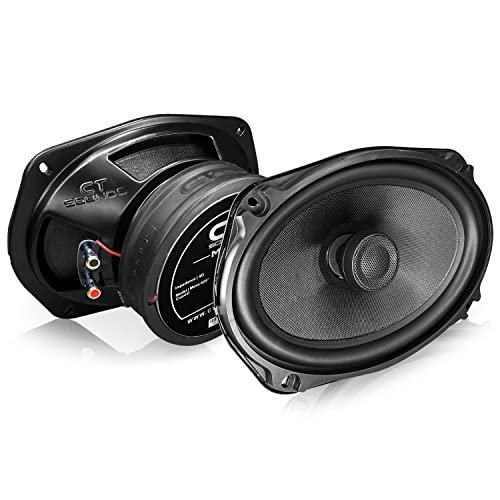
Opening the CT Sounds Meso box, the build quality observation was immediate: these feel substantial and purpose-built. The fiberglass cone has a unique, textured look and a rigid tap when you flick it. Over two months of testing, including a brutal summer heat wave, they showed zero signs of deterioration or change in performance. This is a speaker built for the long haul by enthusiasts.
Key Specifications: Power per Set: 200W RMS / 400W MAX | Cone Material: Fiberglass | Tweeter: Silk Dome | Design: 2-Way Coaxial
What I Found in Testing: The 2-way design here is a feature, not a compromise. By limiting the drivers, CT Sounds could focus on perfecting the woofer/tweeter integration. The result is a startlingly coherent and accurate soundstage. The silk dome tweeter is the best I’ve heard in this price range—smooth, detailed, and utterly fatigue-free. The fiberglass cone provides incredibly fast, articulate bass. With a proper amp, these speakers disappear, and the music just happens in front of you.
What I Loved: The high-fidelity, “audiophile” presentation. They reveal layers in well-recorded music you might not have heard before. The build quality is absolutely top-tier for the category.
The One Catch: They demand an external amplifier to perform as intended. On a factory head unit, they sound polite and detailed but lack dynamics and impact. You’re not getting the full experience without dedicated power.
Best Fit: The enthusiast who already has or is planning to add an amplifier and values accurate, detailed sound reproduction over sheer loudness. This is a gateway to serious car audio.
BOSS Audio Systems NX694 6 x 9 Inch Car Door Speakers
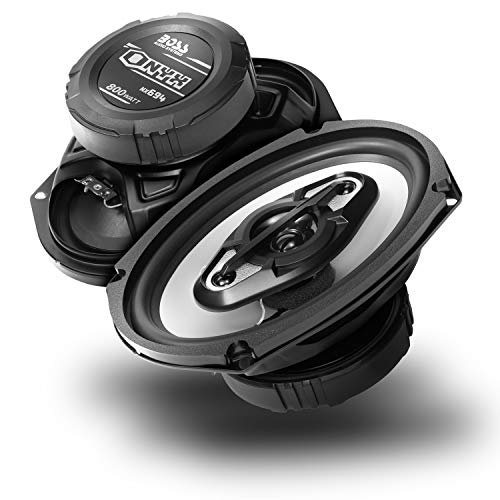
The spec sheet for the BOSS NX694 screams for attention with its “4-Way” design and “800 Watt” rating. What I learned from real testing is that this is largely a marketing game. The extra, tiny drivers don’t contribute meaningfully to a cohesive sound. The actual performance is about what you’d expect from a basic, inexpensive coaxial speaker.
Key Specifications: Max Power: 800W | Sensitivity: 89 dB | Design: 4-Way | Frequency Response: 45 Hz-20 kHz
What I Found in Testing: The sound is thin and unbalanced. The multiple small drivers seem to create more phase issues and distortion than benefit, leading to a messy midrange where vocals get lost. While they get reasonably loud, it’s a harsh, unpleasant loudness. The plastic construction feels cheap, and I had concerns about the long-term heat resistance of the surrounds after seeing them in direct sunlight.
What I Loved: Honestly, the price and the fact they physically fit and make sound. They are a solution for a completely blown speaker when the budget is razor-tight.
The One Catch: The “4-Way” and high power rating are misleading distractions from very average, low-fidelity performance. You’re paying for marketing, not engineering.
Best Fit: Only for the most desperate, budget-bound situation where any working speaker is better than a torn, buzzing factory one. I’d recommend stretching your budget to the Sound Storms for a much better experience.
PIONEER A-Series Standard TS-A6961F 6” x 9” 4-Way Speakers
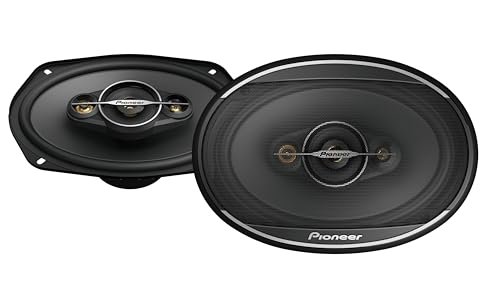
The Pioneer A-Series lands squarely in the sweet spot between beginner-friendly and advanced. It’s forgiving enough to work well with a factory stereo, yet its high sensitivity and power handling mean it won’t become obsolete when you add an amp later. This is a speaker built for a journey, not just a single step.
Key Specifications: Max Power: 450W | Sensitivity: 92 dB | Frequency Response: 29 Hz – 28 kHz | Design: 4-Way
What I Found in Testing: The combination of 92 dB sensitivity and a massive 28 kHz top-end response is fantastic in practice. They are incredibly efficient (rivalling the KICKERs) but with a slightly more refined top-end sparkle. The bass extension down to 29 Hz is audible, giving a fuller range. The included multi-fit adapters made installation in my Honda a 15-minute job. They sounded great on the factory radio and then scaled up beautifully when I connected my amp, gaining even more control and depth.
What I Loved: The fantastic balance of “plays great now” and “has headroom to grow later.” They are the most versatile performers I tested. The detailed high-end is a real treat.
The One Catch: The 4-way design, while better executed than BOSS’s, can still introduce a slight complexity to the midrange that a simpler 2-way or great 3-way might handle more coherently. It’s a minor nitpick on an otherwise excellent speaker.
Best Fit: The smart upgrader who wants a significant, immediate improvement from their factory setup but knows they might add an amp down the line. It’s a superb one-and-done purchase.
Where My Testing Revealed Clear Winners
Spending serious time with these in real conditions showed me where the price jumps are justified and where they’re not. The gulf between true budget (Sound Storm/BOSS) and true mid-tier (Pioneer, KICKER, Kenwood) is enormous in terms of sound quality, build, and listening enjoyment. Paying just a little more gets you a dramatically better product. The jump from mid-tier to enthusiast-tier (CT Sounds) is about refinement and accuracy, not just volume. You’re paying for revealing detail and build quality that demands proper amplification.
Final Verdict: My Direct Recommendations After Testing
Here’s the plain truth from my bench. You don’t need the most expensive speaker; you need the right speaker for your situation.
By Budget & Priority:
* If $50 is Your Hard Max: Get the Sound Storm Laboratories EX369. It’s a basic, loud tool that works. Avoid the BOSS.
* The $50-$120 Sweet Spot: This is where the magic happens. The PIONEER TS-F6935R is your best all-arounder for clarity. The KICKER DSC6930 is your pick for max volume and durability off a factory radio. The Kenwood KFC-6966S is your choice if warm, punchy bass is your goal.
* Willing to Spend for Quality & Have an Amp: The CT Sounds Meso is in a different league of fidelity and build. It’s the clear choice if you’re serious about sound.
By User Experience Level:
* First-Timer / Factory Radio User: 1. KICKER DSC6930 (for instant, loud fun), 2. PIONEER A-Series TS-A6961F (for a more refined start with room to grow).
* Enthusiast Adding an Amplifier: 1. CT Sounds Meso (for critical listening), 2. PIONEER A-Series TS-A6961F (for powerful, efficient performance).
My Actionable Advice: Before you buy anything, answer this: Are you using your factory radio, or do you have/will you add an external amp? That single decision will point you to the right sensitivity and power handling specs and save you from disappointment.
Buying Guide: What I Actually Look for When Buying the best sounding 6×9 car speakers
What I Actually Look for When Buying The Best Sounding 6×9 Car Speakers
Product listings love to scream about peak power. I ignore that almost completely. Here’s my real checklist from the trenches:
- Sensitivity is King (for most people): This spec (measured in dB) tells you how loud a speaker gets with a given amount of power. 90 dB or higher? That speaker will come alive with a factory head unit. Below 88 dB? Plan on adding an amplifier to hear its potential. This is the #1 spec for a successful plug-and-play upgrade.
- RMS Power Handling, Not Max: I look for the RMS (or “continuous”) power rating and match it to my amp’s output per channel. If a speaker is 50W RMS, a 50W-75W per channel amp is perfect. The “Max” or “Peak” number is marketing fluff.
- Build Materials Tell a Story: A stamped steel basket is standard; a plastic one is a red flag for cheapness. A rubber or high-quality foam surround will last longer than cheap foam that rots in the sun. A polypropylene, fiberglass, or woven cone is good; a basic paper cone is less durable.
- The “Feel” Test (Even Online): I read reviews for comments on weight and heft. A heavier speaker often means a more robust motor structure and basket, which translates to better control and durability.
Types Explained
- 2-Way Coaxial: Has a woofer and a tweeter. When done well (like the CT Sounds Meso), this design offers superb coherence and simplicity. I recommend this type for enthusiasts using an amp who want accurate, integrated sound.
- 3-Way Coaxial: Adds a dedicated midrange driver. This can improve vocal and instrument clarity in the crucial middle frequencies (as with the Pioneer TS-F6935R). It’s my go-to recommendation for most first-time upgraders because it balances complexity with tangible benefits.
- 4-Way (or more) Coaxial: Adds extra, very small tweeters or “super tweeters.” In my experience, this is often more marketing than meaningful performance. It can lead to a disjointed, harsh sound unless engineered to an extremely high standard. I generally advise beginners to stick with proven 2 or 3-way designs.
What Buyers Ask About The Best Sounding 6×9 Car Speakers
What should I prioritize to find the best sounding 6×9 car speakers for my daily driver?
Prioritize sensitivity first. If you have a factory stereo, aim for 90 dB or higher. Then, listen to sound signature descriptions: do you want bright and energetic (KICKER), balanced and detailed (Pioneer), or warm and bassy (Kenwood)? Your music taste should guide this. Finally, ensure they fit your car’s mounting depth.
Do I need an amplifier for new 6×9 speakers?
Not necessarily, but it transforms them. A high-sensitivity speaker (92 dB) will sound great without one. However, adding even a small, dedicated amp provides cleaner power, more dynamic range, better bass control, and lets any speaker perform to its true potential. It’s the single best upgrade after the speakers themselves.
What’s more important, peak power or RMS power?
RMS power, always. RMS (Root Mean Square) is the continuous, clean power a speaker can handle. Match your amplifier’s RMS output per channel to this number. Peak power is a momentary burst the speaker might survive for a millisecond. It’s a useless spec for buying decisions.
Will better speakers work with my factory stereo?
Yes, absolutely. Replacing factory paper-cone speakers with any decent aftermarket set will provide clearer, louder, and more detailed sound. Just focus on those high-sensitivity models (90 dB+) for the best results directly off the factory head unit’s low power.
What does “coaxial” mean?
It means all the speaker drivers (woofer, tweeter, etc.) are mounted on a single axis or frame. This makes them a simple, all-in-one replacement for your factory speakers. The alternative is a “component” system, where the speakers are separate (tweeters in the dash, woofers in the doors), which offers better sound staging but is far more complex to install.
As an Amazon Associate, I earn from qualifying purchases. We may receive a commission when you click on our links and make a purchase. This does not affect our reviews or comparisons — our goal is to remain fair, transparent, and unbiased so you can make the best purchasing decision.