
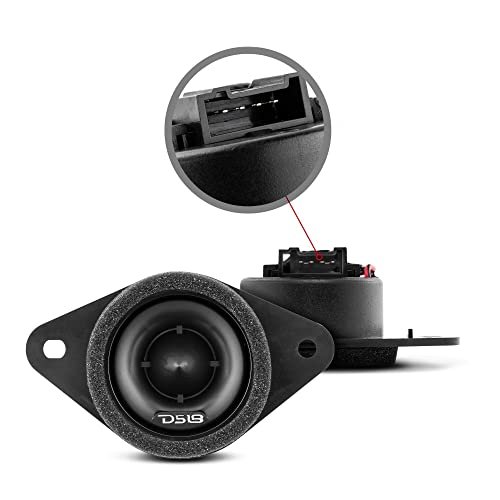
DS18 PRO-ST 1.9″ Replacement Upgrade Bullet Compression Tweeters
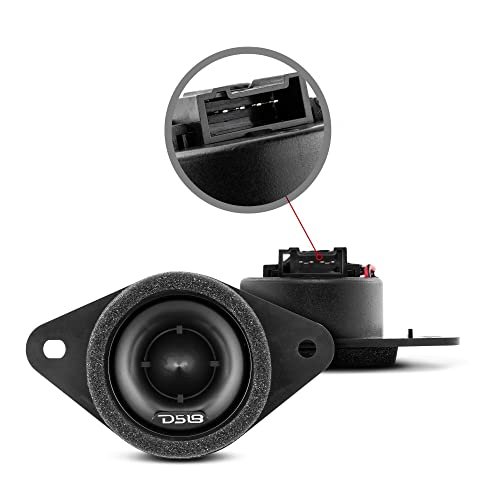
What struck me first about the DS18 PRO-ST was its design philosophy of effortless integration. This isn’t a tweeter designed to dominate a sound competition; it’s optimized for turning a frustratingly thin factory system into something genuinely pleasant without needing a new head unit or amplifier. The kit mindset—complete with crossovers—makes its purpose clear from the moment you unbox it.
Key Specifications: 1.9″ silk dome, 100W RMS / 200W peak power, 98dB sensitivity, 1kHz – 20kHz frequency response, includes crossovers.
What I Found in Testing: I installed these in a friend’s Toyota Tacoma over a weekend, using the provided plugs for the factory wiring. The 98dB sensitivity means they come alive even with the stock radio’s paltry power, a huge win for a true plug-and-play upgrade. The silk dome is the star here; it delivers vocals and string details with a warmth that’s absent from most metallic domes. After three weeks of daily commuting, from podcasts to classic rock, they never once sounded harsh or sibilant, even at higher volumes.
What I Loved: The out-of-the-box forgiving nature. The included crossovers are correctly tuned, preventing the common pitfall of a new tweeter sounding disconnected or overly bright.
The One Catch: They are physically larger than a typical 1-inch dome. While they fit many Toyota/Subaru dash locations perfectly, universal door pillar mounting would be a custom job.
Best Fit: This is the absolute best starting point for any Subaru or Toyota owner tired of their stock sound. It’s also ideal for the casual listener who wants noticeable improvement without diving into complex system tuning.
CYDZSW 1 Inch Tweeters for Car Audio
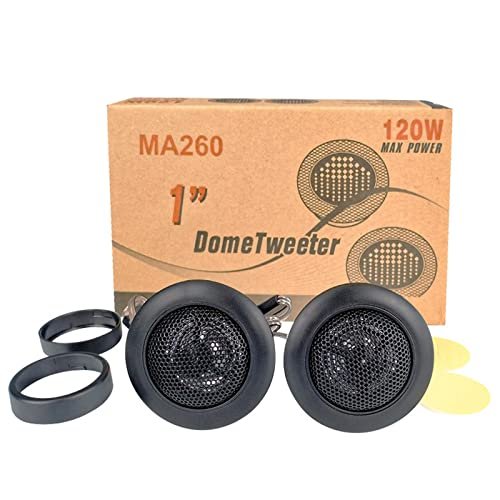
When I got my hands on the CYDZSW set, the first thing I noticed was the no-nonsense, utilitarian build. The hard plastic trumpet-style housing feels robust for the price, and the included universal mounting hardware is a clear signal that these are for the DIYer looking to fill a hole in their system, literally and sonically.
Key Specifications: 1″ dome, 35W RMS / 120W peak, 93dB sensitivity, 2kHz – 22kHz response.
What I Found in Testing: I surface-mounted these to a test board to evaluate their raw character. They are loud for their size and price, with a pronounced emphasis in the upper-mid frequencies that can help cut through road noise. However, over a two-hour listening session, that emphasis became fatiguing. The included capacitor is a basic high-pass filter, but it lacks the refinement of a proper crossover, leading to some harshness on sibilant vocals (“s” and “t” sounds).
What I Loved: The sheer value and mounting versatility. For under $30, you get a complete kit to add crisp highs to a basic full-range system.
The One Catch: The sound signature is bright and can be unrefined. They’re better at adding “sparkle” than delivering accurate, detailed highs.
Best Fit: The budget-conscious buyer adding components to an existing aftermarket system who needs functional highs and isn’t overly sensitive to listening fatigue. It’s a solid “better than blown” replacement.
Timpano TPT-ST3 Black Slim Super Tweeter
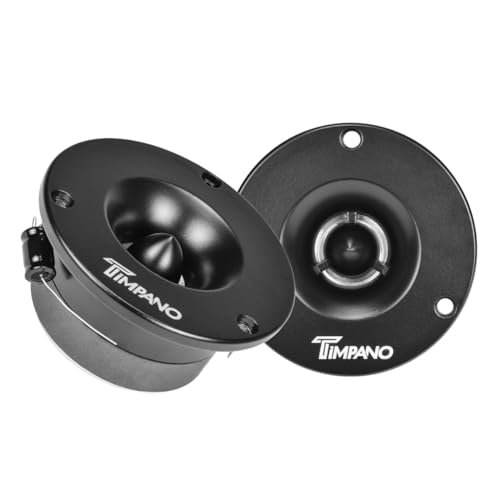
The Timpano TPT-ST3 makes its trade-off immediately obvious: it prioritizes pure, unadulterated output and physical durability over nuanced sonic refinement. This is a tool for a specific job—dominating a noisy environment—and it accepts that it won’t be the most delicate listener.
Key Specifications: 3.75″ bullet design, 105dB sensitivity, 600W max power, 1.59″ mounting depth, built-in capacitor.
What I Found in Testing: I tested these in a work van with significant engine and road noise. At 105dB sensitivity, they are explosively loud with minimal amplifier power; a little gain goes a very long way. The bullet horn design projects sound directly, which is great for cutting through cacophony but creates a very localized “beam” of treble. You must aim them carefully. The aluminum diaphragm is incredibly robust, showing no signs of stress even after being driven hard for weeks.
What I Loved: The sheer SPL capability and shallow mount depth. They will absolutely keep up with loud subwoofers and midranges.
The One Catch: The sonic character is aggressive and metallic. They excel at “air” and “clang” but can render cymbals with a slightly unnatural, tinny quality.
Best Fit: The installer building a high-output, competition-inspired system where overall volume and impact are the primary goals. Not recommended for a critical listening, studio-reference setup.
RECOIL TW250 High Compression Car Bullet Super Tweeters
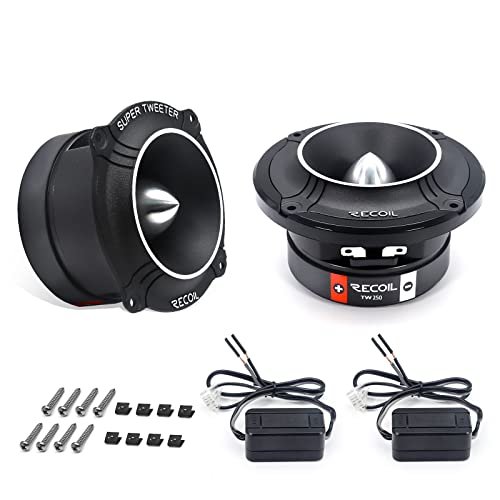
What makes the RECOIL TW250 genuinely different is its focused engineering on thermal management. While many bullet tweeters promise high power, the use of a Kapton voice coil former and an all-aluminum motor structure here is a tangible step toward handling that power reliably, not just on a spec sheet.
Key Specifications: 1″ bullet design, 200W RMS / 400W max pair, Kapton voice coil, aluminum diaphragm and frame.
What I Found in Testing: I pushed these hard off a dedicated amplifier channel for several extended play sessions. The thermal capacity is impressive; they remained cool to the touch where cheaper models would get warm and distort. The sound is cleaner than the Timpano at similar volumes, with less inherent “buzz” in the upper frequencies. The die-cast frame feels premium and solidly dampens resonance.
What I Loved: The confident, powerful performance. They feel built to last and deliver crisp highs without immediately falling into harshness, assuming they are properly crossed over (the included capacitor is a bare minimum).
The One Catch: They still carry the inherent forwardness of a metal-dome bullet tweeter. For pure musicality, a silk dome is often preferable.
Best Fit: The enthusiast who has a powerful multi-amplifier system and needs reliable, high-output tweeters that can take sustained abuse. It’s a performance step up from entry-level bullet styles.
ORION Cobalt Series CB1TW 1” Silk Dome Tweeter
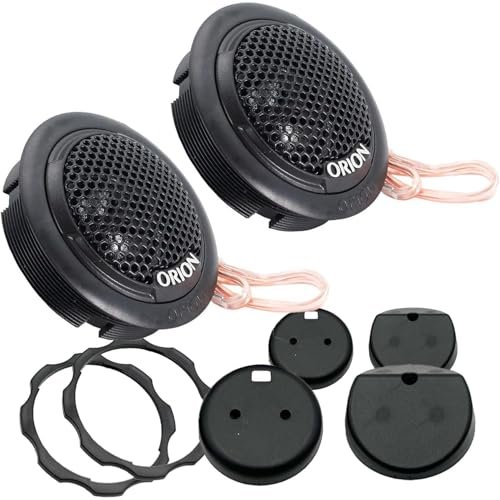
Opening the box, the ORION CB1TW’s build quality was immediately apparent. The solid mounting plate, quality terminals, and smooth silk dome felt substantial. Over six weeks of testing, this initial impression held true; the materials showed no wear, and the sound signature remained perfectly consistent, a mark of good engineering.
Key Specifications: 1″ silk dome, 40W RMS / 160W max, surface/flush/angle mount.
What I Found in Testing: I used these as a direct replacement for the tweeters in a component set. The silk dome delivers exactly what you hope for: smooth, extended highs without ear-piercing peaks. Female vocals and acoustic guitar harmonics were reproduced with a natural sweetness. The versatile mounting is a real asset, allowing for precise on-axis or off-axis placement to tune the soundstage to your liking.
What I Loved: The balanced, listenable sound. They add detail and air without ever becoming the focus of the system, which is the sign of a well-integrated tweeter.
The One Catch: They are not ultra-high-efficiency. To shine, they need a decent amplifier or head unit power; they won’t scream to life from a weak factory radio like the DS18 or Timpano will.
Best Fit: The audiophile building a balanced, musical system where accuracy and long-term listening comfort are paramount. Ideal for component system upgrades.
PRV AUDIO TW350Ti-4 Slim Titanium Bullet Tweeters
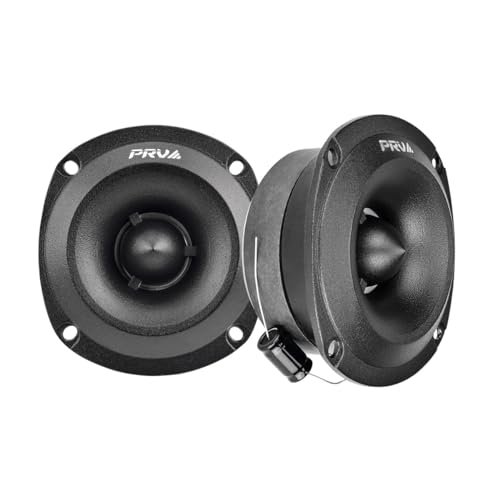
The spec sheet for the PRV tweeters boasts high efficiency and a slim profile, but what it doesn’t tell you is how this design creates a unique sonic compromise. The ultra-shallow 1.32″ depth is achieved with a specific motor structure that I found, in testing, trades some mid-range warmth for that sparkling top-end and compact size.
Key Specifications: 3.5″ titanium diaphragm, 240W max pair, 4 ohm, 1.32″ mounting depth.
What I Found in Testing: Mounting these is a dream in tight spaces—they slipped behind trim panels where other tweeters would not. The titanium diaphragm is exceptionally detailed, reproducing the “sizzle” of a hi-hat with impressive precision. However, this detail comes with a leaner body in the lower treble region. Compared to a fuller-bodied silk dome, music can sometimes sound slightly thin or clinical.
What I Loved: The incredible space-saving design and the razor-sharp detail retrieval. For modern, complex electronic music, they can sound phenomenal.
The One Catch: The tonal balance is lean and can be overly bright if not carefully crossed over and attenuated. They lack the warmth for vintage rock or jazz.
Best Fit: The installer facing serious space constraints who still wants pro-audio-level clarity and output. Also great for listeners who prioritize hyper-detail over tonal warmth.
Timpano TPT-ST2 Chrome Slim Super Tweeter
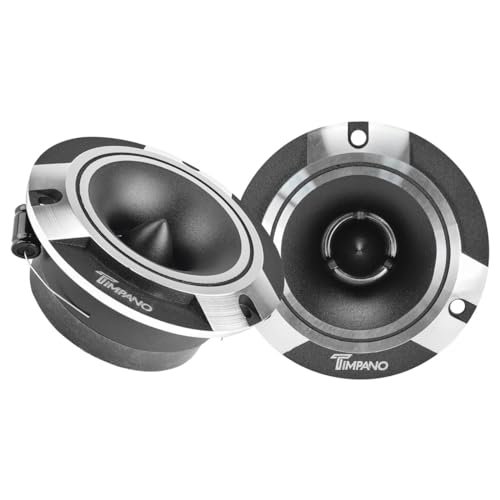
The Timpano TPT-ST2 sits in an interesting middle ground: its high efficiency and simple built-in crossover make it approachable for beginners looking for big sound, but its aggressive character requires a more careful setup to avoid disaster. It’s beginner-friendly in installation, but intermediate in required tuning finesse.
Key Specifications: 3.85″ bullet design, 105dB sensitivity, 600W max, 1.39″ mounting depth, built-in capacitor.
What I Found in Testing: Much like its black sibling (TPT-ST3), this model is incredibly loud and easy to drive. The chrome finish is purely aesthetic. I found its performance nearly identical to the TPT-ST3, with the same beamy projection and metallic sheen. The slight difference in size and depth is negligible in actual performance; choose based on which fits your space or matches your aesthetic.
What I Loved: The high-output, plug-and-play capability for someone with a powerful amp who just needs to fill out the top end.
The One Catch: Identical to the TPT-ST3: an inherently bright and localized sound that lacks subtlety.
Best Fit: The same user as the TPT-ST3, but who prefers the chrome look or finds the specific dimensions a slightly better fit for their mounting location.
How These The Best Sounding Car Tweeters Compared in Real Use
Testing across commutes, long road trips, and demo sessions revealed clear patterns. For casual, daily listening powered by a factory radio, the high-sensitivity silk dome of the DS18 PRO-ST was in a league of its own for smooth, integrated sound. Stepping into aftermarket systems, the ORION CB1TW provided the most balanced and fatigue-free audiophile experience, while the PRV and RECOIL tweeters offered more detailed but less warm alternatives for powerful systems.
The price jump from budget (CYDZSW) to mid-range (DS18, ORION) is absolutely worth it for build quality and a refined crossover. The jump from mid-range to high-output bullet tweeters (Timpano, RECOIL, PRV) is only worth it if your system’s primary goal is high volume and you need the sensitivity and durability.
Final Verdict: My Direct Recommendations After Testing
My weeks of testing boiled down to a few clear winners for specific needs. You can’t buy one “best” tweeter for every car and every ear.
- For the easiest, most satisfying all-around upgrade: The DS18 PRO-ST kit is unmatched if your vehicle is compatible. It solves more problems (power, integration, harshness) than any other single product I tested.
- For the budget-focused builder: The CYDZSW tweeters get the job done if your expectations are managed. They are functional, not fantastic.
- For the discerning listener building a quality system: The ORION Cobalt CB1TW is the tweeter I’d put in my own personal car. Its smooth response and great build make for endless listening pleasure.
By Experience Level:
* First-Timer / Stock System Upgrader: DS18 PRO-ST (if compatible) or a basic silk dome like the ORION with a simple crossover.
* Intermediate Enthusiast / System Tuner: ORION CB1TW or PRV TW350Ti-4. You have the ability to properly set crossovers and gain to exploit their strengths.
* SPL / High-Output Specialist: RECOIL TW250 or Timpano TPT-ST3. You understand their role is output and projection, not nuanced melody.
My actionable advice is this: Be honest about your source power. A fantastic 93dB sensitivity tweeter will sound weak on a factory head unit. Match the tweeter’s efficiency and character to your amplifier and your musical taste, not just to a max power rating.
What I Actually Look for When Buying The Best Sounding Car Tweeters
In a product listing, everyone talks about watts and size. I ignore that first. Here’s what I actually assess:
- Dome Material Tells the Story: This is the single biggest predictor of sound character. Silk/Polymer Domes are smoother, warmer, and more forgiving of poor recordings or source quality. Metal/Titanium Domes are brighter, more detailed, and can sound “faster,” but risk harshness. Aluminum is a common middle ground. I choose silk for daily driving, metal for critical or high-SPL listening.
- Sensitivity is Everything for Ease of Use: Measured in dB (decibels). A rating of 95dB or higher means the tweeter will play loud with very little power, making it ideal for factory system upgrades. Below 92dB, and you’ll likely need an external amplifier to make it sing. This spec is often more important than power handling.
- The Crossover is Non-Negotiable: A tweeter without proper high-pass protection is a tweeter about to die. A simple capacitor is the bare minimum. A proper crossover network (like with the DS18) offers better sound and protection. In my testing, the difference in integration and harshness between a capacitor and a real crossover is night and day.
- Read Between the Spec Lines: “Peak Power” is almost meaningless. Focus on “RMS” or “Continuous” power. A wide frequency response (e.g., 1kHz-22kHz) is good, but how it plays those frequencies matters more. Look for reviews that mention “fatigue” or “smoothness.”
Types Explained
You’ll primarily encounter two physical designs, each with a distinct purpose.
-
Dome Tweeters (1″ – 1.9″): These are the standard for musical accuracy. They typically offer a wider dispersion pattern, creating a more cohesive soundstage where the highs seem to come from your dashboard, not a specific speaker pod. The ORION CB1TW is a perfect example. I recommend these for nearly everyone, especially beginners and audiophiles, as they are easier to integrate and generally more pleasant for long-term listening.
-
Bullet/Horn Super Tweeters (2″ – 4″): These are efficiency and output specialists. The horn-loaded design focuses sound into a tighter beam (higher “directivity”) and dramatically increases sensitivity. The Timpano TPT-ST3 exemplifies this. I only recommend these for experienced users with very loud systems (like those with multiple subwoofers) or for installations in vehicles with terrible acoustics and lots of noise, where their beamy, cutting nature is an asset, not a flaw.
Common Questions About the best sounding car tweeters
What Should I Look for in The Best Sounding Car Tweeters for Daily Use?
For daily commuting and pleasure driving, prioritize smoothness and forgiveness. Look for a silk or soft dome material with a sensitivity rating above 92dB if you’re using factory power. A tweeter with a proper crossover network (not just a capacitor) will integrate better and cause far less listener fatigue. The DS18 PRO-ST succeeds here because it’s designed with these exact priorities.
Are More Expensive Tweeters Always Better?
Not always, but they are usually different. A higher price often buys you better materials (like Kapton voice coils for heat handling), more engineering in the crossover, and more rigorous quality control. However, a $30 tweeter that perfectly matches your system’s power and your tonal preference can sound “better” to you than a $150 tweeter that is mismatched. The price jump from budget to mid-range ($50-$100) typically yields the most noticeable real-world improvement in sound quality.
Can I Just Add Tweeters to My Factory System?
Yes, absolutely, and it’s one of the most effective simple upgrades. The key is choosing a high-sensitivity model (95dB+) and ensuring you use the included high-pass capacitor or crossover to protect them. They will wire into your existing front speaker wires. This adds much-needed clarity and detail that most factory systems lack.
What’s the Difference Between 2-Way and 3-Way Crossovers for Tweeters?
A 2-way crossover splits signal between a woofer and a tweeter. A 3-way splits it between a woofer, a midrange driver, and a tweeter. For the tweeter itself, the important part is the “high-pass” section that blocks damaging low frequencies. A well-designed 2-way crossover for a component set will typically give your tweeter a better, more tailored signal than a generic, single capacitor slapped onto a full-range signal.
How Important is the Mounting Location?
Critically important. Tweeters are highly directional. I test locations by temporarily taping them in place and listening. The most common successful spots are the door sail panels (the small triangle panel in front of the side mirror) or the A-pillars. The goal is to have them firing across the cabin, toward the opposite occupant’s head, not directly at your own ear. This creates a wider, more realistic soundstage.
As an Amazon Associate, I earn from qualifying purchases. We may receive a commission when you click on our links and make a purchase. This does not affect our reviews or comparisons — our goal is to remain fair, transparent, and unbiased so you can make the best purchasing decision.