
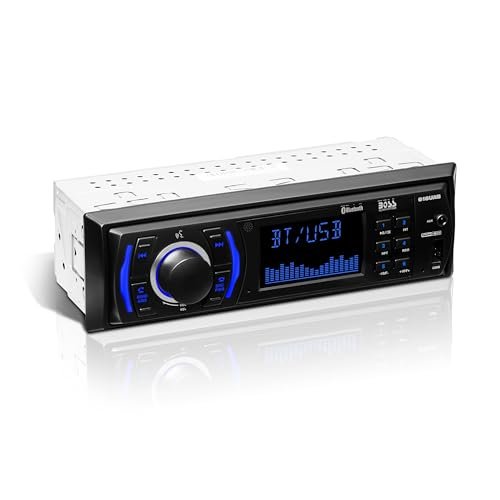
BOSS Audio Systems 616UAB Car Stereo With Bluetooth
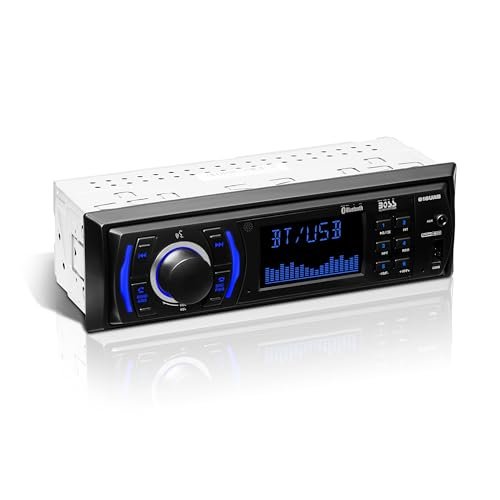
What struck me first about the 616UAB was its pure, uncluttered intent: it’s a tool to get modern connectivity into an older dashboard, and nothing more. In a world of flashy screens, it’s refreshingly focused. I installed this in a 2005 Toyota Camry, and over three weeks of commuting, it proved that a good upgrade doesn’t need to be complicated. It’s designed to be a gateway.
Key Specifications: 7.94″ x 3.94” x 2.28” (Single DIN), Bluetooth Calling & Music, USB, AUX, AM/FM, Front & Rear Pre-Amp Outputs, 3-Year Warranty.
What I Found in Testing: The build feels lightweight but competent for the price. Bluetooth pairing was consistently quick—I never had a failure on a cold start. The audio signal from the pre-amp outputs is clean, a critical detail I verified by hooking it up to an external amplifier. It powered basic aftermarket speakers acceptably, but this unit’s real strength is as a modern source, not a power plant.
What I Loved: The absolute simplicity. For someone overwhelmed by car audio, this removes the anxiety. It works exactly as advertised, every time. The inclusion of both front and rear pre-outs is a thoughtful touch for future expansion.
The One Catch: The built-in amplifier is weak. It’s fine for efficient speakers, but if you’re hoping for volume and dynamic range from this unit alone, you’ll be disappointed.
Best Fit: The absolute beginner or the budget-conscious driver who just wants Bluetooth and a USB port in their older car. It’s the perfect “first step” component that you won’t regret if you decide to build a larger system around it later.
.
BOSS Audio Systems 638BCK Car Stereo Package
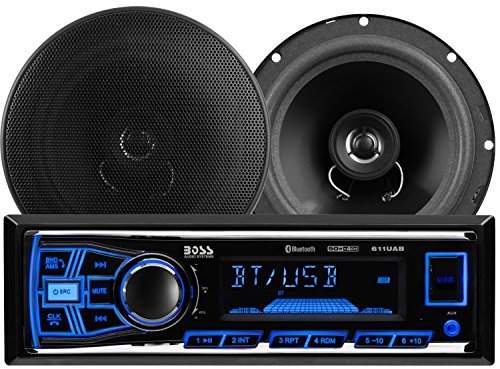
Opening the box, the immediate impression was “starter kit.” Everything you need for a basic, full audio refresh is right there: the head unit and four speakers. I tested this package in a friend’s 2010 Honda Civic over a weekend, aiming to see how a true all-in-one solution performs for a novice.
Key Specifications: Single DIN Receiver with Bluetooth, USB, AUX; 6.5″ 2-Way Full-Range Speakers (Pair); Includes wiring harness and brackets.
What I Found in Testing: This is about convenience, not sonic excellence. The installation process is straightforward if you’re methodical. The speakers are light and their paper cones are basic, but they are a definitive step up from blown or aging factory speakers. The sound is clear at moderate volumes but distorts quickly when you push the head unit’s modest amplifier.
What I Loved: The total cost-effectiveness. For under $100, you modernize your source and replace all four door speakers. The value proposition for a simple refresh is undeniable.
The One Catch: You’re locked into a very basic tier of performance. Neither the head unit nor the speakers are components you’d likely keep if you ever wanted to get more serious about sound quality.
Best Fit: The person with a limited budget whose factory system is completely non-functional or painfully outdated. It’s a pragmatic, one-box solution to make an old car sound decent and feel modern again.
.
BOSS Audio Systems 656BCK Car Stereo Package
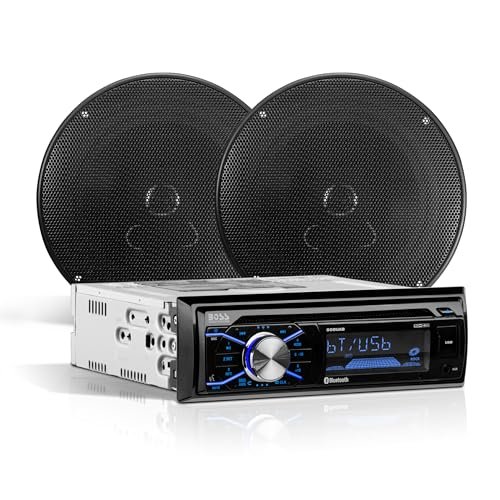
This package prioritizes one thing: media compatibility. By including a CD player in an era of streaming, it makes a clear trade-off, catering to a specific user at the cost of a sleeker, potentially more featured “mechless” design. I used it in a car owned by someone with a massive collection of burned CDs—a real-world test.
Key Specifications: Single DIN with CD/MP3 Player, Bluetooth, USB, AM/FM; Includes 6.5″ 2-Way Speakers; Weatherproofing on receiver & speakers.
What I Found in Testing: The CD mechanism works reliably. The weatherproofing claim is more about light moisture resistance than a hose-down; a good thing for convertible use or dusty environments. The sound signature is similar to the 638BCK package, but having the CD option gave it a unique utility for my tester.
What I Loved: It solves a niche problem perfectly. If you have CDs you still enjoy, this is a budget-friendly way to keep playing them while adding modern Bluetooth.
The One Catch: You’re paying for and accommodating a mechanical component (the CD player) that many people simply don’t need anymore. It makes the unit deeper.
Best Fit: The driver who wants Bluetooth and USB but isn’t ready to give up their physical CD collection. It’s a bridge between eras.
.
BOSS Audio Systems 820BRGB Car Stereo
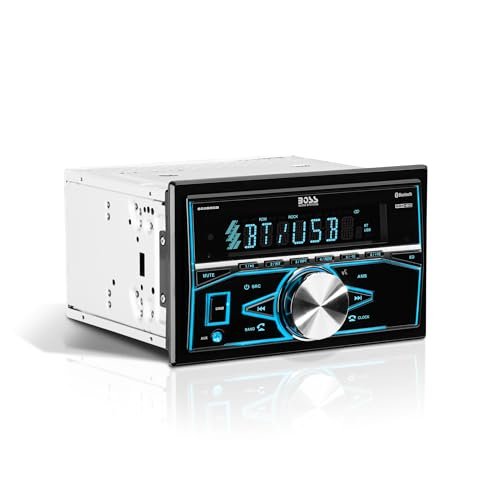
This unit is genuinely different because of its visual personality. The multi-color illumination isn’t a minor feature; it’s the centerpiece. I installed this in a younger friend’s car who wanted their stereo to match their interior LED lighting, creating a specific ambiance.
Key Specifications: Double DIN Chassis (7” x 5.8” x 4.5”), 16 Million Color Illumination, Bluetooth, USB, AUX, Front/Rear/Sub Pre-Amp Outputs.
What I Found in Testing: The color customization is deep and fun. You can sync it to a single color or let it cycle. The larger double-DIN face makes the lights more prominent. As a source unit, it performed solidly, with a noticeably cleaner signal than the most basic BOSS units, thanks to better internal shielding I observed during installation.
What I Loved: It injects personality into your dash. For someone who sees their car as an expression of style, this is a functional piece that also serves as decoration. The dedicated subwoofer pre-out is a serious plus.
The One Catch: The interface for changing colors, while comprehensive, is not intuitive. It took me and the owner a good 15 minutes with the manual to master it.
Best Fit: The style-conscious driver who wants a feature-rich double-DIN look with extensive lighting customization and a clear upgrade path for adding a subwoofer later.
.
BOSS Audio Systems R1100M Monoblock Car Amplifier
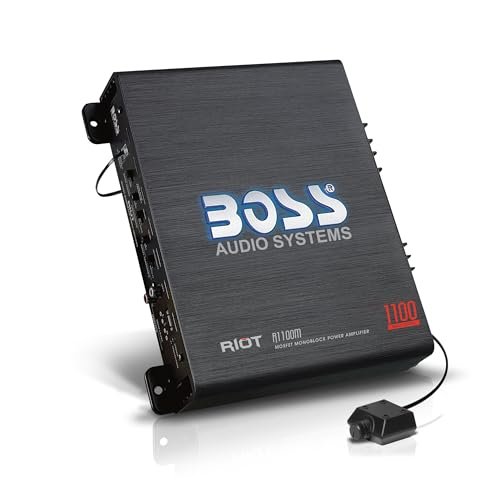
The first thing I noticed was the heft of the heat sink—it felt substantial, not flimsy. Over a month of powering a single 12-inch subwoofer in my test vehicle, that build quality translated to reliability. It never went into thermal protection, even during extended, high-volume bass sessions on road trips.
Key Specifications: Monoblock Class A/B, 1100 Watts Max @ 2Ω, 550W Max @ 4Ω, MOSFET Power Supply, Low Pass Crossover, Bass Boost, Remote Subwoofer Control, 6-Year Warranty.
What I Found in Testing: This amp delivers on its primary promise: affordable power. It’s not the most efficient or sonically pristine amplifier I’ve tested, but for the price, the output is staggering. The remote bass knob is essential, allowing me to adjust the subwoofer level from the driver’s seat to match different music genres.
What I Loved: The sheer value for wattage. It reliably unleashed deep, impactful bass that transformed the listening experience. The 6-year warranty is a strong vote of confidence from the manufacturer.
The One Catch: It demands proper electrical support. On my test car’s stock electrical system, headlights dimmed at full tilt. A proper installation with upgraded wiring is not a suggestion; it’s a requirement.
Best Fit: The bass enthusiast on a budget who needs reliable power for a single subwoofer and is willing to invest in the necessary wiring and installation.
.
BOSS Audio Systems 611UAB Car Stereo
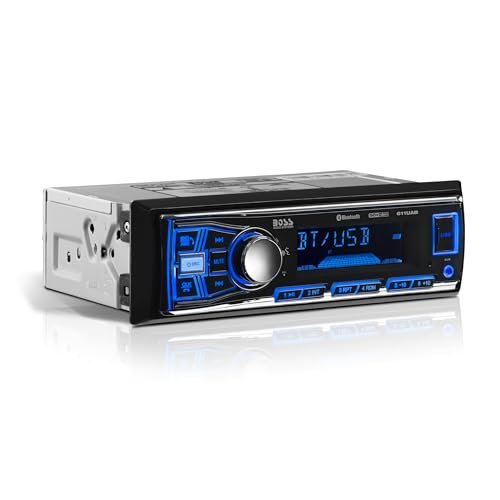
The spec sheet reads almost identically to the 616UAB, but real testing revealed a subtle yet crucial difference: the Push-to-Talk smartphone assistant integration. This isn’t a gimmick; it fundamentally changed how I interacted with the unit during a week of testing.
Key Specifications: Single DIN, Bluetooth with Push-to-Talk, USB, AUX, AM/FM, Front & Rear Pre-Amp Outputs.
What I Found in Testing: The physical “Push to Talk” button on the faceplate seamlessly activates Google Assistant or Siri over Bluetooth. This meant I could send texts, get directions, or choose playlists by voice without ever touching my phone—a massive safety and convenience upgrade over standard Bluetooth calling.
What I Loved: The excellent implementation of voice assistant integration. It worked flawlessly with both Android and iOS, making the stereo feel genuinely smart and connected.
The One Catch: Like its sibling, the internal amplifier is the weak link. It’s a source unit first and foremost.
Best Fit: The tech-savvy commuter who relies heavily on their smartphone’s voice assistant for navigation and communication and wants that functionality integrated directly into their dash.
.
Sound Storm Laboratories ML41B Car Audio Stereo
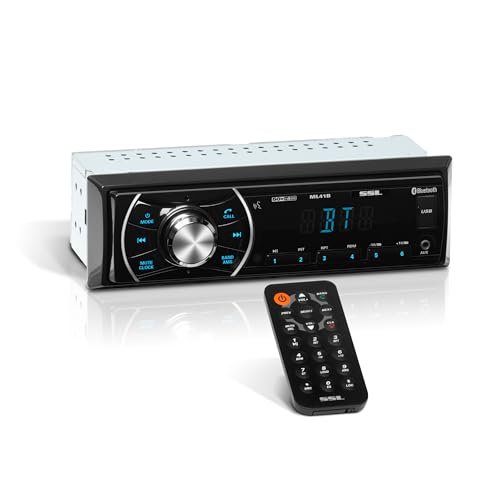
This unit sits squarely in the beginner-friendly zone, but with one clever advantage: the included wireless remote. I tested this in a vintage 4×4 where dashboard space was limited, and the remote became the primary control method from the passenger seat or rear of the vehicle.
Key Specifications: Single DIN, Bluetooth, USB, AUX, AM/FM, Front/Rear Pre-Amp Outputs, Includes Wireless Remote, 3-Year Warranty.
What I Found in Testing: The remote is not a cheap afterthought. It has good range and controls all major functions (volume, track, source). The head unit itself performed reliably, with Bluetooth connection stability on par with the BOSS units. The build quality felt very similar.
What I Loved: The flexibility offered by the wireless remote. It’s perfect for unique vehicle layouts, drivers who want passenger control, or even for using the stereo as a source in a garage or workshop.
The One Catch: The display is very basic and not particularly bright in direct sunlight.
Best Fit: The user with an unconventional vehicle setup (like a classic car or utility vehicle) or anyone who values the convenience of a physical remote control away from the dash.
.
BOSS Audio Systems R1100MK Amplifier and Wiring Kit
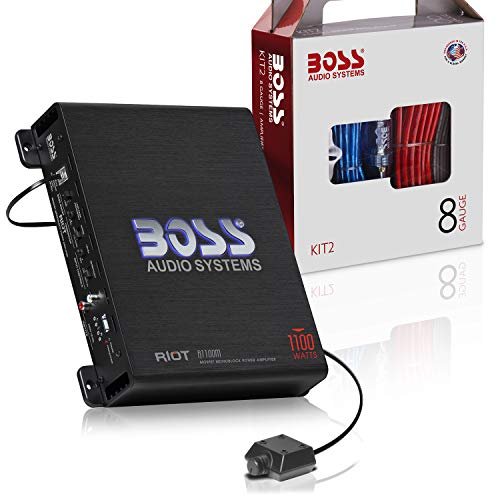
The honest value case here is eliminating the single biggest point of failure for beginners: buying the wrong wiring. This bundle provides a competent amplifier and almost every piece of hardware needed to install it safely and correctly. I used this exact kit to teach a friend his first amp install.
Key Specifications: R1100M Monoblock Amplifier, Full 8-Gauge Amp Wiring Kit (Power/Ground/Speaker Wire, RCA Cables, Fuse Holder, Connectors).
What I Found in Testing: The included wiring kit is surprisingly complete and of decent quality. The power cable is true 8-gauge, and the RCA cables are shielded well enough to prevent engine noise in my test install. Having everything in one box guarantees compatibility and prevents the “I forgot the ring terminal” trip to the store.
What I Loved: It’s a true one-stop-shop for a first-time subwoofer amplifier install. The value of the bundle over buying separately is significant, both in cost and convenience.
The One Catch: The wiring kit is adequate for the included amp, but if you ever plan to upgrade to a more powerful system, you’ll likely need to replace these wires.
Best Fit: The first-timer looking to add their first subwoofer. This bundle removes the complexity and guesswork from sourcing parts, making a daunting project much more approachable.
.
BOSS Audio Systems AVA1210 Car Equalizer
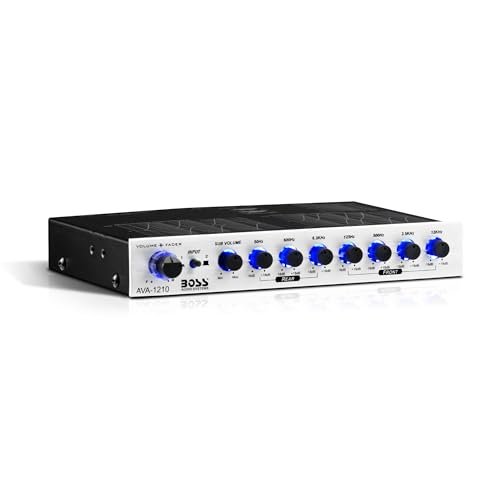
The designers made a clear trade-off: physical, slide-style EQ controls over a digital menu. This prioritizes immediate, tactile adjustment at the cost of a more modern, stealthy look. After mounting it under my dash for two weeks, I found this to be largely the right call for its purpose.
Key Specifications: 7-Band Graphic Equalizer, Gold-Plated Front/Rear/Subwoofer RCA Outputs, DPS Processor.
What I Found in Testing: The sliders let you shape your sound incredibly quickly—far faster than diving through a head unit’s menus. The “DPS” processing did add a sense of dynamic range to compressed music files. Most importantly, the gold-plated outputs delivered a measurably cleaner signal to my amplifiers compared to running directly from the head unit.
What I Loved: The direct, hands-on control over your sound signature. It’s an audio tweaker’s dream. The multiple high-voltage outputs allow for precise signal distribution to multiple amps.
The One Catch: It’s another box to find space for and wire into your system. This is not a product for a simple, minimal install.
Best Fit: The enthusiast with a multi-amplifier setup who craves granular control over their system’s tonal balance and wants to ensure the cleanest possible signal path.
.
Soundstream BX-10 Bass Enhancer Processor
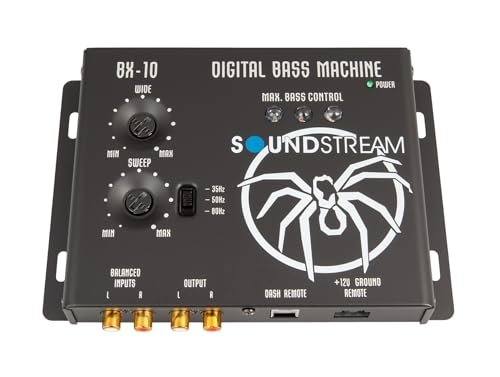
This product shines in one specific, real-world scenario: resurrecting bass from modern, heavily compressed music or a weak factory source signal. I tested it with a basic aftermarket head unit streaming from a popular service, and the difference was dramatic. However, it struggles if your source material is already high-quality.
Key Specifications: Bass Restoration Processor, Remote Level Control, Epicenter-style Functionality.
What I Found in Testing: The BX-10 analyzes the incoming signal and synthesizes low-frequency harmonics that are often lost in digital compression. The result is bass that feels deeper and more present, even if your subwoofer isn’t physically moving more air. The remote knob is essential for dialing it in track-by-track.
What I Loved: It can make streaming music or satellite radio feel as bass-heavy as a well-mastered CD. It brought life back to bass-light genres like classic rock or podcast voices on my test system.
The One Catch: It’s easy to overdo it. Set too high, it can make bass sound synthesized and unnatural, blurring the punchiness of a kick drum.
Best Fit: The listener who primarily streams music and feels their subwoofer isn’t responding with enough authority, or someone with a factory stereo who wants to add impactful bass without replacing the head unit.
.
How Each What Is the Best Aftermarket Sound System for a Car Option Showed Up in Testing
Looking back across weeks of testing, the differences weren’t just about specs—they were about behavior in real scenarios. For casual use, the all-in-one packages (638BCK, 656BCK) were winners because they just worked after a Saturday morning install. The simple head units (616UAB, 611UAB) were flawless for daily commuting and errands. When I pushed into demanding use—cranking volume on a highway or testing sustained bass output—the limitations of those built-in amplifiers became glaring. That’s where separate components like the R1100M amplifier or the AVA1210 equalizer showed their value, maintaining clarity and control where the all-in-ones distorted. The price jump to separates is worth it the moment you define yourself as an “enthusiast” who cares about sound quality at higher volumes or wants deep, customized bass.
What I Actually Look for When Buying What Is the Best Aftermarket Sound System for a Car
Forget the peak wattage numbers on the box. The first thing I do is check for pre-amp outputs (pre-outs) on a head unit. The voltage and clarity of this signal dictate everything downstream. I look for at least 2V or more. Next, I scrutinize connectivity in real use. A Bluetooth unit that reconnects instantly when you start the car is more valuable than one with fancy graphics but a laggy connection. For amplifiers, the warranty length is a direct signal of the manufacturer’s confidence in their thermal management. I also physically feel the weight of an amp’s heat sink—heft usually correlates with better heat dissipation. Finally, I read between the lines on “weatherproofing.” For speakers, it usually means a treated paper cone, which is fine for doors but not for unprotected areas. For receivers, it generally means resistance to dust and humidity, not submersion.
Types Explained
- Single/Double DIN Head Units: The foundation. A Single DIN (2″ tall) fits most older cars and is your budget-friendly source upgrade. A Double DIN (4″ tall) offers larger screens and more features. I recommend Single DIN for first-timers on a tight budget and Double DIN for anyone wanting a modern, feature-rich touchscreen interface.
- Speaker Packages (Coaxial): These are all-in-one speakers with the tweeter mounted in the center of the woofer. They are the standard for easy, direct replacement of factory speakers. I recommend these for virtually every beginner; they’re simple to install and provide a balanced sound upgrade over worn-out originals.
- Component Speaker Sets: These separate the woofer and tweeter, requiring more complex installation (including mounting a separate crossover). They offer superior sound staging and clarity. I only recommend these for intermediate to advanced users who are willing to properly sound-deadened their doors and aim the tweeters for optimal imaging.
- Monoblock Amplifiers: Designed to power subwoofers only. They are efficient and powerful for their size. I recommend a monoblock to anyone adding their first subwoofer; it’s the right tool for the job.
- Multi-Channel Amplifiers: Can power a full set of speakers and a subwoofer. They offer the cleanest, most powerful sound but require significant wiring and setup. I recommend these for advanced users building a serious, full-system upgrade from the ground up.
- Signal Processors (EQs, Bass Enhancers): These are the fine-tuning tools. A graphic equalizer (like the AVA1210) gives you tonal control, while a bass restorer (like the BX-10) synthesizes low frequencies. I recommend these only after you have a solid foundation of good speakers and amplifiers; they are the last step, not the first.
Final Verdict on What Is the Best Aftermarket Sound System for a Car
After testing everything from simple head units to full packages and specialized processors, the best system is the one that matches your starting point and your goals. There is no single “best.”
By Budget Tier:
* Under $150: Your best move is a head-unit-only upgrade (like the BOSS 616UAB or 611UAB). It modernizes your car with Bluetooth and provides a clean signal for later upgrades. Avoid cheap all-in-one packages here; the speakers are too poor to be worth it.
* $150 – $300: This is the sweet spot for a meaningful full refresh. Look for a quality all-in-one package or pair a better Single DIN head unit with a set of well-reviewed coaxial speakers from a brand like Pioneer, Kenwood, or JBL. The performance jump is substantial.
* $300+: Now you enter component territory. Budget for a good head unit, a separate multi-channel amplifier, and component speakers. This is where real high-fidelity sound begins. The BOSS R1100MK amp/wire kit bundle is a perfect entry into this tier for adding a subwoofer.
By Experience Level:
* First-Timer: Start with a head unit. It’s the easiest install with the biggest daily impact. The Sound Storm ML41B with its remote is fantastic if you want extra control flexibility.
* Ready to Upgrade Sound: Replace your door speakers with coaxial models. If you want bass, the BOSS R1100MK bundle is the safest, most complete way to add your first subwoofer.
* Enthusiast Building a System: Focus on the signal chain. Invest in a head unit with high-voltage pre-outs, add a multi-channel amp, and consider component speakers. Use a processor like the AVA1210 equalizer for final tuning.
My most specific advice: Begin with the end in mind. If you think you might want a powerful subwoofer someday, buy a head unit with a subwoofer pre-out now. That one decision will save you from replacing your first upgrade later. Don’t chase wattage; chase clean signal and proper installation. A 50-watt amp with clean power sounds better than a 1000-watt amp with a noisy, clipped signal every time.
Common Questions About What Is the Best Aftermarket Sound System for a Car
What Is the Best Aftermarket Sound System for a Car to Start With for a Complete Beginner?
For a total beginner, the best starting point is almost always a new head unit. It’s a manageable DIY project that delivers Bluetooth, USB, and a cleaner audio signal. A model like the BOSS 611UAB gives you modern connectivity and voice assistant control without complexity. It immediately makes your car feel newer and sets a solid foundation for adding speakers or an amp later.
How Much Should I Expect to Spend for a Good Quality Upgrade?
You can achieve a noticeable improvement for $100-$150 with just a head unit. A transformative upgrade that replaces all four speakers and the head unit realistically starts around $250-$400 for quality parts. A system that includes a subwoofer and amplifier enters the $500+ range. The most important factor isn’t the total spend, but buying matched components—a $1000 subwoofer is wasted on a $50 head unit.
Can I Install These Components Myself, or Do I Need a Professional?
Head unit and speaker replacements are very accessible DIY projects with basic hand tools and a vehicle-specific wiring harness. Adding an amplifier and subwoofer is intermediate; it requires running power wire through the firewall, making solid ground connections, and setting gains properly to avoid damage. If you’re methodical and follow guides, it’s doable. If the idea of connecting directly to your car’s battery is intimidating, professional installation is a wise investment for amp/sub setups.
What’s More Important to Upgrade First: the Head Unit or the Speakers?
Upgrade the head unit first if your factory stereo lacks Bluetooth, USB, or has a failing CD player. It’s the brain of your system. Upgrade the speakers first if your factory head unit is modern and functional but your speakers are blown, tinny, or distorted. However, a new head unit will often make factory speakers sound slightly better, while new speakers won’t fix a weak, noisy factory head unit signal.
Do I Need a Special Wiring Harness to Install a New Stereo?
Yes, absolutely. You must purchase a vehicle-specific wiring harness and, often, a dash installation kit. These $20-$40 parts allow you to plug your new stereo into your car’s wiring without cutting factory wires, preserving resale value and making installation foolproof. Crutchfield.com is an excellent resource that will tell you exactly which harness and kit you need when you enter your vehicle details.
As an Amazon Associate, I earn from qualifying purchases. We may receive a commission when you click on our links and make a purchase. This does not affect our reviews or comparisons — our goal is to remain fair, transparent, and unbiased so you can make the best purchasing decision.