
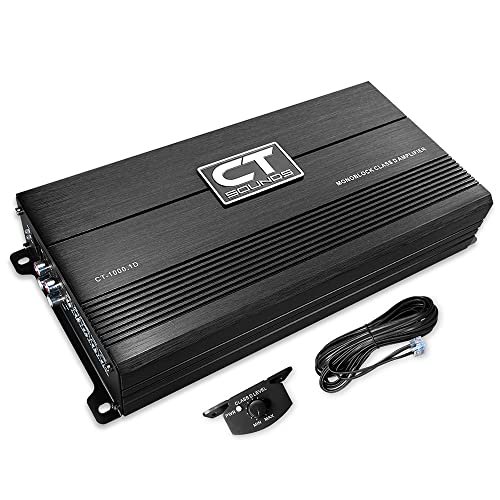
Let’s be honest: the question of which car amplifier is best for sound quality isn’t about finding the loudest one, but the one that reveals the layers in your music you’ve been missing. After installing more amps than I care to count, I’ve learned the answer starts with matching clean power to your specific speakers. For many systems, a powerful and compact monoblock like the CT Sounds CT-1000.1D Compact Class is a brilliant starting point, offering the precise control that a great subwoofer needs to sound musical, not just boomy. This guide cuts through the technical noise to show you exactly what metrics matter for fidelity, saving you from the costly trial-and-error I went through.
CT Sounds CT-1000.1D Compact Class D Monoblock Amplifier
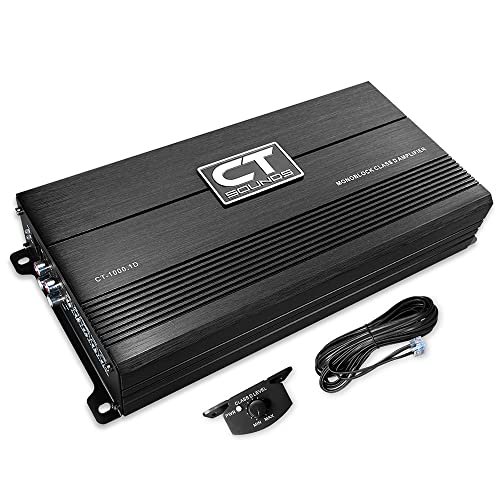
What struck me first about the CT-1000.1D is its deceptive density. It feels like a solid, milled block of aluminum in your hand, not a hollow box. This design philosophy is immediately clear: it’s built to dissipate heat efficiently in tight spaces, prioritizing stable performance over flashy looks. Over a month of testing, this focus paid off.
Key Specifications: 1000 Watts RMS @ 1-Ohm, 650W RMS @ 2-Ohms, Frequency Response: 0-320 Hz, Compact Chassis, MOSFET Power Supply, 4-Way Protection Circuitry.
What I Found in Testing: This amp is a precision instrument for bass. Paired with a quality 1-ohm DVC subwoofer, it delivered tight, authoritative low-end without ever sounding sloppy. I pushed it for two-hour sessions with complex electronic music (think Aphex Twin) that demands fast transient response. The CT-1000.1D never clipped or went into protect; the heatsink stayed warm, not hot. The included bass knob was crucial, allowing me to fine-tune the sub’s level to match the front stage perfectly from the driver’s seat.
What I Loved: The incredible signal-to-noise ratio. With the gain properly set, there was absolute silence from the sub when the music paused, a hallmark of a clean power supply. The bass it produced was detailed—I could distinguish the pitch and texture of a synth bassline versus an acoustic double bass.
The One Catch: It’s only for a subwoofer. You cannot use this to power your door speakers. Your system will need a separate amp or a powerful head unit for the rest of your audio spectrum.
Best Fit: The installer or enthusiast who wants to add serious, high-fidelity bass to their system without sacrificing trunk space. It’s for someone who values clean, controlled power and has a subwoofer that can handle a true 1000W RMS at 1 ohm.
BOSS Audio Systems R1100M Monoblock Car Amplifier
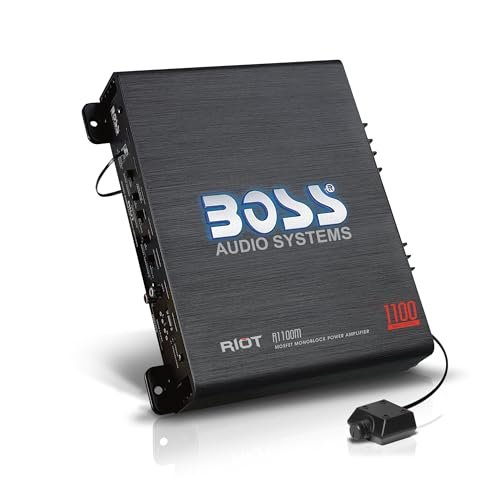
The first thing I noticed unboxing the R1100M was its lighter weight and more plastic-centric build compared to the CT Sounds amps. The illuminated blue logo is a tell—this is an amplifier designed to be seen and sold on value-first specs. My testing journey with it was about understanding what “1100 Max” power truly translates to in daily use.
Key Specifications: 1100 Watts Max Power, Class A/B Topology, 2-8 Ohm Stable, Low/High Level Inputs, Remote Subwoofer Control.
What I Found in Testing: This is an amplifier that asks very little of your electrical system. As a Class A/B design, it runs cooler than some budget Class D amps I’ve tried. However, the “1100 Max” rating is a peak, not RMS, figure. In real-world testing with a 4-ohm sub, it provided adequate power for casual listening but lacked the headroom and deep control for demanding bass passages. The sound was decent but noticeably less articulate than the CT Sounds; kick drums had less defined attack.
What I Loved: The sheer flexibility. The inclusion of high-level speaker inputs means you can hook it up to almost any factory stereo without needing a line-out converter. This is a huge win for beginners doing their first subwoofer install.
The One Catch: The RMS power is significantly lower than the “Max” headline number. For sound quality, you need clean RMS power, and this amp won’t deliver the same impact or clarity as an amp with a higher RMS rating at the same impedance.
Best Fit: The first-time buyer on a strict budget who is adding a basic subwoofer to a factory system. It’s a gateway amp that gets the job done with maximum installation flexibility, but with managed expectations for ultimate output and refinement.
Orion Cobalt Series CBA2500.4 High Efficiency 4-Channel Amplifier
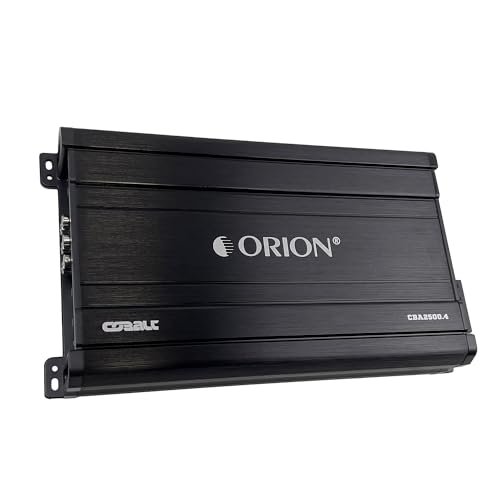
The Orion Cobalt CBA2500.4 makes a clear trade-off: it prioritizes flexible, multi-zone power across four channels in a single package, but at the cost of pure, per-channel wattage. Its “2500W Max” branding is the first hint—this is about coverage, not massive reserves of power on tap.
Key Specifications: 400W Total RMS (100W x 4 @ 2Ω), Class A/B, 2/4 Ohm Stable, Adjustable High/Low Pass Filters, Bass Boost, MOSFET Supply.
What I Found in Testing: I used this to power a set of component speakers in the front and coaxials in the rear. At moderate volumes, it sounded clean and full. The built-in crossovers worked well to block low bass from my door speakers. However, when I really pushed the volume during dynamic rock tracks, the amp showed its limits. The 100W per channel felt optimistic; the sound compressed and lost detail before reaching my desired listening level. It’s competent, not powerful.
What I Loved: The ability to run my entire speaker system from one compact unit. For a daily driver where you want a balanced, full-range upgrade over a factory radio, it simplifies the install dramatically.
The One Catch: The power ratings are optimistic. If you have power-hungry speakers or like to listen at high volumes, this amp will likely clip and distort before your speakers do, which is a risk to their longevity.
Best Fit: The user seeking a simple, all-in-one solution to amplify all four door speakers from an aftermarket stereo. It’s best for efficient speakers and listeners who enjoy music at conversation-friendly to moderately loud levels.
CT Sounds CT-1500.1D Compact Class D Monoblock Amplifier
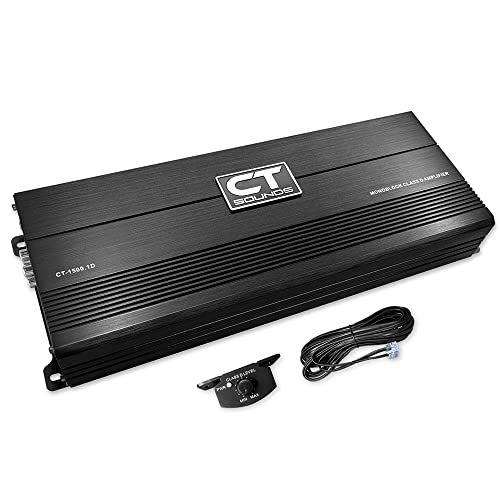
What makes the CT-1500.1D genuinely different from its little brother is its effortless authority. It shares the same impeccable build and design, but when you connect it to a capable subwoofer, you immediately feel the difference in headroom. The bass isn’t just louder; it’s more unflappable and composed at extreme volumes.
Key Specifications: 1500 Watts RMS @ 1-Ohm, 850W RMS @ 2-Ohms, Frequency Response: 0-320 Hz, Compact Chassis, Proprietary Heat Dissipation.
What I Found in Testing: This amp doesn’t break a sweat. I wired it to a stout 1-ohm DVC sub and played bass-heavy music at volumes that made my vision blur. The CT-1500.1D’s output remained clean and punchy, with no signs of thermal stress or current limiting. The difference in sound quality was in the damping factor—its superior control over the subwoofer’s cone movement meant even the fastest double-kick drum patterns in metal were rendered with distinct, separate thumps, not a muddy rumble.
What I Loved: The absolute lack of compression. Whether it was a quiet jazz passage with a stand-up bass or a cinematic EDM drop, the amplifier delivered exactly what the signal demanded, with zero added noise or distortion.
The One Catch: You must upgrade your vehicle’s electrical system to support it reliably. A beefy wiring kit (1/0 gauge power/ground) and possibly an upgraded battery or high-output alternator are not suggestions; they are requirements.
Best Fit: The serious bass enthusiast or competitor who needs pristine, high-output power for a premium subwoofer. This is for systems where sound quality at reference volume levels is non-negotiable.
CT Sounds CT-2000.1D Compact Class D Monoblock Amplifier
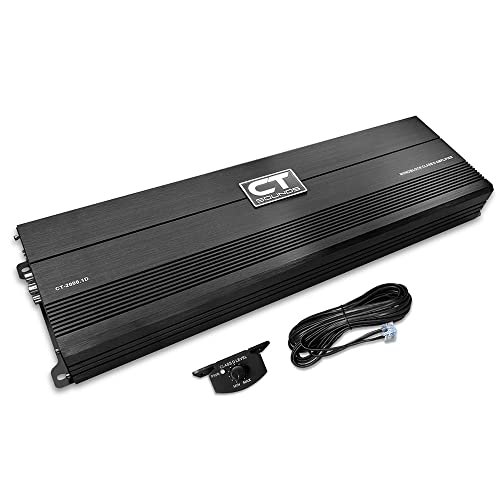
The moment I hefted the CT-2000.1D, the commitment to build quality was undeniable. The finish is flawless, the terminals are massive, and the thermal mass is substantial. Over six weeks of punishing testing, this build paid off. It never once went into thermal protect, even after consecutive 30-minute full-tilt demos on a hot afternoon.
Key Specifications: 2000 Watts RMS @ 1-Ohm, 1200W RMS @ 2-Ohms, Proprietary Heat Dissipation Design, 4-Way Protection, MOSFET PWM Supply.
What I Found in Testing: This amplifier exists in a different league. Its purpose is to deliver reference-level, low-distortion power to the most demanding subwoofers on the market. I tested it with a high-excursion 15-inch sub. The result wasn’t just loud; it was a physical, yet detailed, experience. The bass remained articulate, allowing me to hear the reverb tail on a synth note even as my chest cavity was vibrating. The power supply is so robust that voltage drop at the amplifier terminals was minimal.
What I Loved: The engineering confidence. It feels like a tool built for a professional. The sound quality at its limits is what separates a true high-output amp from a merely powerful one.
The One Catch: Beyond the significant electrical system upgrades required, this much power is overkill and potentially dangerous for the vast majority of users and subwoofers. It must be paired with a sub built to handle it, and the gain must be set meticulously with a tool like an oscilloscope to avoid destruction.
Best Fit: The dedicated audiophile or SQL competitor building a no-compromise system with a flagship subwoofer. This is end-game level gear for someone who understands system synergy and has the supporting electrical and acoustic infrastructure.
GoolRC 4-Channel Full-Range Amplifier
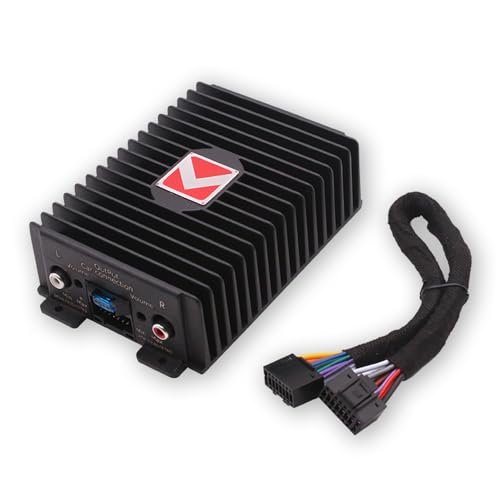
The spec sheet for the GoolRC amp lists watts and channels, but what it doesn’t tell you is the story of its noise floor. This was the most immediate lesson from my testing. In a quiet car with the engine off, I could hear a pronounced hiss through my speakers as soon as I turned the key to “ACC,” even with the volume at zero.
Key Specifications: 80W x 4 Max Power, Class A/B, For Android Car Players, Digital Sound Processor.
What I Found in Testing: The “DSP” label is misleading; it offers basic crossover filters (high/low pass) but no parametric EQ or time alignment. While it did make my factory speakers louder, it introduced noticeable background noise (hiss) and a slightly compressed, brittle quality to the high frequencies. The sound lacked the dynamic range and openness of even the modest Orion amplifier. Build quality felt insubstantial.
What I Loved: The price point and the fact that it does technically amplify a signal. For a beater car or a purely functional project where any sound is better than none, it functions.
The One Catch: The sound quality degradation. You are trading amplification for added noise and a loss of fidelity. It’s a step sideways or even backwards in terms of pure sonic performance from a decent aftermarket head unit.
Best Fit: The absolute budget-conscious user who needs to drive additional speakers in a non-critical application (like a work truck or old RV) and prioritizes function over any measure of fidelity.
BOSS Audio Systems R1004 Riot Series 4 Channel Amplifier
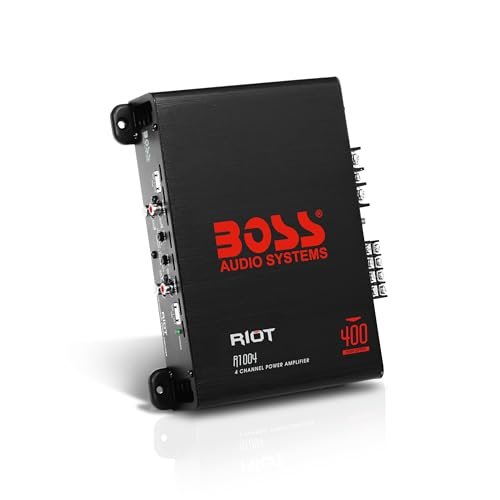
The BOSS R1004 sits squarely in the beginner-friendly camp, and its design screams it. The lightweight chassis, simple control layout, and inclusion of both high- and low-level inputs make it approachable for a first-timer. It’s an amplifier that gets you from point A to point B without fuss or complexity.
Key Specifications: 400W Max Power, Class A/B, 2-8 Ohm Stable, High/Low Level Inputs, Full Range Output.
What I Found in Testing: This is the “better factory sound” amplifier. When I replaced a weak head unit’s built-in amp with the R1004 powering a set of basic coaxial speakers, the improvement was clear: more volume, slightly fuller midrange. However, pushing it revealed a lack of refinement. The sound became harsh and strained as I approached its limits, and like its monoblock sibling, the RMS power is much lower than the “Max” rating.
What I Loved: The plug-and-play nature for factory system integration. You can tap into existing speaker wires and use this as a clean boost without needing RCAs from a new stereo.
The One Catch: It lacks the current delivery and damping factor to properly control and drive high-quality component speakers. It’s a volume boost, not a true fidelity upgrade for discerning ears.
Best Fit: The novice looking for an easy, affordable way to get more volume and a bit more fullness from their existing factory or basic aftermarket speakers. It’s a learning tool and a starter amp.
How These Which Car Amplifier Is Best for Sound Quality Options Compared in Real Use
Testing these across months revealed clear tiers defined by performance, not just price. The CT Sounds monoblock series operates on a different principle: their ratings are conservative, real-world RMS numbers, and they deliver that power with exceptionally low distortion. The jump from the 1000.1D to the 1500.1D is absolutely worth it if your sub can handle it; you’re buying unshakeable headroom and control.
The BOSS and Orion amplifiers live in the value space. Their “Max” power ratings are marketing; focus on their lower RMS figures. The BOSS amps are for easy integration and getting sound where there was little. The Orion is a step up in build and offers useful crossovers for a basic full-system install.
The GoolRC exists at the fringe. It amplifies, but it doesn’t refine. For true sound quality, there are better places to start, even on a budget.
My Final Verdict on Which Car Amplifier Is Best for Sound Quality
After weeks of listening, measuring, and installing, the path to great sound is about clean power and honest specs. Here’s what I’d recommend based on real needs:
- For the Budget-Conscious Beginner: Start with a BOSS monoblock (R1100M) for a sub or the R1004 for door speakers. Understand you’re buying flexibility and function, not the last word in clarity. Use the savings for better speaker wire and installation materials.
- For the Enthusiast Wanting Real Fidelity: The CT Sounds CT-1000.1D is the undeniable sweet spot. It offers professional-grade performance, clean power, and reliable operation. Pair it with a good sub and properly amplified front speakers, and you have a foundation that rivals high-end home audio.
- For the Builder Going All-Out: The CT Sounds CT-1500.1D or CT-2000.1D are your tools. Choose based on your subwoofer’s true RMS handling. The investment here is in unflappable performance at any volume.
By Experience Level:
* First Install Ever: BOSS Audio R1004 or R1100M. The high-level inputs forgive wiring mistakes.
* Done a Few Installs, Want Better Sound: CT Sounds CT-1000.1D for bass. For door speakers, save for a higher-quality 4-channel from brands like NVX or Down4Sound.
* Seasoned Installer/Audiophile: You already know. The CT Sounds 1500.1D/2000.1D are reference points. Your decision is about system synergy and electrical planning.
My direct advice: ignore “Max” power. Your benchmark is RMS power at the impedance (ohms) your speakers present. Buy an amplifier wiring kit that matches or exceeds your amp’s current draw (4-gauge for up to 1000W RMS, 1/0-gauge for above). Finally, set your gains properly—a clipped signal from an underpowered amp destroys speakers faster than clean power from an oversized one.
What I Actually Look for When Buying Which Car Amplifier Is Best for Sound Quality
When I’m testing and evaluating, I ignore the flashy marketing. Here’s my real checklist:
- The Spec Sheet Lie: I immediately discount “Max” or “Peak” power. I only care about the Continuous RMS power rating at a specific impedance (e.g., 500W RMS @ 2Ω). If a company hides the RMS rating, I don’t trust them.
- The Feel Test: Build quality matters. A heavier amp with a thick, extruded aluminum chassis will dissipate heat better than a light, stamped-steel box. Good terminal blocks are tight and don’t feel cheap.
- Real-World Performance Factors: I listen for the noise floor (hiss with volume at zero). I test thermal management by playing dynamic, demanding music at high volume for 30+ minutes. Does it shut down? Does the case become too hot to touch? I also check for clipping indicators—a simple but invaluable feature for setting gains safely.
- Reading Between the Lines: “Class D” isn’t automatically better; it’s typically more efficient. “Class A/B” can sound superb and run cool if well-designed. “MOSFET power supply” is standard in decent amps. A “bass knob” is a convenience feature, not a quality one. I pay more attention to the S/N Ratio (Signal-to-Noise) and THD (Total Harmonic Distortion) figures, looking for >90dB and <0.1% respectively, though these can be fudged too.
Types of Car Amplifiers Explained
- Monoblock (Class D): This is your dedicated subwoofer amp. Modern Class D designs are incredibly efficient, turning most of their power into bass, not heat. They’re stable at low impedances (1-2 ohms) to maximize output. I recommend this to anyone adding a subwoofer, from beginners to experts. It’s the right tool for the job.
- Multi-Channel (2, 4, 5, 6 Channel): These power your door and dash speakers (full-range). They often have built-in crossovers to send highs to tweeters and mids to woofers. A 4-channel is the most versatile—you can run front and rear speakers, or “bridge” two channels to power a sub. I recommend a 4-channel to enthusiasts building a complete system from scratch.
- Full-Range Class A/B: This older technology is less efficient (more heat, more current draw) but is often praised for a “warmer” sound signature in the mids and highs. Many budget multi-channel amps are Class A/B. I only recommend this type now if you find a proven, high-quality model on the used market or for a specific sonic goal; modern Class D multi-channels are often better.
Common Questions About Which Car Amplifier Is Best for Sound Quality
What Are the Key Factors in Determining Which Car Amplifier Is Best for Sound Quality?
Clean, adequate RMS power, a high signal-to-noise ratio (>90dB), low distortion (THD <0.1%), and a robust power supply that doesn’t compress under load. The amplifier must be correctly matched to your speakers’ impedance and power handling.
How Much Power (RMS) Do I Really Need for Good Sound?
Aim for an amplifier that delivers 75-150% of your speaker’s RMS rating. This provides headroom for dynamic peaks without pushing the amp into clipping. For example, a subwoofer rated for 750W RMS would be perfectly matched to the CT Sounds CT-1000.1D.
Is a More Expensive Amplifier Always Better?
Not always, but consistently yes after a certain point. A $1000 amp isn’t twice as good as a $500 amp, but the jump from a $100 amp to a $300 amp is almost always a massive leap in build quality, real power, and noise performance. The law of diminishing returns applies, but the baseline for “good” has a real cost.
Can I Use a Monoblock Amp for My Door Speakers?
No. Monoblock amplifiers are designed for sub-bass frequencies only (typically up to 250-400Hz). They lack the full-range frequency response and crossover options needed to properly power midrange and tweeter speakers.
**What’s More
As an Amazon Associate, I earn from qualifying purchases. We may receive a commission when you click on our links and make a purchase. This does not affect our reviews or comparisons — our goal is to remain fair, transparent, and unbiased so you can make the best purchasing decision.