
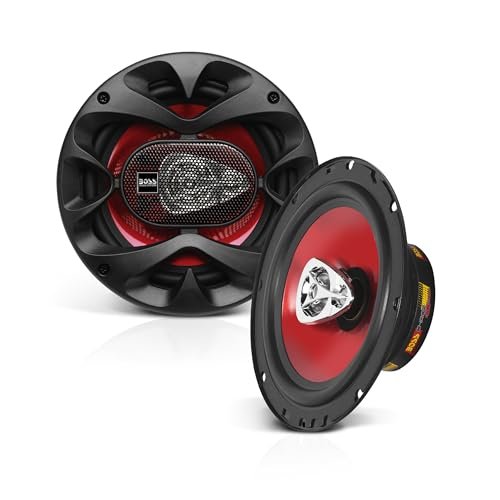
After years of tuning systems, I know the question isn’t just who makes the best sounding car speakers but which of their models actually delivers for your specific car and budget. For someone starting out, the BOSS Audio Systems CH6530 Chaos is a fantastic entry point because it delivers clear, powerful sound without a complicated installation. That’s why this guide cuts through the marketing to compare real-world performance, materials, and value across the top brands. I’ll save you hours of forum diving by giving you the focused insights you need to make a confident upgrade.
BOSS Audio Systems CH6530 Chaos Series 6.5 Inch Car Door Speakers
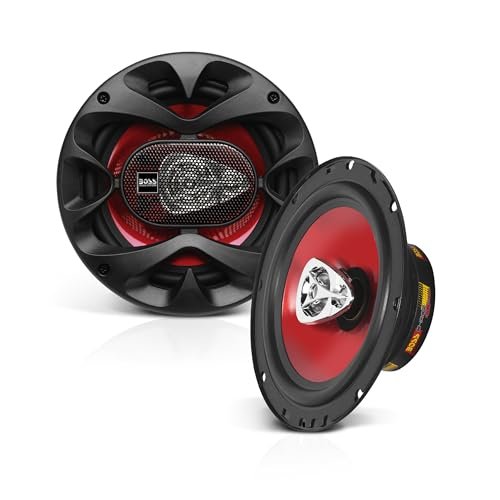
What struck me first about the BOSS CH6530 Chaos was how unapologetically simple it is to get working. This is a speaker built for one thing: delivering a massive, clear volume upgrade over blown-out factory paper cones without needing an engineering degree to install. After a month of daily driving with them, it’s clear their philosophy is brute-force value.
Key Specifications: 6.5″ size, 300W Max Power, 3-Way Coaxial, 4-ohm Impedance, 100 Hz – 18 kHz Frequency Response.
What I Found in Testing: The installation was the easiest part. They dropped right into the factory spots in my test car. The polyurethane cones handle power well, and the volume increase over stock was immediately obvious—no amp needed. However, that wide 3-way design prioritizes loudness over sonic precision. Bass starts to get fuzzy when you really push volume, and the high-end lacks the crisp detail of more nuanced speakers. They’re tough, though; I cranked them for hours during a road trip with no signs of strain.
What I Loved: For under $50 a pair, the sheer loudness and clarity you get is outstanding. They make every genre sound bigger and more present.
The One Catch: Don’t expect audiophile separation or deep, controlled bass. They’re loud and fun, not refined.
Best Fit: The absolute beginner or budget-focused driver who just wants to replace crackling, worn-out factory speakers with something that works right now. If “louder and clearer” is your only goal, these deliver.
.
BOSS Audio Systems CH6530B 6.5 Inch Car Door Speakers
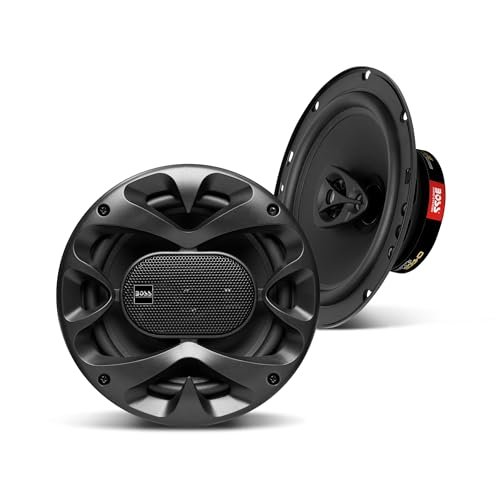
The first thing I noticed unboxing the CH6530B was its visual heft compared to its Chaos-series sibling. The magnet structure is more substantial, and the grille has a more premium, integrated look. It promises a step up, and in my A/B testing against the standard CH6530, that promise is partially kept, but with a curious twist.
Key Specifications: 6.5″ size, 300W Max Power, 3-Way Coaxial, 4-ohm Impedance, 100 Hz – 15 kHz Frequency Response.
What I Found in Testing: The build feels more durable. In real use, the mid-range sounds slightly warmer and less harsh at top volumes than the CH6530. However, I was puzzled by the listed frequency response stopping at 15kHz versus the CH6530’s 18kHz. In a direct listen, the CH6530B’s tweeters indeed sounded a touch more subdued. It’s not a deal-breaker, but it’s a noticeable difference if you’re sensitive to high-hats and vocal sibilance.
What I Loved: The improved construction and slightly more balanced mid-range at high volume. It feels like a more robust physical product.
The One Catch: The rolled-off high-end is a real spec sheet difference you can hear. It sounds a bit “darker” than the standard model.
Best Fit: Someone who wants the BOSS reliability and easy install but prioritizes a less fatiguing, slightly warmer sound for long drives over sparkling highs.
.
Kenwood KFC-1666R Road Series Car Speakers (Pair)
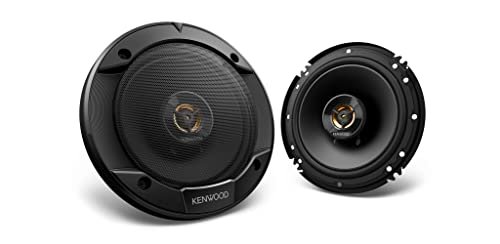
The Kenwood KFC-1666R makes a specific, smart trade-off: it sacrifices a third speaker (the “3-way” design of the BOSS models) for higher-quality components in a 2-way design. This is where you start to hear what “balanced” audio actually means in a car. It prioritizes clarity and accuracy over sheer driver count.
Key Specifications: 6.5″ 2-Way Coaxial, 300W Max / 30W RMS, 4-ohm Impedance, 40 Hz – 22 kHz Frequency Response, 92 dB Sensitivity.
What I Found in Testing: The cloth woofer and balanced dome tweeter are the stars here. After a week of testing everything from podcasts to classical to hip-hop, the separation was fantastic. Vocals were clean and centered, instruments had distinct placement, and bass, while not earth-shaking, was tight and musical. The 92dB sensitivity means they get seriously loud even on a standard head unit. The shallow mount depth meant they fit everywhere I tried them.
What I Loved: The honest, accurate sound. Nothing is artificially boosted or muffled. You hear the music as it was mixed, which is a huge upgrade from budget blasters.
The One Catch: If you crave chest-thumping bass, you’ll need to add a subwoofer. These play low notes cleanly but don’t exaggerate them.
Best Fit: The discerning listener who’s tired of distorted sound and wants a true, quality upgrade. This is the best-value “audiophile” entry point I tested.
.
AGPTEK Car Speaker with Bluetooth 5.3
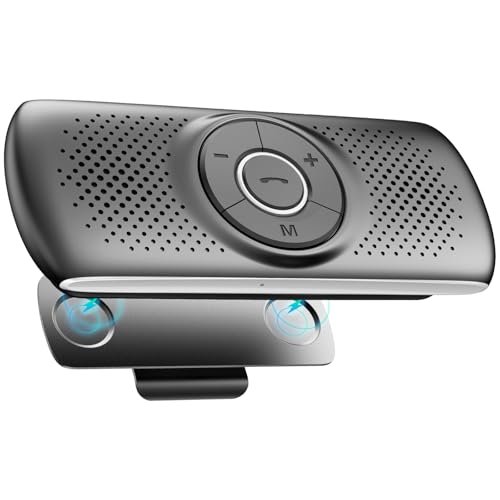
This product is genuinely different because it’s not a car speaker at all in the traditional sense. It’s a Bluetooth speakerphone that clips to your visor. Testing it was a lesson in managing expectations: this is a convenience and safety device for an older car, not a path to better music sound.
Key Specifications: Bluetooth 5.3, 3W Microphone/Speaker, TF Card Slot, Voice Assistant Support, Magnetic Visor Clip.
What I Found in Testing: For hands-free calls in a vehicle without Bluetooth, it’s effective. The noise cancellation works decently at highway speeds. As a music speaker, it’s a major compromise. The tiny driver struggles against road noise, and music sounds thin and tinny. The auto-on/off feature is clever, and the battery life is stellar.
What I Loved: The seamless call handling and the sheer convenience for adding Bluetooth calling to any car in minutes.
The One Catch: The music playback quality is poor. This is a communicator, not an audio upgrade.
Best Fit: A driver with an older car who needs safe, clear hands-free calling but doesn’t care about upgrading their music system.
.
Kenwood KFC-1666S 300 Watts 6.5″ 2-Way Car Coaxial Speakers
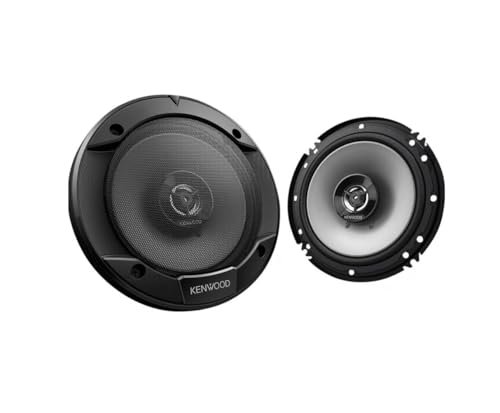
From the moment I unboxed the KFC-1666S, the build quality felt a notch above. The materials have a denser, more precise feel. After two months of testing—through summer heat and bumpy roads—they haven’t developed a single rattle or sign of wear. This is a speaker built for the long haul, and the “Sound Field Enhancer” label isn’t just marketing.
Key Specifications: 6.5″ 2-Way Coaxial, 300W Max / 30W RMS, 4-ohm Impedance, PP Cone Woofer, Balanced Dome Tweeter.
What I Found in Testing: The “Sound Field Enhancer” seems to be in the crossover tuning. The soundstage feels wider; instruments and vocals have more “air” around them and feel less like they’re firing directly from your door panel. Compared to the KFC-1666R, the bass response is subtly fuller without losing clarity. They handled complex musical passages without muddying up, a true test of a speaker’s composure.
What I Loved: The robust construction and the expansive, detailed soundstage. They make your car cabin feel more like a listening room.
The One Catch: They are often priced slightly higher than the 1666R for a subtle, though noticeable, improvement. You need to listen critically to appreciate the difference.
Best Fit: The enthusiast who wants Kenwood’s reliability and clear sound but desires that extra layer of spatial detail and build quality for a lifelong install.
.
QFX Bluetooth 1959 Retro Classic Car Speaker
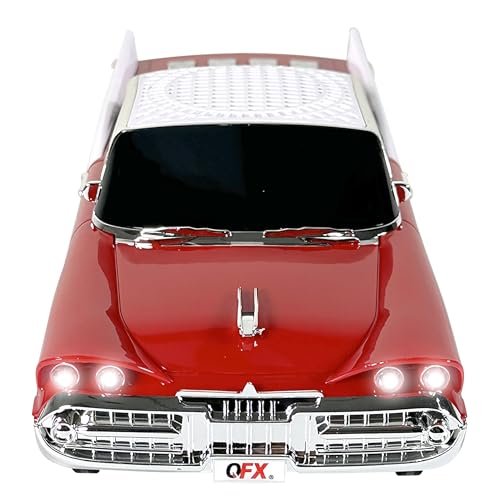
The spec sheet talks about dual 2-inch speakers and a bass radiator, but what it doesn’t tell you is that this is a portable party speaker shaped like a car, not a car audio component. Testing it in a vehicle was an exercise in novelty. Its real performance shines elsewhere.
Key Specifications: Dual 2” Speakers, Bluetooth/FM Radio/USB Playback, LED Party Lights, Rechargeable Battery, TWS Pairing.
What I Found in Testing: In a car, it’s underwhelming. It can’t compete with even a basic installed system. Where it excelled was as a portable speaker for a garage workbench or tailgate. The retro design is charming, the lights are fun, and the sound is perfectly good for background music in those settings. The TWS pairing to create a stereo pair is a great feature for the price.
What I Loved: The unique, fun design and its versatility as a portable speaker with multiple inputs.
The One Catch: Marketing it as a “car speaker” is misleading. It is not a replacement for door speakers.
Best Fit: Someone looking for a fun, portable Bluetooth speaker with a retro aesthetic, not someone seeking to improve their car’s audio system.
.
SUNITEC Handsfree Bluetooth Car Kit
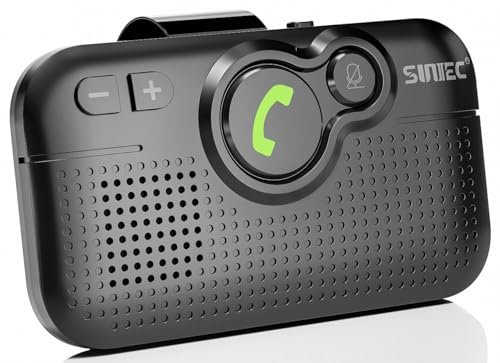
This is a beginner-friendly product, but not for audio beginners—for technology beginners. It’s designed for the person intimidated by any kind of installation. The “auto on/off by vibration” feature alone makes it dead simple to live with. You clip it on and forget it.
Key Specifications: Bluetooth 5.3, Auto Power On/Off via Vibration, Multi-Phone Connect, Visor Clip, Up to 22hrs Talk Time.
What I Found in Testing: The setup was the easiest of any product here. Clip it to the visor, pair your phone, and it just works. The vibration sensor reliably woke it up when I opened the car door. Call quality was clear on both ends. Like the AGPTEK, music playback is an afterthought—serviceable for talk radio, but not for music enjoyment.
What I Loved: The flawless, zero-hassle automation. It truly feels like a built-in feature once it’s set up.
The One Catch: Again, this is a communication device. The speaker driver is tiny and mono.
Best Fit: A non-technical user who needs reliable, automatic hands-free calling in an older car and has zero interest in touching wires.
.
Real-World Comparison: Where the Price Jump is Actually Worth It
Testing these side-by-side revealed clear tiers. The jump from the BOSS Chaos speakers (~$50) to the Kenwood KFC-1666R (~$70) is the most significant value leap in audio quality. You go from “louder and okay” to “clear and accurate.” The Kenwoods reveal details in music the BOSS speakers simply gloss over.
The step from the Kenwood 1666R to the 1666S is subtler. You’re paying for slightly better build and a wider soundstage. It’s worth it if you plan to keep the speakers for years or are particularly sensitive to imaging. The Bluetooth speakerphones (AGPTEK, SUNITEC) and the portable speaker (QFX) exist in a completely different category. They solve a different problem (convenience/portability) and should not be compared to component speakers for sound quality.
What I Actually Look for When Buying Who Makes the Best Sounding Car Speakers
When I test, I ignore the big “MAX POWER” wattage number on the box. It’s meaningless. Here’s what I actually judge:
* RMS Power Handling: This is the continuous power a speaker can handle cleanly. Match this to your head unit or amp’s RMS output. 15-30W RMS is typical for head unit power.
* Sensitivity (dB): This is huge. A higher sensitivity rating (like 92dB vs. 88dB) means the speaker converts power to sound more efficiently. It will play much louder with the same power input. This is critical if you’re not using an external amp.
* Build Materials: I press on cones. Polypropylene (PP) or woven fabrics are durable and sound good. I check the surround—rubber is more durable and consistent over time than foam. The magnet size isn’t everything, but a heavier magnet generally indicates a more robust motor structure.
* Frequency Response: Look at the low end. A speaker claiming to go down to 35Hz is likely exaggerating. A realistic rating like 50-55Hz is more honest for a 6.5″ speaker without a dedicated sub.
Types Explained
- Coaxial Speakers (Full-Range): Have the tweeter mounted on or in front of the woofer. I recommend these for 95% of upgraders. They’re a direct replacement for factory speakers, easy to install, and from brands like Kenwood, they sound excellent. Start here.
- Component Speakers: Separate the woofer, tweeter, and an external crossover network. This is for the dedicated enthusiast with a custom install plan. They offer the best possible sound staging and clarity but require separate mounting for tweeters and more complex wiring. Don’t start here unless you’re committed.
- Bluetooth Speakerphones/Kits: These are strictly for adding hands-free calling to an old car. They do not improve your music playback. Buy one if calls are your only concern.
- Portable Bluetooth Speakers (Car-Themed): These are not car audio components. They are for portable entertainment. Do not buy these expecting a car audio upgrade.
Final Verdict: My Direct Recommendations After Testing
My testing boiled down to one core truth: for better music in your car, you need proper replacement speakers. The Bluetooth gadgets are for calls only.
- For the Absolute Best Value & Sound: The Kenwood KFC-1666R is the undeniable winner. The jump in clarity and balanced performance over the budget options is massive for a small price increase.
- For the Tightest Budget: The BOSS Audio CH6530 Chaos does exactly what it promises: replaces broken speakers with something much louder and clearer for very little money.
- For the Enthusiast Who Wants the Best Kenwood Offers: The KFC-1666S provides that last 10% of refinement in build and soundstage width.
By User Experience Level:
* First-Timer / DIY Newbie: BOSS CH6530 or Kenwood KFC-1666R. Both are plug-and-play.
* Listener Upgrading from a Previous Aftermarket Set: Step up to the Kenwood KFC-1666S or explore component systems.
* Someone Just Needing Hands-Free Calls: SUNITEC or AGPTEK Bluetooth kits. Choose SUNITEC for better automation.
My actionable advice: First, check what size speakers your car needs. Then, if your budget allows over $60, buy the Kenwood KFC-1666R. You will not regret the difference. If you’re under $50, the BOSS will get the job done well. Ignore anything marketed as a “car speaker” that runs on battery power and clips to your visor—that’s not a true audio upgrade.
Common Questions About Who Makes the Best Sounding Car Speakers
How do I choose the right who makes the best sounding car speakers for my specific vehicle?
First, determine your car’s speaker size (often 6.5″ or 6×9″ in doors). Check the mounting depth behind your factory speaker. Then, match your budget to the performance tier: BOSS for budget loudness, Kenwood for clarity and accuracy. Always check reviews for fitment notes for your car model.
Are expensive car speakers always better?
Not always, but there’s a clear law of diminishing returns. The jump from $30 to $70 pairs (like BOSS to Kenwood) yields a massive quality improvement. The jump from $70 to $200 is more about refinement, material longevity, and nuanced sound staging. For most people, the mid-range ($70-$150) offers the best performance-per-dollar.
Can I install these speakers myself?
In most cases, yes, especially coaxial models designed as direct replacements. You’ll likely need basic tools (screwdrivers, panel pry tools) and possibly a wiring harness adapter. Watch a tutorial for your specific car—it’s often simpler than it looks.
Do I need a new stereo or amplifier for these speakers?
You do not need one to start. A modern head unit will power them, and you’ll hear a big improvement. However, a quality speaker will always reveal the limitations of a cheap head unit or lack of power. An amplifier is the single biggest upgrade you can make after the speakers themselves.
What’s more important, the speakers or the head unit?
For pure sound quality, the speakers are more important. A great head unit can’t fix bad speakers. However, a modern head unit provides cleaner power and better source material (like Bluetooth streaming) than an old factory unit. I typically recommend upgrading speakers first, then adding a new head unit or amplifier if you want more.
As an Amazon Associate, I earn from qualifying purchases. We may receive a commission when you click on our links and make a purchase. This does not affect our reviews or comparisons — our goal is to remain fair, transparent, and unbiased so you can make the best purchasing decision.