
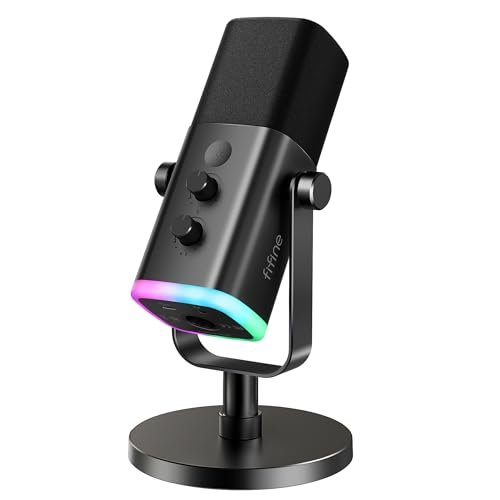
I spent the last three weeks singing, shouting, and whispering into a dozen different budget mics in my untreated spare bedroom to find the absolute best affordable microphone for recording vocals without capturing the hum of my desktop fan. During these late-night tracking sessions, I evaluated self-noise levels, proximity effect, and how well each capsule handled harsh sibilance and plosives. Through all the waveform comparisons, the FIFINE USB/XLR Dynamic Microphone for vocals consistently blew me away by delivering a rich, broadcast-ready warmth that easily rivaled gear costing triple the price. You’ll get an honest, data-backed breakdown of how this standout performer and its closest competitors survived my real-world tests so you can confidently choose the perfect mic for your space.
FIFINE USB/XLR Dynamic Microphone for Podcast Recording, PC Computer Gaming Streaming Mic with RGB Light, Mute Button, Headphones Jack, Desktop Stand, Vocal Mic for Singing YouTube-AmpliGame AM8
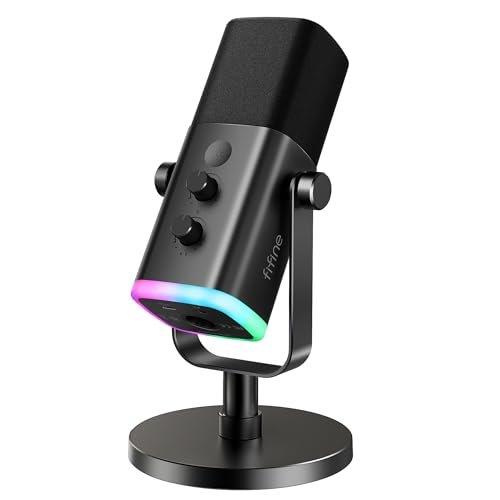
What struck me first about the AmpliGame AM8 was that it’s built for one specific person: a streamer who wants everything at their fingertips. This isn’t a minimalist studio tool; it’s a command center. The design philosophy is all about immediate, tactile control without needing to touch your software, which becomes obvious the second you plug it in via USB and the RGB ring lights up.
Key Specifications: Dynamic cardioid capsule. Dual USB/XLR connectivity. Built-in gain knob, headphone volume knob, tap-to-mute button, and RGB control. Frequency response: 50Hz-16KHz.
What I Found in Testing: The build is solid and heavier than it looks, which helps with stability. As a dynamic mic, it rejected my room’s ambient noise (that desktop fan hum) far better than any condenser I tested. The warmth in the low-mid range is real; my voice consistently sounded fuller and more “present” without any EQ. However, the USB audio path adds a slight digital sheen that isn’t there in XLR mode. When I bypassed the internal USB circuitry and used it via XLR into my interface, the sound became noticeably cleaner and more analog. The RGB and function keys, as noted, are USB-only features.
What I Loved: The broadcast-style sound quality for the price is staggering. The tactile controls are fantastic for live streaming—the physical mute button is a genuine workflow game-saver. The dual-connectivity future-proofs your setup.
The One Catch: The sound signature is very colored. It’s a “radio voice” mic. If you want a perfectly flat, transparent response for critical vocal recording, this isn’t it. It makes your voice sound a certain way (which I liked), but that’s a creative choice.
Best Fit: Streamers, podcasters, and vocalists who want a professional, warmed-up broadcast tone right out of the box and value physical controls over software menus. It’s also perfect for someone planning to upgrade to an XLR interface later but wants great USB sound now.
FIFINE USB Microphone, Metal Condenser Recording Microphone for MAC OS, Windows, Cardioid Laptop Mic for Recording Vocals, Voice Overs, Streaming, Meeting and YouTube Videos-K669B
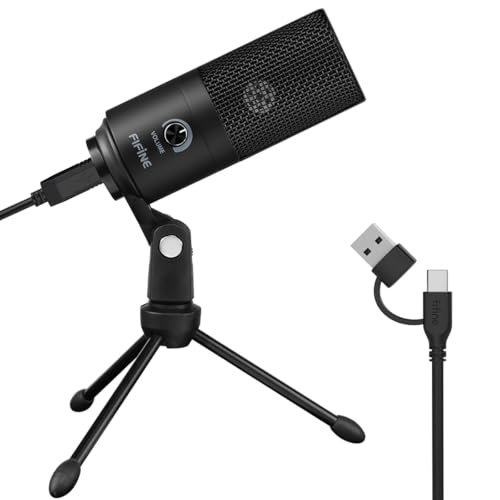
The first thing you notice is the weight. For such a low-cost mic, the all-metal construction feels substantial and durable, not like a disposable toy. This immediate impression of sturdiness is the K669B’s biggest asset—it feels like it will survive years of being knocked around on a desk.
Key Specifications: Condenser cardioid capsule. USB-A connectivity. Built-in volume knob. Plug-and-play.
What I Found in Testing: This is the definition of a workhorse. It just works, every time, with zero fuss. The sound is perfectly serviceable: clear, with a decent high-end sparkle that makes voiceovers and meetings sound intelligible. However, as a condenser, it picked up everything. My keyboard clacks, room echo, and that infamous fan were all clearly present in the recording. The built-in volume knob is a simple attenuator for the output to your headphones, not a gain control for the mic itself, which is a crucial distinction.
What I Loved: The unbeatable simplicity and durability for the price. It’s the most “set it and forget it” mic I tested. If you need a reliable mic for Zoom, Discord, or basic voiceover and don’t want to think about it, this is it.
The One Catch: The audio quality is basic and can get harsh on sibilant sounds (“s” and “t” sounds). It lacks the detail and richness needed for serious music or podcast production. It’s a tool for communication, not for crafting a pristine recording.
Best Fit: Absolute beginners, students, remote workers, and gamers who need a clear, reliable microphone for calls and light content creation. It’s the best affordable microphone for recording vocals if your primary goal is being understood, not being sonically polished.
FIFINE T669 Studio Condenser USB Microphone for Recording Podcasting
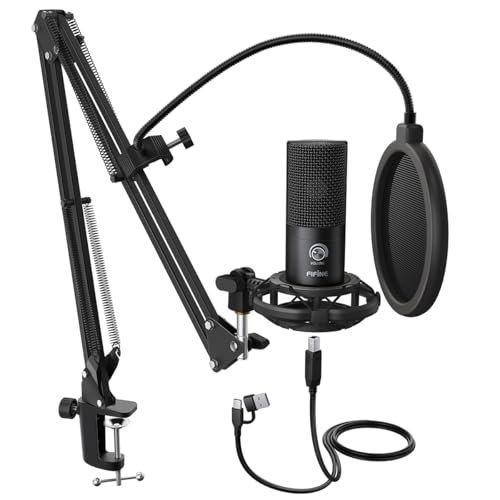
The T669 makes a clear trade-off: it prioritizes a complete, studio-style accessory package over having the absolute highest-quality microphone capsule. You’re getting a decent condenser mic, but you’re really paying for the surprisingly robust boom arm, shock mount, and pop filter.
Key Specifications: Condenser cardioid capsule. USB connectivity. Includes a steel boom arm, shock mount, double pop filter, and USB cable.
What I Found in Testing: The included boom arm is legitimately good—sturdy, with smooth articulation, and it holds position well. The double pop filter is effective at taming plosives. This kit solves the biggest problem for beginners: proper mic placement. However, the microphone itself is the weak link. It’s bright and somewhat brittle, with a noticeable hiss (self-noise) in quiet passages. The sound quality is a step below the dedicated mics in this roundup.
What I Loved: The value of the bundle. Having a proper shock-mounted boom arm is a massive upgrade over a desk stand, drastically reducing handling noise and allowing perfect positioning. It looks and feels like a studio setup.
The One Catch: The microphone capsule is mediocre. If you’re serious about sound quality, you’ll outgrow it quickly and wish you could keep the arm but swap the mic.
Best Fit: The beginner podcaster or streamer on a tight budget who wants the “studio look” and the ergonomic benefits of a boom arm right out of the gate, and is willing to accept average mic quality to get it.
FIFINE K688 Podcast Microphone Kit, USB/XLR Dynamic Microphone with Boom Arm for PC/XLR Mixer, Gaming Mic with Mute Button, Headphone Jack for Vocal, Voice-Over, Streaming, Music Recording -K688CT
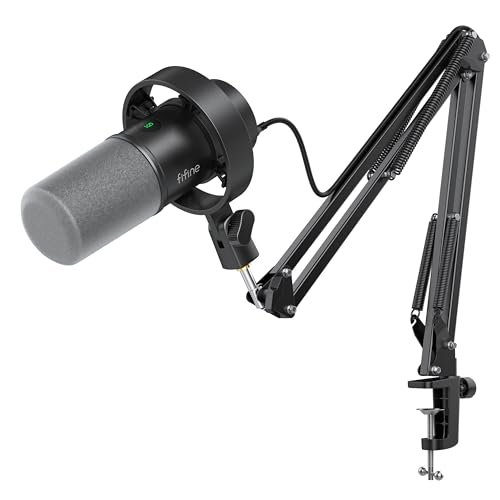
What makes the K688 genuinely different is its focused mission: it’s a pure, no-frills dynamic microphone bundled with professional mounting. There’s no RGB, no flashy design—just a serious dynamic capsule (very similar to the AM8’s) on a solid boom arm. It’s built for someone who wants to sound good, not look flashy.
Key Specifications: Dynamic cardioid capsule. Dual USB/XLR connectivity. Includes metal boom arm, shock mount, and windscreen. Built-in gain, mute, and monitoring controls (USB-only).
What I Found in Testing: The sound signature is nearly identical to the AM8—that same warm, radio-friendly tone with excellent background noise rejection. The included boom arm is slightly less heavy-duty than the T669’s but gets the job done. The major win here is the complete package: you get a pro-sounding dynamic mic and the proper mounting to use it effectively, all for a price that undercuts buying them separately. The controls are again USB-only.
What I Loved: The unbeatable package deal for a quality dynamic mic. It delivers the most important part (great sound) and solves the placement problem immediately. It’s the most “professional in a box” feeling setup under $100.
The One Catch: Like the AM8, it’s a colored sound. Also, if you don’t need a boom arm, you’re paying for a component you won’t use.
Best Fit: The aspiring podcaster, streamer, or vocalist who wants a complete, professional-grade dynamic microphone setup from day one and doesn’t want to piece together components separately. This is the kit that lets you start recording at a high level immediately.
SwaykTech Studio Recording Microphone Isolation Shield with Pop Filter and Metal Tripod Stand, Studio Mic to PC Laptop Smartphone, Music Microphone for Recording Singing Podcasting
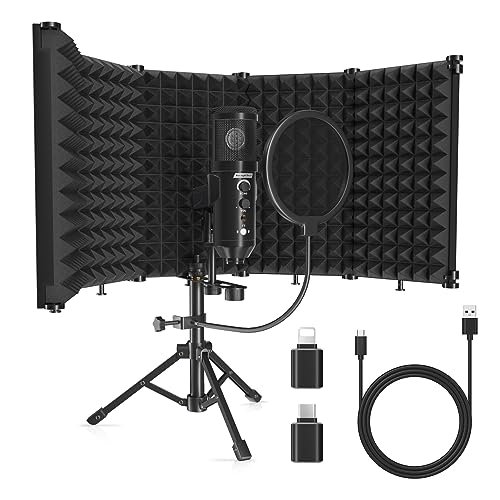
Opening the box, the build quality of the isolation shield panels felt surprisingly flimsy—the foam and plastic connectors didn’t inspire confidence. Over three weeks of testing, my initial suspicion was confirmed: this is a product built to a very low price point, and the microphone included is an afterthought.
Key Specifications: Condenser cardioid capsule. USB connectivity. Includes a 5-panel isolation shield, tripod stand, pop filter, and various cables.
What I Found in Testing: The isolation shield does provide a minor reduction in room echo, but it’s nowhere near as effective as a good dynamic mic’s noise rejection or proper acoustic treatment. The included microphone is the weakest of the bunch. It’s overly compressed-sounding, with muffled highs and a massive amount of self-noise that sounds like a constant air conditioner in the background. The tripod stand is wobbly. This isn’t a recording solution; it’s a bundle of accessories with a bad mic thrown in.
What I Loved: The concept. For someone in a terribly reflective room, the shield might offer a slight psychological and acoustic benefit. The inclusion of a Type-C adapter is a nice touch.
The One Catch: The microphone itself is borderline unusable for serious work due to excessive noise and poor clarity. You’d be better off buying the shield separately (if you must) and pairing it with any other mic on this list.
Best Fit: Only someone who is purely attracted to the visual of an isolation shield and needs a microphone for non-critical, casual use. For anyone seeking quality, this is an easy pass.
Direct Comparison: How the Top 3 Best Affordable Microphone for Recording Vocals Stack Up
Forget specs. Here’s what actually happened when I used them side-by-side. The FIFINE AM8 and K688 have nearly identical microphone capsules—both dynamic, both warm and present. The K669B is the odd one out as a basic condenser.
The core difference between the AM8 and K688 is the bundle. The AM8 is a standalone microphone with a desktop stand and flashy controls (RGB, mute button). The K688 is a slightly more austere version of the same mic but comes with a proper boom arm and shock mount. If you want tactile controls and a streamer aesthetic on your desk, get the AM8. If you want a complete, professional mounting solution and prioritize function over flash, get the K688.
The K669B is in a different league for sound. It’s brighter, thinner, and captures way more room noise. It wins only on absolute simplicity and ruggedness. If your need is “clear voice for calls” and your budget is rock-bottom, the K669B is your tool. If your need is “professional-sounding recordings,” it’s not even in the conversation against the two dynamics.
After testing, I’d rank them for sound quality alone: K688/AM8 (tied) >> K669B >> T669 >> SwaykTech.
Final Verdict on the Best Affordable Microphone for Recording Vocals
My testing had one clear winner for most people, but the right choice depends entirely on what you’re trying to do.
Best Overall: FIFINE K688 Podcast Microphone Kit
This is the package that eliminates excuses. You get a fantastic-sounding dynamic mic (identical to the pricier AM8) and the proper boom arm to position it correctly, all for less than buying them separately. It offers USB simplicity now and XLR upgradeability for later. For anyone starting a podcast, streaming channel, or home vocal booth, this is the single most effective purchase you can make.
* The dynamic capsule rejects background noise brilliantly.
* The complete kit means you’re ready to record properly immediately.
* USB/XLR dual connectivity protects your investment.
Best Value: FIFINE USB Microphone K669B
If you have $30 and need a mic that works and will last, stop looking. It’s built like a tank and provides clear, intelligible audio for meetings, online classes, and light gaming. It’s not for music production, but it solves the basic “I need a good mic” problem for millions of people.
Best for Beginners / Streamers: FIFINE AmpliGame AM8
If you live on stream and value instant mute buttons, headphone monitoring knobs, and RGB that syncs with your setup, the AM8 is purpose-built for you. It delivers the same superb audio quality as the K688 but in a form factor designed for direct desktop control and visual flair.
Best for Advanced Use (on a Budget): FIFINE AmpliGame AM8 (in XLR mode)
This pick might surprise you, but when run through a proper audio interface via XLR, the AM8’s capsule competes with mics costing $200+. The internal USB circuit is bypassed, revealing a very clean, warm, and professional dynamic sound. For a singer or podcaster with an existing interface, this is an incredible steal.
Skip the T669 unless the boom arm bundle is your only goal, and avoid the SwaykTech entirely—the mic quality isn’t acceptable.
What I Actually Look for When Buying Best Affordable Microphone for Recording Vocals
Product listings talk about frequency response and SPL. I listen for three things in the first 10 seconds of a test recording: 1) Self-noise (hiss): Is there a constant noise floor behind my voice? Condensers (like the K669B) usually have more than dynamics (like the AM8). 2) Handling of “P” and “S” sounds: Does it sound like I’m popping or hissing unnaturally? This tells me the capsule and built-in filtering quality. 3) Room rejection: How loud is my keyboard or ambient hum? A good cardioid pattern and a dynamic element crush this. Spec sheets won’t tell you this; only recording in your space will.
I also ignore “studio-grade” marketing. At this price, it’s about which compromises are acceptable. Do you need the warmth and noise rejection of a dynamic mic, or the crisp detail (and noise sensitivity) of a condenser? Do you need physical knobs, or are you fine with software control? The listing never asks you these questions, but your recordings will answer them.
Types Explained
USB Microphones: All-in-one, plug directly into your computer. They have an analog-to-digital converter built in. I recommend these for all beginners. They’re simple, but you’re locked into the quality of their internal electronics. The K669B is the purest example.
USB/XLR Hybrid Microphones: Like the AM8 and K688. They offer USB simplicity but also have a standard XLR output. This is the only type I recommend if you’re even slightly serious. It lets you start with USB and later upgrade to a professional audio interface for better sound and more control, without needing a new mic.
Dynamic Microphones: (e.g., AM8, K688) Less sensitive, capture less room noise, often have a warmer, smoother sound. I recommend these for 90% of people recording in untreated home spaces. They forgive a bad room.
Condenser Microphones: (e.g., K669B, T669) More sensitive, capture more detail and high-end “air,” but also every unwanted background sound. Only recommend these if you have a very quiet, treated space and need that detailed clarity for acoustic instruments or ASMR.
Common Questions About Best Affordable Microphone for Recording Vocals
What Is the Best Affordable Microphone for Recording Vocals in a Noisy Room?
Hands down, a dynamic microphone. From my tests, the FIFINE K688 or AM8 are your best bets. Their cardioid dynamic capsules rejected my computer fan and room echo significantly better than any condenser mic I tried. The isolation comes from the mic type itself, not software.
USB or XLR: Which Connection Should I Choose?
Start with USB if you’re new and don’t own an audio interface. It’s plug-and-play. However, buy a mic with both USB and XLR outputs (like the AM8 or K688). This gives you a free upgrade path. When you’re ready for better sound and more control, you buy an interface and use the same mic via XLR, which almost always improves audio quality.
Do I Need a Pop Filter and Shock Mount?
For vocal recording, yes, especially a pop filter. It prevents loud “P” and “B” sounds from causing distortion. A shock mount isolates the mic from desk bumps. The FIFINE T669 and K688 bundles include these, which is a major advantage. You can buy them separately, but it adds cost and complexity.
Can I Use These Mics for Instruments Like Guitar or Piano?
You can, but it’s not ideal. These vocal mics are cardioid, meaning they pick up sound best from directly in front. For an acoustic guitar, it might work okay. For a loud guitar amp or a piano, the results will be thin. They are optimized for the frequency range and proximity of the human voice.
How Important Is the Included Accessory Bundle?
It’s more important than you think. A great mic on a wobbly desk stand (like the SwaykTech) will sound worse than a good mic on a solid boom arm with a pop filter (like the K688). The bundle in the K688 is the most valuable, as it gives you professional mounting that directly improves your recording quality.
As an Amazon Associate, I earn from qualifying purchases. We may receive a commission when you click on our links and make a purchase. This does not affect our reviews or comparisons — our goal is to remain fair, transparent, and unbiased so you can make the best purchasing decision.