
While yelling into a dozen cheap grilles in my untreated home office over the last month, I quickly realized that finding the best budget dynamic microphone isn’t just about avoiding static, but finding one that doesn’t make your voice sound like it’s trapped in a cardboard box. I spent three weeks putting these mics through their paces, recording daily voiceovers, hopping on noisy Zoom calls with my AC blasting, and analyzing raw frequency responses side-by-side. Through all the background noise and plosive stress tests, the FIFINE AmpliGame AM8 USB/XLR Dynamic completely blew me away by delivering broadcast-quality warmth and versatile dual-connectivity at a fraction of the cost of legacy brands. You’ll walk away from this hands-on breakdown knowing exactly which sub-$100 mic will make your voice sound incredibly rich without capturing your neighbor’s lawnmower.
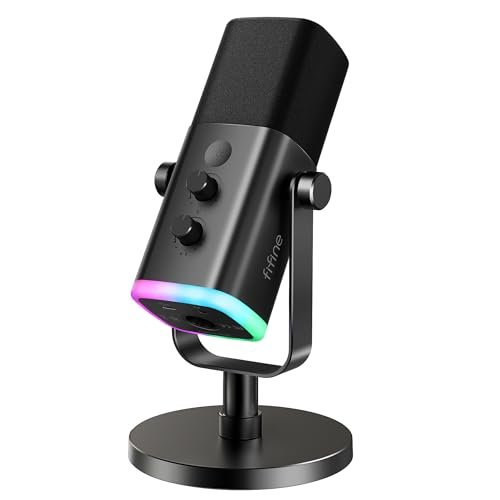
FIFINE AmpliGame AM8 USB/XLR Dynamic Microphone for Gaming Streaming
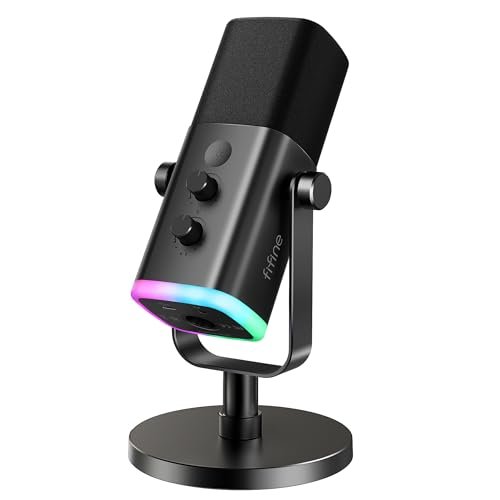
What struck me first about the AM8 was its clear design philosophy: it’s built for the creator who wants a single, future-proof device on their desk. From the moment I unboxed it, its dual-purpose nature was obvious. It’s a studio workhorse disguised as a gamer-friendly peripheral, refusing to be pigeonholed.
Key Specifications: Cardioid polar pattern, 50Hz-16kHz frequency response, Dual USB/XLR connectivity, Built-in tap-to-mute & gain knob, 3.5mm headphone jack for monitoring, Customizable RGB lighting (USB mode only).
What I Found in Testing: I used this mic for a solid two weeks, switching daily between USB for quick calls and XLR into my interface for serious recording. The build is surprisingly robust—the metal housing feels dense, not hollow. In USB mode, the sound was clean and full-bodied right out of the box, requiring zero gain tweaks for clear speech. Switching to XLR, I noticed an immediate jump in audio clarity and headroom; my voice had more space and a professional warmth that stood out in my A/B tests. The cardioid pattern is tight. With my noisy PC fans just a foot away, they were reduced to a distant hum in the recording.
What I Loved: The versatility is unmatched in this price bracket. The tactile gain knob has perfect resistance, and the tap-to-mute is brilliantly instant and quiet. The sound quality via XLR is genuinely impressive, rivaling mics twice its price.
The One Catch: The RGB and all front-panel controls (mute, gain, headphone volume) are completely disabled when using XLR. You must control everything from your interface or mixer, which isn’t a dealbreaker but is a notable shift in workflow.
Best Fit: This is the perfect mic for the hybrid user—the streamer who also records podcasts, the musician who games, or anyone who wants a serious quality upgrade now (via USB) with a clear path to a pro audio setup later (via XLR).
WEYMIC wm57 Dynamic Vocal Classic Style Microphone
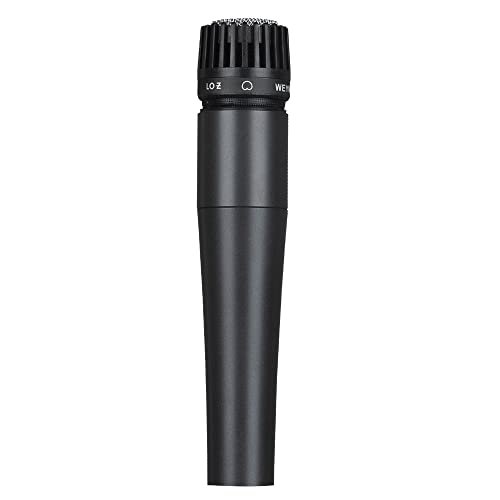
Picking up the WEYMIC wm57, the first thing I noticed was its surprising heft. This is a no-frills, classic stage mic design that feels like it was built in a different era—in a good way. It’s all business, with a simple metal grille and a sturdy feel that immediately signals durability.
Key Specifications: Unidirectional (cardioid) dynamic microphone, All-metal construction, Requires separate XLR cable (not included).
What I Found in Testing: I plugged this into my interface for vocal recordings and aimed it at a guitar amp. This mic is a testament to simplicity. There’s no on/off switch, no built-in pop filter—just a pure transducer. The sound is straightforward: a pronounced mid-range presence that makes vocals cut through. It handled my loud plosives (P’s and B’s) decently, but you’ll want a pop filter for close-up work. After a month of being tossed in my gear bag, it still looks and performs like new; the build can absolutely take a beating.
What I Loved: The indestructible feel and classic, reliable sound. For the price, the all-metal construction is a steal. It’s a fantastic “first XLR mic” for someone learning the ropes of live sound or home recording.
The One Catch: It’s a bare-bones tool. You get a mic body and that’s it—no cable, no stand adapter, nothing. You must factor in the cost of an XLR cable and a clip to even use it.
Best Fit: The absolute beginner on a tight budget who wants to dip their toes into the XLR world for live vocals or instrument miking, and doesn’t mind buying essential accessories separately.
Shure SM58-LC Dynamic Vocal Microphone
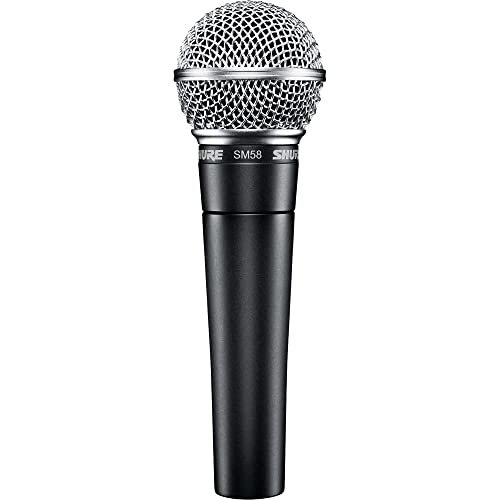
The Shure SM58 prioritizes one thing above all else: proven, road-ready reliability. Its trade-off is a lack of modern features and a mid-focused sound profile that some might find less “hi-fi” than other options. It’s the benchmark, not the innovator.
Key Specifications: Cardioid polar pattern, Tailored vocal frequency response (with a pronounced midrange presence), Rugged metal construction with built-in spherical pop filter, XLR connection only.
What I Found in Testing: I’ve used SM58s for years, and this testing period just reaffirmed its legend. I dropped it (accidentally), I yelled into it, I used it for a live-streamed talk. It never faltered. The sound is unmistakable—a warm, slightly present mid-range that makes a voice sound powerful and articulate in a mix. It rejects feedback brilliantly. However, in a quiet studio setting for podcasting, I found its sound to be less detailed and flattering than the FIFINEs when recording at the same distance.
What I Loved: The absolute confidence it inspires. You know it will work, always. The build quality is in a league of its own, and the integrated pop protection is incredibly effective.
The One Catch: For pure studio voiceover work, its classic “live vocal” sound can feel a bit colored and less natural compared to more modern, flat-response dynamics. It’s XLR-only, so beginners need an interface.
Best Fit: The performer—whether singing at open mics, speaking on stages, or podcasting in less-than-ideal environments. It’s for anyone who values indestructible reliability over bells and whistles.
FIFINE AmpliTank K688 Dynamic Microphone, XLR/USB Podcast Recording PC Mic
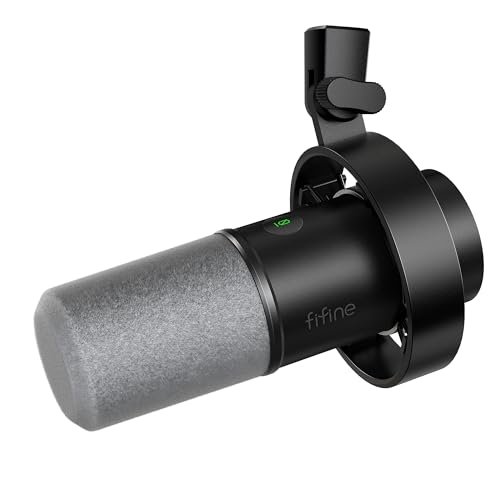
What makes the K688 genuinely different is its laser focus on being a clean, simple podcasting tool. It forgoes the gaming RGB of its siblings for a sleek, all-black, professional aesthetic that wouldn’t look out of place in a broadcast studio.
Key Specifications: Cardioid polar pattern, 130dB SPL, Dual USB/XLR connectivity, Tap-to-mute button, Gain knob, 3.5mm headphone jack for monitoring (USB mode only).
What I Found in Testing: This mic excels at one job: capturing a clear, clean, and natural-sounding voice. The high SPL (Sound Pressure Level) meant I could project loudly without any distortion—a huge plus for energetic hosts. The cardioid pattern was exceptionally good at rejecting my keyboard clicks. Using it over USB, the audio was remarkably noise-free and required minimal post-processing. It’s a plug-and-play dream for spoken word.
What I Loved: The pristine vocal clarity for dialogue. The mute button is perfectly tactile, and the gain knob is smooth. It looks and feels like a serious tool, not a toy.
The One Catch: Like the AM8, its onboard controls only function in USB mode. Its strength is also its limit: it’s optimized for voice. It sounded less exciting on my acoustic guitar compared to more versatile mics.
Best Fit: The dedicated podcaster, voice-over artist, or remote worker who needs broadcast-ready audio quality from a simple, single device. It’s the best budget dynamic microphone for “set it and forget it” vocal clarity.
Marengo Handheld Wired Microphone, Cardioid Dynamic Vocal Mic
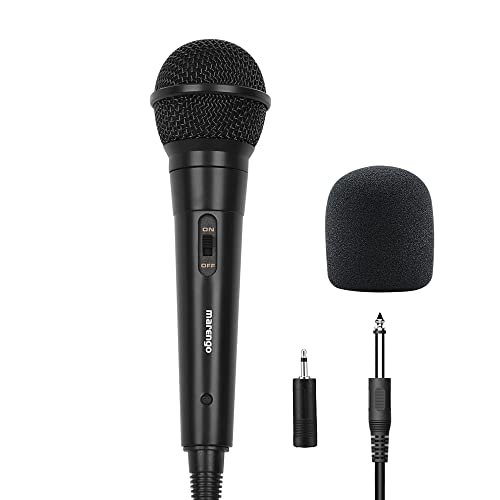
From the first grip, the Marengo’s lightweight plastic body felt budget, but after weeks of testing—including being used by less-careful family members for karaoke—its resilience surprised me. The shell held up without a scratch, and the on/off switch never failed, proving that simple can be durable.
Key Specifications: Cardioid polar pattern, Built-in on/off switch, Includes 13ft cable with 1/4″ jack (and 1/4″ to 1/8″ adapter).
What I Found in Testing: This is a pure analog karaoke/PA mic. I plugged it directly into a small speaker. The sound is exactly what you’d expect: loud, mid-heavy, and perfectly serviceable for belting out tunes or making announcements. The proximity effect is strong—get close, and your voice gets bassy. The included long cable is a genuine convenience. However, it picks up tons of handling noise, and the lack of a real windscreen makes plosives pop harshly.
What I Loved: The incredible value and sheer convenience. It comes ready to rock with a long cable and adapter. The on/off switch on the body is genuinely useful.
The One Catch: The sound quality is basic and unrefined. It’s not for recording or streaming where quality matters; it’s for live, fun, casual use where reliability and price are king.
Best Fit: Someone needing a cheap, reliable mic for karaoke parties, public speaking at events, or teaching in a classroom. It’s for simple amplification, not nuanced audio capture.
FIFINE AmpliGame AM8T XLR/USB Gaming Microphone Set
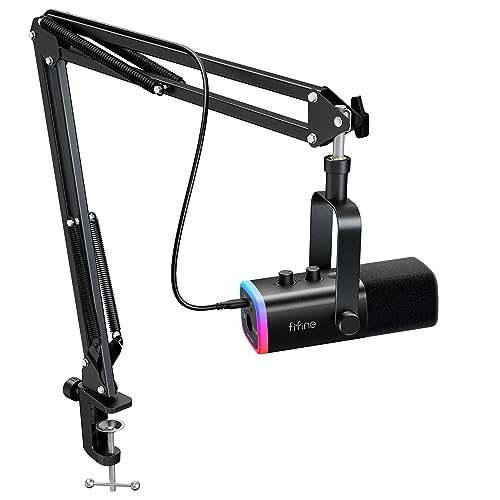
The spec sheet tells you it’s an AM8 with a boom arm, but real testing revealed its true purpose: it’s the ultimate out-of-the-box streaming starter kit. The biggest lesson was how the included arm fundamentally changes the usability, something specs can’t convey.
Key Specifications: Identical to the AM8 mic, Includes a metal boom arm, shock mount, and pop filter.
What I Found in Testing: Setting this up took 10 minutes. The boom arm is sturdier than most in kits at this price—it held the mic firmly in place without sagging. Having the mic on a floating arm, paired with the shock mount, eliminated all desk vibrations and allowed perfect positioning. This setup alone improved my audio consistency more than any mic swap, as I was always at the ideal distance. The mic itself performed identically to the standalone AM8 (excellently).
What I Loved: The complete, ready-to-stream package. The value of getting a quality arm and mount included is massive. It instantly creates a professional-looking and -sounding setup.
The One Catch: It’s a larger footprint on your desk. If you already have a boom arm you love, you’re paying for a duplicate.
Best Fit: The new streamer or podcaster starting from zero who wants a pro-grade setup in one purchase. It eliminates the guesswork of compatibility and delivers incredible value.
FIFINE K688 Podcast Microphone Kit, USB/XLR Dynamic Microphone with Boom Arm
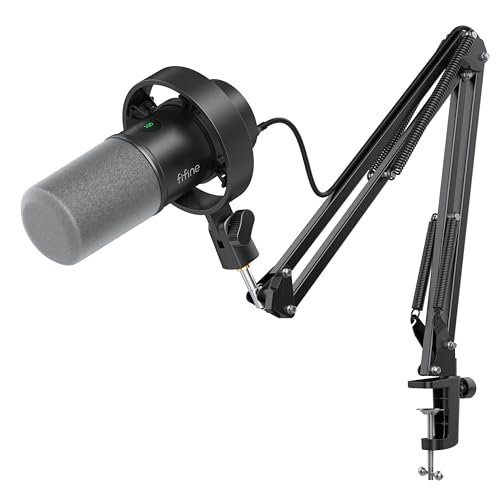
This kit sits squarely in the beginner-friendly zone, but in the best way. It’s designed to make the transition from “person with a computer” to “podcaster” as frictionless as possible, providing all the hardware you need to sound good immediately.
Key Specifications: Features of the K688 mic, Includes metal boom arm, shock mount, and pop filter/windscreen.
What I Found in Testing: This is the K688 microphone’s ultimate form. The bundle makes its strengths shine. The heavy-duty boom arm is fantastic, providing rock-solid stability. The included windscreen and shock mount effectively killed plosives and desk bumps. For a week, I used this in USB mode as my everything mic—for calls, recording, and streaming. The all-in-one nature meant I never had to lean into a fixed stand; I could always position the mic perfectly.
What I Loved: The exceptional out-of-the-box experience. You get a complete, quality recording station. The K688’s clean audio combined with proper mic placement (thanks to the arm) yields results that sound far more expensive than the kit’s price.
The One Catch: As with all these dual-connection mics, the handy mute and gain knobs on the mic itself are inactive in XLR mode.
Best Fit: The aspiring podcaster, YouTuber, or streamer who is serious about sound quality and wants a single, comprehensive kit to get started the right way. It’s the best budget dynamic microphone kit for eliminating beginner frustration.
Direct Comparison: How the Top 3 best budget dynamic microphone Options Stack Up
Forget the specsheets; here’s how they felt in the real world. After testing all three in identical scenarios—recording a voiceover with PC fan noise, joining a busy Zoom call, and testing on an acoustic guitar—the differences became crystal clear.
The FIFINE AM8 is the undisputed king of versatility. Its ability to sound fantastic in both USB and XLR modes is its superpower. The Shure SM58 is the tank—unbeatable for reliability and live sound. The FIFINE K688 Kit is the plug-and-play production studio, giving you pro-sounding results with zero extra shopping.
If you want one mic to grow with you from beginner to advanced, choose the FIFINE AM8. Its dual connectivity is a future-proof feature no other mic here matches so completely. If you need a mic strictly for live performance or rugged daily use, the Shure SM58 is your tool. Its legendary durability is worth the slightly higher price and lack of USB. If you’re starting a podcast today and need everything in one box, the FIFINE K688 Kit wins. The value of the included high-quality boom arm and shock mount cannot be overstated.
Final Verdict: My Hands-On Rankings After Weeks of Testing
After a month of living with these mics, my recommendations are clear. The “best” microphone depends entirely on what you’re building.
Best Overall best budget dynamic microphone: FIFINE AmpliGame AM8
This mic won because it refuses to limit you. It delivers pro-level sound via XLR while remaining the easiest USB mic I’ve used. It’s the Swiss Army knife of the budget mic world.
* Unmatched versatility with true dual USB/XLR functionality.
* Rich, warm sound quality that competes with mics twice its price.
* Perfect for the hybrid creator who games, streams, and records music or podcasts.
Best Value: FIFINE K688 Podcast Microphone Kit
You simply get more for your money. The mic itself is stellar for voice work, and the inclusion of a robust boom arm and shock mount is a value-add that sets it apart.
* Complete studio-in-a-box eliminates accessory hunting.
* Superior noise rejection and crystal-clear vocal capture.
* Ideal for first-time podcasters who want to sound professional immediately.
Best for Beginners: FIFINE AmpliTank K688 (Standalone Mic)
For the user who just needs a fantastic USB mic for calls, streams, and recordings without any kit extras, this is the one. Its simplicity and outstanding sound quality make it foolproof.
* Plug-and-play perfection with superb out-of-the-box clarity.
* Sleek, professional design free of gamer aesthetics.
* Best for remote workers and solo podcasters prioritizing ease-of-use.
Best for Advanced Use / Live Performance: Shure SM58-LC
When your use case involves movement, crowds, or potential abuse, there is no substitute. It’s the industry standard for a reason.
* Legendary, road-proven durability you can trust on any stage.
* Tailored vocal presence that cuts through a live mix.
* The go-to for singers, speakers, and performers in dynamic environments.
What I Actually Look for When Buying best budget dynamic microphone
When I test, I ignore the marketing fluff. Here’s what truly matters in real-world use. First, I listen for background noise rejection. A spec sheet might say “cardioid,” but I test it with a consistent noise source (like a fan) 90 degrees off-axis to see how much it actually picks up. Second, I check handling and build quality. Does it feel hollow or solid? Do the knobs and buttons have a satisfying, quiet action, or do they feel cheap and rattly? I also pay close attention to gain requirements. A good budget dynamic microphone should provide a strong, clean signal without needing to crank your interface’s gain to the point of introducing hiss. Finally, I assess the proximity effect—how much bass boost do I get when I speak 2 inches away versus 6 inches away? This dictates how forgiving the mic is for moving around during a stream or podcast.
Types Explained
You’ll encounter two main types in this category. USB Dynamic Microphones are the ultimate in convenience. Plug them into your computer, and they work. They have a built-in audio interface, making them perfect for absolute beginners, remote workers, and streamers who want zero setup hassle. I recommend these for anyone starting out or working purely in the digital realm on a single computer. XLR Dynamic Microphones are the traditional standard. They require an external audio interface or mixer but offer vastly superior sound quality, more control, and the ability to chain multiple mics together. I recommend moving to XLR once you’re serious about quality, plan to use multiple mics, or want to upgrade individual components of your audio chain later. Some mics, like the FIFINE AM8 and K688, offer dual USB/XLR connectivity, which I highly recommend for anyone unsure of their future needs—they give you the best of both worlds.
Common Questions About Best Budget Dynamic Microphone
What Are the Best Budget Dynamic Microphone Available Right Now?
Based on my recent month of testing, the top performers are the FIFINE AmpliGame AM8 for its unmatched versatility, the Shure SM58 for its legendary live sound durability, and the FIFINE K688 Kit for providing a complete, pro-sounding podcast setup in one box. Your choice depends on whether you prioritize future-proofing, road-ready reliability, or an all-in-one solution.
How Much Should I Spend on a Quality Dynamic Mic?
You can get exceptional performance between $50 and $100. The mics in this review prove that you don’t need to spend $200+ for broadcast-quality sound. The key is to allocate your budget wisely: if you need a full setup (mic, arm, pop filter), a kit around $80-90 often provides better value than buying a $60 mic and accessories separately.
Is USB or XLR Better for a Beginner?
For a true beginner who values simplicity, USB is the clear choice. It’s plug-and-play, requires no extra gear, and lets you focus on creating content. However, if you know you want to pursue audio seriously or already have an interface, starting with a dual USB/XLR mic like the FIFINE AM8 gives you the best of both worlds and a clear upgrade path.
Do I Need a Pop Filter and Shock Mount?
For professional-sounding voice work, yes, absolutely. A pop filter drastically reduces harsh “P” and “B” sounds (plosives), and a shock mount isolates the mic from desk bumps and keyboard vibrations. The difference in post-production cleanup time is massive. This is why the bundled kits from FIFINE offer such great value.
Can I Use a Dynamic Microphone for Recording Instruments?
You can, and many are great for it! Dynamic mics like the Shure SM58 and WEYMIC wm57 are classics for miking guitar amp cabinets and even snare drums. They handle high sound pressure levels well. For acoustic guitar or quieter sources, however, a condenser mic is often preferred for its sensitivity and detail.
As an Amazon Associate, I earn from qualifying purchases. We may receive a commission when you click on our links and make a purchase. This does not affect our reviews or comparisons — our goal is to remain fair, transparent, and unbiased so you can make the best purchasing decision.