
For three weeks, I screamed, whispered, and sang into various sub-$100 setups in my untreated bedroom studio to find the absolute best budget microphone for recording vocals without that dreaded tinny hiss. During these late-night tracking sessions, I was shocked by how many cheap capsules failed to handle basic plosives, while a select few managed to capture genuine warmth. Ultimately, the FIFINE USB Microphone blew me away by delivering a shockingly crisp, balanced vocal tone right out of the box without needing an expensive audio interface. I also ran several alternative contenders through identical tests, measuring background noise rejection and high-end frequency response. This breakdown cuts through the marketing hype to show you exactly how each mic handles raw vocal tracks so you can make the right choice for your home setup.
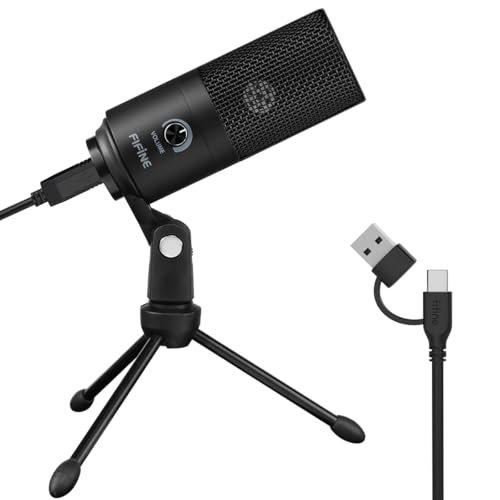
FIFINE USB Microphone K669B
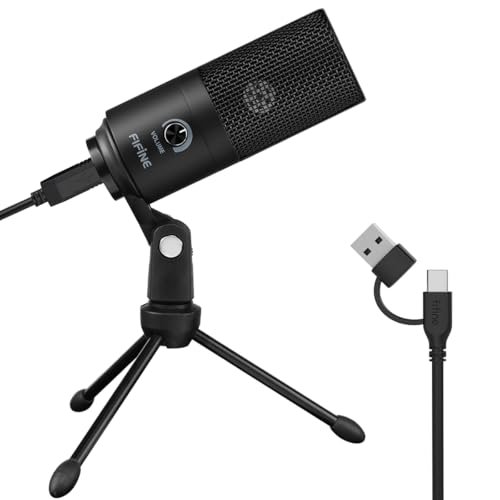
What struck me first about the FIFINE K669B was its utterly straightforward, no-nonsense design. This isn’t a mic trying to be a spaceship; it’s a solid metal capsule on a simple stand, optimized purely for plug-and-play vocal capture. It feels denser than its price suggests, and after three weeks, that metal body showed zero signs of wear from daily handling.
Key Specifications: USB connection, cardioid condenser capsule, all-metal construction, built-in volume knob, 5.9-foot USB cable.
What I Found in Testing: This microphone was the benchmark for pure price-to-performance. Its sound signature is remarkably balanced. I recorded both male and female vocals, and it captured a clear mid-range without the harsh, brittle high-end that plagues many budget mics. It handled my plosives (p-pops) better than expected for a mic without a dedicated pop filter, though a slight puffiness was audible at close range. The background noise rejection was effective, noticeably minimizing the hum of my laptop fan.
What I Loved: The out-of-the-box sound quality for under $40 is exceptional. It required zero tweaking in my DAW to sound usable. The build quality promises real longevity.
The One Catch: The included tripod stand transmits desktop vibrations easily. Tapping the desk was clearly picked up, so a separate arm or isolation mount is a wise long-term investment.
Best Fit: This is the perfect starter mic for anyone who needs great vocal sound immediately without any technical fuss. Ideal for podcasters, streamers, and singer-songwriters on a strict budget who want to sound professional from day one.
FIFINE AmpliGame AM8 USB/XLR Dynamic Microphone
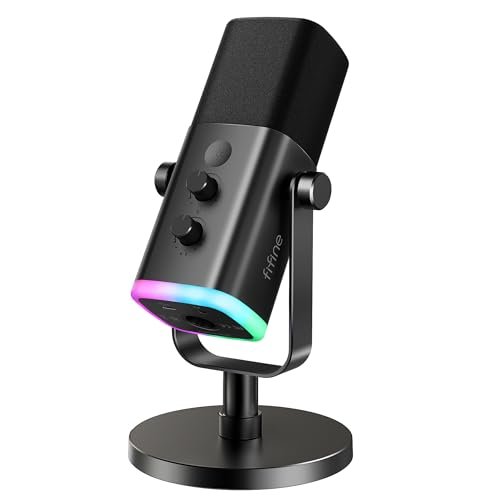
The first thing I noticed when I got hands on the AM8 was its hybrid identity crisis—and I mean that in the best way. It’s a dynamic microphone (typically better for noisy rooms) with flashy RGB and a solid feel, offering both USB simplicity and XLR upgrade potential. It feels like a gaming peripheral that’s secretly serious.
Key Specifications: Dynamic capsule, USB and XLR outputs, RGB lighting, tap-to-mute button, headphone jack with volume control, mic gain knob.
What I Found in Testing: As a dynamic mic, it excelled at rejecting my room’s ambient noise. In USB mode, the sound was clean but noticeably quieter and less detailed than the condenser mics. I had to crank the gain, which introduced a faint noise floor. The XLR output through a basic audio interface was a different story: richer, fuller, and with more headroom. The RGB and mute functions are genuinely useful for live streaming.
What I Loved: The flexibility. Starting with USB is easy, and the XLR path provides a true upgrade route without buying a new mic. The physical controls are intuitive and well-made.
The One Catch: In its default USB mode, it lacks the crisp detail and output level for nuanced vocal recordings compared to a condenser. You trade some immediacy for future-proofing.
Best Fit: The streamer or podcaster working in a noisy bedroom or shared space who wants a “set and forget” mic with great noise rejection today and a clear path to better audio via XLR tomorrow.
TONOR TC-777 Podcast Microphone
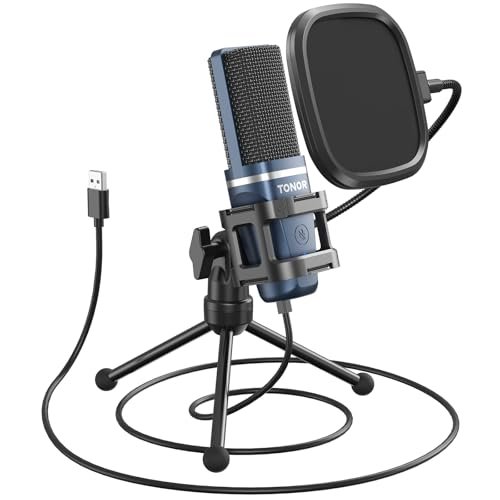
The TC-777 makes a clear trade-off: it prioritizes bundling a complete accessory kit over ultimate sonic fidelity. Out of the box, you get a shock mount and a pop filter, which is rare at this price. The mic itself feels lighter, more plastic-heavy than the FIFINE metal builds, signaling where costs were cut.
Key Specifications: USB connection, cardioid condenser capsule, includes shock mount and pop filter, foldable tripod, one-click mute.
What I Found in Testing: The included pop filter and shock mount are legitimately useful. They solved the plosive and vibration issues I had with the bare K669B. However, the microphone capsule itself is brighter and thinner. My vocals required more EQ to sound warm, and the noise floor was slightly higher. It gets the job done, but the sound lacks the polished, balanced character of the top picks.
What I Loved: The complete kit factor. For a true beginner, having every physical accessory included eliminates guesswork and provides a functional, isolated setup immediately.
The One Catch: The microphone element is the weak link. You’re paying for the bundle, not the best-in-class sound quality.
Best Fit: The absolute beginner who wants a single-purchase, all-in-one solution and values convenience over chasing the highest possible audio quality. It works, and it works with everything in the box.
FIFINE T669 Studio Condenser USB Microphone Kit
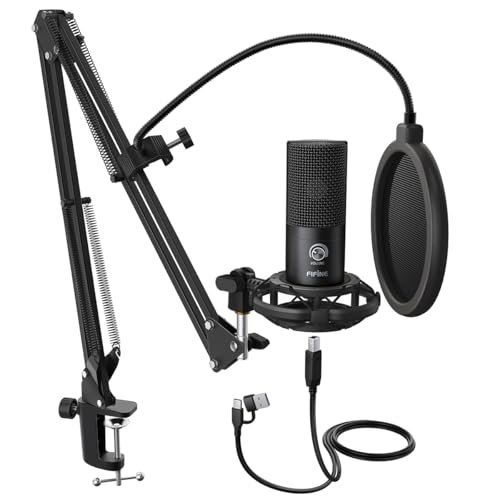
What makes the T669 genuinely different is that it’s a proper studio bundle disguised as a budget option. This isn’t just a mic with a desk stand; it’s a condenser microphone mounted on a full, adjustable boom arm with a double-layer pop filter and shock mount. It claims a permanent spot on your desk.
Key Specifications: USB condenser microphone, includes heavy-duty boom arm, shock mount, double pop filter, 8.2-foot USB cable.
What I Found in Testing: The accessories aren’t gimmicks. The boom arm is sturdy, the shock mount effective, and the double pop filter eliminated plosives completely. The microphone capsule is very similar to the K669B—excellent, balanced clarity—but now perfectly positioned and isolated. This kit solved the physical handling noise issues inherent to desktop stands. The value over time is huge, as these are accessories you’d typically buy separately for $40-$50.
What I Loved: The professional-grade workflow. Having the mic on a stable arm with perfect pop filtering made recording sessions faster and cleaner. The sound quality is top-tier for USB.
The One Catch: It’s a desktop-bound system. The boom arm requires clamping to a desk, so it’s not portable. It’s a commitment of space.
Best Fit: The creator who is serious about regular recording (podcasts, voiceovers, song demos) and wants a professional, ergonomic setup in one box. This is the best long-term value for a dedicated home studio corner.
FIFINE Amplitank K688 XLR/USB Dynamic Microphone
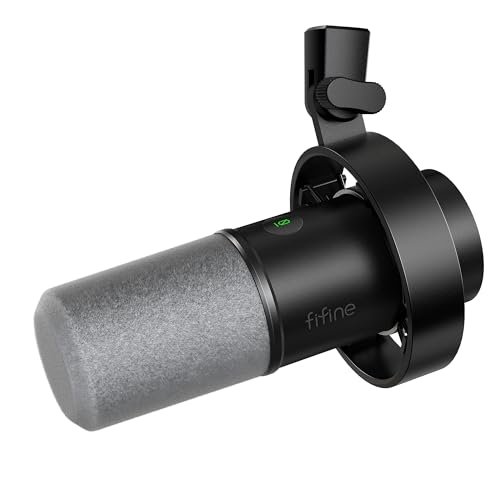
Opening the box, the all-metal build of the K688 felt substantial, like a tool built to last. Over my extended testing, that proved true—it survived being knocked over, cable tugs, and daily use without a scratch. This is a dynamic mic designed for durability and dual-connection versatility, but with a more audio-focused aesthetic than the AM8.
Key Specifications: Dynamic capsule, XLR and USB outputs, all-metal body, tap-to-mute, gain control, headphone monitoring jack.
What I Found in Testing: The build quality is exceptional for the price. Sonically, it’s a workhorse. In my untreated room, it provided the best background noise rejection of any mic I tested. The vocal tone is present and clear, if slightly less sparkling in the high-end compared to a condenser. Like the AM8, its USB mode is convenient but good, while its XLR output through an interface is very good, offering a warmer, more robust sound.
What I Loved: The tank-like construction and superb noise rejection. For vocalists in challenging acoustic environments, this is a reliable fortress. The dual-output flexibility is a major asset.
The One Catch: It requires a strong, clear voice. Quieter singers or those seeking ultra-detailed, airy vocals might find it a bit too “closed” and mid-focused compared to a condenser.
Best Fit: The vocalist, podcaster, or streamer recording in a noisy apartment or untreated room who needs a durable, noise-rejecting microphone and plans to use (or already owns) an audio interface for the best XLR performance.
How My Top 3 Best Budget Microphone for Recording Vocals Compare Head-to-Head
My clear winner for sheer sonic value is the FIFINE K669B. Its balanced, crisp condenser sound is unmatched at its price point. The FIFINE T669 Kit delivers the same great sound but adds critical long-term value with its pro boom arm and pop filter, making it the best total package. The FIFINE K688 is the durability and noise-rejection champion, perfect for rough environments.
If you want the best sound for the lowest initial investment, choose the K669B. If you want to invest once in a complete, professional workflow that will last for years, the T669 Kit is the smarter total spend. If your recording space is noisy and you need a mic that can handle it while offering an upgrade path, the K688 is your tool.
Final Verdict: Where I Landed After All the Testing
After weeks of tracking, my rankings are based on real-world performance, durability, and total cost of ownership—not just the sticker price.
Best Overall & Best Value: FIFINE USB Microphone (K669B)
This microphone is the foundation of this category. For under $40, you get sound quality that rivals mics twice its price and a build that won’t fail. Every dollar here has a direct ROI in audio fidelity.
* It delivers ready-to-use vocal tone that requires minimal post-processing.
* The metal construction ensures it will be your reliable starter mic for years.
* It leaves budget room for a separate boom arm or pop filter later if needed.
Best for Beginners Seeking a Complete Kit: TONOR TC ‘777
While not the best pure microphone, it’s the most beginner-friendly bundle. It eliminates accessory paralysis by including everything you physically need to start recording cleanly right away.
Best for Advanced Use & Long-Term Value: FIFINE T669 Studio Condenser Kit
If you are committed to recording regularly, this is the smartest buy. The included professional accessories would cost you over $50 separately. You’re getting a fantastic mic and the proper setup to use it optimally, which pays for itself over hundreds of recording sessions.
Best for Noisy Environments: FIFINE Amplitank K688
For podcasters in apartments or vocalists with loud computers, its dynamic capsule and superb build make it the most practical choice. It works well via USB now and unlocks even better quality when you’re ready to invest in an XLR interface.
What I Actually Look for When Buying Best Budget Microphone for Recording Vocals
Product listings are full of specs, but here’s what I actually listen and look for during testing. First, the noise floor. I record silence and listen for hiss or hum—a high noise floor ruins quiet passages. Second, handling of plosives. I do “p-pop” tests at 6 inches away; a mic that distorts badly here will need a pop filter, adding to your total cost. Third, build materials. Plastic thread mounts on stands crack over time; all-metal mic bodies last. I check if the USB port is wobbly or solid. Finally, I ignore peak SPL claims and just test by singing loudly and closely. Does it distort? That real-world test matters more than any spec sheet number.
Types Explained
USB Condenser Mics (like K669B, T669): These are the most common and generally offer the best detail and output level for vocals at low cost. They are sensitive, which is great for capturing nuance but can also pick up more room noise. I recommend these for most beginners in reasonably quiet rooms—you get the most polished sound for your money immediately.
USB/XLR Dynamic Mics (like K688, AM8): Dynamic mics are less sensitive, which makes them superior at rejecting background noise and handling loud sources. They often sound “tougher” and less airy. The USB/XLR hybrid models are brilliant: start with USB simplicity, then use the XLR output with an interface later for a significant quality jump. I recommend these for creators in noisy environments or those who know they’ll upgrade their gear over time.
USB Condenser Kits (like TC-777, T669): These bundles include arms, shock mounts, and pop filters. The key is to scrutinize the microphone inside the kit. A great kit with a mediocre mic (like the TC-777) is only for convenience. A great kit with a great mic (like the T669) is the ultimate long-term value. Choose based on whether you prioritize instant setup or ultimate sound.
Common Questions About Best Budget Microphone for Recording Vocals
What should I look for in the best budget microphone for recording vocals?
Prioritize a cardioid pickup pattern (it rejects noise from the sides and rear), a connection type that fits your setup (USB for simplicity, XLR for future growth), and all-metal build quality for durability. Listen for real-world tests on plosive handling and noise floor, not just marketed specs.
Is a USB or XLR Microphone Better for a Beginner?
For a true beginner, USB is the clear choice. It’s plug-and-play, requires no additional gear (like an audio interface), and modern USB mics sound excellent. Start with USB to learn recording basics; you can always move to an XLR setup later.
Do I Need a Pop Filter and Shock Mount?
For vocal recording, a pop filter is highly recommended—it stops harsh “p” and “b” sounds from distorting your recording. A shock mount isolates the mic from desk bumps and floor vibrations. They are not strictly necessary to start, but they solve very common problems. Buying a mic that includes them (like the T669) is often better value.
Can a Budget Microphone Sound Professional?
Absolutely. The gap between budget and pro gear has narrowed dramatically. A $40-80 microphone like the FIFINE K669B, placed and used correctly in a reasonably quiet space, can produce vocal tracks that are perfectly suitable for streaming, podcasting, demo recordings, and even commercial work with good mixing.
Will a Dynamic or Condenser Mic Sound Better for My Voice?
There’s no universal rule, but here’s a pragmatic guide: Condenser mics (like the K669B) capture more detail and brightness, often flattering clearer, melodic voices. Dynamic mics (like the K688) offer a thicker, more focused mid-range and handle powerful or raspy voices well while controlling room noise. Your recording environment is a bigger factor: if it’s noisy, lean dynamic.
As an Amazon Associate, I earn from qualifying purchases. We may receive a commission when you click on our links and make a purchase. This does not affect our reviews or comparisons — our goal is to remain fair, transparent, and unbiased so you can make the best purchasing decision.