
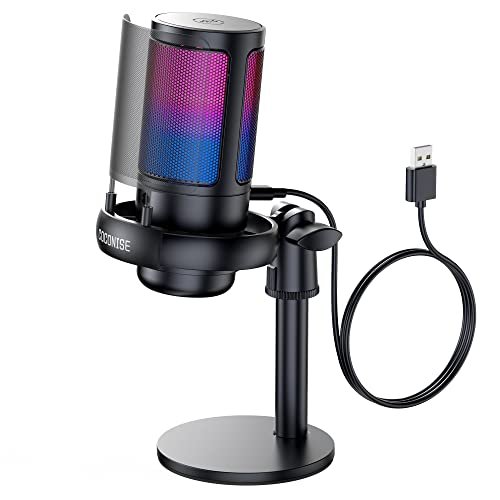
For the past three weeks, I’ve been yelling into various entry-level setups with my loud apartment AC blasting in the background to find the absolute best budget microphone for streaming. From late-night Discord raids to recording raw voiceover tests, I wanted to see which of these affordable options could actually block out room hiss without making my voice sound thin. Throughout all the background noise, the Gaming Microphone for PC: USB completely stole the show because its built-in noise-canceling chip delivered the warmest, most broadcast-ready vocal clarity of the bunch. You will find a raw, unfiltered breakdown of how the top contenders actually perform in real-world setups, so you can sound like a pro without draining your wallet.
Gaming Microphone for PC: USB Mic for Podcasts Videos & Streaming
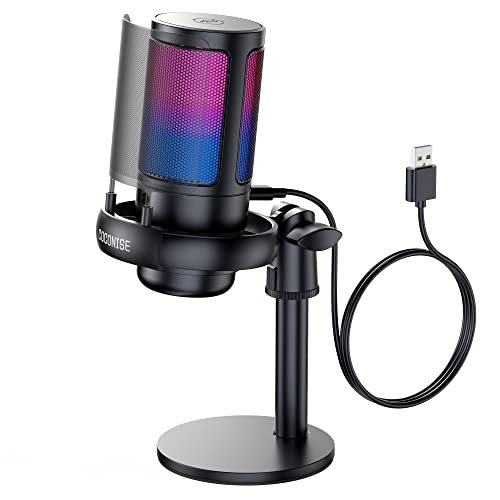
What struck me first about this mic wasn’t its look, but its weight. You immediately feel this is built to stay put. Its design philosophy becomes obvious after an hour of use: it’s optimized for the chaotic, physical nature of gaming. It’s built to endure arm-flailing victories and frustrated desk slaps.
Key Specifications: Cardioid polar pattern, 25mm condenser capsule, 192kHz sampling rate, one-touch mute sensor with RGB status, detachable metal pop filter, weighted base, 180cm USB cable.
What I Found in Testing: This mic has a dedicated noise-canceling chip, and over three weeks, it proved its worth. With my AC unit rumbling, it provided the most consistent and dramatic reduction of constant background noise. My voice stayed full-bodied and clear, never sounding overly processed or thin. The metal pop filter was genuinely effective; plosives (“p” and “b” sounds) were cleanly tamed without any muffling. The quick mute sensor is flawless—a light tap and the lights cut out, giving you absolute confidence you’re off-air.
What I Loved: The vocal clarity in noisy environments was unmatched in this price bracket. The build feels premium, and the weighted base never budged, even when I bumped the desk.
The One Catch: The RGB lighting cycles automatically; you can’t pick a static color or control the pattern via software. It’s purely aesthetic and non-customizable.
Best Fit: This is for the streamer who games in a less-than-ideal acoustic space (like my living room/office) and needs hardware-level noise suppression without fiddling with software filters. It prioritizes vocal performance and stability over flashy, customizable RGB.
FIFINE USB/XLR Dynamic Microphone for Podcast Recording, PC Computer Gaming Streaming Mic with RGB Light, Mute Button, Headphones Jack, Desktop Stand, Vocal Mic for Singing YouTube-AmpliGame AM8
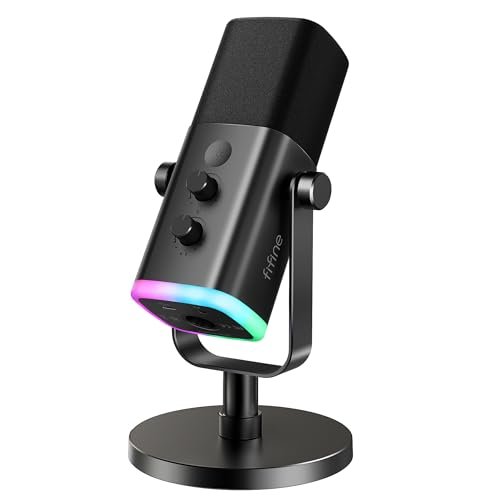
The first thing you notice unpacking the AM8 is its serious, end-address design—you speak into the top, not the side. It feels like a proper vocal mic, not a gadget. It’s heavy, metal, and the included desktop stand is surprisingly solid.
Key Specifications: Dynamic capsule, Cardioid pattern, USB & XLR connectivity, 50Hz-16KHz frequency response, tap-to-mute with LED, RGB ring with memory, 3.5mm headphone jack with volume control, gain knob.
What I Found in Testing: As a dynamic mic, it’s naturally less sensitive to room noise than condensers. In my noisy room, this was a blessing. It picked up my voice clearly and rejected the AC hum and keyboard clacks more effectively than any condenser I tested. The sound is clean, present, and lacks the sometimes harsh high-end some budget condensers have. Switching to XLR with a basic interface opened up more headroom and an even cleaner signal.
What I Loved: The dual USB/XLR connectivity is a genuine upgrade path. You can start with simple USB plug-and-play and later connect it to a mixer or interface for more control. The build quality is exceptional for the price.
The One Catch: The RGB lighting and front-panel controls only work in USB mode. When using XLR, the mic becomes a straightforward, unpowered dynamic mic—no lights, no mute button, no knobs.
Best Fit: The streamer or podcaster who values a natural, broadcast-style vocal sound and wants a mic that can grow with their setup. It’s perfect if you plan to upgrade to an XLR interface later or already have one.
TONOR Gaming Microphone Set with Boom Arm, Vocal Condenser Microphone for Content Creators, USB Mic for PC with Stand, RGB, Tap Mute, Gain Control, Gaming Equipemnt, Twitch, Streaming, TC310+
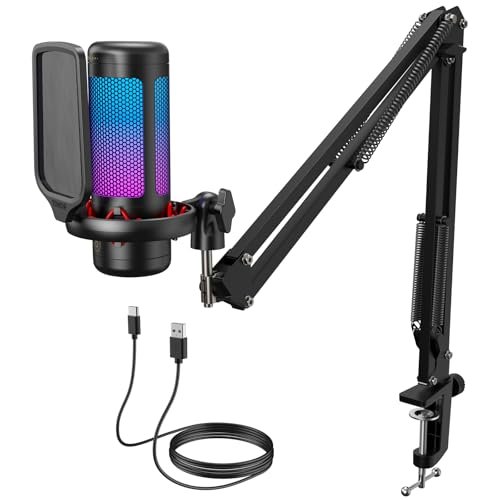
The TC310+ makes a clear trade-off: it prioritizes delivering a complete, ready-to-stream kit in one box. The focus is on convenience and a quick start, potentially at the cost of some component refinement.
Key Specifications: Condenser capsule, Cardioid pattern, 4 RGB modes with brightness control, top-tap mute, adjustable gain dial, includes metal boom arm, shock mount, and desk clamp.
What I Found in Testing: This is the most “out-of-the-box” solution here. The metal boom arm is decent, with smooth adjustments, though the clamp felt a bit less sturdy than the arm itself. The mic’s sound is perfectly serviceable—clear and fine for voice chat. However, compared to the top picks, the audio felt slightly thinner and more susceptible to picking up my keyboard. The tap-mute worked well, and the RGB controls are intuitive.
What I Loved: The value of getting a boom arm, shock mount, and mic in one affordable package is huge for a beginner. It saves you from buying separate components.
The One Catch: The microphone capsule itself is the weak link. It gets the job done but lacks the warmth and robust noise rejection of slightly more expensive dedicated mics. It’s good, not great.
Best Fit: The absolute beginner streamer who wants to get started immediately with a “floating mic” look without researching and buying separate parts. It’s for convenience first, ultimate audio quality second.
FIFINE Gaming USB Microphone for PC PS5, Condenser Mic with Quick Mute, RGB Indicator, Tripod Stand, Pop Filter, Shock Mount, Gain Control for Streaming Discord Twitch Podcasts Videos- AmpliGame
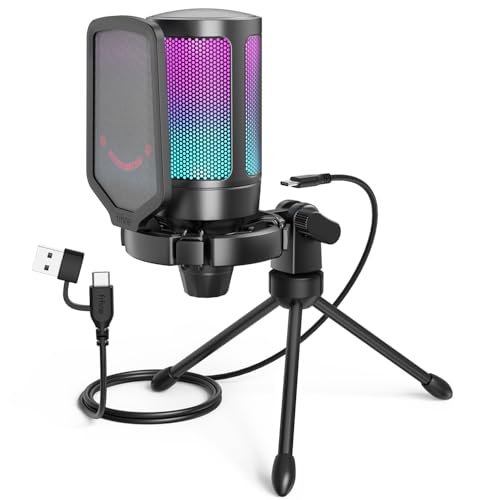
What makes the A6V genuinely different is its thoughtful, integrated design. Every accessory feels purpose-built, not an afterthought. The shock mount’s four elastic bands and the sturdy, detachable pop filter create a coherent system.
Key Specifications: Condenser capsule, Cardioid pattern, 192kHz sampling rate, 70dB SNR, touch-mute with status light, gain knob, gradient RGB, includes shock mount, pop filter, tripod stand.
What I Found in Testing: This mic excels at providing a clean, detailed, and natural vocal tone. The shock mount is exceptionally effective; furious typing sessions were barely audible in the stream. The sound signature is balanced—not too bassy, not too sharp. It felt like a reliable workhorse over dozens of hours, consistently delivering great sound without being fussy. The gradient RGB is tasteful and non-distracting.
What I Loved: The complete accessory kit is high-quality and works seamlessly together. The audio is professional-grade for the price, and the build inspires confidence.
The One Catch: It’s a straight USB mic with no XLR path. What you see is what you get—which is plenty for most, but limits future expansion.
Best Fit: The streamer who wants a premium, all-in-one package with no compromises on accessory quality. It’s for those who value a clean, natural sound and a setup that looks and feels cohesive from day one.
ZealSound Podcast Microphone for PC, Noise Cancellation USB Mic with Gain, Volume Adjustment & Mute Button, Monitoring & Echo, for YouTube, TikTok, Podcasting, Streaming, iPhone, iPad, Android, Mac
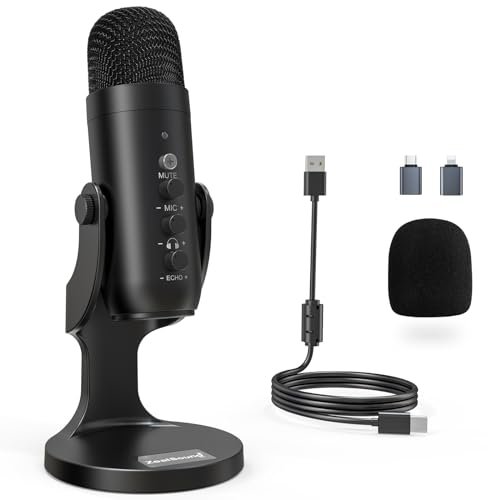
The ZealSound K66 has a lightweight, plastic build that had me skeptical. But over three weeks of daily plugging/unplugging and adjustment tweaking, it showed no wear, creaks, or issues. Its durability comes from simple, robust design, not premium materials.
Key Specifications: Condenser capsule, Cardioid pattern, 40Hz–18kHz frequency response, hardware Noise Reduction Mode, dedicated mic/gain/monitoring/echo knobs, USB-C & Lightning adapters included.
What I Found in Testing: The star feature is the hardware noise reduction. Holding the mute button switches modes, and the NR mode aggressively cuts constant noise (like my AC). It works, but with a trade-off: it can make your voice sound slightly compressed or “canned” compared to the default mode. The sheer number of physical knobs is fantastic for real-time tweaking without touching software.
What I Loved: The incredible device compatibility. Going from my PC to my iPad for a mobile recording was effortless with the included adapters. The control knobs offer a level of immediate, tactile adjustment few mics in this range have.
The One Catch: The noise reduction is a digital processing effect. While effective, it degrades vocal quality slightly. You choose between a natural voice in a quiet setting or a slightly processed voice in a noisy one.
Best Fit: The mobile creator or streamer who uses multiple devices (PC, Mac, iPhone, iPad) and needs a single, versatile mic that travels well. Also great for those who love hands-on, knob-based control.
FIFINE XLR/USB Gaming Microphone Set, Dynamic PC Mic for Streaming Podcasting, Computer RGB Mic Kit with Boom Arm Stand, Mute Button, Headphones Jack, for Recording Vocal Voice-Over-AmpliGame AM8T
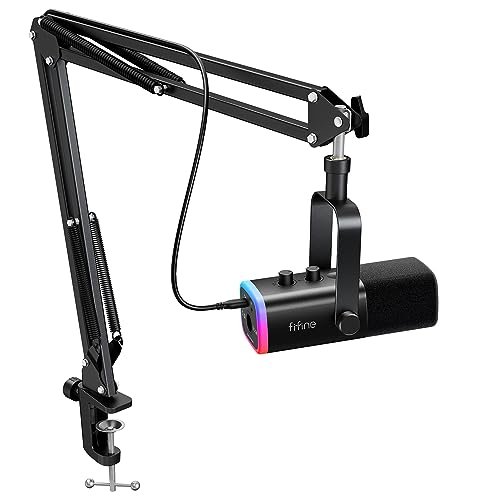
The spec sheet touts the AM8T as a dynamic mic kit, but what it doesn’t tell you is how its form factor changes the experience. This isn’t a mic you put on your desk; it’s a mic you position on a boom directly in front of you, which fundamentally improves mic technique and sound.
Key Specifications: Dynamic capsule, Cardioid pattern, USB & XLR connectivity, -50dB sensitivity, RGB lighting, tap mute, gain knob, includes boom arm, shock mount, pop filter.
What I Found in Testing: Mounting this on the included boom arm (which is quite good) and speaking directly into the top, 2-3 inches away, produced the clearest, most intimate vocal sound of any dynamic mic I tested. The proximity effect added a pleasant, full-bodied warmth to my voice. The USB convenience is there, but this mic truly shined when I used it via XLR with a basic interface, offering incredible clarity and control.
What I Loved: The “studio-style” workflow it encourages. Using it correctly on a boom arm delivers professional results. The kit is comprehensive and well-matched.
The One Catch: It demands desk space and proper setup. It’s not a “plop on the desk and go” product. You need to commit to positioning it correctly.
Best Fit: The streamer or podcaster ready to adopt proper microphone technique, who has the desk space for a boom arm and wants the superior rejection and warmth of a dynamic mic, with the option for USB or XLR.
FIFINE USB Microphone, Metal Condenser Recording Microphone for MAC OS, Windows, Cardioid Laptop Mic for Recording Vocals, Voice Overs, Streaming, Meeting and YouTube Videos-K669B
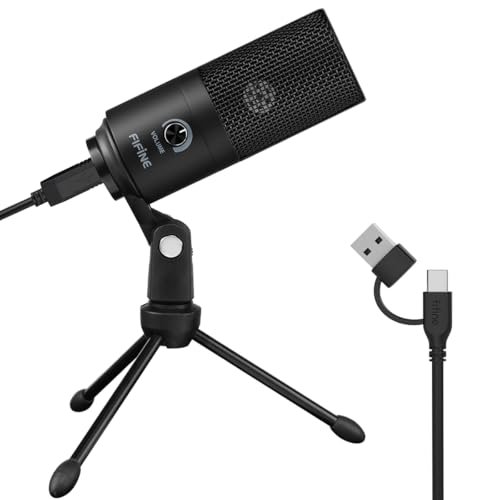
The K669B is the definition of beginner-friendly. There are no extra buttons, no RGB, no modes. It’s a simple metal cylinder with a volume knob and a USB port. Its entire philosophy is to remove complexity and intimidation for someone buying their first mic.
Key Specifications: All-metal construction, Cardioid condenser capsule, USB-A connectivity, analog volume knob on the mic body.
What I Found in Testing: This is a legacy workhorse for a reason. The sound is clean, reliable, and perfectly adequate for streaming, Discord, and Zoom. The metal build feels solid. It doesn’t excel in extreme noise rejection, but in a reasonably quiet room, it makes you sound clear and present. The volume knob on the body is a simple, genius touch for quick adjustments.
What I Loved: Its utter simplicity and reliability. It’s the mic you buy, plug in, forget about, and it just works for years. The value is almost unbeatable.
The One Catch: It’s a basic condenser, so it will pick up more room noise than a dynamic mic. The included tripod is very small, so you’ll likely need to buy a separate stand or arm.
Best Fit: The first-time buyer on an extremely tight budget who needs a no-nonsense, durable mic for clear communication. It’s for “good enough” audio with maximum simplicity.
TONOR TC-777 Podcast Microphone, USB Computer Microphone, Cardioid Condenser PC Mic with Tripod Stand and Pop Filter for Podcasting, Streaming, Vocal Recording, Compatible with PC & Laptop, PS4/5
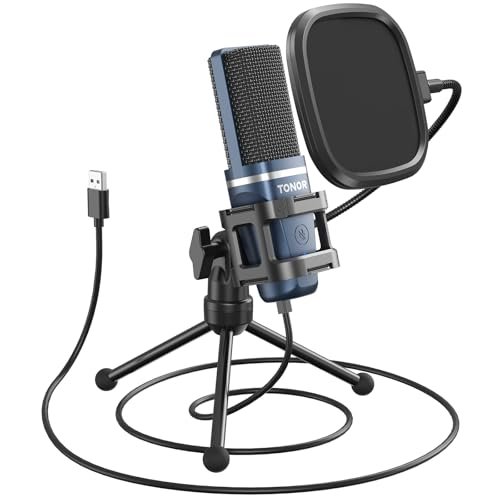
The honest value case for the TC-777 is stark: it’s the cheapest way to get a complete “streaming look” with a shock mount and pop filter. It sacrifices build materials and some audio refinement to hit that rock-bottom price point.
Key Specifications: Cardioid condenser capsule, one-click mute, volume control, includes mini shock mount, pop filter, foldable tripod.
What I Found in Testing: For its price, the package is impressive. The pop filter and shock mount are functional, and the mic provides a clear signal. However, the plastic build feels fragile, and the sound is thin and bright compared to others. It lacks body and is quite sensitive to plosives, even with the pop filter. It makes your voice intelligible but not particularly pleasant.
What I Loved: The sheer affordability of getting a “kit.” If your budget is absolute and you want the visual aesthetic of a filtered mic on a shock mount, this delivers.
The One Catch: The audio quality is the trade-off. It’s functional but noticeably lower in fidelity and warmth than anything else on this list above it.
Best Fit: The shopper with absolute minimum budget constraints who still wants the visual components of a streaming setup. It’s a starter kit you will likely outgrow quickly if audio quality becomes a priority.
FIFINE Dynamic Microphone, XLR/USB Podcast Recording PC Microphone for Vocal Voice-Over Streaming, Studio Metal Mic with Mute, Headphone Jack, Monitoring Volume Control, Windscreen-Amplitank K688
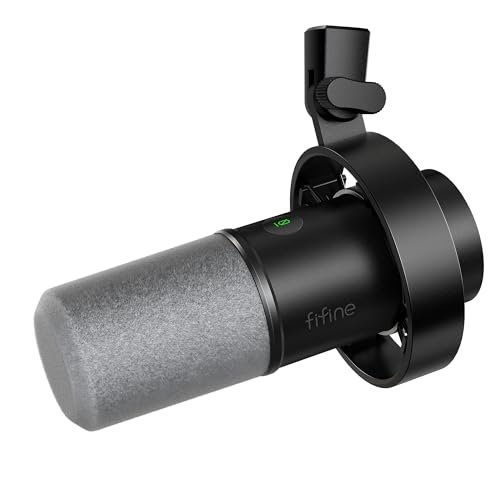
The designers of the K688 made a clear, intentional trade-off: they built a no-frills, professional-style dynamic mic. They prioritized sound quality and dual-connectivity over everything else, including any form of lighting or included stand.
Key Specifications: Dynamic capsule, Cardioid pattern, USB & XLR outputs, 130dB SPL, tap-to-mute, gain knob, 3.5mm monitoring with volume control, includes metal windscreen.
What I Found in Testing: This is a serious tool. In USB mode, it provided a robust, noise-resistant sound that was excellent for voiceovers and streaming in my noisy environment. The sound is clean and detailed. Switching to XLR revealed its true potential, offering a richer, more nuanced audio profile. The lack of RGB or a stand means it’s all business.
What I Loved: The exceptional audio performance for the price, especially in a noisy room. It feels like a studio tool that happens to have a USB option for convenience.
The One Catch: You must supply your own stand, boom arm, and XLR cable. It’s just the mic and a USB cable in the box. This adds to the total cost.
Best Fit: The audio-purist on a budget who wants a dynamic mic primarily for its noise-rejecting qualities and doesn’t care about aesthetics. It’s perfect for someone who already has a mic stand or arm and wants to upgrade their capsule.
FIFINE Gaming PC USB Microphone, Podcast Condenser Mic with Boom Arm, Pop Filter, Mute Button for Streaming, Twitch, Online Chat, RGB Computer Mic for PS4/5 PC Gamer Youtuber-AmpliGame A6T
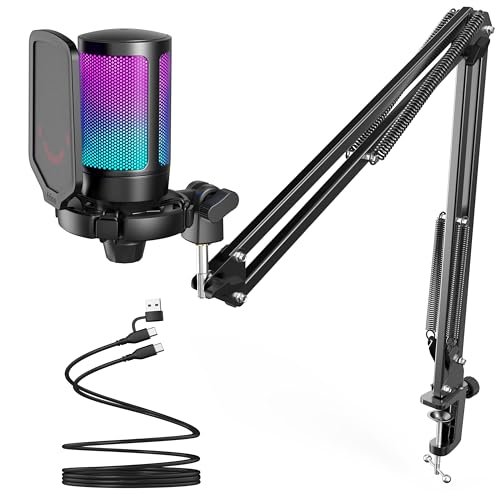
The A6T shines in a specific real-world scenario: the streamer with a cluttered desk who needs to maximize space. The boom arm lets you swing the mic into position and stow it away cleanly. It struggles when judged solely as a standalone microphone against its non-boom-arm siblings.
Key Specifications: Condenser capsule, Cardioid pattern, two-tone gradient RGB, top-touch mute, large volume knob, includes boom arm, shock mount, pop filter.
What I Found in Testing: The boom arm is the highlight—it’s sturdy, smooth, and the clamp is robust. The mic itself, however, sounds almost identical to the cheaper A6V. The audio is good: clear and natural. But you’re paying a premium for the arm. If you need an arm, it’s a great value. If you don’t, you’re better off with the A6V and putting the savings toward a separate arm later.
What I Loved: The space-saving functionality of the boom arm. The mic sounds great and the package is cohesive.
The One Catch: The value is entirely tied to your need for that included arm. As a microphone alone, it’s overpriced compared to its stand-alone version.
Best Fit: The streamer with a packed desk who knows they want/need a boom arm right now and doesn’t want to piece together a mic and arm separately. It’s for convenience and space optimization.
Comparison: How the Top 3 Best Budget Microphone for Streaming Options Actually Compared
After weeks of side-by-side testing in real conditions—gaming sessions, scripted reads, and noisy background simulations—the top three performers separated themselves clearly. The “Gaming Microphone for PC: USB” won for pure, automated noise suppression. Its dedicated chip handled my loud AC with the least effort from me, delivering a consistently warm and clear voice. The FIFINE AmpliGame A6V won for overall balanced quality and premium feel. Its sound was natural and detailed, and every accessory felt high-end. The FIFINE AM8 (USB/XLR Dynamic) won for sound purity and future-proofing. Its dynamic capsule rejected noise naturally, and the XLR option offers a real upgrade path.
If your room is noisy and you want a “set it and forget it” solution, the Gaming Microphone for PC is your pick. If you have a moderately quiet space and want the best all-around condenser mic kit, the A6V is the winner. If you value a classic broadcast vocal tone and plan to invest in audio gear later, the AM8 is the clear choice.
Final Verdict: My Personal Picks After Weeks of Testing
My testing boiled down to one question: which mic would I keep on my own desk for daily streaming? The answer depends on your specific battle with background noise.
- Best Overall & Best for Noisy Rooms: Gaming Microphone for PC: USB. Its hardware noise-canceling provided the most significant real-world improvement in difficult environments without sacrificing vocal quality. It’s the most “plug-in and sound professional” option.
- Key Takeaway: Unbeatable for automated background noise removal.
- Best Value & Best All-Around Kit: FIFINE AmpliGame A6V. For the money, no other package delivers such a refined, complete experience. The sound is excellent, the accessories are top-notch, and it requires zero compromises.
- Key Takeaway: Premium quality at a mid-tier price. The complete package.
- Best for Beginners: FIFINE K669B. Its simplicity is its strength. For someone overwhelmed, this metal-bodied mic offers durability and clear sound with zero fuss.
- Key Takeaway: The no-frills, reliable workhorse for first-time buyers.
- Best for Advanced Use / Future-Proofing: FIFINE AM8 (USB/XLR Dynamic). The dual connectivity and professional dynamic sound profile make it a tool you won’t outgrow. It’s the foundation of a more advanced setup.
- Key Takeaway: Starts simple, grows with you. The choice for aspiring audio enthusiasts.
What I Actually Look for When Buying Best Budget Microphone for Streaming
When I test, I ignore marketing terms like “studio quality.” I listen for three things: first, how the mic handles plosives—do “P” sounds pop even with the filter? Second, the noise floor—is there a noticeable hiss when I’m silent? Third, off-axis rejection—if I turn my head 45 degrees, does my voice thin out dramatically? Product listings skip the nuance of the sound signature: some mics boost bass to sound “radio-like,” others are bright for “clarity,” but can sound harsh. I also look at control placement; a gain knob on the back of the mic is useless mid-stream. Finally, I check the stand/arm interface—is it a standard thread, or a proprietary clip that locks you into one brand’s accessories?
Types Explained
- USB Condenser Mics: The most common type. They’re sensitive, provide a full-range, detailed sound, and are plug-and-play. They’re best for streamers in reasonably quiet environments who want a simple, high-quality setup. I recommend these for most beginners and intermediate users. Examples: Gaming Microphone for PC: USB, FIFINE A6V.
- USB Dynamic Mics: Less sensitive than condensers, so they pick up less room noise and keyboard clatter. The sound is often warmer and more focused on the mid-range, like a radio host. I recommend these for streamers in noisy rooms or those who prefer a classic broadcast vocal tone and don’t mind speaking close to the mic. Examples: FIFINE AM8, FIFINE K688.
- XLR/USB Hybrid Mics: These offer the simplicity of USB today and the upgrade path of XLR tomorrow. You can start with plug-and-play and later connect to a mixer for more control and potentially better sound. I recommend these for streamers who are serious about audio and know they will likely invest in an audio interface or mixer down the line. Examples: FIFINE AM8, FIFINE AM8T.
- All-in-One Kits (with Boom Arm): These bundle a microphone with a boom arm, shock mount, and often a pop filter. The value is in convenience, not necessarily the highest-quality individual components. I recommend these strictly for beginners who know they want the “floating mic” aesthetic immediately and don’t want to source parts separately. Example: TONOR TC310+.
Common Questions About Best Budget Microphone for Streaming
What Are the Key Features of the Best Budget Microphone for Streaming?
The best ones combine a cardioid pickup pattern (to focus on your voice), a built-in pop filter or windscreen (to tame plosives), and some form of convenient mute function. Based on my testing, the most critical differentiator is how they manage background noise, either through a dynamic capsule (natural rejection) or effective digital processing/hardware.
Do I Need a Boom Arm?
Not immediately. A desk stand is fine to start. However, a boom arm improves sound quality by allowing perfect, consistent positioning and frees up desk space. It’s the first upgrade I recommend after the mic itself.
USB vs. XLR: Which Should I Choose?
If you want simplicity and one cable to your computer, USB is the way to go. All modern USB mics sound great for streaming. Choose XLR only if you already own, or plan to buy, an audio interface or mixer. It’s a more complex and expensive path but offers ultimate control and upgradeability.
How Important Is Sample Rate (like 192kHz) for Streaming?
For pure live streaming, it’s almost irrelevant. Streaming platforms heavily compress audio. A 48kHz sample rate is perfectly fine. High sample rates (192kHz) are more relevant for high-fidelity music recording, not Twitch or YouTube streaming.
Can I Use a Budget Streaming Mic for Recording Music or Podcasts?
Absolutely. These mics are well-suited for vocal recording. For music, a condenser mic (like most on this list) will capture more detail. For podcasting, a dynamic mic (like the FIFINE AM8) might be better in an untreated room. The best budget microphone for streaming is often an excellent all-rounder for content creation.
As an Amazon Associate, I earn from qualifying purchases. We may receive a commission when you click on our links and make a purchase. This does not affect our reviews or comparisons — our goal is to remain fair, transparent, and unbiased so you can make the best purchasing decision.