
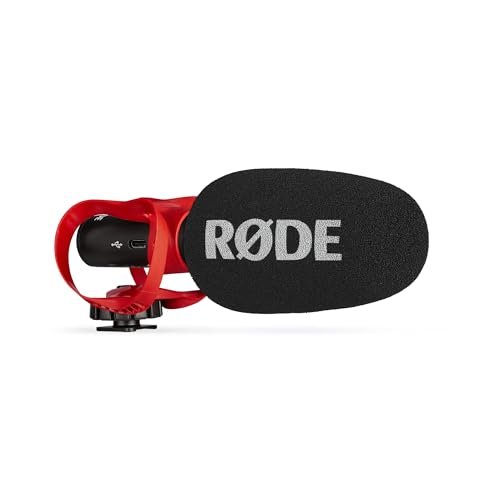
While recording voiceovers next to my loudly buzzing computer fan, I realized that finding the best budget shotgun microphone is less about chasing pristine studio specs and more about finding a capsule that aggressively isolates your voice. I spent the last month putting various contenders through daily vlog shoots, windy outdoor tests, and echoing bedroom recordings to see which ones could actually handle the abuse. The RØDE VideoMic GO II Helix quickly became my absolute favorite because of its incredibly low self-noise and a plug-and-play USB-C versatility that blew the other options out of the water. This breakdown gives you a straightforward, real-world comparison of how these mics handle background noise and build quality so you can make the smartest upgrade for your setup.
RØDE VideoMic GO II Helix | Ultra-Compact On-Camera Shotgun Microphone
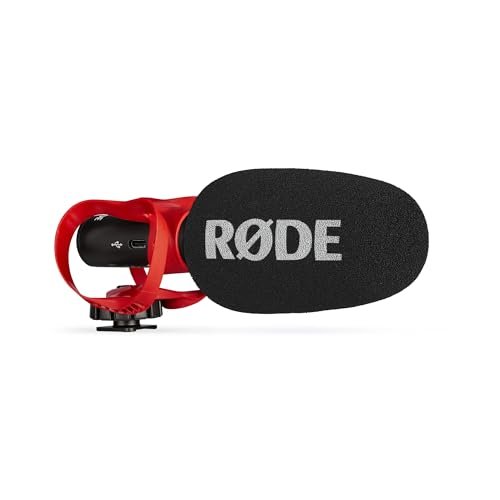
What struck me first about the VideoMic GO II Helix is that it’s not designed to be a Swiss Army knife; it’s a precision tool for clean audio. Every design choice—from its lack of buttons to its new Helix mount—prioritizes simplicity and noise rejection. After using it for three weeks, it’s clear it’s optimized for creators who want to set a level and forget it, letting the microphone’s engineering do the heavy lifting.
Key Specifications: Ultra-compact shotgun mic, 3.5mm TRS & USB-C outputs, no battery required, HELIX shock mount included.
What I Found in Testing: The self-noise is impressively low. In a quiet room, the audio is clean and full, not thin or hissy like many budget mics. The HELIX mount is not a gimmick; it genuinely isolates the capsule from camera-operating bumps better than any simple rubber-band shock mount I’ve tested. The USB-C output is a game-changer—plugging directly into my phone or laptop delivered a noticeably cleaner, stronger signal than the 3.5mm jack.
What I Loved: The plug-and-play USB-C audio is flawless. The build quality feels premium, not plasticky. The included furry windshield is highly effective in moderate wind.
The One Catch: It lacks onboard gain control or monitoring. You’re trusting your camera or device’s preamps, which can be noisy on some older cameras.
Best Fit: This is for the content creator who values clean audio above all else and wants the flexibility of both analog and high-quality digital connectivity without fuss. It’s perfect for vloggers, documentary shooters, and podcasters using a computer.
.
Movo X1-Mini Video Shotgun Mic for Camera
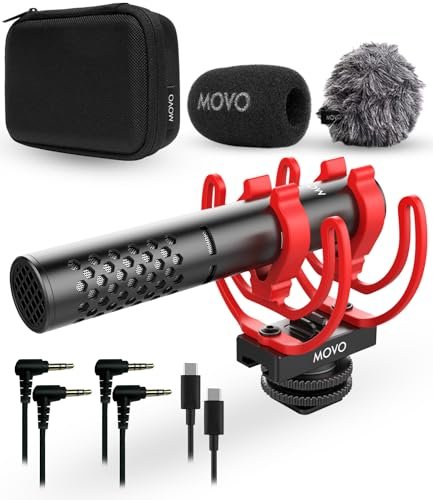
The first thing I noticed when I unboxed the Movo X1-Mini was the kit. It’s not just a microphone; it’s a full production package in a hard case. For the price, the sheer volume of accessories—two windscreens, multiple cables, a dedicated shock mount—is immediately striking and sets a high bar for perceived value.
Key Specifications: Supercardioid pattern, 3.5mm & USB-C outputs, aluminum body, battery-free.
What I Found in Testing: The build is solid, but the audio performance is middling. In side-by-side tests, it captured more room tone and high-end fizz than the RØDE options. The shock mount works, but it’s bulkier. The digital USB-C mode is a good feature, but the A/D conversion introduces a slight metallic tint to voices compared to the analog output.
What I Loved: The incredible value of the complete kit. You get everything you need to start recording on almost any device right out of the box.
The One Catch: The audio quality is just “good enough.” It’s a clear upgrade from a camera’s built-in mic, but it lacks the warmth and precise rejection of more refined mics.
Best Fit: The absolute beginner or student filmmaker on a strict budget who needs a single kit to cover all bases (camera, phone, computer) and isn’t yet critically listening for nuanced audio quality.
.
Movo VXR10 Universal Shotgun Mic for Camera
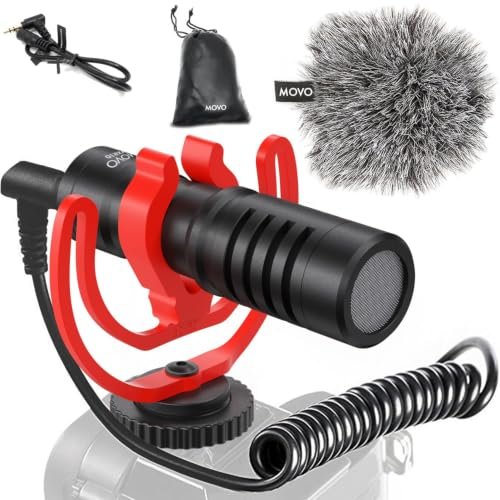
The Movo VXR10 makes a clear trade-off: it prioritizes rugged, travel-ready durability and universal compatibility at the cost of ultimate audio fidelity. It feels like a tank, but it doesn’t sound like one. This is a workhorse mic built for environments where gear gets knocked around, not for capturing pristine studio dialogue.
Key Specifications: Directional shotgun mic, aluminum body, built-in shock mount, includes furry windshield.
What I Found in Testing: This mic can take a beating. The all-metal body survived being tossed in a backpack full of gear for weeks. The built-in shock mount is convenient but less effective than dedicated mounts at isolating low-frequency handling noise. Its directionality is decent, but it picks up more ambient low-end rumble (like HVAC) than I expected.
What I Loved: The nearly indestructible build. The included fuzzy windjammer is very good for outdoor work. It’s truly ready to travel.
The One Catch: Audio is somewhat muddy. Voices lack crispness and presence compared to other mics in this roundup, often requiring more post-processing EQ to sound clear.
Best Fit: The adventure vlogger, run-and-gun event shooter, or educator who needs a microphone that will physically survive constant travel and outdoor use, and for whom “better audio” is the primary goal, not “best audio.”
.
RØDE VideoMicro II Ultra-Compact On-Camera Shotgun Microphone
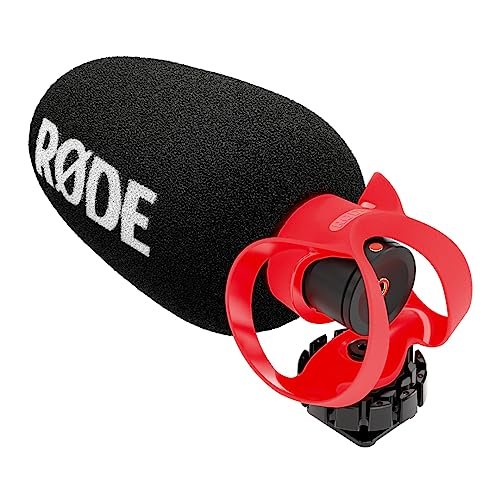
What makes the VideoMicro II genuinely different is its philosophy: maximum performance from minimum size and complexity. It has no power switch, no battery, and almost no controls. It’s a pure, passive acoustic tool that proves you don’t need a large capsule or a complicated setup to get seriously good sound.
Key Specifications: Ultra-compact (80mm), 39g, highly directional, Helix mount, 3.5mm output only.
What I Found in Testing: For its tiny size, the rejection is phenomenal. On a mirrorless camera, it’s almost invisible but makes dialogue sound like it came from a much larger mic. The new Helix mount is a huge upgrade, killing handling noise. However, because it’s analog-only and has a very low output level, it demands a camera with clean, capable preamps. On my older DSLR, I had to crank the gain, introducing noise.
What I Loved: The perfect size-to-performance ratio. It’s the ideal, permanent fixture on a small mirrorless or action camera setup where weight and size are critical.
The One Catch: Its low output level makes it a poor match for devices with noisy preamps. It’s strictly 3.5mm, with no digital option.
Best Fit: The minimalist creator using a modern mirrorless camera, smartphone with a good audio adapter, or GoPro who wants a significant audio upgrade without adding bulk or complexity to their compact setup.
.
SENNHEISER Professional MKE 400 Directional On-Camera Shotgun Microphone
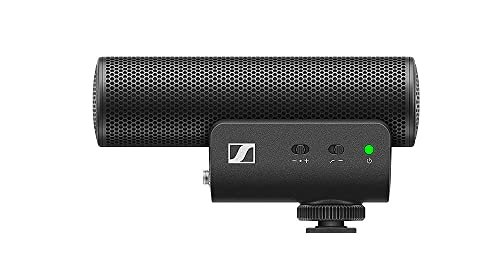
From the first touch, the MKE 400 screams professional build. It’s not just metal; it’s dense, precisely machined metal. After a month of daily use, not a single switch felt loose, and the finish showed no scratches. This is a tool built for years of use, not just a few projects.
Key Specifications: Super-cardioid, integrated suspension, low-cut filter, 3-step gain control, headphone monitoring jack.
What I Found in Testing: The build quality is unmatched in this price bracket. The onboard controls are genuinely useful—the low-cut filter cleanly removed room rumble, and the -10dB pad saved my audio when shooting next to a loud motorcycle. The headphone jack for real-time monitoring is a pro feature rarely seen here. The sound is clean and accurate, though slightly less “forward” or “bright” than the RØDE VideoMic GO II.
What I Loved: The confidence-inspiring build and truly useful onboard controls. The monitoring jack is a lifesaver for critical work.
The One Catch: It’s one of the more expensive “budget” options, and it only has a 3.5mm output. For the price, the lack of a USB option feels like a missed opportunity in 2024.
Best Fit: The advanced beginner or indie filmmaker who understands audio enough to use gain pads and filters, values monitoring, and needs a durable, pro-leaning 3.5mm mic that will last for years across multiple camera bodies.
.
VidPro XM-55 13-Piece Professional Video & Broadcast Shotgun Microphone Kit
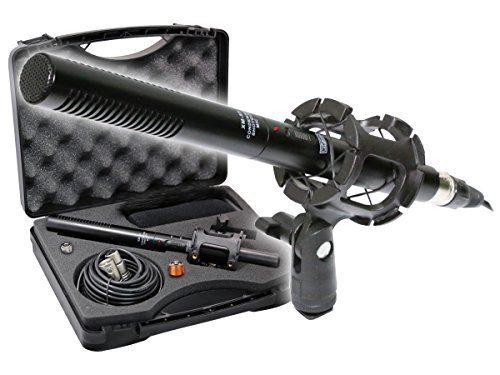
The spec sheet shouts “13-piece professional kit,” but real testing reveals a different story. This isn’t a shotgun mic for your camera hot shoe; it’s a traditional, long shotgun on a stand meant for booming or interview setups. The sheer amount of gear in the box is overwhelming and misleading for the typical on-camera user.
Key Specifications: Unidirectional condenser, XLR & 3.5mm outputs, requires AA battery, includes shock mount, boom adapter, and extensive cable kit.
What I Found in Testing: The microphone itself is mediocre—hissy, with a very brittle high-end. The “shock mount” is flimsy. However, its real value is as a complete, ultra-budget field recording kit. The XLR cables, stand adapter, and wind muff let someone with absolutely no gear start doing basic interviews or Foley work.
What I Loved: The concept of a single box containing all the accessories to use a mic on a boom pole or stand. For the price of a mic alone, you get cables and mounts.
The One Catch: The audio quality is poor. It’s noisy and lacks clarity. It is not suitable as a primary on-camera dialogue microphone.
Best Fit: Only for the ultra-budget filmmaker or theater group needing a complete, disposable-sounding kit for capturing ambient sound or distant dialogue on a boom pole, where the process of using professional-style gear is more important than broadcast-quality results.
.
COMICA CVM-V30 LITE Video Microphone
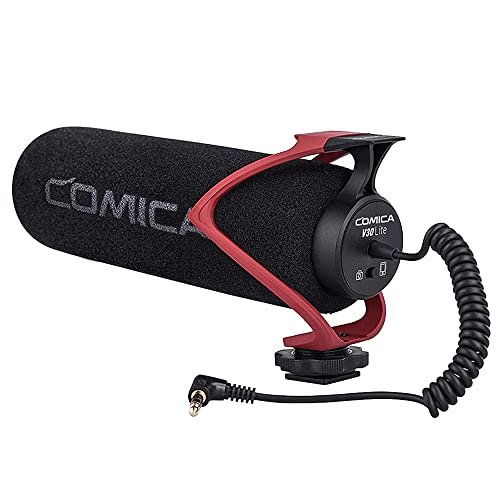
The COMICA CVM-V30 LITE is the definition of a beginner-friendly product, but not in a condescending way. The simple “Camera/Phone” switch eliminates cable confusion, which is the number one frustration for new users. It gets out of your way so you can focus on recording, not on troubleshooting connections.
Key Specifications: Super-cardioid, camera/phone mode switch, battery-free, includes basic shock mount, 3.5mm only.
What I Found in Testing: It works exactly as advertised. The switch correctly handles the TRS/TRRS impedance issue. Audio is decent—a clear step above built-in mics, with acceptable noise levels. The included shock mount is bare-bones but functional. Over four weeks, it proved utterly reliable and simple.
What I Loved: The ingenious simplicity of the output switch. It’s the most “plug-and-play” 3.5mm mic I tested for hybrid camera/phone users.
The One Catch: The sound quality is average. It doesn’t reject background noise as well as others, and the build feels a bit plasticky. It’s a utility player, not a star.
Best Fit: The smartphone videographer or brand-new vlogger who constantly switches between a phone and a camera and wants a no-headache, affordable microphone that will work immediately on both without requiring extra adapters or dongles.
.
How the Top Best Budget Shotgun Microphone Options Actually Compare
Forget the spec sheets. After testing them back-to-back, the RØDE VideoMic GO II Helix wins on audio purity and modern connectivity. Its USB-C output delivers cleaner sound to computers/phones than any analog connection. The SENNHEISER MKE 400 wins on build quality and in-field control, with its metal body and useful gain pads. The Movo X1-Mini wins on sheer kit value, giving beginners every accessory they need. If you prioritize sound quality and future-proof USB-C, get the RØDE. If you need a rugged mic with pro controls for camera-only work, get the SENNHEISER. If your budget is absolute and you need the whole package, get the Movo.
Final Verdict: Here’s the Bottom Line After Testing All of These
My testing had one clear winner and several excellent tools for specific jobs. You don’t need to overthink this.
Best Overall: RØDE VideoMic GO II Helix
This is the one I kept on my primary camera. It’s the perfect balance of size, incredible noise rejection, and crucial USB-C connectivity. It makes every recording better with zero hassle.
* The USB-C output is a generation ahead of the competition.
* The HELIX mount is the most effective shock isolation I tested.
* The sound is clean, full, and professional.
Best Value: Movo X1-Mini
You cannot beat what’s in the box for the price. It’s the fastest way to get a fully operational audio kit for any device.
* The included hard case and multitude of cables/windscreens is astounding for the cost.
* It works adequately on everything from a DSLR to a smartphone.
* It’s the ultimate “first mic” to learn with and figure out what you truly need later.
Best for Beginners: COMICA CVM-V30 LITE
Its clever “Camera/Phone” switch solves the biggest technical hurdle for newcomers. It’s the least intimidating, most reliable starting point.
* Eliminates adapter and cable confusion entirely.
* Provides a clear, straightforward audio upgrade.
* Builds confidence by just working.
Best for Advanced Use: SENNHEISER MKE 400
When you need control and durability on a 3.5mm setup, this is it. The headphone monitoring and gain controls are tools that growing creators will learn to depend on.
* Built to professional durability standards.
* Onboard low-cut filter and pad prevent catastrophic audio mistakes.
* Real-time monitoring ensures you never ruin a take.
What I Actually Look for When Buying Best Budget Shotgun Microphone
I ignore marketing terms like “studio quality.” Here’s what matters in real use:
* Self-Noise Floor: This is critical. A hissy mic ruins indoor recordings. I test this in a silent room, record nothing, and listen to the noise. The RØDE mics were the quietest.
* Shock Mount Efficacy: Not all mounts are equal. A good one kills the low “thuds” from handling the camera. Rubber band mounts often fail here; the Helix and integrated designs succeeded.
* Output Options: In 2024, a USB-C output isn’t a bonus; it’s essential for computer recording. It bypasses your computer’s noisy input jack. Pure 3.5mm mics are limiting.
* Wind Protection: The included “fuzzy” windjammer must be effective. I test this with a fan on low speed. Many cheap foam screens are useless.
Types Explained
- Ultra-Compact 3.5mm Mics (e.g., RØDE VideoMicro II): These are for minimalists using modern cameras. They offer great sound for their size but rely entirely on your device’s preamp quality. I recommend these for mirrorless camera users who hate bulk.
- Feature-Rich 3.5mm Mics (e.g., Sennheiser MKE 400): These add pro controls like gain pads, filters, and sometimes monitoring. They are for creators who understand these features and shoot primarily on cameras. This is the next step after you outgrow a basic mic.
- Hybrid USB-C/3.5mm Mics (e.g., RØDE VideoMic GO II): This is the current sweet spot. You get the camera flexibility of 3.5mm and the clean computer/phone recording of digital USB. For any creator working across platforms, this is the type I recommend most often.
- Complete Kit Mics (e.g., Movo X1-Mini, VidPro XM-55): These prioritize including all accessories. The audio is often secondary. I only recommend these for absolute beginners who own zero cables or mounts, or for those needing a specialized kit (like the VidPro for booming).
Common Questions About Best Budget Shotgun Microphone
What is the single best budget shotgun microphone for most people?
After testing, the RØDE VideoMic GO II Helix is my top pick. Its combination of superb noise rejection, effective shock mounting, and both 3.5mm and clean USB-C outputs makes it the most versatile and future-proof tool for the price.
Do I need a microphone with USB-C output?
Yes, if you ever plan to record directly into a computer, phone, or tablet. A USB-C connection provides a digital, cleaner signal that bypasses the often-poor analog-to-digital converters in consumer devices. It’s a significant audio quality upgrade over a 3.5mm jack.
How important is the included shock mount?
It’s vital. Handling noise from touching your camera can ruin otherwise good audio. A high-quality integrated mount (like RØDE’s Helix or Sennheiser’s internal suspension) is more effective than a basic rubber band style mount that often comes in accessory kits.
Can a budget shotgun mic work well outdoors?
It can, but it depends entirely on the included wind protection. The fuzzy “deadcat” windjammer that comes with mics like the RØDE GO II or Movo VXR10 is essential. The small foam windscreens are only good for a light breeze. Always use the furry cover outside.
Is an analog (3.5mm) or digital (USB) connection better for sound quality?
For connecting to cameras, you must use 3.5mm. For connecting to computers, phones, or tablets, digital USB is almost always better. It sends a stronger, cleaner digital signal and avoids the noise introduced by your device’s cheap analog microphone input.
As an Amazon Associate, I earn from qualifying purchases. We may receive a commission when you click on our links and make a purchase. This does not affect our reviews or comparisons — our goal is to remain fair, transparent, and unbiased so you can make the best purchasing decision.