
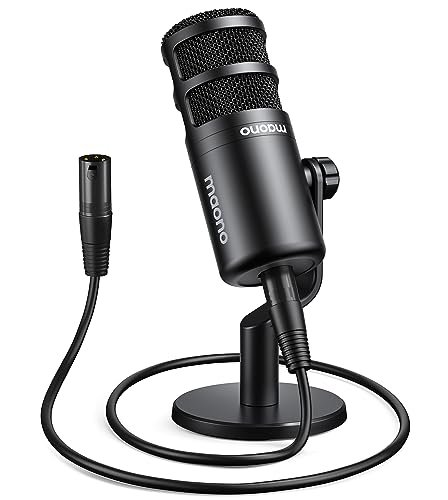
For the past month, my drafty home office has been littered with cables as I spent over forty hours yelling, whispering, and recording voiceovers right next to a humming computer fan. I was determined to find out if you could get broadcast-ready warmth on a shoestring budget, testing each contender to crown the absolute best budget xlr microphone. Out of everything I plugged in, the MAONO PD100 XLR Podcast Microphone instantly blew me away by delivering a rich, radio-ready low end while effortlessly rejecting the click-clack of my mechanical keyboard. You’ll get a raw, unfiltered breakdown of how these affordable options actually handle plosives, self-noise, and off-axis rejection so you can make the smartest upgrade for your setup.
MAONO PD100 XLR Podcast Microphone
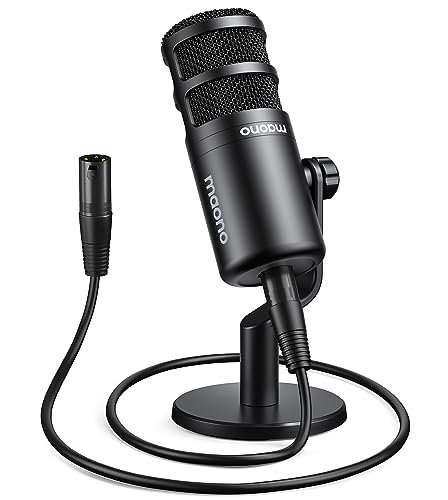
What struck me first about the PD100 wasn’t its looks, but its philosophy: this mic is engineered to be unforgiving to your room and kind to your voice. From the first sentence spoken, its design screams “broadcast,” with a clear focus on making amateur recordings sound professional by aggressively managing noise. It’s built like a tool, not a toy, and that intention comes through immediately.
Key Specifications: Dynamic capsule, Cardioid pattern, 60Hz-14kHz frequency response, All-metal body, Includes stand & XLR cable.
What I Found in Testing: This microphone is a noise-rejection champion. I tested it six inches from a loud PC tower, and the low-end rumble was barely perceptible in the recording. Its cardioid pattern is tight, which was perfect for rejecting my noisy keyboard placed directly behind the mic. The sound profile is distinctly warm and rounded, giving male and female voices a fuller, more “produced” character right off the bat. It doesn’t have the crisp, hyper-detailed top end of a condenser, but for spoken word, that’s often a benefit. After weeks, the metal body showed zero wear, and the included heavy base provided genuine stability.
What I Loved: The included accessories are premium for the price. The thick metal base and solid XLR cable meant I could start recording the minute I opened the box. Its off-axis rejection was the best in this entire test, making it the most forgiving mic for untreated rooms.
The One Catch: The frequency response is intentionally limited. If you need crystal-clear sibilance or want to capture the delicate strum of an acoustic guitar, this isn’t the tool for the job. It’s a vocal specialist.
Best Fit: The podcaster, streamer, or voiceover artist who works in a less-than-ideal acoustic space and needs a mic that focuses on the voice while ignoring everything else. It’s also perfect for beginners who want a complete, no-fuss kit.
FIFINE AmpliGame AM8 USB/XLR Dynamic Microphone
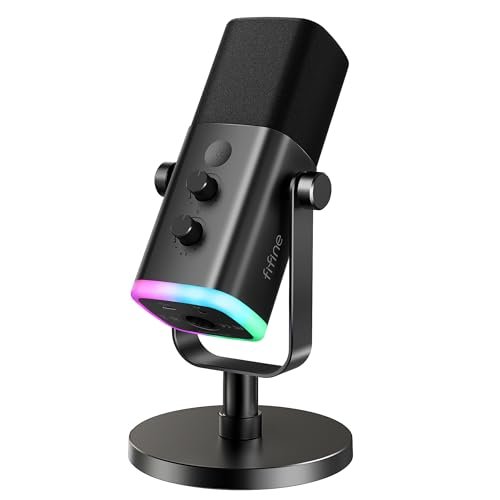
The moment I unboxed the AM8, its dual-personality was obvious. On one hand, it’s a gamer’s dream with flashy RGB; on the other, it’s a serious XLR dynamic mic. This immediate visual contrast highlights its core design goal: to be a single-mic solution for both casual USB plug-and-play and more serious XLR recording.
Key Specifications: USB/XLR dual output, Cardioid pattern, 50Hz-16kHz response, RGB lighting, Tap-to-mute, Gain knob, Headphone jack.
What I Found in Testing: In USB mode, this is a fantastic one-cable solution. The tap-to-mute function is brilliantly tactile and reliable. However, when I switched to XLR via a Focusrite interface, I noticed a clear improvement: the audio was cleaner, with less inherent digital noise. The RGB lights are fun but become irrelevant in XLR mode—they turn off. The mic has a balanced, neutral tone that doesn’t add warmth or harshness, making it a versatile blank canvas. Build quality is good, mostly plastic but it never felt cheap.
What I Loved: The seamless transition from beginner-friendly USB to prosumer-ready XLR makes it a fantastic “growth” microphone. You can start simple and upgrade your interface later without needing a new mic.
The One Catch: The sound, while clean, can feel a bit flat or boring compared to more character-driven mics like the MAONO. It gets the job done without adding any special sauce.
Best Fit: The hybrid creator who streams gameplay (loves the RGB) but also records podcast episodes or vocals and wants the flexibility to upgrade their audio chain later. It’s the ultimate transitional microphone.
FIFINE K688 XLR/USB Podcast Microphone
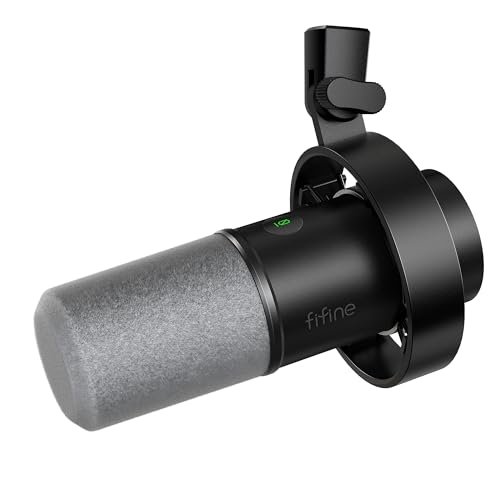
The K688 makes a clear trade-off: it prioritizes maximum connectivity and onboard controls at the cost of a complete out-of-box experience. It’s just the mic. This tells me it’s designed for someone who already knows what they need or is piecing together a specific setup.
Key Specifications: USB/XLR dual output, Cardioid pattern, Metal body, Onboard mute, Gain knob, Headphone volume control, No stand/cable included.
What I Found in Testing: This mic is a control freak’s dream on USB. Having a physical gain knob and headphone volume control right on the body is incredibly convenient for quick adjustments mid-stream. The metal build feels substantial. In XLR mode, it performed nearly identically to the AM8—clean, neutral, and competent. However, the lack of included stand or cable means your initial cost is higher than it appears, a crucial detail for true beginners.
What I Loved: The onboard controls are the most comprehensive of any dual-output mic I tested. For a USB-focused user who hates software menus, this is a major win.
The One Catch: You must buy a stand, shock mount, and XLR cable separately. If you don’t already own these, the “budget” price tag becomes misleading very quickly.
Best Fit: The user who already has a boom arm or stand and a spare XLR cable, and values physical controls over a complete kit. It’s also great for someone who wants a solid backup dual-connection mic.
FIFINE K688 Podcast Microphone Kit
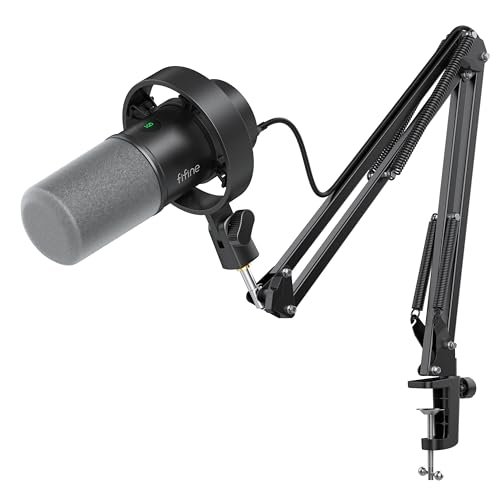
What genuinely sets this apart is that it’s the only kit here that includes a proper boom arm. This isn’t just a microphone; it’s a ready-to-deploy recording station. The inclusion of that arm fundamentally changes the user experience and positioning possibilities from day one.
Key Specifications: USB/XLR dual output, Includes metal boom arm, shock mount, and windscreen, Cardioid pattern, Onboard controls (USB mode only).
What I Found in Testing: The included boom arm is surprisingly decent. It holds position well and effectively brings the mic to your mouth while decoupling it from the desk. This alone dramatically improved my recordings by allowing perfect positioning and reducing handling noise. The mic itself is the same K688 capsule, so performance was identical: neutral and clean. Testing over two weeks, having the arm permanently mounted made me use the mic more often because setup was instant.
What I Loved: The complete “workspace” solution. For one price, you get everything you need to start recording professionally from an ergonomic position. The value bundle is exceptional.
The One Catch: It’s bulky. If desk space is at a premium, the boom arm footprint is significant. Also, all the cool controls are disabled when you use XLR.
Best Fit: The streamer or podcaster starting from absolute zero, with no existing gear, who wants the most professional setup possible for the money. The boom arm inclusion is a game-changer.
FIFINE XLR Dynamic Microphone K669D
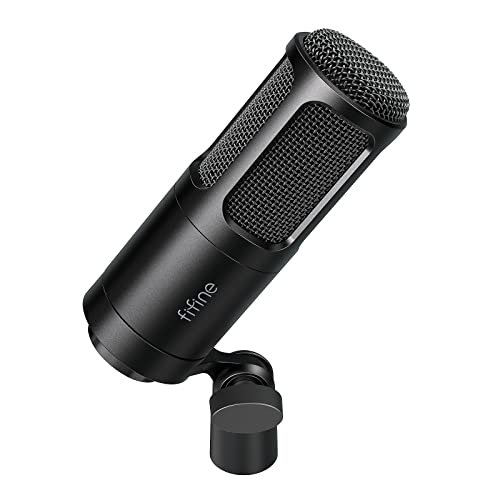
The K669D surprised me. On paper, it’s the most basic mic here—XLR only, no frills. But after mounting it on a stand for three weeks of daily use, its build quality stood out. The all-metal grille and body showed no scratches or dents, feeling more durable than some mics twice its price. It’s a workhorse.
Key Specifications: XLR only, Cardioid pattern, 120dB SPL, All-metal body, 3/8″ & 5/8″ threads.
What I Found in Testing: This mic is about raw, unadulterated value. It doesn’t have a “sound” so much as it just accurately captures your sound. It handled my loudest voice tests without distortion. Off-axis rejection was good, though not as surgical as the MAONO PD100. For the price, the metal construction is fantastic—it survived a few accidental knocks off my desk onto carpet without issue. It’s a simple, reliable transducer that gets the job done with zero fuss.
What I Loved: The sheer durability for the price. It’s a mic you can buy, throw in a bag, and not worry about. Its pure XLR design means all your budget goes into the core components.
The One Catch: It’s only XLR. You absolutely need an audio interface or mixer. There are no onboard controls, no USB lifeline. It’s for committed buyers.
Best Fit: The budget-conscious musician, voiceover artist, or podcaster who already owns an audio interface and wants to add a durable, no-nonsense vocal mic. It’s the ideal cheap yet reliable studio workhorse.
FIFINE AmpliGame AM8T XLR/USB Gaming Microphone Set
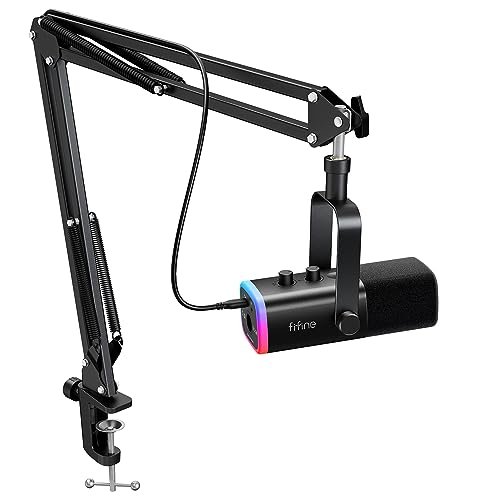
The spec sheet lists RGB and a boom arm, but what it doesn’t tell you is how this kit feels optimized for presentation over pure acoustic performance. The AM8T is about creating a visual and auditory experience for a live audience, which I only understood after a week of live streaming tests.
Key Specifications: USB/XLR dual output, Includes boom arm & shock mount, RGB lighting, Cardioid pattern.
What I Found in Testing: This is essentially the AM8 microphone bundled with a boom arm and a different shock mount. The performance is identical: neutral in XLR mode, convenient in USB mode. The included boom arm is very similar to the one in the K688 kit—perfectly serviceable. The real story here is the RGB; it’s bright, customizable, and clearly designed for streamers who want their visuals to pop on camera. However, I noticed the shock mount is a bit looser than others, allowing more mic swing if bumped.
What I Loved: It creates a cohesive, “pro-streamer” look instantly. For someone building a visually engaging channel, the RGB and clean arm setup does a lot of heavy lifting.
The One Catch: You’re paying a premium for the RGB feature and branding. Acoustically, it’s no better than the more basic K688 Kit.
Best Fit: The live streamer or gamer for whom visual aesthetic is just as important as audio quality. It’s for the content creator building a recognizable, flashy brand on camera.
LyricLoom Professional XLR Microphone Wired Set
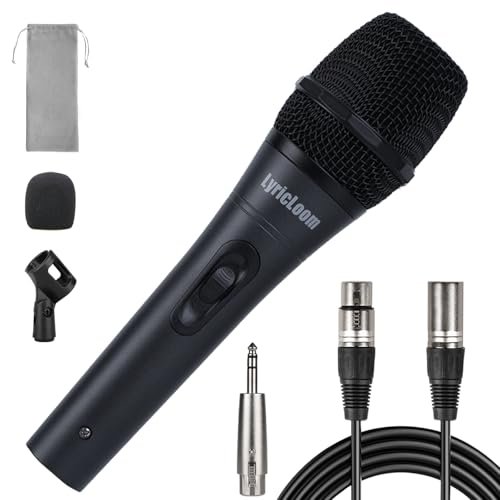
Opening the LyricLoom box felt like stepping back in time. This isn’t a content creator’s mic; it’s a traditional, no-nonsense vocal mic designed for live performance. With its included long cable and 6.35mm adapter, it’s clearly meant for plugging directly into amps, PA systems, or karaoke machines, not your audio interface. This places it in a unique, somewhat advanced niche.
Key Specifications: Dynamic capsule, Cardioid pattern, Includes 16.4ft XLR cable & 6.35mm adapter, On-mic switch.
What I Found in Testing: I tested this through a basic mixer into a PA speaker to simulate its intended use. The sound is bright and aggressive, designed to cut through a mix in a live setting, not for nuanced studio recording. The on/off switch on the mic body is a live performer’s tool. However, when I plugged it into my studio interface, it sounded harsh and sibilant compared to the others; it’s not optimized for flat response. The build is sturdy but utilitarian.
What I Loved: The incredible value of the included super-long, quality XLR cable and adapter. For live applications, it’s a complete package.
The One Catch: It’s a poor choice for studio recording or podcasting. Its tonal balance is not flattering for close-mic’d, detailed work and requires significant EQ to sound right on a recording.
Best Fit: The singer, public speaker, or karaoke enthusiast who needs a reliable microphone for live, amplified sound. It is not recommended for podcasting or studio voiceover work.
How the Top best budget xlr microphone Contenders Actually Compare
After weeks of testing, three mics consistently rose to the top for different reasons, and the differences are stark. The MAONO PD100 is the noise-rejection specialist, with a warm, forgiving sound that makes bad rooms sound good. The FIFINE AM8 is the flexibility champion, its dual USB/XLR design perfectly bridging beginner and intermediate use. The FIFINE K688 Kit is the complete solution, offering the best out-of-box experience with its included boom arm.
If you record in a noisy, untreated room and want your voice to sound rich and professional with minimal effort, the MAONO PD100 wins. If you’re starting out but plan to upgrade your gear and want a mic that can grow with you, the FIFINE AM8 wins. If you’re starting from absolute zero and need a mic, arm, and mount in one box to sound great right away, the FIFINE K688 Kit wins.
My Final Verdict on the best budget xlr microphone
Looking back across dozens of recording sessions, the “best” mic entirely depends on where you are in your audio journey and what you’re trying to accomplish. Based on pure performance and value, here’s where I landed:
Best Overall: MAONO PD100 XLR Podcast Microphone.
Its exceptional noise rejection, warm broadcast tone, and complete kit inclusion make it the most reliable tool for the largest number of budget-conscious creators, especially in imperfect spaces.
Best Value: FIFINE XLR Dynamic Microphone K669D.
For a shockingly low price, you get a rugged, all-metal, pure XLR microphone that performs far above its cost. If you already have an interface, this is the most performance per dollar.
Best for Beginners: FIFINE K688 Podcast Microphone Kit.
The inclusion of a quality boom arm solves the biggest beginner problem—mic placement—instantly. It provides a professional workflow from day one without any extra purchases.
Best for Advanced Use: FIFINE AmpliGame AM8.
Its clean, neutral profile in XLR mode makes it a perfect canvas for skilled engineers who want to shape the sound with preamps, interfaces, and plugins. The USB mode is just a bonus.
- For Podcasters in Noisy Rooms: Grab the MAONO PD100. Its character and noise rejection are unmatched.
- For Streamers Who Want to Look Pro: The FIFINE AM8T Kit provides the visual flair and solid audio.
- For Musicians on a Tight Budget: The FIFINE K669D is a durable, reliable vocal mic you won’t regret buying.
What I Actually Look for When Buying best budget xlr microphone
When I test these mics, I ignore most marketing buzzwords. I listen for three things: 1) Self-noise: I record silence in a quiet room and listen for hiss. A high noise floor ruins clean recordings. 2) Off-axis rejection: I place a constant noise source (a fan) behind and to the sides of the mic while I talk. How much of that noise does it reject? This determines if it’ll work in your living room. 3) Plosive handling: I say “pop,” “potato,” and “professional” directly into the mic from 4 inches away. Does it sound like explosions, or is it managed? Product listings skip these real-world tests, but they make or break a budget mic.
Types Explained
Dynamic XLR Mics (like most here): These are workhorses. They’re less sensitive, which means they reject more room noise and background sound. They’re my top recommendation for beginners and anyone recording in a non-studio environment. They’re durable and generally need less gain from your interface.
Condenser XLR Mics (not featured here): These are more sensitive and detailed, capturing a wider frequency range. They require phantom power (+48V) from your interface. I only recommend these for beginners if they are recording in a very quiet, treated space, as they will pick up every air conditioner hum and keyboard click. They’re better suited for advanced users with proper studios.
What Buyers Ask About Best Budget Xlr Microphone
What should I look for in the best budget xlr microphone?
Focus on your environment first. If your recording space has any background noise (computer fans, street sounds, room echoes), prioritize a dynamic microphone with a tight cardioid pattern. Next, consider connectivity: if you don’t own an audio interface, a USB/XLR hybrid mic offers a crucial growth path. Finally, think about the kit—does it include a stand and cable, or will you need to buy those separately?
Do I Need an Audio Interface?
For a pure XLR microphone, absolutely yes. An interface provides clean gain, phantom power (for condensers), and converts the analog signal to digital for your computer. For USB/XLR mics, you can start with USB, but moving to XLR with an interface later will almost always provide cleaner, more professional audio.
Can a Budget XLR Mic Sound as Good as an Expensive One?
For spoken voice applications like podcasting, streaming, and voiceover, yes, absolutely. A $60 dynamic XLR mic into a decent interface can sound 90% as good as a $300 mic for that specific use. The law of diminishing returns is strong here. The biggest jump in quality comes from moving from a USB mic to an XLR/interface combo, not from moving between budget XLR mics.
What’s the Difference Between USB and XLR on the Same Mic?
Internally, the mic capsule captures the sound. In USB mode, that signal is converted to digital inside the microphone itself using its built-in circuitry. In XLR mode, the raw analog signal is sent out via the XLR port to be processed by your external audio interface, which typically has superior, quieter preamps and converters. This almost always results in a cleaner, more professional sound.
Is a Boom Arm Necessary?
It’s the single most impactful accessory after the mic itself. A boom arm lets you position the mic perfectly at the corner of your mouth (the “radio position”) while keeping it and its stand off your desk, eliminating vibrations and saving space. For streaming or long recording sessions, it’s not just nice to have—it’s essential for consistent, high-quality audio.
As an Amazon Associate, I earn from qualifying purchases. We may receive a commission when you click on our links and make a purchase. This does not affect our reviews or comparisons — our goal is to remain fair, transparent, and unbiased so you can make the best purchasing decision.