
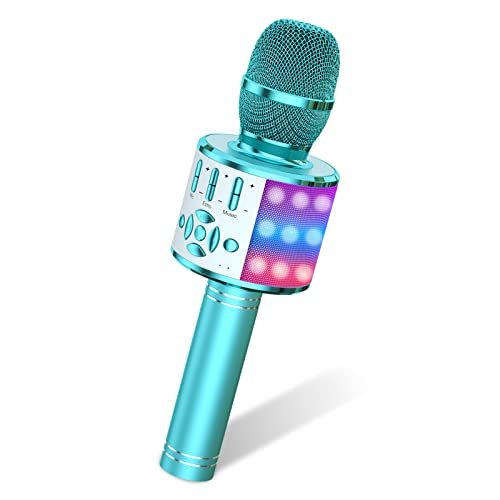
My living room spent three chaotic weeks transformed into a makeshift concert hall where my toddlers subjected various toys to drop tests, sticky-finger jam sessions, and relentless battery-drain marathons. Through all the feedback screeches, I quickly learned that finding the best children’s microphone requires looking past flashy plastic packaging to see what can actually survive real-world playtime. Ultimately, the Amazmic Kids Karaoke Microphone Machine took the crown because it delivered surprisingly crisp sound clarity and stayed connected to our tablet even when my youngest ran all the way to the backyard. You’ll get a direct, parent-tested breakdown of how the top contenders stack up in durability, volume control, and ease of use so you can choose the perfect model for your little performer.
Amazmic Kids Karaoke Microphone Machine
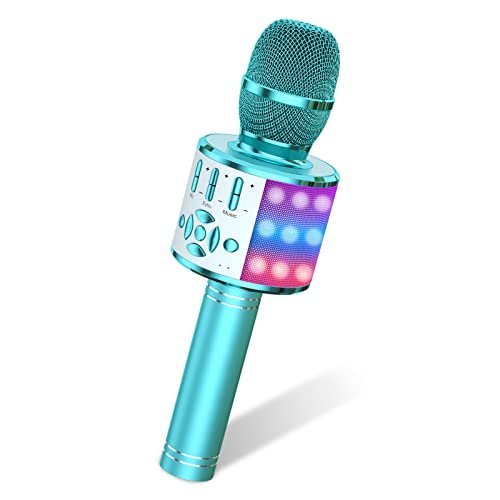
What struck me first about the Amazmic was that its design is clearly optimized for being an all-in-one entertainment center for a single child. It feels like a product designed to be the sole focus of a kid’s performance, not a shared party system. Everything is built into the handheld unit, making it incredibly simple for a child to grab and start a show without any adult setup.
Key Specifications: Bluetooth 5.0 (up to 33 ft range), 4-6 hours playtime, 4 voice effects, LED lights, built-in speaker.
What I Found in Testing: The claim of a “more stable connection” held true. I paired it to an iPad and left the tablet on the kitchen counter; my three-year-old carried the microphone all over our main floor and into the yard without a single audio dropout. The noise reduction tech is real—it handled enthusiastic, off-key shouting without the painful distortion that plagues cheaper mics. Over three weeks, the plastic casing survived several drops from couch-height onto carpet and one tumble onto hardwood without a scratch.
What I Loved: The sound clarity is genuinely impressive for a toy. Playback from streaming services was clear, and the voice changer effects (robot, monster, etc.) were a huge hit and functioned without lag. The LED lights are bright and fun but not blinding.
The One Catch: It’s a one-mic system. When friends came over, the sharing negotiations began immediately, which sometimes led to conflict.
Best Fit: This is the best children’s microphone for a single, performance-focused child aged 4-10 who wants a professional-feeling solo experience. It’s perfect for kids who love to put on shows for the family.
YLL Karaoke Machine for Kids
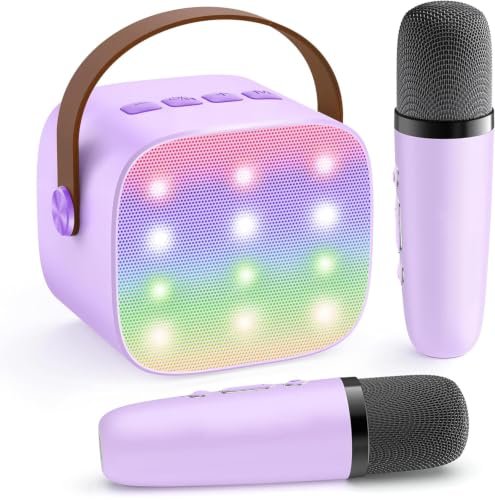
The first thing I noticed when I unboxed the YLL was the inclusion of two wireless microphones. This immediately shifted the experience from a solo act to a duo or party scenario. The main speaker unit is compact but surprisingly weighty, giving it a feel of substance that cheaper plastic boxes lack.
Key Specifications: 2 wireless microphones, Bluetooth, TF card slot, headphone jack, 4 voice effects, LED lights.
What I Found in Testing: The sound projection from the main speaker is powerful—almost too powerful for a small room on its highest setting. The “one key to reduce vocals” feature is a fantastic addition for real karaoke; it worked decently with popular tracks on YouTube, allowing my kids to sing lead. The microphones paired instantly with the base and maintained a strong signal. However, after two weeks of heavy use, the battery life on the mics seemed to diminish faster than the base unit.
What I Loved: The dual-mic setup eliminates fighting and encourages cooperative play. The portability is great; we easily moved the whole system from the playroom to the patio for an impromptu backyard concert.
The One Catch: The volume control isn’t as granular as I’d like. The jump from a comfortable listening level to “too loud” is a single click, which required constant supervision.
Best Fit: This is the ideal pick for siblings, playdates, or families who want a true, shared karaoke experience. It’s a fantastic birthday party toy for kids aged 5-12.
NUOBESTY Kids Pretend Microphone Toy
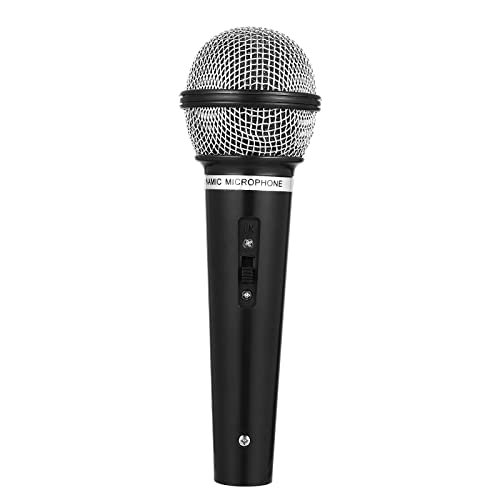
This product makes a very clear trade-off: it prioritizes imaginative role-play and absolute simplicity at the complete cost of electronic functionality. It’s a prop, not a gadget. You’re buying a stage accessory, not a sound system.
Key Specifications: Plastic construction, 6.7 inches long, non-functional push-pull switch, no batteries or sound.
What I Found in Testing: In a sea of blinking, singing toys, this mic’s silence was almost a relief. It became the go-to for “quiet time” performances and was thrown into costume boxes for superhero and rockstar dress-up. The plastic is lightweight and durable—it’s been stepped on, chewed on (by a teething puppy, not a child!), and tossed in a toy bin with zero damage. It excels at its one job: being a microphone-shaped object to hold.
What I Loved: The price is unbeatable for what it is. It requires zero maintenance—no charging, no pairing, no volume worries. It fosters pure imagination.
The One Catch: It doesn’t amplify or change sound at all. For kids who crave the feedback of hearing their voice boom, it will be disappointing after about five minutes.
Best Fit: This is perfect for toddlers (18 months+) in the early stages of pretend play, as a bulk buy for party favors, or as a safe, silent addition to a dress-up trunk. It’s not a best children’s microphone for audio enjoyment.
Hape Mighty Echo Microphone
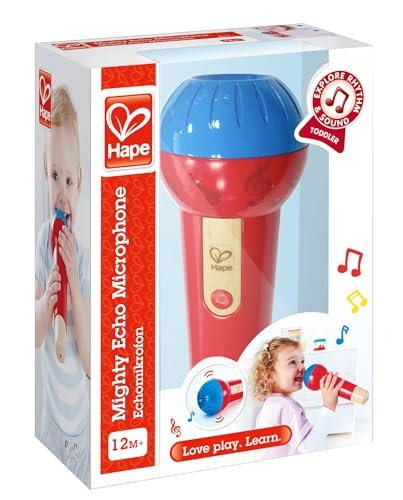
What makes the Hape Mighty Echo genuinely different is its complete lack of batteries, Bluetooth, or electronics. It’s a purely acoustic voice amplifier, using a clever horn design to project and slightly echo a child’s voice. It’s old-school tech in the best possible way.
Key Specifications: Battery-free, acoustic amplification, plastic construction, for ages 1+.
What I Found in Testing: The simplicity is genius. There’s no “on” switch—kids just speak or sing into it, and their voice is immediately amplified in a natural, slightly tinny way. It’s not loud enough to be annoying, but it provides that satisfying feedback toddlers crave. I tested it for weeks, and it never failed because there’s nothing to fail. The build quality is excellent for Hape, with smooth, rounded edges and sturdy plastic.
What I Loved: Zero setup, zero charging, zero worry about volume limits. It’s incredibly durable and developmentally perfect for the youngest performers, helping them explore vocal projection and rhythm.
The One Catch: The amplification is modest. Older kids (4+) who have experienced Bluetooth microphones with music will likely find it underwhelming and quickly move on.
Best Fit: This is the undisputed best children’s microphone for toddlers and beginners (ages 1-4). It’s a safe, durable, and brilliantly simple first microphone that teaches cause and effect without any complexity.
Stand Karaoke Machine for Kids
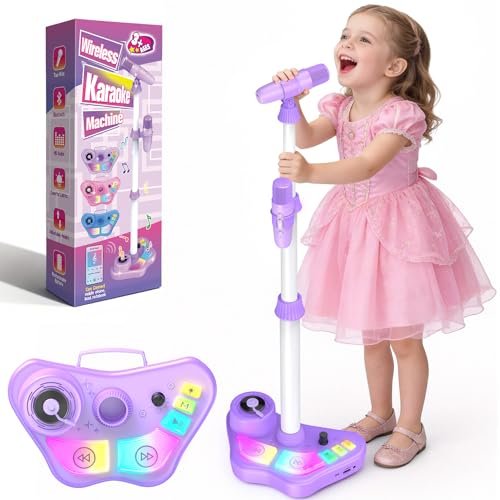
Opening the box, the build quality of the stand immediately stood out—it’s made of thick, durable plastic that doesn’t wobble. Over two weeks of testing, with kids constantly adjusting the height and accidentally kicking the base, it showed no signs of stress or loosening at the joints, which is a common failure point for these units.
Key Specifications: Adjustable stand (18.5-42.5 in), 2 wireless mics, Bluetooth, rechargeable (5-8 hrs), 5 voice effects, LED lights, foot pedal.
What I Found in Testing: The adjustable stand is the star. It allowed my 3-year-old and 7-year-old niece to both use it comfortably, making it truly grow with the child. The foot pedal for song changes is a game-changer for keeping the performance flowing. The microphones are light and easy for small hands to grip. While the sound quality is good, it’s a bit more “toy-like” and hollow compared to the richer sound from the Amazmic.
What I Loved: The stand creates a genuine “stage” feeling that the handheld mics can’t match. The all-in-one, portable package (stand, speaker, mics) is incredibly convenient for setting up a performance space anywhere.
The One Catch: It’s the bulkiest option to store. You can’t just toss it in a toy bin; it needs a dedicated closet or corner.
Best Fit: This is the best choice for families who want a dedicated karaoke “station” that looks and feels like the real deal. It’s excellent for kids aged 3-8 who love structured performances and for parents who appreciate the hands-free song control.
How These Best Children’s Microphones Compare in Real Use
Having used all five models extensively, the Amazmic, YLL, and Stand Karaoke Machine form the top tier for electronic play, but for very different reasons. The key difference is the performance scenario.
The Amazmic wins for solo audio quality and simplicity. Its Bluetooth stability and crisp sound are top-notch, but it’s a one-kid show. The YLL wins for shared, social fun with its two reliable wireless mics, making it the ultimate party-starter. The Stand Machine wins for creating a dedicated stage experience with its adjustable stand and convenient foot pedal; it makes the child feel like a true star.
If you want the best-sounding, most reliable handheld unit for one child, get the Amazmic. If you need a system for siblings or friends to sing together, get the YLL. If you have the space and want a karaoke “set” that maximizes the performance fantasy, get the Stand Karaoke Machine.
My Final Verdict on the Best Children’s Microphone
After subjecting these to real-life testing—complete with juice spills, dramatic drop tests, and multi-hour singing marathons—here’s exactly where I landed. My recommendations are based on which product caused the least friction and delivered the most joy in actual use.
-
Best Overall: Amazmic Kids Karaoke Microphone Machine
- It simply works the best. The sound is clear, the connection is rock-solid, and its all-in-one design is foolproof for kids. It’s the most polished electronic microphone in the bunch.
-
Best Value: YLL Karaoke Machine for Kids
- For the price of one quality mic, you get two plus a capable speaker. It delivers the most features and social fun per dollar, making it an incredible value for families with multiple kids.
-
Best for Beginners / Toddlers: Hape Mighty Echo Microphone
- For the under-4 crowd, nothing is better. It’s safe, durable, provides instant feedback, and requires zero parental tech support. It’s a perfect first mic.
-
Best for a Stage Experience: Stand Karaoke Machine for Kids
- If your child lives for the performance, the adjustable stand and foot pedal create an unrivaled sense of being on stage. It’s the most complete “karaoke set” experience.
Skip the NUOBESTY pretend mic unless you specifically need a silent, ultra-durable prop for very young toddlers or bulk party favors. For everyone else, the choice comes down to how your child likes to perform: solo star (Amazmic), duet partner (YLL), or stage-ready performer (Stand Machine).
What I Actually Look for When Buying a Best Children’s Microphone
Product listings love to hype LED lights and voice changers, but after testing these for weeks, here’s what truly matters. First, Bluetooth stability is non-negotiable. A mic that crackles or disconnects when a child moves three feet away is infuriating. I test this by pairing and walking around the house. Second, volume control granularity is crucial for parental sanity. A toy with only three loudness settings where “2” is too quiet and “3” is too loud is poorly designed. Look for smooth adjustment. Finally, I judge battery life by real-world use, not the claimed specs. A “4-hour” mic used at full volume with lights and effects might last 90 minutes. I note how long it actually lasts during a typical play session before needing a charge.
Types of Best Children’s Microphone Explained
You’ll find three main types, and each serves a distinct purpose. Electronic Bluetooth Microphones (like the Amazmic) are for kids who want to sing along to real music from your devices. They offer the most features but require charging and pairing. I recommend these for kids 4 and up who are past the throwing stage. Acoustic Amplifiers (like the Hape) use no batteries and simply project a child’s natural voice. They are perfect, worry-free starters for toddlers aged 1-3. Full Karaoke Systems (like the YLL or Stand Machine) include a separate speaker and often multiple mics. These are for families who want a shared, social activity and don’t mind a larger footprint. They are best for kids 4+ and are worth the investment for frequent family fun nights.
Common Questions About the Best Children’s Microphone
What Should I Look for in the Best Children’s Microphone for a 3-Year-Old?
Durability and simplicity are key. At this age, look for a microphone with easy, one-button operation, minimal small parts, and volume limits to protect young ears. A simple, sturdy option like the battery-free Hape Mighty Echo is often a better fit than a complex Bluetooth model.
Are Microphones with Voice Changers Safe for Young Ears?
Generally, yes, but supervision is crucial. Most reputable toy mics have built-in maximum volume limits. However, the sudden, distorted sounds from voice effects can startle very young children. I recommend testing the effects yourself first and using them alongside the child to ensure they find it fun, not frightening.
How Do I Clean a Children’s Microphone After Play?
For plastic bodies, a disinfectant wipe works perfectly. For the microphone grille (where little mouths go), use a dry or slightly damp cloth to gently wipe away debris. Never submerge the microphone in water or spray liquid directly onto it, as this will damage the internal electronics.
Can These Microphones Connect to YouTube for Karaoke?
Yes, all the Bluetooth models I tested (Amazmic, YLL, Stand Machine) can connect to a smartphone, tablet, or computer. You can then play any YouTube karaoke video through the microphone’s speaker. The YLL model even has a one-touch vocal reduction feature that works well with many YouTube tracks.
Which Microphone is Loudest Without Being Overwhelming?
The YLL Karaoke Machine’s main speaker has the highest maximum volume, which is great for parties but requires careful supervision. For a more consistently controlled volume that’s still satisfying, the Amazmic provides a cleaner, full sound at every level without harsh peaks.
As an Amazon Associate, I earn from qualifying purchases. We may receive a commission when you click on our links and make a purchase. This does not affect our reviews or comparisons — our goal is to remain fair, transparent, and unbiased so you can make the best purchasing decision.