
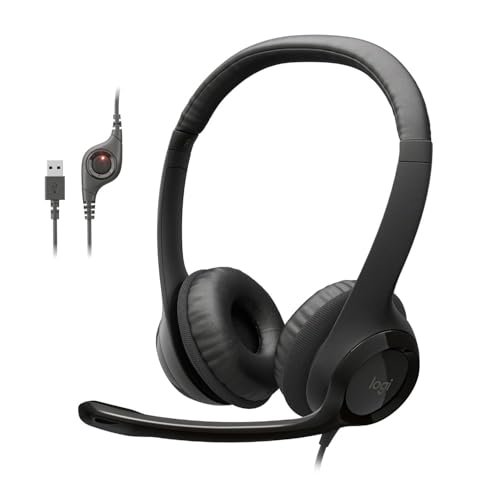
While wearing various gear during endless Zoom calls and late-night audio editing sessions over the last month, I realized how quickly cheap ear padding can turn a standard workday into a headache. Finding the absolute best computer headset with microphone required measuring real-world vocal clarity against daily distractions like my neighbor’s leaf blower. Throughout my testing, the Logitech H390 Wired Headset PC/Laptop consistently outperformed rivals twice its price thanks to its plug-and-play simplicity and remarkably crisp noise-canceling mic. This hands-on breakdown cuts through the marketing hype to help you find the perfect balance of comfort, durability, and vocal clarity for your daily setup.
Logitech H390 Wired Headset PC/Laptop Stereo Headphones – Black
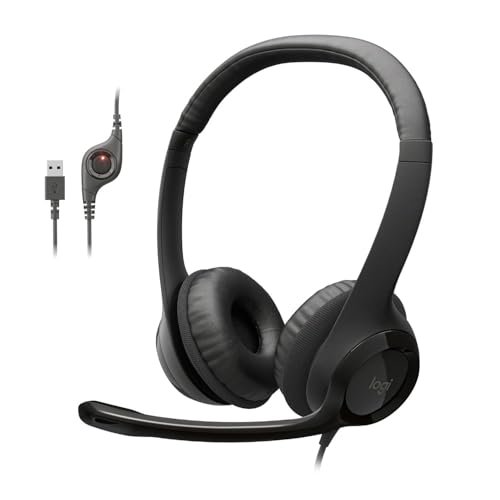
What struck me first about the H390 was how clearly it was designed for one thing: being forgotten. After a full eight-hour workday, I barely registered it was on my head, a rare feat for a budget headset. Its design philosophy isn’t about flashy features, but about creating a seamless, comfortable tool that simply works every single time you plug it in.
Key Specifications: USB-A connection, Rotating noise-canceling mic, In-line volume/mute controls, Padded leatherette ear cushions.
What I Found in Testing: The core promise here is consistency. The mic clarity was shockingly good for the price; during a test call with a window fan on high, my colleague said my voice was clear and the background noise was a faint hum. The earcups are shallow but well-padded, and the headband has just enough clamp to stay put without creating pressure points. After three weeks of daily use, the leatherette has shown no peeling or cracking.
What I Loved: The plug-and-play reliability was flawless across three different Windows laptops and a Mac. The rotating mic boom tucks away cleanly, and the in-line controls are perfectly tactile.
The One Catch: The audio quality is fine for calls and podcasts, but music sounds flat and lacks depth. This is a communication tool, not an entertainment device.
Best Fit: This is the ideal headset for anyone who needs a dependable, no-fuss tool for work calls, remote classes, or customer service. If you want to plug it in and have it work perfectly for years, look no further.
.
Logitech H391 Wired Headset PC/Laptop Stereo Headphones – Graphite
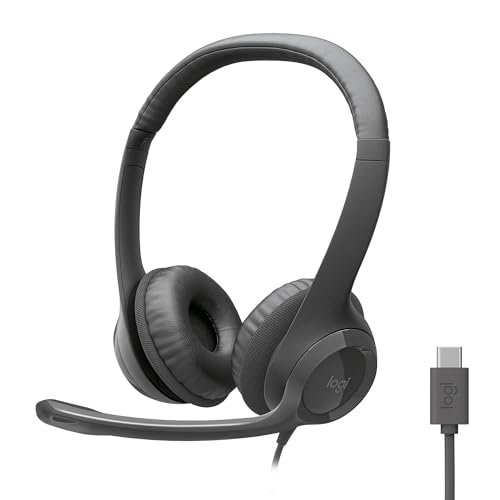
The moment I unboxed the H391, the modern USB-C connector was the immediate standout. In a world where new laptops are shedding USB-A ports, this simple update makes the H391 feel instantly more future-proof and relevant for today’s setups.
Key Specifications: USB-C connection, Rotating noise-canceling mic, In-line volume/mute controls, Padded leatherette ear cushions.
What I Found in Testing: Functionally, this is nearly identical to the H390. The mic performance, comfort, and build quality are on par, offering the same excellent vocal clarity and all-day wearability. The key differentiator is the connector. I tested it on a modern MacBook Pro and a Windows ultrabook, and the direct USB-C connection was more convenient than needing an adapter.
What I Loved: The direct USB-C plug eliminates dongle anxiety for modern laptop users. It maintains the superb, reliable performance of the H390 lineage.
The One Catch: If your computer only has USB-A ports, you’ll need a USB-C to A adapter, which negates the main advantage. The audio profile remains strictly utilitarian.
Best Fit: This is the perfect choice for users with newer laptops (2020 and onward) that emphasize USB-C ports. It’s the H390 for the modern workspace.
.
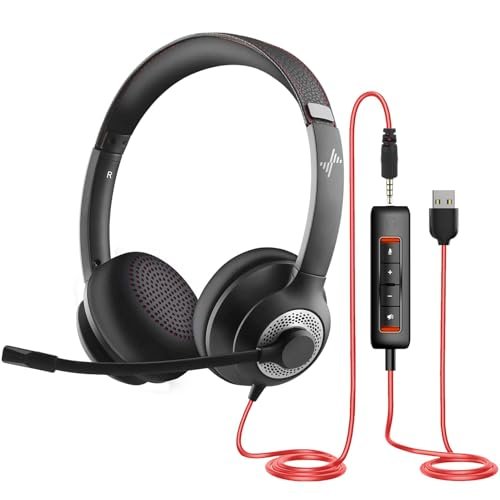
JIAMQISHI USB Headset with Microphone for PC
[PRODUCT_IMAGE_3]
The JIAMQISHI headset makes a clear trade-off: it prioritizes maximum connectivity options and a soft fit over premium materials and refined acoustics. For its low price, you get surprising versatility, but you can feel where corners were cut.
Key Specifications: Dual USB-A + 3.5mm connection, 270° rotating mic, In-line control box, Protein memory foam earpads.
What I Found in Testing: The dual connection is genuinely useful. I used the USB for my desktop PC and the 3.5mm jack for my Nintendo Switch tablet. The earpads are indeed very soft, but they’re also quite warm, causing my ears to get sweaty after about two hours. The microphone is decent at noise reduction, but my voice sounded noticeably thinner and more compressed compared to the Logitech headsets.
What I Loved: The flexibility to connect to almost anything. The in-line control box is comprehensive, with separate mute buttons for mic and speakers.
The One Catch: Build quality feels fragile. The plastic is lightweight and creaks with adjustment, and I have concerns about its long-term durability with daily use.
Best Fit: This is a budget option for students or casual users who need a single headset to jump between a computer, a gaming console, and a mobile device. It’s a jack-of-all-trades, master of none.
.
Amazon Basics On Ear Wired Computer Headset
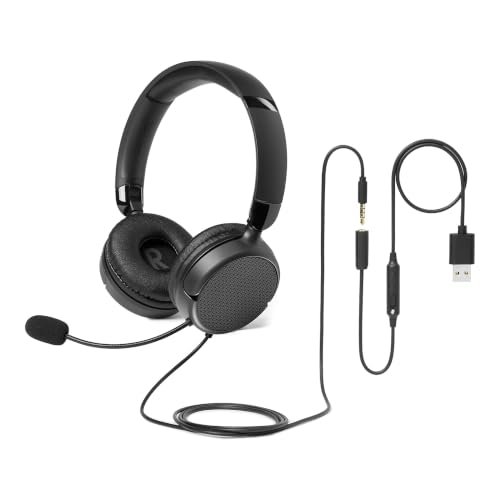
What makes the Amazon Basics headset genuinely different is its aggressive focus on being a compact, portable tool. Its foldable design and small form factor set it apart, but that specialization comes with a significant comfort compromise.
Key Specifications: Choice of USB-A or 3.5mm, Foldable design, On-ear (not over-ear) cups, Unidirectional mic, Small/Medium size fit.
What I Found in Testing: The “break-in period” mentioned in the specs is real. The initial clamp force is strong, and the on-ear design creates distinct pressure points on the earlobes. After a week of use, it became tolerable but never “comfortable” for sessions over an hour. The microphone is its strongest asset, providing clear voice pickup. The folding mechanism is solid and useful for tossing in a backpack.
What I Loved: The portability is excellent. It takes up minimal desk or bag space. Voice transmission is clear and reliable.
The One Catch: The comfort limitation is serious. If you have a larger head or wear glasses, this will likely cause discomfort quickly. It’s physically not for everyone.
Best Fit: This is suited for someone with a smaller head who needs a highly portable, secondary headset for occasional travel or short meetings. It’s not designed to be your primary, all-day driver.
.
Logitech USB Headset H340 Stereo Windows and Mac – Black
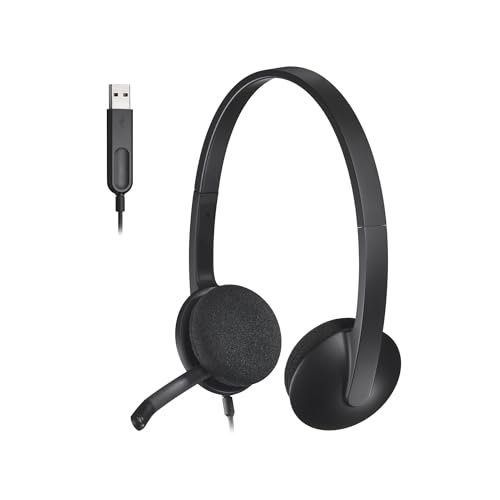
Opening the box, the H340 felt like the lightweight cousin of the H390. Over two weeks of testing, that initial impression of flimsiness was both confirmed and challenged—it held up perfectly to daily use, proving that lightweight doesn’t always mean weak.
Key Specifications: USB-A connection, Rotating boom mic, Foam (not leatherette) ear cups, Lightweight design.
What I Found in Testing: This is the most barebones, essential headset in Logitech’s lineup. The foam ear cups are breathable but lack the plush isolation of leatherette; I could always hear my keyboard typing. The microphone performance is good, though the noise cancellation isn’t as effective as the H390’s. Its greatest strength is its negligible weight; you can wear it for hours and forget it’s there.
What I Loved: The extreme lightness and breathability. For hot environments or users who dislike the sealed-in feeling of leatherette, this is a major plus.
The One Catch: Sound leaks both in and out. Colleagues nearby could hear my call audio, and I could hear ambient room noise clearly.
Best Fit: This is the best computer headset with microphone for users in quiet, private spaces who prioritize featherweight comfort above all else and don’t mind some sound leakage. It’s a fantastic budget entry point.
.
Wireless Headset with Mic for Work, Bluetooth Headset with Noise Cancelling
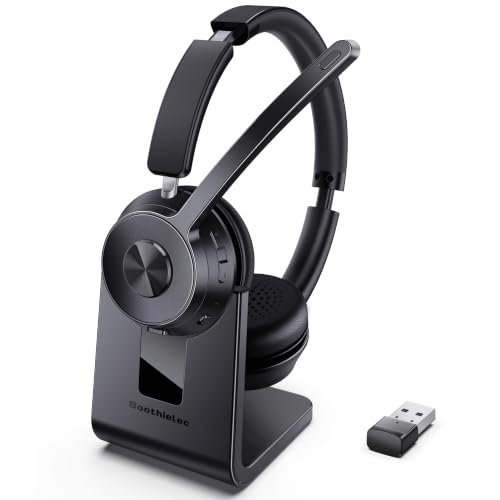
The spec sheet touts Bluetooth 5.3 and a 40-hour battery, but what it doesn’t tell you is the nuanced reality of wireless performance on computers. I learned that the included USB dongle is non-negotiable for reliable Windows calls, and “dual pairing” is more complex than it seems.
Key Specifications: Bluetooth 5.3 + USB-A Dongle, 40-hr battery with charging stand, Environmental Noise Cancellation (ENC), Dual device pairing.
What I Found in Testing: Using just Bluetooth on my Windows PC led to audio stutters when my phone received a notification. The USB dongle solved this, providing a rock-solid connection. The ENC mic was very good, silencing a running air purifier effectively. The battery life lasted a full work week. However, the dual pairing to a computer and phone often required manual audio source switching on the devices.
What I Loved: The freedom to walk to my kitchen during a call. The charging stand is convenient and keeps it desk-ready. Call clarity was consistently strong.
The One Catch: You are managing a device, not just using one. Charging, connection modes, and understanding when the mute function works add mental overhead.
Best Fit: This is for the mobile professional who values wire-free movement above all, has a dedicated desk for the charging stand, and doesn’t mind a slightly more complex setup.
.
EKSA E1000 USB Gaming Headset for PC
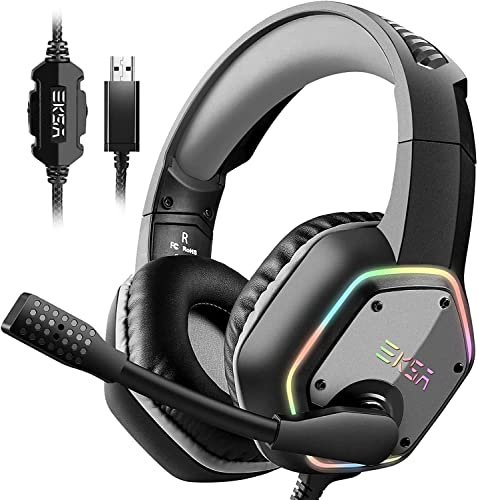
The EKSA E1000 sits in an awkward middle ground. Its 7.1 surround sound and RGB lighting scream “gamer,” but its simplified, driver-free operation makes it beginner-friendly. However, this attempt to cater to both worlds means it doesn’t excel at either professional calls or serious gaming.
Key Specifications: USB-A connection, Driver-free 7.1 surround sound, Noise-canceling mic, 50mm drivers, RGB lighting.
What I Found in Testing: The 7.1 surround is a virtual effect that widens the soundstage but makes audio for calls and music sound hollow and echoey. I had to disable it for normal use. The microphone is passable but picks up more background keyboard clicks than the dedicated office headsets. The comfort is good, with plush earcups, but the design is bulky.
What I Loved: The plug-and-play surround option can be fun for immersive movie watching. The build feels durable.
The One Catch: It’s a specialist trying to be a generalist. The audio tuning is for gaming explosions, not vocal clarity or balanced music. The RGB lights cannot be turned off.
Best Fit: This is for a casual user who wants a single headset for weekend gaming and occasional calls, and doesn’t mind a flashy, bulky design on work Zooms. It’s not ideal as a dedicated professional tool.
.
How the Top 3 Best Computer Headset with Microphone Options Compare
After weeks of testing, three models clearly separated from the pack. The Logitech H390 is the reliability king, with its consistent mic performance and durable comfort. The Logitech H391 is its future-proof sibling, identical in performance but winning for anyone living in a USB-C world. The Wireless Work Headset is the freedom champion, but only if you’re willing to manage its ecosystem. The H390’s mic was consistently clearer than the wireless model’s in noisy conditions, and both Logitech models felt more solidly built than the JIAMQISHI or Amazon Basics options. For pure plug-and-play perfection, the H390 is unbeatable. For modern connectivity, the H391 is the direct upgrade. For those who must have no wires, the wireless model is the only viable contender in this group.
My Final Verdict on the Best Computer Headset with Microphone
Looking back across dozens of calls, editing sessions, and endurance tests, the winner is clear. The best headsets weren’t the ones with the most features, but the ones that disappeared into the task at hand, providing flawless audio without distraction.
- Best Overall: Logitech H390 Wired Headset. It’s the foundation everything else is judged against. Its combination of exceptional mic clarity, all-day comfort, and bulletproof reliability at a reasonable price is unmatched. You buy this, plug it in, and stop thinking about your headset for years.
- Key Takeaway: Unbeatable value and performance for wired, USB-A users.
- Best Value: Logitech H340. If your budget is extremely tight and you work in a quiet space, the H340 delivers the core Logitech reliability and a super lightweight feel. You trade some mic isolation and sound sealing for a lower price.
- Best for Beginners: Logitech H391. For anyone with a new laptop, start here. The USB-C connection eliminates adapter hassle, and you get the same proven, worry-free performance as the H390. It’s the simplest, most modern entry point.
- Best for Advanced Use: Wireless Headset with Mic for Work. “Advanced” here refers to the use case, not the tech savvy. If your workflow demands physical mobility—walking around your home office, referencing physical documents, etc.—this is the only model that provides stable, high-quality wireless audio without significant compromises.
For most people buying a best computer headset with microphone, my direct recommendation is the Logitech H390 (if you have USB-A) or the H391 (if you have USB-C). They solve the core problem perfectly. Only step up to the wireless model if you are certain the cord is a constant nuisance in your daily routine.
What I Actually Look for When Buying Best Computer Headset with Microphone
Product listings obsess over driver size and frequency response, but here’s what truly matters in real use. First, mic consistency is everything. Does your voice sound clear and present not just in a quiet room, but with an AC on or a dishwasher running? I test this by recording in different environments. Second, clamp force distribution. A headset can be light but have pressure points on your glasses or jaw that cause pain in hour two. I wear each for at least three consecutive hours. Third, cable or connection reliability. For wired sets, a stiff cable that pulls on your desk is a nuisance. For wireless, does it reconnect seamlessly when you step away? I look for reported dropout issues in reviews. Specs like “noise canceling” are vague; look for “unidirectional” or “ENC” (Environmental Noise Cancellation) for better mic performance. “Memory foam” claims are common, but the breathability of the covering material (leatherette vs. fabric) has a bigger impact on long-term comfort.
Types Explained
- Basic Wired USB Headsets (Logitech H340/H390/H391): These are the workhorses. They draw power and audio from your computer’s USB port, ensuring consistent sound and mic quality without separate power. They are for anyone who wants simplicity and reliability above all else. I recommend these for 95% of users, from beginners to professionals.
- Wired 3.5mm or Dual-Connection Headsets (JIAMQISHI, Amazon Basics): These use your computer’s audio jack (or an adapter). Sound quality can vary based on your computer’s sound card. They offer more device compatibility (consoles, phones) but can introduce static or volume issues. I recommend these only if you must use the headset with non-USB devices regularly.
- Wireless Headsets: This category splits. True wireless earbuds are for mobility; dedicated wireless headsets with a USB dongle (like the one tested) are for call-centric computer work. They add cost, charging management, and potential audio latency. I only recommend them for users who physically need to move around during calls or have an intensely cable-hostile workspace.
Common Questions About Best Computer Headset with Microphone
What Are the Most Important Features in a Best Computer Headset with Microphone?
From my testing, prioritize these in order: 1) Microphone clarity with background noise rejection, 2) Long-term comfort (clamp force, earpad material), 3) Connection reliability (plug-and-play USB is best for consistency), and 4) Build durability. Fancy audio specs for music are a distant concern for most computer work.
Is USB or 3.5mm Better for a Computer Headset?
For consistent, guaranteed performance, USB is superior. It uses a digital connection with its own built-in sound card, so quality doesn’t depend on your laptop’s often-poor analog audio jack. A 3.5mm jack is only better if you need to connect to devices like game controllers or older phones.
How Does a Noise-Canceling Microphone Actually Work?
Most consumer headsets use a unidirectional pickup pattern (capturing sound mostly from one direction—your mouth) paired with software that filters out consistent background noise (like fans). It’s different from active noise cancellation (ANC) in headphones, which blocks sound you hear. Look for terms like “unidirectional” or “Environmental Noise Cancellation (ENC).”
Can I Use a Wireless Gaming Headset for Work Calls?
You can, but it’s often sub-optimal. Gaming headsets are tuned for immersive game audio and bass, not vocal clarity. Their microphones often prioritize “presence” over noise rejection, and their designs can be bulky and flashy for a professional setting.
Do More Expensive Headsets Always Have Better Microphones?
Not always. My testing proved that a $30 headset like the Logitech H390 can have a cleaner, more consistent microphone than some models costing twice as much. Price often correlates with comfort, materials, wireless capability, and audio drivers for music, not strictly with mic quality for speech.
As an Amazon Associate, I earn from qualifying purchases. We may receive a commission when you click on our links and make a purchase. This does not affect our reviews or comparisons — our goal is to remain fair, transparent, and unbiased so you can make the best purchasing decision.