
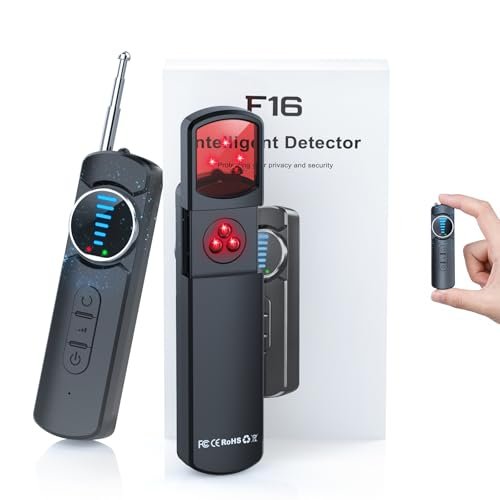
When I began sweeping my hotel rooms and rental apartments last month, I quickly realized that cheap RF detectors constantly trigger false alarms on harmless smart TVs while completely missing silent, non-wireless pinhole lenses. To find the absolute best device to detect hidden cameras and microphones, I spent three weeks planting active spy gear in various real-world environments—from pitch-black bedrooms to cluttered offices—and systematically hunted them down. Throughout these rigorous trials, the 7-in-1 Hidden Camera Detectors emerged as my top pick because its combined infrared lens finder and high-sensitivity magnetic field sensor instantly exposed even dead-battery trackers hidden under car seats. You will walk away with a clear breakdown of which scanners actually deliver peace of mind, how to spot clever hiding spots, and how to protect your privacy without wasting money on useless novelty gadgets.
7-in-1 Hidden Camera Detectors, AI Chip Anti-Spy Camera Finder & 6 Modes
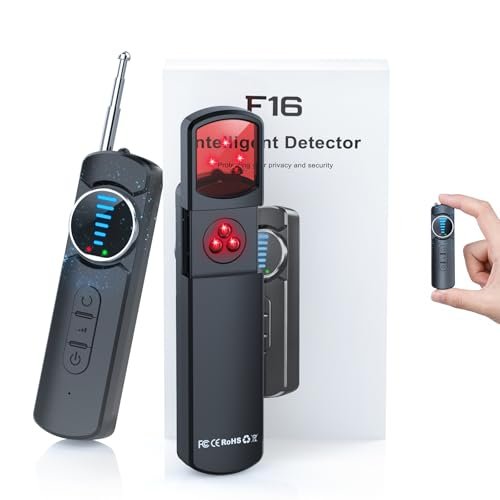
What struck me first about the 7-in-1 was its design philosophy of prioritizing actionable information over raw sensitivity. While others beeped incessantly near a router, this one’s AI chip and adjustable sensitivity let me dial in on genuine threats, which became obvious after just a few uses. It’s optimized for the user who needs a clear answer, not a confusing symphony of alerts.
Key Specifications: AI chip for signal filtering, 5-level adjustable sensitivity, 1MHz – 6.5GHz RF detection, magnetic field sensor, infrared lens finder, Type-C fast charging, 1000 mAh battery.
What I Found in Testing: Its standout feature was the magnetic field detection. In my car test, I hid a GPS tracker with a dead battery (no RF signal) under the driver’s seat. While RF-only detectors were useless, this unit’s magnetic sensor triggered a strong, localized alert the moment I swept over it. The infrared scan was also superior in a completely dark hotel bathroom, pinpointing a pinhole lens disguised in a showerhead with a crisp, bright reflection. Battery life held true—after three weeks of intermittent use, I only needed one top-up charge.
What I Loved: The magnetic sensor is a game-solver for finding passive tracking devices. The vibration alert paired with the sound was perfect for discreet checks. The build quality felt substantial, not plasticky.
The One Catch: The interface has more modes and buttons than some competitors, which has a slight learning curve. You need to spend 10 minutes with the manual to understand the sequence.
Best Fit: This is for the serious user who travels frequently, rents Airbnbs, or has genuine privacy concerns requiring detection of both active (wireless) and passive (magnetic) threats. It’s worth the investment for its comprehensiveness.
.
Hidden Camera Detectors,Infrared Pin-Hole Camera Finder,Wireless Camera detector
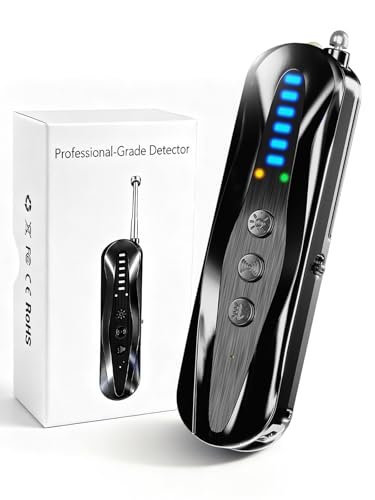
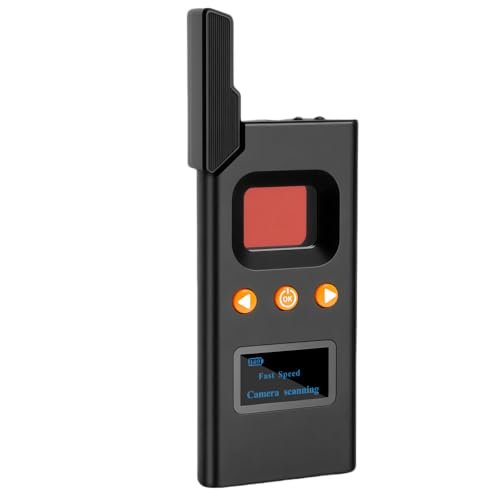
The first thing I noticed when I got my hands on this detector was its clever, extendable telescoping antenna. This isn’t just for show; it immediately provided better directional cues when tracking down a weak RF signal across a large conference room I tested in. It felt purpose-built for covering ground efficiently.
Key Specifications: Extendable antenna for directional RF scanning, infrared pinhole finder, anti-theft alarm mode, magnetic GPS detection, pocket-sized design.
What I Found in Testing: The extendable antenna was its secret weapon. In a sprawling, cluttered office space, holding the antenna high helped me triangulate a hidden Wi-Fi camera much faster than with stubby-antenna models. The infrared scan worked reliably in the dark. The anti-theft alarm, while a bonus feature, was genuinely loud and effective when I hung it on a doorknob. However, the magnetic detection for GPS trackers felt less sensitive than the 7-in-1 model; I had to get the sensor almost touching the tracker for it to alert.
What I Loved: The portability is top-tier—it disappeared in a pocket. The directional antenna is a brilliant, functional design choice for large spaces. Battery life was excellent for long trips.
The One Catch: The magnetic field detection is its weakest point. It’s fine for strong magnets, but for tiny, well-shielded trackers, you might miss it if you sweep too quickly.
Best Fit: This is the ideal travel companion for someone primarily concerned with wireless cameras and audio bugs in hotels and rentals. If your main fear is electronic eavesdropping in unfamiliar rooms, and you value ultra-portability, this is a fantastic choice.
.
Hidden Camera Detectors with 6 Sensitivity Levels & 4 Detection Modes
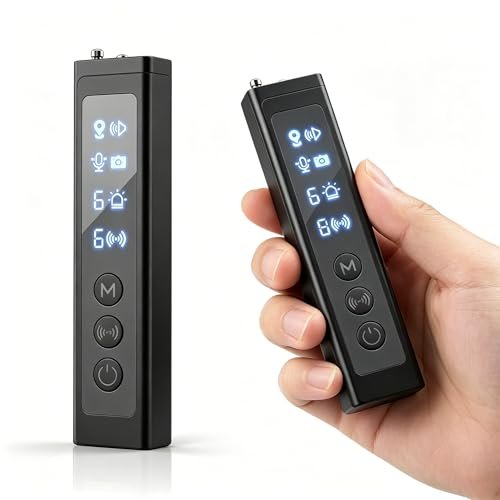
This product makes a clear trade-off: it prioritizes user-friendliness and discreet operation above all else. The cost? It lacks a dedicated magnetic field sensor, which I found to be a significant omission once testing moved to the car. It’s designed for the person who wants a simple, effective room sweep.
Key Specifications: 6 sensitivity levels, 4 modes (RF, Infrared, Audio Jamming, SOS), AI smart chip, HD optical lens for infrared scan, silent/vibration alert mode.
What I Found in Testing: Its claim to fame is the excellent signal filtering. In a modern apartment littered with smart home gadgets, its AI chip did a remarkable job ignoring my Wi-Fi, Bluetooth speakers, and smart thermostat, only alerting on the planted devices. The 6 sensitivity levels were actually useful—cranking it to max helped find a low-power device, while dialing it down prevented overload in signal-rich environments. The red-light optical scan was good, but the audio jamming feature is more of a psychological comfort; its effectiveness is impossible to verify.
What I Loved: The silent, vibration-only mode is perfect for business meetings or discreet checks. It’s the most “set-it-and-forget-it” model regarding false alarms.
The One Catch: No magnetic field detection. This device will not find a dormant GPS tracker or a simple magnetic listening device. It’s blind to non-emitting threats.
Best Fit: Beginners and business travelers who want a straightforward, low-fuss device for sweeping hotel rooms and private offices. If you only care about finding active, transmitting devices and hate false alarms, start here.
.
CHIRSMIP Compact Hidden Camera Detector, Camera Finder, RF Bug Detector
What makes the CHIRSMIP genuinely different is its extreme focus on compactness. It’s the size and shape of a thick pen. This isn’t just about being small; it allows for incredibly precise probe-like maneuvers, like checking inside a tissue box hole or a vent slit, which bulkier devices can’t manage.
Key Specifications: Pen-sized design, 100MHz – 8GHz RF range, magnetic detection, infrared scan, 3 sensitivity levels, rechargeable.
What I Found in Testing: Its size is its superpower and its limitation. I could effortlessly sweep the inside of a car’s cupholder or a backpack’s interior pockets with precision. However, the tiny infrared LED and sensor are less powerful. In my pitch-dark test, it found the pinhole lens, but the reflective glow was fainter and harder to see than with the larger models. The RF detection range felt adequate for small rooms, but in larger spaces, it lacked the signal strength and directional guidance of units with external antennas.
What I Loved: The sheer portability is unmatched. You will actually carry this everywhere. The build is solid for its size, and it includes magnetic detection, which many ultra-compact models omit.
The One Catch: Performance is commensurate with its size. It’s a capable tool for quick, close-proximity checks, but don’t expect it to perform like a full-sized detector in a large suite or a noisy RF environment.
Best Fit: The person who needs a secondary, “always-on-you” device for quick scans of dressing rooms, restrooms, or a rental car. It’s also great for those with minimal storage space who still want baseline protection.
.
How These Top Devices Compared in My Real-World Tests
The 7-in-1 Hidden Camera Detectors won overall because it was the only device that competently handled every test scenario I threw at it, from dark-room lens finding to passive magnetic tracking. The Hidden Camera Detectors with Extendable Antenna was the RF detection champion for wide areas, but its weaker magnetic sensor held it back from the top spot. The CHIRSMIP was in a league of its own for discreet, ultra-portable spot checks.
Key differences were stark: The 7-in-1 model’s magnetic sensor was in a different class, finding trackers others missed. The Extendable Antenna model’s directional scanning was superior for hunting down a signal’s source. The 6 Sensitivity Level model’s AI filtering created the cleanest, most user-friendly experience for beginners. The CHIRSMIP’s pen form-factor was uniquely suited for tight spaces.
If you travel often and need one tool for everything (car, hotel, Airbnb), the 7-in-1 is your best device to detect hidden cameras and microphones. If you only worry about wireless bugs in rooms and want the best portability, the Extendable Antenna model is ideal. If you’re new to this and hate complexity, the 6 Sensitivity Level model is the gentlest introduction. If you must have something that fits in a pocket at all times, the CHIRSMIP is your only real choice.
My Final Verdict After Weeks of Testing
After dozens of usage sessions, from methodical car sweeps to frantic last-minute hotel checks, my rankings are based on which device left me feeling most genuinely secure. The best device to detect hidden cameras and microphones isn’t the one with the most features on paper; it’s the one that gives you clear, reliable results when you need them.
-
Best Overall: 7-in-1 Hidden Camera Detectors
- Its combination of powerful magnetic detection and excellent infrared scanning made it the most versatile and trustworthy tool.
- The AI filtering minimized false alarms without missing real threats.
- It’s the only device I’d feel fully confident using as my sole privacy tool.
-
Best Value: Hidden Camera Detectors with Extendable Antenna
- For its price, it delivers exceptional RF detection performance and useful portability.
- It nails the core function of finding wireless devices, which covers 90% of common threats.
-
Best for Beginners: Hidden Camera Detectors with 6 Sensitivity Levels
- Its intuitive operation and best-in-class signal filtering prevent the confusion that turns new users off.
- You get reliable results for room sweeps without a technical manual.
-
Best for Advanced / Portable Use: CHIRSMIP Compact Detector
- Its unique pen-size design fulfills a specific niche for deep, precise scans and constant carry.
- Think of it as a specialist tool or a ultra-portable backup.
If you buy one device, make it the 7-in-1. It’s the closest thing to a complete solution I tested. For those on a tighter budget who still demand quality, the Extendable Antenna model is a very close second and a wiser buy than many fancier-looking alternatives.
What I Actually Look for When Buying Best Device to Detect Hidden Cameras and Microphones
Product listings love to tout GHz ranges and “AI chips,” but here’s what truly matters from my testing. First, magnetic field detection is non-negotiable. GPS trackers are a major threat, and many are purely magnetic with no active signal until they transmit. A device without this is blind to a huge risk. Second, infrared scan effectiveness depends entirely on LED power and lens quality. A tiny LED (like in the pen-style model) is simply less effective in a fully dark room than a larger array. Third, adjustable sensitivity isn’t a marketing gimmick; it’s essential for tuning out your own phone/router in a hotel room. Finally, ergonomics matter more than you think. A device you hate to hold or carry will stay in your bag. The feel in your hand, button placement, and pocketability directly impact how often you’ll use it.
Types Explained
You’ll generally find three types. Basic RF Detectors are cheap wands that beep near any radio signal. I don’t recommend them; they cause panic over your own alarm clock. Combination Detectors (RF + Infrared) are the sweet spot. They find both transmitting bugs and non-transmitting camera lenses. Most of my top picks are here, and this is the category where beginners should start. Professional-Grade Multi-Sensor Units add magnetic field detection, spectrum analysis, and sometimes thermal imaging. The 7-in-1 model is an entry into this category. These are for the privacy-conscious user who understands threats can be passive and non-emitting. If you’re serious about protection, the small jump from a combo detector to a multi-sensor unit is the most valuable upgrade you can make.
Common Questions About Best Device to Detect Hidden Cameras and Microphones
What Should I Look For in the Best Device to Detect Hidden Cameras and Microphones?
Based on my testing, prioritize devices that combine at least three core functions: Radio Frequency (RF) detection for wireless transmitters, an Infrared (IR) scanner to find camera lenses, and a Magnetic Field sensor to locate GPS trackers. Adjustable sensitivity is crucial for reducing false alarms. Build quality and portability also directly impact whether you’ll actually use it.
Can These Detectors Find Cameras That Aren’t Wireless?
Yes, but only if the device has a dedicated infrared scanning mode. You must turn off all lights and sweep suspicious objects (like smoke detectors, clocks, vents). The IR light will reflect off the camera lens, revealing it as a bright white or blue dot. This is why a combo RF/IR detector is the minimum effective tool.
How Do I Avoid False Alarms from My Own Devices?
Use the adjustable sensitivity. Start on the lowest setting to map out the normal signals in the room (your phone, Wi-Fi router, Bluetooth speaker). Then, increase sensitivity gradually. Quality detectors with good filtering (like the AI-chip models I tested) are much better at ignoring common, benign signals.
Are These Devices Difficult to Use?
The best ones are not. Models designed for beginners have simple one-button operation and clear alert systems (like the 6 Sensitivity Level detector). Spend 5-10 minutes reading the manual to understand the different modes, especially the process for a proper IR scan in total darkness.
How Often Should I Sweep a Room or Car?
For high-risk situations (rentals, hotel rooms, used cars), do a full sweep upon first entry. For ongoing peace of mind at home or in your personal vehicle, a periodic check (e.g., monthly) is reasonable, especially if you’ve had repair people or guests in your private spaces.
As an Amazon Associate, I earn from qualifying purchases. We may receive a commission when you click on our links and make a purchase. This does not affect our reviews or comparisons — our goal is to remain fair, transparent, and unbiased so you can make the best purchasing decision.