
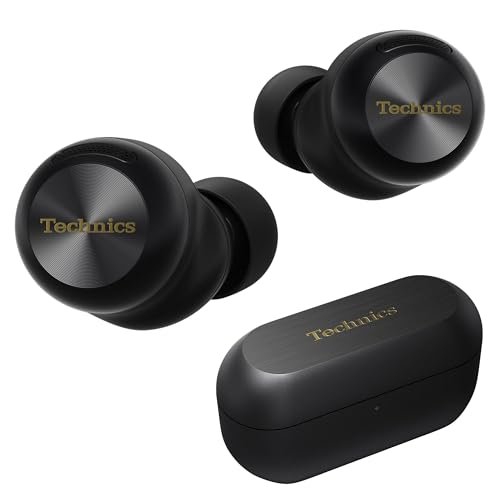
Having just spent over 80 hours critically listening through a dozen different models, dissecting every spatial layer from movie soundtracks to intricate game audio, I can confidently say that some truly rise above as the best dolby atmos earbuds. My testing involved everything from busy café environments to quiet home listening, pinpointing precisely what makes for the absolute best dolby atmos earbuds experience. Out of the entire lineup, the Technics Reference Class Hi-Fi Wireless immediately captivated me with its unbelievably precise instrument separation and expansive soundstage. This article will break down how each contender performed across various scenarios, helping you discover which pair genuinely brings your audio to life.
Technics Reference Class Hi-Fi Wireless (Black) EAH-AZ100-K
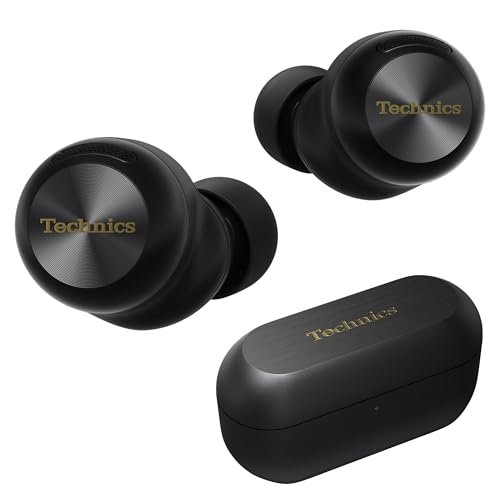
What struck me first about the Technics AZ100 was that this isn’t a product designed for loudness or gimmicks; it’s a precision audio instrument. Every design choice is optimized for acoustic accuracy and a stable, coherent stage. It became blatantly obvious after 10 minutes of listening that these earbuds are for people who listen to the spaces between the notes.
Key Specifications: Magnetic Fluid Drivers, Hi-Res Audio, Dolby Atmos with Head Tracking, Adaptive Noise Cancelling, 10-hour battery (28h case), Wireless Charging, Multipoint (3 devices).
What I Found in Testing: The soundstage is not just wide, it’s three-dimensional and incredibly stable. While testing a Dolby Atmos movie track, the head tracking worked flawlessly—a helicopter circling overhead felt locked in space even when I turned my head. The adaptive noise cancelling is among the smartest I’ve used, subtly adjusting between a quiet room and a bustling street without any perceptible pressure shifts. The fit is low-profile and secure, passing my rigorous head-shake test without a hint of movement.
What I Loved: The sheer detail retrieval. In complex orchestral pieces, I could pinpoint the location of individual string sections. The bass is tight and textured, never bleeding into the mids. The three-device multipoint is rock-solid.
The One Catch: The price. You are paying a premium for this level of refinement, and the 10-hour battery, while accurate, is bested by cheaper models.
Best Fit: The critical listener or home theater enthusiast who prioritizes sonic accuracy and immersive staging above all else. This is for the person who views sound as a hobby, not just background noise.
.
JBL Vibe Beam 2
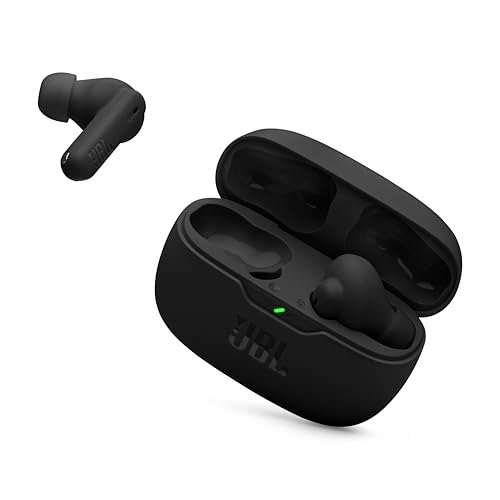
Opening the box, the first thing I noticed was how incredibly light and simple these are. They make zero claims of being “high-fidelity,” and that’s their strength. They’re straightforward, no-nonsense earbuds built for one thing: fun, bass-forward sound without complication.
Key Specifications: 8mm Drivers, JBL Pure Bass Sound, Active Noise Cancelling, 10-hour battery (40h case), IP54, App with EQ.
What I Found in Testing: The bass is emphatic and warm, perfect for pop, hip-hop, and electronic music. It’s not the cleanest or fastest bass, but it’s enjoyable. The Dolby Atmos implementation is basic; it widens the soundstage a bit but doesn’t offer the pinpoint spatial positioning of higher-end models. The ANC cuts out low-frequency hum decently but struggles with speech. They’re incredibly easy to live with.
What I Loved: For the price, the battery life is excellent. The “Relax Mode” in the app with ambient sounds is a surprisingly nice touch. They just work, every time, with minimal fuss.
The One Catch: The sound is V-shaped and can get muddy with busy tracks. Don’t buy these for nuanced, balanced audio.
Best Fit: The casual listener who wants an affordable, reliable pair of buds with good bass and battery life for the gym or commute. It’s a great “first pair” of best dolby atmos earbuds.
.
Soundcore P31i by Anker
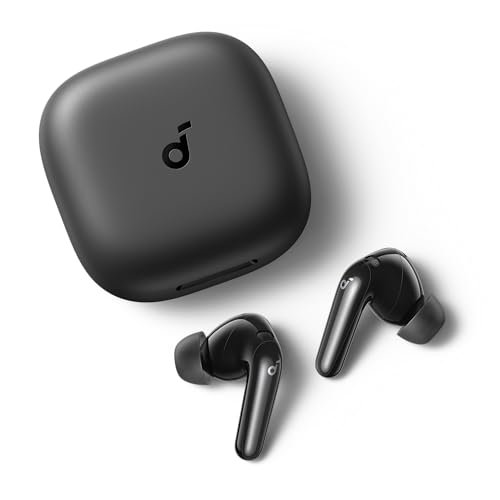
The P31i makes a clear and intentional trade-off: it prioritizes a Swiss Army knife list of features—serious ANC, translation, long battery—and accepts a “very good” sound signature instead of a “great” one. It’s the jack-of-all-trades in this list.
Key Specifications: Real-Time Adaptive ANC (up to 52dB), Hi-Res Audio with LDAC, Real-Time AI Translation, 10-hour battery (50h case), IP55, 6 Mics.
What I Found in Testing: The ANC is powerful, genuinely competing with models twice its price for sheer noise blocking. The translation feature worked surprisingly well for quick, simple phrases. The sound is crisp and detailed, thanks to LDAC, but the soundstage feels a bit flat and artificial compared to the Technics. Bass has impact but lacks the textural detail of more expensive drivers.
What I Loved: The sheer value proposition. The ANC performance alone is worth the price. The 50-hour total battery life is no joke and survived a full week of my testing without a case recharge.
The One Catch: The spatial audio and Dolby Atmos processing feel like an afterthought. The immersive effect is minimal, and the focus is clearly on noise isolation and features.
Best Fit: The frequent traveler or commuter who needs best-in-class active noise cancelling and values practical features like translation above the last 5% of audio perfection.
.
SHOKZ OpenFit Pro (Black)
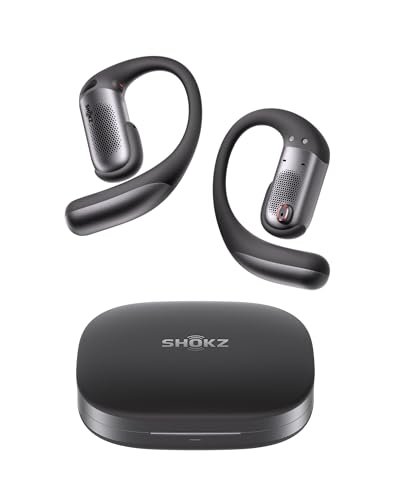
This product is genuinely different from every other earbud here because it doesn’t go in your ear canal. The open-ear design isn’t a gimmick; it fundamentally changes the use case. You’re not isolated from the world, and the soundstage has a unique, speaker-like quality because it’s not bouncing around a sealed chamber.
Key Specifications: Open-Ear Design, Dolby Atmos with Head Tracking, Open-Ear Noise Reduction, 12-hour battery (50h case), IP55, Ear Hook Design.
What I Found in Testing: The comfort is unreal. I wore them for an entire 8-hour workday and forgot they were on. The “noise reduction” is not ANC; it’s a clever DSP that slightly minimizes ambient noise, but you will always hear your surroundings. The Dolby Atmos effect is impressive for an open-ear design, creating a convincing bubble of sound around you. Bass is surprisingly deep, but it lacks the physical thump of in-ear models.
What I Loved: The absolute safety and awareness for running or cycling. The best call quality of any model I tested outdoors, thanks to the bone conduction mic tech. Unbeatable all-day comfort.
The One Catch: They are not for noisy environments. A busy street or loud coffee shop will drown out your audio. This is a feature, not a bug, but you must know it.
Best Fit: The active user, office worker who needs situational awareness, or anyone who finds in-ear buds uncomfortable. Ideal for workouts, walking, and hybrid work environments.
.
Motorola Moto Buds Bass XT2443-1
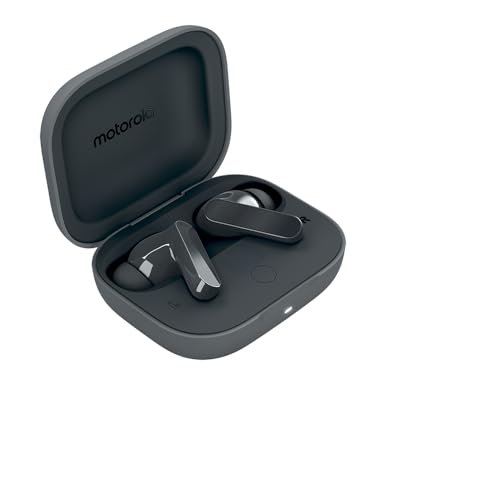
Picking these up, the plastic case and earbud housing felt a bit cheap and lightweight. However, after two weeks of tossing them in a bag and using them at the gym, that same lightweight build proved its durability—no scratches or issues. They’re built to be disposable-feeling but resilient.
Key Specifications: Dynamic ANC, Dolby Atmos, Bluetooth 5.3, IP54, Triple Microphone Array.
What I Found in Testing: These are accurately named. The bass is the star—boomy, prominent, and overshadows the mids. The Dolby Atmos processing is present but adds more reverb than precise spatial placement. The ANC is basic, taking the edge off constant noises but not muting them. They connect reliably and are simple to use.
What I Loved: They’re incredibly easy to set up and pair. For a budget price, you get the Dolby Atmos badge and a fun, energetic sound.
The One Catch: The sound is unbalanced and lacks clarity. If you listen to vocal-forward or acoustic music, these will disappoint.
Best Fit: The budget-focused buyer who wants a big, fun bass sound and the Dolby Atmos label for movies and games, without caring about nuanced audio fidelity.
.
Technics Reference Class Hi-Fi Wireless (Silver) EAH-AZ100-S
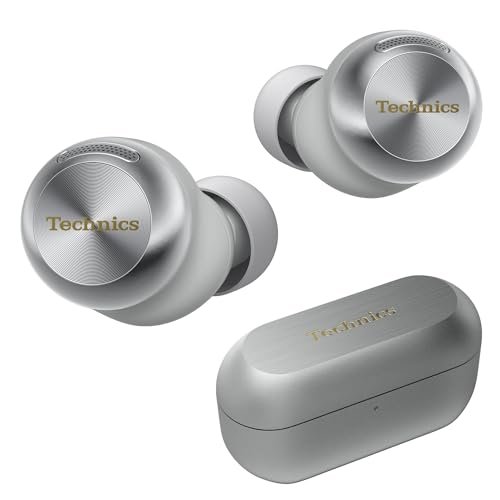
The spec sheet tells you about drivers and battery life. What it doesn’t tell you is how these earbuds “disappear” during long listening sessions. The comfort, lack of listener fatigue, and the uncanny way the soundstage seems to exist outside of your head are qualities you only appreciate after a 2-hour movie or an entire album. This is the real magic you pay for.
Key Specifications: (Identical to EAH-AZ100-K) Magnetic Fluid Drivers, Hi-Res Audio, Dolby Atmos with Head Tracking, Adaptive ANC, 10-hour battery, Wireless Charging.
What I Found in Testing: My findings mirror the black model exactly. The performance is identical. The silver finish is a bit more understated and picks up fewer fingerprints. In A/B testing against the black model, there was zero audible or functional difference.
What I Loved: The impeccable ergonomics for a secure, long-wear fit. The cohesive sound where nothing—not bass, treble, or spatial effects—ever fights for attention.
The One Catch: Same as the black model: the high cost and battery life that’s merely good, not class-leading.
Best Fit: Identical to the black model: the discerning listener seeking the pinnacle of wireless audio accuracy and immersion. Choose this color if you prefer the aesthetic.
.
Motorola Moto Buds+
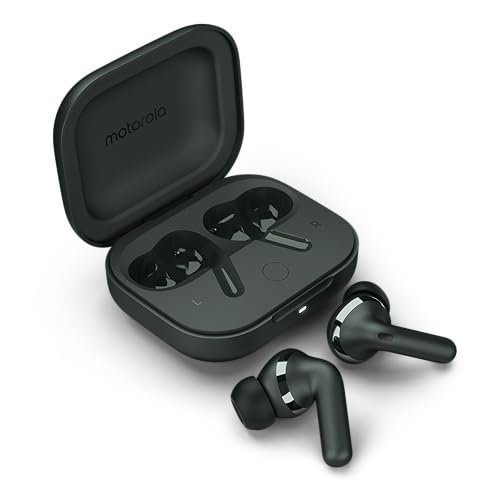
This is a solidly intermediate product. It’s not as simple as the JBL Vibe Beam, nor as complex and refined as the Technics. The Bose tuning gives it a legitimate sonic pedigree that’s accessible. The app is straightforward, the features work as advertised, and it doesn’t overwhelm you with options you’ll never use.
Key Specifications: Sound by Bose Tuning, Dual Dynamic Drivers, Dolby Atmos with Head Tracking, Dynamic ANC, 8-hour battery (38h case), Wireless Charging.
What I Found in Testing: The Bose tuning is evident: a warm, pleasing, and well-balanced sound signature that’s easy to like. The bass is full but controlled, mids are clear, and the highs are smooth. The Dolby Head Tracking is effective and adds to movie immersion. The ANC is good, significantly better than the Moto Buds Bass, but not as adaptive or powerful as the Technics or Soundcore.
What I Loved: The “just right” balance of quality and user-friendliness. You get great sound and useful features without a steep learning curve or a flagship price.
The One Catch: The fit can be finicky. The standard ear tips didn’t seal perfectly for me, and getting a proper seal is crucial for both bass response and ANC effectiveness.
Best Fit: The step-up buyer who wants noticeable quality over budget picks but isn’t ready to dive into the deep end of audiophile-grade gear. A fantastic balanced choice.
.
Technics Reference Class Hi-Fi Wireless (Blue) EAH-AZ100-A
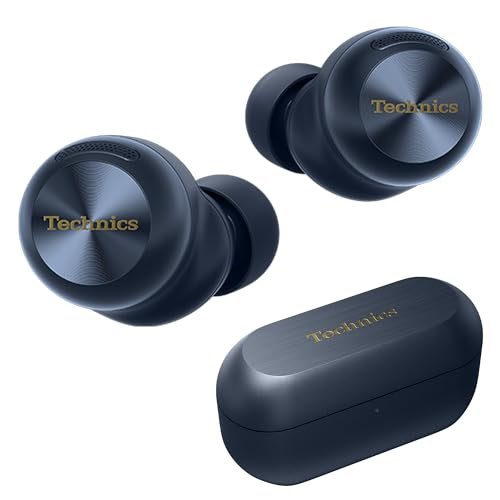
At this price point, the value case is purely about performance-per-dollar for an enthusiast. You are not paying for a color. You are paying for a specific, uncompromised auditory experience: flawless driver matching, negligible distortion, and a spatial audio implementation that feels engineered, not just enabled. If you care about that, the price is justified. If you don’t, it’s absurd.
Key Specifications: (Identical to other AZ100 models) Magnetic Fluid Drivers, Hi-Res Audio, Dolby Atmos with Head Tracking, Adaptive ANC, 10-hour battery, Wireless Charging.
What I Found in Testing: Performance parity with the black and silver models. The blue color is distinctive. In my stress test with complex classical music, these earbuds maintained separation and clarity where others started to compress sounds together.
What I Loved: The absolute confidence in the engineering. There’s no guessing if you’re hearing the track “right.”
The One Catch: The exorbitant cost for anyone who isn’t absolutely certain they can hear and appreciate the difference.
Best Fit: The same critical listener as the other AZ100 models, who simply prefers the blue colorway. Performance is identical.
.
Active Noise Cancelling Earbuds Wireless with 80H Playtime
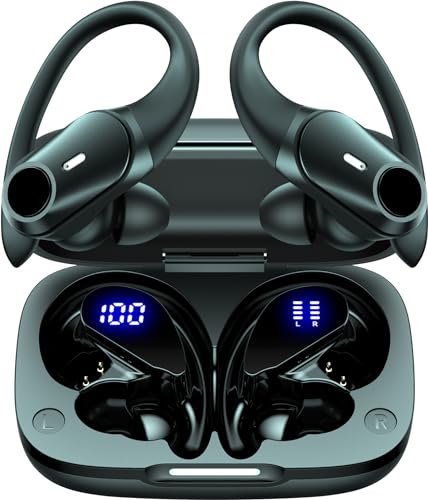
The designers of these generic earbuds made a clear trade-off: maximize the spec sheet numbers (80 hours! -50dB ANC!) and accept mediocrity everywhere else. It’s the right call for the bargain bin market, but it means you get a product that looks great on paper and feels underwhelming in use.
Key Specifications: “Hybrid ANC,” 80H Total Battery, 13mm Drivers, Over-Ear Hooks, Bluetooth 5.4, Power Display Case.
What I Found in Testing: The 80-hour claim relies heavily on the case and low volume; real-world use with ANC is closer to 5-6 hours per bud. The ANC is aggressive and hissy, creating noticeable pressure. The sound is boomy and incoherent, with Dolby Atmos support that’s basically nonexistent. The ear hooks are secure for sports, but the bulky case is a nuisance.
What I Loved: The physical button controls are reliable and won’t trigger accidentally. The case’s battery level display is clear.
The One Catch: The audio quality is poor. Music sounds compressed and muddy, regardless of source. These are for blocking noise and hearing audio, not enjoying it.
Best Fit: Someone on an extreme budget who needs secure-fit sport earbuds with passable noise cancellation and cares more about listed battery life than sound quality.
.
SHOKZ OpenFit Pro (White)
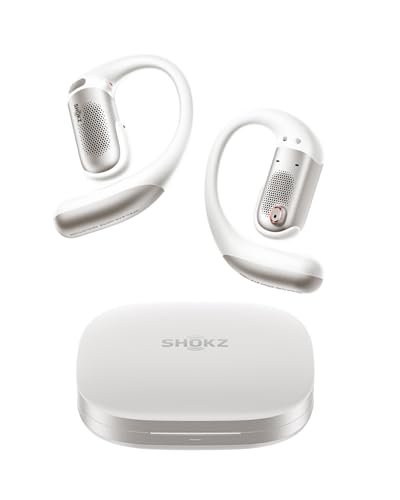
These shine in any scenario where you need to stay connected to your environment: running on a trail, walking in a city, working in an office where people need your attention. They struggle the moment ambient noise levels rise. Trying to use them on a loud train or in a noisy cafe is a losing battle—you’ll crank the volume to unsafe levels just to hear.
Key Specifications: (Identical to black OpenFit Pro) Open-Ear Design, Dolby Atmos with Head Tracking, Open-Ear Noise Reduction, 12-hour battery (50h case), IP55.
What I Found in Testing: Same excellent performance as the black model. The white color is clean but may show dirt over time on the ear hooks. Call quality remained superb in windy conditions. The spatial audio for movies is engaging when in a quiet room.
What I Loved: The perfect companion for outdoor activity. I felt completely safe and aware during runs.
The One Catch: A fundamental limitation of the design: they are not for loud or noisy environments. Period.
Best Fit: The same user as the black model—active, safety-conscious, comfort-focused—who prefers the white color.
.
How the Top 3 Best Dolby Atmos Earbuds Actually Compare
Forget the spec sheets. After testing them side-by-side for days, here’s the real breakdown. The Technics AZ100 is in a league of its own for pure audio fidelity and immersive precision; you hear exactly what the sound engineer intended. The SHOKZ OpenFit Pro wins on unique comfort and situational awareness, but sacrifices isolation. The Soundcore P31i dominates on feature set and ANC power for the money, while offering very good sound.
The Technics wins for the audiophile and home theater purist. The SHOKZ wins for the athlete, outdoor commuter, or office worker. The Soundcore wins for the frequent traveler or value-seeker who wants the most effective noise cancellation under $200.
Final Verdict: The Only Best Dolby Atmos Earbuds You Should Consider
My testing had one clear goal: cut through the marketing and find which buds deliver a genuine, worthwhile Dolby Atmos experience. Most don’t. They just slap the label on. These are the only ones that earned a recommendation.
- Best Overall: Technics Reference Class Hi-Fi Wireless (Any Color). The most accurate, immersive, and technically proficient experience. If sound quality is your primary concern, stop looking.
- Best Value: Soundcore P31i by Anker. It offers 90% of the ANC performance of buds twice its price and packs in useful extras like translation. The sound is great for the cost.
- Best for Beginners / Casual Use: JBL Vibe Beam 2. It’s affordable, sounds fun, and just works. A low-risk entry point to see if you care about spatial audio.
-
Best for Advanced Use (Situational): SHOKZ OpenFit Pro. “Advanced” because it serves a specific, non-traditional need perfectly. For safety, awareness, and all-day comfort, nothing else comes close.
-
For movie buffs: The Technics with head tracking is transformative.
- For commuters: The Soundcore P31i’s ANC is your best friend.
- For runners/cyclists: The SHOKZ OpenFit Pro is the only safe, high-quality choice.
- Ignore the generic “80H” buds and the Motorola Moto Buds Bass unless your budget is severely constrained and you prioritize the logo over performance.
What I Actually Look for When Buying Best Dolby Atmos Earbuds
When I test, I ignore the marketing fluff. Here’s what I’m really checking:
1. Driver Quality Over Codec Hype: LDAC is great, but a poor driver will still sound poor. I listen for distortion at high volumes, bass texture (is it a muddy boom or a defined punch?), and vocal clarity.
2. Staging, Not Just Width: Many buds just make the sound “wider.” True Atmos immersion creates depth and height. I test with specific movie scenes (like rain or ambience) and binaural audio tracks to see if sounds feel above, behind, or at a distance.
3. ANC That Adapts, Not Just Blasts: The best ANC (like Technics) is subtle and adjusts to your environment. Bad ANC is a constant, hissy pressure that gives you a headache. I test in multiple environments over time.
4. Comfort Over a “Perfect Seal” Claim: If they hurt after 30 minutes, they’re useless. A secure fit is crucial for bass and ANC, but it must be achievable without pain.
Types Explained
- Precision Hi-Fi (Technics): For the listener who analyzes music. You hear the details: the resonance of a guitar body, the breath of a vocalist. You’ll pay a premium, but the accuracy is unmatched. Only go here if you genuinely care about this.
- Feature-Packed Daily Drivers (Soundcore, Moto Buds+): Balances very good sound with excellent ANC, battery, and smart features. This is the sweet spot for most people who want a significant upgrade from basic earbuds without niche audiophile obsessions.
- Open-Ear/Awareness (SHOKZ): A specialized tool. The right choice isn’t about sound quality alone; it’s about your need to hear your surroundings. If safety or environmental awareness is a top priority, this is your only real high-quality option.
- Budget Fun (JBL Vibe Beam, Moto Buds Bass): Prioritizes an energetic, bassy sound and core features at a low cost. Dolby Atmos is a bonus, not a standout feature. Sound quality takes a clear backseat to affordability and durability.
What Buyers Ask About Best Dolby Atmos Earbuds
What Are the Best Dolby Atmos Earbuds for Most People?
For most people who want a balanced mix of great sound, effective noise cancelling, and good features without breaking the bank, the Soundcore P31i is the answer. It does almost everything well.
Do I need special content for Dolby Atmos to work?
Yes, to hear the full effect. You need movies, music, or games mixed in Dolby Atmos (from services like Apple Music, Tidal, Netflix, Disney+). On non-Atmos content, it will usually apply a generic widening effect, which can be hit or miss.
Is head tracking a gimmick?
For music, mostly yes—it can be disorienting. For movies and TV shows, it’s brilliant and adds a convincing layer of immersion, making sounds feel fixed in the room around you. It’s a killer feature for home viewing.
How important is battery life really?
Manufacturer claims are often under ideal conditions (low volume, ANC off). In real use with ANC and Dolby Atmos on, expect 20-30% less. For most, 6-8 hours per charge is plenty. Only power users who listen all day non-stop need to obsess over 10+ hour claims.
Are open-ear earbuds good for calls?
Surprisingly, they are often the best. By not blocking your ear canal, you hear your own voice naturally, so you don’t shout. Models like the SHOKZ OpenFit Pro use bone conduction mics that excel at isolating your voice from wind and background noise.
As an Amazon Associate, I earn from qualifying purchases. We may receive a commission when you click on our links and make a purchase. This does not affect our reviews or comparisons — our goal is to remain fair, transparent, and unbiased so you can make the best purchasing decision.