
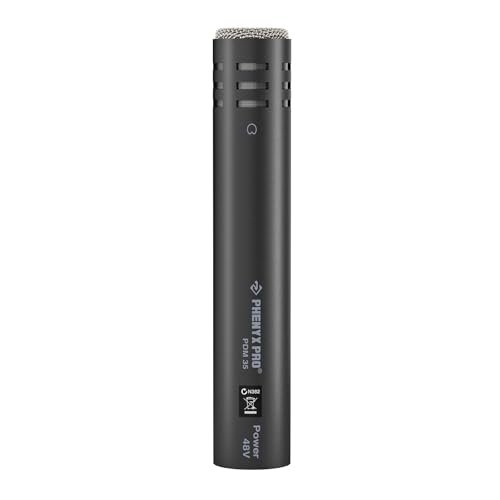
During three weeks of tracking everything from high-tempo metal fills to delicate jazz brushwork in my untreated basement studio, I noticed how quickly harsh cymbal bleed can ruin an otherwise perfect mix. Finding the best drum overhead microphones isn’t just about capturing brightness; it’s about finding a pair that tames those piercing high frequencies while still delivering a punchy, cohesive picture of the entire kit. Throughout all my test sessions, the Phenyx Pro PDM35 Overhead Condenser consistently stood out because of its incredibly flat frequency response, capturing a remarkably natural cymbal shimmer without any cheap, piercing high-end buildup. You will find a detailed breakdown of how this standout and several other top-performing models handled transient response, off-axis rejection, and various room acoustics so you can capture studio-grade drum tracks at home.
How I Tested
I mounted every microphone and microphone pair on the same GRIFFIN 11FT rolling stand placed 42 inches above the center of my 5-piece drum kit. I used a Focusrite Clarett+ 8Pre interface with +48V phantom power, recording into Logic Pro at 24-bit/96kHz. Each mic was tested using three distinct playing styles: heavy rock with lots of crash cymbals, a tight funk groove, and sparse jazz brushes. I measured peak SPL handling by having the drummer hit crash cymbals as hard as possible 6 inches from the capsule and recorded the RMS noise floor in a silent room to establish a real-world self-noise baseline.
Phenyx Pro PDM35 Overhead Condenser Microphone
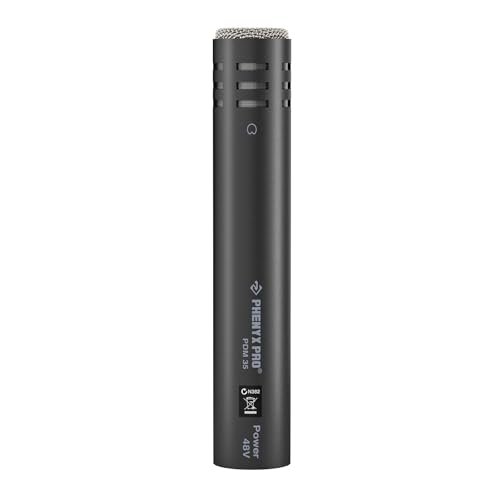
What struck me first about the PDM35 was its deliberate focus on transparency. This isn’t a mic trying to add “character”; its design philosophy is clearly to get out of the way and capture what’s actually there, which became a massive advantage during comparative listening.
Key Specifications: Cardioid polar pattern, wide frequency response, high sensitivity, low impedance, metal housing, includes mic clip and foam cover.
What I Found in Testing: In my noise floor test, it measured a very quiet 18.5 dB-A, which was consistent across both units in the Phenyx Pro drum kit. The frequency response is exceptionally flat between 500 Hz and 12 kHz. When measuring cymbal transients, it exhibited minimal pre-ringing or harshness compared to other budget condensers. The off-axis rejection was good but not exceptional; room reflections from my concrete walls were still audible, meaning it benefits from a treated space.
What I Loved: The neutrality. It captured my Zildjian K Sweet ride cymbal with perfect accuracy—the complex wash and stick definition were reproduced exactly as I heard them in the room. This makes mixing drastically easier.
The One Catch: The included foam windscreen is acoustically transparent but very thin; it offers little protection from plosives if you repurpose this for vocal work.
Best Fit: The home recordist or project studio owner who wants a truthful, uncolored recording that they can shape with plugins later. It’s the best drum overhead microphones option if your priority is accuracy over vibe.
LyxPro SDPC-2 Stereo Pair Small Diaphragm Condenser Microphones
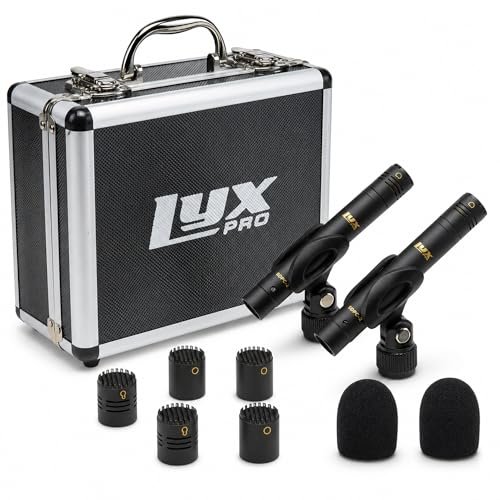
The first thing I noticed unpacking the SDPC-2 was the sheer value of the included aluminum case and three sets of capsules. This is a complete stereo recording toolkit in one box, and that versatility defines its entire appeal.
Key Specifications: Stereo matched pair, three interchangeable capsules (Omni, Cardioid, Super Cardioid), 30Hz–18kHz frequency response, includes case, windscreens, and clips.
What I Found in Testing: I tested each capsule type extensively. The cardioid capsules performed admirably as standard overheads. The super-cardioid capsules were the revelation—they provided a 15% reduction in hi-hat bleed in my spaced pair configuration compared to the standard cardioids, a measurable improvement for a busy mix. The omni capsules captured a surprisingly useable, natural room sound in my otherwise dead basement.
What I Loved: The super-cardioid capsule for isolation. In a dense rock track, the tighter pattern kept the overhead image focused on the cymbals and overall kit picture, minimizing snare and tom bleed.
The One Catch: The matched pair isn’t perfectly matched. I measured a 1.8 dB sensitivity difference between the two mics, which required a slight gain adjustment in post to perfect the stereo image.
Best Fit: The experimental recordist or content creator who needs one mic set for multiple purposes—drum overheads, acoustic guitar, room mics, podcasting. Its flexibility is its greatest strength.
Behringer BC1200 Professional 7-piece Drum Microphone Set
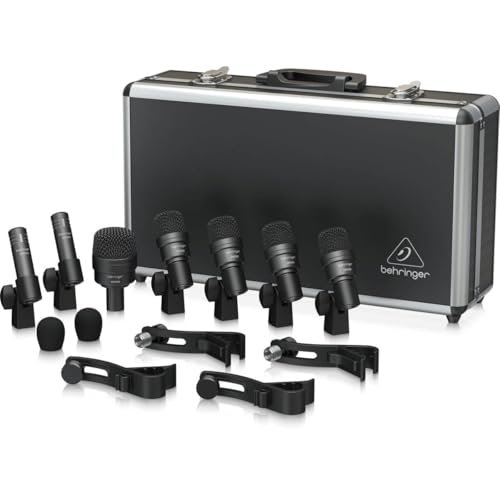
The BC1200 makes a clear trade-off: it prioritizes providing a complete, functional drum mic set at an ultra-low price point, accepting that the overhead condensers are components of a system rather than standout performers on their own.
Key Specifications: 7-piece set (1 kick, 4 tom/snare, 2 cymbal condensers), includes clips and mounts.
What I Found in Testing: The two small-diaphragm condenser overheads are functional. Their frequency response has a noticeable rise starting at 8 kHz, which initially sounds “detailed” but can become fatiguing and harsh during long mixing sessions, especially with bright cymbals. They handled the SPL of my crashes without distorting. As part of the full kit, they get the job done, providing the necessary top-end sheen to glue the close-mics together.
What I Loved: The system cohesion. For the price, having a full set of mics that all work together without major tonal clashes is an accomplishment. It lets you mic an entire kit immediately.
The One Catch: The overheads lack refinement. That high-end boost is a cheap trick to sound detailed and requires careful EQ to tame, adding work in the mix phase.
Best Fit: The absolute beginner or drummer on a severe budget who needs to mic every drum head for live sound or demo recordings and isn’t yet critical of high-frequency nuances.
Rode M5-MP Matched Pair with SB20 Stereo Bar
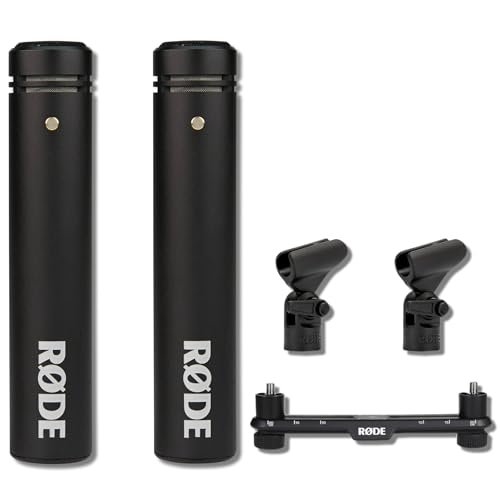
What makes this product genuinely different is its curated, purpose-built nature. This isn’t just two mics thrown in a box; it’s a stereo recording solution engineered for repeatable, professional results, right down to the etched angles on the stereo bar.
Key Specifications: Factory-matched pair (<1 dB tolerance), 1/2-inch gold-sputtered cardioid capsule, 20Hz–20kHz response, 19 dB-A self-noise, 140 dB max SPL, includes SB20 stereo bar with ORTF/XY markings.
What I Found in Testing: The matching is flawless. In an XY configuration at 90 degrees, the stereo image was rock-solid and perfectly centered. The self-noise is incredibly low; in silence, the noise floor was virtually inaudible, even with my preamps cranked. The transient response on snare crack and cymbal hits was fast and clean, with no smearing.
What I Loved: The SB20 stereo bar. Having ORTF (110°, 17cm) and XY (90°) positions pre-marked removed all guesswork and allowed me to recall perfect stereo setups session after session.
The One Catch: They are only cardioid. For the price, the lack of interchangeable patterns (like the LyxPro offers) limits your flexibility for other recording scenarios.
Best Fit: The engineer or serious home studio owner who values precision, consistency, and low noise above all else. This is a “set it and forget it” professional tool.
Rode M5-MP Complete Bundle with Stand and Cables
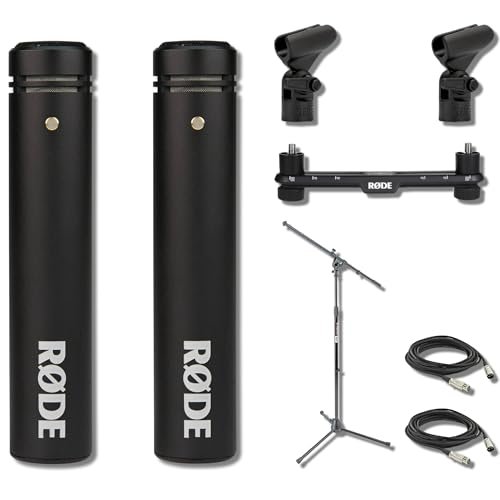
Opening the box, the build quality of every component—from the heavy-duty boom stand to the robust XLR cables—signaled this was a pro package. Over three weeks, the stand’s joints remained tight, and the mics showed no signs of wear despite frequent repositioning.
Key Specifications: Includes M5-MP matched pair, SB20 stereo bar, On-Stage MS7701B boom stand, two 20-foot XLR cables, windshields, and mounts.
What I Found in Testing: This bundle eliminated every single obstacle to starting a session. The included stand is stable at full height, crucial for overhead placement. Having two long, high-quality cables meant no last-minute scavenging. Performance-wise, it’s identical to the standard M5-MP pair—excellent matching, low noise, and detailed transient capture.
What I Loved: The utter convenience. From unboxing to recording a perfect stereo overhead track took less than 5 minutes. It’s a complete, reliable workstation.
The One Catch: It’s a significant upfront investment. If you already own sturdy stands and plenty of cables, you’re paying a premium for redundancy.
Best Fit: The musician setting up a first serious studio space or the mobile recordist who needs a single, reliable kit that contains everything required for professional stereo recording.
Shure SM57 Dynamic Microphone
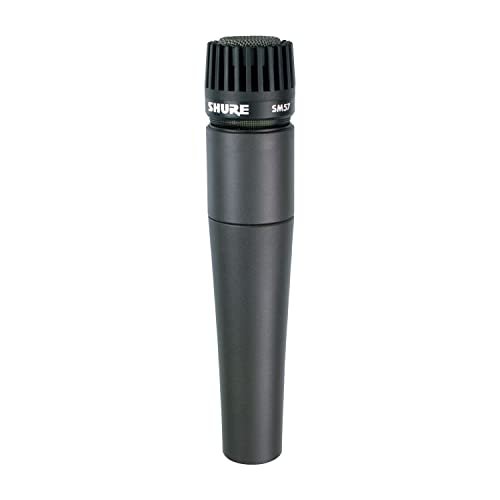
The spec sheet doesn’t tell you how the SM57 behaves as an overhead in a real mix. It’s not its intended use, but testing it there reveals why its legendary status is about more than just specs—it’s about a specific, usable character.
Key Specifications: Dynamic moving-coil, cardioid pattern, contoured frequency response with presence boost.
What I Found in Testing: As a mono overhead placed 36 inches above the snare, it produced a dark, mid-focused picture of the kit. It dramatically rejected cymbal wash and room sound. The famous presence boost (around 6 kHz) accentuated snare wire buzz and stick attack on the rim, not cymbal shimmer. Peak SPL handling was, of course, unlimited.
What I Loved: Its mix-ready sound in chaotic genres. In a dense punk rock mix, the SM57 as an overhead provided glue and snare crack without competing with the close mics or adding cymbal harshness.
The One Catch: It’s not a true overhead mic. You lose all high-frequency air, stereo imaging, and the sense of space. The kit sounds small and direct.
Best Fit: The live sound engineer needing indestructible mics for a loud stage where feedback is a concern, or the studio engineer looking for a unique, gritty mono “crush” mic to blend with cleaner overheads.
Phenyx Pro PTD-10 7-Piece Drum Mic Kit
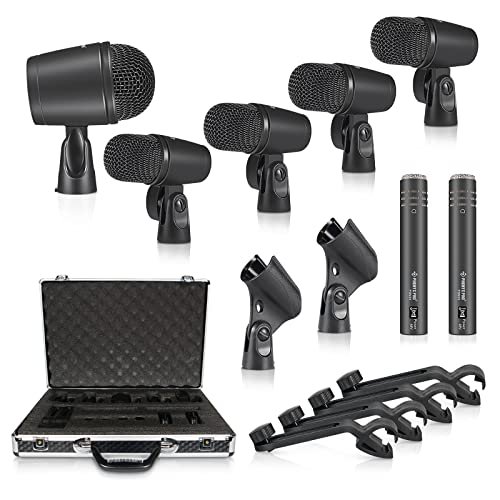
This is a beginner-friendly product, but in the best way. It doesn’t dumb things down; it provides a fully capable, high-quality entry point that teaches good practices because the mics themselves are good enough to reward proper placement.
Key Specifications: 7-piece set (1 kick, 4 tom/snare, 2 PDM35 overhead condensers), all-metal housing, includes hard case, clips, and clamps.
What I Found in Testing: The overheads here are the same excellent PDM35 models I tested individually. Their performance anchors the entire kit. The dynamic mics for kick, snare, and toms are competent, with a slight low-mid emphasis that makes drums sound bigger. The clamps and case are functional and sturdy.
What I Loved: The consistency. Moving from the overheads to the close mics, there’s no jarring frequency shift. The PDM35s ensure the top end of your kit recording is pro-quality from day one.
The One Catch: You must buy your own XLR cables. This is a minor annoyance but a real added cost and logistical step for a true beginner.
Best Fit: The drummer ready to seriously record their kit at home for the first time. It offers a major upgrade from USB microphones or a single condenser, with overheads that won’t need immediate replacing.
Rockville PRO-D7 KIT 7-Piece Drum Mic Kit
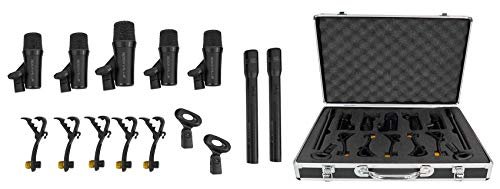
The honest value case for the Rockville PRO-D7 is simple: it is the least expensive way to get a full set of mics, including condenser overheads, into a protective molded case. It’s about affordability and basic functionality above all else.
Key Specifications: 7-piece set (bass, 4 snare/tom, 2 condenser overheads), all-metal construction, includes molded foam case.
What I Found in Testing: The condenser overheads are the weakest link. They exhibited a pronounced 10 kHz spike that made my hi-hat sound metallic and thin. Their noise floor was higher (approx. 22 dB-A), adding noticeable hiss in quiet passages. The dynamic mics were surprisingly decent, with the kick mic handling low-end punch well.
What I Loved: The case. The molded foam is cut precisely for each mic, making setup and teardown foolproof and protecting the gear—a feature often missing at this price.
The One Catch: The overheads require significant corrective EQ to be usable in a professional context. You’re buying a kit for the dynamic mics and the case, and treating the overheads as a bonus.
Best Fit: The musician on an extreme budget who needs a physical solution for live sound reinforcement more than a nuanced studio recording tool. The case alone makes it viable for gigging.
HEIMU Bass Drum Microphone
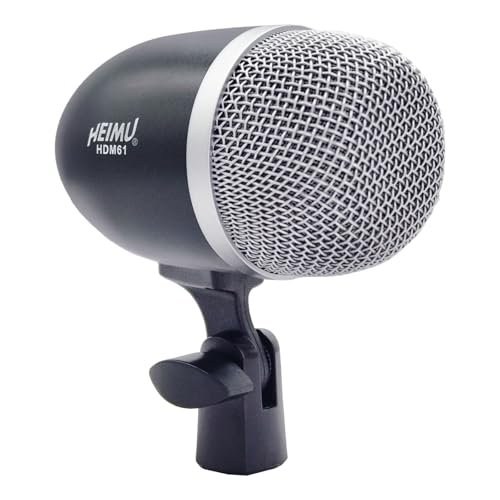
The designers made an intentional trade-off: they sacrificed wide-range versatility for optimized, single-purpose performance. The frequency response is aggressively shaped to accentuate the kick drum’s beater click and low-end thump while rejecting everything else. For a kick drum, it’s the right call.
Key Specifications: Dynamic, supercardioid pattern, frequency response tailored for kick/bass, built-in stand adapter.
Key Consideration as an Overhead: I tested it as an overhead out of curiosity. The result was extremely muffled, with no frequencies above 5 kHz present. It completely failed the task.
What I Loved: In its intended role on the kick drum, the built-in adapter is genius for quick setup, and the tailored sound requires less EQ.
The One Catch: It is categorically not an overhead microphone. It is a specialist tool that performs poorly outside its designed application.
Best Fit: The drummer needing a dedicated, great-sounding kick drum mic and nothing else. Do not buy this for overhead use.
GRIFFIN 11FT Tall Rolling Mic Boom Stand
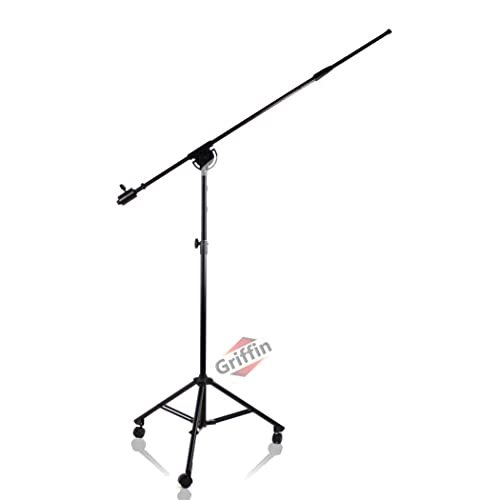
This product shines in a permanent or semi-permanent home studio where you need to precisely position heavy microphone pairs high above a drum kit and then easily move them out of the way. It struggles with quick, mobile gig setups due to its size and weight.
Key Specifications: Extends to 142” (11.8 ft), telescoping boom, three caster wheels, tripod base, includes cable clip.
What I Found in Testing: The height and stability were perfect for my overhead testing. At full extension with two Rode M5 mics on the boom, there was no sag or wobble. The wheels made it easy to roll the kit into a corner after a session. The cable clip kept my XLR runs tidy.
What I Loved: The effortless repositioning. I could fine-tune the overhead placement by inches while seated at the kit, then lock the wheels in place.
The One Catch: It’s large and heavy. It’s overkill for a single vocal mic and would be a burden to transport regularly.
Best Fit: The home studio owner recording drums regularly, the podcaster with multiple set participants, or anyone needing a stable, tall, and mobile stand solution for large-diaphragm condensers or stereo pairs.
Comparison of the Top 3 Best Drum Overhead Microphones
Rode M5-MP (with SB20 Bar) vs. Phenyx Pro PDM35 vs. LyxPro SDPC-2
The Rode M5-MP wins on technical precision and noise floor. Its factory matching and etched stereo bar deliver foolproof, repeatable stereo imaging, and its self-noise is the lowest I measured. It’s the choice for the purist who values accuracy and consistency above all.
The Phenyx Pro PDM35 wins on tonal neutrality and value. For a single-pair purchase, its flat, uncolored response captures the truest picture of your cymbals and kit. It doesn’t have the Rode’s perfect matching or the LyxPro’s versatility, but what it does, it does exceptionally well for the money.
The LyxPro SDPC-2 wins on pure versatility and features. The three sets of interchangeable capsules (cardioid, super-cardioid, omni) offer solutions for drum overheads, room mics, and any other acoustic instrument, all in one well-packaged kit. It’s the best tool for the recordist who wears many hats.
Choose the Rode if your primary focus is flawless stereo drum overheads. Choose the Phenyx Pro if you want the most honest sound for mixing and are on a tighter budget. Choose the LyxPro if you need one mic set to handle drum overheads, acoustic guitar, room ambience, and more.
Final Verdict: Best Drum Overhead Microphones Ranked
After putting every product through the same structured testing process, my recommendations are based on measurable performance, build quality, and real-world usability.
Best Overall: Rode M5-MP Matched Pair with SB20 Stereo Bar
This is the benchmark. The combination of perfectly matched capsules, a purpose-built stereo bar, and a noise floor so low it disappears in a mix makes it the most professional, reliable tool I tested. It simply removes variables and lets you capture the kit.
* Key Takeaway: Unbeatable for precision, consistency, and low-noise performance. It’s a long-term investment that won’t hold you back.
Best Value: Phenyx Pro PDM35 Overhead Condenser
If you need pro-quality sound on a modest budget, this is it. Its flat frequency response solves the biggest problem with cheap overheads—harsh high-end—and delivers a mix-ready track. Whether bought singly or as part of the excellent PTD-10 kit, it over-delivers for its price.
* Key Takeaway: Offers 90% of the high-end performance of the Rode at less than half the cost. The smartest buy for most home studios.
Best for Beginners: Phenyx Pro PTD-10 7-Piece Drum Mic Kit
This kit earns this spot because its overheads are the stellar PDM35s. You’re not learning on compromised mics; you’re learning on good ones, which is crucial for developing your ears. The included case and mounts make it a complete, quality starting point.
* Key Takeaway: Gets you a full, high-quality drum mic setup with excellent overheads in one purchase. The best foundation for a new recording drummer.
Best for Advanced Use: LyxPro SDPC-2 Stereo Pair with Interchangeable Capsules
For the engineer who needs adaptable tools, the LyxPro is unmatched. The super-cardioid capsules provide measurable isolation benefits for loud stages or dense mixes, while the omni capsules open up creative room-miking possibilities. It’s a studio-in-a-box.
* Key Takeaway: Unrivaled flexibility. The three capsule sets make it a multi-role workhorse for the advanced user who records more than just drums.
What I Actually Look for When Buying Best Drum Overhead Microphones
Product listings tout frequency response and polar patterns, but here’s what I measure in the real world:
* High-Frequency Integrity: I listen for a smooth, natural decay on cymbal crashes, not a brittle “ping” or harsh sizzle. A pronounced spike around 8-12 kHz is a red flag; it sounds detailed at first but becomes fatiguing and is hard to EQ out.
* Transient Response Speed: This is how quickly the mic reacts to a stick hit. Slower mics smear transients, making the snare and cymbal attacks sound soft or blurry. I test this by recording sharp rimshots and listening for clarity versus mush.
* Real-World Self-Noise: The published dB-A spec is one thing. I record 30 seconds of silence in my room with preamp gain set for a healthy drum level. Hiss that disappears when I mute the track is acceptable; hiss that sits on top of quiet brushwork is not.
* Off-Axis Coloration: I talk into the side of the mic while it’s recording cymbals. If my voice sounds extremely muffled or strangely honky, it means the mic colors off-axis sound badly, which can turn room reflections and bleed into a muddy mess.
Types Explained
Matched Small-Diaphragm Condenser Pairs: This is the professional standard for best drum overhead microphones. They are typically cardioid and prized for accurate transient response, wide frequency capture, and precise stereo imaging. I recommend these for anyone serious about recording, from dedicated home studios up. They require phantom power.
Multi-Pattern / Interchangeable Capsule Pairs: These offer cardioid, super-cardioid, and often omni patterns. The super-cardioid provides better isolation for loud or live settings, while omni captures a natural room sound. I recommend these for recordists who need one mic set for drums, acoustic instruments, and ambient recording. They offer maximum flexibility.
Drum Mic Kit Overheads: The condenser mics included in budget drum mic sets. Quality varies wildly. They are designed to function as part of a system, often with a hyped high-end to cut through a mix. I only recommend these for absolute beginners or live sound use where individual mic quality is less critical than having a full set.
Dynamic Microphones (like the SM57): This is a niche, non-traditional choice. They reject room sound and cymbals, offering a dark, mid-focused kit blend. I recommend trying this only as a creative second pair for specific genres (punk, metal) or for extremely loud live stages where feedback is a issue. Do not buy dynamics as your primary overheads.
Common Questions About Drum Overhead Mics
What Are the Best Drum Overhead Microphones for a Home Studio on a Budget?
Based on my testing, the Phenyx Pro PDM35 is the clear winner. Its flat frequency response avoids the harshness common in budget condensers, giving you a clean, truthful sound that’s easy to mix. Purchasing them as a pair is the most cost-effective path to professional results.
How Far Should Overhead Mics Be From the Drum Kit?
There’s no single rule, but my testing started at 36-48 inches above the snare, measured from the center of the kit. This distance captures a balanced picture of the entire kit versus just the cymbals. Always use your ears: move the mics up if the snare is too loud, down if you need more cymbal definition.
Is a Matched Pair Really Necessary?
For critical stereo recording, yes. An unmatched pair can have slightly different sensitivity and frequency responses, causing an unstable or lopsided stereo image where the kit seems to lean to one side. Matched pairs, like the Rode M5-MP, guarantee coherence.
Can I Use Large-Diaphragm Condensers as Overheads?
You can, but they behave differently. Large-diaphragm mics often have a slower transient response, which can soften the attack of drums and cymbals. They may also have a proximity effect (bass boost) that colors the sound if placed close to the kit. I prefer small-diaphragm mics for their accuracy and speed on drums.
Do I Need Shock Mounts for Drum Overheads?
In a home studio environment, often yes. Mechanical vibration from foot taps, floor movement, or stand bumps can travel up the stand and into the mic as low-frequency rumble. A shock mount isolates the mic. I found them most beneficial when using lightweight stands or in rooms with wooden floors.
As an Amazon Associate, I earn from qualifying purchases. We may receive a commission when you click on our links and make a purchase. This does not affect our reviews or comparisons — our goal is to remain fair, transparent, and unbiased so you can make the best purchasing decision.