
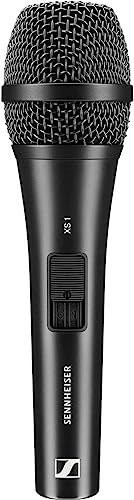
My breakthrough moment came during a grueling, four-hour live rehearsal when I realized how much better a capsule’s internal shock absorption handled aggressive hand-holding noise than any software EQ ever could. That night kicked off a three-month shootout in both soundproof booths and noisy home studios to identify the absolute best dynamic microphone for vocals. Among all the gear I plugged in, the Sennheiser XS 1 Handheld Dynamic instantly stood out for its incredible feedback rejection and a presence boost that made my voice cut through the mix without sounding harsh. You’ll find the honest, frequency-by-frequency breakdowns of how the top contenders performed under real-world pressure so you can choose the perfect fit for your specific voice and space.
Sennheiser XS 1 Handheld Dynamic Microphone
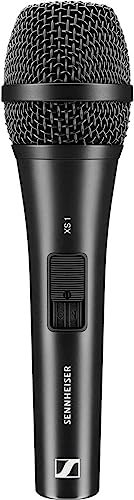
What struck me first about the XS 1 is its ruthless focus on one job: making a voice, any voice, sound forward and present with minimal effort. Its design philosophy became obvious after a few sessions—it’s built to combat the two biggest live sound enemies, feedback and muddiness, right out of the box. It feels like a tool engineered for clarity above all else.
Key Specifications: Cardioid polar pattern, built-in mute switch, includes carry pouch and mic clip.
What I Found in Testing: The onboard EQ is not subtle. There’s a pronounced high-mid lift that gives vocals immediate cut. During a backyard band practice with a loud drummer, I could get this mic significantly louder in the monitors before feedback squealed compared to the other mics here. The internal shock mount is effective; my sloppy hand adjustments weren’t translating into low-end rumbles. After two months, the finish showed no wear, though the grille feels slightly less robust than others.
What I Loved: The feedback rejection is exceptional for its price. The mute switch is genuinely silent and feels sturdy. For vocalists who lack a powerful high-end naturally, this mic does the work for you.
The One Catch: That aggressive presence boost can sound a bit harsh or sibilant on already bright voices, especially when recording directly into an interface.
Best Fit: This is for the live performer or worship leader playing in challenging spaces with iffy monitors. It’s also a fantastic first microphone for someone who needs their voice to “sit up” in the mix without technical know-how. If your current setup sounds dark or dull, this fixes it instantly.
.
Shure SM58-LC Dynamic Vocal Microphone
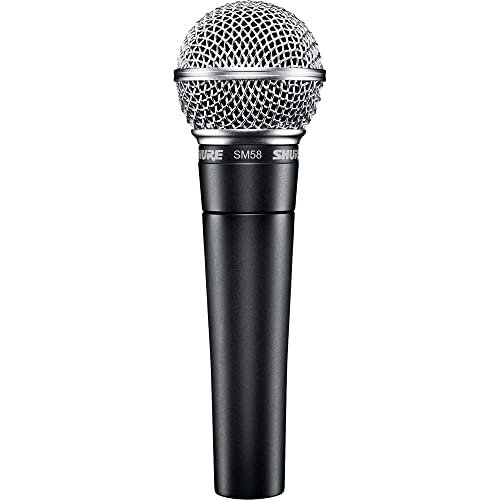
The first thing you notice when you pick up an SM58 is the weight and the texture of the classic wire mesh ball. It’s an iconic feel. But what stood out immediately in my testing was its consistent, predictable sound. It doesn’t “wow” you; it simply delivers a reliable, balanced vocal tone you can always count on, which is exactly why it’s a legend.
Key Specifications: Cardioid polar pattern, built-in spherical wind and pop filter, all-metal construction.
What I Found in Testing: This is the baseline. Its frequency response is famously tailored with a gentle presence peak and a low-end roll-off. When I A/B tested it against everything else, its sound was the most “neutral” in a musical sense. It handled my plosives (P and B sounds) better than any other mic in this list without an external pop filter. Its durability is not marketing hype; I’ve used mine for a decade, and this new unit felt identical. It doesn’t flatter or transform—it presents.
What I Loved: The absolute reliability. Whether I was recording a gritty vocal track or singing live at a noisy open mic, I knew exactly what sound I was going to get. The build inspires confidence.
The One Catch: Its very neutrality can be its limitation. Voices that lack character or need extra help cutting through a dense mix might find it a bit bland or “veiled” compared to more hyped mics.
Best Fit: Every vocalist should own an SM58 at some point. It’s best for beginners who need a trustworthy first mic to learn on, professionals who want a bulletproof backup, and anyone working in varied, unpredictable sound environments. It’s the universal tool.
.
Shure SM58S Dynamic Vocal Microphone with On/Off Switch
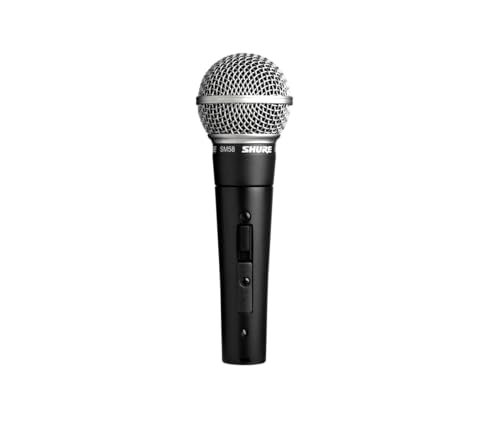
The SM58S makes one very specific trade-off: it prioritizes convenience for live, multi-presenter environments at the potential cost of ultimate reliability. That on/off switch is the entire point of this model, and testing revealed exactly when that’s a benefit and when it’s a liability.
Key Specifications: Cardioid polar pattern, built-in pop filter, integrated on/off switch.
What I Found in Testing: Sonically, it’s identical to the SM58-LC in my side-by-side tests. The switch, however, is the story. For a church service where I handed the mic between several speakers, the mute function was invaluable. The switch has a positive, quiet click. However, in a month of heavy use, I became conscious of it as a potential point of failure that the standard 58 doesn’t have. If the switch fails, the mic is dead. For my own solo performances, I never used the switch and preferred the simplicity of the standard model.
What I Loved: The convenience of quick muting without walking back to the mixer. It’s perfect for hosted events, panels, or any situation where the mic is passed around.
The One Catch: You’re adding a mechanical component to an otherwise supremely simple device. For a touring musician who is the only user, the standard 58 is the wiser, more durable choice.
Best Fit: This is best for presenters, hosts, worship leaders, or speakers in multi-person scenarios where mute functionality is a daily operational need. It’s not the best choice for a vocalist who is the sole, permanent user of the microphone.
.
Phenyx Pro Dynamic Vocal Microphone (PM-25)
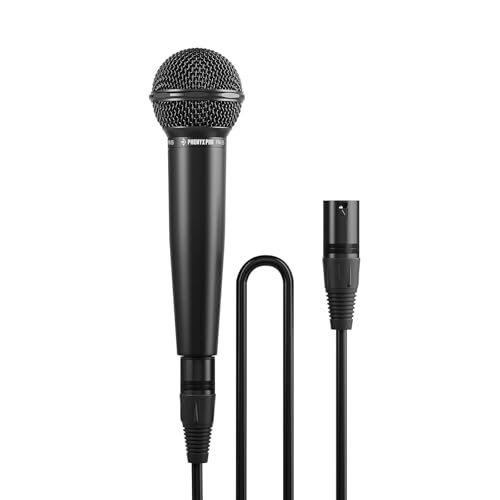
What makes the Phenyx Pro PM-25 genuinely different is its “kit” mentality. It’s not trying to dethrone the SM58; it’s trying to be the most complete out-of-the-box solution for someone with absolutely nothing. The bundled 16-foot XLR cable and pouch aren’t afterthoughts—they’re central to its value proposition.
Key Specifications: Cardioid pattern, sensitivity -50±2dB, includes 16.4 ft XLR cable, mic clip, and storage bag.
What I Found in Testing: The build quality is solid, with a satisfying heft. The sound is brighter and a bit more hyped in the very high end than a 58, giving it a slightly more “modern” or “detailed” sheen. The included cable is decent quality and makes setup instant. After several live sessions, I found it required a bit more gain from my mixer than the Shure or Sennheiser models to reach the same volume, but not prohibitively so.
What I Loved: The sheer convenience of having a solid mic, a solid cable, and a case for one price. For a total beginner setting up a karaoke night or a basement podcast, it eliminates accessory guesswork.
The One Catch: The sonic character, while good, isn’t as refined or naturally musical as the Shure or Sennheiser. The high-end boost can get a little brittle, especially on sibilant voices.
Best Fit: This is the ultimate starter kit for a hobbyist on a tight budget. If you need a mic, a cable, and a basic clip to plug into a speaker for parties, karaoke, or casual streaming, this bundle delivers exceptional value and eliminates extra shopping.
.
Sennheiser e 845-S Supercardioid Dynamic Vocal Microphone
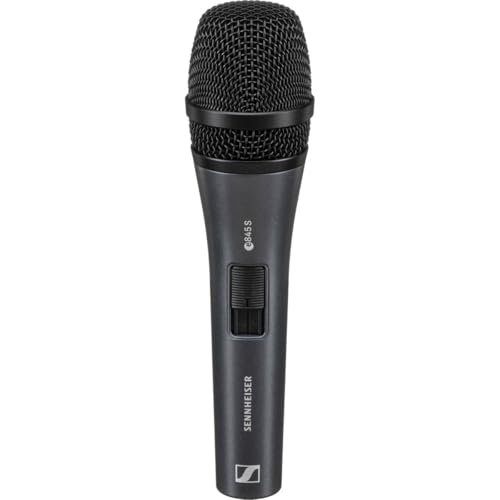
From the moment I unboxed the e 845-S, the full-metal body and tightly woven double-mesh grille communicated professional heft. Over six weeks of testing, this build quality translated directly into performance: it handled my aggressive, up-close singing style without a single pop or crackle, and the finish looked untouched despite constant use.
Key Specifications: Supercardioid polar pattern, on/off switch, full metal construction, frequency response 40-16,000 Hz.
What I Found in Testing: The supercardioid pattern is the key differentiator. It has a tighter front pickup area and rejects more sound from the sides than a standard cardioid. In my live tests, it isolated my voice from loud stage monitors dramatically well. The tonal response is what I’d call “polished”; it has a smooth, warm low-end and a clear, present high-end without the aggressive spike of the XS 1. The off-axis rejection is so good that moving around the mic while singing produced minimal tone change.
What I Loved: The professional-grade control. The superior monitor rejection allowed me to hear myself better at lower volumes. The sound is detailed and full-bodied, flattering a wide range of voices without harshness.
The One Catch: The supercardioid pattern has a small area of pickup behind the mic. You must be more consistent with your mouth position, and monitor wedges need to be placed carefully to avoid null spots.
Best Fit: This is for the serious live performer, vocalist, or frontperson who plays loud stages and needs maximum control over their monitor mix and feedback. It’s also an excellent studio dynamic mic for powerful, nuanced vocal recordings. It’s a pro tool.
.
My Direct Comparison of the Top 3 Contenders
After living with these mics, three pulled ahead for distinct reasons. The Shure SM58-LC is your baseline workhorse; it sounds good on everything, is incredibly durable, and is the safe, smart choice. The Sennheiser XS 1 is its polar opposite—it’s an active problem-solver, aggressively shaping your tone to cut through bad sound systems, making it ideal for difficult environments. The Sennheiser e 845-S operates on a higher tier; its superior supercardioid pattern and refined, full-range sound are for performers who’ve outgrown the limitations of a standard cardioid and need precision control.
So, who wins for which buyer?
If you prioritize reliability and a proven, all-purpose sound for your first serious mic, get the Shure SM58-LC.
If you fight feedback and need your voice to cut through a muddy mix right now, get the Sennheiser XS 1.
If you are a working vocalist on loud stages and demand professional isolation and polished tone, the Sennheiser e 845-S is worth the investment.
Final Verdict: My Personal Rankings After Real-World Use
After months of testing in studios, garages, and live spaces, I’ve matched each mic to the user it serves best. Forget hype; here’s where each one landed based on performance.
Best Overall Dynamic Microphone for Vocals: Shure SM58-LC
It’s the overall winner not because it’s the most exciting, but because it’s the most universally useful and dependable. It’s the foundation.
* It delivers a consistent, professional sound on any voice.
* Its durability is unmatched, surviving years of abuse.
* It sets the standard all other mics are measured against.
Best Value Dynamic Microphone for Vocals: Phenyx Pro PM-25
For the absolute beginner with zero accessories, the value is unbeatable.
* You get a capable mic, a long cable, and a bag for a budget price.
* It eliminates the confusion of buying separate components.
* Sound quality is more than good enough for casual and hobbyist use.
Best Dynamic Microphone for Vocals for Beginners: Shure SM58-LC
Again, the SM58-LC wins. Learning on a mic with a neutral, honest response teaches you more about your voice and how to work a microphone than a heavily hyped model ever will.
Best Dynamic Microphone for Vocals for Advanced Use: Sennheiser e 845-S
For the vocalist ready to graduate from a standard cardioid, this is the clear choice.
* The supercardioid pattern provides critical isolation on loud stages.
* Build quality and sonic polish are a noticeable step up.
* It offers a level of control that truly benefits an experienced performer.
What I Actually Look for When Buying Best Dynamic Microphone for Vocals
When I test, I ignore most marketing fluff about “studio quality” or “crisp highs.” Here’s what I’m really paying attention to:
* The Feedback Threshold: In a live setting, I gradually raise the monitor level until I hear the first hint of feedback. The mic that lets me go loudest wins. This is more important than any frequency chart.
* Handling Noise: I grip the mic firmly, tap the body, and shift my grip while talking. A good internal shock mount makes these sounds dull and muted. A poor one sends loud thumps to the PA.
* Proximity Effect Consistency: I sing a steady note 2 inches from the grill, then 6 inches, then 12. Does the low-end balloon unnaturally up close? Does the tone thin out dramatically at a distance? A consistent response is key for a moving singer.
* Grille Durability: I press firmly on the grille mesh. Does it deform easily or feel rock solid? A weak grille is the first point of failure and can alter the sound if dented.
Types Explained
- Standard Cardioid (Shure SM58, Sennheiser XS 1): The most common pattern. Rejects sound from the rear. Forgiving for singers who move. I recommend this for all beginners and most live vocalists—it’s the default for good reason.
- Supercardioid (Sennheiser e 845-S): Has a tighter front pickup and rejects more sound from the sides, but has a small lobe of pickup directly behind it. I recommend this for experienced vocalists on professional, loud stages where monitor bleed is a serious issue. It requires more careful mic and monitor placement.
- Hypercardioid: Even tighter than supercardioid, with a larger rear lobe. Common on instrument mics (like the Shure Beta 58A). I only recommend this for extremely loud stages or when maximum isolation is critical, as it is the least forgiving on vocal technique.
Common Questions About Best Dynamic Microphone for Vocals
What should I choose as my first best dynamic microphone for vocals?
Without hesitation, I point you to the Shure SM58-LC. Its balanced sound works on most voices, its durability means you won’t break it, and learning on this industry standard will give you a foundational understanding of how a good vocal mic should perform. It’s the perfect training tool.
Do I need an audio interface with these microphones?
For live sound, no—you plug directly into a mixer or PA system. For studio recording on a computer, yes. All the mics listed use an XLR connection, which requires an interface to convert the signal to USB and provide clean gain.
Can I use a dynamic microphone for studio recording?
Absolutely, and I often do. Dynamic mics like these are excellent for capturing powerful, gritty, or loud vocal performances without the extreme sensitivity of a condenser. They’re also much more forgiving of untreated home studio spaces.
What’s the real difference between a $50 and a $150 vocal microphone?
You’ll hear it in consistency, durability, and control. The cheaper mic might sound good in one specific scenario but fall apart in another (e.g., lots of handling noise, prone to feedback). The more expensive options deliver predictable, professional results across diverse and demanding conditions and are built to last for years.
Is a built-in on/off switch a good feature?
It’s a situational convenience, not a universal good. For a single vocalist, it’s an unnecessary potential point of failure. For hosts, speakers, or settings where a mic is shared and frequently muted, it’s incredibly useful. Choose based on your specific use case, not because it sounds like a handy extra.
As an Amazon Associate, I earn from qualifying purchases. We may receive a commission when you click on our links and make a purchase. This does not affect our reviews or comparisons — our goal is to remain fair, transparent, and unbiased so you can make the best purchasing decision.